Wendy Babcock- The Power of your WHEN Story
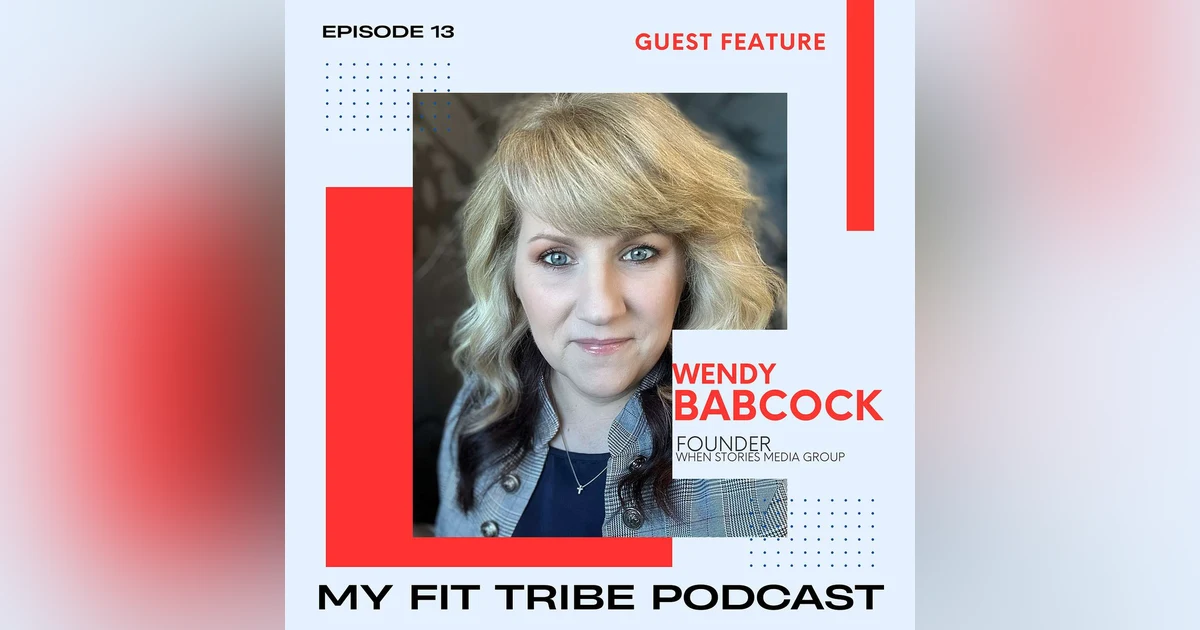

Send us Fan Mail Joining us is Wendy Babcock—an international speaker, TEDx presenter, storytelling coach, and the founder of WHEN Stories™. Wendy’s work is all about helping individuals find their voice, craft their stories, and use those stories to create impact. Whether through her Warrior Unchained events or her transformative coaching, Wendy has been empowering women and entrepreneurs to share their most powerful, authentic selves with the world. Today, we're diving deep into how storyte...


Joining us is Wendy Babcock—an international speaker, TEDx presenter, storytelling coach, and the founder of WHEN Stories™. Wendy’s work is all about helping individuals find their voice, craft their stories, and use those stories to create impact. Whether through her Warrior Unchained events or her transformative coaching, Wendy has been empowering women and entrepreneurs to share their most powerful, authentic selves with the world.
Today, we're diving deep into how storytelling can be a game-changer for your personal growth, confidence, and business success. So get ready for an inspiring conversation that will not only elevate your mindset but also help you unlock the power of your own story.
https://www.wendybabcock.com/
https://whenstories.buzzsprout.com/
https://profit-up.mykajabi.com/warrior-unchained-2024
Throughout my own life and fitness journey, I have had the privilege of meeting incredible people who've shared valuable insights on mindset, health, fitness, and spiritual growth. The profound impact of this knowledge on my own life has inspired me to share it with all of you. I'm Erica Sweeney, host and founder of My Fit Tribe Podcast. Join me as we explore inspiring conversations with experts, thought leaders, and everyday heroes who offer their stories and practical tips to help you on your own journey. From nutrition and fitness to mental well-being and personal or spiritual growth, our mission is to empower you to take charge of your health and live your best life. We are more than just a podcast, we are community. Through coaching, a wealth of shared knowledge, and a strong support network, we are here to guide and encourage you every step of the way. Come be a part of our tribe. Joining us today is Wendy Babcock, an international speaker, TEDx presenter, storytelling coach, and the founder of When Stories. Wendy's work is all about helping individuals find their voice, craft their stories, and use those stories to create impact. Whether through her Warrior Unchained Events or her transformative coaching, Wendy has been empowering women and entrepreneurs to share their most powerful, authentic selves with the world. Today we're diving deep into how storytelling can be a game changer for your personal growth, your confidence, and business success. So get ready for an inspiring conversation that will not only elevate your mindset, but also help you unlock the power of your own story. Let's get started. Today on this episode, I'm joined by Wendy Babcock. She is an international and TEDx speaker, storytelling coach, and award-winning lyricist, which I love that. She's a creator of Warrior Unchained Event and the founder of When Stories, truly someone who understands the importance of storytelling. So again, Wendy, thank you for joining me.
SPEAKER_00Thank you for having me. I'm excited for this episode and for this podcast.
SPEAKER_01Yeah, you describe what you do as helping others transform their pivotal moments into impactful messages, which is so much of what we talk about on this podcast. And really just in life, it is so important to take all that happens to us and use it to learn and to change our trajectory. And when you I first saw your when stories, I was so intrigued. So I'm going to start with the future. So let's just start with what When Stories is.
SPEAKER_00Okay. So When Stories is a platform similar to TEDx. It's a branded stage with a 20-minute or less talk. And then what we do is we take that talk that's on, and it's a theatrical stage. This is not like in a cold conference room with a Steppen Rehe Pete banner. We we rent out this really these really nice places so that the visuals are amazing for speakers and entrepreneurs who really want their expertise to shine. So we have this beautiful stage, and then after the talk, we transcribe the talk to put it into a book anthology. And then we pull the audio and put it on a podcast along with an interview. And there's a lot of other small pieces I'm kind of like glossing over, but the main point is the people I talk to, my clients, um, people I network with have so many incredible stories that they're not talking about. And it's really what's led them to do what they're doing now, the impact they're trying to make, the people they're trying to serve. And I wanted to create a platform where they could tell their story and be relatable, but also where it would lead to what they're doing now. So it becomes promotional. And it's a place where they can showcase, hey, this is who I truly am, because I feel like in business, that's what really draws our ideal clients in. So I wanted to marry the idea of that TEDx stage with the expertise and authority with telling our true stories of transformation when we really had that pivotal moment, that when everything changed moment. So kind of in a nutshell, that's what one's stories is.
SPEAKER_01It's beautiful. It really does. I always take it from Ed MyLead, but you're best equipped to help the person that you once were. And it really holds true in all these stories, and I've really enjoyed catching up on them. So let's rewind a little bit. So let's talk about what you were doing way before you became a speaker. Let's talk about being a lyricist. How did you get into music?
SPEAKER_00So I've been writing lyrics and poetry since I would say by age 11 is when I really started to like start penning things. Um, I grew up in a home that wasn't always friendly. Um, you know, I experienced childhood abuse. And so writing, I found was kind of my way of speaking because I lived a lot of my childhood in silence. Because I found when I spoke up is when I would get the belt, get screamed at, you know, be put down. And so I started channeling that into writing. And um, in my teens, you know, I started formulating things better. I loved my English and creative writing classes. So I got a better grip on it. I love music, everything about it. And I would sit, I mean, this, I'm aging myself, but like I would sit with my cassette player and I would play and stop and play and stop to write down the lyrics of songs because I was trying to understand how music was actually how the lyrics were written, you know, you know, it's just poetry, basically poetry, but it's in a specific format. And so that's how I learned how to like figure out how a song is written. And then in my late teens, and this always sounds a little bit morbid when I say it out loud, but I started getting asked to write poetry for funerals for people's loved ones who had passed. And so that was kind of a my first kind of sidekig, if you will, you know, while I was working full-time. And so I learned how to draw an emotional emotion and write things that were really empathetic and sympathetic to what people were going through. And as I developed that, I started putting it into songs and entering lyric contests, and some of which I actually won. You know, my first one was I won $500 and an actual production of my song. And that is so cool. And if if anyone who's out there who's listening has ever penned um, you know, lyrics or poetry and actually got to hear it for the first time, your lyrics being sung. I mean, it was just, it was such a moment to have happen. So yeah, and I've just been writing ever since. Wow. Yeah. And my first co-writer um was back in the MySpace ages. Um, so I we met on MySpace. I was up in Wisconsin, he's in Sedona, and he was a music producer. He'd been in a band called uh Diamond Lane, opening for like Cheap Trick and Ario Speedwagon back in the day. And he was looking for lyricists to work with. And him and I we wrote together fantastic. And this is before Zoom was cool or doing things virtually were cool. So we we literally wrote long distance and we didn't meet for two years. Wow, that is so cool.
SPEAKER_01Yeah, and like you said, it's such a form of communic communication like poetry that we kind of take for granted when we're listening to the music on the radio. Yeah. And I can totally relate to the whole cassette thing because we used to do that with my sisters because you didn't have Google to tell you what the lyrics were. Yeah. So when did you get into when did that switch to public speaking?
SPEAKER_00So it didn't switch for a long time. So I worked in a hospital for 20 years. I never set out to be a public speaker in any way, shape, or form. I think if you would have put a microphone in front of me when I was in my 20s, I probably just would have thrown up on it, to be honest. Like I had no intention. But while I was working at the hospital, I would listen to audiobooks quite a bit, uh, personal development. I had come out of a domestic violence situation and I was learning to figure out who I was, you know, and kind of developing that part of myself. So I learned about, you know, personal development books. And so I would listen to audio books while I worked. And in this one book, um, the author mentioned A Complaint Free World by Will Bowen. And I recall just stopping the Audible and searching this movement because it resonated with me in the fact that I was trying to push negativity out of my life and how I do things. And I thought, complaint free, what's more negative that we do than complain? So this guy's on to something. So I went to Facebook that day and I looked up Will Bowen, the author, the founder of the movement, and he had posted that he wanted to train 10 people to speak on this movement. And I don't know to this day why I applied because I'm like, maybe I didn't think it through or I didn't think I'd get chosen, but I applied for it and um he was offering to train people for free. So this was kind of before the the age of, you know, quote unquote coaching for speakers that I even knew of. Um and so he trained 10 of us for free. I was chosen um to go through his training, it was a 16-week training. And I felt like I was low man on the totem pole in that training because I don't didn't have any public speaking experience, and other people kind of had bits and pieces of it. So I really dove in and listened to everything he said to do. He essentially gave me a speaking business in a box, every aspect of speaking he had covered. How to get the speaking gigs, what to charge, what to say. It was his program. So I didn't have to come up with my own program. I taught, I became a certified complaint free trainer and I taught his program. And within nine months, I quit my full-time job to get on stages and deliver his message. And I'd been doing that for now for about eight years.
SPEAKER_01Wow. I love that story. I I did listen to your when story, which I won't get into too much because I want you to be able to share. But that moment really resonated for me because that was one of those moments where you stop and you can look back and say, had I not listened to that audible on that day, I wouldn't be where I am. And it's just really uh such a pivotal point that changed changed your life just by by that by that little voice in your head. Looking back, how does that feel?
SPEAKER_00It it's amazing. And I do the same thing. I always look back on some decisions, and it's it's that it's more than a nudge. You know, we get these nudges, and like I say, it's it's like a two by four to the back of the head, like you need to do this. And that's kind of why I came up with the idea of what to call my stage was when moments, because it was when everything changed. Like you you call that it's a pivotal moment. And it's how I would describe it, it's those moments that have a definite before and after. And we talk about them in everyday speech. You know, we'll we'll re be telling a story and we'll say, oh, that was that was after my divorce, or that was before my surgery, or it was after this pivotal moment, you know. So there's a definite before and after, and that moment is a huge when moment for me. It's when everything did change. It it changed the course of where my life was going. And who knew? I didn't know in that moment that that's what that was going to become. So yeah, it feels pretty amazing to look back and see those things.
SPEAKER_01And also because at that moment you weren't a public speaker and you said you were afraid of it. So how many of those moments do we have come to us, but we're too afraid to move forward? Maybe they come at the right time. You know, I don't know. But it's interesting because a lot of those things, had it happened a year later or a year earlier, your decision to do it may have been completely different.
SPEAKER_00Well, and I think part of it is I wasn't, I don't think I was thinking about the actual getting on stage and speaking part. I think the part that motivated me was the message. It was what Will was teaching people to do is become complaint free and how to share that. Because everything I had been learning in personal development, part of me wanted to share it with people who I talked to, anyways. So this was kind of that opportunity to share it. And I think it wasn't until I got on the stage for the first time it was shaking in my boots and feeling like I was going to pass out and felt my face get red and flushed and hot that I was like, oh my gosh, what did I sign up for?
unknownRight.
SPEAKER_00It was that reality of everything that I'd signed up for came to fruition. There I was on stage. So it's it's kind of crazy to look back for sure.
SPEAKER_01So let's talk about that moment because as being my experience like that was when I had gone bodybuilding and I got on the stage for the first time. And I was terrified, didn't tell anybody I was gonna do it. I was did was afraid I was gonna fall, that I was gonna give up, all the things, all the fears. But when you get up there and you're there and you see the people out there in front of you, not that you're they're watching you, but you know that it's your moment to do what you set your mind to and getting up there, and then when you're done with it, you did something really difficult and you conquered it. And that is what I took away from it. How was that moment for you?
SPEAKER_00I would say very similar. And I think the things that I had learned, and probably like you did with bodybuilding, you know, all the steps that you took to train to get up and be in that moment, you know, I did all the things. And so getting on the stage and knowing my stuff, like I knew the message inside and out because I had rehearsed it so many times. And so that's what Will says, you know, practice, practice. You cannot practice enough. And because I knew what I was teaching, I understood it. Even though I was nervous, I was still able to deliver it. So getting off the stage, you know, you can look back, and most speakers will tell you they do this, is they'll get off stage and oh, I forgot to say this. Oh, darn, I didn't really say that perfectly. But the audience doesn't even know. They don't know that you forgot to say a certain line or you didn't deliver it perfectly. You know, so I learned over the years to celebrate as soon as I get off stage. Like I knocked it out of the park. I knew people were engaged, they leaned forward, they asked questions, they wanted to talk to me when I got off stage. Those things are more the sign of, you know, the confidence I feel when I'm up there. And maybe you had that too with the bodybuilding.
SPEAKER_01Yeah, first it was just that I did I didn't fall on my face. That was step number one. That too. But it does. It really, for me, that was definitely one of my when moments. It was uh I put my mind to something very hard that I was afraid to do, didn't believe I could, but when I did, it took me, as I've said in other ones, it took me to another level. It opened up the possibilities of other parts of my life for sure. When you talk about the complaint-free world, I'm curious about this. So, what did you learn through that that you're able to apply to everyday life?
SPEAKER_00Let's see, what did I learn? Um, well, first the complaint-free challenge. I would say, besides learning the public speaking part of it, you know, Will taught us like how to become complaint-free ourselves. And there's a 21-day challenge that I talk about on stage. Well, I took the challenge. And it's basically to go 21 days consecutively without complaining. It's catching the things that you're saying out loud. Um, that was a huge lesson in consistency and also paying attention to my mindset and what I am speaking out loud and into the universe and into the world. Um, I think that part, because it took me, I thought I was pretty positive, even though I was trying to get rid of negative. I thought I should be able to do this challenge fairly. It took me, I think it was right around six months to finish the challenge. And it does on average take people four to eight months to finish the challenge because you keep starting back over at day one. Whenever you catch yourself complaining, you start back over at day one. And so it is being consistent. And I think that's the part of the complaint-free movement that has stuck with me is knowing that when I show up and am consistent, whether it's looking for speaking opportunities, um, looking for coaching clients, um, following leads, following up, it's the consistency when it's when I show up is when the things actually turn out the way I want it to.
SPEAKER_01Right. That's hard because that takes persistence and you've got to quiet that little voice in your head, speaking from experience. I've got a few voices in my head.
SPEAKER_00Yeah, and especially when you have kind of a neuro spicy brain as I do, I can get distracted really easy by shiny things, which is, and I know this is just audible, but I have like disco balls behind me because that rep represents who I am. Shiny things.
SPEAKER_01I love that. I have many shiny things and squirrels and all things moving in my head at all times. So I can totally relate to that. Love it. So, how does how did that experience of going through that challenge and learning to speak then when you're bringing other people into that, where you're teaching them how to speak? How did you just realize that you had such a gift where you were able to really give that strength to people?
SPEAKER_00It was after the pandemic because I didn't start teaching people how to get on stages until, you know, when the pandemic hit, a lot of my speaking engagements went away. I mean, I had some big opportunities coming that canceled. I was supposed to speak at Lambeau Field that May in 2020. And that got canceled. And, you know, they went virtual as a much smaller group. It was so different than what I was looking forward to doing. And I kind of, I, as many people did, I went through a bit of a depression. We lost my mom in 2020. There was a lot of things that happened and I had to shift my business. And I tried a couple different things, trying to see what was going to stick essentially, until I hired a marketing coach and we talked about like basically what I wanted to be when I grew up. And she asked me the best question she could have asked me. She says, Well, what do people come to you for for advice? What are people asking you? I'm like, Well, that's easy. They ask me how to get paid to speak all the time. Okay, she says, Well, how much do you charge for that? And I said, Charge. She's like, Please tell me you're charging. I'm like, nope, we just hop onto Zoom and I tell them everything I know and I just talk their heads off about it because I get so excited about it. And so um, that is what began my coaching career as far as how to help people get on stages. But for me, I know the technical parts of it, right? Here's here's steps one through 20 of things you need to do to get on stage. But what lit me up is when they started talking about their stories. When we dug into, okay, tell me about, you know, kind of like how you ask on a podcast. Tell me where you started, tell me the things in your life that led up to this moment. And that's where I felt like I really lit up. And so it's just kind of evolved over time that that's where I would really focus my energy. So I still help people get the paid stages, but now I want them to lean in their personal story and share that from the stage because that's what I learned people really relate to and what they really want to know. They want to know who you are as a person.
SPEAKER_01Right. What do you feel that that brings to everybody that listens to that? I mean, we we learn better from storytelling than we do from facts or pictures, but we know if if I'm listening to a podcast and I'm listening to your when stories and I hear someone that's gone through such a difficult situation, it really gives us a chance to sit and reflect on our own journeys and then also kind of turn it into a purpose, right? Because we always it's always nice when we can take something difficult and and make something good out of it. So what have you seen with not only the people that have been able to speak under the when stories, but those people who have been able to listen to it?
SPEAKER_00Well, I think it highlights um that everyone's story matters. Um and I think when we hear each other's stories, I I do the same thing and I like to use the example of if I'm gonna try a new diet, right? I'm not just going to look at all the facts and the science, which is great. I want to see who's done it before. I want to see their before and after pictures. I want to hear their story, how hard was it? You know, how did you stick to it? How did you stay accountable? That's what I'm really looking for because that piece of inspiration is really what lights up in my brain, that I can also do it. So it's kind of a, you know, I see someone else doing it, so that means I can do it too. And that's the same with telling our personal stories. If I see someone else telling their personal story who's gone through something similar, maybe I can actually speak about my own story. And especially the hard things that, you know, we we try to get away from speaking out loud because we're like, oh, someone's gonna judge me, you know, why didn't you leave sooner? And all those typical phrases we hear with domestic violence and other types of situations. But when we hear somebody else talk about it, it gives us kind of that inner permission, like, oh, maybe it's okay to share my journey. Maybe it's okay to talk about these things. And then I think it also on another level, it helps us see people as humans because with social media and keyboard warriors and trolls online, sometimes we forget that there's actual people out there. Right. And I think when you tell your story, you know, when you're in a grocery line, you see someone berating the cashier, you know, you think that cashier has a story. There's something that's going on in her life or his life or their lives that maybe they're going a little slower. Maybe they're, you know, you know what I mean? Like I think we just helps us see people as actual human beings than just an assembly line of, you know, robots and AI in the in the world of AI. So I I think it just gives us permission to speak up a little more.
SPEAKER_01Have you found when people come to you that they already have that when moment determined, or is that something that you that they end up exploring? You talk a bit of it on your when story, which again, I don't want to share all of it so people can check it out. But um where you started with one, and then the more you thought about it, you realized that your when story was really quite different. Yeah.
SPEAKER_00You want to share a little bit about that? Sure. So when I when I did the first event for One Stories, you know, and I had all these amazing speakers come in, I went back and forth of whether I should take the stage or not. Like, well, do I tell mine too? Is that weird if I get up on stage? And then um, my uh my partner in crime, Sarah Deakin, she's our DEO, our director of event operations. She's like, Yeah, you have to tell your story. Get up there and tell your story. I'm like, okay, well, I want to tell something I've never talked about. And so my thought was, you know, I'll tell my journey of being BRACA too, which is a gene mutation, which means I'm more susceptible to lots of different cancers. And so I had opted for, you know, um, a prophylactic mastectomy, and that was quite the journey. And I felt like I had lost myself. I felt like I was kind of a floating head on somebody else's body because of the type of reconstruction I had. And I thought, I'm gonna tell that story. That's that's the story. And as I got coaching everybody else who were also questioning, okay, I think I know what my when moment is. But some of them had other people in their lives where their stories tied into their own, right? So it was more than just it's their daughter, daughter's story, their father's story. So I was walking them through that. I said, well, I want you to ask a couple questions. First is, so what? And that sounds harsh, but you know, it's the okay, well, why do people care, you know, to hear your story? And then the what now. So the what now is when stories tie into what you're doing now. So we want to take the listener on from that pivotal moment. So that so what? Okay, so here's the here's the it's gonna land the plane right when we start the talk. When everything changed, here's what happened. It pulls the the listener in. We tell the backstory, then we pull them through to what you do now. So there's that, it's not promotional, but it can be promotional. We want to tie it into your business and what you're what you're pursuing now because most people just want to make an impact on the world. So we want to showcase that.
SPEAKER_01Right.
SPEAKER_00And as I got writing my own story with the BRACA 2 journey and the surgery, I'm like, I I'm not tying it into what I do now. It really doesn't lean into what I do speaking or coaching speakers. Like I just could not seem to land that plane. And about two weeks out of the event, I thought, shoot, I have to tell the hard stories. The stuff that, you know, bring up emotion. And I'm like, the stuff that I haven't been talking about, the stuff I'm I'm encouraging my speakers who are going to take to the stage to talk about. But boy, am I being a hypocrite? I'm telling everyone else it's okay to tell the hard stories. And I was holding back my hard stories. And so I rewrote the entire story. And I I talked about, you know, become being silent through my childhood and through my teens and twenties from, you know, being in a bad marriage. And it was rough. I'll be honest. I got on the stage at rehearsal and I couldn't even get my opening statement out without being emotional and breaking down. And I thought, whoof, this this was how I knew what the speakers that what I was asking of other people to do is get on stage and kind of bare their souls, sort of speak. So now I know exactly what it feels like. And so coaching everyone else through it, it it opened my eyes into how difficult this can really be and helping them see what those pivotal moments are because sometimes it's the small thing, not the big thing. Sometimes it's not the leaving the thing. Sometimes it's something else that happens that is the true one moment. And so in the coaching, yeah, some of the people came in knowing their one moment and it stuck. That was the one moment. But other people shifted a little bit where it wasn't the childhood thing. It wasn't, it was more the shift in their careers. So, you know, they vary. I found it really varied on the person, the personality, and the story.
SPEAKER_01And so much power behind it. I mean, I I watched your video and uh made me emotional. You know, I think anytime we watch someone or listen to someone who talks about their childhood, um, you know, we just kind of go back to our little inner child and we can uh we can feel what you felt and we can empathize with what you've been through and also see, again, how strong you are and how you used what happened to find a voice and give a voice to other people, I think is is just so powerful. I'm I'm just so proud of you and for this this uh venture you started on because I just think it helps so many people on such a deep level just to be able to say what happened, how it made them feel, whether it be something and super positive and exciting or like you said, something very little. Um, you know, just there's things in life that are just those when moments that we really have to hold close. So I give everybody so much uh so much courage that comes from taking that stage, I can imagine for sure. Yeah. What do you tell your clients then when they're so scared and they have to share this moment now that you've been through that? Is there how what does that look like?
SPEAKER_00Well, there's a lot of conversation before somebody enrolls in this because that's that's this is what I love about One Stories because while yes, there's an investment to do this, what I'd love is there's no sales pitch because people have to be ready to tell that story. So there's always conversations before they enroll and conversations throughout, you know, to make sure that we're being true to the story they want to tell, make sure that they feel safe on stage telling their story. Um, my oldest daughter actually told her one story at my live event when we first launched this. And she struggled with telling parts of her story. It was more about saying the words. So for her, um, when she was 18, she was sexuased by a good friend of hers. And so saying the words out loud is where she was catch, was she was catching her breath almost and couldn't get the words out. And I said, Well, can you say it a different way? Where it doesn't feel like you're saying, because it's almost like you're you're standing naked on stage saying this awful thing that happened to you. And so when she gave her talk, she only used the word assault, that he assaulted her. And it was implied, everyone knew exactly what she meant without her having to say it. And so we there's a lot of workarounds in because there's six weeks of coaching before the talk. People, okay, if this is uncomfortable to say out loud, if this you you want to say the thing without saying the thing, there's ways to do it in a way that is still true, right? But maybe there's people in your life that are still alive that you don't want to call people out or feel put them in the spotlight. So we work we do a lot of workarounds in the way we say things and phrase things so that people feel safe and supportive while they're on the stage because it can be re-triggering. It can, you know, some of this is trauma that we're talking about. Right. So I also offer there are um resources of people that are in my network that offer trauma counseling. So let's say somebody is re triggered and you know, they're maybe spiraling a little after giving the talk, which could happen. Um, you know, there's resources that I can point them to to kind of help them get through that.
SPEAKER_01I didn't even think about that, how that could really spiral someone. That's important. That very good that you provide those resources. What does that look like for them once they have really had that visualization of the when and then the what now? So how did can you just see them change their light, you know, their energy just change when they're able to see the what now?
SPEAKER_00Yeah. So I want to share a story that happened to one of the speakers, um, Kristen Adkins, and uh, I'll just door her. So Kristen Adkins builds websites for speakers. And her story, which is on the YouTube channel, is about when her father passed away at a younger age, and her sitting down writing his obituary. And she talked about how she struggled with putting this man's whole life into one page to sum up everything he meant to her. And as she was talking, right, she opened up in the first couple of coaching sessions, she opened up about that and her relationship with her dad. But it was probably like the third or fourth coaching session, somewhere in there, where she talked about, she just in general conversation, not even about her writing her story, but she was sharing with the group, she's no, I really didn't feel like I knew my dad growing up. Like I didn't feel like I had a relationship with him. She basically described, I felt like I was just really getting to know him when he passed. And so she felt like now she was trying to tell everyone who he was. And I said, Kristen, this explains so much about what you do. And she kind of had that, you know, like when a dog tilts his head a little bit, like, huh? Like what? What are you talking about? I said, think about it. I said, you build websites for speakers, you can encompass everything about that person on more than just a couple paragraphs. You're building an entire website to showcase somebody who they are. I said, that's what you missed out with with writing your dad's obituary. And she was like, holy crap, I never even thought about that. You know, so you could see that that moment kind of lit up for her. So I think there's parts of them that lights up when they put those things together that, and it's not just me. Sometimes somebody else in the coaching, you know, because it's group coaching, will say, Oh wow, that happened to me too. And they'll draw attention to part of their story. And there's all these aha moments. And it's really cool to see all the light bulbs go off and them kind of light up as they start to share their story and realize, oh yeah, this is exactly why I'm doing what I'm doing. It makes so much sense now.
SPEAKER_01It does. It's really cool. It's really cool to stop. I think again, just putting words to it, like you said, where you're able to say what happened, see where it's brought you, and you know, kind of just kind of live in that moment of it. It's very powerful.
SPEAKER_00Yeah. It draws the line. It just kind of connects all the dots for people because we know we're passionate about, you know, a lot of entrepreneurs, women especially, like we're lit up, we're heartfelt. We want to make a difference, we want to make an impact. And we don't always realize it's because of the stuff that we've been through.
SPEAKER_01Right.
SPEAKER_00You know, we just think we're called to do something. We're we're meant to do this thing. And we say those words all the time, like, this is my passion. This is why, you know, my why. This I'm doing it to leave a legacy, to build something for my kids, or make a difference in a world in the world, but we don't go back further to ask, well, when was that moment for you that your life was changed? When was the moment that your life took a different path? Because that ultimately is almost always why we're doing what we're doing. I think you mentioned it is um we're reaching back and helping the former version of ourselves. Right.
SPEAKER_01Right. And again, having people who are listening to these stories, they may have had that something like that happen, but haven't quite gotten to the point where they're able to see the what now. I mean, that's a that's some people never do, right? That's a very can be a very different transition depending on your story, your lens, you know, everything. But to if you've gotten to that point where you can do the what now, I think that's gives you a little bit of control over the uncontrollable, if that makes any sense.
SPEAKER_00Right. And and for people with a business mind around the stories, I mean, part of it also lends into marketing. Right. I mean, we're telling our story, but it forces us to look back to what our struggles were, because it's usually the person we're trying to serve is that former version of ourselves. So it kind of forces us to look back at, okay, what were we really struggling with? What really solved our problems? And in doing that, for you know, if you're a coach and you're trying to help somebody, say you're a life coach or a health coach, and you're trying to help that former version of yourself, it kind of brings things to light with, because we tend to forget, we get so far removed from our the old version of ourself, we kind of forget about it and we kind of use general terms as to, you know, what we struggled through, but by kind of going backwards and diving a little bit deeper into it, you start to understand your clients better and what they're really struggling with, and then you can market better to them, which, you know, it's just putting our business hats, going from the story to the business, which is what the ultimate goal with One Stories is to bring visibility to them, um, make their stories marketable, which I know that to some people that might sound cold, but it's the truth. We I feel like in this day and age, we throw that word authenticity around too much. And we we say it without actually doing it ourselves. And so I think this brings authenticity to who we are by sharing a piece of ourselves. You know, I I know probably 15 sales coaches, you know, 10 marketing coaches, uh, I mean 50 health and wellness coaches, but I hire the people, even if they're all amazing experts and everything, I hire the person because of who they are. And what better way to do that is than to tell your story? Right. It it makes them more relatable and it helps me connect with them. And because it it does actually change chemicals in our brains when we listen to stories, it lights up different parts of our brain and it it builds kind of a bridge. And I forget what the technical terms are, but like it actually builds a connection between your brain and mine when you're telling me your story. And it lights up and it releases all these different types of um hormones that truly builds connection.
SPEAKER_01Wow, that's so cool. So, how when they do the when stories um and they're on the stage, are there people there that are watching or what how like number of people there? How does that look when people do that?
SPEAKER_00So, right now, um, the only people in the audience are the other speakers and their friends and family who they invite for support. We do live stream it. So um, you know, we had around 70 people on the live stream for the first event, you know, off and on. Because it is a full day event. It's from like it's nine to five, so it's a long day. Wow. But on average, we had about 70 people on. But when you're on stage, you forget about the live stream, which is kind of nice. And so then when you're peering out into the audience, it's your peers, it's the other speakers, and it's their friends and family. Someday maybe we might sell tickets for it, but I found in doing the first event for myself telling my story, if there would have been 100 people in the audience, I would have been a lot more intimidated to tell my very raw and vulnerable story than looking out and seeing people who were there to support me. And so I don't know if we'll get there or not, but the streaming is there, you know, and and you forget when you're on stage about the streaming audience. You're not thinking about that because there's lots of cameras around you, you know, doing the recording and stuff. So yeah, I don't know if if we'll do the live audience or not. I mean, obviously there's an audience with the other speakers and the family and friends, but it's just a different feel. So maybe down the line we will, but for right now, there's I'm not planning to have like a sell tickets for these.
SPEAKER_01Yeah. I can imagine to have it more intimate would be um easier. Okay, like you said, and when you're telling a story that you feel so vulnerable in.
SPEAKER_00Yeah, for sure. And even from an event uh planner um aspect, because we are recording these for like the YouTube, if somebody is struggling, they then they can stop. They're not in front of this big live audience. There's a lot more flexibility in the event production side of it that okay, we can stop a second, you know, gather yourself, you know, take a breath, or and then we can edit and we can start over if we need to, you know. So from that aspect too, it feels safer for everybody to do. It's okay. You're telling a vulnerable story. If you have to stop, fine. And so the people who are streaming, they get to see kind of the behind the scenes as far as the event production. So that adds a little bit more of a bonus for the people who who joined the live stream.
SPEAKER_01Right. And you just had your first event in November. Yeah. And when did you start planning the when stories? Like when was that? When did you have that? What was that pivotal moment? Like, I need to do this. What did that look like?
SPEAKER_00Um, just over a year before I actually launched it. So it launched, um, and it launched in September. Like the whole when we opened it up for speakers at my event, Warrior Unchained. Um, but it was a year before that that I had the the idea because I was coaching clients who wanted to get on a TEDx stage. And I don't coach people to get a TEDx. But and I would ask them, well, why do you want to get a TEDx? I've done a TEDx, great experience. I love that platform. They're like, well, oh, because like everyone's like, oh wow, you did a TEDx. It's the, you know, the expertise, the the aha, you did this, you know, like the all of that. And I'm like, well, TEDx isn't about that though. They are about the idea where it's sharing. They're not there to promote you, they're about promoting the idea. So if you're doing it for the accolades, you're doing a TEDx for the wrong reason. Um, and they're very strict on that. And it even says on their website, as far as TEDx goes, that it speakers and coaches, this platform's not for you because they know it's being done for promotion and they're about the idea, which I'm so happy they stay with their message and what they're trying to do. So they really hold true to what their um stage is about. Um so that came up, and then uh again the stories. And so I had the idea of just creating the stage, and then the marketing um coach I was working with, I brought the idea to her and I said, Hey, I want to do this, I want to create this branded stage like a TEDx for storytelling. And she said, Well, here's the thing. You're just getting known as the paid stage speaking coach. You know, people can come to you to get the paid stages. If you do this other idea, it's going to kind of drown out your message. And so I was, I was kind of bummed about it. I'm like, oh man, maybe I won't, maybe I won't do this. Then I know it's a good idea, but she's right. You know, she's uh she had hadn't led me astray, and she was right. And so I sat on this idea for almost a year. And what it did was it helped me develop it more because I kept thinking, okay, well, how does this idea tie into what I'm doing with the paid stages? How does this actually help my clients? And how else can it help my clients? And so the visibility piece came up. This is why they want to do it. And so the book idea came along with, okay, my my clients want to write a book, but they don't want to write a whole book. They don't think they have enough knowledge or enough content to put an entire book. I'm like, okay, there's an anthology, but I've also done an anthology that didn't lead into my business. I'm like, okay, it has to align with my business. Okay, so there's the next piece. Podcasts. They want to get on more podcasts. Podcasts are huge. Okay, what if I made this a three-piece like touch point for visibility? And so I just kept developing the idea. And so then about a week before my event, when I was going to launch this, now I didn't tell my marketing coach who I'd been working with this entire time that I had developed this whole idea and I was planning to launch it without any of her input. Oh, wow. Because I was afraid she'd tell me no, because I valued her opinion so much. I'm like, it's like going to my mom and saying her telling me no, right? So I went to her about a week before my event and I said, okay, here's what I'm gonna do. And she's like, This is awesome. You've really developed this idea. I think it's a great offer. And I just about cried. I was like, oh my God. It's like mom telling you, yes, you can go outside and play, right? So, and I launched it, and I'm telling you, the response has been phenomenal ever since. People seem to really get it and understand it. And um, I get I can't, well, I'm getting a little bit choked up just thinking about when we launched it. I had my daughter and Vanessa Cook, who I had been coaching as like my poster child or poster children, tell their stories live on my stage at Warrior Unchained. I sat in the audience and just cried my eyes out because their stories were so amazing and they did such a great job, you know. And people came up to me at the last day of my event saying, you know, I really loved the idea of One Stories when you talked about it, but it wasn't until I heard, you know, Jennifer's talk with my daughter, give her talk. And then I realized that I could do it too. And then they signed up for One Stories. So it it was a year in the making, and I'm so glad that my coach held me back because it wouldn't have developed into what it be what it became today. Wow.
SPEAKER_01I I'm speechless because I can imagine as you're thinking about this project, it you could sometimes it's nice to have little breadcrumbs along the way that keep guiding you to know you're in the right direction. But you kind of held on to all those breadcrumbs, and all of a sudden, you know, what a what a reward to know that it just feels like it's the right thing at the right time.
SPEAKER_00Yeah, and it's hard for someone, honestly, because of the way my brain works, um, I love shiny things and I get distracted very easily. And when I have an idea, I want to just pounce on it and run with it. So this was the first time that I didn't have the opportunity to just pounce like I wanted to, because you know, my coach was like, breaks. I'm so thankful she did. Because even though like I wanted to curse her in that moment, like I was kind of angry about it. And I'm like, oh gosh darn it, she just like crushed my dreams. I didn't have to listen to her, but because I I had that, I hired her for a reason. So for me with my shiny syndrome brain to sit on an idea and develop it and not just run with it, that was like probably the hardest thing I've ever had to do. And not scream it to the world, this is what I'm doing. Look at all these things I'm doing, you know. Um, but it paid off, you know. But yeah, if any of your listeners have that neurodivergent brain and and they know what I'm talking about, yeah. Raise my hand.
SPEAKER_01Yeah. Yep. For I can totally relate to that. So the Warrior Unchained event, are you having that event again this year? Warrior Unchained has always been in the in the fall.
SPEAKER_00And I'm shifting it to the spring because the fall, as you know, if you're an entrepreneur, there's tons of conferences in the fall, and it it just gets so heavy, even for things that I want to attend. So I'm like, let's switch it to the spring. So what we're doing is instead of me trying to plan a three-day event within six months of the last three-day event, we're doing a placeholder event. So it's a one-day event, which is calling it Warrior Amplified. It's just a one-day, nine to five, you know, four workshop type of event. And then we're going to come back in the spring of 26 and do the full production again, the full big event. Nice.
SPEAKER_01And what all can someone expect if they're attending that event next year? We'll look at the 2026, the big three-day one.
SPEAKER_00Oh, the big three day. Okay. So the main event is two days with a VIP add-on, which makes it three days. We do things differently. So, because of my creative brain, this is not your typical women's event where it's lecture style. You know, you have some breaks, some breakouts, whatever. It's usually around eight speakers, but I have dance parties in there because music lights up my brain. And I like to bring in really great speakers, but sometimes the topics can get heavy because it we I'm kind of marry the idea of professional and personal development because again, storytelling lights me up. I want people to go a little deeper. I don't like surface level training, so I like to go a little deeper. So we bring in those speakers. We also bring in the business type of speakers to help with the how-to's, marketing, sales, all of those things. And I usually either have a dance party or this past year we did karaoke VIP night. So it's just done a lot differently. And my goal is never to keep building this bigger and bigger every year. My goal is to keep it around 100 people or less every year because there's a more intimate feel. And the networking is off the hook at this event. So we make sure we have um really unique, playful ideas for networking. So it's not your standard, you know, go talk to somebody for two minutes and hand your card out. We have different activities that are just kind of crazy and off the wall that we do. I love that. So it's very out of the box. So for entrepreneurs who do things out of the box, they really relate to this event. It's the best compliment I get is people saying, I've never been to an event like this before. This was phenomenal. Like that's the idea. I love that. I don't want women to walk in and think, oh, this is just another women's conference. You know, you can check all the boxes down the line of what's all involved. This is so out of the box that they don't even know what to expect.
SPEAKER_01So, you know, without giving it all away.
SPEAKER_00That's basically what Warrior Unchained is. It's about unchaining your inner warrior to show up in your life and your business. How long have you been doing that? How many years? So the original event was in 2019. So this was our four. Fourth event. And so 2026 will be the fifth big event with this little mini one coming in in this April. Wow.
SPEAKER_01How cool. Did when you started this, did you see like what did you envision it as when you first started this event?
SPEAKER_00I'll be honest, I had no idea what the heck I was doing. Like I had never planned an event as big as I did. And I went too overboard on the first event. And I'm never shy about telling people. I sunk myself financially with it. I went four grand in the hole. I had taken a loan to pay the bill at the end of the day for that event. I had no idea what I was doing. So I learned every year we learn, we get feedback, we do it, you know, smarter. I've enlisted help. Um, so I didn't picture it being what it is today. I had no idea. I mainly, for selfish reasons, I kind of did it for myself because I didn't know that there was an event of what I was envisioning out there that was near where I was living at the time. So I built what it was that I wanted and just invited all my friends and people to join me. So that's kind of like how it, what it grew into, you know, and um yeah, it it's it surprises me every year that, you know, just for myself, like to sit back and see what I've built and what the people who have helped me help me build and the people who attend it and the feedback I get, I just cry because it's it's it, you know. I'll get emotional telling you this, but like I've had no less than five people come to me after this past year telling me that it changed their lives. Who can picture doing that? Like who foresees that happening? And so that's that's what I built it for, but to actually see it come to fruition and have people tell you that, whew, it's mind-blowing.
SPEAKER_01It's more than just a breadcrumb. It's a you are doing really good things. How powerful. I hope that you sit with that a bit. Yeah. And you know, I've said, you know, a lot of people who are out there helping people and doing things for the right reason. Um, not that we should sit in glory and but really it's important to take a little bit of time to say, you know what, I I I'm making a difference. It feels good, and I and I'm thankful that I'm blessed that I have this opportunity and just sit with that, that knowing that you're making a difference is is important for sure.
SPEAKER_00Well, and and the cool part of it is is because I don't take the glory. Yeah, I I I plan the event, I bring the people together, but it's literally the people that get into that room that are drawn to this event. Right. That's where the that's where the difference is made. The people that they're meeting in the room, the speakers that they're listening to, the people that we attract to get on that stage. You know, last year we had Alethea Crimmans come and she's a TikTok celeb. I still understand why she said yes to us because, like, you know, I was forward when she said yes to come to our event, and she's like the queen of positivity. And her talk was phenomenal. So it's it's the people that are drawn, not even just the speakers, it's the people in the room themselves, the business owners and the and them talking to one another and sharing their own stories. To me, that's where the magic happens.
SPEAKER_01Right.
SPEAKER_00You know, it's a contagious vibration for sure.
SPEAKER_01So if people want to find um your warrior art event this year, how can they find that?
SPEAKER_00So it just goes to the website warriorunchained.com and it takes them to the Warrior Amplified event. Awesome. And then if they want to find the when stories, what's the best way to find the when stories? Right on the website, just when stories.com. Make it nice and easy.
SPEAKER_01And right on YouTube, and you can get the when stories on Spotify as well, correct? Yes, anywhere you listen to to um podcasts, you can find when stories. Yep, that is so cool. So we'll put the links in the show notes on this. Um, I'm gonna wrap up this podcast with a question I ask all my guests. So the first two-part question. First question is if you, Wendy, today, can have a conversation with Wendy of the past. Now, I listened to your Wend Story, so I know a little bit about but the young Wendy who was at home writing her music. What would you tell her?
SPEAKER_00Oh, this is a good one. So for young Wendy writing her music, I'm gonna tell her that one day her music will be on popular playlists, that people will be able to just stream and listen to her music, give her a little hang in there.
SPEAKER_01Yeah. So now what if you, Wendy, today, can look, sit down in your favorite place and have a conversation with Wendy of the future? She can be 20 or 30 years older, or whatever you choose for the age, and you're sitting down, you're having that conversation. What will you ask her and what will she tell you back?
SPEAKER_00Does it work out? I would ask her, does your legacy and what you're dreaming of, does it work out? Because I've got a plan and how to leave a legacy and how to build this thing and and make a difference. And I would just want to know, you know, did I do it? And what would she tell you? Yes.
SPEAKER_01I think she will say, Yes, you you did it. I think you already are, Wendy Babcock. You already are. Thank you. Thank you for joining me today.
SPEAKER_00Thank you so much.
SPEAKER_01Thanks for listening to My Fit Tribe Podcast. Tune in weekly for our latest episode for more health and wellness insights and inspiration. For more information, visit myfitribe.org. Please note that the opinions and comments presented here are those of the guests and do not necessarily constitute medical advice or the opinions of MyFit Tribe. Copyright 2024, all rights reserved. This podcast is a production of MyFitTribe LLC.