Traci Eliszewski- All things Menopause
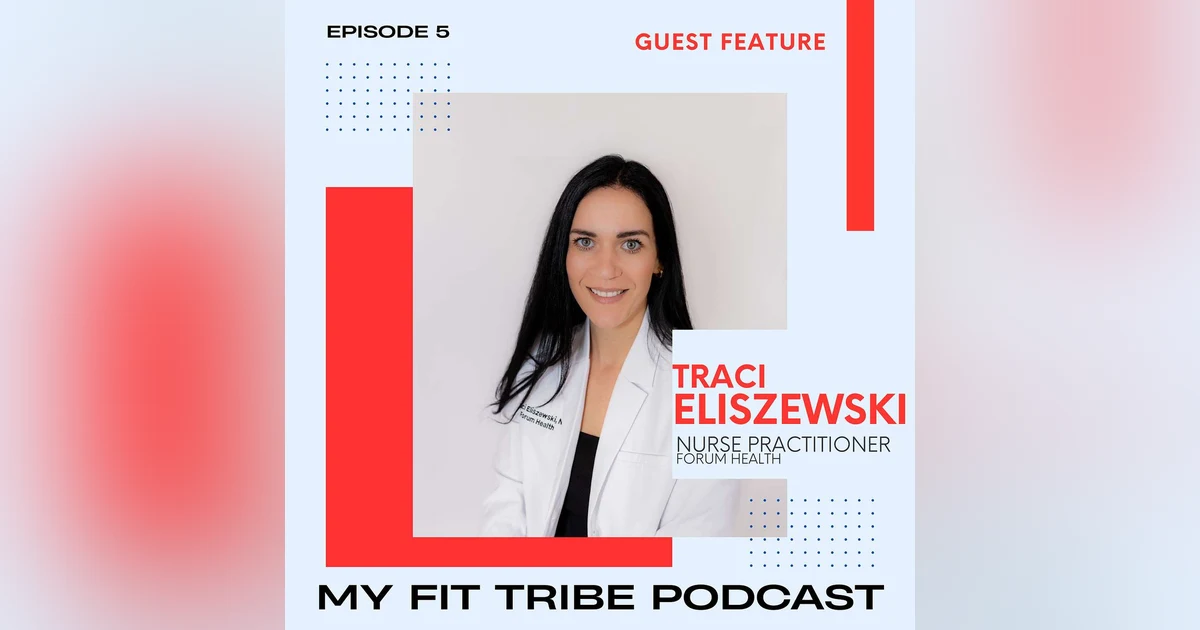


In this episode, we’re breaking the taboo around a topic that affects many but is often left unspoken: menopause. I’m excited to welcome Traci Eliszewski, a Nurse Practitioner at Forum Health, to shed light on what menopause really is, the symptoms we might experience, and how we can support our bodies during this transition. Reaching this stage is a time for empowerment and self advocacy in our health and wellness.
Throughout my own life and fitness journey, I have had the privilege of meeting incredible people who've shared valuable insights on mindset, health, fitness, and spiritual growth. The profound impact of this knowledge on my own life has inspired me to share it with all of you. I'm Erica Sweeney, host and founder of My Fit Tribe Podcast. Join me as we explore inspiring conversations with experts, thought leaders, and everyday heroes who offer their stories and practical tips to help you on your own journey. From nutrition and fitness to mental well-being and personal or spiritual growth, our mission is to empower you to take charge of your health and live your best life. We are more than just a podcast, we are a community. Through coaching, a wealth of shared knowledge, and a strong support network, we are here to guide and encourage you every step of the way. Come be a part of our tribe. Today, we're breaking the taboo around a topic that affects many but is often left unspoken: menopause. I am excited to welcome Tracy Elishewski, a nurse practitioner at Forum Health. She will shed light on what menopause really is, the symptoms we might experience, and how we can support our bodies during this transition. In our conversation, we'll explore ways to think beyond traditional Western medicine and discover how we can continue to thrive and enhance our quality of life after menopause. Remember, reaching this stage does not mean we have to stop moving forward. It's a time for empowerment and self-advocacy in our health and wellness. I hope you find this episode enlightening and inspiring. Let's dive in. Today we are joined by Tracy Elishewski. She is an anti-aging regenerative medicine nurse practitioner, currently running the team at Forum Health and Madison, providing health optimization through peptides, hormones, and functional medicine. Hi, Tracy. Hello. Thanks for having me here. Can you tell us a little bit about yourself?
SPEAKER_01Yeah, so I am actually board certified as an acute care nurse practitioner. I'm an adult gerontology acute care nurse practitioner. So I started my NP career actually in neurology at Northwestern. And then I followed it up with internal medicine as a hospitalist here in one of the local hospitals. And I loved my job, but I always kind of felt like there was something missing in terms of getting people healthy and staying healthy. Like, how do I keep them out of the hospital is really what the goal was. So alongside working as an internal medicine hospitalist, my husband, who's a chiropractor and was always kind of like more on the nutrition, hey, there's more to medicine than just prescriptions, right? Like, how do we get people healthier and stay healthy and fitness and all that kind of stuff at the same time? So we opened a functional medicine clinic in the Madison area and then ran that for about two and a half years. I was approached by Forum Health that my my physician, the physician that I worked with, she was looking to retire. And so I took over for her at Forum Health. And then Drew and I were running two different clinics and we were like, why are we running two clinics at the same time? We're doing the same things. So we joined officially about a year and a half ago. So we've been up and running since then.
SPEAKER_00And I my experience with Tracy or with Forum, I should say, goes back, oh, probably 15 years ago I went to see Dr. Stangers, who was there before. Um and if anybody knows what it's like to go into the clinic with symptoms, and a lot of people don't go into the clinic until they're beyond that frustrated point, right? They don't run right away. So you don't feel well, you don't feel well, you don't feel well, you go in and you go to the doctor, and they're like, well, your lab tests are fine. Sorry I don't want to tell you, or you're depressed, or try, you know, come back in six weeks if you still don't feel well. And so that's what got me going from your standard medical clinic into something a little bit different where you're, you know, checking your vitamin levels and deficiencies and all the things that you never check when you're going to your standard clinic. For sure.
SPEAKER_01For sure.
SPEAKER_00So when I went to Dr. Stanger back then, I've gone back a couple of times and then we met probably, oh my gosh, three, four, five years ago or whatever. Time flies. Um let's talk. Oh, today we're gonna talk a little bit about menopause. Yes. So many people, women my age, especially, you know, menopause is something that was never talked about when we were growing up. It was the M-word. Um you'd pretty much you'd dry up and go in a corner to die. I mean, that's kind of how I feel, right? Not that how I feel, but how I feel like it was created. Yes. Yeah, exactly. So I think it's really important that we talk about the symptoms that people have, because as you get older, anytime during your life, especially for women, you have symptoms and you don't really equate that necessarily to that hormonal imbalance. So let's talk a little about like standard from your experience what you see as the most common symptoms coming in for like a hormone imbalance due to menopause.
SPEAKER_01Yeah, absolutely. Most commonly, most common symptoms, and again, if you look at the textbook, um, and in my clinical experience, right, what you're mostly going to see in the textbook is vasomotor symptoms, what we describe as hot flashes or night sweats or um vaginal dryness, uh, dry eye, uh, low libido, hair falling out, um, poor sleep, insomnia, um, palpitations, heart racing, anxiety, depression. I mean, honestly, you name a lot of what many women experience their entire lives, whether it's the perimenopause stage or the menopause stage or even prior to perimenopause, the, you know, I always say like we do hormones so wrong because from the time we're 10 to 12 years old, right, that's when we should start balancing hormones. It's not, you know, and we can get into that too, but like it's not just put here's birth control to help your symptoms, right? Because those symptoms can start at a much younger age. And again, that's why I say the number one thing we do wrong is hormone management for women across all ages. Um, but those are like the main uh symptoms in menopause weight gain that, you know, you can do the same exact diet, you can work out harder, but you can't lose that five to 10 pounds or 20 pounds that have happened post-menopause. And that's because there's a lot of hormones involved there. So um, those are the most common um things that I see. I mean, joint pain, joint achiness, um, brain fog, memory issues, like you name it. Like it's all in every patient I talk to, right? Because I see a lot of women, I also see men, but every single one of those patients, right? I could sit there and I, and in my brain, I've looked at enough labs and I've I've talked to enough women to say, like, oh, I bet you her estrogial level looks like this, or her progesterone is like this. But um, so those are kind of the varied symptoms. But honestly, there are things that um vertigo and dizziness have been able to help patients out with, with just balancing their hormones. I mean, stuff that you wouldn't even think about sometimes. And those are 100% related to hormones I had a patient that actually had these new um allergic reactions. She was just like breaking out till everything highs. I've actually had a couple patients and balancing their hormones has helped that. So, like nothing's off the table, honestly, when it comes to menopausal symptoms or perimenopausal symptoms.
SPEAKER_00Aaron Powell So when you first describe the symptoms of menopause, including the brain fog, the weight gain, the all the things, I really think if you looked in a dictionary, you would see a picture of me. Yeah. Yes. Um but why do why are people so afraid to talk about outside of just like the medical community based on their education? Why are people so afraid to acknowledge that this is going on within our body, in your opinion?
SPEAKER_01Yeah. I mean, I think that we've we've tried to normalize for such a long time. And I honestly, I think this it still in the traditional medicine training, right, is still that hormones are bad, right? That it's still like post-menopausal, you don't need hormones, right? Your body's gonna naturally do what it wants to do. And I would agree with some of that, except for the fact that having hormones, if we're talking about vitality and longevity, right? There's hormones involved, in my opinion, right? I'm a huge advocate for the right type of hormone therapy. So we'll talk, we'll differentiate that because I think that's the biggest thing here. Um, but no one talks about it because I think the training is so it's terrible, right? Because it's it's still the thought process is still, you know, based on this one study we all hang our heads on in traditional medicine, which has been debunked a million times already. Um, but I think it starts there and it's it it's it's like no one wants to talk about it because there's no education. I mean, it's estimated, and there's actually a beautiful documentary that just is, I think it launched this week. It's called the M Factor. Um, and it's it's a beautiful documentary that it basically is laying the foundation of this. Why does no one talk about this? Because everyone's gonna experience this, right? Like, and and so there it's it's over a million. It's like 1.5 million women right now suffer with these symptoms. And they might go to their doctor, and what kills me, you know, symptoms, you know, the symptoms you're describing, a lot of women are given antidepressants because the off label to that is oh, it can help with hot flashes, right? But that's that's a whole nother category of of cortisol and stress that no one's uh you know talking about. Um, but it it's just I think it's the training and that filters down to say, like, oh, menopause is normal. And then you you start talking with other women, you're like, oh my gosh, I have that. And then you find one woman that maybe has found help from a provider in the alternative space, though, typically. And then that's kind of like where the the discussions kind of open up. But I really think it it's it's what was normal 50 years ago. You know, women went into menopause, but they also didn't live much past menopausal age. Now we're living 50 years beyond that, and that 50 years should be really, really important years for you doing the things that you want to do.
SPEAKER_00Right. You know what I mean? Can you talk a little bit about the different stages? You mentioned perimenopausal, and I know there are a lot of people that end up going into menopause earlier than they had anticipated, causing life changes as well. Talk about those stages, what triggers them, how do you know you're in them, that type of thing. Yes.
SPEAKER_01Um, so perimenopause is is just it's the time before menopause. Menopause is 12 months without a cycle is textbook. Um, I've been burned a few too many times to really think that that's like the end all be all sometimes, because I've had women go like 360 days and get their cycle back, and I'm like, sorry, like technically per this. Um, but but textbook is 12 months without a cycle. Now, perimenopause is the time up to that. So perimenopause can last one month to 10 years, right? It technically the the age you'll say about 45. I've definitely seen women that are younger than that are starting already to go through those perimenopause hormonal imbalances, and I think a lot of it's due to our environment and the endocrine disruptors and and all that kind of stuff. But um, so perimenopause, I always say, is kind of one of the hardest times in women's life because there's a lot of changes, right? You might have your menstrual cycle once every two weeks, then maybe go once every six months, and then maybe you go once every nine months, and then you go that full year, you're menopausal. You're menopausal for about a day, okay, and then you're postmenopausal. And this is where, you know, basically what happens when you're menopausal or postmenopausal is your body's not producing those hormones anymore. Why I say perimenopause is hard because it's a lot of up and down, up and down fluctuations. Am I going to get my cycle this week? Is it six months away? I don't really know. And so what I say just generally is you do not have to suffer. Like there's so many things that we can do in that regard. And every woman is so different. So it it's it is really not a one-size-fit-all approach. I mean, we we hear that in alternative medicine all the time. But like I sit down, I talk to a lot of women, and things that I would say based on their labs or you know, and again, labs are great, but like how are you feeling? That's really the biggest thing.
SPEAKER_00But it's different for everybody. It really is. And that's something that I think everybody needs to understand when they go in with symptoms or to to talk about menopause is that when you try something, it may not be work out the very first time or the third time or the fourth time with anything we were talking before the podcast where being healthy and feeling good is a lot harder than not. You know, I'd much rather be eating the McDonald's French fries, but we don't do that. Yes. Exactly. Let's talk a little bit about lab tests since we talked about that. Um to know what if you're in menopause, generally you do the labs and what are you checking and what are they telling you? Yeah.
SPEAKER_01Um just a general hormone panel that we do for all my patients is your estrogens. Now, when you talk about estrogens, there's there's three main types of estrogens. Um your estradyle, your progesterone, your testosterone, your DHEA. Um, those are the main hormones that I check right away. Um there's also a really important lab, it's called your follicular stimulating hormone or your FSH. And this is kind of like that, it's the I call it the menopause barometer. Okay. Um textbook will say, you know, over 24 or 25, technically, or based in the lab, it might change a little bit, but over 25, your FSH over 25, you're considered menopausal. Okay. Um I've been burned by that way too many times. So I always say, again, when you're gone 12 months without a cycle, um, or if you're in this perimenopause state, like that that FSH helps me as far as like if it's on the lower side, I'm like, you know, I just don't know. You've you haven't gone 12 months without a cycle, you might get a cycle back. Um, let's say your FSH comes back at like 90, and there's no other reason for that, meaning infection or or virus or mold or something like that, that we we look into those things too. Um, then I'm like, my suspicion for you getting a cycle back is pretty low. But also, how are you feeling? And what are your other hormone levels looking like? If if your hormone levels are low across the board and your FSH is high, you haven't had a cycle for a while, it's pretty consistent. Like you're likely menopausal. But again, throughout that whole time frame, perimenopause, postmenopause, you know, it's we can do many things to balance those hormones. You don't, you do not have to have all those symptoms and lower hormone levels as as you get older.
SPEAKER_00Right. So it's really just a chance to give a snapshot of where your body's at so that you know where to start as far as treatment goes. Absolutely.
SPEAKER_01And a lot of a lot of providers, traditional medicine doctors will say, like, I don't, I'm not gonna check labs because it really doesn't help. Like it, you know, those are gonna change, and absolutely they will change. But the timing of that draw is the most important. So if you're a cycling woman or menstrual, you know, you're having your your cycle, menstrual cycle, then during certain times of the month, that definitely matters, right? But if you're postmenopausal, I can grab a snapshot. I'm really looking at the ratios between some of these hormones too, and based on your symptoms, like how do we optimize it all within?
SPEAKER_00What do you do for someone who say is on has an IUD or birth control that doesn't give them a cycle? How do you handle that testing?
SPEAKER_01Yeah. I'll still look at the whole hormone panel. It really is at that point, it's based on symptoms and um what your levels are showing me. Now, with an IUD, and it depends on what type of IUD or birth control. Um so the FSH isn't super reliable. Uh, you know, your ratios are still there. So I definitely, again, based on your symptoms, like I'll still try to optimize things in that regard as well. And that's like a whole nother uh the type of hormone that's in there, or the type of hormone that's in the ID. So I still, I still there's still many things that we can do. One of the things that you f we find often elevated is something called a sex hormone binding globulin, which is a kind of a marker to tell me, is your liver kind of getting rid of things as it should? And that's often high when patients are on birth control or IUDs because it's it's a little bit clogged up, right? The liver's a little bit sluggish at that point. So those are the things that we're really keen looking for. But you can optimize. Um, I always say if you're on birth control or have an IUD for pregnancy prevention, if that's truly the reason, and there's no other means to do that, please by all means, if you don't want to have a baby, do that. But if you're on it for hormonal balance or helping the cycle and not having terrible heavy cycles, like there's there's a we're missing the boat there. Like there's so many other things that we should be doing, helping your body detox the estrogen, stimulate body's own progesterone. Like there's so many things that we can do in that regard.
SPEAKER_00So if we take a pause right now and think about someone coming in to visit in a regular standard medical clinic versus going to functional medicine. So, you know, we go in and like we mentioned, you see the doctor, and the labs that they do are completely different than what you do. And I know if if anybody is following like Gary Brecca or other um bio health people, um, there is so much progress made in the biotech side of things and the lab testing. Can you talk a little bit about we talked about like what levels you're testing for hormones, but what does opportunities does that whole world give us?
SPEAKER_01Yeah, so we do look at a lot of blood, so a lot of blood work. I mean, I'm a huge our clinic too, like huge proponents of cellular medicine. So that's every part of that. So most of my new patients go through that what we call our inflammation panel, which is just a beautiful panel of, you know, um physicians I've mentored with or conferences I go to, or certain people have certified, or you know, certain organizations have certified through all of that into knowing that inflammation is the root cause to pretty much every single disease state. So optimizing the cellular health with blood is kind of the gold standard for many years. Um there are providers out there that do hormones and they only believe in saliva testing or they only believe in urine testing. Um, and I think each has their own pros and cons. Honestly, you just have to really know um what you're looking for, what time of the month to do it. Um now we do a lot of other, you know, bringing up the Dutch test, which is the dried urine for testing comprehensive hormones, and that's a beautiful test. I always say, like, this is the test your OBGYN should be doing at least once a year, right? Because um, or every other year, you know, it's it's a very important test. It's it's technically three tests in one, it looks at your uh cortisol levels, your urinary cortisol levels. It also looks at your urinary metabolites of your hormone. So it's not apples to oranges of blood work versus the urinary test or the Dutch test. But what that does tell me is what pathways you're excreting your estrogens through, your testosterone, what preferences do you have? And I think that's really important because we know we I think we're gonna touch on this too, is like breast cancer, right? There's a lot of, there's three main hormone pathways that we detox our estrogens through. And if that Dutch test comes back and you have a high bad pathway or the red pathway, I we can do things about that to optimize the future. Like we can do things about promoting that good estrogen detoxification pathway and methylation. And so there's there's a lot of really cool testing out there. I would say we do a fair amount of the Dutch test, we do a lot of blood work, we do saliva testing for some patients that that's what they've done before. Um, but I think, you know, I understanding the the urine, the metabolites, and also the methylation part of, and this is we do check some of that on the blood work as well. Um, but just making sure that you're absorbing and detoxing and pushing those right pathways, I think is is is only continuing to grow. Um I mean it's it's amazing how far we've come to in a very short amount of time.
SPEAKER_00Yeah, absolutely. Right. Which makes me optimistic. One of the few things out there right now that does. Yes. So let's go right into there as far as hormone supplementation and the relationship it has to cancer. There is a, you know, the history of that and where it goes now and what people should be concerned of or know for sure.
SPEAKER_01I think in general, right? Um, this is a very sensitive subject, but also very important subject to understand too. So this is the way I say, so we do hormones so wrong from the time we're 12 to 14 years old. Okay, I'll bring it back to this, is that most of us are very estrogen dominant when we're 12 years old. We first get our cycle. And so estrogen dominance comes in the forms of heavy cycle, clotting, cramping, migraines, headaches, uh, bloating. You know, I always say, and I joke that there's going to be a meme about me someday, is you know, your cycle should creep up on you. You shouldn't have any of those symptoms, acne, all that kind of stuff is hormones that are offbalance, okay? Most of us are put on birth control to stop those symptoms, but in reality, we're not getting to the root cause of that. We're just kind of actually, most birth controls have synthetic hormones in them, synthetic progestins, which we know is really the root of all evil, is how I really feel about it. But birth controls basically stop our body's own hormones from working, right? And so if you think about the three main hormones, estradiol, the main uh estrogen hormone, I would say estradiol, progesterone, testosterone, right? Estradiol is like our feel-sexy hormone. It's our, it's it's what makes us us hormone. It helps with brain fog and energy and and joint achiness. Um, and then uh progesterone is our, it's nature's, we call it nature's volume, right? It's the most anti-anxiety hormone the body makes. It's also got a lot of anti-I would say anti-cancer properties to it. It's really good for brain health. I mean, it's it's a beautiful hormone, but birth controls stop that. So it's very common for me to see 18-year-old, 19-year-old woman on birth control and a, hey, also here's an SSRI for your anxiety because we just stopped your own progesterone from producing. And then here, this will help with your anxiety that you now have. So I always say we do it wrong from that time because what we should be asking is why is she producing so much estrogen? Is this genetically linked? Is she getting it from her environment? Is it the laundry detergent that's giving her the xenoestrogens? Like, where is she getting that from? And or probably more importantly, why is she not detoxing it out? Because we can easily, we do it all the time in our clinic, is push those estrogens down the right metabolism or the right metabolite pathways using things like DIM or certain simple supplements, right? That the same amount of DIM you would find in probably like six pounds of broccoli, right? Like these things are super easy to do and it helps ours detox our estrogens. So I'm gonna tap real quick for those who don't know what is DIM. Diet, so it's a it's a phytonutrient, I would say. It's a it's a supplement. Um, and it's it's the same as if you were gonna eat like six pounds of broccoli. Um that's what would that's what DIM. So DIM is really, really helpful for pushing those um those right estrogen metabolites. So if I see a Dutch test and that red pathway is super high in that patient, I know if that patient, if we didn't do that Dutch test and she didn't see me, her risk of breast cancer or DNA changes is pretty high, right? And to to help that, you can add things like DIM or sulforophane, right? Like broccoli seed extract, things like that. Super easy to do. But what I'm getting back to the cancer question is like this is where it starts, right? At 12 to 14 years old, if we started optimizing the hormones that young and didn't put them on synthetic things, right? We also know that when a provider hands you a prescription of birth control, I mean, this was me, right? I had I was 12 years old, I had terrible acne, had horrible cycles, I would stay home. And here's birth control, right? This will get rid of your symptoms. Those synthetic hormones are the ones that are linked to cancer, right? They are the ones that are linked to blood clotting issues, stroke risk, heart attack. Okay. It's so mind-boggling to me, and I'm a little bit on the soapbox right now, but like we give that out like candy, no one talks about the side effects of it. And then, hey, postmenopause or perimenopause hormones are bad, even though we just gave you synthetic hormones for 25 years that have known endocrine disruptors in them. Um, but the type of hormones, really honestly, when it comes down to it, it's the type of hormone. Okay. Synthetic hormones in my mind should never be prescribed. Okay. Those are the ones that'll increase the risk. Breast cancer. There has never been a study, and we can I mean there's there's loads of scientific research to support the difference in bioidential hormone replacement therapy and synthetic hormone replacements. Okay. The the progestins, the progesterone or the end the estrogens made from horse urine, right? Um those are the ones that the Women's Health Initiative study back in 2002 showed that there was a very small increased risk of breast cancer in the combination arm of synthetic estrogens and synthetic progesterones. What was interesting with that study though is that there was there were two main arms. There was the combination synthetic progesterone and estrogen, and then the synthetic estrogen arm alone. The combination arm is the one that showed that there was a very small increased risk of breast cancer, so it got pulled off overnight. Hormones were like the worst, most terrible thing ever, even though the years before that and the estrogen-only arm showed that there was a lot of benefit, actually. There was cardiovascular benefit to it. There was decreased risk of Alzheimer's dementia benefit to it, decreased risk of osteoporosis. I mean, before this study, estrogen, and these were synthetic estrogens given orally, synthetic estrogens actually had so much benefit that cardiovascular risk decreased. I mean, breast cancer decreased. There was a lot of benefit. It was that combination arm of the women's health initiative study. And actually, when they reanalyzed the women's health initiative study back in 2002, the years after that, they actually said, actually, that was a very faulty analysis. We should have never came out with that. However, I would still say there's no need for synthetic anything, right? Um, I come from the side of, yeah, alternative therapies, bioidentical therapy just means I'm giving you back the same exact chemical composition of those hormones that your body's already had. Most of them are plant-based. So I would agree, I would never give synthetic progesterone to anybody because I would agree this might increase your risk of breast cancer. But those are the same things that are in birth control for years. So it's just, it's just a really flawed, you know, I'm on the soapbox to like change this movement for women, but it's it's a completely different. There's never been, and I would say the route of which you administer the hormones to are very important too. So, you know, I never give anything orally. Everything's always transdermal. Um, gels, vaginal estrogen, uh, patches, um, we do pellet therapy, you know, there's other ways to do that. Um, and and the only reason why is when you take estrogen orally specifically, right? It does have to be metabolized by the liver and you increase your clotting factors. So same thing that happens with birth control, right? You can use there's a first pass metabolism. But when you're doing vaginal, transdermal, I mean, there's never been a study to show that you increase the risk of any of the bad things. There's really only good benefits to it.
SPEAKER_00That's so much information to take in. Um, that's such a very good point. How we are on this birth control for decades. And then when you hit menopause, you're like, oh, no, no hormones needed. Bye. Yes. That's just crazy to me. With the synthetics. Right. It's, it's, it's, it's wild, honestly. So let's let's hop over to testosterone a little bit. Since that's something everyone thinks that all the bodybuilders and only men can have. Let's talk about the need for a woman to have testosterone in their system, how you check it, and what options are for that. Yes.
SPEAKER_01I would say uh unless I have somebody that comes in my office and they're having like hot flashes, and like I have some women that come in with fans in my office, and I'm like, oh my gosh, we gotta do something about this. Um outside of that, I mean, I do I love to balance all hormones, but testosterone is definitely my favorite for a lot of reasons because I feel like it's the one when we find your sweet spot, um, you feel such a difference, right? And so we we say testoster, we all think testosterone is a male hormone, right? It's just as just as important for women. I would say maybe even more important, honestly, when you're talking about a hormone that has the motivational component to it, the lean muscle mass component to it, the sleep, the the achiness, the joint pain. Um, testosterone is a very natural anti-inflammatory hormone. Um, I actually have a woman that um she was actually on chronic opioids because she had sciatica pain so bad. Um, and we did, we, we optimized her testosterone level and her sciatica went away. She got off her opioids. Like that's and it's incredible, right? It's awesome. But sleep, I mean, muscle, libido, energy, right? When you find that sweet spot for that, that really is what we're going for. And it's usually the one when that happens for women, they're like, oh my gosh, this is this is life-changing. Every part of my life has improved. Um, so there's lots of ways. So generally we we do everything blood work, we always we check labs, we see where you are. Testosterone, too, is um, I always say like there's there's not a lot of like, there's not a lot of research, right? For women in testosterone and understanding that we actually have more testosterone in the body specifically than estrogen, the res the actual um conversion of testosterone. So like it's the the actual um units of it. Um so I think it's a really important hormone, of course, sleep, I said energy, libido, muscle mass, all that kind of stuff. What will lower testosterone in both men and women is high stress, poor sleep, poor diet, not working out, um, insulin resistance, blood sugar issues. Um, it is generally one of the more the probably one of the first hormones that goes for women in perimenopause. Um, and so you can check that blood work, you can check it on urine, saliva. Again, there's lots of ways to test it. We just generally do blood work and then you can replace it. Um we replace it a few ways. I mean, the most common are creams or pellet therapy. And so they they all kind of have their pros and cons, honestly, when we're coming to replacement. Um, with the creams, it's more about you have to apply it daily so that you don't get a lot of the like ups and downs, ups and downs. You want to get that like steady state, but you do have to apply it daily. Um that's probably the biggest inconvenience for a woman is just like I have to apply this daily, or probably not gonna get my levels to rise. Um and then we do pellet therapy. Pellet therapy is literally where it's we're we're inserting, I always kind of describe it as like a tic-tac size of a testosterone, and we insert it into like a fatty area. So most commonly we do it kind of in the upper butt cheek area. Um, you can do it in the flank, there's other ways to do it. But with a pellet, I would say there's way less downstream side effects to it, and you get more of a steady state over a longer month period. So for women generally, and it and it's also based on your cardiac output. So if you're super, you know, in the gym a lot, like you're like very fit, right? You might go through that pellet if you're gonna do it maybe faster than somebody who say is more sedentary. So generally, I would say pellets can last anywhere from three to six months for women, and then our guys usually go from four to I've had guys go seven months without their testosterone dropping.
SPEAKER_00So I have heard, and I I don't, I didn't fact-check this, but that the insurance companies around here, or many insurance companies in the standard medicine will never cover testosterone for women and will only cover for a man if their testosterone was like completely not there. Like I I know someone who needs testosterone, their their labs came back low, but the doctor said, Oh, you're not low enough, we can't help you. So then they have to go find that source elsewhere, which may not be the safest source, or so why?
SPEAKER_01Yes, yes. Um, I always say there's like 5,000 studies for men, probably more than that on men, right, in testosterone. And with women, there's like very little. Um so I I think that's only going to change the more data that we have, honestly. Now, when you're replacing things too, I think this is where thing I think this is where testosterone replacement therapy gets a bad rep from some sometimes, is that you're you have other providers that are not measuring labs that are not, you know, their their dosing is not therapeutic or physiological numbers, right? And I think that's a big thing because you you can at higher levels, right, if things are too high, you you can have you can have issues with that too. Um so I think that's why it gets a better rep. But it is like in standard of care, unless your testosterone level is less than uh 200 or whatever it is, like men that have a testosterone level of 200 are are feeling not good. I can tell you that, right? Like they're very low energy, they have fatigue all the time. They have, you know, from our standpoint, my first question is always like, well, why do you have that? Why is that happening? Do you have I mean, we rule out things, we draw prolactin levels, make sure there's nothing, you know, tumor-wise or something, like the reason for that. Um, but it is traditional medicine is like standard of care, unless it's less than this. You know, I don't care if it's 205. It has to be less than this, and then you meet criteria. Um it's just a different way of of thinking, unfortunately. Um, but it is, I mean, if you think about one hormone and there, like I said, this is this goes back a long time. Pelletherapy actually goes back a long time. They were using this for a you know a long time ago. Um, I think adequate levels, monitoring labs, making sure that you're not having symptoms or signs of too much, making sure you're not, you know, all the other things that we look for with testosterone. I think when you do it well, patients feel so much better, honestly.
SPEAKER_00So before we get into other ways to treat menopausal symptoms, is there anything else you want to talk about regarding um, you know, hormones and hormone replacement therapy?
SPEAKER_01I think I just think generally it there's such a misconception. And I mean, even my NP friends or provider friends, right? Like it's just there's a misconception in the type of hormone. And so that's the biggest thing that I want patients to understand is like bioidentic replacement therapy is in a whole different category than synthetic anything. So I still, I mean, the the studies are insane when you actually look at the research of just let's just talk about estrogen replacement therapy. Okay, just estrogen, which is what the women's health initiatives talked about, lowered the the risk of about five to six different types of cancers. They did studies that, I mean, breast cancer, unfortunately, is a very prevalent cancer. It's estimated like one in one in five, it might be even be more than that now, risk of breast cancer for women, right? And there's a lot of other components to that. But I think the one thing that we can control through our entire life is balancing that estrogen. Um, we want to vilify estrogen. Estrogen is not a vilif, we should not vilify estrogen. It's a beautiful hormone. Um we just want it in right levels and the right type, the right route, uh, in the right, the right kind, the bioidentical. Um, but it really is such a difference. Still traditional medicine training is hormones are bad, doesn't matter what type it is. I I think a lot of it, what it is is that providers don't understand the difference. Right. I didn't understand the difference. I I maybe got 10 minutes of of hormone therapy in my NP school. Right. Most it I mean, it's the N the M factor, the documentary talks about this too, is like less than 15% of providers, right, including our OBGYNs, have menopausal training in school, right? To understand. And I have a few patients that are that are OBGYNs actually. And that's the conversation that we have is like no one on no one talks about this, right? No one understands until you go through it, right? My my OB patients are are going through it. That's why they're my patients. But it's not until then, right, that it it actually becomes an issue.
SPEAKER_00Aaron Powell But then when you go through it, it's a don't talk about it, oh, it is how it is, and you go to your doctor, which most people, that's their only form of health care. Yes. And they're like, that's just your menopause, and this is your new life. Yes. And that is an antidepressant because you're depressed now. It's just and we'll have to have another whole session. Yes.
SPEAKER_01Or trazodone because you can't sleep, or you're having palpitations, like all those things can absolutely be the imbalance of hormones. And it is.
SPEAKER_00All the side effects that those drugs give you too on a person. So what if someone is um you know, if we stay, you know, go past the hormone therapy, what things as far as nutrition, exercise, you know, that natural other things behavior-wise that we can do to help alleviate our symptoms of menopause? Absolutely.
SPEAKER_01Um first thing is I think probably I would say the biggest roadblocks to over overall health uh is um poor sleep and chronic stress. Okay. The more I I think sleep is something that I really like to like, I want you to sleep. Um so trying to figure out why they're not sleeping, is it a stress issue, is it a cortisol issue? Because that sleep is going to help balance your hormones. Um so sleep, food, right? Food is food is medicine, right? So whole food, um, less processed things, just whole food. The more you can eat organic, grass-fed, all that kind of stuff. I think less sugar, less sugar. Um, you know, those those are big things, um, hydration, step count. I talk a lot about step count, like just movement, right? Working out if you can get in the the gym and lift weights, absolutely. But some patients, like, you know, they they either like can't get back on the workout train or they're so stressed out from everything else in life. I'm like, just stop, just count steps. Just, just every single day, meet your step count. Right. 5,000 a day, go up to 15, you know, eventually. It's just those are the biggest things. Um, food, sleep, working out, those are huge stress support, right? Just figuring out like how to be able on a daily basis to take that like that breath of fresh air, um, whether that's a walk, whether that's meditation, whether that's, you know, talking with a friend or whatever it may be, I think that's such a huge, again, roadblock to overall health, stress and sleep. Um, there are supplements that can be helpful. Um, maca root can be helpful. Um, I just generally like to look at your blood work in general, knowing that all your hormones are related. So the more that we optimize the cortisol and stress, your blood sugar, your thyroid, your sex hormones, it's all coming together as a picture of how do I feel the best.
SPEAKER_00And it's talking about the sleep component, when you are suffering from the anxiety that is caused by the menopause and then you can't sleep, and then it exacerbates. I mean, it it can be just a snowball effect of really disrupting your life and unable to function optimally when you are dealing with all those issues, which are from this stupid thing called menopause. Yes. Yes, absolutely. It really frustrates me. Yes. Um, we also talked a little bit again before we started the podcast about how anytime you how you have to follow through. And so when you go in for an appointment and you get labs checked, and then they're like, okay, you gotta start these supplements, it doesn't mean you take it for five days and go, I don't feel good. I'm not gonna go back, and then I'll go back a year later and go, I still don't feel good, which I'm guilty of. I've done that in the past as well. Yeah. But let's just talk about the follow-through and the need to really not only follow through on what's given, but be open that you're not gonna figure out the answers the first time or the second time, or you know, how what's a what do you recommend facing that challenge?
SPEAKER_01Yeah, I mean, I think you're so right. I think I think in the supplement world, I always tell my patients, I don't want you on 20 things because I think that's really hard to do. Right. So food is gonna be the foundation, of course. Um, but in terms of that, like, you know, when we're starting whatever it whatever it is, right? Sometimes all I I tell my patients, like just looking at your lab, sometimes all I do is optimize a vitamin D and B12 level, and that's the easiest thing I've ever done. And my patients are like, oh my gosh, you just fixed my world. And I'm like, well, that was really, really easy. Um, but other times it is that the cortisol, the stress response, um, you know, just just really trying to make sure that we're staying. Um, you know, a lot of times I'll just, I'll say, like, listen, I want a touch base in three, four months. I want to make sure that we're still getting you to your goals. Um, but with hormone therapy, with biogenical hormone replacement therapy, too, if we decide to do that, sometimes it is that first time it's like a home run. And then sometimes it's not, it's hormones are constantly changing, right? So I like to look at labs every six months in patients because they do change so much. They're gonna change on stress, they're gonna change on diet, they're gonna change on sleep habits. Um so doing things well and and making sure that ratios are beautiful, but it might not be the first time that we get it. We're gonna get you closer there, but it might be the second time, or might be the third time with pellets. Um, sometimes it's the sometimes it's the first pellet and and they're like, oh my gosh, this is amazing. And uh I remember the physician teach me, he was like, you know, sometimes it's the second pellet that they're like, oh my gosh, this is amazing, right? It's just it's just finding out those right balances, those right sweet spots. Everybody is so different.
SPEAKER_00So that sweet spot changes for every single woman I see. Right. And sometimes it's not always that all of a sudden you feel amazing. It's when those symptoms start to come back, you realize that you how badly feel when you're not on it.
SPEAKER_01That's really awakening as far as I had this conversation with a patient yesterday, is she said, um, I don't really know if I I feel different. And I was like, Okay, like um, well, how is sleep? And she's like, Yeah, I guess I guess that's better. And I was like, How is how's libido? She's like, uh, yeah, I guess that's better too. And I was like, and how what's the scale? She's like, Yeah, I guess I have dropped a couple pounds. So it's it's sometimes it's those really subtle things. Unless I get a woman in there with with the fan holding the hot lash, I'm like, You're gonna feel better two days in two days. Give me two days, you're gonna feel so much better. But a lot of times it is those, those little subtle things. And um, I have a family friend that she's like, I don't really I've been doing this for a little bit, I don't really know if it's doing much. And I'm like, okay. And then she she forgot her meds, she forgot her stuff when they went on vacation, and she called me afterwards. She's like, Yeah, I remember how I said I really wasn't feeling different. She's like, I forgot them, and uh I remembered how I was feeling.
SPEAKER_00Right, exactly. You don't realize how good you feel until you feel like you did before you started. 100%. And that is really um a good motivator to follow through and keep doing the things you gotta do. And again, with anything in life, it's always learning. I mean, it's for spiritually use mind, body, spirit. You have to keep keep working and trying to figure it out. 100%. Um, what what else would you recommend to us women who are in that stage of either paramenopause or menopause? Yeah.
SPEAKER_01I mean, I would say find somebody, right, to to listen to you, number one. But number two, like it is sometimes that the it's it's work, right? It is, it is not, like I said, it's not sometimes the first time we get it right. It's it's kind of like we have to continue to work with you, work with your body as it changes too. But, you know, really when you find, when you find your sweet spot and you're doing, you know, you get in that rhythm of all the other things, all the other, the working out, the sleeping, the the cortisol, the stress, and then having that balanced hormones. I mean, I think so. My biggest thing is just find somebody well versed in hormones, right? And understand and who understands the difference. Um, you know, not that all traditional medicine are like closed off. I would say more recently than not, I've seen more people kind of open their mind a little bit more. And a lot of it's based on studies, right? If you actually look at the research, we're supposed to be evidence-based medicine. Like that's what we're we we hang our hat on in traditional medicine training. And we're usually about 30 years behind the time in medicine based on the research. And that's truly how I feel about that. So just you know, doing those little things, you know, doing the step count, those little, those little daily wins, right? You you s you set those things up, you're winning the day just by doing those things. And then balancing the hormones on top of that, I think is a huge, huge win.
SPEAKER_00Right. And again, I'm gonna reiterate the being active is you don't have to necessarily go to the gym and and lift weights for an hour, but just just going for walks, it's soaking up nature, eating again, eating the whole foods, not the processed foods, not the high sugars. Um, and then really that mindset is such a huge component for that stress alleviation. And that one, I think is again something that you have to constantly work on finding the answers. But as long as you keep learning and trying, I think that's moving forward. Absolutely. So a lot of people have insurance that they have to go to their standard medical care for because of their insurance. Can you talk a little bit about about forum and insurance and you know what treatment options are?
SPEAKER_01Yes. Um, so we do not take insurance per se. Now there is we we don't take insurance for consults. Um, and that's just truly because insurance companies don't like wellness care at the end of the day. Amen. Um but there are ways to use to use it. So we have patients that submit their so like when I go to my dentist, same thing, right? They don't take insurance, but and I go to an integrative dentist, so um, but they don't take insurance, but I submit my stuff, my my claims on the back end, right? So like if you do labs at our clinic, we do cash-based labs, which usually, I mean, that's a whole nother concept. Um, but you know, you can you can submit things on the back end to see it, it really comes down to your insurance what they'll cover, right? Um so you can absolutely do that. When it comes to hormone therapy or or bioogenical hormone replacement therapy, um, you can get insurance to cover some of it, right? Like I I prescribe estradiol patches all the time through your regular insurance, progesterone can come through your regular insurance, still bioogenical forms. Um, otherwise, we use a lot of compounding pharmacies. Um there's there's definitely ways to do it. Um, you know, so the biggest thing is just that the the consults are not covered, but you can the rest of the things that we do. I mean, usually you can get some sort of coverage for it based on your insurance.
SPEAKER_00That's really good to know. I would assume the maybe the savings plan might help.
SPEAKER_01Yes, HSAs. Um, and then my girls, like if that's something that interests for my patients, we just we print out what we call a super bill, you mail to your insurance, and then they they usually, if they're gonna mail you something, they'll mail you a check if they're gonna cover it.
SPEAKER_00Great. So before I get to my last couple questions, how do people find you, whether it be on social media or at forum health?
SPEAKER_01Yeah, so um our clinic is in uh Minnona, Wisconsin. We just moved to this location uh earlier this year. Um so it's Forum Health Madison. Um we have a website, um forumhealthmedicine.com. They're gonna be really mad. I'm gonna ban if that's right. We'll put the link in the show notes. Um and then I do a lot of of Instagram, just try to you know continue whether it's a patient I talk to and I'm like, oh man, this would be great for other people to understand. So my Instagram handle is the.longevity.np. Um, and that's just kind of where I try to share more more information or funny reels or whatever it may be or or things that I'm doing on there as well.
SPEAKER_00Yeah, you have great content. I and again, I just think it's important for people to open up their eyes that again, not that necessarily traditional medicine is a bad thing, but they're if you're not getting the answers you want there, there are other places to look. And you have been such a great resource, and I'm so grateful for you. Um so but my last question I'd love to ask my guests is if you could look at yourself back when you started at the very beginning of your nurse practitioner career, what would you tell yourself? Oh my gosh.
SPEAKER_01It's such a great question. Um I would say I'm exactly where I need to be right now. Um so if I could look back, I would say, you know, all those experiences. So as an acute care nurse practitioner, I was uh heavily in the ICU settings, right? Like I that was kind of like always kind of like my mantra. I've always had to be the best at whatever I do, right? That's just the competitor. No way. Um and so, you know, I started there. Um, and I think what I would tell new, and this is what I do tell nurse practitioner new nurse practitioners, is like, and even physician colleagues of mine, we have great open-minded conversations, is just just be more open-minded that like what is taught. Um, and I say this in the best way possible, but like you have to be able to do your own research and not just be driven by, you know, whatever the guidelines are telling you and and just be more open-minded, I would say. Um, because it definitely, I mean, I always I kind of started there because I had my husband kind of pushing me in this direction, but like initially I was like, nope, this is this is everything, this is how it is. And then you just kind of see like a lot of it's not not followed by research, right? Again, we're 30 years behind the time. So um I would say that would be one of the things is just go in more open-minded initially. Um but I would say I would I'd be pretty proud of like where she was or where I am now looking back. Um I don't think I would change my directory of my career.
SPEAKER_00So now let's pretend that you're talking to Tracy of the future, maybe 10 years, 20 years, whatever you choose. What would you ask your future self right now, and what would your future self tell you? That's my favorite question. Yeah, right.
SPEAKER_01I don't know. I think I would continue. I mean, just I would one of the things I said when I was 18 years old, and this is like a complete different um, is I told uh I think it was a professor of mine, I said, I'm gonna help cure cancer. And so um learn a lot of what I know now is is different in that perspective. But if I can, yeah, sure, that would be a goal of mine, right? To help to help do this for sure. But if I can help women along the way decrease the risk of that happening, um, that's where I would say, like, have I done enough? Like have I helped change the directory of not only women's health, men's health, but just cellular health in general. Like, have I done what I wanted to do or set out to do? And could I have done more? Um, or have I changed the the way that because I always say I'm on a soapbox to change the world, right? Um, so that's that's kind of you know, that's I think what I would ask myself. And what would your future self tell you?
SPEAKER_00I'm on the I'm on the path, I think. You're like the emotional. Yeah. Yeah. But if you take a moment and sit with that, I think if you know, for someone who is so driven, you know, you're you're you love to to do all the things, but you're doing it all for the right reason, and that's what makes a difference. And you're not looking just to treat people who come in with symptoms, you're looking to find the reason, the source, and giving them a better quality of life. So I think sometimes people that are really busy forget to take a moment just to sit with the fact that you are impacting people. Yeah. And so I think your future self would say you're doing a damn good job. But I'm very appreciative for you and thank you for all that you do and continue to do. Uh, we will put all of your information in the show notes so people know where to find you. And then we're gonna have Tracy back again soon to talk about another topic. Yeah, awesome. Thank you so much for having me. It's been fun. Thank you. Thanks for listening to My Fit Tribe Podcast. Tune in weekly for our latest episode for more health and wellness insights and inspiration. For more information, visit myfitribe.org. Please note that the opinions and comments presented here are those of the guests and do not necessarily constitute medical advice or the opinions of MyFit Tribe. Copyright 2024, all rights reserved. This podcast is a production of MyFitTribe LLC.