Tim O'Brien The Healthy Place
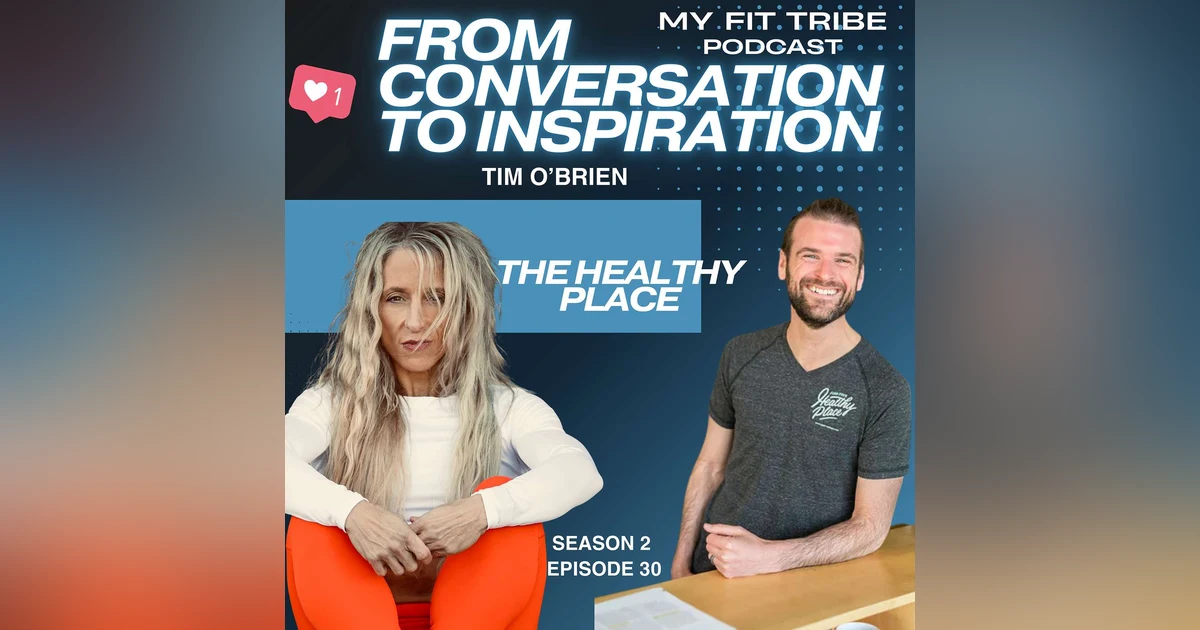


Today on The My Fit Tribe Podcast, I’m joined by Tim O'Brien from The Healthy Place and the newly launched The Healthy Place Clinic.
We covered a lot of ground in this conversation, coming back again and again to the fundamentals: movement, nutrition, and high-quality healthcare that focuses on identifying and addressing the root cause of issues — not just managing symptoms.
I honestly could have talked with Tim for hours, so we’ll definitely be having him back. This conversation absolutely lit me up because we share such a deep passion for helping people improve their health and overall quality of life.
Let’s dive in.
https://thehealthyplaceclinic.com/
https://findyourhealthyplace.com/
13:53 - [Ad] Just Be True ~ A Soul-Led Podcast
14:39 - (Cont.) Tim O'Brien The Healthy Place
Throughout my own life and fitness journey, I have had the privilege of meeting incredible people who've shared valuable insights on mindset, health, fitness, and spiritual growth. The profound impact of this knowledge on my own life has inspired me to share it with all of you. I'm Erica Sweeney, host and founder of My Fit Tribe Podcast. Join me as we explore inspiring conversations with experts, thought leaders, and everyday heroes who offer their stories and practical tips to help you on your own journey. From nutrition and fitness to mental well-being and personal or spiritual growth, our mission is to empower you to take charge of your health and live your best life. We are more than just a podcast, we are a community. Through coaching, a wealth of shared knowledge, and a strong support network, we are here to guide and encourage you every step of the way. Come be a part of our tribe. Today on the My Fit Tribe Podcast, I'm joined by Tim O'Brien from The Healthy Place and the newly launched The Healthy Place Clinic. We covered a lot of ground in this conversation, coming back again and again to the fundamentals: movement, nutrition, and high-quality health care that focuses on identifying and addressing the root cause of issues, not just managing symptoms. I honestly could have talked with Tim for hours, so we will definitely be having him back. This conversation absolutely lit me up because we share such a deep passion for helping people improve their health and overall quality of life. Let's dive in. Today I am so excited for this conversation. This guest has been on my must-have list since the very beginning of the show. I'm joined by Tim O'Brien, a local favorite and the founder of The Healthy Place. He started the company back in 2010, and what began as a single health and supplement store has grown into multiple locations serving the Madison area. Now, Tim is expanding that impact even further with the Healthy Place Clinic, offering holistic and integrative care to support people on a deeper level with their health journeys. Hi Tim, thanks for joining me today. Like I said, I'm so excited for this conversation, and there's so much I want to get to. So before we, you know, talk about your new clinic and even your supplement store, I want to know how you even got into supplements to begin with.
SPEAKER_01Yeah, I mean, it started when I was just a little guy. So I was maybe six or seven years old, and my mom developed cancer. And I remember just the fear there and hearing about big words at the time, like chemotherapy and radiation, and you know, my mom going through that fear of her very life and her health. And someone in her life recommended this supplement store in a little town called Mosquego, Wisconsin. And it was a health food store. There was an older gentleman named John who took her by the hand and sort of educated her around supplements that might be able to help in some of her areas of like brain fog or fatigue or sleep issues. And in her words, it impacted her life. And in some ways, she would say it maybe even saved her life, and it created this uh experience where she's like, man, I want to bring this to others. And so she became the manager of that health food store. And us five kids were homeschooled, so we would often come to work with mom and sit in the back room, you know, working on math or different subjects. And I just remember observing like these customers come in and say, you know, hey, thank you, Tanya, you know, and and you know, what you recommended a couple months ago really helped uh my chronic pain, you know, took the edge off. Thank you so much. And I just grew up learning about natural alternatives as sort of like what to go to first, maybe before pharmaceutical drugs or surgeries, like maybe just become a little more educated on what the natural alternatives are before we try some of the medical side. And so that was sort of my upbringing.
SPEAKER_00Wow. And that makes so much sense. And I'm grateful for things like podcasts and you talking on the radio to make people aware that there are options other than just pharmaceuticals. So regarding the supplements, I feel like sometimes even when I walk into a supplement store, it's like, whoa, there's a lot on the shelf.
SPEAKER_01Yeah, thousands of products. Yeah,
SPEAKER_00and
SPEAKER_01hundreds of brands.
SPEAKER_00A lot of times when people have symptoms, they don't just have one symptom and they don't even maybe know what their symptom is. They just don't feel well. So if we talked, if our listeners are listening and they're like, well, where do I even start? Like, what is what do you recommend for someone if they're just walking in your store going, Okay, I my doctor told me nothing's wrong with me, but I still don't feel well. What do I do?
SPEAKER_01Oh, goodness. I mean, that's a loaded question because there's three like circles, I would say. Circle number one is people really aren't not taking care of their basic health. So things like hydration, you know, we were just kind of talking about, and I ran and got my water bottle from the car. And, you know, drink water like it's your job. Uh when you're thirsty, you're already dehydrated. So what is it like to be hydrated on a regular basis? And then what does it look like to eat a cleaner diet? Like people know what ultra-processed foods are without becoming very educated, you know, like steer clear of as many ultra-processed foods as you can. You know, that's number two is like your diet, your basic activity, like getting eight to ten thousand steps a day, like just get one of those counters and and then sleep health, like especially those hours between 10 and 2, you know. Uh don't burn yourself out. Like when you don't get a good night's sleep, like you actually can't make that up. Like the science points to you just can't make that up. So get sleep, you know, and then at social connection, like the science is pointing towards like a couple social connections per week. So those are like the top five that people just neglect, and those are things you can do for free right now. And then in the world of supplements, there's like foundational supplements that near everyone can benefit from. And at the healthy place or findyourhealthy place dot com, you know, we'll recommend foundational five, we call it, which are just like foundational supplements that are good for you know, pretty much everyone. And that's like a good quality multivitamin because we're all deficient in one way or another. An omega-3 fish oil, because it's the second most studied nutrient in the world, and heart health, uh, brain health, uh omega-3s from fish are are are powerful for the body. Probiotics, because your good and bad bacteria are always in a race and decides the state of like your immune system, for example. 80% of your immune system is right in your gut. Anti-inflammatory, because inflammation leads to you know all forms of degenerative disease and chronic pain, and then antioxidants uh because free radical damage, oxidative stress. So it's kind of like circle one is just like the things you can do for free. Uh circle two is more in the world of supplements, and then circle three is really where this uh the Healthy Place Clinic was born, which is like get to the root of your problems. Like it's called foundational care, and it doesn't replace primary care or acute care or specialty care. Like in Madison, we have some of the best in the world here. This is foundational care. So it's root cause diagnostics with a team that practices collaborative medicine and integrative medicine. And so we'll encourage people pretty often, even in our supplement store, like, well, maybe go over to the clinic, get some lab work done. You know, I I like to say like genetic testing is your past, lab testing is your present, and things like VO2 Max are your future. So get get like some clarity on where you're actually at so that you can treat it rightly with the right supplements, with the right nutrition, with the right lifestyle, and then match that with what you're passionate about. Like where are you wanting to go in your health? Like what are your areas of health that you really want to get after?
SPEAKER_00Yeah. So
SPEAKER_01that's that's a mouthful. And it depends, you know, uh where someone's at. Uh we'll try to ask them some questions and uh fan the flame of their health best we can. And foundational care is really a vital component that people really don't understand.
SPEAKER_00That's so important. Okay, so much I want to delve into. Let's start with that circle one where you talk about all those basics that are for free that with in today's society we've seem to have lost. We need to go back to the basics again of movement and the food. I just want to touch base on the food because I just got done listening to a part of a podcast that we talked about the the food pyramid. We've now flipped that upside down. So cool, man. I was like, one of the
SPEAKER_01best days of my life. I was like, because I never thought it could happen. You know, I'm like, oh my gosh, that's so cool.
SPEAKER_00And putting Fruit Loops as a vital
SPEAKER_01food is not
SPEAKER_00appropriate, right?
SPEAKER_01It's not hidden.
SPEAKER_00Yeah. So so how important is it, you know, let me let me back up a little bit. One of the things that they talked about in this podcast that I listened to is that we need to get back to cooking, right? So that we're eating whole foods and can get those nutrients from the whole foods and also have that feeling of community when we're eating dinner together. So that's a that's a win-win when we're doing that. But I feel like people are so busy that convenience outweighs that step. So talking about you know, food and the food pyramid and nutrition and all that, so how do we even begin to give people some encouragement to make those changes?
SPEAKER_01Yeah. I mean, one thing I like to say is like I don't think there's like the perfect diet for everyone.
SPEAKER_00Right.
SPEAKER_01And I think for years I would chase like which diet is perfect because I have a voice here in Madison at least, for my customers at least, and they sort of look to me for some sort of guidance and like, okay, what diet should I recommend? You know, you just hear of all these different diets and feels like there's a new one every week, and they all have pros and cons, it seems, and some people do great and some people don't. So, first off, just like releasing that expectation of like there's not a perfect diet, and there are things that are good for like everyone. And so we know for certain, for example, that ultra-processed foods, UPFs, I have to visualize that one, are like poison for the human body. And that was like discovered in the early 1990s, I think. Uh this is not only poisoned ultra-processed foods, uh, but it's highly addictive, and it is not good for your body. So I think in general, if we can understand what ultra-processed foods are, and there's a range of degree from like a smoothie, like technically that's a you know, food processor literally processes foods. So, like, okay, what's an ultra-processed food and synthetics, artificials, dyes, uh mass amounts of sugar, you know, you you brought up fruit loops or you know, lucky charms, and I grew up on these things, and and then you you just begin to learn uh what that does in the the body, like through glucose, for example, is something I'm quite passionate around educating. When you have a fasted glucose level past 85, like every point past 85, the science is saying that you have a 6% increased all mortality rate. Uh every point you're past that. So it's just like when I learn that, I'm like, okay, goodness, I need to become more educated on my own body. And, you know, I got one of those glucose monitors, um, become educated for my own body so I can help others. And then glucose spikes, if you're having a spike more than like 30 or 40 on a regular basis, and many will have three or four per day for decades, like these two things, fasted glucose levels and too high of spikes on a regular basis, open two floodgates. Floodgate one is inflammation, floodgate two is browning. And inflammation, most people have heard of, and inflammation is the root of all chronic pain for the most part. It's the root of all degenerative disease, or at least a big part of it. Cancer, you have inflammation was sort of the fuel or the fire behind that. You know, I call them the four horsemen, there's more what it's been called. Cardiovascular disease, cancer, dementia, and uh diabetes are the four horsemen. And they're fueled by inflammation. They're created through inflammation. And that's that's in the science of epigenetics. You know, genetics we can't control as much, but most of disease is created through epigenetics, which is that which you can control. At least that's what more and more of the emerging science is saying, uh, that which you can control through diet and activity. And so then this second floodgate is called browning, which is the fastest way to age, by the way. And you know, you take a bite out of an apple, it turns brown. That's browning, and that's called oxidative stress, and that's happening internally, externally. So that second floodgate, you know, you want to keep both these floodgates closed. And so I I mean, just learning that fact this last year has has lit a fire for me because for the last 16 years that we've had the healthy place opened, I've been speaking to inflammation, which is important conversation. And right before it's the inflammation, it's like, what's producing that? Well, it's these spikes and this fasted glucose level. So everyone needs to know these facts because these four horsemen are taking out the ones we love all the time.
SPEAKER_00I'm gonna dive into the glucose a little bit because it I don't know a lot about it and it fascinates me. And I know with recent research, they're finding that like Alzheimer's and dementia are directly impacted by by your sugar intake. But with glucose, we're not just talking about like eating donut, right? So how can you simplify and explain how to regulate your glucose, you know, based on diet or how that works? Like is it adjusted, you know, straight up sugar? Is it fruits or what is it causing that those spikes?
SPEAKER_01Yeah. So all carbohydrates get converted into glucose or sucrose or or sugar, you know, into your bloodstream. And for years I would eat in a way because I've been on the side that I've been trying to gain weight, that I'm thinking, hey, more carbs are great. And if you, for example, eat a high carbohydrate meal and then you go sit down at a computer, for example, like it will spike glucose into your bloodstream, and that glucose only has a few different ways to go. So if you're not working out or going on a walk or being active, it's not gonna go to your muscle. So place one for it to go is your muscle, which is great. And if you're gonna go on a walk, that's why, for example, if you're going on a hike, you know, people would eat an apple or or some carbs to give that fuel, that energy. We need that energy. But if your muscle is already full of glucose, then it has to go to that subcutaneous layer, if I'm saying that right, and or your liver. And so the subcutaneous layer is what leads to, you know, obesity and weight gain. And when it goes to your liver, it builds non-alcoholic fatty liver disease. And so you'll see a liver that's all like fuzzy with white, like mossy. That's like non-alcoholic fatty liver disease. And so those two are very bad. And you know this for horsemen in opening these two floodgates, inflammation and browning, that's the m the fastest way to create these degenerative diseases in your body. Again, cancer, cardiovascular disease, diabetes, dementia, are to have this fasted glucose level be higher and your uh spikes, you know, on a regular basis. So we want to shut both of those things down. And what happens in this day and age is I'll just use myself as an example, because this is a real story, and I'm learning all this stuff, you know, right along with the listeners that are learning about it too. You know, there's many people smarter around me that I've that have known this for for a long time, but I've just discovered this the last year. So my fasted glucose was 104. This is about a year ago, when I had my glucose levels tested, and my primary doctor wouldn't really even bring anything up. So my primary doctor didn't tell me this. One of our practitioners uh have has told me this. So I learned it through uh getting my own lab work done and then education through books like Outlive with Dr. Adia, Glucose Revolution, two great books to read on this topic. And so my level was 104. Now, if you remember what I said earlier, 85 is really the fasted glucose level that you want to you wanna kind of be at, and anything past that is negative. It starts to open those two floodgates. So 104, so typical in the United States here, like no one would ever bring that up, like primary doctor usually wouldn't bring it up. And so then, you know, I'm 41, so then fast forward to when I'm 51, now that 104 became, let's say, 117. And now my primary doctor would bring it up because I'm would be classified as pre-diabetic. And so when someone learns they're pre-diabetic, the doctor might say, and all doctors are different, so you know, there'd be a range here, so I don't want to put a broad umbrella over everyone. 117, they'd say, hey, pre-diabetic, you know, not a big deal. Keep an eye on like what you eat. Uh this is not diabetes, so don't freak out. You know, aka, it's not a big deal. And at least the community that's come into our stores over the years, that's the sort of, you know, they they'd bring it up that way. They would just kind of talk about, yeah, pre-diabetes, but not really a big idea. But those that understood more about the topic would be like, well, I don't want to be type 2. So then fast forward another 10 years, 51 to 61, now that 117 becomes 129. And now their primary doctor says, hey, you have type 2 diabetes. You know, it's like, oh my goodness. Okay, so watch what you eat. Um, you know, don't freak out. A lot of people have type 2 diabetes. Watch what you eat. Let's start trying to get that glucose level down. And then some people take it seriously and some people don't. So now, fast forward to 71. Now we're like 142, and it's like, get on the medications, you know, get on the insulin, the metformin, because things have continued to creep up. We haven't had the education or the action in our life to work on getting these numbers down. So now our numbers are screaming high. We're medicated, and fast forward to 81. Well, okay, now my foot has been numb for years. The concerns around my health are now at a critical point, and you know, and and and many of our loved ones get taken by diabetes, let's just say at age 81. And what no one knew is way back when you were 41, or when you passed that number of 85 on the fascist glucose level, your nerves were dying right now. And so my natural path was was kind enough to share with me after my lab work that, like, hey Tim, just so you know, 104, your nerves are dying right now. And that shook me. And people need to know this stuff.
SPEAKER_00Yeah. You know, I I think that's what I've said too to people is like, don't wait till you're sick, super sick, to make a change. You know, don't think of yourself five years from now when your future self tells you you should have done things differently. And to for have that, and that's the glucose level is not something I've ever had monitored or checked. You know, it's becoming more of a thing right now that people are wearing them and monitoring them. But I've never gone to my primary and they've said, let's just check your glucose for fun. I mean, not at all. you never
SPEAKER_01would even have that come up.
SPEAKER_00No.
SPEAKER_01And it's it's the primary thing that creates the main diseases that are taking out our loved ones. And and I didn't I didn't know you know about it. I've been in the health industry for decades, my whole life. I grew up in this industry. I didn't know about any of this. And it's the most important thing I can educate my customers around.
SPEAKER_00So is it something that people like can't eat any carbs and sugar in order to keep their glucose level down? Or like
SPEAKER_01that's
SPEAKER_00the same thing.
SPEAKER_01Yeah, that's a good question. Yeah, it's it's that's why wearing one's helpful for people because everyone's so different. So, first off, you can eat, you know, for example, I can have oatmeal with some chocolate chips on it and some maple syrup and almond butter uh but Becky, my wife, can't.
SPEAKER_00And
SPEAKER_01it just spikes our levels differently. Likewise, uh you can uh eat your carbs with I think the sequence of eating is very important. So I think it was 2015 University of Cornell put out a study. That analyzed two groups. They were all type two diabetics. Group one watched the sequence in that they ate. So vegetables first, then proteins, fats, then sugars, carbs, starches. And then group two did not. And uh the end of the study it was it immediately so for those that watch the sequence in that they ate, it immediately started reversing type 2 diabetes. And it's because carbs, if you have an empty stomach, for example, or you eat the french fries first on an empty stomach, the uptake into your bloodstream is so fast. But if you have the veggies first, or say you don't have any veggies in a meal, but there's protein, veggies, proteins, fats, they all break down slower. So picture the bottom of your stomach. So then the carbs don't uptake as fast into your bloodstream. So that concept is really important because, you know, I'll just use Becky as an example because she said I can use this example out in the public. She loves chocolate chips, you know? She's like, Jesus in chocolate chips. That's all I think. I'm right there with her. Right there with her. All right. Five kids. She's like
SPEAKER_00handfuls.
SPEAKER_01Yeah. So she has her little chocolate chip jar, you know, and for years she would take a little handful and, you know, help her get through the day. And so when she started wearing a glucose monitor, it's like spiking. She's like, okay, goodness, that's not good. But she had read some of these books I brought up. And now she takes a scoop of almond butter and puts the chocolate chips on the almond butter, which is even better, really. I mean, that sounds delicious. I want some of that right now. And it doesn't uptake. And, you know, I I was didn't make a great uh uh food decision. This is a few months ago, but I like to use the example of mozzarella sticks before bed, and there's a couple things wrong with that. You know, you're about to go sleep, uh ultra pro you
unknownknow,
SPEAKER_01it's more processed foods. But I just like to give people this like clarity. The mozzarella sticks by themselves uh spiked my insulin, but if I ate protein, I had a protein shake before it, then it didn't spike my sugar levels. And so you can take the foods you love and just be a little bit smarter on how you eat them and level out some of those spikes.
SPEAKER_00So if I were gonna do a pre-workout, instead of just having a banana, I could have like a banana protein shake and that with almonds in it, and that should help alleviate the glucose if it's in the smoothie, or is it should be a layer by layer instead?
SPEAKER_01Bananas are actually pretty great. It's like say you ate an apple. So an apple with almond butter would be better than an apple by itself. But if you're gonna be active, then those carbs are great.
SPEAKER_00Okay.
SPEAKER_01So with a workout, you're gonna be utilizing those carbohydrates, glucose, you know, is in your muscles, so you it gives you that extra power uh going into your your bloodstream. And so you you want some carbs around like a workout, for example. But say you were gonna go sit down at your computer, eating an apple, I mean, apple has fiber in it, so it's obviously better than like a white bagel. You know, I'm not picking on fruit, but fruit does have a lot of sugar in it.
SPEAKER_00Right.
SPEAKER_01So just be aware that if you go sit down, then that is going to be much more likely to spike your glucose levels. And everyone's so different, so you can't again say this is true for everyone. But yeah, that's
SPEAKER_00that's fascinating. And I like what you mentioned earlier about you know getting your lab work done and having the the glucose meter. You know, it's all data. Like you have to know where you are to know where to even move forward. And there's nothing even the scale, like don't feel shame about the scale. You're just trying to figure out where you're starting so you can see where you need to go.
SPEAKER_01Yes.
SPEAKER_00You know, I think it's important for people to reframe how they see that because uh I get it, you don't want to be reminded that you're not where you wish you were, but you're not gonna get where you wish you were if you don't know where you start, right?
SPEAKER_01Right. Well, for example, you know, I work with a lot of people in the supplement store, and the clinic is really an evolution out of the supplement store. So for years, people would come to my stores, I have three in medicine, and say, okay, I have this problem, you know, what supplement can I take? And I would say, okay, you know, Kirkcumin has been working great for inflammation, so it helps many in our community take the edge off of chronic pain. And that's true. However, that becomes symptom-chasing. So it's sort of like whack-a-mole, you know, or you're like, symptom, symptom, symptom, but what's going on under the hood? You know, you bring the scale up, for example. Okay, I'm eating well, you know, I'm working out, and I cannot lose weight. Like, I'm so discouraged with myself, I'm so angry at myself, like I don't like how I look. And so then you look at that scale as like, what's going on under the hood there? Like, for example, women's hormones is like an epidemic. I mean, it is there's a lot of women suffering in the area of hormones and you know, perimenopause, menopause. And if you don't know that that's what's going on under the hood, then you you're gonna be stuck spinning your wheels, being frustrated, discouraged. So root cause is, in my opinion, really a pretty huge part of how we should even look at health. Like, if you don't know what's going on under the hood, and I'll pick on myself or pick on the supplement world, like vitamin D is huge for a lot of reasons. And so for years, somebody would, hey, hey, yeah, everyone should take vitamin D. Well, unless you don't need vitamin D, but how would you know that without some lab work?
SPEAKER_00Right. And I'm so glad you brought that up because that was one of my questions. Because vitamin D is one of those things, again, that I think most people, especially in Wisconsin, are deficient in. And even your primary, they rarely test whether you're deficient. There was a period in my life, to get a little personal, that I had a lot of fatigue and illness, and it took them a while to actually test for the basic of vitamin D. And I was so deficient. And when I started taking that and bringing those levels up, I felt better.
SPEAKER_01Oh, mood health, energy health, energy.
SPEAKER_00When I heard it, I'm like, there's no way I feel this awful because I'm vitamin D deficient. That's offensive. You know, because I felt like there was something really, really wrong. And it's very there are many aspects of our deficiency because of our environment and our nutrition that are causing all these symptoms that make us feel super duper sick. And COVID, they were saying don't take vitamin D when vitamin D was something that really could have helped everybody.
SPEAKER_01Rosemary and my daughter, she's 14 now. When she was a baby, she would projectile vomit on like a daily basis. And Becky and I, I mean, Becky would really take up the sword of research. She she's the family researcher and the learner and the the one that really seeks out uh answers for our kids. And so she was on a journey to discover like what was going on. And we had brought Rosie to a number of specialists and doctors in our area, and it took two years of this, like it was almost daily, every two days, three days, you know, but on a weekly basis, two, two, three, five times for uh 18 months, something like that. And she finally discovered it was like acid reflux and just something like uh rather basic that was undiagnosed for years. And uh George is another one of our kids, just when he was a baby covered in scales, like skin issues, and we you know had some basic lab work done, but then we later found out that this allergy test was not a good quality one. And you know, about a year after that we discovered that he was actually anaphylactic to a few f foods and thank God we didn't that we were able to find that out before he, you know, we don't because we didn't carry epipens or anything like that at the time. So he's uh anaphylactic to a couple foods. And again, like it was because there wasn't this root-cause approach, this root cause diagnostics, you know, our we have some of the best primary doctors in the world here in Madison. And I was talking to one a couple weeks back where they just don't have time. And so this uh MD I was talking to last month is interested either in joining our team over at the Foundational Care Clinic, uh, the Healthy Place Clinic, or like maybe leaving the hospital and starting her own clinic. And she was telling me, like, you know, we only have like five minutes, you know, and we've all experienced that where the doctor, we love him, you know, I have a great primary, comes flying in. Like you, he's just, you know, out of breath. He's flipping through the charts, you know, he gives me eye contact, you know, a couple times, but it's like he's just looking at the chart, trying to be like, okay, so you had this, you had that, you know, cross it, how's this doing? Uh uh, how's that? And, you know, I have asthma, for example, I have some skin issues. And, you know, his response if my asthma is, it is it's just, hey, you know, here's a steroidal inhaler and uh for the skin, like here's some steroids to maybe put on the skin. And there's just not time, this doctor was telling me last month, to really practice root cause diagnostics or root cause care. But she looked at me and she's like, Tim, like every day I'm I'm failing my oath. Like in med school. You know, I we took an oath and I know what the patient in front of me needs, and I don't give it to them.
SPEAKER_00We had Amanda Dr. Amanda Primusberger on the show once too, and she's a direct primary care provider who left the clinic for that same reason because she wasn't able, she was so exhausted, so her life balance was off because she was running, like you said, in and out of quite a bit.
SPEAKER_01They're trying. Yeah. They're great humans.
SPEAKER_00But the system isn't set up that way. It's a
SPEAKER_01systemic issue. Check in the
SPEAKER_00computer, and again, we're not we don't provide health care, we provide sick care.
SPEAKER_01You
SPEAKER_00know, and that's really the problem. I
SPEAKER_01heard someone say, you know, primary care, acute care, specialty care, like you go to those guys when you're sick, and foundational care is where you go to work on problems that your doctor has given up on, you know, or areas of your health that you really truly want to optimize.
SPEAKER_00But how wonderful that we're at the point where we have options other than primary And again, primary care providers are great and they do serve a purpose.
SPEAKER_01Yes.
SPEAKER_00But it wasn't that many years ago where we didn't have functional care, integrative care, foundational care. It was that was your only option.
SPEAKER_01So
SPEAKER_00I think a lot of people still don't know that it's there, don't understand it, or are just too frustrated and just give up.
SPEAKER_01Well, that's where the community is at right now, even. Like they come in with their, you know, their notepad and they've they heard this podcast of like, okay, I should try this like red light thing, you know, and then this podcast. Um, they should try this this series of like this type of workout, you know, and then they maybe read a book around this type of diet. So it's this piecemeal, like all this information, which there's infinite, and they're trying to distill it without any sort of genetic testing, lab work or VO2, like you need to understand your past through genetics, you know, your present through lab work and future through uh modalities or therapies like VO2 Max that can project out your health 10, 20, 30 years. And without some of those things, like you can't really truly know where you're at or the treatment that you would need, the nutrition that you would need, the supplements that you would need, the activity, lifestyle, rests, sleep, you know, working that you need, it needs to be personalized to you. I heard you say it earlier. Like it has to be personalized to your data, data driven, you're the you know, patient-driven, you're the CEO of your own health, and all of that information and data that's connected to you and what's important to you is quite empowering to discover. And, you know, that's that's where with Becky and I, like when with our own kids trying to help their health, and for me in the stores, working with my community, like looking around and trying to guide people, like what we currently have is just not enough. And I love what we've created and I love what others are creating because it's gonna take a community to build and reach a community.
SPEAKER_00It is, I have goosebumps. And the thing about wellness too is it's you're not I think sometimes people think like they go into the doctor, they maybe get a diagnosis, they get a f a pharmaceutical prescription, and then they're better. Like that's not realistic. Again, you might be treating the symptoms. Same thing when you go into a foundational care. Like you're
SPEAKER_01not
SPEAKER_00gonna find all of a sudden you've one thing and you're great for the rest of your life. You know what I mean? Like it's a continual work. We're complex creatures.
SPEAKER_01Just
SPEAKER_00when we think we haven't figured out, then the body will throw something else in the mix. Yeah,
SPEAKER_01I love the idea that, like, uh or just the reality that pharmaceutical drugs, like they're they're actually, they have a have a place. It's not like medical is bad and natural is good. Like naturopaths and medical doctors used to sit at the same table.
SPEAKER_00Right.
SPEAKER_01Back, I think it was 1950s, and then they were sort of driven apart by Big Pharma or or who whoever kind of divided them. And so there's so many voices right now that are like, let's bring, let's bring integrative medicine back, and it sort of resonates with everyone because you can go too far on the natural side, which I've done, and you can go too far on the medical side. And so, true integrative medicine, uh, for example, at our clinic, we're we're working, we're literally doing it. It's so cool, and others are too. Like, we have an overseeing medical physician, we have a nurse practitioner, and then we have a licensed naturopath and two functional medicine doctors, and they sit at the same table every Friday for hours discussing like what are the bottlenecks, like what's what do we need for breakthrough for this challenging disease or issue or problem in in our community. And it's like, that is so cool because it's all about all about education and working as a as a team and collaboration, collaborative medicine, integrative medicine to bring that light that comes against the darkness, you know, distress, disease, death in this town. And so it it does get pretty cool. And pharmaceutical drugs a lot of the times will treat a symptom, but then damage the body. It's like putting a band-aid over the engine light. And so if there is an integrative approach or a natural approach that treats that same symptom but strengthens the body, I mean that resonates with people.
SPEAKER_00As it should. As it should.
SPEAKER_01Yeah, it makes sense.
SPEAKER_00So I want to get into a bit more about your clinic and all that you offer. I'm glad you talked about that a little bit. But that transition, like when did it become an idea that you need to focus on the root cause and opening a clinic? Because there's a difference between having a supplement store and being able to provide those supplements and then taking that big leap into opening the what did that transition look like?
SPEAKER_01For me, it was when a customer named Richard died of cancer. And I had met Richard ten years earlier with his wife Gail and talk, you know, in in our stores at least, we talk to our customers every month or every two months, they come back in for their supplements, you know. So you just create a relationship with the community. And Richard battled cancer for 10 years, and you know, we had him on glutathione because the liver is deficient on glutathione with when you have cancer, and uh curcumin because inflammation is a part of cancer, and greens powders because cancer thrives in an acidic environment but dies in an alkaline environment, and vitamin C because Dr. Gerson, you know, in the 40s was treating curing cancer with vitamin C therapy, and so we had him on all the good stuff from a supplement space, and you know, the rest of his life was just out of my hands, and his cancer continued to get worse and worse and worse, ending in l literally what's called nuclear therapy. And he couldn't eat next to his wife, Gail, because he's radioactive. And nuclear therapy is like a newer FDA-approved approach, and you know, he couldn't sleep after treatment. He couldn't sleep next to Gail. He had to have like plastic on his chair by the television. Uh when he was driving home, he couldn't drive with Gail because he's radioactive, you know. It's just terrible end that he had. Very not cool end that he had. And so that was so I mean, I was emotional with Gail because I love I just like people, I build a relationship with the people, I care about this couple, and you know, we we would pray together over the years and we're gonna win this thing, you know, and just to end with that type of end was devastating to me. You know, you just want to bring a value, and we we didn't make it, and it's okay, you know, you talk yourself through it and all this, but I knew because I've just learned more and more over the years, that there's so many things outside of supplements that could have been done earlier when this thing was first discovered. And I thought to myself, I bet if we had a foundational care clinic, you know, uh ten years ago, I bet we could have saved them. And just that like thought came in my mind. So Becky was the first one to think of this back in like 2016 and then 2021 was with Richard, and so we were started getting aggressive about creating this thing. But there is so many hurdles to creating anything great. I mean, it's been the hardest thing I've ever put together, been a part of putting together just so hard. Because I'm, you know, you can you can tell pretty quick that I'm not a doctor and like I don't have the credentials. I barely graduated out of high school, 1.7 GPA, you know, like that's just not my thing. And so it's been the fight of our life to bring this to the community. And for Becky, I would say the driving force has been our kids because, you know, George with his anaphylaxis, Rosie has, you know, I shared the story with her acid reflux that she's battled throughout her life, but also contracted Lyme disease this last year, uh, which has just been terrible. So we're a Lyme literate clinic as well, uh, for that reason. And so for her, it's been driven by our own five kids, like their health journeys, and I could share a bunch of stories from each of the kids. For me, I have the community and hundreds of customers slash community members that battle chronic, terrible issues, that they are sick and they are discouraged and they are without help and they feel like they're in a corner and they're heavily medicated and they don't know how to do with the symptoms and they're just stuck, you know, and they sort of come to the healthy place often like help. And I'm like, I can't help you. I could, you know, here's a supplement. And we've been able to help people. You can see by our by our reviews that we help people, but I know that we're not getting to root cause all these years. So it's just devastating. And supplements are amazing, and the right nutrients in the human body are amazing. And without root cause discovery, through whether it's genetics, lab work, VO2, you cannot know what's going on under the hood and truly give them what they need. So Becky and I, we both have different driving forces, but we're a great team. You know, I was telling you before the show, or like a kite and the one who holds the string. So I'm the kite, and but you a kite can't fly without somebody holding the string. And so we make a great team. So we're like, okay, we're just gonna do this. And the scariest part though is like attracting the right team because it's all about the practitioners.
SPEAKER_00Right.
SPEAKER_01You know, you can set up the best model in the world, but if you don't have the right people in the right seats, like it'll so we through a series of events, you know, Dr. Michael Smith, our MD overseeing medical physician, we couldn't have prayed for a better guy because he's pediatrics, we're passionate about family. So he's our overseeing medical physician. And then Andrea, nurse practitioner, we've known her for years. She's just lovely. Her family is awesome. Her husband makes guitars, and he's just this cool guy, you know. And so Andrea's amazing, and Andrea is uh dietetics, gastrointestinal, and dry needling. And then Dr. Ashley is a functional medicine doctor who has been our family chiropractor for like 13 years, I think. And she's pediatrics and Lyme disease, and she's our director, and she's just like told me last week, she's like, Well, I'm just I'm just creating like a sacred space in this clinic, and you know, I'm like, oh, I have so much to learn from you. She's just lovely. And then Dr. Brooke is a licensed naturopath, which is very different than a natural path. So you can take a three-week course in the state of Wisconsin and call yourself a natural path, which can be a little bit misleading. You know, if I took a three-week course and called myself a natural path, people would trust that I'm a naturopath. And it is very different what Dr. Brooke has gone through eight years, I think, to become a licensed naturopath and six or eight years. And her education, her history was actually in cancer support uh in Sedona, Arizona. So she was dealing with stage four cancer for years. She said, Tim, this is. I needed to find something a little bit less stressful, but her knowledge around cancer support, uh, because we don't treat cancer, uh, we support uh cancer treatment, and then women's hormones is her big thing. So she has uh many uh women that she's already helped even in the last six weeks since opening. And sh then we have Dr. Bradley, who is a cool guy. I've known him for a long time, and he's a functional medicine doctor, uh, specializing in VO2 max and sports and male hormones, uh, so like testosterone, for example. And so this team of five practitioners, and then our receptionist Hannah is just amazing. We couldn't have asked for a better receptionist, she's just great, puts up with all my stuff, like Hannah, can you do this? She's just great. She kind of helps hold it all together in a lot of ways. So this team, Erica, like getting to watch them from a distance for HIPAA uh respect, watching them like check notes with each other in the halls, and then in the uh meeting room that we have at our clinic, like actually practice integrative medicine. Because I used to think integrative medicine was, you know, if you have a MD and a natural path under the same roof, it's automatically integrative medicine. But no, no, no, it's actually sitting down at the same table discussing challenging issues. So getting to observe firsthand this team come together, and then our goal around being cutting edge and patient-driven and actually caring, along with practicing root cause diagnostics, those are sort of our non-negotiables, like those four, matched with our core values, has just been electric. And I have another hat with a lightning bolt on it that I wear often because it's like incredible to me what can happen if a lightning bolt strikes the right area at the right time. It can start a fire, you know?
SPEAKER_00Right.
SPEAKER_01And in people's lives, like you give them the right information and it can change everything.
SPEAKER_00Oh, that's so exciting. So you opened up what date did you open up?
SPEAKER_01January 20th.
SPEAKER_00Wow. Yeah. Well, you know, and I did another podcast recording last week with a gentleman who has been battling cancer for 17 years. And his point was kind of what you said that you you have to have care providers in so many different aspects of your treatment. And that's lost in the way today's medical system works. Like you need to have, he's like, even a music therapy, or you know, just there's so many different things you can have that that help to keep you healthy. Like you and they have to be able to talk to each other. And that's a really hard um mapping to have with our system. So the fact that you're providing that under one roof for people to, again, who are so frustrated because they don't feel well and they've tried the things and they just are depressed, and then they go in SSRIs, and then they I mean again, it's just a snowball effect.
SPEAKER_01Yes, and and it's beyond our clinic, too. It's like finding, you know, I'll just highlight Dr. Sokel. I don't know if you've heard of her, she's an optometrist. Uh I mean, wonderful woman, anything to do with the eyes. Like we're also bringing people in that have expertise we don't have. Because I think humility and leaving the ego at the door is really important for a business owner that wants to make a difference. Where uh if we have, you know, uh Becky has a friend with a son who's just a little guy and uh has eye cancer, you know, and they've been trying to save his eye for this last uh, you know, 12, 18 months. They fly to New York City every like 10 weeks to try to save this eye. And Dr. Sokel is someone that uh we've asked to come in to our uh board of directors that we want to come into our integrative meetings to bring and shed the light from her perspective, because she was she, you
unknownknow,
SPEAKER_01I don't know if she would call herself this, but she's like she thinks functionally minded. So functional medicine eye doctor, uh, as uh as an eye doctor, bringing in those functional, that whole picture, that holistic picture, root cause diagnostic. So it's not just our clinic, although we are creating that. And I have a dream because Becky's kind of like, well, hold on, like let's just but for a long time I was like, we're gonna create an integrative male clinic in Madison. It's gonna have 150 different services, and we're gonna strike lightning all over the city, and you know, and so that's like my promised land. That's the North Star of like what I want to create and bring. And right now we have so many in our community that are thinking like-minded. Yes. Where it's like, we need to link arms, baby. We gotta, we gotta pull together, we gotta leave ego at the door. Business is important, I get it. You know, making money is important, I get it. Zig Ziggler is like, money's not everything, but it's second to oxygen. Like, I get it. And we have to be humble enough to know when to ask for help, when to join with others, when to link arms with others in the community. So this is an invitation, too, for others to work with us. And it's been very cool, Erica, to see how many people are reaching out and being like, you know, how can we join? You know, and sometimes it might start in networking or like referral passing, and maybe the focus is business. And it's like so much more than that for most anyone that I've talked to, at least, like Dr. Sokol, it's very much so more about the business. Like she got into that because she wanted to make a difference.
SPEAKER_00Right.
SPEAKER_01And that's what we're gonna keep working hard in Dane County, and that was cool too, uh, in my journey, because in the supplement world, you know, we have findyourhealthyplace.com and we serve customers all over the United States with supplements. And so the the focus was there for the last five years for me. Like we went through the CBD boom here in Madison and we were kind of the first to marketing. So there's just a lot of resources that I thought I was supposed to bring, like supplements to the country, and that like lost its passion because all of a sudden it became more about numbers, and it became so it was a couple years ago, you know, Richard played a role, uh his passing played a role in my life where it's like, what am I doing? Like, I want to make a real difference. Like I set out in 2010 with the Healthy Place to make a difference, and like has have I really expanded or extended human life in Madison like I I want to over the last 15, 16 years? Have I really decreased human suffering and or unneeded pharmaceutical medication or unneeded surgeries? Like, have I really made the difference that I set out based off my mom's story way back all those years? Like, have I? And, you know, sure I've made a difference, but not near what I dreamed about, you know, in 2010. So my point is the focus is Dane County, the focus is Madison, Wisconsin, and then education is fine around the world. I love that. Like this podcast, I hope someone's listening right now, that's like root cause, you know, foundational care, uh, taking care of those five vital components like hydration, diet, activity, sleep, social connection. So for me, it's just been electric, is just my word. Electric.
SPEAKER_00And then too, like you said, it I get the the nearing the focus, because they'll say that even like with podcasts. If your audience is too big, then you lose it, you know. And but if you're talking to someone in Austin, Texas or Kalamazoo, whatever, um, there might be a medical professional who's like, I'm tired of that rat race of the medical system as it is, and I want to make a difference. And then all of a sudden you have these foundational clinics that are popping up all over because if you can do it, if someone else is doing it, then maybe they can do it too. And sometimes just hearing that message can make all the difference in the world.
SPEAKER_01Yes. Yes. For for me, when I started asking that question of like, how can I really make a difference? The floodlight became a laser. It was like, oh, I can make a difference in this town.
SPEAKER_00Yeah.
SPEAKER_01And then all of a sudden, you know, somebody great said, think small and make tiny changes. And it's like, I can do that. And then the more I started thinking about that, it was like, okay, it's time for this foundational care clinic. You know, we got to get after root cause for people like Richard, because there's thousands of people suffering. I mean, it is crazy. And I was talking to Krista, uh, this customer, and she's had insomnia forever. Insomnia, anxiety, just forever. And I met her 12 years ago, and we got her on some supplements. But fast forward, I'm talking to her a month ago, and it's like, she still has insomnia. She still has, you know, I still have asthma. And we sort of settle for these conditions that we face and settle that life's normal. She said to me though, she's like, if I had something uh large happening in my health, I don't even think I would know it because I just feel kind of terrible every day.
SPEAKER_00Right.
SPEAKER_01And so she's going through our our clinic gaining some clarity. I was talking to a patient uh last week who had undiagnosed Hashimoto's for 10 years. And so she was running in ten directions, trying to listen to all the information that was given to her and running in the wrong directions, you know? And so just to have the clarity, I mean it's really cool. And then, you know, I know I'm going in a lot of directions in this too. It's like when you start following your passion, when you just breathe for a second, take a deep breath, and you sort of like ask, like, okay, what what am I, what gives to me? What am I passionate about? How how do I want to help people or add value or do something with my life that counts? Or, you know, what should I do next? Like, there usually is some clarity that'll come to you. Like, maybe not the whole picture, but maybe the next step. And then the more you do that, the more the people around you start to see more clearly of their own. It's like that butterfly effect.
SPEAKER_00Yes.
SPEAKER_01That stuff's pretty cool.
SPEAKER_00Goosebumps, right? Yeah. I I call said a lot this a lot recently on these podcasts, is they're like breadcrumbs that help guide you through the forest. When you get that, you know, that little buzz in your skin going, I feel like this is the right thing. And when you get done doing something, it you're excited about it. I said, you know, real estate is my main job. That keeps me awake at night of the stress. But this this podcast is my passion project, and that keeps me awake with excitement. And that's where you can kind of feel a difference between
SPEAKER_01where
SPEAKER_00you're supposed to be going.
SPEAKER_01And how powerful to manage your stress. Like I started coloring recently.
SPEAKER_00Oh, that's that's so therapeutic.
SPEAKER_01Right. Like I have not colored since I was like 11 years old, and I remember it because I had always loved it, and people would compliment my work, and then 12 came, and it was probably like dude hormones, like school, all of a sudden, you know, I was challenged with like, okay, people don't like me, or I'm not popular, I'm not good at sports, not very good at school, you know, or this or that. And sort of my my joy for um coloring just like died for whatever, you know. I just didn't give it time because there's other things, quote unquote, more important.
SPEAKER_00Right.
SPEAKER_01And so talk about managing stress and the importance of managing stress, like color, or start a podcast, or do the things that you love to do because it's kind of like putting that oxygen mask on in the plane. Like you can't help your kids, you can't help your significant other, you can't be a good boss or a good uh employee or anything if you're not taking care of your body and your health. And it in so many ways, people just push that to the side and they say, either they say, like, this is common for moms, because I I watched Becky do this, like, hey, I can't take care of my health because I have to take care of all my kids' health or my family or my home. And you that like way of thinking, and I did it with the business, like, business is too much, family's too much, so I'm gonna put myself on the back burner and my health suffered, and my health continued to go downhill, and you have to let go. You really do. You have to let go of this idea that you're okay, I'm gonna get less done if I take care of my health. And that can be true. However, you taking care of your health will make the work you do exponentially more powerful and successful, and you just have to trust that process. It's like when you take care of yourself, it's bl it's like blessed. I don't know what other word. Like it's gonna be okay, and you need to take care of your health, and you just can't ignore it.
SPEAKER_00You can't. And everyone says, Well, I don't have time to work out. Well, you don't have to go to the gym for two hours. You can go for a 20-minute walk. You know, there's there's the simple things like you addressed at the beginning, changing to eating whole foods. It's not that you have to count your macros and weigh out your food. You can make little changes, tiny changes. And then once you get used to that, make a little bit more and a little bit take that momentum to again be healthier. So five years from now, you don't go, Oh, I wish I would have been better in the past so I can live healthier today.
SPEAKER_01Yes, I'll give a tangible example because I worked six days a week for, you know, goodness, I think it was 12 years, 2010 to 2022. And I believed I had to.
SPEAKER_00Right.
SPEAKER_01And once I like saw my kids growing up and what that would impact how that would impact Becky, because then she got her stuff done on Sunday. So then I didn't even put the pieces together. She's working seven days a week, which just doesn't work, you know, it's just not healthy. And so letting go of that, it's trusting, you know, it's trusting the process, going from six days to five days work week, it's interesting. Everything carried on.
SPEAKER_00Yeah.
SPEAKER_01You know, and amazing ideas came, like the clinic.
SPEAKER_00Right.
SPEAKER_01And now we're creating even more of an impact here in Madison than we were when I was working six days a week. And so if you're listening, you know, what do you need to let go so that you can take care of your health more? Uh, because I would have loved to put those pieces together back in 2010.
SPEAKER_00Yeah, when you're an entrepreneur that really you I think we just put it on ourselves that we have to do everything all the time, you know, just so that we're I don't know, it's just a mindset, a guilt thing or uh
SPEAKER_01yeah. Like you gotta be the one in the organization that's working the most or the hardest in order to feel right about yourself. Yeah. And that's just like not a healthy way to live.
SPEAKER_00Right. Yeah. And sometimes you start that way because you have to given, but um, yeah, it takes its toll. And you do, you miss time out with your family and it's a hard balance for sure. So oh my gosh, so much good information. So I'm gonna have to have you up back again to talk about more because we didn't even touch all the stuff I wanted to talk about. You're just you're six weeks in, and so you're a new clinic here to the Madison area. Have you envisioned how to anticipate if you grow really fast?
SPEAKER_01And
SPEAKER_00what's your plan for that?
SPEAKER_01I mean, I have the location in Sun Prairie that I want, and then the one in, you know, kind of middle ground in Fitchburg. Uh we believe that the West Side is underserviced right now, so that's sort of like the focus, and that's why we're on the west side on Junction Road there. So yeah, I have that flight path and it's like 150 services, and it's on the 10-year plan. And I'm so lit, and um, we're working hard though to like use time as a tool. You know, there's a a cool book I read called The Science of Scaling, and that's been like the coolest book I read since you know, good to great, as far as a book that's like, okay, how do we view time? Because time is so short. Right. You know, life is so short. And so even using time as a tool, like how can we be here in three years? Like, how would that break down our process and change how we're building or talking about it? And, you know, we're only six weeks in, so I'm getting ahead of myself, but it's it's all and it's the humility thing comes in too, because like there's other others that I've personally connected with and encouraged that are technically competitors that I'm like, market, like you got to get the word out. Like, how can we work together? Because it's not like my own kingdom, you know. It it's like uh we all have the same enemy. It's darkness, distress, disease, and death. And everybody is on the same page when it comes to that. So it's like, how do we so yeah, I've all the plans in the world on how we're gonna scale. And also uh humility, I also call her Becky to remind me like to hold my hands open because it's all about helping people. And we're gonna do that one way or another, and that's become a great passion of my life.
SPEAKER_00And again, when you're doing things for all the right reasons, they just seem to work out.
SPEAKER_01Isn't that something? I mean, that's where I'm like, I told you like the team coming together or figuring out all these pieces. It's been like the hardest thing I've ever done, but also like it's happened naturally.
SPEAKER_00Right.
SPEAKER_01Like when you're following your passion, you know, you're like shutting your eyes, meditating, praying, like whatever. Like it'll come to you.
SPEAKER_00Right.
SPEAKER_01And letting go is a big part of it, and letting go of expectations, big part of it.
SPEAKER_00Yeah.
SPEAKER_01So I do love that. That's happened to me.
SPEAKER_00Yeah, that's awesome. Okay, so now we'll let our listeners know how do they find you both at your healthy place store and your new clinic?
SPEAKER_01Yeah. So we have three physical locations, health food stores in Dane County, Madison, Wisconsin. And, you know, that's on in Sun Prairie and Fitchburg and the west side of Madison. And then we have findyourhealthy place.com, uh, which you know anyone can order from. And then the Healthy Place Clinic. We can only serve Wisconsin because of how licenses work and all of that. We can expand over time, and there's ideas around that. Our practitioners really believe in like hands-on care.
SPEAKER_00Yeah.
SPEAKER_01So like it's been lost a lot in our system where you know, you have a gland or something, the doctor's actually like feeling it and and seeing how you're doing, how you're feeling. So hands-on touch. And so we're on the west side of Madison on Junction Road, and the healthy placeclinic.com is the website where you can book now, and you can book. I'm so excited, the book in five minutes, you know, and then come in for an intake where you spend that time with a practitioner to discover what in the world is going on in your health. And so I'm I'm talking to people like if you have something that you have felt stuck, you have like maybe given up on, that you're wanting to get to root cause, like there really is hope. And there really is answers based on your data, what you're passionate about to gain discovery there. Or if you're somebody that just wants to optimize their health, like go to the next level. Uh, we have a great team over there, and that's the few ways that you can get connected with us. Also, my email, just if you have questions, you know, I'm no doctor. But if you have any questions, the uh Tim at findyourhealthyplace.com, you can sure shoot an email anytime. It's my favorite part of my job is getting to either help guide people in the right direction or literally having an answer that I can be like, oh, do this, you know. Um that's the few ways you can get connected.
SPEAKER_00I'm so excited for you, and I'm so excited for Madison. And then like you said, it's
SPEAKER_01I know me too.
SPEAKER_00There are lots of great clinics and alternative medicine practitioners that are in Madison that provide amazing information. And the fact that you it feels like a spiritual revolution almost, you know. It's like the lightning's gonna
SPEAKER_01strike. Let's let's make a little fire, yeah.
SPEAKER_00Oh my gosh. Well, I will put the links to both your store and your clinic in the show notes too, so everybody can have that. And before I ask my last question, I just want to again thank you for taking the time out for this.
SPEAKER_01Thanks for having
SPEAKER_00me. There's it's so important that people take agency over their health. And we talked about that before the podcast, being the own the CEO of your of your health, because we tend to turn it over or we don't feel like we have control over it. And the daily decisions that we make are directly impacting our health for our future. And the more we start to realize that and share that philosophy, I think the more people that will start to to make changes to and you the goal is to someday be, you know, playing on the ground with your grandchildren when you're older or traveling the world or whatever your dreams are as you age, you don't want health to be the thing that inhibits you being able to do that.
SPEAKER_01Amen.
SPEAKER_00Yeah. Okay, so my final question is a two-part question. So the first part is if you, Tim, today could have a conversation with your past self. And I'm gonna maybe pick the one that was, you know, with your mom when she was getting the diagnosis and seeing her go through care. What advice would you give your past self?
SPEAKER_01Yeah, wow. Past self, I'd say that your life circumstances do not define you, you know. Um the support you have or lack of support does not create your value. You are you might get emotional with this. It's like you are um divinely you're like a diamond. Like you have such value and you're cool, and you're you have something to bring to this world that is so important for you to discover. So don't let your current circumstances or the raging storm around you take that from you. Like you are a diamond, you are created for great things, and uh the more you uh discover that, the more joy you'll have, and the more you'll be able to bring to those around you that you love and those around you that are in your community, and then you'll help other people discover that in themselves too.
SPEAKER_00How important, because I think so many times people think I can't, or not me, or I'm not worth it. You know, that value part as from dealing with all of life can be challenging. So now you, Tim, today are gonna have a conversation with your future self. You can pick 10, 20, 30 years, and you're sitting in your favorite place with by yourself with your future self, what would you ask him and what do you think he would say back to you?
SPEAKER_01Wow, these are these are good. I'd ask him if he was present for the moments that were most important with his kids and his wife, and were you present in my day-to-day so that you didn't let busyness or some idea of success or did you allow like the thoughts or emotions of others to take or control like what your destiny or God-given call was? You know? Like, did you run the race well?
SPEAKER_00And what do you think your future self would say?
SPEAKER_01Oh man, I hope he says yes. Heck yes. Heck
SPEAKER_00yes. I'm pretty sure he's gonna say, Well, of course. Of course.
SPEAKER_01Thank you for believing in me there.
SPEAKER_00Oh, I do. That
SPEAKER_01is the dream.
SPEAKER_00That's amazing. Well, thank you again for the time that you spent today, and we're gonna have you back to talk about more. And I wish you nothing but the most success in your new clinic. I have no doubt it will make a difference.
SPEAKER_01Thank you.
SPEAKER_00Thanks for listening to the My Fit Tribe podcast. Tune in weekly for our latest episode for more health and wellness insights and inspiration. For more information, visit myfitribe.org. Don't forget to share, like, and download this episode, and thank you for your support. Please know that the opinions and comments presented here are those of the guests and do not necessarily constitute medical advice or the opinions of MyFitTribe. Copyright 2026, all rights reserved. This podcast is recorded and produced by Jake Johnson at Paradigm Productions in Madison, Wisconsin, and is a production of MyFitTribe LLC.