Susan L Combs- Pancakes for Roger
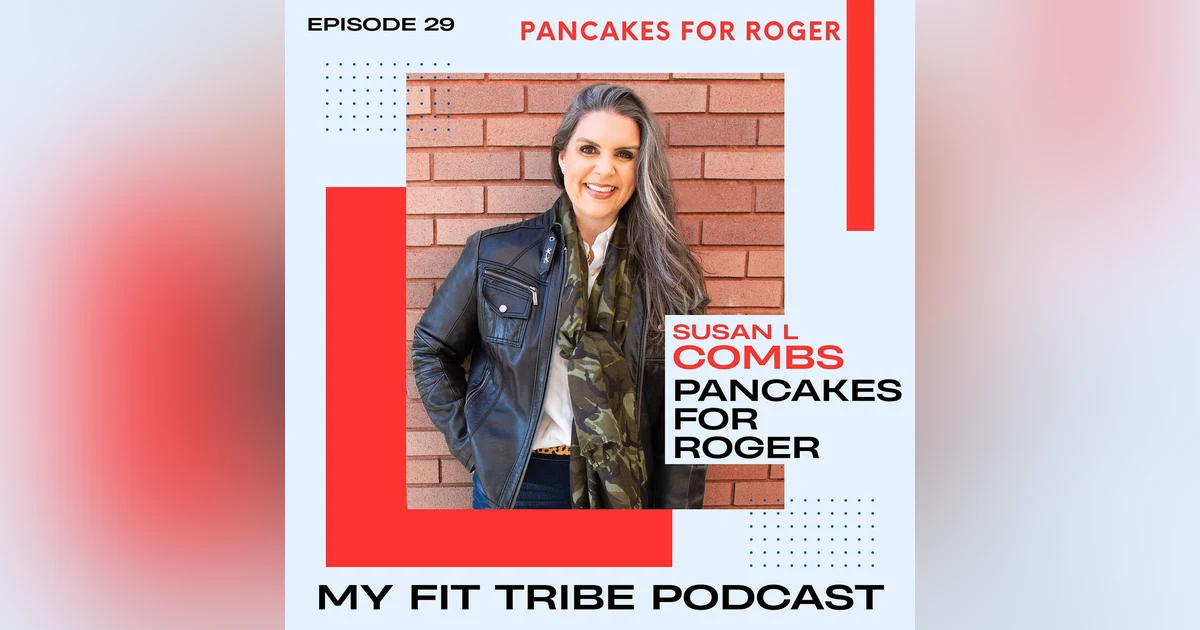


In this week’s episode I’m delighted to be joined by Susan L. Combs. She is the founder of Pancakes for Roger—a nonprofit born from a simple yet powerful wish. We’ll explore how fitness became her strength, why her father inspired her to write Pancakes for Roger, and how her foundation honors his legacy. Get ready to be inspired, moved—and maybe even flip a pancake or two in his honor.
16:20 - [Ad] Just Be True ~ A Soul-Led Podcast
17:06 - (Cont.) Susan L Combs- Pancakes for Roger
Throughout my own life and fitness journey, I have had the privilege of meeting incredible people who've shared valuable insights on mindset, health, fitness, and spiritual growth. The profound impact of this knowledge on my own life has inspired me to share it with all of you. I'm Erica Sweeney, host and founder of My Fit Tribe Podcast. Join me as we explore inspiring conversations with experts, thought leaders, and everyday heroes who offer their stories and practical tips to help you on your own journey. From nutrition and fitness to mental well-being and personal or spiritual growth, our mission is to empower you to take charge of your health and live your best life. We are more than just a podcast, we are a community. Through coaching, a wealth of shared knowledge, and a strong support network, we are here to guide and encourage you every step of the way. Come be a part of our tribe. In this week's episode, I'm delighted to be joined by Susan Elcombs. She is the founder of Pancakes for Roger, a nonprofit born from a simple yet powerful wish. We'll explore how fitness became her strength, why her father inspired her to write pancakes for Roger, and how her foundation honors his legacy. Get ready to be inspired, moved, and maybe even flip a pancake or two. Joining me today is Susan El Combs. She is a CrossFit enthusiast, a best-selling author, and nonprofit founder of Pancakes for Roger Incorporated, which is dedicated to serving veterans who have served our nation by asking people to enjoy the simple pleasure of eating pancakes. Hi, Susan. Thank you for joining me today.
SPEAKER_00Hi, how are you doing?
SPEAKER_01There's so much I want to get into. We started touching basin a little bit before the show, but let's start with your CrossFit journey, your fitness journey. What when did you start that?
SPEAKER_00Okay. Well, I had a general for a father, so fitness was always something. I mean, I played sports my entire life. I mean, I think my first sport was like T ball when I was like four, and then it just never stopped. So I did, you know, uh softball and golf and track um in school. Um I was not a good basketball player, played that in junior high, rolled an ankle, and that was it. And um, I guess I'm a I'm kind of a brute. Um, so I I did play some rugby in college. Um and then uh, you know, so it just like you have to, you have to lift. So um I always, I mean, even I think I started lifting in fifth grade. Wow. Um, so that's kind of because my dad would be training for PT tests that he had to do every single year, and it was just something, you know, something he did. And I got into CrossFit actually in 2018. Um, so that was that was actually the year my father passed. And my husband and I both got involved. My husband's a nationally ranked endurance athlete, Spartan racer, high-rise racer, like you name it, he's kind of done it at this point. Um, and so it was funny because we we were living in Queens and um our our subway station was getting upgraded. And so we had to walk to another subway station. So we kept walking by this CrossFit gym called Dutchkills, and it had ropes in it. And since Sean was doing Spartan races at the time, he needed a place to practice climbing ropes. So that is the really how we got involved directly in CrossFit. Um, I actually was a personal trainer back in the day too, but never had done, you know, a ton of Olympic lifting or anything like that. So um I'm a strong girl and I've always been a strong girl. And so that's one of the things that I just fell in love with about CrossFit, that it's just like, you know, if a girl says she weighs 180 pounds, nobody shrieks away, you know, in CrossFit because they're like, you know, they're freaking a Mac truck, you know. So um, so that's kind of, you know, with the CrossFit, we got involved in that in 2018 and then just haven't stopped. And then we also do um our gym in New York is also a um strongman gym.
SPEAKER_02Wow.
SPEAKER_00So Dominic Fortino that started our gym in New York, um, wrote most of the curriculum for strongman certified gyms. So we do strongman right in New York. And so every Saturday and Wednesday were our strongman days. And then we've since moved to New Hampshire about six months ago. And so we're we're trying to get people to be a little bit more into strongman, but they're definitely into CrossFit. And our gym, CrossFit Sohegan, is very much um more uh gymnastics than we've ever done. So we do toes to bar every single week, we do handstand push-ups almost every single week. It's a lot more. I mean, I know they have a rack, but they like to take every freaking barbell from the ground. And uh so it's we're definitely, I mean, it's so cool because our bodies are shifting in different ways. And it's also made me think that, you know, we also have aspirations of having a gym someday. And I said, I think we got to get a different programmer every year because I said we see the shifts that that makes that you just wouldn't have normally anticipated, I don't think.
SPEAKER_01Yeah, it's really true. Your body gets used to doing certain movements, and so like I love to just lift at the gym. I'm not a big cardio fan, so when I do CrossFit, I'm gassed, you know, real quick. But I know how important it is to do things you're not used to doing. So it's good to have for me to have that reminder too. That's a great point. I brought the fitness first because one thing that you talk about um when you were taking care of your dad is how important that that time was for you to fill your cup, and that was at the gym, which again I can totally relate to. Let's talk a little bit about your dad and and you're having to step in as a care provider for him.
SPEAKER_00Yeah, so my my dad was uh he he was a civilian judge, but then he was also in the military. He served in three branches of our armed services for 39 years and four months. And he was diagnosed with aging-orange-related throat cancer in 2008. And right after he had retired, he was a major general in the Air Force, was his last, um, was his last ranking. And um, we had 10 relatively good years. We didn't realize how good they were until they weren't so good, um, to be honest. But um, you know, and I the last 10 years of his life, I mean, I had a good friend that told me he's like, Susan, you'll never regret the time you spend. He said, when somebody passes, somebody says they always wish they had more time. They didn't wish that they had less time with that person. So I I definitely took that to heart when my dad got sick 10 years before he passed. And I I constantly showed up. And because um my dad and I were the two extreme type A's in our family. Um, very much um regimented logic works, emotion not so much sometimes. Um, but you know, the last year of his life, he relapsed twice. And um, you know, the the first time he relapsed, um he had to have a significant surgery. We didn't know if he was gonna be able to speak again um after that. So he and I sat down, spreadsheet a lot of things. I mean, that's the thing that people don't talk about is like having those really tough conversations that you you're not even sure if you're ready to have the answer that's gonna be given. Um, but you have to be brave enough to do that stuff. And so, you know, we sat down before he had that last surgery, and I got, you know, the plumber, the, you know, the information for farming, the information for, you know, the VA, um, Arlington, um, who to sell the guns to, who to sell the Winnebago to, like, where, you know, just everything, passwords. I mean, those are the things that you just don't realize you're gonna have to have. And, you know, we could both kind of compartmentalize the the feelings we were having and saying, like, let's get this done so that we can set it and forget it, type of thing. Um, and then uh he relapsed again a few months before um before he passed away. And so I was able to return from New York City back to Missouri. I grew up in a real small town, um, 986 people when I left in the northwest corner of Missouri. I grew up about 30 miles from Kansas, 40 from Nebraska, 50 from Iowa.
SPEAKER_01Oh, wow.
SPEAKER_00And, you know, my brother's a nurse and my mom was around too. But personality-wise, my dad just kind of preferred me because I would talk to him how I'd want to be talked to. You know, if he had to explain a situation, like, for example, um, I had just come back to New York and then my mom needs to go to some doctor's appointments and take the dog to the groomer, you know, stuff like that. And so I said, okay, I'll come back again. And before I had moved back, and my dad's like, you don't need to come back. It's fine. I'm fine. I'm fine. And I said, you know what? This isn't about you anymore. And I said, You're probably right. You're probably fine. But I said, just think about her. And I said, think about if you fell and hit your head when she was off, you know, taking the dog to the groomer, and I said, and you died that way. I said, she never forgives herself. And I said, so this isn't about you. And he's like, okay. Like it just, he just needed that logic.
SPEAKER_02Right.
SPEAKER_00And so in the last year, you know, last few months of his life, you know, I moved back to King City, and um, you know, they don't talk about like when when you're a caregiver, I mean, it's just a lot of times you're stepping in and you have no idea what you're stepping into because it's it's new territory. And um, I really think they should bring like home economics back to schools, and this is the type of stuff they should be teaching people. Um, because you know, you have to think on your feet. You have to um, you know, I mean, with my dad, I mean, I was sleeping with a baby monitor on a couch, like in the room next to his, just because if he needed anything, I was right there. And I look at pictures of myself from back then and I look, you know, like 10 years older than I am now. And um, just because it's heavy, it's heavy in the lack of sleep. So you talked about like filling your cup. I mean, that's how I CrossFit. I mean, really, like every single morning I'd get up and my dad and I had a cadence. I mean, I'd check on him if he was good. I'd go to the gym, I'd come back, check on him again if he was good. Um, I'd go get cleaned up for the day, and then I'd get him kind of ready for the day. And then I would take my laptop and sit at, you know, my childhood home at the coffee table with him in the recliner. And if I if he needed anything, I was right there. And so um, one particular morning that kind of launched the whole pancake siragea request was, you know, my we were fortunate enough to have hospice at home. And, you know, I'd done the cadence of checking on him, he was good. I came back, he was good. And then I came down from getting showered and he wasn't in his hospital bed. My parents' house, like the rooms just go in a circle. So I just went from room to room to room because that's kind of how you located him. And I ultimately landed in the kitchen, and he was sitting at the table, he had his placemat, he had set the table, and I looked at him and I said, Dad, what are you doing? And he said, I want pancakes for breakfast. And so the last year of my dad's life, he had a feeding tube. I mean, he wasn't allowed to eat any food. Um, and he was also on auction. So, any of your listeners that have dealt with somebody that's been on auction, if um their oxygen levels get too low, they can have some confusion. And it was the first time in a year this man had asked for any type of food item. And I looked at him and I said, Oh, dad, you know, there's just nothing more that I want to give you than pancakes or breakfast. I'm like, we're on hospice, we have a DNR. Said, if I give you pancakes and you choke, I said, we're probably done here, and I don't think we're quite ready to be done. And he said, Oh, yes, I can. Matt said I could. And Matt's my brother that was the nurse, and he wasn't there that morning. So I knew we were dealing with some oxygen deprivation, some confusion. And so I looked at him and I said, Let me see what I can do. So I took his tube feeding formula. The general always wanted it warmed up for 14 seconds. He would hold you to it. He would know if it was 15, he would know if it was 13. And I brought it over to the table and I sat it down. He said, What's that? And I said, That's your syrup. So his oxygen levels would kind of start rattling back around. And he he smiled and he understood. And he said, Okay. And in a few weeks later, my dad would pass away. And I took one day off of work when I came back. And I know, you know, you and I were talking that you lost your father a couple of years ago, and you understand that when you lose that person that you're caring for, you kind of lose your purpose. And it takes you a second to get your feet back under you. And so um, so I just I took one day off work. I just needed one day to just be, if I wanted to respond to a text, if I wanted to respond to a phone call, I could, but I just need to give myself some space. And my husband said to me, Why don't we go have pancakes for your dad? And so we went to the Bel Air Diner in Queens, New York, and um my husband took a picture of me and I told a little bit about the story, and I said, you know, I said, if you're, you know, everybody's life can change in the blink of an eye. And there's something that every single one of us, even on our darkest days, there's something for us to be grateful for. So if you're so inclined, go have some pancakes for Roger and remember all the good things you have in your life. So it was it was just me talking. It wasn't, it wasn't supposed to go anywhere. It was just me sharing some of my heart, sharing some of my sorrow, just being being honest with people. And then people started having pancakes and sending me pictures. And, you know, I'm a big person. My dad was always a big person of where's the lesson? And I was like, there's gotta be more. I mean, especially when you have somebody that you're caring for. My dad and I were so close, so close. And so it it was really I mean, it's still hard for me because I kind of lost my partner in our family that thought like me, that under that really understood me as a person. And so um, we ended up turning it into my dad's birthday was February 22nd. So he passed away on August 22nd. Um, and so we ended up, you know, after we started getting these pictures of pancakes, we were like, you know what? We've been doing some work with the University of Missouri School of Law Veterans Clinic, and they provide free legal services for veterans and their families navigating the VA claims and appeals process and um and discharge upgrades and a lot of other things, all free of charge for veterans. And I was like, you know what, why can't we see about like turning this in kind of to fundraising effort for them? So in February, and then we've done this now for seven years. Um, so the for the month of February, for every pancake-loving picture that we get on social media, then um at the time it was my company, Combs and Company, making it a donation to the clinic. Um, so you know, like the first year, I think we got like, oh, something like 150 pictures. It wasn't anything great. Um, and then it's just grown over time, over time, over time. And then, you know, the book came out in 2022, and then the official nonprofit came out um the end of 2023. And so, you know, through the nonprofit, we've been able to do kind of some corporate sponsorships and corporate matchings. And so this past year, we got what? We got uh a hundred and or 1142 picture submissions. We had all 50 states, Washington, DC, 25 countries and six continents. Antarctica broke my heart this year. We had them the past two years. Um, but you got to get on Antarctica quick because um, if you ever need something out of Antarctica, you can't go to Costco, people, but you know, you can't go buy pancake mix. Um, so they have to be on the on the boat. So you got to get to Antarctica like in December to make sure that they get a shipment of pancake mix. So I missed it. I I reached out to them a month before and it was still too late this year. Um, but the other two years they got me. So, you know, it's it's been fun. And then, you know, we're super excited with the nonprofit because, you know, um our mission is creating pathways for to improve the lives of veterans in their communities. Um, so we're in the process of um working on providing grants for veterans. Um, you know, we're focusing on this year on housing projects and improvements. So, you know, say a veteran needs a um like a ramp replaced or, you know, or needs a ramp in general, like a handicapped ramp. Or um say, you know, there it's somebody that that's fallen on hard times and they need a little bit of money for for rent to kind of get through. Um, so you know, we're we're in the process of uh doing, you know, finalizing our applications for that to get people to start applying for that. So it's just it's one of those things that's just super rewarding. Um, but you know, it just all started with a simple request for for pancakes by my dad.
SPEAKER_01Wow. And you look at how much, I mean, you you say it kind of candidly, you just you know, it just started with with having pancakes, but look how quickly it grew into something that is so big and so meaningful. How does that feel to be able to honor your dad in such an amazing way?
SPEAKER_00You know, my dad was one of those guys that he was good when nobody was watching. Yeah. And um, like the day after he passed, I went to the gym, because that's what we do. And um and when I was coming back from the gym, I heard a clanging and something just said, Susan, look up. And I looked up and my, you know, small hometown post office had put the flag at half mass for my dad. And it's just like if that's not a testament of life Will lives, like I don't know what is. And so, you know, those little things after he passed started coming out where people just would send stories to me um about how my dad had helped them in certain ways and um or just mentored him, or you know, as a judge, I mean, he had he had people that had been in jail that came to me that said, your dad gave me a second shot when nobody else would. I mean, I was going down a bad path, and your dad really had, you know, spent some time with me and really feel like I that he changed the trajectory of my life. So, you know, having a dad like that, and I know not everybody has a great dad. So um so I try to be, you know, cognizant of that, but it's it's kind of taking the lessons that I learned from him and the good that he did and put out that people, I mean, a lot of times didn't even know he did. Um, and just kind of like, you know, sharing that with others and knowing that there's there's always something that we can do. And it makes you feel good to help people and it makes you feel good to do different things and and recognize other people that are doing good as well.
SPEAKER_01It does. And also when you uh when you lose someone and you're able to keep their memory alive and be able to talk about them, you know, everybody grieves differently, but just to be able to have that conversation about the things that your dad did do, I mean, that's just such a such a great way to to sit with him, really, you know?
SPEAKER_00Yeah, yeah. Well, and I, you know, I'm a big believer in signs too. Um, you know, I I get a lot of signs from my dad. I mean, I uh big signs are like helicopters because he was a helicopter pilot and sunflowers because he used to grow sunflowers and it used to make my mom nuts because they were pretty ugly. Um, but he would grow his own bird feed because ultimately my my dad was first and foremost a farm boy. Um, you know, he grew up on a dairy farm. He used to say, you know, I grew up on a dairy farm, everything else is easy. Um and so, I mean, you being in Wisconsin, I'm sure that resonates um as well. But, you know, it's there's, I don't know. I mean, it's just like there's so much social media, there's so much noise out there, there's so much, you know, people not doing what they're saying they're doing. Um, I'm a big person that like you will never see a filtered picture of me on the internet because it's one of my biggest pet peeves because I feel like it starts off a conversation in a lie. Um, but I just I'm what you see is what you get. So I try to be a bottom line, very straightforward. And, you know, that's you know, the the nonprofit, I mean, it's very different. I mean, I have, I mean, I own four companies and I know how to make money, but making money for, you know, for the purpose of like, okay, you have salary and you have employees and things like that is much different than a nonprofit money because that's not my money. That's the money to help vets. And so it's, you know, we scrutinize every single dime we spend just because we want to make, you know, this can't be a flash in the pan. It has to be, you know, sustainable. And so anytime we look at doing something where somebody asks us to consider something, it's always like, is it repeatable? Um, so you know, we've incorporated our love for fitness into pancakes for Rogers. So we have we have a dragon sling competition in New York, we're gonna have one up in New Hampshire, we're gonna do a virtual aspect with um probably a rucking component. Um, so we're working on, you know, trying to partner with GoRuck on that. Um, so that could be kind of cool with a pancake patch for people. Um, you know, and our our board's expanded. We're a board of seven now, and you know, we have a couple of veterans on our board, but people from all different states. Yeah, I don't think any of us are in the same state, which is kind of cool because it just makes the reach that much um much easier for sure.
SPEAKER_01That's awesome. Can you talk a little bit about the dragon slayer? I love that too.
SPEAKER_00Yeah, so it's just like, so it's it's just it's fun. It's just it's a competition, it's a CrossFit competition. And so um three workouts, you know, typically. Um, so New York is individual. Um, that's gonna be June 14th, so it's flag day. And then uh New Hampshire is gonna be a partner one. That's gonna be August 17th. And um, and so you know, we do, you know, scaled, you know, men, women scaled RX. And then we um we recognize the top three winners. Um, there's uh, you know, pretty cool dragon swag and everything like that. I mean, I I tend to name our dragons. So our last year's dragon I named Axel. This year we've added some like we've added some combat boots and some uh you know, a camo vest on hit uh this guy. And so I've been calling him Blaze. So we have Axel in Blaze. We have to get these cool ass names. Um, but it's just been it's a lot of fun. So we're we're excited about it. So it's just like um, you know, I'm just uh I'll have to bring up the workouts and share them with you guys. Um, but it's just you know, like the quick hits. I mean, it's just like you're in uh Wisconsin, so I know you've been around the games and stuff like that. So it's just like you know, um there's gonna be a power clean ladder, and then at the your final wait, then you um max F or on your deadlifts, um that's gonna be your tie break. Um, there's gonna be one that's gonna be a rowing component and um burpee pull ups and some box jumps and some rowing. Um, and then there's going to be another one that's gonna be like a like a chipper with like four different things. So it'll be it'll be a lot of fun. But it's it's definitely, I mean, I don't think you have to be in cross. But you have to be comfortable with a barbell.
SPEAKER_02Right.
SPEAKER_00Um, because it's just like if somebody's never done a power clean, I don't want them learning on our watch. Right. Um, you know, it's just like, you know, we don't have time to instruct, like, you kind of need to come in knowing what you're you're doing. But we actually were kind of excited because the one in New Hampshire, um, we have some friends that are games athletes in in New York. And so they're they're like, if you can add a pancake eating component in there, Susan, we'll we'll come and compete. So we're working on that too. You can do protein pancakes. Oh, yeah. Well, so one of my friends, he actually has an endorsement um contract with a protein pancake company. So we're yeah, we're kind of kind of work on piggybacking off that for sure.
SPEAKER_01Oh, that is so awesome. Talk a little bit about your book, because you started with with the book before the nonprofit. So what you talked about incorporating stories of of your dad. Well, tell us a little bit more about the book.
SPEAKER_00So the book came out actually on my dad's birthday. So it was 2222. So if you believe in numerology, I mean that's that's an angel number.
SPEAKER_02Yep.
SPEAKER_00And so, you know, I was raised that if you get a good piece of advice, it's your duty to share it with somebody else. Because if it helped you in some way, chances are it can help somebody else. And so the book's very simple. I mean, you know, I've been pretty plainspoken on this um this interview, and that's kind of how the writing is. I mean, it's separated into four sections self-love, family, and career. It's written in what you call vignette style. So um, there's not going to be a word that you have to Google on me. I'm very, and um, if my husband wrote it, like with the journalism degree, um, you'd have to Google half the words because I have to Google half the words. But um, you know, I'd say the shortest chapter is like a paragraph. The longest, I don't think there's a uh chapter over 10 pages. Um, but I have friends that have said that they've used it almost like as a daily read. Um, and I always tell people, like I, you know, I mentioned before, I know not everybody has a good father. And so, you know, and I I mentioned that in in the book. Um, but you know, probably one of the I would say the best compliment I've ever gotten on my book is I have a girlfriend that grew up in the New York City foster care system. And she said to me, she was like, I got your book because she said I didn't have dad advice growing up. And she said, I wanted to know what it was like to have a good father and to get some of those good pieces of advice that I just missed out on life. And so that, I mean, that just deeply touched me. Um, because, you know, I can't even imagine what that would have been like for her. Um, but and then I also have another um guy that's a Marine, retired Marine that was my dad was in the purple foxes, world famous purple foxes. Um, and uh he he buys it every single time he has somebody that served with him that has a child as a guide to raise a strong kid. Um and so it's you know, it's just very, you know, very much to the point I always tell people, I'm like, use what you want throughout the rest. Um, you know, not every single lesson is gonna resonate with you, just like, you know, any book I read, if it's it's like kind of like self-help or whatever, you know, you just kind of skim through what's what's not gonna hit. But it, you know, it was it was fun. And they, I was very realistic when it came to writing the book. I mean, I think if you, because I'm logical, um, you know, if you're just like, oh, I want to be on, you know, Oprah's favorite things or I want to be on like New York's, you know, like you're just it it's not realistic. And so I was like, my goal was to help five people and to bring more recognition to the veterans clinic. And so there was a massive uptick in donations for the veterans clinic. So we knew we did that. And I got emails, more than five emails, in the first week after people had read the book talking about how they felt like I was talking directly to them, like how much it helped. And so, you know, it just it it made me really happy. And so, um, but then that's when we were like, there's gotta be more, there's gotta be more. But the book's been great because then, you know, it's also a keynote. So I speak quite a bit um, you know, on different different lessons from the book and can kind of cater it and tailor it to um to the venue and what we're doing, um, because it there is a lot of different life applications that um that resonate with a lot of people. Do you have a favorite? Oh, it depends on the subject matter. Um, you know, I would say um just because it was funny. Um, so my my dad, so um, because again, you grew up, I don't know. Did you grow up in Wisconsin? Yeah. Or did you grow up in farming community?
SPEAKER_01Uh we didn't farm, but yeah.
SPEAKER_00Okay. So it was just like, so you know, us farm kids, like we're driving at a much younger age than a lot of people. And so, but my dad was still the judge. So it's like we would drive on the farm, but we didn't do any highway driving until we had, you know, our learner's permit at 15 and a half. And so my dad always had um, you know, a cadence with us. He would always say, drive the car, drive the car, drive the car, drive. I mean, just I hear it in my head. And so, because he could say, you know, you could be the best driver in the world, but you have to be worried about the, you know, the everybody around you. And to still to this day, my dad always said, he always said, if it's bigger than you, don't hit it. If you're bigger than it, hit it. You know, and so and he always told us that a horse is the worst thing to hit because the mass is right at your windshield, never hit a horse. I was like, okay, dad. But, you know, he um, so it just, but that became such a metaphor for life of just basically putting first things first. Um, because I mean, when we taught us how to highway drive, my dad would literally grab the steering wheel and jerk it and like we'd go off the road. And he's like, drive the car, drive the car, drive the car. And so we're like, shit, okay, we're driving the car, you know. So you had to maintain your composure. And so, you know, and that was the thing. Like, uh, I was the, you know, I was the only girl. So it was like, um, so before I could even go on a date, I had to be able to change a tire and I had to have my driver's license because my dad was like, you had to be able to drive yourself out of a situation, you had to be able to get yourself out of a situation if you needed to. So, but it was just one of those things that um it ended up applying later on in life. I mean, just as an example, before he passed, um, you know, I was back and taking care of him. And um, I'll tell you, I mean, you were a caregiver for your dad too. So your house can look like a freaking pharmacy. Um, and there's just so many meds and so many narcotics and things like that. And we had had him out. And so uh one morning, he took his nighttime meds in the morning. And so then he just couldn't interact and he was just asleep the entire day. And so I was like, okay, our drive the car of this is we're putting everything up, we're putting everything away except for the dose that he can self-administer during the middle of the night if he's in pain. Um, because then we didn't have to worry about him over medicating or taking the wrong thing, and it kept him safe. And, you know, at that point in my dad's life, it was just like, you know, it was kind of out of sight, out of mind. So he didn't even think about it. Um, so it was just one of those things that sometimes it just, even though it was pertaining to drive, you know, driving the actual car, I actually have a medallion that is um that is engraved in the back that says drive the car now. It just applied to so many things. And sometimes when we have these big, giant, you know, dragons to slay, we can just get so paralyzed on what's what we see in front of us instead of saying, like, okay, what's what's the first thing that needs to happen? You know. Um, so that's that's probably one of my favorite lessons because it's just I still hear it to this day. Somebody pulled out in front of me two days ago and I was like, drive the car, drive the car.
SPEAKER_01Don't you love it when you can hear their voice and just feel them? It's so wonderful. Yeah. Um, you talked too a little bit about when you were taking care of him and how after he passed, that you were able to remember him, you know, as a healthy dad. And I talked about that a bit on in a previous podcast too, where for me, um, I was with him when he passed away. And so it was about six months worth of those repeated visions of seeing him struggling because he had COPD, so he, you know, the I when you talk about the oxygen dropping, I can totally relate to that. Um, but it took for me to have a dream about him healthy, for my brain to switch over to he's okay and he's healthy now. So it was kind of one of those spiritual things. Like I just couldn't shake that off. Yes, yes. So did you have any signs or do you have any suggestions for people that are dealing with a loss to help them to be able to you know remember their loved ones in the way they need to?
SPEAKER_00I mean, you know, because uh like you said, you had the the repeated of you know him struggling, and then I had the opposite where my mind played a trick on me where I only thought of him healthy. So then it made me miss him even more. And you know, I mean, it's like you said, everybody deals with grief differently. Everybody's brain is wired a little bit differently, so it just it reacts uh to to it's trauma, right? I mean, it's just like a lot of people don't want to say that, but it is. I mean, it's just like if you're so closely connected with somebody like that and they they leave you, I mean, that's that's total trauma. And you know, my my dad was a big believer, and I am too, like, move a muscle change of thought. I mean, it just I and I'm not I'm just not a wallower. And again, everybody's different. Like, if you got to stay in bed for a week and that's what you need, you do it. Um, but I'm just not that person. I mean, a prime example, like my brother and I are extremely close. And I remember the the day after my parents called us and said he had relapsed again, and we knew this was the beginning of the end. I had to get up the next day and go deliver a keynote. And I am not a depressive person, but who that was everything it took me to get out of the bed and like and go do what I needed to do because I knew that's what my dad would have done. My brother, on the other hand, called into work and didn't get out of bed. So it just everybody is so, so different. And so for me, it was like, how can I extend his legacy? You know, because it's just um, I mean, you've probably heard that the phrase, I don't know the the exact wording, but it's like, you know, a person dies twice. They die when they're they're they leave their body and then they die when the last person says their name. And so it's just like if you can keep their legacy alive, and you know, I mean, I had a cousin that said when he's when he would have a task and he was trying to figure out what to do, he would be like WWRD, what would Roger do? You know, and um and try to think about it. And so for me, it was like, you know, how can you how can I help other people? I mean, I will tell you that if somebody puts on Facebook that they that somebody passed, I mean, one of my good friends, like his father um just passed away on um on May 31st, and um, and he had been going back all the time. And um, you know, I don't I don't comment on the picture, like I reach out to them personally. I remember what that did for me. And so, you know, when somebody reached out personally and just said, hey, you know what, it's a shitty club that you never know about until you join it. And you know, try to let other people do for you right now and cry in the shower and just find the serenity when you can. Because that's for me, like I'm just one of those people that I need to process on my own. And then I'll come to you and talk to you when I need to talk to you, or I need your help, or I need your support. But let me just have my moment to kind of figure things out in my head. Not everybody's like that. And some people like some people need to drone on and on on Facebook. I mean, and some people probably said I droned on and on at Facebook. I wrote a lot. Um, so I wrote a lot and I write for a magazine, and they gave me that platform and space to just be like, hey, if you're gonna be in my shoes at some point, these are the things you need to be thinking about. Right. So that same magazine, um, I actually just did a session with two of my girlfriends that had lost their parents um in the past few years. And it was basically when when the child becomes a parent. Um, and um the things that that we wish we had known or things you need to be thinking about, because let's be honest here. I mean, you and I are both, you know, we're both Gen Xers, right? And um I think that especially the Gen Zs, they're not gonna know what hit them. Um you know, I mean, I'm I'm not trying to be critical of parenting in any way, but I think a lot of kids are shielded from a lot of things. And so they don't know how to do stuff. Um, you know, I have so many I have cousins in college that they're like, my roommates don't know how to do laundry. I'm like, what? I'm like, your job as a parent is to prep prepare your child for life. I'm like, that's not preparing your kid for life. But you know, I mean, so that's the thing that I really think that in the next 20 years, I can only imagine um how hard it's gonna be for some people to just because they won't know what to do. I mean, like, I was resourceful. I'm like, you know, in our office, we always look to hire people that have, you know, the characteristic of tenacity, and we call that the ability to find the answer. And if you, you just have to sometimes like not be afraid to ask for help and also know who to go to. I mean, that's the thing. I mean, I'm I'm so I can check my ego so quick and be like, hey, I don't, I don't know this, but I know who I can go to to get that answer to help me. And so, you know, and I relied on that. You know, I don't it never wanted to overwear my welcome, but it was just, you know, prime example. There was a guy, there was a gentleman with my dad that was a good friend, and he said, Susan, you need to make sure that it has Asian orange-related throat cancer on the death certificate. I wouldn't have known to do that. Um, because he said, you know, it, you know, it it ended up, I mean, it because he said, Susan, this is not not for you. This is for the other guys that are coming down the pike. And so just things like that that I didn't even realize. And I remember when the coordinator came to get my dad, I was like, Hey, I'm not trying to tell you how to do your job, but I'm gonna tell you how to do your job right now. And my mom's like, Have you met our daughter? And I was like, Look, I need you to have this on there. And he's like, Okay, not a problem. Yeah, you know, and so, but that's the thing. If I didn't know to ask the questions or I didn't have people that mentored me and guided me, um, and also to be open to people just helping you. I mean, I just I don't know what I would have done. But you know, it's the people I don't know about for you, but the people that I anticipated the least were the ones that helped me the most.
SPEAKER_02Yeah.
SPEAKER_00Because I I was still in my 30s when my dad passed. And I had my best friend growing up, she had lost her father when we were in high school, but that was like the only one. I mean, still to this day, I don't have very, I mean, most of my friends have their fathers. And so I didn't know who to really reach out to. I mean, I had my friends to support and like FaceTime and just be like, just talk to me while I cry right now. But it was the people that had gone through it recently that would gently reach out and said, Hey, I don't know if you've thought about this, but maybe, you know, this was something that helped me. I mean, it just, those were the people that just showed up for me that I just I mean, I was in such a fog too, as I'm sure you can relate to, that you just you I know I've never thanked everybody that I should have thanked because I just you just don't remember.
SPEAKER_01That's what I was gonna say too. I remember my brain just didn't work right. I mean, it was the fog was terrible. I had to fill out all the paperwork, you know, to file with a court system in order to be able to access the accounts. And I'm like, I can't even remember my address or his address, and I made mistakes that I don't normally make, but I just my body was just almost in like a grief shock just trying to compose of it. And you know, you talk about those people that reach out. I had a friend who's not even an acquaintance more so than a friend, and he he had recently lost his father too, and he said to me, you know, it it comes in waves, and at first the waves are so big that you can't breathe, but slowly they will lessen and they'll become less frequent. And that it almost, you know, just it's like once I got through a wave of grief, I was like, okay, it's maybe the next one's not gonna be so close. You know, just that just helped me put uh a hope behind how I felt because it was just so deep and physically sickening to have to, you know, deal with the loss. It was really overwhelming for sure.
SPEAKER_00Yeah, one of my really good friends, um Mike Vini, he's actually a uh like a national worldwide um mental health speaker, and he had lost his father and um and he made me meet him for coffee. I was like back. I mean, it was and it was just I was just like like do you remember that feeling where it was just like you were just so freaking anxious? And you were just like, oh my god, like it's just and I mean this was even this is before my dad passed. And I was like, I was so freaking anxious because I was like, oh my god, is the phone gonna ring? Is the phone gonna ring? Is the phone gonna ring? You know? And um, because like there were times I had to like run back to New York for like two days and come right back, type of thing. And um, you know, and he was just like, you're meeting me for coffee. We are talking, you know? And I remember he said something to me that man, it just I always remember he said, It's okay that you're not okay. And that just it helped me so much because like um, you know, I felt like a freaking plate spinner at the time. And I'm like, something's gonna fall. And I mean, and I'm I'm the fixer of my family, and I I'm still in that role. I mean, I'm even more in that role since my dad's passed. Um, and that that has a whole nother bailiwick of of issues. Um, but you know, it's just it was so good to have somebody that had been through it that knew me well and was like, Susan, look, no, you're taking some time.
SPEAKER_03Yeah.
SPEAKER_00That you know, everything can wait just for an hour and meet me for coffee. So I'm glad you did. You have to have those people in your life for sure.
SPEAKER_01Yeah, it's hard to take that time for yourself when you're always fixing for other people.
unknownYeah.
SPEAKER_01Coming from a self-proclaimed fixer. So let's talk a little bit more about. So you talked about the events coming up. So um, and the pancake photos that are taken, that's only the month of February. Is that correct? Yes.
SPEAKER_00Yeah. So it's just, I will say, like, I mean, we are being a little bit more creative there. So yes, the the pancake picture like campaign and everything like that is the month of February. So that's every picture we get that you tag us on, you know, Facebook, Instagram, LinkedIn, whatever, like we'll make a donation. Um, but we are open, like, say there's a corporation that wants to host their own pancake Saraja breakfast and like take a whole bunch of pictures or something like that, and they want to contribute, you know, to uh to the campaign and you know, financially support it or whatever. You know, we're so happy to to highlight them and to profile them and everything like that. I mean, we have people, there's um, there's a woman in Washington State that's going to be having her own pancake breakfast because she just wants to. And so we have like um, we kind of call it pancakes for Audrey Day in a box. And so it's just like, so we provide like, you know, social media graphics and like flyers that have like a QR code. People can just put on their, you know, on their tables. And, you know, if this story tugs on their height, heart strings and they want to support a veterans organization. I mean, it's just like during the month of February, when we had those breakfasts and we had those QR codes sitting around, I mean, it's like we brought in like $2,000, just five dollars here, $2 here, $10 there. I mean, all that stuff just adds up. So um, so we're very much, you know, happy if somebody's just like, hey, we want to do a joint event with you guys. Do you have a board member that can come and talk about Pancakes Roger and what you guys are doing? Um, you know, we're we're happy to do that. Like I said, we're building our endowment right now. Um, so we are in the process of um, we're working on obtaining a grant for ourselves that we can turn around and we will literally give that money away as soon as we get it. Um, so you know, anybody that's needing kind of some support. I mean, we we do a lot of work with the University of Missouri School of Law Veterans Clinic. We're always gonna have an affinity to them. But we've also worked with other smaller veterans nonprofits. Um, you know, not trying to be critical of the massive, you know, nonprofits out there, but say you write a check for $2,000 to Red Cross, is it going too good? Absolutely. But Red Cross is like, I could have found that in my couch cushions, you know, and so you give $2,000 to a small organization that's doing good, you can see the instant impact, which is pretty cool. So cool. Um, because it's just, you know, $2,000 like to a smaller organization, you know, that that just changes the trajectory of things. And um, you know, we can go and we can support vets. I mean, you know, because a lot of times it's just people don't need a lot, you know, they don't need a lot of money. I mean, there's this organization that we've also supported called Vets Helping Vets in South Carolina. They're doing construction and um vehicle support for veterans. And so, you know, somebody needs a flagpole, you know, because it blew over in a storm. You know, these guys get together and they, you know, somebody has a post hold digger, somebody has concrete, and they they put together a, you know, another flagpole for them. You know, so that's the type of stuff that we're excited about with this housing fund that we're um that we're applying for because we know that we'll be able to have like instant impact and hopefully um, you know, we've we've had a goal of giving away grants this year. We we are going to give away grants this year, but we're hoping that we can give way more than we were initially planning. So if this we should know that we will definitely know that the month of June. Um and then you'll be seeing a lot of things on our social media pages, like um encouraging people to apply for grants as well.
SPEAKER_01Oh, what a meaningful impact. And the other part of the pancakes for Roger is the taking the moment to appreciate those small things that we take for granted. And that's something I think every person in the world can do. I mean, I just love that premise.
SPEAKER_00Yeah, yeah. Well, and also too, I mean, I um, you know, I get people that the kids now have grown up on pancakes for Roger. I mean, they're not grown yet, but it's just like we spent seven years, but it's like these five year olds that are now 12 years old. Um, and they're um they're like, Dad, it's pancake month. It's pancake month, you know, the month of February. And, you know, we were actually given a really cool opportunity, a couple opportunities out here in New Hampshire where um there's high school kids that were graduating and you could adopt a senior. And so, you know, what basically that happens is the they had a Facebook page. The mother or a guidance counselor or a teacher would post a picture of the kid that was graduating and a story about them and what their intentions are. So we actually grabbed some of the kids that had that were going to the into the military. So we were able to, you know, give a gift to a kid getting ready to go to boot camp. You know, give him, we have challenge coins. So give him a pancake serrage challenge coin and some, you know, some swag, um, give him some beats headphones so he, you know, when he's back in his bunk, he can you kind of zone out a little bit after he's done his whatever 20-mile run for the day. Um, and he's gotten, you know, harassed a little bit. Um, and you know, it's so that's kind of cool. And then we've also um been supportive of um veteran funerals here in uh New Hampshire. So there's a lot of times that that vets pass, and if they can't locate family members, you know, it's kind of sad to have nobody come to your funeral. So I was like, you know, that's a super easy thing that we can just come and be supportive in Paris respects, um, because it's you know, to these men and women that have given us so much. And um, that's one of the things that it's since we've come to New Hampshire and we've relocated Pancake Sharaja in New Hampshire, it's such a veteran-friendly state. And uh basically every other town's a purple heart community. So we're super excited because we know that our reach is going to be far and wide here, just because there's so much support for veterans here.
SPEAKER_01Oh, it's so important. They just tend to be forgotten, and it's just so nice to see your organization supporting again those who have passed and then even those young ones to be able to encourage them and to support them and their new journey. That's really powerful as well. Wow, how cool. Thanks. I have goosebumps. So if people want to find you, are they able to donate through your website or what's the best way to find you?
SPEAKER_00Yeah, well, I'm pretty Googleable. Um as long as you put my middle initial, there is a Susan Combs that's a comp troller down in Texas. Um so it's just like if you get in it, she's a redhead much older than me. So um you look for the brunette with a gray streak. Um, but uh yeah, pancakesrager.org is our website. There's a donate button right there. You want to give us money, hey, we'll take it, right? But it's just like, but just sharing the message, you know, if you know of um, I will tell you, if you know of volunteer uh uh opportunities for us, so I know that there's like things like, you know, somebody will have like the PGA tournament, and if you supply them with 10 volunteers, then they'll give a donation to the nonprofit. So anybody knows uh any opportunities like that, we would love to know about them. And if we can come and support um so that we get support, that's great. Um, but also I tell people too that um if there's any veterans that are struggling with a VA claim um and they're, you know, maybe they're at 90%, they know they should be at 100%, they're just having trouble with that. Feel free to reach out to us. I mean, my email Susan at pancakesroger.org. Um, and I can get some information and and connect you with the right people and they'll they'll help if they can. And um, so you know, just it we have Instagram, we have TikTok, we have Facebook, we have LinkedIn, I think, oh, and we have Twitter or X or whatever it's called now. So I think I think that's it. So, but yeah, but it's just like but but following us on Facebook, following us on Instagram, I mean those are are great things because that just helps get the word out.
SPEAKER_01Right. And we will put all the links in the show notes as well. Thank you. So before I wrap up today, I'm gonna ask you the question that I ask all of my guests. So if you, Susan, today could have a conversation with Susan of the past, let's say the Susan that you know was had taken that time off to go spend time with your dad at the end, what would you say to her?
SPEAKER_00I mean I mean, would I know the future? Or is it would I not know the future? That's the big thing. Um, you know, I think it it depends on what what you're looking at. Because, you know, for when it comes to like say when I started my first company at 26, I didn't anticipate the loneliness factor. And so, you know, that was something that um that if I could go back and say to myself, like, look, you know, just surround yourself with the right people, you know, and connect, you know, network, go out there, put yourself out there, then you know, things will be a little bit easier. I think that would be good. Um, you know, with my with my my dad, I mean, I will tell you that I I'm glad that I'm able to say I have no regrets with that relationship there. I mean, I know I was a good daughter, I know I showed up time and time again. Um I think if I could go back and talk to myself, I threw myself into such work mode um after my dad passed that I didn't get that grieving time. And um, you know, I remember like not long after my dad passed, my my brother called and he's like, You good? And I was like, Well, I vlogged 14 hours on the phone with the VA, Arlington, Department of Defense, like all this stuff. And my brother's like, Well, do you need any help? And I'm like, Well, not now. Like at all. I did that. Yeah, but it's just like, but I I uh like even my therapist talks to me that she's like, Susan, you can call logic and emotion at the same time. And so I don't I didn't get that closure with my dad passing. I mean, writing the book was definitely a gift to myself. Um, I ugly cried every single week when I wrote um because I didn't get that time, but I'll tell you that I don't think I really got the a lot of that closure until he was buried at Arlington over a year after he passed. And um so I think I if I could go back, I would have given myself some more space um just to um just to kind of go through the process and grieve. Um I tend to go, you know, 110 miles an hour and which serves me well in a lot of things. Um but you know, it can catch up to you at some point in your life, I would say.
SPEAKER_01Yeah, I can understand that for sure. So now if you, Susan today, could have a conversation with Susan of the Future. You can pick 10, 20 years and you're sitting down with her in your favorite place having a conversation. What would Susan today ask Susan of the future and what do you think she would say back to you?
SPEAKER_00What would I ask a Susan of the Future? Um I'm super, super excited to see where Pancake Surrager goes. I'm I'm like, um, you know, I have aspirations, you know, I have my my main company that I do my day-to-day work in, and you know, I plan on selling that in the next, you know, couple of years, and then being able to dedicate my time to pancake surroger. And I've been very slow and very methodical on how we've grown. And because every single time we do something, I'm like, is it repeatable? Is it repeatable and can it continue to be done and in other places at you know at different times? And so I'm really excited to see what the future holds and see how many veterans that we can impact and help along the way and see what other ideas and initiatives we we come up with.
SPEAKER_01So, what do you think future Susan will say back to you?
SPEAKER_00Oh, it's a household name. That's what we're going with. Like the pancake surrager has become a household name. Maybe we have a pancake mix, you know, under our label. Maybe like we're in, I live in Syrupland now, so maybe we have a pancake Syrager syrup. Um, I have a big aspiration of doing a soldier shark tank to provide some seed money to veteran startup companies. And I would love to see that happen in the future. So I would love for her to tell me like all the dreams and aspirations of having Pancake Syrager be a household names, launching a soldier shark tank and uh, you know, in a pancake mix uh and impacting veterans, you know, thousands of veteran lives in all 50 states. That would just be such amazing for me.
SPEAKER_01Oh, I have goosebumps all over. I can see it now. I'm gonna eat my protein pancakes with my fresh maple syrup, and it's gonna have pancakes for Roger all over it.
SPEAKER_00Oh, well, and I'm gonna have to record, I'm gonna have to take that snippet of what I said, and then I'm gonna have to, we're gonna have to put it somewhere so I can go back and reflect on it every single year and say, okay, these these were the big goals, the BHAGs, big, hairy, audacious goals, right?
SPEAKER_01I love it. I so appreciate your taking the time to talk with us today, and I love your story, I love your journey. Um, and I can't wait to see where your foundation goes.
SPEAKER_00Thank you so much for having me today.
SPEAKER_01Thanks for listening to My Fit Tribe Podcast. Tune in weekly for our latest episode for more health and wellness insights and inspiration. For more information, visit myfitribe.org. Please note that the opinions and comments presented here are those of the guests and do not necessarily constitute medical advice or the opinions of MyFit Tribe. Copyright 2025, all rights reserved. This podcast is a production of MyFitTribe LLC. Don't forget to download, subscribe, and follow the MyFit Tribe podcast so you don't miss an episode. Thank you for your support.