Shelly Braxton and Johanna Hatch- Modern Health Clinic and Pharmacy
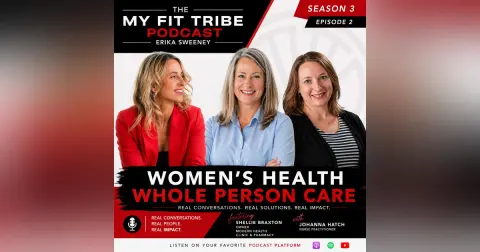
Send us Fan Mail Today I'm joined by Shellie Braxton, owner of Modern Health Pharmacy, and Johanna Hatch, Women's Health Nurse Practitioner. In this episode, we discuss women's health, hormones, hormone replacement therapy, functional medicine, and the role of a compounding pharmacy. Most importantly, we talk about the importance of advocating for yourself, being heard, and continuing to search for answers when something doesn't feel right. Here's my conversation with Shellie and Johanna. htt...


Today I'm joined by Shellie Braxton, owner of Modern Health Pharmacy, and Johanna Hatch, Women's Health Nurse Practitioner.
In this episode, we discuss women's health, hormones, hormone replacement therapy, functional medicine, and the role of a compounding pharmacy. Most importantly, we talk about the importance of advocating for yourself, being heard, and continuing to search for answers when something doesn't feel right.
Here's my conversation with Shellie and Johanna.
https://www.modernhealth-rx.com/
Throughout my own life and fitness journey, I have had the privilege of meeting incredible people who've shared valuable insights on mindset, health, fitness, and spiritual growth. The profound impact of this knowledge on my own life has inspired me to share it with all of you. I'm Erica Sweeney, host and founder of My Fit Tribe Podcast. Join me as we explore inspiring conversations with experts, thought leaders, and everyday heroes who offer their stories and practical tips to help you on your own journey. From nutrition and fitness to mental well-being and personal or spiritual growth, our mission is to empower you to take charge of your health and live your best life. We are more than just a podcast, we are community. Through coaching, a wealth of shared knowledge, and a strong support network, we are here to guide and encourage you every step of the way. Come be a part of our tribe. Today, I'm joined by Shelly Braxton, owner of Modern Health Pharmacy, and Johanna Hatch, women's health nurse practitioner. In this episode, we discuss women's health, hormones, hormone replacement therapy, functional medicine, and the role of a compounding pharmacy. Most importantly, we talk about the importance of advocating for yourself, being heard, and continuing to search for answers when something just doesn't feel right. Here's my conversation with Shelley and Johanna. Today on the MyFitTribe podcast, I'm joined by Shelly Braxton, owner of Modern Health Pharmacy, and Johanna Hatch, women's health nurse practitioner. Together, they're taking a personalized approach to healthcare through custom compounding, hormone optimization, weight management, and wellness services designed to help patients find solutions that fit their individual needs. By combining pharmacy expertise with direct patient care, they're helping people better understand their health and discover options that go beyond the traditional one size fits all approach. Shelly and Johanna, thank you. Welcome to the show. Thank you so much. Thank you. I am so excited to have this conversation because the compounding pharmacies are so important and I don't think they get enough exposure and people don't know what they are until they have to find them. And there's a lot I want to get into with it. So before we talk about modern health pharmacy and all that you do, I want to hear a little bit about your stories and your journeys. So Shelly, let's start with you. How did you get into pharmaceuticals? We talked a little bit as we started. Yes. Um, what was your journey to this path?
SPEAKER_02Yeah, so my parents, who are business owners, they started the pharmacy back in the late 80s. And it was specific to hormone therapy. And neither one of them were pharmacists, both accountants. I was always just part of it somehow, from helping make the compounds as a technician to doing mailings. Then my path was also accounting. And so I'm an accountant, but I was laid off during the recession in 2009 and started working for them in 2010, and I realized that that was my passion of what I wanted to do. And then in 21, I purchased the pharmacy. And um, it's just been a whirlwind since then.
SPEAKER_03Oh my goodness. And so just back up on a bit on your parents. So how did they go from being accountants to buying a pharmacy? And a hormone pharmacy in the 80s was not common.
SPEAKER_02No, not at all. Um, they had um a friend that was a pharmacist that owned a pharmacy doing hormones as well, and they partnered with him. So they were still accountants. This was just a business endeavor that they put together. And so they were hiring pharmacists and technicians to run everything. But back then, there weren't the regulations that we have now. Um, we were nationwide, mail order everywhere across the country, even to Hawaii. And the mailings we would send out were postcards that the doctor could just fill out a free prescription and drop it back in the mail. There was no HIPAA, nothing. Um, the doctors could do office use. So they would get, you know, 300 capsules from us and dispense them that way. Uh, but over the course of the years, the restrictions have gotten tighter and tighter. So you have to be licensed in all the states that you dispense to. And so we're licensed in six states because Wisconsin and Illinois, everybody is snowbirds, especially in the hormonal ages. So we have to make sure that we can send them where their second homes are during the winter. Interesting.
SPEAKER_03Interesting. Okay, so Johanna, let's talk about your story. How did you get into this path?
SPEAKER_00So I started out my career in healthcare as a doula. So working with pregnant families, birthing families as they were welcoming their babies. And through that, I got a greater interest in healthcare, decided to go to nursing school, became a registered nurse, worked for a few years in reproductive health, and then took the next, to me at the time logical step and became a certified nurse midwife. So I've worked in reproductive health care, worked in community health care, worked with birthing families. I was trained both in the hospital and with home birth families. And then in the past year or so, I was really excited to have this opportunity to work with Shelly at the Women's Wellness Center, working uh with women in the menopausal transition. So I've always had a really strong interest in women's health care, coming at it from different angles. And this was just really the natural progression of where my interests led me, and I'm really grateful that I got to be part of it.
SPEAKER_03Oh, that's fascinating. I had a midwife for my second, for my daughter, um, and that was just a beautiful experience. It was it was unfortunately the most uncomfortable labor of the three kids. She had a really big ass. She's gonna love that I say that. But you know, it's funny how with each of the kids the labors were so different for me, but I really enjoyed having someone there and the natural, more natural approach to delivering. Um, and it really, you know, I think as women, a lot of times we try to find the more natural approach going forward, and we don't always understand the full scope of care that we can get as we age and go through different stages of our lives.
SPEAKER_00Yeah. And I think that's one of the great things for me about the training of being a certified nurse midwife, is it's not just labor and birth that we are also trained to be healthcare practitioners for women from their first periods through menopause. So that's another message I love to get out is that midwives are not just for babies. We're here for your whole life cycle.
SPEAKER_03Yeah. Well, and hormones in general, like it's always been such a don't talk about thing, even when, you know, when you're teenagers, you know, through this whole menopause thing, every stage is challenging in many ways. But we we're starting to now be able to have conversations on platforms like this, which I'm grateful for because I think people need to understand they're not alone, their symptoms are normal, there's things you can do to help balance your hormones and and balance your life along the process. So again, thank you for coming here. I want to hear about your wellness center first before we dive into the pharmacy. So when did you start that and what is that platform?
SPEAKER_02So we opened October 1st of last year. Okay. And it really came about because having the pharmacy, we get phone calls from women all the time wondering where can I go to get help? And we just didn't have a solid answer for that. Or if we did, there is six months to a year wait list for new patients. So I just finally like, we just gotta do something and decided to open our own center. And as we were doing that, if we were talking before, that every woman that was involved in this, from the realtor to the insurance to everything, always had a story to tell me, which just solidified that decision to make. And we we keep hearing it. Everybody that we talk to now, when they call us, we hear, oh, we talked to my doctor. You know, it's that seven-minute visit. I didn't get to say everything I wanted, and I just feel brushed off and I didn't get the help I needed. So that's that's really why it started. But now like I feel like it's going in like such a bigger direction, too, that it's not only just the hormones that we're hearing about. I mean, because when we think about hormones, what are we thinking about sex hormones? Progesterone, estrogen, testosterone. Um, but there's there's more. There's thyroid hormones, there's cortisol, which I think mostly everybody has cortisol things. So um, like it's just growing into um a bigger beast, shall I say? I don't know. But it's um it's being able to hear the oh my gosh, finally somebody is listening. And I created this space as a I want us to be your best friend. Come and talk to us about what you're telling your girlfriend over a glass of wine. Because our our moms taught us to not talk about it. And we can't get the help if we don't talk about it. But it doesn't help when you go to the person, your doctor, to talk about it and here's an antidepressant. Oh, you just have to deal with it. Give it five years and it'll be gone.
SPEAKER_03And you know, and yeah, it's just it's frustrating. It is. And I I want to delve in a little bit into that story that we all hear because there are many women who might think that their story is different, like, oh, maybe I'm not sick enough, or maybe this is just temporary. I mean, let's talk a little bit about what those stories are. What are women feeling when they come to you?
SPEAKER_00There are so many ways that people feel, and then so many similarities into what people feel. I think especially with folks who are in you know, the perimenopausal transition can start as early as 35. Our hormones can start to fluctuate in ways that are different than they have before. So people can start feeling those symptoms pretty early on. Also, this is an age group, if we're in the perimenopause age group, who I'm seeing people who are taking care of their kids while taking care of their parents, who are trying to be a good mom and do their job and be part of the community, taking care of everybody except for themselves. Um and then on top of it, I'm having hot flashes and brain fog, and I think I might be going crazy.
SPEAKER_03And I might hurt somebody.
SPEAKER_00I might hurt somebody. And I think part of the real joy of this work is that I get to make a space for these people to say, like, no, that's real. There is actually a pretty radical change happening in your body. It's hard to pin down. It's hard to, you know, maybe identify exactly where you are in the process. Um, you know, we're taught clinically that, you know, you don't really diagnose menopause until somebody's gone without a period for 12 months. Okay, where does that leave someone who's had a hysterectomy in their 30s for a different medical condition? You know, you just kind of have to like wing it and guess. What am I feeling? Um, so really talking to people about how we can look at the stage of life, how we can look at their hormones, and how we can be supportive. I mean, that's also one of the great things about working with like the compounded bioidenticals, is we can start with a really low dose and allow people to adjust until they find the spot that works for them and where they are feeling their best.
SPEAKER_03That is super important. And and we'll get into the compounding side because that is something that, again, the compounding pharmacies do not get enough recognition for what they do because there's so few of them, and there's so many of those medications that need to be specific to your body. Because we're all different, right? Our hormones are different, our our everything is different. We're gonna react differently to things. And if you're doing a one-dose thing, it's gonna give you side effects. I mean, I could just go on, we'll we'll get to that. So if we have women of all ages that are coming to you going, okay, I don't feel good. Is this legitimate? So what are your do you start by doing blood draws at the clinic, or what's what's your first step when people come in going, help me? So the first step is we listen, which I think it's a good first step.
SPEAKER_00The first step, and that's I found, I mean, like I can offer people tests and prescriptions, but the most meaningful interactions I've had with people who have just been like, I needed somebody to like hear all of this and see it as the whole instead of like a little fragment. So we can do um hormone testing. We often do it through a couple different ways. Um, it can be done through serum, though that's not like the most precise way, in my opinion. We do a lot of salivary testing or capillary blood testing, because that shows us how the hormones are actually getting to the tissues. Based on symptoms, health history, and what those results look like, we can talk about a plan that can include hormone therapy, but likely it's also going to include talking about things like diet, supplement. Gut health is a big one for hormone balance that I think a lot of people don't know about how impactful their gut health is in what's going on with their hormones and the symptoms that they're having with their hormones. So taking the time to really kind of look at that holistic picture as well.
SPEAKER_03So can we dive into the gut health a little bit? Because I think, like you said, it's something that we all might know it's something that we might not be the healthiest, but it's hard to navigate because there's so many changes. I mean, obviously, one with starting your diet and cleaning up eating whole foods is one, but how your body reacts to different foods is going to be individual to each person. So what are you looking at when you're starting to identify what type of issues someone might have with their gut? And then do you go with a probiotic or a prebiotic, or what are your do you have like recommendations on that?
SPEAKER_00I'm always looking through the lens, well, my primary bias is we're looking at the lens of hormones. So in the gut, there are actually enzymes that can impact how your body is processing estrogen and how it's eliminating the excess estrogen from your body or if it's reprocessing it back into the system, especially for folks who have symptoms of estrogen dominance, which we often see in things like fibroids, endometriosis. There's a lot of excess estrogen being recycled into the system. So looking at primarily things like making sure there are good prebiotics and probiotics to help the body do what it wants to do, which is get rid of that excess estrogen through the digestive system. Um, there's also some supplements that we often encourage that can help with things like inflammation and hormone metabolism that um can help people as well.
SPEAKER_03When you look through the lens with your clients, do you are you able to kind of take from your own journeys in order to say, you know, I understand how hard this is being a woman? Like how does that feel to be able to translate what you've been through into helping other people?
SPEAKER_02I mean, for me, because I've been within this industry for so long, um I've talked to so many people, even with just the pharmacy. And I can always relate to everything. And, you know, one of the things that we hear a lot about is breast cancer, right? And I mean, I have a huge history. My mom, my grandma, great-grandma all have passed from breast cancer. We have colon cancer, we have uh ovarian cancer, and everybody's like, oh my gosh, I can't do anything. And I mean, that's just not the case that they're finding out anymore. There's definitely options. And I went on hormone replacement almost three years ago. Changed my life, absolutely changed my life. Sometimes, even going on those hormones, if your gut isn't in the right place, you're not going to get the response that you're looking for. And we'll hear that where people are increasing, increasing, increasing, and they're still having side effects. But the one thing they haven't looked at is their gut. Um, and you know, and it's not only just with supplements, but it is lifestyle changes. And we are unfortunately living in the space of where the processed foods started when we were younger, and nobody knew what was going to happen. And here we are now. Our generation is the first generation really living it, finding out what's happening. And so you have to get rid of that. And you not only um have to get rid of it, but you have to get rid of what's going on in your gut and then build that back up with the good bacteria. And if we offer weight loss medications to go along with it, um, but we aren't, you know, just a place where we're gonna hand out shots. Like you get a full experience with us. We will hold your hand along the way because we don't want you to use this for the rest of your life. We want it as a tool to be able to get to that healthy living space and then move forward.
SPEAKER_03I'm glad that you said that because I have had that conversation in another episode too about GLP ones and the benefits of them. But you know, part of the conversation was they're healthiest if you are combining it with being active and eating well. I'm like, okay, but you're you're handing this out and you're not being able able to provide that coaching regularly to make sure that people are eating well and exercising well, and many of the people who are having to use it have not had a history of living that more healthier lifestyle. So how are you ensuring that you're benefiting somebody? I mean, if it's for a severe, if someone's very obese, obviously there are bet health benefits that way. But there are health concerns with some of it as well. And so there's a balance there with dosage and lifestyle changes that I think needs to be monitored more than oftentimes it's being handed out like candy right now. And that really-I mean, I'm not a professional, it's just my biased opinion, but it's kind of concerning that so many people are on it without that supervision or maybe the correct dosage that they should be on. If you can give some feedback on that, either one of you.
SPEAKER_00Yeah, I think that's such a key part, um, especially like when we designed how we wanted to do this, one of the things that we included was looking at lab work throughout the process of getting some data about where are you starting? Are we s like at the beginning, are we starting to see signs of like fatty liver, um signs of insulin resistance or other metabolic disorders, as well as nutrition? Um, you know, because so many vitamins are absorbed through the gut. And if we're changing the way that the gut is moving, are we changing the way that people are absorbing these nutrients? So checking things like B12, um, vitamin D, iron, things that really do impact people's overall energy and well-being, and to be able to monitor those throughout the course of treatment as well to make sure that somebody is not just dropping pounds, but are they meeting their goals of overall health, as well as providing um, I think kind of like a high-touch coaching to allow people to access a human being locally. Right. Who is, you know, who is there to help them through the process.
SPEAKER_03Because it isn't just about losing weight, it is about being healthier and sometimes dropping too much weight too fast is not the healthiest because you're losing your muscles or your bone density. And that as we're aging, which many people my age are using these GLP ones now, and not all of them are people I would even, you know, think that need them. And then all of a sudden they're very thin and you can just tell they're losing that muscle. And that is concerning for me as someone who's is passionate about muscle. So yes. Yeah.
SPEAKER_02I mean, I feel like we're gonna see a whole new epidemic going on with this medication. And I'm a firm believer in it. I think that it is fantastic for for people who need that push. But through the pharmacy, we're seeing okay, here you go, here you go, here you go, with no guidance. And they just automatically write the prescription. Okay, month one, it's this, month two, it's this. They just automatically give the extra doses going up instead of okay, let's check in and see, do you need to go up to that next dose? Because most people don't, you know. But we live in a world of instant gratification. Yes. And so if I have one person who, oh, my friend was losing three pounds in a week, and oh my gosh, I only lost a pound. Okay, but you're ahead of where you were before. So let's talk about that. And as the the doctors are writing the prescriptions, sending them over to us through the pharmacy, we put together a packet of information to go with it because otherwise they're coming in and it's like, okay, here you can take this shot. And now what do I do with it? So we gave them guidelines on how to eat. We gave them supplements that they should be taking to go along with it to help reduce the muscle loss. And we gave them guidance on what type of um movement they should be doing to keep that muscle. But I mean, we're seeing it all over the place. What are they talking about? Osympic face, osympic butt, and all of it.
SPEAKER_03And it's all over the place. It makes me okay. So I again I'm in my 50s, and when I was a teenager, it was stick-thin girls, right? Like super skinny, which I never was. You know, I was had more of a curvy body. And then finally, you see women wanting to be strong, big and strong. It wasn't all about the the scale, it was about feeling healthy and strong. And now I feel with this is going the other direction again. And it makes me kind of sad because again, every body is different. And some bodies do better thinner, but some bodies do better, you know, being more muscular and strong. And you know, I just hate that the social perception is you have to be this take a shot to be super thin and maybe not your healthiest.
SPEAKER_00It just frustrates me. Especially, I feel like if we're looking, if we're talking about you know, the midlife transition, how vital muscle and bone health is to longevity and independence and being able to enjoy your life as you age. So I think keeping those in the picture is is super important.
SPEAKER_02Aaron Powell Well, and going along with that, you know, we have people who come in, women, you know, 50 years old. And, you know, let's say they've put on 15 pounds from when they were 20 years old and it's like, oh my gosh, I need to take something. Well, you're never gonna be in that place when you are in your 20s, now that you're in your 50s. Like our bodies are different, they're doing different things. That's when our hormones were the highest. Now they're we're running out. We're we're running out of that stuff. So things are going to be different. And we just have to learn that as our our our lives evolve, our bodies evolve. And making the best of that is just so important.
SPEAKER_03And you have to advocate for yourself, not only in the conversations, but in your actions, right? Absolutely. Oh my goodness. Okay, so let's delve into the home hormone replacement therapy a little bit. So I'll be fully transparent. I started HRT was after my shoulder surgery, so that would have been 2024. Um and I did some BPC 157 to help with that. And I started, and I take, you know, all three of the sex hormones, the estrogen, progesterone, and testosterone. And you are right. I mean, my the reason I went on it was was not a performance related, it was for energy level, because I have a history of dealing with bad fatigue. And I needed that so that I could function, and it made a huge difference. And it still takes me reanalyzing and adjusting my doses because my body keeps changing along with it, because you don't find the answer, or that's too easy. So let's talk a little bit about people's misconceptions with HRT. I don't know which one of you wants to tackle that one.
SPEAKER_00I think first of all, the biggest misconception is that it's dangerous across the board. I, you know, I think I was in my early 20s when the Women's Health Initiative study happened that, you know, for the uninitiated was a very broad-range longitudinal study looking at women across the U.S. who are taking supplementary hormones. In the study, they were using um equine estrogen and synthetic progestin. And then looking at this very large sample, they started to see signals of increased breast cancer and cardiovascular risk. So they shut the whole thing down, and then basically nobody got hormones at all. At all, forever. Thankfully, now here we are in 2026. We have more research, we have more options for prescribing, we have things that are bioidentical, which means your body recognizes it the same as the hormones that your body makes. Your body does not respond the same way with synthetic progestins or with equine estrogens or synthetic estrogens. So we have options that are more closely matched to what our body's expecting. Um, and we have the ability to prescribe it in ways that are really safe, um, like estrogen. We're looking, lots of people know about the patch. We also prescribe topical creams, so that bypasses the liver, doesn't raise your risk of blood clots. It's missing, misses right that misses that pathway. Um so I think I think that's what one of the biggest misconceptions is that it's super dangerous or you absolutely can't have it. And I think there's actually a much more nuanced conversation for the vast majority of women.
SPEAKER_02Yeah, when um the initiative hit, I mean, we our pharmacy was in full force and estrogen was in the top three prescribed medications. Oh wow. And within months, it just I mean, dived. Everybody instantly just stopped taking it. So it's fantastic that now the black box warning has been removed. It's fantastic that we are seeing doctors who are more willing to prescribe. The problem is that they aren't trained in it. And so if they aren't prescribing it properly and your um ratios aren't properly um working, yeah, then um you could see worse side effects going on. Um the patches are great for an option, but what we're seeing is having a combination of estrogens because there's three estrogens um and two of them are just very important. And the the patches don't give you that. There's five doses of patches, two doses doses of progesterone that are commercially made. And again, we're so happy to see that there are doctors out there that are willing to do this instead of like, you know, we we're not doing hormones, you know, it's uh it's a hard pass. But again, you know, not having the knowledge of what to do with them may not be in everybody's best interest either.
SPEAKER_03Okay, so I'm glad you touched on that because that was my next question, Shelly. So you do have the doctors who were trained in the time where hormones were bad, and there are still, I don't think insurance covers any testosterone coverage for women at this time. Correct? I think so. So they're not educated in it, as you mentioned. And even those that are not are not all willing to accept the new data, even though the black box morning was re was removed. Right.
SPEAKER_02So here's the funny thing with the testosterone, right? Is men can get it everywhere, right? Yeah. So they're the it's amazing how many doctors don't know about compounding or think that it is not FDA approved. So just to talk about that quickly, everything that we put in a compounded medication is FDA approved. Every single thing. The only thing is, is once it's all mixed together, then it doesn't have that final FDA approval because we would have to take every combination of every cream, of every capsule, of every single thing we did and submit it for approval.
SPEAKER_03Can you imagine? No, because it's based on dosage for the e-specific client anyway.
SPEAKER_02Exactly, exactly. So we only use FDA approved products. So there's the first thing. But what some of the doctors are doing, it's like, oh yeah, I can write that prescription for you as a woman. I'm gonna write you it where you get the packets that are dispensed for men and just use an eighth or a sixteenth of that. And so that's not getting a consistent daily dose. But also that's just not pharmacies don't want to see that. We are trained to be very specific, very scientific on how we are dispensing things. It's important. If you are giving women testosterone, don't give them what has been manufactured for a man. Give them what is specific to them.
SPEAKER_03Yeah. And you know, so so I made the decision to go on the HRT, even though I had intended to compete again as a natural bodybuilder. And I could not have competed as a natural bodybuilder once I started taking testosterone, understandably, but I needed to prioritize my health. But you know, the again, the misconception of testosterone is that you're shooting up steroids. Like that's not the reality of it. So just to clarify that, and it really helps a lot of symptoms that you have as you're getting older as well. So let's address maybe the testosterone benefits. Sure.
SPEAKER_00So I'd say, yeah, every living person is making estrogens, progestins, and testosterones at different ratios. So it is a hormone that is in women's bodies through menopause, it declines just like estrogen and progesterone, right? Like so I think um testosterone is a big one for a lot of folks. If it's very low, like fatigue is probably the number one thing. As well as like sex drive and libido is another really big thing that people talk about. Which I mean, I think we also have in our culture kind of this idea of like, you know, sexiness is only for the youth. And as we age, we don't deserve to have a healthy sex life where it's not really important. But the reality is, in ev almost every single woman I talk to, it is something that she is thinking about and concerns about and wants to have as part of her life. Um so I think also like kind of the undervaluing of that culturally, I think also is a big hurdle to making sure that folks get what they need to have the healthy, happy overall life that they are looking for.
SPEAKER_02That's a really good point. Yeah. And just for comparison, so when men are on a testosterone, it's 200 milligrams and up. Women, we're talking small doses, like 0.25 milligrams. You know, I mean, rarely do we see anything over two milligrams. It's very, very small doses. So you're not going to bulk up. Right. You know, I mean, for women to bulk up re anyway, you know, right? It like it just is not a common thing. So the tiniest amount of testosterone, all we're doing is replenishing our body with what it's no longer making. We're not trying to go above and beyond that. Right. We just want you to feel good.
SPEAKER_03Yeah. And I'm glad you mentioned that about the sex drive too, because you're right, that's another topic that we don't necessarily talk about, especially as we get older. And since my kids listen, I probably won't I won't really delve into that. But I really think, again, you're looking to live your optimal life as long as possible. And that incorp incorporates your sex drive, your energy, your wellness, your fitness, nutrition, mindset, spiritual growth, all of these things we talk about. Yes.
SPEAKER_02With with the pharmacy, I mean, we've had patients that have been with us for 20, 25 years, and they're now in their 70s and 80s. And they're saying, Oh my gosh, my friends are always wondering, why do you look so good? Why are you so active? My husband is still very happy, you know? And and they're like, it's because we're on hormones. And that's another misconception that we hear is as you get older, you shouldn't be on them. You know, it's five years and then no more. And that is absolutely not the case. Our bodies don't start making it anymore. I mean, we're never gonna make estrogen again. Right. So why why would we stop putting it in our body? Because it hits over 200 receptors in our bodies. So muscles, brain, skin, you know, it everything.
SPEAKER_03It touches everything in our bodies. I I'm just okay, this is what brings me back. So a couple things on that. The whole concept that you go into the doctor and you're they you are curious about hormone therapy and they go, well, you know, it's just menopause, it's just your new life now. Like, okay, there's the no what? Like when I hurt my shoulder, I needed to have shoulder surgery because I ended up with a frozen shoulder and I had a torn lab. And so both the sports med doctor and the surgeon said, We don't do surgery on women over on people over 50. I'm like, like I'm like, I'm I'm active, like I'm hoping to compete again. I'm like, oh sorry, you know, and it took me set seven months of advocating and going through all the hoops in order to have them finally agree to do it. And it that concept that, okay, well, you're too old now, you can't do these things to keep you young. That's stupid.
SPEAKER_02That's crazy to me. Well, that's just as bad as having menopause clinics that don't prescribe compounded hormones.
SPEAKER_03So what do they do?
SPEAKER_02That's a silence of I don't have any idea. Antidepressant, you know, do this diet, meditate, you know, the these things. And I don't want to like discount that stuff either. Right.
SPEAKER_00Like, oh, this is super important. Right. Yes. And usually a low dose of progesterone and estrogen is super safe and also really I mean, like if that's the other thing too, I think that's so frustrating is we we have this reticence around hormones. We also have really good data that the best evidence-based intervention for vasomotor symptoms, so your hot flashes, is estrogen. The best evidence-based, super safe intervention for genital urinary changes in menopause, so dryness, increased UTI symptoms, vaginal estrogen. Like that is the data. And that is what people tell us when they have these things. It's like, this is making a big difference in my life. Wow. You know, we have good clinical indications that the FDA agrees with to have a really positive impact on people's lives. And we shouldn't be withholding it.
SPEAKER_02I feel like what we're seeing is, well, for example, I talked with a woman last week, and she was interested in hormones. And she had talked to this person, they blew her off, she had talked with somebody else, and they weren't about it. But then all of a sudden, that prescriber, our practitioner, was to the the place of the hot flashes and the night sweats. And of course, that's what we think about when we are in menopause, right? Because those are that's the stuff that sucks the most. Um, and once that practitioner started going through it and they started on hormones, everything changed. And now they're they're talking about it in a different way. And I think that that's what a lot of it is going to take. Yeah. That as these practitioners are starting to experience these things themselves and they find out wait a minute, there is help out there. Because right, for 20 years, women were had nothing. They had nothing and couldn't talk about it. Right. Well, because of the women's health initiative, it was shut down. There's there's been help out there all this whole time.
SPEAKER_03Yeah.
SPEAKER_02So now it's great. Like I'm so happy to see that I talk to women, they're like, oh yeah, I'm on this and I'm on that. And I'm like, how are you feeling? And then that opens another conversation because it's like, okay, you're not having those same side effects, but you're feeling something else. We should talk more.
SPEAKER_03Right.
SPEAKER_02And that is that is where we are filling that gap. And we don't want to take away from, you know, your general practitioner, your family practitioner. We're not trying to do that at all. We just want to fill the gap that isn't being taken care of.
SPEAKER_03And I again I think it's important to acknowledge that your body will continue to change. As you go on HRT, your your adjustment to the doses changes. Like so the rest of your life is always going to be a learning, pivoting journey to what makes you feel good. So you really have to stand up and have those conversations with a trusted provider who can help guide you to the right steps forward. Yes. Absolutely. I want to jump back to the compounding side. So we had an episode on the podcast about LDN. And LDN, for those who are listening that don't know, is low-dose naltrexome, which is used oftenly for autoimmune diseases. We had Linda Elsgood on the show, who is the founder of the LDN LDN science. Trust me. Trust. Yes. LDS Research Trust. Thank you. And it was just such a powerful conversation. I actually got off of the podcast and I was, I was in tears because one, her story is amazing. And two, it just gave me so much hope that people might hear the episode and be able to go on it and have an improvement in their lifestyle. But you can't get it at a regular pharmacy. You need a compounding pharmacy for it. And it's not something that many general practitioners will prescribe, even though it's helpful for so many conditions. So do you want to just touch base not just on LDN, but on prescriptions in general and how compounding pharmacies are helping people? Yeah.
SPEAKER_02So we're actually uh a member of the LDN Trust. Um we started working with it probably seven, eight years ago. And it's truly one of the most amazing medications out there. It does so many different things. I actually take it for inflammation and people take it for pain. But it's not one of those things where you're gonna take a pain medication and it's gone. Right. You have to titrate up and you have to give it some time. But once you do that, life-changing. If there's anybody who has something they don't know what it is, if you go to the website, it will tell you everything that they are seeing that it's working for. And the list is endless. Okay, who's bombs? Isn't it amazing? You can look at anything. Right, absolutely. So with compounding, the idea is that you are taking the highest, lowest dose for yourself. There's no reason that you need to be taking the highest dose of a medication. So everything that we start people on, we start out at a low dose with the instructions saying, okay, do this for one or two clicks. Yeah, no, Halle Berry talking about her clicks, Oprah Winfrey talking about their clicks. Um, but that's the way it is. And then it's like, okay, so now we're gonna have a discussion in a couple of weeks to see where you are. Okay, what are you feeling? How are you doing? Okay, so let's go ahead and add another click. And so that's just the way, you know, even talking about the weight loss medication. This is how everything should start. Everybody should be starting at lower doses and then titrating up as needed. As needed. As needed. And her and I were just talking that I started on a new medication and they jumped me, there's four doses. They jumped me up to the second highest dose immediately. Oh my gosh, I'm I'm feeling miserable. And I already have a sensitivity. So it's like, okay, so now I'm cutting pills because I have to, I have to take that into my own hands to do that. Why didn't we start it out that way in the first place? So with compounding, and here's the other great thing is you can mix things. So once you get to, so we generally do a biest, which is an estradiol and an estriol combination. Um, they're two different, um, like estrogen estradiol is the strongest of estrogens, and estriol is a more mild, but they hit different things. So we start them off with that, and you can combine them in a topical form. But a lot of times we see that with the progesterone, so that that way you only have to do one application a day. You don't have to like, okay, I gotta rub over here, I gotta rub over here. It's just so great. And like I often, this is how I want to explain it, because everybody knows what ibuprofen is. And you go to the drugstore and you get 200 milligram tablets or caplets or whatever who takes one. Usually you take two or three prescription, it starts at 800. 800. But what if you are somebody that is super sensitive to even 200 milligrams? You're a tiny person. You either have to go to the children's doses or you have to break capsules. Well, with compounding, we can make it to that 25 milligrams or 50 milligrams that somebody may meet. And I just I I like to use that as an example because everybody knows that. And so that's what we do with with everything. Everything is custom made for each individual person based on what their doctor offers them.
SPEAKER_03So there was something in the news recently, and forgive me for not looking this up ahead of time, but it was a statement out there uh trying to further regulate compounding pharmacies. So is that something that is is still like in discussions or is it it's been in discussions forever.
SPEAKER_02Because pharmaceuticals want to kill you down. Yeah, totally. Of course they do. I mean, and that's exactly what it is. They've been fighting hormone compounding forever. A few years ago, it was coming to almost a conclusion, but there is a group that's together, um, I4PC, which they take our memberships and hire attorneys and they fight for our cause. And so they're on Capitol Hill compounders every year go up to Capitol Hill to fight for our rights. We keep getting through every single time. But right now, what they're fighting for is the porosine thyroid medication. And so, what that is is a thyroid medication that is made from pig thyroid. And so they're trying to make it so we can't come. I mean, as of right now, there's a rule that in November I think that we can't make that anymore. But they're fighting and it's been, I think it's been put off for a little bit longer while the fight continues.
SPEAKER_03My goodness. Well, you know, I I hope that well, there's a couple things in our favor. I think again, we're we have platforms like this where we can have conversations so people know that there's options and can support causes like that to help keep those options available. Yes. We're and now we have your compounding pharmacy here in Madison that can help provide services for people here. But I really think it's important that people know that there's options and that they can, again, as I've mentioned repeatedly in the show, it's to advocate for themselves and get the information and talk with people like you in order to know that there's options. Because again, without hope, you've got no progress, you know?
SPEAKER_02Well, and and one thing I want to say too about our wellness center is that it is a cash pay. It's frustrating, yes. But if you think about the amount of times that you go to a doctor, that you have to pay towards your deductible, that you have to pay a copay just to not get any answers. Oh, it's hands. Isn't it isn't it worth to come in? I mean, we we offer a 15-minute free phone call. So call us, have the conversation, and you know, sometimes whatever's going on could be way out of our scope. Right. And we are not going to BS you to try and get your money just to come on, talk to us and tell us for us to tell you we can't do it. Yeah. Um, but quite often what you're gonna talk to us about is deserves a next visit. So the next visit is a 45-minute visit with us. And from there, we start the process of where we go. And every single person is different. Right. So when when we get that call or that email saying, Oh, what do I expect? I I can't I can't tell you because first we don't know what's going on. And your treatment is gonna be something different than everybody else. Yeah, yeah. Because there's some women who do have conditions where they can't be on estrogen. Right. Absolutely. And so then what do we do? Well, then that's that's the conversation that we have to have.
SPEAKER_03And a lot of people, I have someone close to me who is going through breast cancer treatment right now, and with the type of breast cancer she has, she's gonna be off hormones completely. And right now she's just dealing with the enormity of her diagnosis. Of course. But you know, as she progresses through her recovery, hopefully everything, you know, gets her healthy, where she's gonna have to deal with that transition of not having any hormones, and that can be you don't know, there's like I said, there's so much out there, you don't always know what the right path is to take. So again, getting information and advocating for yourself and finding out what's best for you is super important in whatever stage you're at in life. Right.
SPEAKER_02Yeah.
SPEAKER_00Wow. And I think also like with folks like that too, I think of widening that conversation around hormonal health, right? Of like somebody who's gone through the diagnosis of cancer and treatment. Yeah, maybe we can't prescribe estrogen, but let's talk about your adrenal health. Let's talk about the impact that this entire life process has had on your stress levels. Because that could also make you feel pretty exhausted and pretty overwhelmed. And how can we find ways to holistically support you through that? So even if maybe topical estrogen isn't going to be the best, safest choice for you, but do you have a place to have this whole system held?
SPEAKER_02Right. I want to another thing about compounding pharmacies. I'm in a group of 30 compounding pharmacy owners across the country. And if you are at your wit's end about what your doctors are telling you or not telling you, go to a compounding pharmacy because we are all broadening everything that we're doing. It's not just sending, giving you a prescription anymore. We have become functional medicine practitioners. And the stuff that these compounding pharmacists are doing are amazing. It's amazing. And it's they can't prescribe. So everything they're doing is holistic with supplements, life changes. So I can't preach it enough. And I tell everybody, okay, you want something that you can't get at your regular pharmacy. Don't order it off the internet. Go to a compounding pharmacy. Yeah. Because they can help you get what you need.
SPEAKER_03That's a really good point because we forget to start there when we need information or whatever. We we think of it just as a Walgreens, which it is not at all. No, no. I mean, it is a full service, well-rounded practice. I love it. Oh my God. See, I could have you guys here for like three more hours and we can dive into stuff. Because there's there's so much. I mean, you know, we're talking about mostly hormones and compounding pharmacies, but you know, you mentioned earlier with you know mindset and all the things that are incorporated into our health, and you have to just work at it, unfortunately. But it's good because there's information, there's learning, and there's options out there. And again, I'm so appreciative of you providing this to the people in Madison and sharing this conversation because it's so important to know that you don't have to feel miserable. Like you can do things to improve your capacity to live your life. Yes. Wow. Very cool. Okay. So um, before I get to the last question, I I have added a third question to my final questions for my guests. Because I think it's really important when people are listening to these episodes that they have an actionable item because it's you can listen to it and get inspired, and then sometimes they turn it off and go to work and then they don't do anything different. So um, Shelly, I'm gonna start with you. Okay. So um, based on your experience, what is one action step that our listeners can take this week to move their health, mindset, or life forward?
SPEAKER_02Go on our website and book a 15-minute phone call with Johanna.
SPEAKER_03That is a perfect answer. Johanna, do the same the same answer. That would be one of my answers.
SPEAKER_00Feel free to call me and we'll chat. Um I also think one of the most important things, especially for women as we're approaching midlife, is just take a 10-minute walk after dinner that's gonna do loads for your metabolic health and your muscular health, which is gonna have a positive impact on your hormonal health.
SPEAKER_03It's all connected. And again, it's those simple things. It doesn't have to be drastic changes overnight, but those simple things that again create that momentum to improve your life is so important.
SPEAKER_04Yeah.
SPEAKER_03Wow. Well, again, so before I I guess my favorite last two questions, can Shelly, you want to tell us where we can find you? Sure.
SPEAKER_02Our website is modernwomenwellness.com. We are in Verona. Yep.
SPEAKER_00Right by the draft house on Cross Country Road.
SPEAKER_02Yeah, so that um our phone number is 608-888-0933. Okay. So either one of those. And then do you post much on social media? Yes, we post regularly.
SPEAKER_03And I'll post that on social media too, so we can help share your what you're doing and get people familiar with it so we can give people more options to do their health. That would be awesome. That'd be awesome. Awesome. Okay, so my last two questions is they're two-part questions. So, Johanna, I'm going to start with you. If you could sit today and have a conversation with a past version of yourself. Now we got into like the the core of what you guys are doing, but we really didn't touch on like your individual history. So if you pick a past version of yourself, what advice would you give her?
SPEAKER_00I mean, one of the things that really propelled me to this position was when I was 33, I was diagnosed with cervical cancer and had a hysterectomy, um, which included the removal of one ovary. And I was super scared at the time, even though my diagnosis was like it's was literally the smallest thing that they could stage as cancer. It was like, you're gonna be okay, Johanna. But I would like to tell her that the experiences of your life from that point on are gonna set a trajectory that's gonna enable you to help other women through these transitions.
SPEAKER_03So don't feel too sad. It's gonna be okay. Yeah. Thank you for sharing that. Because anytime, I mean, the cancer diagnosis, especially, no matter how small or serious, you know, it's very scary. It really puts your your future in perspective. And it's getting that phone call is the hardest thing. So it's important to share that, that you can move forward. And then when you're using that to impact other people, that's what I think is really a game changer.
SPEAKER_00Yeah. And I think because of that, I mean it's one of the things that has a like really helped shift my thinking and shape my thinking about like, okay, like, yeah, if you call it 12 months without a period is menopause, what does that mean for me?
SPEAKER_03Yeah.
SPEAKER_00Right. How am I supposed to navigate this transition? How do I know what my hormone levels are supposed to be? Nobody knows what my hormone levels are. Right. Who do I ask for help? And now to be able to have that to turn to other women who have been on a similar trajectory to say, like, no, like there are ways that we can learn what's going on in your body. We can give you support, we can help you through this next stage. And you can feel great.
SPEAKER_03Yeah, it's possible. Yeah. So Shelly, what about you? If you picked a past version of yourself, what advice would you give her? Oh, goodness.
SPEAKER_02I thought I had enough time. Well, I think initially, you know, I went to school to become an accountant because that's just what I thought I needed to do. Right. You know, my parents were accountants. And I like that puzzle, um, the idea of puzzles when it comes to accounting. What I didn't think about at that time is these options with health. You know, that's a puzzle. Everybody's different. I don't know that I would have gone in the like the same path as Johanna because needles, blood, you know, all of that. Like I I no. But pharmaceutical that is in that same way. And knowing the pharmacists that I do that are in the functional side of things and the stuff that they know is just amazing. Where it is teaching people that they can be healthy without taking all the medicine.
SPEAKER_03Thank you.
SPEAKER_02And um even people who are on all these medications, they don't realize that probably this one is because of this one. And if we could just if I could have just learned about all of these things so that I could help people right from the beginning instead of um now trying all the certifications and all the school and um and all of that. I mean, I would want to still keep up with the new information. Um, but now it's kind of like I've tried to backtrack. But thankfully, Johanna came into my life and um she's amazing. So she does that. She holds that part of me that I'm not able to do.
SPEAKER_03Yeah, but that's what a good partnership is. Yes. You know, and that's why you're able to be successful in helping other people.
SPEAKER_02Yeah, and the all the women that work at the pharmacy are the same way. Our managing pharmacist Mary, she took on that role. She came from Walgreens as a retail pharmacist. She didn't realize what she was getting into. Yeah. So, Mary, if you're listening to this, I love you too.
SPEAKER_03I mean, they just roll. Yeah. They're amazing. That's awesome. Yeah. Okay, so the second part of the last question, then I'm gonna start with you this time, Shelley. So now you're sitting today and talking to a future version of yourself. 10, 20, 30 years. You can pick in your favorite place. If you can envision sitting by her, or what would you ask her and what do you think she would say back to you?
unknownOh my gosh.
SPEAKER_02Um, I think the advice that I would ask would be really just uh wondering if what I did was the right thing, if I took the right path. And like I guess when I'm thinking about this, like I'm thinking about my mom. Like if my mom is the one that is sitting next to me and I'm asking her. And I think she would say, You did it. You did what you were meant to do.
SPEAKER_03And as I mentioned to you earlier, I might have been before the show started, is when you're having all those conversations and those people are saying, I am in the I don't have anybody, no one hears me, I have no path, no hope. And you know it's it's emotional. But you know why it's emotional with talking to your future self is because you're able to see the impact that you're having. Like it's almost like you're seeing in the future, and I'm getting goosebumps talking about it because it's really important for those of us who've been on our path and we choose to impact others, how much that transition changes and how much that emotion means you're again exactly where you're supposed to be. So okay, Johanna, what about you? You're sitting with your future self. You're sitting with your future self again, your favorite place. I like to imagine, you know, that place where I just feel total zen and my future self walks in and I can picture her. Like, what would you ask her and what would she say back?
SPEAKER_00So I in exercises like this, I always picture my future self as by the camper in the national park in the sun, and I say, So did it all work out? And she tells me, yes. Not the way you expect it. But yes. And I think being um being able to be in this role and do this work is a part of that is like maybe not what I had planned when I graduated from nursing school, but it all worked out.
unknownYeah.
SPEAKER_00Right where we should be.
SPEAKER_03Right where you're supposed to be. Yeah. Yeah. And I just want you both to know that you are making a difference. And I am sure that your grand opening is going to be amazing. We're going to share your clinic and hopefully again give women in the area just more information so they can advocate for themselves and have hope that they don't have to just dry up and die. You know, which again is an important place to be. So again, thank you so much for joining me for this conversation. I'm so looking forward to all that you guys do in the future. Thank you so much for having us. Thank you. Thanks for listening to the My Fit Tribe podcast. Tune in weekly for our latest episode for more health and wellness insights and inspiration. For more information, visit myfittribe.org. Don't forget to share, like, and download this episode, and thank you for your support. Please know that the opinions and comments presented here are those of the guests and do not necessarily constitute medical advice or the opinions of MyFitTribe. Copyright 2026, all rights reserved. This podcast is recorded and produced by Jake Johnson at Paradigm Productions in Madison, Wisconsin, and is a production of MyFitTribe LLC.