Sean Casey-The RX for Success
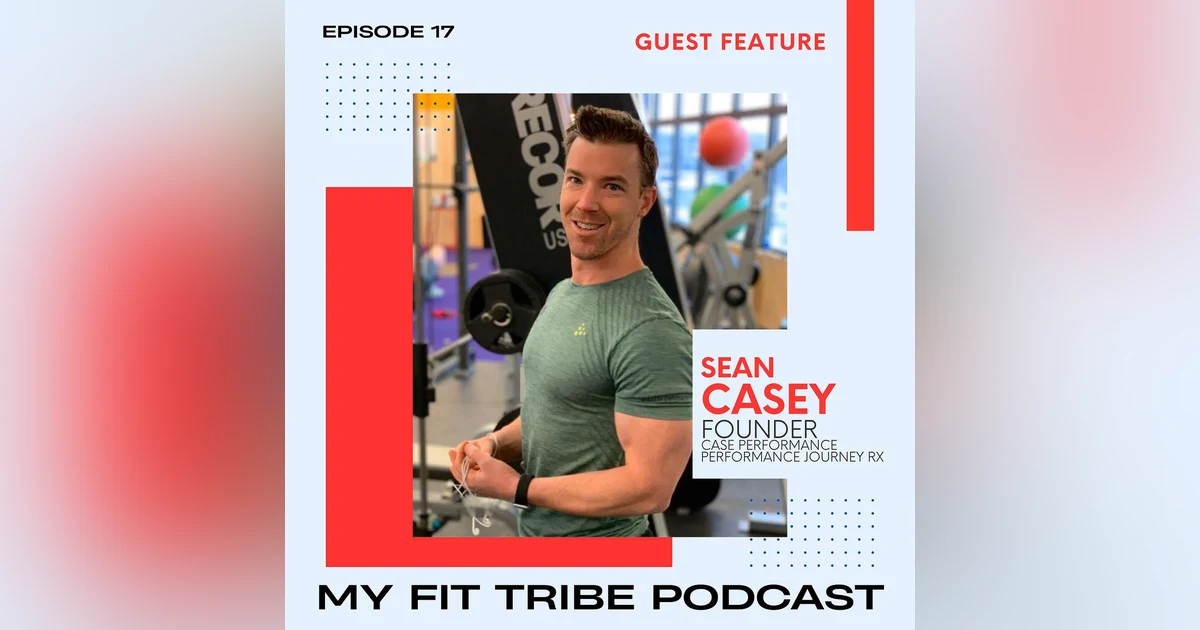

Send us Fan Mail This week we’ve got an amazing episode lined up for you. Today, we’re joined by Sean Casey, the owner of Case Performance and Performance Journey RX. Sean is a registered dietitian and physical preparation coach who works with athletes from all around the world, helping them elevate their performance. In this episode, we dive deep into practical tips to improve your mindset, nutrition, and overall health. With a strong passion for pharmacology, Sean brings a unique perspectiv...


This week we’ve got an amazing episode lined up for you. Today, we’re joined by Sean Casey, the owner of Case Performance and Performance Journey RX. Sean is a registered dietitian and physical preparation coach who works with athletes from all around the world, helping them elevate their performance.
In this episode, we dive deep into practical tips to improve your mindset, nutrition, and overall health. With a strong passion for pharmacology, Sean brings a unique perspective on how to understand what the body truly needs and the most effective ways to reach your goals.
There’s so much valuable insight packed into this conversation—I can’t wait for you to hear it. Let’s get started!"
https://www.caseperformance.com/
Throughout my own life and fitness journey, I have had the privilege of meeting incredible people who've shared valuable insights on mindset, health, fitness, and spiritual growth. The profound impact of this knowledge on my own life has inspired me to share it with all of you. I'm Erica Sweeney, host and founder of My Fit Tribe Podcast. Join me as we explore inspiring conversations with experts, thought leaders, and everyday heroes who offer their stories and practical tips to help you on your own journey. From nutrition and fitness to mental well-being and personal or spiritual growth, our mission is to empower you to take charge of your health and live your best life. We are more than just a podcast, we are a community. Through coaching, a wealth of shared knowledge, and a strong support network, we are here to guide and encourage you every step of the way. Come be a part of our tribe. This week we're joined by Sean Casey, the owner of Case Performance and Performance Journey RX. Sean is a registered dietitian and physical preparation coach who works with athletes from all around the world, helping them elevate their performance. Sean brings a unique perspective on how to understand what the body truly needs and the most effective ways to reach your goals. There is so much valuable insight packed into this conversation. Let's get started. Joining me today is Sean Casey, owner of Case Performance and Upcoming Performance Journey RX. Hi, Sean. How are you today?
SPEAKER_00Wonderful. It's a pleasure to be on. Great show, and I look forward to a good conversation.
SPEAKER_02Awesome. You um have degrees in both kinesiology and nutrition science from UW Madison. Let's talk a little bit about where your passion for fitness and nutrition started. Like were you two? Were you 10? Like how old were you?
SPEAKER_00I was probably, gosh, you know, around 10 years old. And I think it was roughly that time period when I saw Rocky 4 for the first time. And I just got so fascinated, you know, with you know, um, Rocky's obviously training, you know, kind of the, you know, throwing logs, pulling sleds, and then you had, you know, Drago doing all the sciencing. I, and it was that movie that really just got me fascinated. It's like, wow, how can you optimize health, wellness, performance? And the other thing, too, is uh my older brother was uh really athletic. Um, and we were both into sports, both competitive, but in terms of like athleticism, like he could blow the doors off me, you know, there. So I always thought we were like, well, what can I do to improve my performance, you know, one way or the other? And I found it through food, through uh training, nutrition, through those means. And so that's how I really got into it. And then, you know, when I was going through like school, you know, again, now we're we're like 12, 13. Um, my biggest dilemma that I had as a young kid is am I gonna go professional in basketball or in football? You know, a very realistic thought process as a little kid. Which sport am I gonna go professional in?
SPEAKER_02Right.
SPEAKER_00Um, and then you know, you get to high school, kind of reality sets in like, hey, I'm five foot seven, I have the hand-eye coordination of a three-year-old, I'm probably not gonna go pro in any sports. And but I always wanted to, you know, kind of work at the high level. And so took that through high school. Um I went to school at UW Madison. Originally, I was gonna go into physical therapy. You know, I found that to be really fascinating. And then I job shadowed with a physical therapist between my freshman and sophomore year university. And what I found was the only time I really enjoyed it was when an athlete came in that was hurt. And all of a sudden I had this like light bulb epiphany moment go off my brain. I'm like, Sean, you just got excited because an athlete is hurt. Like, what is backwards with this thought process? Again, physical therapists are very well needed. So I don't mean that as a negative, but then I started thinking about it, and you know, I'm like, well, what's the best way to rehab an injury? Well, the best way to do that is to prevent that injury from ever happening in the first place, right? And so then it's like, okay, how can I get on the front side of someone getting injured? And that's when I started thinking, like, okay, well, you know, strength conditioning, you know, and this is where my passion really kind of went to the next level was, you know, strength condition. Then I kind of made the career goal at age 20 was one, I wanted to be the youngest strength-conditioning coach in NFL history. That was one of my goals, and then to attend Olympics to watch athletes I work with compete. And I realized, you know, that's a thought of a whole lot of people. And like it's a very competitive thing. And that's where I decided, along with the degree in kinesiology, to pick up a second degree in nutritional science and dietetics. You know, because if we're able to incorporate food along with training, along with kind of that holistic approach, it can open up doors. And, you know, from there, I was very fortunate, had a lot of great mentors. Um, had my first NFL offer when I was about 24. Wow. Um, first Olympians uh were in 2016, first Olympic medalists were in 2020 with Olympic golds. And like I said, I've been very fortunate along the way to have a lot of mentors. It's taken a lot of great experience. And what I've really realized during this time period is it's about the journey. And that's one thing that I love, you know, about what you do is you know, you specifically have on your website, you know, about the journey of well-being and self-discovery, which I think is absolutely awesome.
SPEAKER_02It really opens up doors that you if you don't go there, you don't know those doors even exist. And when they start to open, your life changes. It's just amazing. So, what did your career then? You touched the base a little bit. So after you graduated from UW Madison, then where did you go first?
SPEAKER_00I I worked uh in uh Los Angeles uh for a little while. Um, and then I ran into some health issues of my own. Um, I have I'm on the spectrum of Airless Dan Low syndrome, which is basically your hypermobile, so joint pain. And I long story short, my issues didn't get uh figured out right away. So I ended up being bedridden for about a year as they're trying to figure out what's going on in my body. And it's during this time period, too, is I'm trying to figure out what's all happening as well. And so you learn through that process. And then in probably it would have been 2013, um, I launched my first uh nutritional supplement brand where I was doing formulations. And here's where my career kind of took a really interesting U-turn. So I'm still training athletes, but as I launched uh this brand, one of our uh clients was uh Hometown Pharmacy of Wisconsin. So Hometown Pharmacy is a very unique pharmacy uh where they're focused on you know helping people get off medication through food, movement, sleep, and stress management. And I was fortunate to really kind of build a good relationship. And then it probably would have been in 2018, uh, their co-founder and CEO at the time, Dan Strauss, he reached out to me. He's like, Sean, he's like, would you be interested in working together? We're putting together a science team, uh, you know, focused on proactive health. You know, our team really enjoys you. Do you just want to work together? And for me, I very much believe in law of abundance. Um, you know, I'd rather have a rather than having a big piece of a very small pie, I would rather have a small piece of something that can be asked, you know, huge and literally change the world. You know, how do we recalibrate health in the US? And so that's at that time, I'm like, heck yeah. And plus I'll be honest with you, I love the science. I love working with people. I don't like uh necessarily all the logistic business stuff. So when that opportunity became available, I said, let's let's work together. And so that took me through some interesting pathways uh to around 2018. And that uh coincidentally was um a few years prior to that, about 2016, I started working with an individual by the name of Victor Axelson, who at that time he was he lived, he's from Denmark. Uh he was up and coming in the badmint world. And uh we started working together. We had some success. He, you know, he's been he's exceptionally hard work, he won multiple Olympic gold medals. Um, but through working with him, I lived in Europe for a while. And two, with badminton, there it's really big in Europe and it's also really big in Asia. So at that time period, um, between him and other clients, I had the chance to really travel the world, which great experiences. But the thing that always resonated with me is how are people in different parts of the world approaching health and wellness? You know, and it it was just a very opening, uh, eye-opening experience where I think in the US, I always tell people if I'm in a, you know, some sort of emergency room type visit where I need to hear, I mean, I think the US is phenomenal work, but what I realized traveling to all these other countries is in terms of proactive health and wellness, there's so many things that we can learn from, you know, our our neighboring countries internationally.
SPEAKER_02Okay, so I'm gonna delve into that because I find this fascinating. So, first thing that comes to mind for me is gonna be nutrition, because we know that the food that is in this country is if you shop the inside of the grocery store, you can't pronounce any of the ingredients. And we're starting to see the effect on the body from us eating that for the generation, not to mention the food pyramid that told us to eat all of this crap. Sorry. Um, you know, but it's just in we we were taught a certain thing, you know, at least for my generation, when we're looking at the 80s of eating and we ate more processed foods with more plastic exposure with all these additives, we didn't know the long-term effects. So the first thing when you talk about other countries, I'm thinking nutrition. So when you notice the difference uh with these other countries, uh is it nutrition the number one, or what types of preventative things did you notice?
SPEAKER_00That was absolutely Miami. So the one of the things that was most uh shocking to me was in international in terms of what we consider to be overweight, you know, like hey, that that individual's a little maybe a little bit bigger than what they should be. What I found when I was in Denmark and you know, your Asian countries is what we would consider overweight, some would be like, oh wow, that that individual's definitely obese. Um, and and I think a lot of it came back to nutritionist portion sizes. So you look at the plates in a lot of these places, the plates are much smaller. And it was interesting. First time I kind of was eating over there, I'm like, oh man, like this doesn't look like much food, but it's something like when you're going through it, it's a lot of very whole foods. You know, it doesn't have a bunch of stuff in it that makes it like hyper palatable where you're just able to go through it forever. And that was one of the things that struck me was when I was living over in Denmark, I just didn't see obesity at all. And it and so that was really map. So food was definitely a big thing. And food is, you know, very much on the experiential level. So you're you're talking with people, it's a community, it's very cool, like that there, and it's like you just have smaller portions as you're going through. So that was interesting. Uh, the other thing that I found really fascinating was I was working with a client when I was in Hong Kong and started having some back issues. Uh, and so we first went to like uh, you know, a chiropractor, then we went to an orthopedic, and then we went to uh finally a radiologist. And one of the experiences just opened up my eyes was we were going through all these um individuals. And do you want to take a guess at one of the first questions every one of these healthcare practitioners in Hong Kong asked us?
SPEAKER_02I have no idea.
SPEAKER_00They said, What do you do for breathing exercises?
SPEAKER_02See, we just had this conversation.
SPEAKER_00Blew my mind. And um, and again, maybe just been coincidental, all three of these asked that question, but and I finally got there, you know, chiropractor asked him, like, man, like this is really interesting. But you know, you know, right, wrong, or indifferent in the US, you could say, hey, chiropractors are a little bit more progressive in you know, some ways there, and then the orthopedic is asking us, and finally, like, we have a radiologist that's asking us what we're doing for breathing exercises. It was just so ingrained with what they were doing. So finally I'm asking him, and he's like, Yeah, he's like, you know, why won't we be? And we're talking, he's like, you know, the quickest way that you can decrease stress within someone's body is through the breath, you know, within 30 to 60 seconds, if you're at, you know, an eight out of 10 on this, you know, arbitrary scale of stress, like through breath work, you can ratchet down a couple of levels, you know. And it's like, what we know is if stress causes inflammation in the body. So if we can decrease stress, we decrease inflammation in the body. We decrease inflammation in the body, we just got to the root cause of every chronic disease out there. And so, like that was the other really thing that opened up my eyes from a health and wellness where I think, you know, a lot of individuals uh in America, like I said, nutrition's obviously big, but bringing into that whole meditation, um, breath work, um, spirituality, you know, whatever, that whole dynamic I think is so powerful that we can tap into.
SPEAKER_02So let's talk a little bit about breathing because as I've mentioned in other podcasts, breathing is really hard for me. Gary Brecca talks about breathing, uh, but to start off your day, and he does a very deep breath. Um, just resetting your system and bringing that stress level down is very should be very easy for me, not easy. So, what do you how does somebody start with with that mindset, that breathing process?
SPEAKER_00As simple as just focusing on breathing through your nose for a minute. Again, I always think of what is the least barrier to to get involved in something. So I always look at those very small little steps. And um, and it can even be as simple too is being mindful of what's happening in your life, just taking that minute to pause. And I think that's where really the the beauty of breath work is. I mean, we're already breathing right now, you know, as we're here. So it's not like we're starting this as a brand new thing, is and that's what I love about breath is it's literally free and you can do it anywhere you want to. Um, and so that's what I always tell people is just take that pause. Um, a lot of people when I'm first starting off with them, is you can get really busy during the day and just forget to do that. So, what I have found for effective for a lot of people is, you know, maybe it's not first thing in the morning, maybe that's like just when it's all chaos because you're you're getting ready for work, maybe you have kids, you know, whatever it is. But it's like, okay, you know, I want to be able to commit to something. I'm just gonna set an alarm on my phone, you know, where it's like, okay, when it's two o'clock or whatever it is, just kind of one of those subtle reminders of, okay, I just need to take 20 seconds to kind of breathe through my nose. One of the easiest things I always find is kind of the call the 424 method is I'm just gonna focus on breathing in through my nose for a count of four seconds, pausing for two seconds, and exhaling for a count of four seconds. I'm gonna just repeat through that cycle three times. So that's 10 seconds to do one cycle, 10 seconds for a second cycle, 10 seconds for a third cycle. So literally just 30 seconds and just taking that moment to pause at you know, some point during the day, whenever it's most convenient for you, or having like a just a subtle reminder. It might even be as simple as hey, I'm gonna put a sticket note on my my work desk where when I um before I start off the work day, I'm gonna see that visual reminder, I'm gonna go through that for 30 seconds, I'm gonna take that sticky note off, put it on the thing, and just start going. So that's what I always tell people is have something that is just 30 minutes. Because I think a lot of people when they think of breath work, they're like, okay, I need to I need to clear out five to 10 minutes of the day. And I know it's only five to 10 minutes, but still it's kind of a nuisance. Um, I don't have that visual reminder. So that's my big thing is let's condense that to as short of a time period as possible.
SPEAKER_02And it's also one of those things where I think of where I have to not only have to stop what I'm doing, but I have to clear my brain to do it, which makes me not want to do it. That makes me procrastinate it, right? So if it's only for 30 seconds and I do it you starting off doing it once or twice a day, that's very attainable for anybody to do, including me.
SPEAKER_00Yeah. Exactly. And that's the thing, is because I know how it is when you get going to work. Like the mind is going a thousand miles per hour, and sometimes when you pause, it's like, oh crap, I'm gonna lose this thought, it's gonna, you know, drift off, I'm not gonna be able to pull it together. So if you're able to do that at the start of the day, it can work. And I always tell people, what do you have to lose? You know, it's not like, hey, I just invested, you know, $10,000 in cryptocurrency and I'm hoping it pays off, right? Like there's uh the you know, in terms of downside, there's there's not much downside. So I always just kind of look for those little things and you know, and it'd be fun. Like I could, you know, share stories of just clients I've worked with, and just through breath, like I've had people get off blood pressure medications almost solely through breath work. Um, you know, make sure we get some more magnesium in our diet, let's incorporate breath work. And interesting. Uh, one of the stories I can share is that I was working with a client, and this individual was into like CrossFit. Where they came to me was they were having issues where every time they ate food, they'd get stomach pains, they would have all these sort of, you know, GI issues, and it had been going on for a while, like, you know, month, you know, over a year, and they had been to multiple individuals, and um they finally came to me and they're like, you know, trying, they're going through their food records, and I could tell this person was a little bit more anxious. Um, you know, on a one to ten scale, the individual shared with me, hey, I tend to ride the day at about an eight out of 10. So anxious individual. And we just got to the end of the consult, and you know, the individual's looking for like a very elaborate food changes and all the these things. I'm like, well, let's do this for the next two weeks. Like, you know, let's not really worry about the food things. I'm like, I just want to focus on implementing these a couple breathing strategies. I'm like, when you want to do it in the day when it makes most sense, perfect. But I'm like, try to get something in the morning, something evening, and anytime you're kind of ramping up in terms of anxiousness. And the person looked at me like I was crazy, like, oh my gosh, this is a total wit witch doctor, like woo-woo. I just totally, you know, paid this individual whatever. And I could tell there, so I'm like, hey, let's do this. Um, if you don't have you know positive results, you can have full money back guarantee, you know, right there. So like nothing to lose. So I could tell she's a little bit hesitant, but it was still kind of like, well, what do I have to lose? I've been to multiple individuals, nothing's worked, let's give this a try. Came back two weeks later. Um like, well, hey, how are things, you know, going for you? And she's like, Sean, she's like, it was wild. I thought you were pure like woo-woo when you're sharing this, but she's like, you know, I was a seven out of 10 on a daily basis for anxiousness. Now I kind of go ride the day at about a four out of a 10. And so I'm thinking, like, man, if two weeks, if we can go from a seven out of 10 to a four out of 10, that's awesome. But here's where it got fun was she was like, after about 10 days, I noticed I was eating food without having like the stomach issues and the GI issues. She's like, what is the deal here? And then I'm like, oh, that's pure sorcery, I'll be honest with you. No, I didn't. So I was joking with her. Um, but then I kind of explained to her is you know, your gut is directly connected to your mind. Um, they're, you know, if if you look in a lot of the science literature now, they're referring to your gut as the second brain. They're crosstalking with each other. So if we are very anxious, that's gonna affect our gut health, you know, inflammation and all those type of things. But I'm like, I'm like, I can't say for certain because I can't see inside what's happening to your gut. But, you know, if we can decrease that stress, we decrease inflammation. We decrease inflammation, your gut's gonna feel a lot better. You're now gonna be able to start absorbing those nutrients more efficiently. And, you know, I think there's some wonderful things that can happen there. Um, I think anything that we can do to decrease stress in life is amazing simply because, you know, the thing about skin health. I'm like, what's happening on your skin is a reflection of what's happening inside your gut, you know. And I'm like, if we decrease stress, be a breath worker or whatever, I find most people's skin can be look really radiant, you know, within a little while. So I mean it's just wild how the body's commute uh connected and how you can integrate different things, low-hanging fruit to bring about that health and wellness on their journey.
SPEAKER_02Our body is such a complicated machine, it blows my mind. That is an awesome story. But the thing too, when you start with something with anything, health fitness, wherever you start your journey, the momentum that you create when you have those little bits of success is is life-changing. I mean, I can only imagine where her journey led her.
SPEAKER_00No, and that's the thing, and you know, and this would be fascinating just in your own experience. I know you do a lot of stuff wonderful with people, but how many times have you had a you know client or someone in your life that you worked with and they got better in that little thing, be it a something fitness related or whatever element, but then that confidence they gained from there, they applied it to all other aspects of life and they just blossom like wild.
SPEAKER_02Exactly. Those moments are are my favorite. Oh my goodness. So the other thing that you mentioned, I just want to go back to a little bit is you mentioned the smaller plates. So initially I was like, well, smaller servings, but you're right, we do have really big plates. I never thought about that. Because if you fill it up, I mean, duh.
SPEAKER_00It's it's a wild like mental game. I mean, even like uh gosh, I remember I went, so I I love ice cream. Most people are like, wait, you're you're a dietitian, you love ice cream. Like, yeah, I do. I'm like, I'm I I crutch ice cream. But I remember going to like uh in Denmark, first time I went out for like ice cream, and I don't remember what the name of the place was. Like, I'm like, oh, like I'll get the large whatever. And it came back, and it was like very much like that's like. A cross between maybe a small medium, it might be like one of those medium type things, but it definitely wasn't a large by US standards. And uh man, like I'm gonna be hungry after this, but like you're having it again. I there's something with what you see visually, and when you consume something, I don't think your brain, you know, how it really is, I don't know that aspect, but it's like when you have a smaller portion, if you eat the entire thing, it's like you have that sense of like, okay, uh this was what it was. And I found that like just appetite-wise was wild.
SPEAKER_02The changes and also, like you said, what food you're eating and uh how the food that we have makes us more hungry. What a big difference that is.
SPEAKER_00Yeah. The I I I think that's one of the things with US is the food is so hyper palatable that you can go through a lot before it even starts like connecting with your brain, like, hey, you've just went through an entire bag of whatever, like you shouldn't be full anymore.
SPEAKER_02Right, right. And it does take to get to the bag till you realize that. Speaking from experience, no, I'm just kidding. So, how did that look with your athletes then when you're traveling around the world and you're starting to see the differences? Like, where did where did that take your career and with your athletes as you learned along the way?
SPEAKER_00When you start bringing in all these different aspects, is I I found a lot of them, they just found like their life was more fulfilling. Um, and they were able to recover faster. And I think, you know, a lot of people think about athletes in terms of recovering physically, you know, so they can be ready for the next session. I think what can often be missed is how are they recovering from a mental standpoint, from an emotional standpoint. So I mean, again, those same things that you talk about with your fit tribe is, you know, path of mental, physical, and emotional wellness. That's what I found that I was able to do is by bringing in these other elements, you know, their performance increased, which was great, but I found it's like there are other aspects of life they were just, you know, happier with, they were able to enjoy life more on the journey.
SPEAKER_02That's important because we tend to miss that sometimes. It goes so fast.
SPEAKER_00No, it it it can go quick.
SPEAKER_02So, how did you get then into the pharmacy side of things? Like what did I mean, obviously you're looking at the well-being and what was that trigger for you?
SPEAKER_00Yeah, so here's where it got really cool within the pharmacy world, where to be able to start to integrate uh this these aspects is one, I've yet to meet the person who gets excited, like, oh, can't wait, wait to wake up in the morning. I know I have 14 different medications that I have to take. You know, and you know, and again, medications are life-saving. So I'm not saying they're you know all evil or anything of that nature, but where it became really fascinating, the more that I you know spent time within the pharmacy world, I started to learn about how a lot of medications deplete essential nutrients within someone's body. Um, a few examples, again, I'll I'll in the athletics specifically is um any uh individual who's on estrogen medications, be it for to treat a medical condition, oral contraceptives, you know, whatever it is, most of those medications will deplete both B vitamins as well as magnesium. We know that B vitamins and magnesium are essential for a lot of different things, um energy production. Uh, your magnesium is key for, you know, plays a huge role in sleep. It plays a huge role in uh anxiety, a lot of these different things. And so once I learned about this was I was able to like, okay, I notice a lot of individuals who are on be it estrogen medications, and I'll just use this example, you know, before long they're taking maybe like uh anti-anxiety medication or something of that nature. And so that's where I'm like, wow, like we can take nutrition and be it, you know, they're eating more dark leafy greens, or maybe they're taking a magnesium supplement, whatever it is, but they were able to help to reduce some of the side effects of the medications that they were on. And in a sport performance world, is if we're getting better sleep now, um, and if we're, you know, having better energy levels, that's going to show up if you're timing someone. And so that's where I'm like, wow, this is really cool how this can tie together. Um, a couple other ones. Anyone who's on metformin. So metformin is, you know, for type 2 diabetes, it's the first line medication that almost everyone is on. It does phenomenal work in terms of lowering blood sugar levels. Unfortunately, it also depletes the body of vitamin B12. B12 is essential for maintaining nerve health. And so diabetes runs in uh my dad's side of the family. And one of the end things of uh long-term type 2 diabetes or type 1 diabetes is they they'll get neuropathy, um, which can lead to limb amputation. It can lead to a lot of negative effects. And once I realized that, okay, if they're on metformin, if we don't you know get you know B12 into their body as well as folate and a few other things, I'm like they're we're actually kind of speeding up some of their neuropathy symptoms. So again, that that was just the other area that I was able to, again, very fortunate to learn from some very uh smart individuals about how these work in the body. And then again, trying to take those and share amongst our community. So we're not now on three or four different medications. If you have to be on one medication, let's try to stop it right there. Or instead of being on the medications, there are things that we can do through lifestyle, so you don't have to be on a medication.
SPEAKER_02Now that's the question because some of those things that you can do through your lifestyle, people would rather just take the pill because it's easier, you know. But then again, like you said, then I have seen medications that are, you know, pharmaceutical medications that are uh advertised to help support symptoms from the other medication that you're taking, but then those cause other side effects, including death. You know, I mean, it's just it's crazy. And I'm not good at taking my vitamins and supplements every day. I certainly would not be good if I had to take a pill every day or multiple pills every day. Um just to back it up a little bit, because magnesium I know is something that is super important, but there are different types of magnesium. Can you just touch on that real quick?
SPEAKER_00Yeah, absolutely. So different types of uh magnesium, um, probably with the most prevalent magnesium. If let's say if you're going to your um local big box, you know, location um there, the one thing you'll see in a lot of your magnesium supplements is called magnesium oxide. It's probably the most prevalent one in there. The unfortunate issue is your body cannot absorb magnesium oxide. Um, and so that ends up being uh if you're trying to, you know, if you're having a colonoscopy tomorrow, hey, great, because that's gonna run right through you. Assuming you're not doing a colon prep for a colonoscopy, stay away from magnesium oxide. Uh, the forms I'm a big fan of is uh magnesium bisglycinate. Um, magnesium uh citrate can have some good things, and then there's malate and yeah, torate there. But I I try to make sure that I was tell people just avoid magnesium oxide. Go for ones that are attached to amino acids, like I said, magnesium bisglycinate, uh, magnesium uh citrate, that's another one that's absorbed a little bit gentler on the the body.
SPEAKER_02So that's what frustrates me is there's all of this information out there. So if someone is trying to, you know, self-educate or sees a post or thinks, okay, I'm gonna add magnesium to help me sleep, like, oh, you can add a magnesium, but you're not not that kind. You know, there's just so much information, and it's different for everybody how everyone's gonna react to it as well, of course. But things like that, I mean, those are simple things that I wish would be more available to the general public, right?
SPEAKER_00And that kind of brings it uh kind of um looping around into another area is you know, the the food, the food first approach. So again, I love the nutritional supplement world absolutely, but again, there's so much we can gain from food. And I was thinking, or what are easy things that we can implement um within there? And you know, when I think about magnesium, one of the there's a few different sources of it. Uh, one is going to be your dark leafy greens, um pumpkin seeds. Pumpkin seeds are absolutely loaded with magnesium, almonds is the other source. Uh, and I always tell people when it comes to fruits and vegetables, I always think about your fists as a serving of fruits or vegetables. You know, in a perfect world, if we're getting, say, six servings a day in four different colors, we're gonna be able to grab a lot of these nutrients from food, you know, again, depending on the source and the quality, of course. But again, I always try to like, it's not that supplements is the answer, it's not that food is the answer, but I think there's things you can do to bring those both together to kind of create that holistic, you know, um, wellness plan.
SPEAKER_02When you're doing your nutrition plans for your athletes, or if you just have a client whose lifestyle, your lifestyle coaching, um, do you write like actual food, like this is what you're gonna eat every day, or you just give general rule of thumb, or do you do macro counting, or what's your approach?
SPEAKER_00It all comes back to the individual in terms of what is their goal, what are they they trying to do on there? But I always try to focus is what is the least, what is the easiest implement? I'm I'm a very big fan on pragmatic type stuff. I think sometimes you can get so lost in the science you forget of, okay, can this actually be implemented? And I'm guilty of this. When I first came out of school in my 20s, so I'm 40 right now, but when I first came out of school, I'm like, oh, I'm gonna create these, you know, elaborate meal plans for individuals and it's gonna be really good, and everything's gonna be spelled out. And I'd put like seven to eight hours in creating these meal plans. And what I found for a lot of individuals, again, everyone's a little bit different, is what I end up finding was a lot of people wanted, they thought maybe they wanted uh an elaborate meal plan, but what they really wanted to see was how can I start pairing foods together that makes sense so I know what I can I can do on my own. And so that's where I would say once I kind of got in my 30s, I realized that I just wasn't having the success with the clients I was hoping for from a food standpoint. So I ended up switching it more into okay, I want to give you the tools and now you can grab things and implement it. So it's kind of like here's my golden rules, and I'll work with you to create meal plans based off these. But one, I want a variety of minimally processed foods. When I think about um fruits and vegetables, I want you to think about your fist as a serving. We're trying to get six servings a day, or if let's just say if you're starting at one serving right now, it's going from one to six is gonna be hard for a lot of people. I'll say whatever your starting base is now. I for this first block that we're together, I just want you to increase by two servings and four colors. So now it's like here's the list of you know, fruits, vegetables, the different colors. You can mix and match how you want in those. So I'll have that block. And then I'd be like, okay, here is healthy sources of protein. Here's healthy sources of you know, carbohydrates, healthy sources of fat. So I might do a meal plan where I'm like, okay, I want you to have two for your lunch, I want you to have two servings of protein. You know, if it's meat, it's the size of your palm. Um, if it's dietary fat, a serving size is your thumb. And so that's what I end up doing was like, okay, this meal, we want this many, you know, hand reference points. Here are the foods that you can choose from. Let's create meals off there. That way they feel like they have structure to guide them. And again, if somebody's a smaller body size, they're gonna have less portions of fruits, vegetables, whatever it is, as opposed to someone who's a larger body size. But that's what I ended up finding was the most successful for a lot of the clients I was working with was those guardrails to stay within. You know, I can create, you know, uh sample menus to kind of get people started, but I really try to help them get to the point where they can take it and run it within the guidelines with whatever works best for them.
SPEAKER_02What a great approach because like you said, you have structure, but yet freedom. Because again, you can be um we talked in different podcasts about how it can trigger someone if you're too restrictive or not strict, you know, not restrictive enough. Um but also just to try to to to not be so overwhelmed with a drastic change. Because like you said, I do not have six servings of vegetables a day. I'm I'm writing that down to if I can get to one. I mean, but it is one of those things that if you don't have a lot of fresh produce, good produce nearby. Um, we travel a lot out of the country, and where we go, there's really good, you know, organic vegetables and fruits and the meats taste different. And it's so easy to eat well and healthy. You know, just I'm not hungry. I it just I fulfills me differently than when I'm back here. And it takes about 24 hours of me eating food here, you know, to could be speculated. Um, but to to go back to my old patterns, right? So it's very fascinating to really say, okay, now I'm gonna start just double what I do. That's totally attainable. And then once you get that due to like a six-week process, then then you hit six weeks and see if you can reevaluate, or how does that look?
SPEAKER_00I want to have somebody, you know, do something for four to six weeks before they can evaluate what is working, what is not working. And I'm sure you know you probably experienced it too, is from a day-to-day basis, you things can change pretty drastically. So I always look at what are you know, trends, how are we moving? I always find that four to six weeks is a good time period to get an idea of how is someone responding. You know, obviously, if someone's having an allergic reaction to food or whatever, then we change things a lot quicker, of course. But like I like to have that block. Um, here's the other easy thing I find is so uh impactful that people don't realize is you know, not only fruits and vegetables and you know, breath work, those are two easy things. But two, just drinking more water during the day. Right. That that's the other easy thing that I find. Um, and I always tell people, let's drink enough fluid since so that you have to go to the bathroom every 90 minutes to two hours. You know, if you're going longer two hours without going to the bathroom, it's you're probably not drinking quite as much as what you should be. So again, I'll start implementing little things like there. And I always realized, uh, and this is what I always tell every client that I'm working with, I'm like, don't let perfection kill progress. I think sometimes you can get so like, okay, um, Sean said to do A, B, C, and D. Oh my gosh, I don't know how to do D. And now they kind of get, you know, you can get really anxious around this stuff. I'm like, if we 80 75 to 80% of the time, if we hit our goals, that's gonna be that's gonna get you on the right track for a lot of things. So that's what I was wanting to do. I'm like, you know, four weeks, if we can hit 80% of our goals on 80% of the days, we're gonna be able to shift the needle more likely than not, depending on someone's starting place.
SPEAKER_02I love that concept. That's very fascinating. Um, I want to hop back over to the pharmaceutical side of things too, because that seems to be where your passion really kicked off. So you you know, you're doing all these things with with your athletes out of the country. How did you really narrow in on pharmaceuticals? Like what was that trajectory?
SPEAKER_00Where I would say where that came through was once I started seeing how much people were being impacted just by getting those nutrients back within their body. Like I said, the yeah, the idea that a lot of medications deplete those essential nutrients, that that's where it was you know really eye-opening in terms of helping people. And then you start seeing like those stories that um they were like, oh wow, this this changed my life. Like I think that is one of the most rewarding things that any sort of coach or anybody's working in a mentorship role, those are the things that you know, when people come up and give you hugs, I think that's you're mind-blowing. And one story I can't share in there is working with someone who this individual had uh uh ADHD. And so they were on Adderall. So one of the things with Adderall, which is a very uh well-known side effect, is it really can kill appetite for a lot of people. Um, the other thing too is it can cause in terms of, you know, as you're coming off a cycle, it can really kind of mentally can be really challenging at times. And so when I started working with this individual, was they were struggling, they had to eat, you know, over 4,000 calories a day to maintain their athletic ability. And once I started learning more about you know the pharmaceutical impacts, uh the Adderall, they would get to a little over 2,000 calories and they would just be shot in terms of trying to get more food in. And so the the individual's performance was suffering on their athletic field. And so we worked with this individual through lifestyle to help them get um reduce the need for Adderall. Um, we did a lot of focus on sleep. Um, sleep is really fasting. If you look at the symptoms of sleep deprivation, and then you look at the symptoms of ADHD, they almost line 100%. Um, it's really a while. So we started focusing on sleep routines, healthy sleep routines. Um, we started focusing on nutrients. Okay, are we getting enough nutrients from food, from you know, whatever it is, and just lifestyle. And this individual was able to get off the medications that they were taking, the Adderall. And, you know, they had better energy, they felt good, they were able to get through their day great. And I think for me, the impact didn't hit me until a little while later is when I ran back into uh the individual, and this was years down the road, and he's like, you know, they're just like, wow, this really changed things for me. So thank you so much, Sean, for what you did here. And I'm like, well, no, I I I'm happy this went great for you. He's like, no, he's like, you don't understand. Like, uh my I had I had relationship issues because of just how it affected my mood if I missed a dose or something. I'm like, it really um with my uh what wife, this really brought us closer together because now I was my normal self again. So I mean, I think it's when you start hearing stories like that on how you're changing someone's life and maybe they're getting better in athletic performance, or and then you realize, like, wow, like this had far-reaching benefits far beyond that. And that's where if I never would have known how medications impact all these other things going on, I I would have totally been like, oh man, like, well, let's try this, and I would have just left it at that. But again, that's where an understanding of like pharmaceuticals, where again, not that they're all evil or anything of that nature, but through lifestyle, you can reduce the need for a lot of those pharmaceuticals, or it could be one of those things where you can enhance their benefits because now they're having the supporting nutrients that allows that specific pharmaceutical to work better, which means they need less of that pharmaceutical, which means as you alluded to earlier, you're not having all these side effects coming from it.
SPEAKER_02So fascinating. I have to take a moment to just uh it's such a wellness is so much work. I mean, I think that's what really throws people in some days. I'm like, why do people not want to make their lives better? Why do they not want to live a healthier lifestyle again, whether it be fitness, nutrition, mindset, spirituality, whatever? And I think sometimes it's just overwhelming because there's so many aspects to it and it can be a lot of work.
SPEAKER_00And I think sometimes it is overwhelming, you know. And you and I think the other thing that makes wellness hard, especially from a nutritional standpoint, is you're you're watching the news, and on one day they're saying saturated fats are bad for you. The next day they're saying, hey, new study shows saturated fats aren't nearly that bad for you. Then the next day it's a different. So it's like constantly going up and down. And so that's where I always try when I'm working with someone, I'm like, if the more that we can do to simplify things, so sometimes clients will be like, hey, I want to do A, B, C, D, E, F, G. And it'll be like, they'll give the alphabet of things that they want to accomplish. I'm like, hey, that's really great. But let's just focus on two of these. What are going to be the lowest hanging fruit that are going to yield the highest benefit and they're the easiest to implement in your life? Um, you know, and an example is so I was talking about sleep earlier. I think most people know, like, hey, in a perfect world, we're getting eight hours of deep restful sleep. But if somebody has, uh, if they work late at nights, if they have kids where it's like, hey, the earliest I'm realistically going to be getting to bed is 11 o'clock at night due to my life style. I know at 6 a.m. or 5 30 the kids are going to be up. And maybe they only have six and a half hours of sleep that they can really focus on. It's like, you know, that's something that that'd be awesome to focus on, but that's going to be really hard to make a change in, at least in the short term. Let's focus on some of these other areas of life that we know that we can improve through just very simple strategies.
SPEAKER_02So top three, drink more water, breathe, eat whole foods. Would that be top three?
SPEAKER_00Oh man, you're a rock star.
SPEAKER_02Test the test.
SPEAKER_00You're mad. It's like you're already in my head here. I love it.
SPEAKER_02Let's talk a little bit about the Sports Pharmacy Network and also if you want to talk about your new performance journey, RX.
SPEAKER_00Yeah, absolutely. So um, Sport Pharmacy Network, uh, an organization we uh formed about three years ago. We are really focused on how can a pharmacist uh be implemented in terms of the entire sports medicine team. Um I think most people don't realize skill sets of pharmacists is the I think when a lot of people think about pharmacists, they just think about somebody who's pushing pills on there. A lot of your pharmacists are very much focused on proactive health, where it's like, okay, let's if you have lab results, be it blood work, whatever, let's look at there. Is there something that we can help on there? Two, you know, from a medication standpoint, do you have any things that are interacting with each other, which you may just be able to, you know, add this nutrient or supplement there? The other thing, too, is a lot of people don't realize is from a dietary supplement standpoint. Um, let's say if you're an athlete who's tested for you know banned substances, most people don't realize a lot of medications can trigger red flags for people. So that's kind of with the sport pharmacy we're focusing on. How do how can we add the skill sets of a pharmacist into that sports medicine, into that care team to enhance uh productivity, um, wellness, all those things. So that's an area that I'm passionate. And then the other area. That I'm really passionate on is with the new brand I'll be launching here very quickly is Performance Journey RX. And so I love RX and people are like, oh man, is that like prescriptions? I'm like, no, I'm like, if you look look it up, RX is actually Latin for a recipe. And so I always think about, you know, performance, especially the the older I get, I realize it's it's very much a journey. And so kind of like people are on health journeys, I want people to be on their performance journey. I want them to think about the long haul. Um, one thing I always tell any athlete who I'm working with is I how do I plan? I'm like, I always think about 20 years after that athlete's career is over, I want them to be able to live the life that they want to live. And what that means is they have to be healthy enough if they have kids, I want them to be able to run around and play with their kids or grandkids. And I want them to be, you know, successful there. And so that's what I always think about is that journey is yeah, we're starting here, but we got to think about what how is it what we're doing now gonna impact things down the road. So that's where the kind of the name the performance journey came up with the recipe with the idea of like, hey, how do we create an individual recipe for everyone that we work with such that 20 years down the road, they're still living a full, vibrant, thriving lifestyle.
SPEAKER_02And is that uh purely coaching or what all resources are you able to provide with this new launch?
SPEAKER_00So so with this, uh we're gonna be able to provide uh coaching in very I very much believe in like a holistic approach. Um so coaching, both the nutrition side, physical side, uh, you know, we've partnered with various uh sport coaches too. So now we're able to pull in various um sports, you know, or who believe in this philosophy of, you know, we don't want to create the best athlete today. We want to be able to work with someone so they're successful throughout that entire journey that they're on.
SPEAKER_02Oh, I love it. And then real quick, I just want to touch base on the changes in biohealth that we see coming with lab testing and AI. What's your take?
SPEAKER_00You know, the thing that I get really passionate about in terms of lab work, I enjoy looking at um blood work, microbiome analysis, all those type of things. And here's where it's gonna be really fascinating is a lot of standards today, as it relates to health or as it relates to lab values, are based off disease states. Um, but they're not really all geared into what is the best for overall health and performance. Two things I can share with you is right now, if you have your um fasting blood glucose, that's a you know a normal one that a lot of people get, is and they say, hey, anything below 100 is fine. Like you're not pre-diabetic, you're not diabetic at that point. But what we know based off research is really anything above an 88 level, the risk for chronic diseases starts increasing really quickly. So I always think about how can we optimize some of those uh lab values, not just for disease prevention, but uh optimizing uh health and wellness. So that I think is really cool on there. And then as it relates to AI, I always have I think AI is really cool. I kind of have a love-hate relationship with it. I think there are things that it's gonna make things a lot more efficient. The thing that always makes me nervous with AI, be it Chat GPT or whatever, is you have no idea where that information is coming into and where the sources are from, and if it's accurate information that you're getting. So I'm excited about it. I do have some nervousness of it, but I always think of, you know, regardless of what my thoughts are, it's gonna be here to stay. So, how can we figure out how to harness the power of AI to make our lives more efficient so then we can enjoy more of the things that we're doing? So we're not bogged down doing 10 hours of whatever work. We can shorten that up through AI assistance, realizing AI isn't perfect, but at least it can kind of get us moving the right direction.
SPEAKER_02Right. And I do think being able to do all the genetic work, all the lab work, uh, our knowledge of those test results is gonna be so much more common that I think the future of health is gonna be much more attainable because we're not addressing those issues when it comes when someone's sick, right? We're gonna be dealing with it beforehand to see what those issues are. So I think that's gonna be so fun to watch in the next few years for sure.
SPEAKER_00I think the the neat thing with AI and especially this personalized testing is the the more that we get into it, I think those costs are gonna be able to get more affordable to make you know changes, you know, there were again, how can we really fine-tune our health on the proactive side? So now we're not spending nearly as much money on the reactive side down the road.
SPEAKER_02Exactly. Which seems like common sense to me, but I think we're getting there. We're making progress, which I love.
SPEAKER_00Yeah, absolutely.
SPEAKER_02Awesome. I love this conversation. How, if someone is interested in your services, how do they find you?
SPEAKER_00Um, anyone can find me uh one at caseperformance.com. Um, on there, there's a contact form that people can sign me. Um, I'm really active on Facebook. Just my name's Sean Casey. I'm on Instagram as well. My handle is uh S T and then my last name, Casey C-A-S-E-Y 34. Um, so I again I'm active on those fronts. Um and two, uh I I love reaching out, I love connecting with people. So please reach out at any point. Uh depending on when you're listening to this podcast, the performance journey Rx uh website could be fully up at that time, in which case, definitely hit me up there as well.
SPEAKER_02Awesome. I we will put links in the show notes for that as well. I am gonna wrap up the show by asking you my two-part question I ask all my guests. So um you, Sean Casey, today can have a conversation with Sean Casey of the past. I'm gonna pick the one, which we didn't touch on a whole lot, but when you were like bedbound for a year and not sure of where you what your future was, whether you were gonna get better, and didn't even know what was going on. So you're talking to that, Sean. What would you say to him?
SPEAKER_00Hang in there. That was a really stressful time in my life, and you know, you you everyone in dark times, you have really dark thoughts. And again, I just would tell myself, hang in there, Sean, things are gonna come around.
SPEAKER_02Do you think that that was one of those it had to be one of those pivotal moments that changed, made you go this direction? Like, I need to help people who have been in this position.
SPEAKER_00Absolutely. And I think it really shaped my philosophy of this is a journey, and if we're not thinking about what we're doing today, how it affects things 20 years down the road, we're gonna miss the boat.
SPEAKER_02Okay, so you, Sean, today you're gonna have a conversation with the future, Sean. You're you said you're 40. Okay, you can pick what are you gonna be 60, 70, 80? By then we're gonna live to 120, so you can pick how old you are. So what would you ask him and what do you think he would say back to you?
SPEAKER_00Wow, this is an interesting question. Um I I I think I would ask that that Sean, hey, what what things should I be aware of that I, you know, coming down the pipe? And I think that 60-year-old Sean would turn back and say, live life, man. You'll experience it the way it's meant to be experienced.
SPEAKER_02I think that is one of my favorite answers yet.
SPEAKER_00I love it.
SPEAKER_02Thank you for joining me today. I appreciate the conversation.
SPEAKER_00It's been an absolute pleasure. Thank you so much for having me on.
SPEAKER_02If you know someone who would enjoy this episode, please help support the show by sharing. Thanks for listening to My Fit Tribe Podcast. Tune in weekly for our latest episode for more health and wellness insights and inspiration. For more information, visit myfitribe.org. Please note that the opinions and comments presented here are those of the guests and do not necessarily constitute medical advice or the opinions of My Fit Tribe. Copyright 2025, all rights reserved. This podcast is a production of MyFit Tribe LLC.