Miranda Bush- Doing Hard Things!
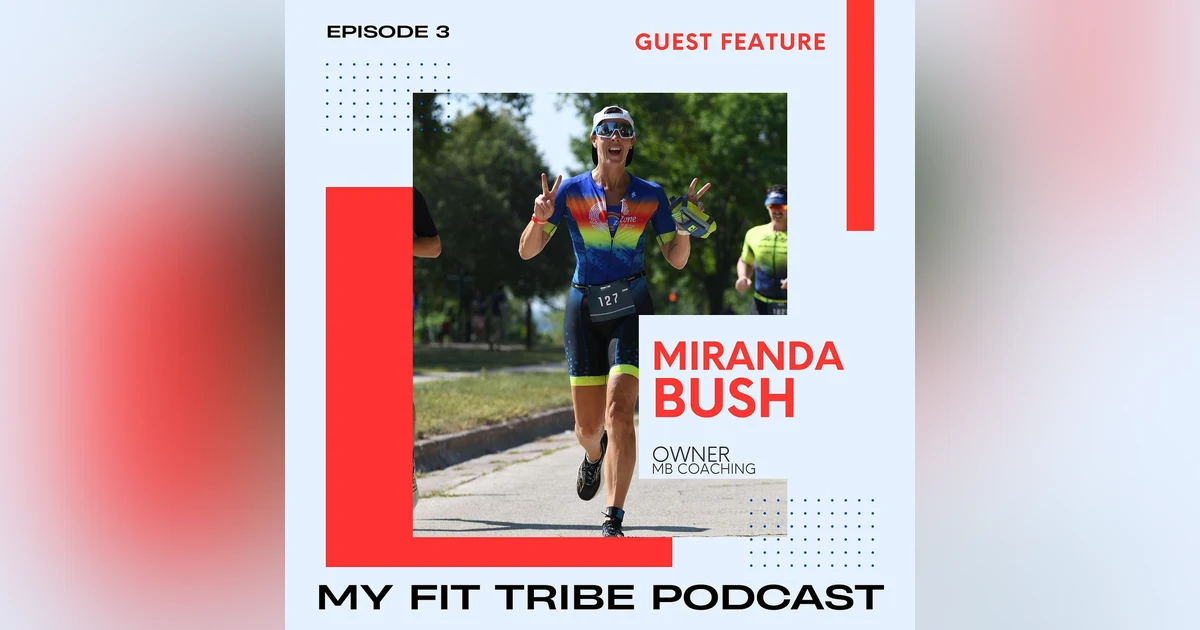


Today’s episode embodies the essence of My Fit Tribe, focusing on the powerful connection between mind, body, and spirit. I had the pleasure of speaking with Miranda Bush, an endurance athlete, coach, and motivational speaker, about the importance of doing hard things. I hope this episode reminds you that we are capable of so much more than we often give ourselves credit for.
You can reach Miranda at MBCoachingWI@gmail.com
Throughout my own life and fitness journey, I have had the privilege of meeting incredible people who've shared valuable insights on mindset, health, fitness, and spiritual growth. The profound impact of this knowledge on my own life has inspired me to share it with all of you. I'm Erica Sweeney, host and founder of My Fit Tribe Podcast. Join me as we explore inspiring conversations with experts, thought leaders, and everyday heroes who offer their stories and practical tips to help you on your own journey. From nutrition and fitness to mental well-being and personal or spiritual growth, our mission is to empower you to take charge of your health and live your best life. We are more than just a podcast, we are a community. Through coaching, a wealth of shared knowledge, and a strong support network, we are here to guide and encourage you every step of the way. Come be a part of our tribe. Today's episode embodies the essence of MyFit Tribe, focusing on the powerful connection between mind, body, and spirit. I had the pleasure of speaking with Miranda Bush, an endurance athlete, coach, and motivational speaker about the importance of doing hard things. In our conversation, we dive into the why and how behind this mindset and explore how embracing challenges can not only alter our paths, but also help us become the best version of ourselves. After chatting with Miranda, I always feel motivated, and I am sure you will too. I hope this episode serves as a reminder that we are capable of so much more than we often give ourselves credit for. Enjoy. Okay, today we are joined by Miranda Bush. Miranda Bush is an accomplished athlete, author, and certified coach, just to name a few things. I have followed Miranda's journey for decades as our kids were in the same class together for like what all of elementary school? Yeah. Oh my goodness. A long time. A long time ago. Um, through the lens of my life, I have had impactful moments that I can categorize in like three categories of mind, body, spirit. And we talked a little bit about this before we started the podcast about how you know you go through journeys and each of those and what it brings you. So we're gonna start with you today because you're such an amazing athlete. We're gonna start with body. So let's talk about your history and athletics growing up and in college and how you got interested in triathlons.
SPEAKER_00Well, thank you for having me. It's great to be here with you always. Um so my background, actually, I played ball sports growing up. I um always played little league and football with my brothers, and then I played volleyball and basketball in high school. So I had no endurance background or even anything that looked like that. In college, um, I'd say my main sport was probably partying. Um and then I um would, you know, run occasionally, run a mile here or there, and think I was going to kind of get myself back into physical shape and then give up on it a little bit and come back and come and go. And so, really, my endurance sports journey started when my kids were little and I was just kind of looking for something to take care of my body. I wasn't really satisfied after having three kids really kind of quickly, and I wasn't satisfied with how I looked. And then I also just was really yearning for a hobby that was outside of being a mom, a wife. Um, and I was staying home with the kids, so it was really a nice fit for me.
SPEAKER_01And then you started doing triathlons and you ended up doing Iron Man. So let's talk about that transition and how many you did.
SPEAKER_00So I started doing triathlons in 2008. Um, I, like I said, had never run more than maybe a mile or two at a time. And I didn't, I had never swam at all for any kind of fitness. I had, I could swim to save my life and grew up in water, but and then I owned a hybrid bike that we would pull our kids around and um up hills while they were saying, Why are we going so slow? You know, that kind of biking. And and I just I went out and I watched the Iron Man um for the first time. And I just thought, I have to do this. Um and I guess I was gifted with um parents that taught us we could do whatever we put our minds to. And so I just got on a journey toward that. And so I did Iron Man Wisconsin this year, which was my fifth iron full Iron Man. Um, and I've done many halves and just been really blessed with a body that has just kept working through all these years.
SPEAKER_01And anybody who doesn't know, the full Iron Man is a 120-mile bike.
SPEAKER_00It's a 2.4 mile swim followed by a 112-mile bike and then a marathon. A full marathon. Yep.
SPEAKER_01I just I'm just shaking my head for those of you who can't see me. And it's you just completed your fifth. I did. I'm just gonna take a pause. Oh my goodness. I remember years ago when we were working the concessions, I think, at a football game. And this was before I ever, you know, it just worked out at the gym a couple days a week. And you were talking about, you know, you were coaching people. So you started coaching people in what year?
SPEAKER_00Uh 2010. Okay. I actually started with kids. Um, and so there was this, I really saw a need at the Oregon Kids Triathlon, a local youth triathlon we have, and kids were crossing the finish line and just crying and upset and not really having fun. And I thought we need to really start helping these kids. And so we started doing clinics, and that's where I started coaching and quickly moved into coaching adults because although I have kids and I love working with the kids, large groups of kids is not really my my uh um where my comfort zone, that's for sure, which is probably good to get out of that. But um, but coaching adults has been a real gift. And I was a personal trainer at the time by that time. And um, so yeah, so then I started working with adults and has never looked back. I have a wonderful job that I love.
SPEAKER_01Oh my goodness. Yeah, and I remember you saying something like, Well, you you you can and people can find time, like you just have to get up earlier, yeah. And I I was kind of like, Well, I don't have time. You know, like there was with little voice in my head going, you know, I'm so busy, I don't have time. But that the planted a seed in my head. And, you know, it wasn't long after that that Krista and Ticey, a mutual friend of ours, was running a uh half marathon. And I had been running a little bit. Again, I'm not a runner, but she said too, well, why don't you why don't you do it? Just set the goal. And I was like, Well, I can't do that. And I'm like, wait a minute. Well, maybe, maybe I can. And it starts with, well, maybe I can sign up for it. And then it goes to, well, maybe I can complete it without stopping, and then maybe I can do it in this amount of time. And then you end up, again, d doing above what you believe you can, which is so empowering. So that seed of like, well, you just have to make time is something that I carried through that and then through my bodybuilding journey too. Like, well, if you're gonna do it, do you find a way? You stop finding a reason not to, and how powerful that is when you learn that you can do what you set your mind to.
SPEAKER_00Oh, well, thank you for sharing that. I I just love that um that little seed was planted for you. And and really I I truly in my heart believe that that it's just really about prioritizing and knowing why you're showing up. And then when you take the time to really show up to the experience and be in that moment and and when you do that, I think it really makes it more fulfilling than just a health journey. Right. And um it really kind of gives you a big impact that you really can't deny and and that you want more of.
SPEAKER_01Oh, it's life-changing. It's all of a sudden, instead of being afraid and um just so anxious that of anything that might happen in a negative way, you just realize that you have what it takes. And that has was a game changer for me. And again, running the half marathon was amazing. I spent a couple years kind of waiting to see what was next, and then you know, took the next journey. But man, every every major goal that I did, whether it be in body, mind, or spirit, I can say that changed my life. That put me in a new direction. And to be able to say that, I don't think everybody has that journey. So I'm when you are able to share what you have done, you have impacted me among many other people. Um, you opened up the zone gym in Oregon for a while. So, how many years did you run that?
SPEAKER_00Well, I owned the gym for a couple of years. Um, and then my husband and I were getting ready to build another business in Oregon that was taking a lot of time and energy and effort, and it was clear that my our most of our financial resources were going to need to go to that. And although I really loved running the gym and owning the gym, it wasn't the most financially lucrative business because I didn't really know how to run a business, basically. Um, but I then ran it for another five years with kind of a part an owner that wanted to be in the background. And so I was able to be there and doing my job and getting paid, and that was nice. Um and really got to see a lot of people reach amazing goals and that and and just really have a community of people who were positive and like-minded and rallying around each other, and it was really a beautiful time.
SPEAKER_01It really is amazing when you surround yourself with that energy, how contagious it is. I call it the contagious vibration because it brings everybody up instead of everybody down, and how again, life-changing that can be. So before we move on to the mind aspect of things in the body, like what does it what does it entail to train for an Iron Man? I mean, that's one of those things that sits in the back of my head, like, maybe someday, but again, I can't swim. I hate running, and I'm pretty much can't ride a bike, but that's that's nothing, I won't ever do it. But if if say someone like me who can't do really any of those things at this moment, how many years, how long does it take to say do a half Iron Man?
SPEAKER_00Well, first of all, anybody who's listening to this that knows me knows that now I've I've got you. And um it really everybody's journey is very individual. And as a coach, that's something that I keep my roster low so I can really focus on individuals and what that looks like. And some people come to me and they want to do the Iron Man in a year and they've never done a triathlon and we make that work. Other people uh come to me and they want it really the entire growth and evolution experience. And so I encourage them to start with a short distance triathlon, start with a sprint, go into the Olympic distance, the next kind of distance that adds, you know, a little bit to each discipline, and then go to the half iron man. And that's not only because the training takes time, obviously, but it's never the training is usually pretty enjoyable if you find that you like to swim and like to bike and like to run. And I would tell people if you don't like to bike, triathlon's probably not the place for you because there's a lot of time sitting on a bike. But there's a lot of another, other amazing things, as you know, that you can do to take care of your health and make goals that have nothing to do with having your butt on a bike for that long. So, but then you really just kind of need to have that time to figure out what the the overall load is going to take of not only the training, but the nutrition, the need for sleep, the relationships, and how that impacts other people around you because we don't exist in a vacuum and we don't just get tunnel vision and get to tell people, I'll talk to you in nine months when I'm done with this training. So when you do it kind of building up to it, it gives you that ability to say, okay, this is how much time this takes. Maybe I'll do this for a couple of years. Because the Iron Man does get to be about a minimum, probably of minimum 12 hours a week. It can get, for me, it was about 20 hours a week for a period of time, which is a lot of, a lot of time. Right. And that's not counting the work that I have to do on making sure I'm eating enough, which it really becomes kind of a part-time job, or um making sure that you're sleeping enough. And that's going to bed at 8 p.m. a lot of nights. And so it's really kind of managing a lot of different areas of health and wellness. And so it takes it takes a lot of time.
SPEAKER_01I think it's really important that you mentioned the impact that that training can have on a relationship because that's something that um if you've never competed at a higher level, that is that demanding that we don't think of than not being able to necessarily go out to eat or participate socially or or give as much to your partner as you would otherwise. And that is a sacrifice that you have to make as a family. And that can be can be challenging. So I give support to or kudos to all the the spouses and the children who are always supporting their athletes and their family too, because it's really important for us to have our own journey and our own growing experience and successes in conjunction with the family unit too, right?
SPEAKER_00Absolutely. And um, I have three kids and I've done Iron Man through each stage of their lives. And my husband is incredibly supportive and amazing in that way, and I'm very blessed for that. But it also takes a lot of communication and it really teaches you a lot about the importance of communication and how you know I'd had to vocalize this is very important to me, and had to say that specifically and had to acknowledge that. And then that also helps you follow through when you when you feel like when you voice that it really when other people are making those sacrifices and investments for you, it really helps when you voice that out loud, that then you kind of yeah, you show up outside of just yourself.
SPEAKER_01That's important because showing up is is how much I mean 90% of it or 100% of it. I mean it really is. Yeah.
SPEAKER_00Yes. Absolutely. That's why anybody can do it. It's a can it's a a journey of consistency, really.
SPEAKER_01It is. But it's also an amazing accomplishment. So I'm not gonna take away from that. Okay, we've covered the body, but let's go a little bit about to the mind. You have written a book called Far Better. We had had you over at the shed about a year ago now to talk about the book when you first released it. What was it that brought you to writing the book? What does it the book entail that you wanted to offer to other people?
SPEAKER_00Sure. Um, wow, that was a year ago. It was almost exactly. Yeah. Wow. So the book, you know, and print is so funny because it was a snapshot in time for me. And and it was my journey, but it my journey wasn't over. Right. So it's really fun. And some of the things even in the book, I'm like, oh, I don't know if I think that anymore. And so it's it's fun to read that as a as a journey and as a snapshot of my journey. Um, the book is all about my journey through endurance sports and kind of the things that I've that I learned. I was I grew up very disassociated and having the skill of really being able to disassociate from how I felt, or um, in order to be more comfortable, or in order to get what I wanted, or feel how I wanted. And so I realized that endurance sports really helped me put my feet back on the ground in a way that I could, I couldn't run away from myself in a way that so it really like opened my eyes to my relationship with God, which I think we'll talk about a little bit, and just the journey that I was on in this world. And so by kind of stripping away everything else, I was kind of raw and just had to show up and do what I could in the swim, do what I could in a bike, do what I could when I ran, and and doing those hard things kind of helped me gain perspective on on life and what is hard and what is not hard that I kind of, you know, like not everything is a 10, is what I tell my kids. And so the journey was just amazing and learning so much about myself and and really putting my feet, you know, quote unquote, on the ground. Um, obviously they weren't always on the ground in the journey. Uh they were swimming and and on bike pedals, but I uh it really taught me so much about myself and and helped me to just be okay with where I was and be okay being uncomfortable. And I really think we're made to be uncomfortable. Um, but we don't, we it's very easy in my life. I'm very lucky to have a house and have water and food and everything I need and more. And so it really helped me to get uncomfortable to really gain some perspective and and really cultivate a lot of gratitude.
SPEAKER_01It it's amazing how much time you spend talking to yourself and to God if you're religious or the universe if you're spiritual or whatever it may be, where you when you're training in a sport that is all you, you're forced to spend a lot of time with yourself, which is part of that being uncomfortable where the growth happens. And I think that that's something that um not everybody talks about either. They talk about how hard it is with the discipline, which is a big part of it, but you're really you're talking to yourself. You know, when you're riding your I can imagine if you're riding your bike 112 miles, you're gonna have a few conversations in your head, right?
SPEAKER_00Absolutely. And that's something that I find through my coaching. I'm also a master health coach and in in addition to an endurance coach. And so many people are really don't spend much time alone with themselves, really. You know, we have so many ways to distract ourselves. And when I ride my bike, I don't listen to headphones of any kind or anything. It's it's just truly me and God out there on the road. And so there's a lot of learning and a lot of revealing and a lot of, like I said, raw times where I have to dig deep and just really have to rely on something outside of myself.
SPEAKER_01And what an amazing opportunity to get through life by growing and putting yourself there. Because not everybody does that. And I think everybody should. I think everybody should do hard things to understand that they are capable of getting through hard things and challenging themselves because it's so empowering. Um it's just so life-changing.
SPEAKER_00It really is. I mean, and you and you gain so much resilience for uh hard things that you can't control. Exactly. You know, when you manufac manufacture hard things, it really prepares you for things that we have we have no idea what's coming and what we're getting prepared for on some levels, and things can get truly hard and we can't control them. And so when you have that skill set and that toolbox, it really helps.
SPEAKER_01That brings us to the a quote in the back cover where you say, Just when I think I have it all figured out, you know, which is what I say too, with with again your health or your fitness or life or your career or your family or your marriage. I mean, there's so many things. You're like all of a sudden, like, okay, I'm in a good place right now, I've got this. And then all of a sudden, wham, you have another wave come over you, and you're like, okay, wait a minute, that totally knocked me off my feet. So, how with your training with endurance sport, we talked a little bit about that, but how where did that quote come from? And how do you use that in your everyday life to get through things?
SPEAKER_00You know, I think that that's kind of what we talked about. Like my journey, it's it's never ending. You know, there's no there's no finish line, I guess, to continuing to learn more about myself, who I'm made to be, how I can show up in this world, um, how I can continue to affect other people around me, bring glory to God, impact and love others, you know, the things I think that I just realized, you know, as soon as you think you know what's happening, I feel like, and I believe that's God saying, like, no, I'm still in control. And so it's really entering life with your kind of hands open instead of, you know, closed up and thinking that you have all the control, but really just saying, okay, what's next? And then continue to do the best that you can and showing up and and being open. And I I just really love the word curious instead of control.
SPEAKER_01That's really a good way to put it. Because we we like to have control of things, right? That's perhaps the battle. So that kind of brings us to the spiritual side. We've covered the mind and the body. So it and that spiritual growth that you get to because you're spending so much time with yourself. You want to talk a little bit about your spiritual journey?
SPEAKER_00Um, sure. Yeah. I grew up a Christian, and so I grew up in the church, and um but I never really grew up knowing what that meant, I guess. You know, I believed there was a God, but I also believed that I was my own God, and I kind of spent a lot of time doing what I wanted to do. And like I said, if I didn't like something, I had a really quick uh way of disassociating from it or going a different path quickly and justifying that path. And I realized that was a skill set that really took me through many years. Um and then I yeah, I really had formed a relationship, I would say, with Jesus about gosh, a long time ago, twenty some years ago. Um, but then again, when things got uncomfortable for me at a period of time when we moved to Oregon, I didn't know where I fit in for a period of time. And so I did what I knew how to do and I kind of found a different path. And in the last couple of years, like I kind of God was like, I think he ran me down, man ran me down and tackled me instead of just kind of like because I realized I had like still had him in the passenger seat for all these years, but I think he was like, okay, I'm kind of tired of this. I'm gonna drive again. And it really like, it was like a veil like just being torn away from my eyes, you know, like I all of a sudden like I I see things differently. Life feels freer. Um, I don't feel like I have to keep searching and seeking. And that's where I think it's cool. I think the book was part of this journey in a way that, you know, he used all of that and uses all of these things for his glory and for my good. And so I get to show up now. You know, the story is, you know, always to be continued. And so I get to show up now and just truly love people in the way that I had been searching for. And with that freedom to have grace for myself and for other people and forgiveness. And I hope it makes me a better coach. I feel more connected to my athletes. I feel um just more grounded as a person. I I really feel like my eyes are really open and my heart is super open.
SPEAKER_01That's beautiful. Again, it's a I think it's a hard place for us to be at in life because there is so much noise in the world with the way technology is and everything else. But to be able to to find that peace and impact others is just why I think we're meant to be here. So you're doing amazing things. If you if you're here to talk to people who maybe have never had a a sports journey or are just kind of feeling a little flat in life and not sure what direction to go. This book has great resources, but what advice would you give someone who's just kind of stuck?
SPEAKER_00Sure. I would say, like kind of what we've already talked about, the first step really is you have to spend some time alone with yourself. Um you have to slow down. I mean, that's another our culture is you know, all hustle, all hurry, all strive, all want more. And I think to really slow down, you know, to really take that pause and spend some concentrated time away from your phone, away from the hustle, away from any distraction. Um, and I do find that on my bike, and so I don't think it has to be just, you know, meditating or sitting, you know, meditating is about clearing your mind too. So it really is um about like having those conversations with yourself. Um, for me, like I journal a lot, and I think that that helps a lot to really like, what am I thinking? Who am I? You know, that was one thing I really realized. And what I talk about in the book is I didn't even know what I was thinking. If somebody would have asked me in a day, what did you think about today, or what were some deep thoughts you had, I would have think, I don't even know what I thought for one thought, you know, other than what are we going to have for dinner, or what time am I going to go for a run, or where do the kids need to be and what do they need next? Um, and so I just felt like I was being swept away. And so I would say, start there, start with that pause, start with actually taking some intentional, concentrated time with yourself. A lot of people find that a walk is good for something like that, but a walk with no headphones, you know, a walk out in nature and get outside. It's amazing what being outside and connecting to nature really does for you in that way too. And kind of opens up these pathways that, like you said, the world is so loud in our in our ears and in our vision all the time that it's hard to even know what we want or who we are or what what we're seeking after. Um, and so I think some time to actually pause. It's been a big part of my personal prayer journey has been not just talking at God, but like being quiet and listening for his voice instead of just talking, talking, talking and you know, still me, me, me. And I think that that's important. And and I do encourage people to think about that faith side, that spiritual side, and start to think about how am I how are my actions impacting others and how am I showing up in the world? Am I the person that I want to be? And then I think the rest of it kind of can unfold from that. You know, and when you're doing that, you feel like you're it's authentic wherever your goals take you. You know, it's not a trying to put that square peg in a you know, circle, whatever you say it, you know what I'm saying? It it really becomes like this is where I feel like I'm meant to be and what I'm meant to be doing, and it that really helps. And I was blessed to fall into something that I loved and I I think that God was, you know, had me there all the time. And I'm just feel very fortunate that I can do that. And for some people, they've tried that and that hasn't been it from a health standpoint. But I think if you kind of are quiet and those little, those little nudges, those are the ones you want to listen to.
SPEAKER_01And you talked a bit about when you know you spent time with your kids and you're in the different stages, and a lot of times when you're worried about get preparing the dinner that's coming up and all the getting kids to soccer practice, all the things that go on when you have kids at home to take care of, you're not taking any time for yourself. So I know for me, I didn't start that personal growth of journey until after my kids were pretty much out of the house because it was all kids, kids, kids. That's I had to, you know, devote everything to them and my job, that there was no room left for me. So when I took that time and got that empowerment of what can be achieved, and it felt like I I always say it's like uh playing a video game and all of a sudden you get to the next level. Like it's all of a sudden you've got the the monster at the top that you beat, and you're like, ah, you know, like I'm thinking of like Atari, not or Super Mario for our generation. But it just it's like, okay, I just unlocked a level. Like that's how for me, when you do those hard things for yourself, that allows you to take care of other people better because you are becoming a better person and growing in a way that makes you more true to who you are, right?
SPEAKER_00Yes, yes. And that's I mentored a lot of moms through the years because of that, because I really felt like we don't have to wait. Right. You know, and you and you want your kids to see that role modeled. Kids really follow what we do, not just what we say. And it really helps to role model taking care of your health and having those goals and and it really helps the role model if failing and falling short. Yeah. And showing kids that maybe you train for a race and you don't get the goal you want, and being open with them about that because they need to know that they too can fail and they'll be okay. Right.
SPEAKER_01And it's okay to try again. You know, or maybe you like you said, maybe you find something else, but you have to, I think seeing it through is hard for people too. I mean, even just, you know, become getting a good healthy regimen, whether it be nutrition or exercise, people tend to sometimes jump all in and then they give up too quickly instead of developing those good habits that is really not only for their physical health, but the mental health as well.
SPEAKER_00Absolutely. And that's and to nurture your mental health, you do need to start small. Right. Um, and it's really hard as a as a health coach, you know, we start with the baby is baby steps, you know, and it really but it's about consistency first. And whatever you can do consistently is good enough. Right. As far as taking care of your health. And so it really is so important to really start where you are. And that's the other advice that I always give people start where you are. Like you said, you don't have to go all in. It doesn't have to look like what it looks like for somebody else. Um, but to really start where you are and to be humble enough to start where you are. And if you can't run a mile, you start with running one minute. Right. You know, and and that's otherwise, you know, what I would see is people come and they would think, oh, well, I can run that far, and then they're hurt or they're discouraged, or but if you start where you are, you just get to see the journey unfold. And of course it always has the peaks and valleys, but you can know that you're honoring your own body and your own journey.
SPEAKER_01Yeah, it is really important. I that's how I started running is two minutes on, two minutes off. I might have been one minute on, two minutes off. I don't know, but I if I I mean you just you have to, your body can't jump all in, and that's okay. And when you start to build that time to be more successful, you gain that confidence, and confidence just is just like a lock, unlocking a door, right? Totally. What would you what advice would you give to the young people? I mean, you have three amazing kids and you've you've trained through the kids toy athletes. What advice would you give to these young people today that are just kind of stuck without that ambition?
SPEAKER_00Yeah, you know, I would uh gosh, I mean, I have a lot, but I think I would tell young people, remind them that they're not defined by their achievements, that it's it's fun to try things and do things, and but none of none of these things define them. And so they can, you know, get a C in a class and that's okay. You know, they can fail in a in a sporting event, and that's okay. Um, and so I would I would tell them figure out what you love. You know, this is a time to try so many different things and don't be afraid of failing. You know, these are all kind of sound like these cliches, you know, like, oh, you know, that sounds like a nice idea or platitudes, but I feel like it it's it really is true. And like I said, I think as parents, as people in the community, as people who kids are always watching, all of us, that if we can role model that, it really helps because kids see us as, you know, perfect or they see us as never making mistakes if we hide it. And I think kids need to know that they can fall on their face and somebody will be there to pick them up. And so I would just keep encouraging them and remind them like what the the investments that they're putting in their body now or the not investments really do still matter. You know, the your body is going to someday remind you, it maybe feels invincible now, but someday it will remind you of all the things that you did before. And so you don't have to be perfect, we can't be perfect, but to really try to like think about taking care of yourself on on some level and have fun in life, you know, like find joy and find what brings you joy, and and don't live like you know, that your youth is just kind of this time that doesn't matter because it's all, you know, put your s put your feet on the ground and truly start to get uncomfortable a little bit, make some hard choices, surround yourself with good people. You know, there's just so many things, the same things I would tell adults. Right.
SPEAKER_01But I feel like we we are afraid to have that conversation sometimes with our kids. You know, we're I'd for whatever reason trying to I don't even know why we don't, you know, but maybe it is important that we all have conversations a bit more like we do with our peers.
SPEAKER_00Yeah, I think there's this idea that our kids won't respect us if we tell them that we have messed up or that, you know, the way I obviously I look at it is like we're sinners, we need a savior too, and we're just on the same level that they are in that way. And I think I see that as freeing, you know, that we can all look at each other like humans and imperfect, and we can apologize and ask them for forgiveness, and then not in a shameful way, but in a way of just like I said, showing them what that looks like, and then they can go forward and do that too. Right.
SPEAKER_01Do you have like a favorite story or a favorite memory as far as when you've been training or coaching?
SPEAKER_00Oh my gosh, I have so many. You know, collectively, most of my favorite memories around sports, around endurance sports has probably been honestly thinking about other people doing things. Um, I've had a I've had so many amazing, and I don't want to like sound like I don't care about my own accomplishments because I do, and I feel very, very blessed to have crossed so many finish lines and had success. Um, I think this last Iron Man I did was really, really special to me. The journey was very special. Um, I felt very open to whatever the day brought. And so this experience in general was just so awesome. I feel like my heart is open. My day was great. I mean, the day the weather was amazing, and I had a large personal record, and it so it was just all around very fulfilling. But I think some of my favorite memories are watching friends. You mentioned Kristen Ticey, um, good friend of mine, a beautiful human, and she um crossed the finish line of an Iron Man when she never thought she would. And I've seen so many of those that I would be terrible for, you know, listing them because I would definitely forget somebody. But I it it's really cool to see people do things that they never thought they would. And that's that was my personal experience and why it really is authentic for me to be like, you can do this too. Right. I never thought I would. And why I love to encourage people, it's not about you know thinking they should or anything. It's just really saying, if you want to, let's do it.
SPEAKER_01Right. I know it's that you know, it for me when I did my first bodybuilding competition was in 2019, and you know, I had some some things happen in life at the beginning of the year that were tough. And I was just feeling very bogged down by it. And um, we lost our husky, had had eaten um gum. For anybody that has dogs, don't let them have gum. It was accidental for the record. Um, but it was just it just kind of hit me that life is short and all these things I said I would do that, but I would have, we could have. I realized that that perfect time was never gonna come. And that's when I just said, okay, um, let's just do it. And I was terrified along the way, the entire way. Um, but again, it was just getting through that next level where I was like, okay, this is just, this is just something different spiritually to spend time with myself, for myself, and to grow and how empowering that is. It's just if I can do it, anybody can do it. You know, I didn't do that until I was 45. So all these people that are listening that are, you know, at any age, you can do whatever you put your mind to for sure.
SPEAKER_00Absolutely. We have a woman in our racing team who did her first triathlon at age 69 years old. My gosh, that's so awesome. And and I could tell stories like that forever. People that, like I said, never thought they would, overcame obstacles, um, never thought they would have the time or the ability. And yeah, I just feel like you, if you have that inkling in you, I think you need to go for it.
SPEAKER_01So as being a health coach, what all do you offer as a health coach?
SPEAKER_00Um, well, my whole that's all that's a work in progress right now. Um, I just finished, it's a master health coach program. So it was really rigorous when that was really a humbling experience this year. I didn't I thought it would be really simple since I'm I was already a health coach. Right. Um so that's kind of that was a really big lesson for me in taking on things and just kind of being a little bit, you know, arrogant or egotistical, like, oh, I've got this. And so, you know, that was shocking as far as the time commitment and the energy commitment and what I what I I didn't know what I didn't know that I had to learn still. So it's something I'm proud of because it was a hard time to do it with training for Iron Man and having the kids home for the summer, which was unique in general. And um, so anyway, I really am excited to use it right now with my current athletes and just kind of up-level their training um and any athletes that I bring in through endurance sports. And I don't know what direction it'll take me in. Um, I'm really less reactive to life and more just kind of responding and um taking opportunities. I feel like I'm in a season of waiting and for the first time in my life, literally the first time, I am okay with that. And I wouldn't say I love it, and I find myself, you know, like kind of spiraling into like, okay, what else can I do? There's so many good ideas and so many opportunities. And I realized I wasn't doing that for the right reasons for a long time. So I'm just in this place of kind of waiting and watching things unfold, and it's so it's so exciting in all the ways. And that doesn't mean I'm just sitting at home, you know, sitting on the couch. I'm still active and doing all, you know, things that I feel called to, but I don't feel this hurried, rushed, harried kind of like I have to prove something kind of feeling that I realized I was living in that I didn't know that I was. Right.
SPEAKER_01And going up that mountain of of curiosity and patience is a completely different feel when you're used to sprinting up the mountain. It's a completely different mindset that takes a bit of adjusting to get to for sure.
SPEAKER_00Absolutely. But it's exciting and then just thinking of I love to help other people in lots of ways, volunteering and doing all kinds of things. So I've just had more space and energy for that stuff too, and just grateful for the opportunity. That's awesome. If someone is interested in hiring you as a coach, where can they find you? Um, they can find me in all the ways. They can, you know, email me at mbcoachingwi at gmail.com, and I'm sure you'll link some of this stuff, but um, that's probably the best way. They can find me Zone Coach M on Instagram. Um, that's where I do a lot of my work-related stuff. Facebook is a little bit more of my personal stuff, but those are two great ways, and I do have a couple roster spots left. Like I said, I keep my roster really low because I really do love to work with people and and really know them and see them, not just and understand them, not just farm out training plans. Um, so it's really important to me to really get to know people and I coach people it locally and then also all over the country. And so I have a lot of awesome, awesome athletes that are doing really fun things.
SPEAKER_01I love doing these podcasts because I know so many people that have made an impact. And I'll steal a line from Ed Milette who says we are best there to help the person that we once were. And I think that that just gives me goosebumps to know that I mean you look at where you were and where you've come and all you've accomplished, and now even looking at where you think you might go and that journey that it's gone. But you've impacted so many people, and you know, social media fuels so much anxiety and can be filled with negativity, but yours is just a place of, you know, this is what I did. I feel great. You're out, you know, showing a different level of competition, you're seeing determined, and you're so positive. So I want to thank you for positively impacting my life and all the people that you touch. So I'm gonna wrap up with my my last two-part question that I ask all my podcast guests. The first one is gonna be if you can, you, Miranda, today can have a conversation with Miranda, say, when you're a teenager to the past, before you started this journey, what would you tell yourself?
SPEAKER_00Oh gosh, gosh, you're gonna make me emotional. Um I would I would really say stay stay grounded. Don't don't disconnect, don't try to do everything you can to try to fit in and belong with people. Um I would really encourage her to connect with God more, to really stay there and to really investigate that in a way that is meaningful. Um and I would tell her you're gonna be okay. You're gonna be okay. And and um you the the love that you feel that you want to give, you'll eventually really feel inside yourself and be able to share that with others.
SPEAKER_01I think it radiates from you for sure. Second part of the question is if Miranda today can have a conversation with Miranda of the future, whether that be five years, ten years, twenty years, you can pick. Oh, wow. What would you ask your future self and what would your future self tell you? Oh my gosh.
SPEAKER_00This is like a time travel question.
SPEAKER_01If you really sit there in that space, you know, a lot of us who have been through these journeys and we're impacting people not f because you know, because we want to help people, we don't really spend much time always talking to ourselves and our future self to realize that we've made a difference. And I think it's a good thing to reflect on.
SPEAKER_00Yeah, yeah. Yeah. I think if I was thinking about my future self, what would I want to ask her? Gosh, Erica, that is really hard for me because I feel like it's hard for me to think about that because I just feel like I just have no idea what that looks like. You know, I think when I think about the future, I think that's just unfolding every second that we're here. You know, and it's it's really hard for me to think. I think I would want to just I would want to know how yeah, I don't know. Gosh, I that's a really put you on the spot kind of question. Well, that's a big one. I I think I need more time to think about that.
SPEAKER_01What do you think if your future self could just say one thing to you? If we take away the asking the future self your question, what what do you think she would say to you for today?
SPEAKER_00I think she'd probably say, you know, your story is still to be continued. Just just keep showing up, keep uh stay, like I said, stay grounded. You know, when I think about I keep coming to that when I think about my young years, like it feels like I was floating. And so I think that that's so important to me. And I think she would say, like, just stay on the path and keep loving people. You know, really like your your whole thing here is to bring glory to God and for the good of the other people around you. You know, don't don't think about it like self-preservation and and how, you know, like how how do you stay okay, but really think about it like now you know.
SPEAKER_01Right.
SPEAKER_00Now you know, and so go out there and and do the best you can with realizing you will fall short. Yeah, I just hope that that's in 20 years. I'll look back and remember this moment and this time of my life as that pivotal time that I was ready to kind of do that.
SPEAKER_01I think that's perfect. I think you're very ready, and I think you've made an amazing difference in many people's lives. So thank you for joining me today. Oh, I appreciate you. Thank you. Thanks for listening to My Fit Tribe Podcast. Tune in weekly for our latest episode for more health and wellness insights and inspiration. For more information, visit myfitribe.org. Please note that the opinions and comments presented here are those of the guests and do not necessarily constitute medical advice or the opinions of MyFit Tribe. Copyright 2024, all rights reserved. This podcast is a production of MyFitTribe LLC.