Mary Theisen-Lappen - Defining Strong!
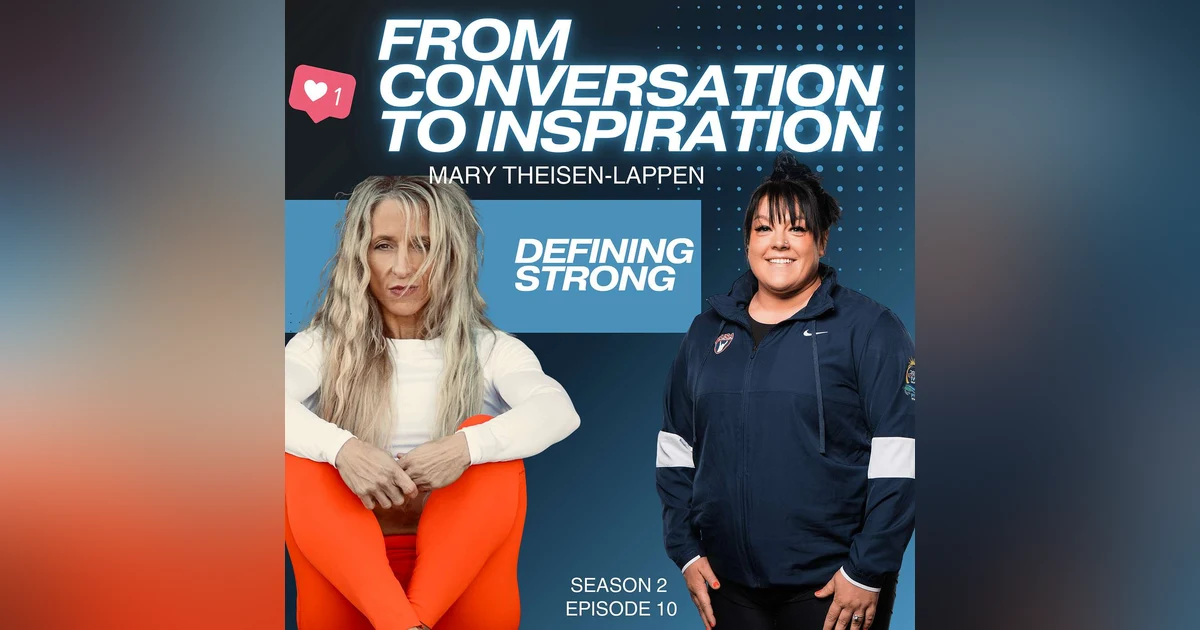

Send us Fan Mail In this episode of the MY FIT TRIBE Podcast, I’m joined by Mary Theisen-Lappen, a world champion powerlifter. Throughout our conversation, we dive into her incredible journey—how impactful coaches can be, and how important it is for people to feel strong and confident in their bodies. I loved talking with Mary about the realities of competing—the highs, the lows, the fears, and the wins and accomplishments. This is one of those conversations where you’re reminded that even pe...


In this episode of the MY FIT TRIBE Podcast, I’m joined by Mary Theisen-Lappen, a world champion powerlifter.
Throughout our conversation, we dive into her incredible journey—how impactful coaches can be, and how important it is for people to feel strong and confident in their bodies. I loved talking with Mary about the realities of competing—the highs, the lows, the fears, and the wins and accomplishments.
This is one of those conversations where you’re reminded that even people who have found success are amazing, down-to-earth individuals who set such a great example.
Enjoy!
14:53 - [Ad] Just Be True ~ A Soul-Led Podcast
15:39 - (Cont.) Mary Theisen-Lappen - Defining Strong!
Throughout my own life and fitness journey, I have had the privilege of meeting incredible people who've shared valuable insights on mindset, health, fitness, and spiritual growth. The profound impact of this knowledge on my own life has inspired me to share it with all of you. I'm Erica Sweeney, host and founder of My Fit Tribe Podcast. Join me as we explore inspiring conversations with experts, thought leaders, and everyday heroes who offer their stories and practical tips to help you on your own journey. From nutrition and fitness to mental well-being and personal or spiritual growth, our mission is to empower you to take charge of your health and live your best life. We are more than just a podcast, we are a community. Through coaching, a wealth of shared knowledge, and a strong support network, we are here to guide and encourage you every step of the way. Come be a part of our tribe. In this episode of the MyFit Tribe podcast, I'm joined by Mary Tyson Lappin, an Olympic powerlifter. Throughout our conversation, we dive into her incredible journey of how impactful coaches can be and how important it is for people to feel strong and confident in their bodies. I loved talking with Mary about the realities of competing, the highs, the lows, the fears, and the wins and accomplishments. This is one of those conversations where you're reminded that even people who have found success are amazing, down-to-earth individuals who set such a great example. Enjoy. Our guest today on the My Fit Tribe podcast is Mary Tyson Lappin, one of Team USA's strongest weightlifters and a rising force on the world stage. She just took bronze at the 2025 World Championships of Norway, beating last year's Olympic gold medalist. A Pan American Games champion and consistent podium finisher, Mary continues to push the limits of American weightlifting with her power, precision, and grit. Mary, welcome to the show. Thank you so much for having me. I'm so excited to have this conversation because one, I love strong women, and I just love seeing the journey of people, you know, getting into something that they love and then something that they're so good at is is is a challenging journey. And I don't think everybody understands the work and the determination that it takes to get there. So I'm excited to kind of dive into that a bit. Let's start with how like what is your athletic path? Were you an athlete in high school, or you know, where did that drive start?
SPEAKER_00Yeah, so I honestly started sports when I was really, really young. So um my parents kind of kind of let us try everything there was. So we started with soccer when we were really young. I'm one of four girls. I'm the oldest of four girls. So we started with soccer. I feel like every kid plays soccer for a little bit, um, and then kind of tried everything, tried basketball. I played softball, volleyball, track. Uh I did basically all that stuff growing up. So when I got to high school, I kind of realized pretty quickly that if I worked hard in track, then that would kind of be a good way that I could pay for college. So I ended up doing that. Um, obviously it sounds easier than it was. It was hard too, you know. But um, I ended up doing pretty well in track and field in high school. So went to college, did track and field all through college, had a good college track and field career, and then I knew that I didn't want to be done with sports, so I kind of I knew I probably wasn't gonna be a post-collegiate athlete when it comes to track and field, just because we're so good at it in the US. So I decided to get into coaching. So I coached college track and field for a while, and then about three, four years after I graduated college, so I hadn't been competing in anything, I started weightlifting. So I kind of started that pretty late compared to the other athletes that I compete with. But I kind of had with the track and field background, I had a good background with strength and power. So then when I started weightlifting, it was kind of you need to learn the technique, but I kind of had like the the basics when it came to being super strong. So that's kind of how that happened.
SPEAKER_01So with track and field, was it what was it shot put or what was the is there one that in area in particular that you really thrived at?
SPEAKER_00Yeah, so I I threw everything. So I threw shot put, discus, hammer, and weight. And um I was a national champion in the discus and a multiple time all-American in the shot put and the weight throw. So um I I think it kind of depended on the day, like what my favorite was, because I I was decent at all of them. Um, but I did that. That was always my favorite thing, like was throwing. I I loved basketball, but I wasn't super tall. I'm tall, but I'm not basketball tall. Um, and so track ended up being the thing that I really loved and was really pretty good at. And um my my sisters all did track, and so it was kind of something that our family could do together and plan trips based on where we had meets and things like that. So it ended up being like a really cool thing for our whole entire family.
SPEAKER_01Very cool. It's I love, you know, youth sports is so important in many ways, including spending time with family and the work ethic and the determination and teamwork and self-dependency. I mean, there's so much that these kids learn from sports. How did that translate in your coaching career? Were you able to take that your college experiences and help other kids?
SPEAKER_00Yeah, I think so. I coached Division III track and field when I coached. So um I was a volunteer assistant at UW Madison for a year. So I kind of saw each each level and kind of like what was, you know, expected at each level. But my thing was like I had coaches growing up that were not good coaches, like especially when I was a kid. Like I had coaches that had no business coaching kids. Um, and not in like a like an inappropriate type of way, but I mean in a way that myself and other kids are say, I don't know, fourth, fifth, sixth grade, and they're getting no opportunity to learn how to be a better athlete. They're just like, oh, you're you don't know what you're doing, so you're gonna just sit on the bench. Well, that isn't really super helpful for a kid who's just trying to like find their like, you know, how their body moves and how the sport works and how their confidence needs to be as growing up to be an adult. So I think that the things that I carried over into coaching were, yes, like I tried to be a good coach and tried to get my athletes to throw far and and whatnot, but I always felt like I wanted to be the coach for the athletes that needed someone to like believe in them. So I think I used kind of what I learned as a kid and tried to use that as a way to make these kids realize like sports, especially for most people, sports is temporary. So at least as an athlete. Um, so tried to use the things that I wish I had had on the kids that I that I coached. So making sure they knew that they were they were worth more than how far they threw or how far how they performed or things like that. So um, yeah, I I loved my athletes because they were good and things, but I I really felt like they ended up kind of being like family to me and I kind of tried to take care of them as humans. So that's I think that's why I like coaching the most. I still coach weightlifting, but I I really enjoy the relationship piece and being somebody for people that some people don't have, like the support system. That's why I like it.
SPEAKER_01I'm so glad you brought that up because there is a mental game, definitely, with the coach relationship and how crucial it is to provide that mentorship and give those kids or even adults that bit of confidence that lets them believe that they can actually do something great and that working hard in accomplishment is just creates so much opportunity. It changes your vibration. And you're right, there are a lot of coaches who my kids went to the same thing. Well, you're sometimes it was you weren't part of the cool group, or you know, we just you weren't good this year, but maybe your body changed the next year and you have more potential, but they've already feel too deflated to to to work hard, you know?
SPEAKER_00Right. Yeah, no, I I think like I had talked about this recently because I'm actually coaching second grade boys basketball right now. Um, and there was this, we had our first two games on Sunday, and we're pretty we're not great. Like we're we got some work to do. Um, but I really don't really understand how a second grader would be good at basketball. But my thing is like I'd like these boys to come in and just feel like I like playing basketball, I like shooting, I like learning, and just have a good time. Um, but at one of our games, this mom was like screaming at her kid, and I was like, I was like, I feel like I almost broke my neck, like whipping my head back and be like, you can't be serious right now. Um, but it's it's just like the the way that some of these kids grow up and the way that like, you know, it's the it's not those are the kids that yes, they're really good when they're young, but they don't last, you know, like and it's not fair to have somebody take that from them. So I I try to, I think probably people probably get annoyed with me, especially with the kids. Like, like you need to be more serious of like, well, I am serious, like, but they need to have a good time and they need to have a good experience, so they want to come back and play in third grade, you know, and fourth, fifth, like second, third, fourth grade basketball doesn't matter, you know. It's it's it's learning how to be a good teammate and learning how like your body is changing and things, because second grade body is not gonna be something a body you're gonna be in for very long, you know, it's it's gonna change a lot very quickly. So it is, I wish people were more like understanding on what youth sports is really about. And I wish that I wish that more people had the experience to be able to have a good coach, and I wish people had, you know, I wish people could be like, you know what, screw that. Like, I'm gonna just like keep trying, even though this coach is like not nice, you know. But it's hard, like when people are mean and don't make you feel good, you don't want to be around them. It's hard to like want to sign up to do that, you know. So I don't know. Coaching is something that I I really feel like I was called to do. And being an athlete has been something I've been lucky enough to do for as long as I have. Um, but yeah, it's coaching is something that's very, very important. And I think we need to try and when we have good coaches, keep them around because absolutely hard.
SPEAKER_01And again, that goes with support from you know from the parents too. I mean, not to get too too deep into the youth sports thing, but it is important for parents to understand that that relationship is important and sometimes not saying anything at all is the especially when like you said, second grade basketball is not the NBA playoffs, so it's it's all gonna be okay. So the when you're competing as an athlete in high school and college and being so successful, how how did it feel when you started to win? Because I'm a very competitive person. Wasn't I did not do sports as a as a child, um, but I got my taste of it a few years ago. And not necessarily winning, but the competition side and doing well for myself, I should translate. That was really addicting for me to set that goal and achieve it. What did that process look like and how did that guy do further along the way?
SPEAKER_00I mean, I've I'm the same way. Like you said, like I I've always been very competitive. So I think that's probably why. Like, I again I won't go too deep into the sports things, but I think that's why like my sisters and I have had experiences as kids where the coach was just not great. And it's not like it's not like you're saying the coach is not good because you don't play, like you know, some people are like, it's not a good coach because you should be playing. Like it's really not a good coach because you're in fourth grade and you're not getting the opportunity to learn. That's why it's not a good coach. But I think that starting from that age, whether it's it's the fact that myself and my sisters were very competitive or maybe we're just stubborn, um, but just like kind of proving those coaches and the parents of the kids that do play wrong, almost like I want to show you that I am a good athlete and I am very competitive. So whether that competition was I want to win or I want to show you that I'm actually good at things, I think that's something that I have always kind of chased. Um I'm not I don't look like a typical athlete. I mean, I think I do, but like compared to what like the world thinks, I don't. Um I'm a big woman, I'm strong, I'm you know, I'm not like an Instagram like um fitness model type body. Like, you know, so I have a different type of body than a lot of people think athletes can look like. So I think that's another thing. Like I I I almost feel competitive to show people, you know, that athletes can look different. And so I do love winning. Like I I think I I think I hate losing more than I love winning. Um, I am very, very hard on myself, whether it's in the gym or just something random that I'm working on. Like I want things to be as good as they can be. So I think that I just like that feeling and I chase that feeling, whether it's sports or coaching or um, again, little projects I'm working on. I'm always kind of doing a little project or something at home. So yeah, I think it's just a feeling that I've chased for so long. So it's not, I mean, I just turned 35 on Monday, so it's like I have a lot of years experience of like chasing that feeling, and I don't know that I can make it go away. So I think it's just I'm used to it and I can't imagine my life any other way. So I'm sure when I do retire from weightlifting, I'll find something else that I'm like want to be good at and things. So yeah.
SPEAKER_01That's awesome. And happy belated birthday, by the way. So that's awesome. And 35 is so young from an old lady.
SPEAKER_00I I definitely feel old compared, like I said, compared to all the athletes I compete with. Like even in the gym, like I train with I we probably have 10 kids in seventh, like six and seventh grade now. And so it's like I I mean I can be their pom, their mom, you know, and it's like I they keep me young. Sometimes I'll be honest, sometimes they get on my nerves. But but I just tell them, like, hey guys, let's like, you know, it's all boys. It's there's one girl and a bunch of boys. Um, and I kind of just tell them, like, okay, remember, like, we gotta, we gotta make the most out of the time we have in the gym. So we can talk about like what type of what type of candy we love after training, you know. Right, right. No, it's it's good. It it really is good, but I'm definitely older than most people that do what I do.
SPEAKER_01So there's a few things I want to delve into. So one is what I have talked to a lot of successful athletes about is the when you hit that that success. And then let's say, you know, when you have to change course and find something new to be successful at, which is what we talked a little bit about, can be a little bit of a transition because you some people just chase the same thing over and over again. They the high seems to not always be as great sometimes, depending on the journey, where you, you know, versus maybe chasing the feeling of the winning. So I feel like that might have been a transition that you made when you, you know, were successful in track and field, and then you made that pivot to weightlifting. Um, so how did the success or your your traction on for weightlifting start with being something that you do to something you realized you could really be competitive at it?
SPEAKER_00Um, okay, so when I started weightlifting, like I was not, I was I say I was exercising, that's what I always say. I wasn't training, like I always say training is like when you're working like really hard, and but other stuff I would consider myself like exercising. So I was exercising, I was like going to the gym a little bit, I was walking a lot, like with my dogs and whatnot. Um, but when I started weightlifting, like I basically told myself, like, if you're gonna do this, like you're gonna do it like all in. You know, you're gonna, you're not gonna just do it just to like go to the gym and have a fun time because this is a really hard sport. So I decided to go all in on it, and I basically had in the back of my mind, like, because I started pretty old, I started when I was 28, which is most most of the people that I compete with are like 20, 23, 24. Like, so I'm starting the sport many years after these girls are already have been in it for like 10, 12 years. So I had a little bit in the back of my mind, like, because my coaches and people are telling me, like, you have potential to be an Olympian. And I'm like, mostly like 99% of me is like, you're full of crap. But there's a tiny part of me that is like, I always wanted to be an Olympian in track and field, and I wasn't like I stopped doing track because I didn't think I could, and maybe I could have, but at at that time, with the knowledge that I had, I was convinced I couldn't. So I start weightlifting and I'm really bad. Like, I'm super strong, I can squat a lot, I can do the things that like make me strong, but I cannot snatch and I cannot clean very much. So those are the lifts that we compete in. So I have to get better at them, especially the snatch. So basically, I just again I had to kind of tap into that feeling like I'm super strong, like I have the base that a lot of people don't have. So now I need to really dial in on the technique and you know, be patient with the things that I'm not good at, because I'm really not good at being patient with things I'm not good at. Like it's really easy for me to just be like, no, screw this. Like, I'm not doing this. This is not worth my time. And it's a lot of time, you know, especially at the time I was working full-time on top of it, and then I went back to school, and so I was doing a lot of different things um and trying to do this sport that's like really technical and really hard. But yeah, I just again, I think I kind of of course, and I still have days now where I'm like, why am I doing this? Like, this is really hard, and I get really frustrated, and sometimes I just like have meltdowns in the gym. Um, but I've gotten to the point where there's less of that, and I can be more patient and know that there's, you know, it's gonna be fine. So it's it's definitely like taken me a lot of time. And right when I think I'm over the edge of like having meltdowns or or freaking out, I have another one. Um, but it's it's fine. It's that's like anything. Like my job is weightlifting right now, and people that have say like more normal jobs, you can call it, they have meltdowns at work too. So that's what I try to like tell myself that even on the days where things are not fun or pretty hard, tomorrow can be better.
SPEAKER_01So I love the fact that you said 99% of you was like, I can't do that. Yeah, but they're that 1% can get really loud, and you think, what if I can? And that, in my opinion, is the seed that starts the dream, right? Yeah maybe I can actually do something so amazing. For me, that was that that little voice was like, the what if I can it started and it got louder and louder, and then the doubts would come in and the meltdowns would happen. And I think for most of us who don't consider ourselves, you know, an athlete or you know, have those self-doubts, we think that people who are successful don't think that way. Like there are other people that that it just comes easier for them. So I'm glad that you said that you have challenging times even still with your success emotionally or mentally with that determination.
SPEAKER_00Yeah, no, I definitely, I mean, like I said, I I have made a huge improvement on my mental side of things in the gym. Like, for example, like the qualification process for me to make the Olympics was super, super miserable. Say I trained five days a week, I probably cried three or four days a week, like at the gym. And especially towards the end when my body was really, like, really not able to recover because I had to compete so often. Mental, emotional, physical health, everything had just tanked. But I I had to keep going to try and make this team. So I think like I look back on that and I'm like, okay, if I could do that, I'll be fine, you know. So I think that dipping into the things that I've done that have been hard, or like I said, like when I first started weightlifting, I was working full-time, and then I thought it'd be a good idea to go back to school full-time as well. And so I was doing these things, and I'm like, even now when I'm like, oh, I don't have time to do that.
SPEAKER_01I'm like, no, you have time, you know. It's all relative. To give our listeners uh an idea of your success or or what you're doing, can you tell us about like your weight category and what you're how much you're lifting?
SPEAKER_00Yeah, so I am a super heavyweight weightlifter. So the next weight class is only 86 kilos, which I don't even know. I think it's like maybe 190 pounds or something like that. So the super heavyweight weight class is actually not that heavy, you know. Um, but basically anything above like 190 pounds is super heavyweight. So I compete in the weightlifting, so it's the snatch and the clean and jerk. So my best snatch ever is 124 kilos, which is like 272 pounds, maybe. Um, and if for anyone who doesn't know, snatch is the lift that goes from the floor to overhead with no stops. You just pull it over your head. Um, and then the clean and jerk. I'm actually the American record holder in the clean and jerk. My best in a meat is 164 kilos. That's my record. So that's like maybe 360, maybe 361 pounds. I don't know. We use kilos because weightlifting is like a sport in the whole world. We had a little bit of experience doing the cleans and jerks in college, so I was a little bit more familiar with that one. Snatches is something I had to learn from the very beginning when I started. So I've always tried to like my snatches have always been a little bit behind, but even like I I I tell myself now sometimes I'm like, oh, I'm so bad at snatching, but I've still I've still snatched like the third heaviest snatch in American history. Like it's not like horrible, it's just not as good as I would like it to be. So yeah.
SPEAKER_01I'm sorry, that that's amazing because it you the third most heaviest in American history, and you're like, yeah, I suck.
SPEAKER_00Yeah, no, that's basically what it is. Like, I'll I tell myself all the time, and then my coach, my coach is like so good at, and that's why I chose him. Like, I I've been with him for six years now, and he's really good at he calls them like receipts, you know, like like you have receipts to tell you otherwise. Like you're like, or I'll tell myself, I'll say something, and he's like, that's not true. Like, and he'll just like look at me straight up and be like, that's literally not true. That is an intrusive thought that is not true, and I'm like, and sometimes I get annoyed with him because he like is. Says that stuff, but I'm like, I guess you're right, you know. So he's like we talked about with like youth sports and stuff. Like, I mean, my coach and I are only what six, seven years apart, like he's in his low 40s, so it's like kind of a like a friend relationship, it's a different relationship as it would be if you're in second grade and your coach is an adult. Like my coach and I are both adults, we both have families, we both have like adult responsibilities and things. So our relationship is definitely different. Um, but he is just a really good coach for me because I do need somebody to remind me that stuff because sometimes I get in my head and things like that. And he he's actually really good. He's coming out with a book actually about like basically the mental side of weightlifting. And luckily, like luckily, I mean, I've been with him for way longer than he wrote the book, but luckily I'm like, okay, this is actually. I mean, he knows what he's doing when it comes to weightlifting and strength and all that, but I needed somebody that was gonna like take care of my brain because my brain can be like my biggest, my biggest downfall in a sport.
SPEAKER_01And you're one of the most successful, and you still have that, which again I think is so important because that intrusive voice in your head is very powerful sometimes. So it really is important that everybody recognizes whether it be something simpler in their life or a major goal they're going for, that those thoughts are normal and having a team around you to help you squash them is very helpful and important too.
SPEAKER_00Yeah, I tell people that all the time. So, like I do like some talks every once in a while at random things, and I always like try to remind people, and like for me, like I was built with a I have a built-in amazing support system with my immediate family. Like my mom and dad, I talk to my mom and dad almost every day. Um, my sisters are my best friends, like and my husband's like this, you know, this built-in awesome partner cheerleader guy, you know. And so I always say, like, not everybody has that, you know, not everyone has an immediate family that is your cheerleaders for everything you do and to build you up and pick you up when you're down. Um, and I think just like finding people that do that, whether it's people that you were raised with in your household or people that you met in school or teachers, like it doesn't really matter who it is, but like finding and surrounding yourself around people that are actually gonna make you feel better. Um, and I have people like that that aren't my family too, but I haven't had to like search for them as much as some other people. So I always like people will say, like, oh, I don't have like a good family like you. And I'm like, that's I I you know, I and I always joke, like, I'll share my family with you, like you can have my family too. But I don't have a lot of times I don't have the friend like a the close friends that a lot of people have, you know. So it all kind of just depends on the situation and how people grow up and how they're raised and what their household looks like and you know where they, you know, what what the situation was when they grew up or or what they're like in adulthood. But there's always people you can find to support you, whether they're in the gym or at work or teachers or coaches, things like that. Um and it can be anybody, you know, just to find people that pick you up and you're down, or remind you like you're doing a good job even when you forget.
SPEAKER_01Yeah, I call it finding your tribe. And I think too, when you take a journey in business as well, but in athletics, even at a later age, you find people who are striving for a goal and end up having that same mindset because of what doing those things together, and you really meet just amazing people who who help each other out and support each other with your weightlifting team. How is it being a part of the USA weightlifting team? How has that been?
SPEAKER_00That's been awesome. Like when I first started, I had a woman in my weight class. So she was a three-time Olympian. She was an American record holder in my weight class. Like, she'd been lifting forever, like almost 20 years. And then I show up and I'm like, pretty strong, but I'm not like I'm not hitting the numbers she's hitting, but people are like, you could, and I'm like, I don't know. So she's the one that I had to beat to make the Olympic team. Wow. And so I am constantly like chasing her, chasing her, chasing her, and we get along very well. She's retired now, but we get along very well. We have a history of track and field as well. Um, you know, we know like our business when we're at the meet, like we have to beat each other and whatnot. But five seconds after we're done, we're like buddies and we're having supper together, you know? So that like everyone that I've met on that team, like my weight class or not, like I've gotten to be pretty close with all of them. And now, like I said, like I've referred to my age a little bit, but like I'm quite a bit older than everybody on the team. And so people like come to me with things and they're like, Oh, what should I do about this? I'm like, I don't know, like, you know, but I try to be like the adult. Um, but it is just like a really cool team, and we love seeing each other because most of us are spread out all around, you know. We have people from all over the country, we all have our own coaches, and then when we go to meets, our coach and us like I will go with my coach, other people go with their coach, and then we have like our main USA coach. But it's just like a lot of really cool people that came from different places and like different sports, and weightlifting is like a pretty most people come from somewhere else, like whether it's CrossFit or track and field, or like most people don't just start as weightlifters, so they have like everyone kind of brings their own thing to the table. Um, and everybody gets along gets along pretty well. Like yesterday we were we have this big group chat with a bunch of people. We're trying to plan like a camp, and the coaches aren't even involved. Like, I mean the coaches can be, but like right now we're just like trying to plan this camp, like just a handful of us, and like trying to figure out where we want to go and what we want to do and all these things. So yeah, it's fun.
SPEAKER_01That is incredible. So I just want to touch back on what you mentioned earlier in the conversation about not being what you considered that uh typical Instagram fitness type and and the body type. And I think for young women, especially or young girls, it's really important to talk about this because you can, you know, embrace your body as it is and fulfill you know great things regardless. So let's talk a little bit about that mental challenge and your advice for young people.
SPEAKER_00Yeah. Um, so I feel like that's something that took me until very recently, like in into like my you know almost mid-30s, is just being able to realize I have what's really helped me is to focus on what my body can do and not what it looks like. And the cool thing about that is when I did that, now like what it looks like, you know. And of course there's days like I think even if you have this perfect supermodel body, there's gonna be days where you're like, I don't like this, you know, and so I I do try to realize that. Um, but just I like my body really can do cool things. It doesn't have to be like, oh, I went to the Olympics, my body's so cool. Like just being able to like, you know, walk my dogs for as long as I want, or like, you know, do things that are everyday things because not everyone can do that, you know. Um, so again, just kind of focusing on what my body can do and not not worrying about what it looks like. But I've also like I've really tried to I've like this year was kind of one of my goals was to kind of like find ways that I can like my body even on days when I don't. So like being more patient with finding clothes that I like, you know, like because it's not easy finding clothes. Honestly, I don't think it's easy for any athlete, whether they're big or small, or honestly, probably any person.
SPEAKER_01Yeah.
SPEAKER_00Um, but being able to just like be a little bit more patient and realizing that if the clothes don't fit, it's not my fault. It's the fact that like no clothing company can have a normal understanding of a sizing chart, right? You know? Um, and so just trying to, you know, and even with clothes like not worrying about what the size says on the tag, like things like that, because there's times in my past where I'm like, oh my gosh, I'm not this size. And it's like, well, it doesn't really matter because this is the same exact thing, but one size says 14 and one says 20. You know, it's like that's that's not my fault that nobody knows what the number is. So I think just trying not to compare myself to others, trying not to compare myself to like what other people are wearing, you know, you know, like trying again to just tap into my body's pretty cool, it can do pretty cool things. Yeah, I think that's helped a lot. I think, and I wish I would have learned it earlier. I wish I would have tried that earlier when I was younger, because I was miserable when I was young, like middle school, high school. Like I went to a really small private high school, and so there wasn't a lot of kids to like look around and see. Like, for example, like my junior year, first year for prom, I skipped prom because I was like, my mom and I went shopping, we couldn't find a dress. Like, and my mom and dad really had no money back then. Um, and my mom was willing to pay anything to find it, you know. So I and I just couldn't find one that I loved, and I knew what the girls at school were wearing. And I was like, well, I don't want to go anyway. I was like, I have a basketball, I could go to basketball. I like because I was gonna skip an AAU basketball tournament to go to prom. And then I decided after shopping, I was like, nope, I gotta go to basketball. I can't skip basketball. And so it's just like I wish I had that attitude that I have now on what I'm built like and what clothes are like back then, because I know I would have been way less miserable, but I didn't have like a life experience, so I don't know how I would. Um I I think that that's kind of my role in the sport and weightlifting. Like I said, I got into it late. I've had a really good career so far, and hopefully I can finish it even better. But because I started late and because I've done a lot of other things in my life, I won't I won't be the best weightlifter in US ever. But my goal now is to be like a good role model and be like a good person that people can look up to. And you know, I a lot of weightlifters, it's funny, like because a lot of them they didn't go to school, they've never had a job, like because they started so young and they found success so early. So a lot of times I'm like, I have more to offer in that way. Like I have social skills, I have things that I can like offer other people. And so I I've always said, like, well, recently actually, that my goal in the sport is to be a role model and be like a positive person for people that they can look up to. And because the thing is, like with weightlifting, especially with like me and my teammates, like there's a lot of times in the gym, like we're not relatable, you know, like a lot of us are so strong that it's hard to be like, oh, I can relate to that. So I try to be like more relatable in real life experiences because like if I squat, say I have a 500 some pound squat, that's not relatable to like somebody just like watching the sport, you know. But if I'm like, I really love these jeans and they don't fit and I'm kind of pissed off that they don't fit, like, where do you guys find jeans? Then that's like more relatable, you know. And so I try to like try to make people remember too, like, even though weightlifting, let's be honest, is a sport that not a lot of people care about. Um, but it is like if you're in weightlifting, people care about what the top athletes are doing. So I just try to just like remind people like we're just like everybody else, we're just like a little bit stronger, you know. Or a lot of it stronger. Yeah, I mean, depending on the person, maybe a lot of it's stronger.
SPEAKER_01But but I think that, you know, when I grew up, which is a way long time ago, it there was no such thing as strong women, you know, it was all you know, sticks thin, you know, no one went to the gym, it was all cardio and all that. And so I'm so excited that it's it's switching a bit where women of all ages, in especially as you get older, that lifting weights and being strong is something that people strive for, which I think is a huge shift in momentum and mindset and health to understand that you need to have muscle and it's good to lift and lift heavy, to heavy is relative, of course.
SPEAKER_00I think that's exactly right because, like, for example, like my mom, my mom is pretty small, and her sisters are small, and like my mom's gonna be 60 next year, and like and my mom understands this because she's been around us and around sports, but like I've had to explain to like even my aunts and like other people their age, like you don't first of all, I think some people that age are scared that they're gonna go into the gym and walk out after one day and look like me. I know there is such a thing as genetics, like my dad is a big dude. Um, and so like, but having like the really good base to age, like to have to start like getting older and like have the bones and the muscles to when you fall, you can get up and feel fine. Like, I mean, that's why I feel like so many people that are older, you know, don't especially women like with osteoporosis and like different things that their bones are just like foam by the time they're old because they don't understand that like you don't have to go into the gym and lift as much weight as you can, but it's really important to get your body ready to get older, you know. So I'm I'm actually trying to like I would love to train till 28, like for the Olympics in LA. But I'm definitely like in the back of my head have ideas on what I want to do when I'm done, because that would absolutely be my last meet. Um, and there are things I would really like to get into, and one of them is like trying to figure out a way and a program and a and a and a way to get out how important it is for like women to be training, whether it's it doesn't have to be heavy, like just to get you ready to age, you know? Um, and then just it's funny, like I had a video recently, like maybe a month or two ago, go super viral on Instagram. And there's most of the comments are nice. Like, I mean, there are like five, six hundred thousand comments on it, like it's like very viral. But the crazy thing is, like, yes, there's a lot of comments from men that are like, oh, you're disgusting, blah blah. Because it's like it's me in a bikini, and it's like talking about how everybody's a bikini body, and it's a joke, like it's silly, you know. It's like it's silly, but it's got a message that I like to try to promote. So, yes, there's like men on there that are like you're gross, like you make me sick, blah, blah. I'm like, whatever. Like, it doesn't make me but the amount of comments from like women that are like 50, 60, 70 years old that are like, you're gonna die, you're disgusting, like this is what happens when you go in the gym and like all these things. And I'm like, what? Like, it's actually crazy. Like the the meanest comments on there are from like like people my parents' age, like women my parents' age, like, and it's just insane to me because like, first of all, besides the fact that like I can't imagine scrolling Instagram and finding a stranger and writing something mean on their page, right? Like, that's like beyond the besides the point. But like the fact that like these women are like telling me how fat I am and how gross I am, and it's like you can tell I have muscles, like you can like even if I don't, like keep your keep your opinions to yourself, but like I mean, I'm not just like a big super big fat gross person. Like, I'm like one of the strongest in the world. Hello, no, and so um, but it is funny because people that people that will comment back and be like, you just like called this Olympian, like one of the strongest people in the world, you just said that to her, like that's crazy. And then I I sometimes will comment back. I don't comment back on all of them, but I'm like, also it doesn't really matter if I went to the Olympics or not. Like you just can't really talk to people like that. Um, but no, it is crazy like how many people don't understand how important it is to, you know, even just have a little light set of dumbbells at your house and do a few things to make your body stronger, you know. It doesn't have to be like go in and do 50 sets of squats as heavy as you can. You know, a lot of it is just like people don't understand that like your bones literally get stronger when you lift weights, you know, and set you up to be an older person.
SPEAKER_01Yeah, and I really do think that again, with the messaging out there, I think if people but hopefully people will understand that and continue to do it. And I agree I've had people say that, well, I want to lift weights, but I don't want to be bulky. I'm like, do you know what it takes to get bulky? Like it's not gonna happen. Like you're fine, trust me.
SPEAKER_00Yeah, no, people don't understand that it's like so much of other stuff too. It's like genetics and what you're eating and how like what types of workouts you're doing. And like, I mean, I I had a a girl that trained with us for a while and she definitely had some like pretty severe body dysmorphia. And I I like told my coach, I was like, he was like asking me, he's like, What do you think is up? And I'm like, honestly, I think her worst nightmare is that she comes in the gym and she like looks like me. But she was a really, really, really good athlete, like one of the best in the in she's one of the best in her class in her sport in the country. And she was being recruited by everybody, and I just really just she did not want to get big. And I'm like, again, if you see my dad, like you'd you would be able to understand, like a lot of why I am the way I am is because my dad is my dad, you know. Um, my dad has super huge shoulders and a really big back, and you know, he's just a big tall guy. And so I think if people see that, they realize, like, oh, maybe it's not all the the work she did in the gym. Um, but of course, like it's my job, that's how I pay my bills. Like, I have to like work really hard in the gym. And if I have muscles to show for it, I don't really don't care, you know.
SPEAKER_01Yeah, I think it's a good thing for sure. Uh let's touch base a little bit on on Norway, quick. If you want to tell our listeners about your trip to Norway and what you accomplished out there. I know we touched on in the introduction, but if you can give us a little bit about how that experience was for you.
SPEAKER_00Yeah, so like I like I said in the intro, like we we knew maybe two years ago that our world championship was gonna be in Norway. And to be completely honest, like my plan back then, like a couple years ago, was that was gonna be my last meet. Um, and then after the Olympics, I took like a month or so off. And then again, I talked about it a little bit mentally and emotionally and physically, like my body and brain and everything was like wrecked after the Olympics. So I couldn't imagine myself training hard again. But after I took a break, I started getting really strong again and feeling really good. And so it didn't make sense for Norway to be my last mate anymore. Um, it made more sense for me to be like, you know what, I'm just gonna train for LA because to be able to retire in your home country at the Olympics. Like, obviously, I have to make the team and I have like things I need to do for that, but it's silly kind of to to not try. Um, anyway, so we ended up making a big deal out of Norway. Um, I was there for about a week before I competed. It was quite a quite a journey to get there. It was like I was joking, like planes, trains, and automobiles because I flew from Indy to JFK, JFK to Bergen, Norway. And then we had like a long, a long wait, and then had to take a three and a half hour bus ride, and to the bus had to get on a ferry. And it was just like it wasn't in like Oslo or anywhere, it was in a really tiny town, not tiny, um, probably like 30,000 people, which like isn't really that big a town. Um, but it was the most beautiful place I've ever been. Like the the building, I said I was joking with my parents before they got there. I said that it was basically like if um like Lord of the Rings and IKEA had a baby, like that's what it felt like. Like all the buildings were really cool and like felt very, you know, like modern and and the the infrastructure and the architecture was really neat, but then you look back and there's like um an amazing range of mountains with waterfalls everywhere. Like it was just the most amazing place I've ever been. Um, and so I was there, like I said, for like a week right outside of our hotel, there was this like little Renaissance festival, which apparently it didn't end up being very popular because it was raining every day, which I mean it's just so beautiful, like the rain didn't even really bother me. But because that festival's thing wasn't very busy, we got to go every day. So we would there was a river right there, so we would jump in the river, do a cold plunge, and then jump in this wood-fired sauna that they had. Nice, so it's just like that's like a big thing they do over there. So we did it like almost every day. Um, so we did that. Um, I competed on the Saturday after I got there on a Friday, competed on the following Saturday. I to be honest, did not, I was not happy with how I competed. Like I did not make as many lifts as I wanted to, and I didn't lift as heavy as I wanted to. Um, but luckily I ended up still getting third place, um, which is nice because that's a medal, top three are medals. Um, and then after that, we my mom, dad, sister, one of my two of my sisters have three kids each, so they can't really get to Norway with their kids. Um, but my one sister doesn't have kids, so she got to come. And so my mom, dad, sister, and my husband and I went that night to an Airbnb, basically in the mountains, and I don't know how I found it. And it was it was a big house to ourselves. Airbnb hosts were the most amazing people ever. I've talked to the one host maybe every other day since I got back. Oh wow, they have a farm right there. So basically, it was the hosts where these people about my age, like in their mid-30s or low 30s. They got sick of the city life, sold everything, bought this beautiful, incredible like property that doesn't seem real, and then turned it into an Airbnb. And so they have a barn on there, they have sheep, chickens, little pigs. They got pigs after we left, and the woman like messaged me and she's like, I want you to name one. And I was like, Oh, so anyway, and like my parents, like my dad, my dad, he I swear he was like, I've never seen him like this. Like, he literally would like because there was a beautiful lake in between these huge mountains right below our house, and he would just walk down by the lake and just like look outside, like, and so we joked about like my dad going down there and just like being one with the earth, you know, like you know, like at the motherland, and um, and it we joked about it, but it honestly felt that way, you know. It felt like like it felt like we could feel that our ancestors were there or something. Um, and my mom was even joking, she's like, Why would our ancestors leave? Like, what is what are they thinking? Why would they come where we are compared to here? Because it was just like the most incredible, beautiful place. And my mom kept saying things like, When we come back, we're gonna do this. And when we come back, and I'm gonna order kayaks and send them to the house. And I'm like, Mom, this isn't our house. Like, and she, you know, and she like asked her Airbnb host to make her a sweater because she really wanted a Norwegian sweater, but they're pretty expensive. And so mom was like, I'll pay for one, but I want I want Talia to make it for me, and that was Be host, so she asked her and she said she would. So it was an awesome meet, like, but my family, like, even my parents, like, my parents never get to leave. Like, my my mom helps my my grandparents a lot, and she works full-time, and my dad works full-time, and he's been traveling a ton for work, and my parents just get very little time to do anything like that. So, for them to be able to come over and be in that really beautiful place and spend time with us. And my my husband turned 40 on the trip, and my dad turned 60 the week after. And it was just like, I don't know. It was, I'm sad that I probably won't be able to go back very soon, but it was like a really amazing trip that I think I'll always remember. Like, and the pictures that I have from it and things like that. My dad got a tattoo, he's never had a tattoo. My dad got a tattoo. Yeah, I know. It was like, I was like, what's going on? Like in my mom, she hates the cold more than anything, and she had this idea that she should do a cold plunge. And I was like, What is going on? I like text my sister at home and I was like, Dad got a tattoo, mom's doing cold plunges. I don't know what's going on. I was like, this is like something's happening here that everyone is just like opening up like this huge can of worms. It was awesome.
SPEAKER_01It's like raising the vibration for everyone. And I love that you went there to compete, but what you're taking away from it was all the memories that you created with your family. How important is that?
SPEAKER_00Yeah, no, it was just like, I mean, because my parents they came to Paris, like I had a ton of people come to Paris when I competed, but like I just was like in, like you said, such a bad place mentally and emotionally in Paris that I just was like, get me out of here. Like, I want to go home. And I feel bad because I just was not in a good place. I I got fifth at the Olympics, but I did not compete well there either. And even my coach was like basically saying, like, I'm just we just had to get through that, you know. It was just by the time it happened, like I was there for a month before I competed, and I just like I think I cried every day, like in Paris. So it just wasn't like a great experience. So when my family was there, like all I wanted to do was like hug them and leave. Like I wanted to just go home so bad, which is not really how you want to feel like at the Olympics, you know. So I think this one was like a like a really good, like a second chance at feeling like really special in a place that's not home with my family. Um, obviously I would have loved for my sister, other sisters, and my niece and nephews to be there, but it's like I said, it's it's I have six niece and nephews under six years old. It'd be kind of hard to get them all over there. Maybe one day, maybe when they get a little older.
SPEAKER_01So before we wrap up, a quick question regarding the Olympics. So, with the anticipation of hoping to compete in LA in 28, what would you take from your experience in Paris that will help you with that?
SPEAKER_00Um, so I I just had a meeting with my coach about this actually. Like we went on a really long walk one day and just kind of talked about it because I just told him I was like, I can't feel like that again. Like I cannot. If I if there's a chance I'm gonna feel like that, I can't do it. The good thing is, is, and I've heard this before, and I do feel like this, like there's already gonna be less pressure because I've already made the Olympics, and the qualification is different each time. It's kind of annoying. They literally change the qualification every time. I think it's gonna be similar, but my experience would be different as well because that woman that I had to beat to make the team in the US is retired. So it's definitely not gonna be an easy road for me, but it would be different. And I do think that that pressure of knowing that I've already, you know, made the Olympic team. Because that last one, it was like, if I didn't make the Olympics, I would have felt like horrible and like a huge failure and things, you know. And so like now it's like, well, if I don't make it, I'll start probably be pretty devastated, but at least I already made one. And that's something that no one can ever take away from me. So I think that I just have a better grasp on like what the process is potentially going to be like, and like I won't have to compete as much, probably, because of the woman that I had to be in my weight class, because only one per weight class can go. Gotcha. So it's and out actually, only three women in the whole US will be able to go. So it's there's five weight classes represented at the Olympics. I think maybe six now, actually, in the next one, and only three can go. So we will have three weight classes that are not represented because we only get there's only ten people in the world in your weight class that make the Olympics. So it's a very, very small group of people. Um so I think it's just I know more of what I don't want to feel like next next time. Yeah. So I'm just gonna like do my best to kind of start that process even before the process actually starts to feel good. And you know, I know that what I need to do to make my body be able to my body's actually like pretty decent for feel feeling 35 and being an athlete my whole entire life. Like there's just things I know I need to be better about. Like I can't ever skip my rehab of my shoulders because my shoulders I've been doing overhead sports for 20-some years. Yeah, my shoulders and I need to take really good care of them. Yeah, um, so I I just have like little things that I know are super important that I didn't have last time. Last time I was going in blind and I was like, this is gonna be so fun. We get to travel everywhere, we get to go all over the world, and like by like the fifth meet, I was like, this is not that great.
SPEAKER_01Different perspective, and now with the experience, you'll be able to take that in and make a different approach to it.
SPEAKER_00Yep, that's the plan.
SPEAKER_01So I'm gonna wrap up this conversation with a question that I ask all my guests. It's a two-part question.
SPEAKER_00Yeah.
SPEAKER_01So if you marry today, can have a conversation with Mary of the past. Maybe it was the high school athlete, maybe it was the, you know, when you took that transition between coaching and training for weightlifting, you can pick that past version of yourself. What would you say to her?
SPEAKER_00Um I think I would probably go to like middle school, high school, Mary. That my whole like I played so many sports, I did all these things, but I I went through this phase where I just wanted to be as small as I could. And I look back on pictures and I'm like, oh my God, I was like, I look gross. Like my my neck is so skinny and my head looks like it's gonna fall off my body. And I just remember being like feeling so like I had no energy and like feeling so hungry and like all the time because I literally was not eating, and I just wanted to be small, and I just I wish I could go back and be like, you don't get this time back, like I don't get the time back as an athlete in high school when I get to play sports that I won't play again, like soccer, basketball, like those types of things. And I just wish I could go back and be like, you need to eat, like you need to fuel your body, you need to like it's not your fault that the clothes don't fit and all your friends are small, you know. Um, so I think that would be the biggest thing that I could take away. And I think that's why I've like learned to love my body now, because which is wild because I'm like double the size I was when I thought I was so gross. Now I actually like myself.
SPEAKER_01I love that, and that's so important, and that also will translate into your continued success in your competing because you do have that confidence in every aspect of yourself. So now the second part of the question is if you marry today, it can have a conversation with your future self 10, 20 years ahead in the future, sitting down, probably at the gym, getting ready to do some more training. Yeah. What would you ask your future self? And what do you think that she would say back to you?
SPEAKER_00What would I ask my future self? Oh gosh. Um probably something along the lines of like why do we do this, or something like that. And it wouldn't be like a bad way, it would be like kind of channeling all of the memories that I have and like the different things that I've done, and like and again kind of chasing that feeling of feeling accomplished and feeling because I feel I feel accomplished even when it doesn't have to do with sports, you know. Like when I went back to school when I was 30, like I got good grades in undergrad, but I got good enough grades to not get yelled at from my mom and dad. Like when I went back to school when I was an adult and actually having to pay for it myself, like I tried really hard and I got really good grades. So I think probably just like asking myself and and reminding myself like why I do the things that I do, and just being able to, as say, say a 50-year-old or whatever, 15 years from now, reminding myself that it doesn't always have to be the same exact reason, you know. Like it can be like I want my my niece and nephews to see like a good strong woman, you know, that's like in in their family. Like my niece is I have two nieces, but one is three, so she's old enough to kind of understand what's going on. And she, I mean, she just like I tell my mom all the time, my mom actually told me, she's like, you better have your records really hard because Margaret's gonna break them all. Like, because she's like this spicy little strong baby girl. And uh I think probably just like looking back and realizing like the diff the reasons why I can do things can change. Like it doesn't have to be I have to go to the Olympics or I have to do this. It can be like I want Margaret to see like a strong her aunt, how strong her aunt was and how awesome that is, and not ever have to wish when she's in middle school like that she wants to be small. Like I want her to and my other niece and nephews too. Like I want them to just to to lean into how they're built and lean into the things that they can be good at.
SPEAKER_01So I think that you're not only setting that example for your nieces and your nephew and your immediate family, but you're setting it for everybody who's watching. And you know, Instagram can be kind of a funny thing when you got nasty people out there saying things, but it also is a place where I call it a silent impact where there's people that aren't commenting and aren't liking, who are seeing it, who are going, here's someone who is embracing their body, who's getting strong, not only physically, but mentally through the competition and kicking ass along the way. And I think that inspiring all those young women and everybody just to work your hardest, to do hard things, and to embrace all that you are is just a beautiful journey that I thank you for for sharing with us. And we really look forward to watching your journey going forward, um, hopefully to LA in 2028.
SPEAKER_00Yeah, that would be that would be I always say like that would be like the perfect ending, you know, for amazing, you know, to be able to retire in a I call it like a home game, you know. Yeah. For how often the Olympics is actually in your home country and to have it be at a timeline where you want to be done, like that would be it's it's hard to not yeah, like I feel like I got goosebumps like thinking. Goosebumps, yeah, I don't know. Like, yeah, it's just and like for weightlifting when people retire, they'll they'll go out for their last lift, they'll take their shoes off and leave them on the platform and then leave, and that's how people know they retire. Um, and I always joke about like if I if I retired at the Olympics, like I would not leave my shoes on the platform, I would untie them and like kick them off into the into the crowd because I'm like, I'm done, like I'm good, like I do not ever want to do anything this hard ever again. Um, but no, if I could, that would be like the perfect ending to like honestly a lifetime of athletics that I've had, you know, I'd be 37 at the Olympics. Um, so to be able to compete at basically the highest level in my sports until I'm 37, that would be a pretty cool, pretty cool ending and a good way to start whatever's next.
SPEAKER_01Absolutely. And I have no doubt you will do amazing things even after that. So thank you again for sharing your journey with us. We look forward to watching the future, and we appreciate the conversation.
SPEAKER_00Thank you so much for having me.
SPEAKER_01Thanks for listening to My Fit Tribe Podcast. Tune in weekly for our latest episode for more health and wellness insights and inspiration. For more information, visit myfitribe.org. Please note that the opinions and comments presented here are those of the guests and do not necessarily constitute medical advice or the opinions of MyFit Tribe. Copyright 2025, all rights reserved. This podcast is a production of MyFitTribe LLC. The MyFit Tribe podcast is recorded and produced by Jake Johnson at Paradigm Productions in Madison, Wisconsin. If you know someone who would enjoy this episode, please help support the show by sharing.