Lyzz Glueckstein- Wellness through a cancer diagnosis
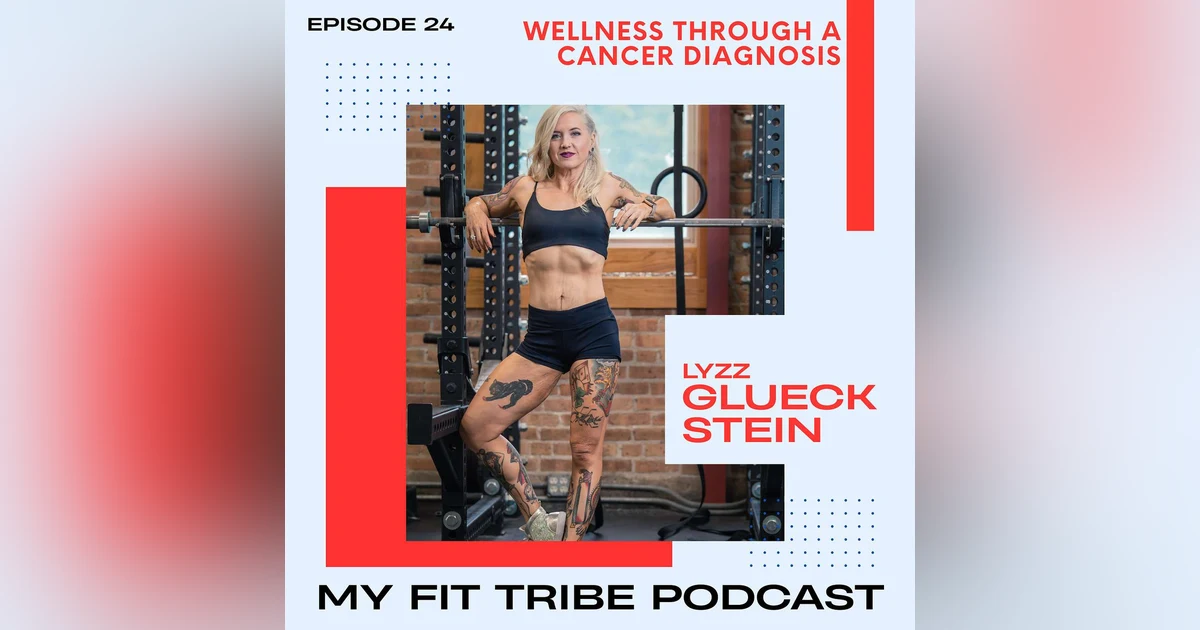


In this episode, I’m honored to be joined by Lyzz Glueckstein. We talk about her inspiring fitness journey—from stepping onto the bodybuilding stage to facing one of life’s biggest challenges: a cancer diagnosis last year.
Lyzz’s courage, resilience, and unwavering positivity shine through in this conversation, and her story is nothing short of powerful.
This episode is a reminder of the strength we all have within us—don’t miss it.
Throughout my own life and fitness journey, I have had the privilege of meeting incredible people who've shared valuable insights on mindset, health, fitness, and spiritual growth. The profound impact of this knowledge on my own life has inspired me to share it with all of you. I'm Erica Sweeney, host and founder of My Fit Tribe Podcast. Join me as we explore inspiring conversations with experts, thought leaders, and everyday heroes who offer their stories and practical tips to help you on your own journey. From nutrition and fitness to mental well-being and personal or spiritual growth, our mission is to empower you to take charge of your health and live your best life. We are more than just a podcast, we are a community. Through coaching, a wealth of shared knowledge, and a strong support network, we are here to guide and encourage you every step of the way. Come be a part of our tribe. Liz's courage, resilience, and unwavering positivity shine through in this conversation, and her story is nothing short of powerful. This episode is a reminder of the strength that we all have within us. With me today is my friend Liz Glickstein. She is a certified health coach, a registered nurse, a natural bodybuilding competitor, and an awesome person. Hi, Liz. Thank you for joining me today. Hi, Erica. Thank you for having me. I wanted to have Liz on the podcast because, like I said, she's an awesome person. She's had an amazing journey. Let's just let the listeners get to know you. What was life like before you started your fitness journey?
SPEAKER_01Um, life was what I thought was a normal life. I was working on a med surge unit at the VA hospital. And so I was working shift work. Um, so I'm working uh PMs and night shift primarily. Um and so I just really was very focused on my job and then also uh just taking care of other people and kind of forgot about myself in uh the mix and then realized uh that I started to need to make some changes to kind of both my um activity uh and my diet, as well as um I was just realizing that I was having some even some struggles with um my anxiety and stress, which led me to some pretty maladaptive both eating and I think also like a relationship with alcohol, to be quite honest. So and how many years ago was it that were you finally had that like aha moment?
SPEAKER_00I need to make some changes.
SPEAKER_01So it was pr probably around 2016. I had seen um a couple of my coworkers who were also nurses at the time um start going and working out together. And I was curious about what they were doing. I saw that that they were eating differently and like bringing, you know, it's always taboo to have uh snacks and food at the nurses station. So uh, but I was seeing how that they were, they were being more mindful of the fact that no, I need to prioritize eating well, I need to prioritize uh hydration, even if that meant uh maybe potentially breaking some rules and having some food and snacks at the nurses station. So that got me curious. And then I found out that they were going to custom fitness specialists and uh seeing Lisa. Um, and so that was in 2016. Um, so I decided, you know, if they're making space for it, they're doing the exact same things I'm doing, working this exact same hours that I'm working. Um, I thought, you know, if they're able to do it, then I should probably be able to do it as well. Um, and so that's really what kind of got me started on uh being curious and trying, you know, kind of being in that pre-contemplative, contemplative uh stages of some change there.
SPEAKER_00I think it's beautiful that when you know, we forget the impact that we have just by doing things differently. So that really shows how when you're around people that are doing things to take care of yourself, how it will inspire people to make changes for the better of their health. And when you're dealing with such a stressful job like that, to be able to have those healthy pathways for coping and wellness, what a difference that made.
SPEAKER_01Huge difference, huge difference. I always was an athlete when I was in school and very competitive by nature as well. And so taking the classes basically, I just needed to get myself there because once I got there, exercise was never hard for me. Um, and the I guess the the focus on group uh activity to start was just really fun to get to know people. Um, and so once I got there, um, that's all I needed to do to I think just start feeling better and seeing some good changes within myself. And that was even prior to even making any changes with diet or anything. Um, it was just getting there and showing up and establishing that um routine, I guess.
SPEAKER_00Planting the seed, right? Mm-hmm. And if anybody's listened to episode two of the of the podcast, we had Lisa Fairn from Custom Fitness Specialist on and we talked about macro tracking. But let's so how did that journey go from okay, I'm going with group classes to what came next to your like how did you get from there to the bodybuilding stage?
SPEAKER_01Well, so I will just kind of slight pause in between that. So I started making the changes in 2016 and then 2017, I got really sick with uh initially what was flu and then turned into a pneumonia. And um, my pneumonia was so bad that I they almost had to put a chest tube in. And so I realized at that point, and I was still even working, like I was trying to work through this illness, even. And I remember taking care of um a patient up in the ICU and was helping this patient to the toilet. And I was like, I am breathing just as bad as this older gentleman is right now, and thinking like, I there is something really wrong with me. And so I ended up going to leaving work to go to urgent care. Um, and they sent me in to for a like a stat CT of my chest, et cetera. And I ended up missing over almost a month of work because of this pneumonia um intermittently, like because I kept trying to go back as well prior to being well enough to go back, um, much to the chagrin of my husband and some other people. Um and so it was really that's what clicked with me of like, I need to go at this wellness, fitness, and nutrition journey full bore. And honestly, like I think it that was a year too that um when I was taking care of people, we had lost a couple of people who were young, like in their mid-30s. And I was in my mid-30s at that point. And I was just like, if I hadn't started making some of those changes, I was just thinking, like, oh my gosh, I could have, I could have had a poor outcome, like some of these young folks that I did see have a poor outcome from a flu that turned into pneumonia that year. So um that really, I think kind of scared me into thinking, like, I need to, I need to take this more. I need to take myself and my health very s more seriously. And so um that is what I think kick-started me once I started feeling better um working with Lisa on my nutrition and really um dialing in both the nutrition and the workouts to then um get me to the point where Lisa saw how um but kind of a spark in me, I think, and um suggested that I do a body transformation competition, which is what I did in 2018, that then just lit that fire even more to then do my first bodybuilding show in 2019.
SPEAKER_00How does that make you feel when you think back to that moment when you first going on stage? Like I get the butterflies all over again.
SPEAKER_01It is, I mean, it's pretty fun. I mean, it's pretty you get those butterflies where you're very nervous, but then you're also kind of like, I don't know, you just kind of turn something on too, where you're just so it's a mixture of just being so proud of yourself, um, as well as like, I want to just rock this and I want to like strut my stuff and whatever that looks like for you, whether it's the music that you're playing, the poses that you're hitting, um, aside from your mandatory poses, um, it it is just it is like something lights up from within, I think. Um, because it's just so fun.
SPEAKER_00It is, and it's just you know where you started, right? And you know all the changes and the discipline that you needed to get there. And like you said, it's so important to say, I yeah, I'm proud. Like I worked my tail off to get here, and I'm proud of myself that I gave myself permission to do so, right?
SPEAKER_01Mm-hmm. Absolutely. Yeah, I I definitely, especially um between that 2018 to 2019, I was just I didn't care if I came in last place. Obviously, like it would, you know, it'd be nice to get a medal or something like that. But I was just so thankful to be there at that point and just um having done something that I never I never in my life set out to be a bodybuilder. I mean, I remember seeing bodybuilding competitions in the 80s on TV and just thinking, like, that's kind of weird. Like, what is going on with these people? And the here I am, like now, just feeling like that is the coolest thing ever.
SPEAKER_00I know. I think I've told the story before, but when when I did my first season, I signed up with Lisa and I walked away from the appointment going, oh no, what did I do? And so we went to a small show down in Chicago just to kind of see what it was like, and it was like in a really dark old cinema or whatever, and everyone was tan and it was so weird. I was like, oh, I'm so scared. What have I gotten myself into?
SPEAKER_01Seriously, but then when you get up there, it's such a rush. It's so much fun. Yeah. It is unlike anything I've ever done before. Um, and it's still something, you know, like even now, I'm thinking, like, okay, maybe 2026, I'll hit that stage again. Like, we'll see. I always I'm one of those people that I always like to have like a carrot. I always call it the carrot dangling in front of my face for just a little bit something to strive to. I always like having a goal. And I kind of think in stages. So I have like a goal set this year of I want to do a powerlifting competition for the first time. Never done a full powerlifting competition. Am I going to be the world's best power lifter? No, certainly not. Um, but again, it's much like bodybuilding where, yes, again, it's nice to do well. It's nice, you know, if I could get a pro card in the natural bodybuilding world, like I mean, I that would just be the pen ultimate awesome thing for me. Um, but again, it's it's more, you know, this I think this is potentially cliche. But as you versus you, I think the same thing would apply for the powerlifting competition. If I can, if I could pull a weight or put push a weight that I've never pushed or pulled before, that is really what would be the winning thing for me versus how well I do in the competition overall.
SPEAKER_00Right. So and the thing when you're training for something like that is you you have those little horizons all during that process. So you have those little, you meet those little goals. There's always room for improvement and they're so tangible. So what I love about lifting is because I every six weeks I can change it up and I can try to do a little bit better each time. So if I can be a better version of me every day, then it satisfies a little bit of my my competitive desire. Wow. Yep. And so then in was it 2023 that you competed last or 22?
SPEAKER_01It was 2023 that I competed last. Yeah. So and I did, did I just do, I think I did uh two competitions that season. And I I mean, I think for me personally, I like I think I look the best I've ever looked. You looked amazing. Um, and so uh, you know, I was super happy with uh how I looked. Um and it, you know, in the midst of that too, like right prior to the um, I always feel like there's some not to be dramatic, but I feel like the last two seasons, like I had a at uh a pet die in like the night before one of our photo shoots in between competitions, unexpectedly, like was in the emergency bed all night. And then unfortunately, two days prior to my first show of the 2023 season, um, my brother-in-law uh unexpectedly, expectedly passed away um from related to his alcoholism. And so it was um one of those uh journeys where it's like, do I even compete anymore? And I, or do I even do that competition? And both my husband and my mother-in-law just looked at me and just said, You've prepared so hard for this. You're going to compete on Saturday. And this was like Thursday that he passed away unexpectedly. So um, so it was, you know, through their strength that I was able to also get on that stage and do my thing and have a lot. I still had a lot of fun. Um so it's just it's complex.
SPEAKER_00It is because you don't know how to feel, and it's hard to feel what you want to feel when you've got such a dramatic loss right there right by you.
SPEAKER_01Yeah. I remember my mother-in-law, so she came to that show and I remember her saying, She's like, you know, I really think I'm gonna be screaming and yelling, and and I might be crying, and she's like, Some of it might be for you, and some of it might be for Robbie. And I'm like, I don't, I'm like, Lil, you just let out what you need to let out, you know. Um, but it was just wonderful to have her support, um, and of course my husband's support, but just to almost let her, I guess, kind of get visceral in those moments too, of like cheering and crying and getting rowdy, um, and just kind of letting out some of that energy and grief that she was feeling too.
SPEAKER_00It also gives you a place to focus, right? I mean, like when you're training, when you've got all that noise, I've always said it kind of makes you narrow in on that focus, that journey. So all that other awful stuff that's around you just kind of gets muted a little bit because you have that focus. And so when you're doing a show and you're right there, it kind of gives you a different uh perspective or uh, you know, something else to think about than yeah.
SPEAKER_01It's it's a good it definitely um can help support that reframe that you need to make in your brain of like, of course, obviously you're gonna be sad and you're going to grieve, but you also are uh something beyond that grief and that sadness too. So it's I think finding that balance is what the challenge is.
unknownRight.
SPEAKER_01Right.
SPEAKER_00So let's talk a little bit about what happened after that season. So you finished up uh it was summer of 2023, right? That you competed, yeah. And then what can't what happened after that?
SPEAKER_01So after that, so while I was um uh going through the what you know the bodybuilding prep stages, so like all of the like hard dieting um and exercise to get yourself into shape for a bodybuilding show, um I noticed some changes um with my menstrual health, which, you know, as people who have competed before or who have done any things very physically demanding, like a bodybuilding competition, you know that sometimes um when calories are low, your period of changes as well. But something just didn't seem quite right. Like it seemed like I was having like unexplained bleeding that it wasn't super heavy. So it wasn't anything like I was concerned about as far as like, you know, my nursely, I would do my assessments of myself. I'm like, it's not enough to be concerned about like an anemia or I'm not symptomatic with it as far as like lightheadedness or dizziness or anything, but just like I just had in the back of my brain that something's changed, something's different. It could be my bodybuilding prep. And then this could be uh TMI for some people, but then I started also having strange and different vaginal secretions to the point where I, you know, like I would feel like sometimes I would have like wet my pants. And, you know, I was like, well, this is odd. And that had that was separate from the bleeding. So I was just like, okay, this is something weird. But I'm like, again, this could all be my bodybuilding prep. Like my body is going through it right now. And so I finished my season of bodybuilding in August of 2023. And so by October of 2023, my calories had returned back to normal. I had been putting on a little bit of weight. These symptoms were persisting and they were uh becoming more frequent, where I was just having um, again, unexplained bleeding and then like some random, strange like secretions. And so I mentioned this to my primary care provider in October of 2023. And she was just kind of like, well, you know, you're healthy. It could just be, you know, you're 40. Um, I think I was 42 at the time. How old am I now? Um, she's like, you know, it could just be your progesterone levels might be low. We should just put you on some progesterone. It's probably endometrial hyperplasia. That's common for women your age. And I also had a history of uh polycystic ovarian syndrome. And so she just thought we can put you on some progesterone. And I was just like, you know, I I thank you for that. However, I just feel like we need to look into this more. Like you're just going off of what I'm telling you. We haven't done any blood tests, we haven't done any imaging. I feel like there's something more there. And she was just like, well, I really think it's this hyperplasia, but if you feel like you need that, she's like, I we can do uh ultrasound of your uterus. And so that got scheduled in November of 2023. So that was October. It got, it was like the day after Thanksgiving. I remember that very specifically. And so I went in for that, got the results right away, because the, you know, results always drop in your my chart before anyone talks to you. And so I looked at it, and you know, having my background in nursing, I saw that it wasn't quite clear what there was something there in my the endometrium of my uterus, but it wasn't clear. It looked like it could be a clot, but they're also they were undetermined because of how it showed up. It looked like it needed to me more imaging or something different to be for them to be conclusive of what it what it was that they saw in there. And again, when um when my PCP came back to me, which I do, I do really like my PCP a lot, but I think this is all I I mean, if I have a message for anyone, if you feel like there's something wrong and you're not convinced that you have the right answers, advocate for yourself or find someone who has the language uh of the medical community to advocate for you. So, you know, again, she's like, you know, again, this looks consistent with hyperplasia, the where it's thick in there. And um, I think again, we could start you on some progesterone. And I'm just like, I don't know. I to me, I feel like I need a biopsy, but that's that's not clear enough from the radiology report that I feel like I want to start the hormones. And so, so then she was like, okay, again, she listened to me. And so then she put in for a gynecology consult. And so that was November of 23. I couldn't get into gyne until February of 24. Oh my God. So then I go, so I wait all that time. This is just the marvels of our healthcare system, right? And so February, I go into the gynecologist, and she's like, Well, you know, I the type of procedure I need to do, I think this looks like um a polyp and not hyperplasia. And so, but in order to determine on if it's a polyp or not, we have to do a specific kind of ultrasound that essentially they have to go up through your cervix and look at what's going on in there. Um, and so she's like, it's uncomfortable. I can't do it in the office today. I think that's what you need to do. If you're okay with that, I want to schedule that for you. And so that was my appointment in February. So I had to wait till March then to go in. So in March, I go in and I will just say that I've never had an idea. Before I've never had children, I was almost on the ceiling. Uh, it was painful. Um, and we almost did it, we weren't even able to get the ultrasound because I found out that day my my anatomy was, I always say it was like going over the river and through the woods to get into my uterus through my cervix. And so it was just very difficult. Um, and she was not able to get the um thread, the catheter through with the camera to get in there. But I was just like, you need to get the biopsy. She's like, Well, can you essentially can you handle this? Because I would, like I said, it was incredibly painful. I'm like, I just want you to get the biopsy. Like I was like gritting my teeth. So luckily, that again, probably kind of graphic, but she just drove that sucker in there and got, was able to get the biopsy, thank God. Because then a few days later I was diagnosed with endometrial cancer. And I'll never forget that day, because that was March 25th. I had competed in a power lifting competition on the 23rd. So 21st, I got the biopsy. 23rd, I competed in um a two-lift meet at Ford's gym that I wasn't sure if I was going to be able to do because I was still having, at that point, I was having such bad cramping. I mean, aside from I was living with a heating pack on my abdomen every night. That's how much my symptoms progressed from like that October to November. Like I was um pretty much on the couch every single night with a heating pack over my abdomen because the pain I was having in my abdomen was so severe. Um, and the bleeding, I at that point, I was like pretty much ready to buy adult diapers because I was just having so much weird stuff coming out of my body. Um, I was like I knew something was wrong. And so I'm just very happy that I listened to myself and just kept sticking with it um to get that diagnosis. So I was able then to compete in that powerlifting competition on the 23rd, pulled a PR of 300 pounds. Oh my gosh, despite everything. And and then the 25th, I got the call. Luckily, I was I was at work uh still. It was, I remember it was like right at four o'clock, and I saw UW Health calling, and I was kind of like, uh-oh. Like I knew at that point, like immediately, I was like, I have cancer. And I had just finished up a training with my colleague Doug. And so I and normally I wouldn't have gone back to the office because I that was working past like my tour of duty. I, for whatever reason that day, I went back to the office with Doug. He and I were just kind of finishing up when I got this phone call from UW Health. And I I like looked at him, I was like, stay here. And so I took the call. And she told me that I had grade one endometrial cancer, and that I was going to need to go to the OR. So obviously that was a lot to take in in that moment. And the reason why I feel like I was so lucky in that moment was because Doug was with me, and Doug was one, a colleague of mine that I had been a call, had been a colleague of mine for, you know, pretty much I think 10 or 11 years at that point, off and on. Um, and he also was a former oncology nurse case manager. So when we left our med surge units, I went to the emergency department and he went to oncology. And so not only is he just a great person, uh, also a life coach. Um outside of his nursing duties, um, he also had that oncology experience as well and uh had to talk people off the cancer cliff uh more than once. So he was with he was my ride or die uh then throughout my journey of cancer.
SPEAKER_00So first off, like six months between, hey doctor, I think there's something wrong and then getting that diagnosis. And my first thought is like you said, how much it advanced in those six months. And if I would have gotten the doctor said there's nothing wrong, it will just put you in. I would have been like, okay, doctor, I I because I wouldn't have known to push to look further.
SPEAKER_01In my current work, we talk a lot about the medical hierarchies, and so the medical hierarchy is real in the fact of you know, these are the experts, these are the people that know their craft well, and they do. Um, and for a lot of folks, it would be just like, okay, great, that's starting me on something. We can try that, let's do that. And for I don't know if it was just that sixth sense uh inside of me, if it was I also having been, you know, a formally obese individual um who you know I you know had struggles with anxiety and depression, like I got very uh sick of being told uh previously about, you know, if I came in with any sort of somatic complaint, um, especially if it was kind of vague, like abdominal pain, being told like you need to either lose weight or go on an antidepressant or take a pill, like immediately. So I think right away, because those were almost like um taboo words for me in my brain of like, you just you just need to take a pill, you'll be better. Um, I don't know if that also helped spark my like uh-uh, nope, we don't have enough. I I I just felt like we didn't have enough data and we didn't know the root cause for me to be like comfortable just taking that pill. But again, I think most people would wouldn't have said anything and just been like, great.
SPEAKER_00So again, so important that you listen to your body, that you put your health as a priority, and that you, like you said, advocate for yourself. So here you are on this cancer cliff with Doug. How does that even feel?
SPEAKER_01Oh, I mean, I mean, I was gutted essentially. We took, I remember it was raining. Um, it was kind of it was March, it was rainy, and we took a really long walk around um the uh hospital campus. And because I just I didn't even know what to tell Steven, my husband, you know. Um, and I I just remembered just walking and talking with him. And I don't even remember exactly what we talked about. I just I can like what I can like visibly feel myself and see myself having that walk with him in the rain. Um and he was essentially kind of coaching me on how to have that conversation with Steven. Um and I also, you know, being my like very routinized self and knowing that I also feel better with physical activity, I left work probably over an hour late, um, still went to the gym, called Steven. And the hard part was is that it was Steven's first day at a new job. And so he was so excited about his new job. And um I and he was so giddy when I called him just to be like, hey, you know, I'm leaving work late today. I'm still gonna go to the gym. How, you know, how are you? And he was like elated about his new job. I was just like, oh my God, how am I gonna tell this guy that I also have cancer? Because I he's like, I mean, talk about bursting a bubble. I mean, that's like the ultimate bubble burst. So it it was a lot of like, how how do I managing how do I talk to Steven about this? Because it's not even real to me yet. And like, how do I convey this in a way to someone else? And I can also get very um just very down, like brass tacks down a business, I think just with being a nurse and you know, being in the emergency emergency department for years, you can like turn on your business face and be just very much like, here's the situation, this is what's gonna happen next, and this is what we're gonna do. Um, how does that sound? You know, that type of thing. And so um trying to strike that balance of like, is that realistic? Is that is that how I should be? You know, like so. I think that was all very hard. Um, and I ended up just walking in the door and telling him to sit, telling Steven to sit down. I have big news, and then just bawling. So that's ultimately how it went down.
SPEAKER_00I I can't imagine. I mean, there are so many people that go through that conversation and it's just it's such a scary start to what's next. Cause you I mean, and it's good that you have that mindset or that framework where you can look at the business quote unquote side of it because I think it's important that when you have a process, you could look at step by step instead of being so overwhelmed by it. But I can't think of uh many more emotional things than that.
SPEAKER_01Yeah, yeah. And I I will say, like, the gynecologist is who made my call and I was telling people I was just like, you know, she's I I like her because she is very uh no nonsense, like it's very straightforward, isn't gonna um beat around the bush about anything. Um it's it wasn't like exceedingly overly caring, you know, like some people are just like sweetheart, you know, and like uh, you know, but it's just very like matter of fact. But I appreciated getting a phone call from her, and um I think a different side of her came out too in delivering news like that too, where you know, it was very like you don't want to sugarcoat anything when it comes to getting a diagnosis like that, but also um her humanity came through too, which is I think also um obviously very important in those moments as well.
SPEAKER_00So then the treatment side of things that wasn't easy either.
SPEAKER_01No. So um, well, and I will qualify everything by saying that I was grade one, um, well, we just didn't know the stage. So what we did know in the time from my biopsy was that it was whatever was growing in there was a slow grower, which is good. So that was right away like some sort of relief. I had had another friend of mine who had had a cervical cancer diagnosis several years before my diagnosis. And um she said, you know, all the days that you wait until surgery, you just feel like you have kind of like death growing inside of you. And she's like, I hate to be dark like that. And I was like, no, that's literally what it feels like because you don't know until you have it removed um what your full story is going to be, um, or could potentially could be. So that was March 25th that I got the call. And so then May 8th was when I needed to go to the OR. I met with the oncology team actually rather quickly. So I marked my first appointment with the oncology team was on April 1st, which I joked about. I was like, I'm like, well, this is a really crappy April fool's gift, right? You know, um, meeting with oncology for the first time. But we, you know, I loved, loved, loved my oncology team. Um, and so I knew right away I was in good hands. Um, and I brought Doug with me to my first oncology appointment because uh I think for anyone, even if you are like I I think I'm a good nurse, I think I can listen well, but when it's you, uh, that's the patient, always bring another set of ears with you. There were things that um Doug thought of that I wouldn't have thought of, or even like I was taking notes and we would compare notes and making sure what we heard was the same thing and was consistent. So I always recommend someone to take a trusted set of ears and eyes with you just to make sure um you're understanding and getting the full picture of everything and asking all of the questions that need to be asked. So, yeah, so my first surgery then was on May 8th, and we made the decision at that point because I had had a couple looks at my ovaries, and because I was 42 at the time, um, we decided to leave my ovaries in place, but take my uterus, fallopian tubes, and cervix, um, which is uh for the type of endometrial cancer I had was what was recommended. Um, but we decided not to put me into menopause at 43 because the risk versus benefit statistics show that um your chance of cancer reoccurrence by keeping your ovaries in place for a grade one endometrial cancer doesn't outweigh if you were to remove them. And so, like going into menopause then right off the bat would be um potentially uh even more challenging than I wouldn't need to have to go through after having a surgery like that. So um went into the OR May 8th, um, was able to leave the hospital the same day, um, which was great. Also, not sure how common that is, but I was definitely on my to-do list was not to stay in the hospital overnight. And so that surgery went well as far as surgeries are concerned. It was um definitely more healing than I thought. Like I I remember just having a really even hard time walking, but knew that walking was so important. And so every day I was like get out and um just walk a little bit further. Like I the first couple days, it was just like, you know, I walked a few times from the my front door down a few driveways and like back into the house to like getting around the block for the for the first time, to getting around three blocks at the first time. I live in like a little neighborhood um on the north side of Madison that we have like nice little blocks and sidewalks. So it was uh easy for me to walk and kind of measure my distance. Well, they were very concerned about me overdoing my limitations as they should have been, because I also wasn't the best patient all the time. Um, but you're basically kind of sewn back together. So I didn't want a where your cervix was. So that was what I didn't want to damage by like uh lifting too many weights or like bearing down or um, and so um even just very humbling on I remember I was back at the gym within a week of my first surgery, and all I could do was walk on the treadmill at 1.7 miles an hour. Like that is like indelibly marked in my brain, but I did it and I um was up there just walking and with my poor little bloated tummy and my um sutures, and but I was up there doing it because that to me was just so important. You know, one of the things I decided to do was really focus on my mental well-being. And so I was using, I had had an appointment with uh the integrative medicine doctor. Um and so he had recommended to me um this healthy minds app, um, which is actually produced here uh at the University of Wisconsin-Madison. And so I utilized that Healthy Minds app to just I meditated on healing and um well-being, um, and to hopefully then spread healing and well-being and inspire people to be well, be well themselves. And so it was as much on like meditations on my healing as well as then being able to get myself to a point where then I could potentially inspire and um people to find their own healing and well-being as well.
SPEAKER_00So big promoter of the Healthy Minds app. I have not tried that, and I did know that that was from Madison, but I'm gonna have to look into that. But we talked a little bit about this before we started the podcast, but the importance of the mind, body, and spirit all together, working together and how you need to take care of all of it, you know, especially when you're dealing with something that is traumatic, whether it be an illness or, you know, emotional trauma or whatever it may be, you really have to work through that healing, if which is sometimes harder to do the mindset part than it is your physical body, depending on obviously what it is.
SPEAKER_01But yeah, I definitely I have a lot of teachers along my way. And one of my um major teachers was um my friend Ariel, who had been diagnosed with a stage four appendix cancer, which is exceedingly rare. Um, and if you look slowly at statistics, it's not good. Um, and you know, I think being the nurse I am, um, and just, you know, knowing kind of like what the science says, I wasn't sure what would happen for her, to be quite honest. But I did know that um what I witnessed her do was really keep her mental well-being and her brain health and her whole health so sharp that I knew if anyone was going to beat that cancer, uh, she would. And she, you know, she I mean she went through chemos and um uh went through um what you know, what the like science of medicine tells you to do. Um, but she also did a lot of other things for herself too, to I guess essentially create a space um for healing for herself. And so I uh wanted to do that for myself. And so I think um I think that's what I did over the course of my journey to you know keep me well and promote my healing and recovery as well, because it did I it it got more complex than that first surgery too. Yeah. Do you want to talk at all about then what happened after that? Yeah, I so I was called and told that you know, this is the best case scenario. You had a grade one, stage one, all you'll need is this surgery. We are good, you are good, and we'll put you in surveillance, is what they call it. And so we'll see you again in this amount of time, and then six months, and then six months, you know. So we uh had this plan. And so for whatever reason, I wasn't like proudly declaring or I didn't feel like I wanted to advertise the fact that I'd been given this great news. And so two days after I got that call, I saw something drop in my chart, and it was an addendum to my initial pathology. And I was like, well, that's weird. And so I went in and looked at it, and it was regarding some cells that they had seen in uh an abdominal washout that they did um just to see if they could catch any cancer cells potentially in there. And so initially um what they found in that abdominal wash washing wasn't concerning. And then um, for whatever reason, they went back in and looked at those cells again, and it was concerning for ovarian cancer. And so we had made that decision to keep my ovaries in place. And so I, you know, I get the results, I immediately call UW and was like, can someone talk to me about this? And my physician was out. Um, I, you know, like I get it where other people don't want to uh speak for someone else's patient. So I I was just told that it would need to go back to tumor board. And I was like, well, it already went to tumor board, and I was told I was in the clear. So obviously something's changed and this is going to be different. And I couldn't get an answer from anyone that Friday. So I spent the whole weekend just like sitting on this information of like, do I now have ovarian cancer? And so I get a call from the oncology department just saying, we ordered a stat CT for you of your abdomen, pelvis, and chest. And so um we'll call you to let you know when that gets scheduled. And I said, Are you looking for metastasis? And no one could tell me. And of course, I knew that the person who was calling to schedule it, you know, they're like an MSA, they're not gonna be able to tell you. But like I knew right away that they were looking for Mets. Like they thought I had a wildly metastatic cancer now that this unknown cellular type was seen in this pathology reread. And so again, no one's talking to me the whole week. I'm sitting there, and then it wasn't. So that was Tuesday. My CT scan um was on Friday, and I ended up just going to that appointment alone. Um, you know, my mother-in-law asked if she um could go with me, and I was just like, I actually think you'll make me more nervous than I already am. So I just decided to do that by myself, and I knew the whole time what they were looking for. They were looking for cancer everywhere in my body. And so um I had the CT scan and Went to the gym right after to ground myself, do my app, etc. And the CT stu results started slowly coming in onto my chart. And so I started reading those. And the good thing was is that the CT scans all looked clean from like my read of the radiologist's read. And so I was like, well, this seems like it's probably the best case scenario. Um, but didn't know what, you know, what that meant further. And um, my physician, my oncologist, was out, and so then I saw her then the next Monday, which I believe was like June 3rd. And so um what that was supposed to be my post-op appointment um for my first surgery, and it turned into my pre-op appointment for my second surgery. So I went from being best case scenario of cancer to being told that Monday, um, and I had Doug with me again, that this was very serious. This was either an ovarian cancer or a peritoneal cancer, that um they were gonna have to take my ovaries, my omentum, and anything else that they saw in there that looked concerning, take some biopsies. Um, she's like, you know, I was just in your abdomen and everything looked okay when I was in there. I didn't see anything that looked out of place where I would have taken, you know, like a biopsy or something at that point. So she's like, I know that you were looking healthy, but we just need to go back in there, take this, and I'll take an even better look in there and just make sure. I mean, because she had combed through my intestines and everything, that first surgery, looking just to make sure everything looked healthy. And again, she's like, again, with this being so serious with ovarian cancer, we don't mess around. She's like, so you're either gonna get, depending on what we see, you'll either have three rounds or six rounds of chemo. That's gonna start probably the first week of July, and we'll go from there. And so, and my surgery then was second surgery was, and you're going to the OR next week. I have an OR book for you on June 11th. And so I um obviously that was a lot to take in. I don't know if I've ever cried as much in my life between that day to like before my second surgery. And I found acupuncture in in between that point. So that was another one. I have like acupuncture, sound baths, meditation. I've like had my like wellness arsenal kind of fully stocked at that point. And so I remember getting into the shower before going to see my acupuncturist. And um, I remember washing my hair. And I'm gonna get emotional talking about this, but I was thinking like this, you know, this could be one of the last times I wash my hair, you know, and just like having a breakdown in the shower, thinking like I don't know what, you know, I went from thinking I had a pretty long life in front of me to being like like peritoneal cancer, ovarian cancer is serious. Like this my life might not be what I think it's going to be. And that, you know, even simple things like your hair, like I was just, I I I pretty much almost had a panic attack in that shower. Like I had to sit down in the shower. And then it just gets more complex from there because my um insurance denied my surgery. Um, so I didn't even know I was going to for sure go to the OR on um until like two hours before the OR on the day of my surgery, because I was going back and forth with uh UW, with my insurance, and um just trying to problem solve and troubleshoot, like getting my surgery covered, which you know that's probably a story for another time. To also getting another call from my oncologist saying pathology's changed their mind again. They don't know what it is, they don't know what those cells are. Now they're thinking that there might not be cancer, but we can't, we don't know for sure until we go in. So you still need surgery so that we know, but she's like, that now they're there, they had someone else look at it. And then I know she was like very obviously upset too, because she could only tell me what pathology tells her and make her clinical decisions based upon what she's told the pathology is, and with all the changes in pathology, we were on a literal roller coaster together. Um, and I did feel like we were on it together. Um, and so while I'm really happy that people were very diligent and very serious and um being very thoughtful about um what was going on inside of my body at a cellular level, the way in which it was um that news was being delivered was obviously not great. The communication about it wasn't great, whether it was like how it was dropped in my chart to um how it was being delivered to my oncology team. And so ultimately, I ended up getting to the OR on June 11th and waking up to be told, you know, your ovaries are out. We took your omentum. What another part of the surgery was is that based upon they you have something called sentinel lymph nodes on either side of your groin. And so for the first surgery, nothing looked cancerous in those sentinel lymph nodes, so they left my lymph nodes alone. In the second surgery, initially, when they thought it was a high grade cancer, they were going to have to take all of the lymph nodes out of my um groin area bilaterally, which then puts you at a really high chance of having lymphedema, so really big swollen legs for the rest of your life that are really hard to manage and control. So that would have potentially been the end of my bodybuilding and my uh weightlifting career had they taken those. And so that was ultimately what I was also very worried about was not only was I potentially going, you know, I'm losing more organs, I'm losing my reproductive ability, et cetera. But now you could be also be taking away like something I really love doing. Um, and so fortunately, based upon how things looked, she left my lymph nodes alone. Also, instead of thinking like we are just strictly preserving your life at this point, to we can also put in quality of life. And she knew my quality of life meant I want to be physically active and I want to be um doing all of my sports, et cetera. So she thought that based upon her, what she saw and her clinical judgment and thinking that the pathology could be less serious, she left my lymph nodes in place, um, which I'm really thankful for because it turns out I did not have ovarian or peritoneal cancer, thank goodness. But what I did have was a really strange condition called endocellinosis, which is like endometriosis, except it stems from your fallopian tube. So my ovaries were full of fallopian tube tissue, which is why the pathologists were like, these are really weird ovarian cells, is because they weren't. They were fallopian tube cells in my ovaries. So very strange. Again, like things I wouldn't have known had I not had these things removed.
SPEAKER_00So you end up having all of this removed. And but it was good that they removed the ovaries, even though it wasn't cancer, correct?
SPEAKER_01Yes, yeah. I mean, because that would have, I mean, I probably still would have been having pain and things like that in the future. Um, I I really think that my ovaries weren't working well for a long time because I was having night sweats for the the longest time. And I initially thought it was, you know, like, oh, the dogs like to crawl into bed, um, you know, and I'm like, oh, these dogs, you know, like things like that, where I was like explaining it away. And then when I got my cancer diagnosis, I knew that also people who have cancer experienced night sweats. So I was like, well, it's probably the cancer that's giving me the night sweats. So because of my ovaries getting removed, and because she was less concerned about ovarian cancer, she did give me like a low dose estrogen patch to put on. And those night sweats immediately went away. As soon as I started wearing an estrogen patch, I had had no more night sweats. So I am convinced that those night sweats were I was going through probably menopause-like symptoms because my ovaries were like, we are not happy or healthy right now. So we are just not going to produce any any more estrogen for you, lady. I, you know, like they can't tell me that that's exactly what is going on, but to me that makes sense, like based upon how my uh symptoms changed after getting an estrogen patch.
SPEAKER_00So, what has re recovery or healing looked like now since that time?
SPEAKER_01Um, well, you know, I stayed kind of in my routinized world of getting to um the gym. So, like forage gym, huge part of my recovery process, just going in um every morning. Um, because I was off of work for eight weeks or so. So every day I got up, went to the gym. Um, and like I said, it didn't matter if I was walking at 1.7 miles an hour or um lifting some baby weights. I after my um second surgery and in between, I did start lifting weights before I was supposed to. Um, but just I didn't go completely um hog wild. But so I think just staying consistent with the routine and just, you know, knowing that, you know, I wasn't deadlifting, I wasn't doing major compound movements or anything like that, but just doing something. And again, then just really trying to focus on my mental well-being too. So, like whether it's mean going to acupuncture appointments, whether it's um I try to do a sound bath every month, um, being even in the emergency department for so long, I like lived in my sympathetic nervous system. I was in fight or flight a lot of the time. And I, you know, I like those adrenaline boosts. I like going hard. Um, and so really it was how do I train myself to be more in that parasympathetic uh realm where I can really just get into some deep relaxation and so promote some deep healing. So just being very thoughtful about um even my caffeine intake. I mean, caffeine is pretty much my only vice in this world right now. And so just even really just trying to um promote deeper states of relaxation for myself. I think I've healed probably better than what people were expecting. Like I I did that same competition um that I did last year, where right before my diagnosis, and I pulled even more weight this year.
SPEAKER_00305, was it? 305. Yay, that's amazing.
SPEAKER_01So heavy. So that was um my big uh F you to cancer. Like I was like in my head, I was like, if I can do this, then I know I'm um better. For you know, like if that makes sense or not, I don't know. But in my head, I was like, that's what I need to do. And so um I was able to do that. And I don't, you know, I also um started seeing a physical therapist, Matt, who works, he has a space inside of Ford's gym that he was uh just paramount in getting me back to what I love to do, um, as well as um my coach too. So um, David, he he and Matt together like have really designed some good habits for me to, I guess, return to my normal activities again.
SPEAKER_00I love that. And how important it is when you have those people that are there to you know that they're there to support you not just physically, but also emotionally. And they're the it's such a place of comfort when you have your tribe to help you out for sure. Absolutely. Yes, yes, yes, yes. What an amazing journey. It's I mean, even like it's been a busy year for you, my goodness.
SPEAKER_01Yeah, yeah. And you're hoping to do a powerlifting competition in August, right? Yes, yes. Hoping I've never done a three-lift meet before, so hoping to do that in August. Awesome. And then um, and then maybe start thinking about uh 2026 return to stage for bodybuilding.
SPEAKER_00Maybe we'll do a season together. That would be fun. I keep saying maybe next year, maybe next year. Oh my goodness. Well, I'm so grateful that you shared your journey with us. I'm gonna wrap up by asking you the question that I ask all my guests. So it's a two-part question. So you, Liz, today can have a conversation with Liz of the past. So we could do the Liz that had that realization when you were sick in the hospital that you needed to make better changes. What would you tell her?
SPEAKER_01I I think it would be um yes, you do, and go for it. You are more than your job and you need to be well in order to take really good care of people. So start prioritizing that.
SPEAKER_00And take care of yourself. And take care of yourself, yeah. So if you Liz today could have a conversation with Liz of the future, 20, 30 years, sit down before you do your sound bath or after you hit the gym, what would you ask future Liz and what do you think she would tell you back?
SPEAKER_01I think she would I think what she would tell me, I'm not sure exactly about asking, but I think what she would tell me is uh you know yourself, just trust yourself. Your your gut is correct. And so if something doesn't feel right, it's not right. So just uh be patient but figure out what the root cause of your uncertainty is or that feeling is. Um, because there's something to that. And that you got this, and you've got this, yeah. And you I I really believe in myself now. Yeah, as you should.
SPEAKER_00Awesome. Thank you for joining us today. Thank you. Thanks for listening to My Fit Tribe Podcast. Tune in weekly for our latest episode for more health and wellness insights and inspiration. For more information, visit myfitribe.org. Please note that the opinions and comments presented here are those of the guests and do not necessarily constitute medical advice or the opinions of MyFit Tribe. Copyright 2025, all rights reserved. This podcast is a production of MyFitTribe LLC. Don't forget to download, subscribe, and follow the MyFitTribe podcast so you don't miss an episode. Thank you for your support.