Luke Briggs-Total Life Fitness
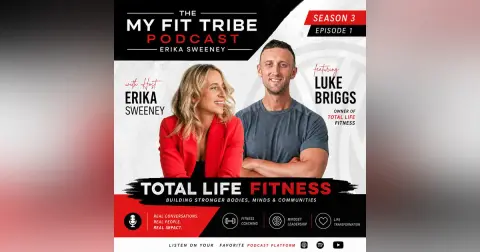
Send us Fan Mail This week I'm joined by Luke Briggs, owner of Total Life Fitness. Sometimes the most powerful conversations aren't about the latest trends—they're about returning to the fundamentals. Luke and I discuss nutrition, movement, strength training, and the mindset that helps turn healthy habits into lasting change. Whether you're just starting your journey or need a reminder to refocus on the basics, this episode is full of practical takeaways. Here's my conversation with Luke. ht...


This week I'm joined by Luke Briggs, owner of Total Life Fitness.
Sometimes the most powerful conversations aren't about the latest trends—they're about returning to the fundamentals. Luke and I discuss nutrition, movement, strength training, and the mindset that helps turn healthy habits into lasting change. Whether you're just starting your journey or need a reminder to refocus on the basics, this episode is full of practical takeaways.
Here's my conversation with Luke.
https://www.facebook.com/share/1HhYadq5rc/?mibextid=wwXIfr
Just Be True is a podcast about spiritual awakening, self-discovery, and real...
Listen on: Apple Podcasts Spotify
11:05 - [Ad] Just Be True ~ A Soul-Led Podcast
11:51 - (Cont.) Luke Briggs-Total Life Fitness
Throughout my own life and fitness journey, I have had the privilege of meeting incredible people who've shared valuable insights on mindset, health, fitness, and spiritual growth. The profound impact of this knowledge on my own life has inspired me to share it with all of you. I'm Erica Sweeney, host and founder of My Fit Tribe Podcast. Join me as we explore inspiring conversations with experts, thought leaders, and everyday heroes who offer their stories and practical tips to help you on your own journey. From nutrition and fitness to mental well-being and personal or spiritual growth, our mission is to empower you to take charge of your health and live your best life. We are more than just a podcast, we are community. Through coaching, a wealth of shared knowledge, and a strong support network, we are here to guide and encourage you every step of the way. Come be a part of our tribe. This week, I'm joined by Luke Briggs, the owner of Total Life Fitness. Sometimes the most powerful conversations aren't about the latest trends, they're about returning to the fundamentals. Luke and I discuss nutrition, movement, strength training, and the mindset that helps turn healthy habits into lasting change. So whether you're just starting your journey or need a reminder to refocus on the basics, this episode is full of practical takeaways. Here's my conversation with Luke. Today on the My Fit Tribe podcast, I am joined by Luke Briggs, the owner of Total Life Fitness, Strength and Nutritioning Coach, and husband and father of three. Since entering the fitness industry in 2012, Luke has worked with more than 2,500 clients helping people transform not only their bodies, but their mindset around health. His coaching philosophy is built around leaving the past behind, focusing on sustainable habits, and creating lasting change rather than chasing quick fixes. Luke is a certified strength and conditioning specialist and also holds certifications in nutrition, coaching, and pain-free performance. Hi, Luke. Welcome to the show.
SPEAKER_00Thank you for the great intro, Erica.
SPEAKER_01I'm excited to have you here. You're one of the Madison legends when it comes to fitness coaches. So I'm really grateful.
SPEAKER_00Oh really? Didn't know that.
SPEAKER_01Well, I'm glad to have you here to talk about all things fitness and wellness in your journey. So before we talk about what you offer with your coaching program, let's hear about how you got into fitness to begin with.
SPEAKER_00Yeah, thank you for asking. So, you know, I grew up in the Madison area here, and kind of the journey for me was growing up, I was always more unconfident in myself, kind of shyer growing up, didn't really have the confidence to go for things. So I actually uh originally started my career as a sports writer. So I wanted I was really obsessed with sports growing up. You know, I was watching ESPN Sports Center when I was six years old, getting up at 5 30 a.m. to watch it. So always just loved it. And then after a while, when I was in college, I went to school for journalism and just kind of realized that uh no one really reads the newspaper anymore. So essentially I decided I wanted to get out of the newspaper industry, but didn't really know where I wanted to go. So I ended up getting into the fitness industry from there. But yeah, my kind of journey was, you know, like I said, not the most confident person growing up. So when I started strength training a little bit more consistently in high school, and then when I got to college, it was just something that were where I felt like I belonged, right? It was like it it built me up, it gave me confidence. I didn't really realize that at the time, but it gave me the confidence to like pursue other things because I was always on the thinner side growing up. Um, so I wanted to learn how to build muscle. And you know, I was able to build some muscle uh over time. And then I eventually, when I decided to get out of the newspaper industry, I decided to pursue fitness because I would read about all these people online who were doing this fitness thing, and I'm like, well, I'm not qualified, I don't have a degree, I can't do it. So I just decided one day, you know, I found and I'm in Madison, Wisconsin, I found this like fitness conference in Indianapolis, and I'm like, I'm not even in the fitness industry, but I'll just go. So I drove the six hours, I didn't know anyone there, and granted, I was on the shire side, so it was definitely putting me way out of my comfort zone. And I just like went up and started talking to people. You know, I'm like, I I don't know anything that you know, all these speakers are speaking, they're all these super intelligent people talking about like energy systems and body systems and all these things, and I'm just like, I have no idea what you're talking about, but all I know is I love this and and I want it to be a part of my life. So uh ended up actually getting connected with um with someone who actually uh you know was looking for his first trainer. So I ended up you know working there for a number of years and then uh eventually, you know, a few years ago went off on my own. And now we have a business called Total Life Fitness where we help primarily you know women over 40, you know, lose weight, build muscle, gain confidence, that kind of thing. And yeah, it's definitely been a fun journey for me. Uh you know, just the thing I love about fitness is it's it's you know all on you, right? It's it's it's a great personal development journey where you know you get out of it, what you put into it. So that was something for me is I didn't really have the greatest work ethic. So it really taught me like work work ethic showing up every day and um you know from there kind of transition to kind of the next phase of entrepreneurship from there. But yeah, definitely uh, you know, I've always loved fitness, it's always at the center at my core, and um glad that I'm in the industry.
SPEAKER_01Okay, so I want to dive into some of this because it's I agree with so much of it. For me, like I had the work ethic to begin with, but I didn't take the time to take care of myself. So my transition was more making myself a priority. So, like, who were you back before you did fitness? Like to make that change to just go to a fitness conference, like that's just a random event.
SPEAKER_00Yeah.
SPEAKER_01You know, what made you think that you needed something different? And how did you follow that breadcrumb?
SPEAKER_00Yeah, so like I said, growing up, that's a really good question, by the way. So growing up, um, like I said, I just had very little self-confidence. So, you know, I was like, you know, scared to talk to girls, you know, uh, I would be, you know, walking down the hall would never talk to anyone. Like even when I was in college and I was in the dorms, I would just sit in my room by myself, never talk to anyone, which maybe some people can write too, maybe others can't. But you know, for me, it was just like I just had no very, very low like self-confidence. For me, it just like fitness really came as like it taught me discipline, it taught me, you know, confidence, showing up for yourself, following through things like that. And it just allowed me to, you know, pursue further. But yeah, in terms of like thinking about going into the fitness industry, honestly, it was just this is one thing that I've always really resonated with is surrounding yourself with people who are already doing like what you want to do. And I've invested a lot of money over the years in various coaches and in fitness and business and other areas of life. And what I just started doing was I remember one day I was just like, I really love this fitness thing, and I just want to like look up how to do it. And this is actually a funny story. This kind of shares how little I used to know about fitness. So I remember the first time I like looked something up on the internet about like lifting. I think this was back in like 2011. I ended up like looking up this person was like talking about taking all these supplements to build muscle because I just wanted to do like whatever it took to build muscle. And you know, I I literally like was like, is that all I'm supposed to eat? Do I eat food with this too? I mean, I I literally did not know anything. Um, and I remember like the first time too, I went into you know the supplement store and again just knew absolutely nothing. And the guy's like telling me to take all these supplements, and I literally am like, okay, why when am I supposed to take this? Why am I taking this? Do I eat food with this? It was just it was just funny. So uh you just kind of went from knowing nothing about it, but just kind of had this insatiable desire to just learn more and more and more. And that's one thing that I've always kind of done is I I've really enjoyed learning about things and and wanting to improve because it kind of started with fitness and kind of snowballed from there. But to bring it back to making that decision to go to the conference, yeah, it was just like for a few months, couple years, I had kind of worked, I was working some temporary jobs. I'd gotten out of the newspaper industry at this point, being a sports writer, and was kind of figuring out what I wanted to do. And in the back of my mind, I didn't really think fitness was an industry that people went into. If I looked at gyms, I'm just like, all the personal trainers there are like in their 20s. You don't see people in like their 40s and 50s generally who are personal trainers, maybe some people doing it as like a side gig or you know, retired but didn't really have it as a career. So I didn't really think of it as something that you could actually pursue. But then it was interesting, I just started like seeing all these people online who had like all these businesses, they had these email newsletters you could subscribe to. They had these you know blogs back when people actually had websites before you know Instagram and Facebook were were more of a thing where where you can consume information now. And and podcasts like this, uh, it was just you know, you'd subscribe to people's blogs, you'd read their information. I just saw these people talking about all these things. There were even a few people I saw who were like me where it was like they didn't start out in the fitness industry and then they got into it. I was like, okay, well, maybe this is something that I can actually pursue. And I just kept reading all this, you know, quote unquote personal development fitness stuff over and over again. And over time I just realized that, hey, maybe it is possible for me. And then, you know, I ended up just making that decision one day. Um, you know, I'm just like, I'm just gonna go to this conference and I'm gonna, you know, just see what happens. So that that for me was kind of the the first time in my life that I'd really like taken a big risk. I mean, not that it's that big of a risk, but you know, it's like you spend, you know, over a thousand dollars going to this, you know, conference in city where you know know no one, and I just decided at that point I'm just gonna take a risk, I'm gonna do something and see what happens, and end up working out.
SPEAKER_01See, that gives me goosebumps because there's there are those moments where you can choose. You do I go do this thing? And you could have gone and like, oh, that was interesting, and then went back right back to your default mode, which is what I think a lot of people will do when they go to conferences, they'll be like, oh, that's interesting. Well, maybe, but maybe not. And that maybe not tends to be a little bit louder than maybe yes, you know. So that's really cool that that that you decided to go and that it really impacted you. And I love what you said about putting yourself in the room with those people that you want to be, because that is so true. Like when you're stuck in a room where everyone is negative and talks about all the bad stuff, like it's so toxic. I can't even surround myself with people that bring me down because I just don't have the energy for it. And when you start to be around people who have done things or who take care of their body or who think positively, or you name it, it really is it's a contagious vibration, really makes you change how you behave and how you react.
SPEAKER_00Yeah, absolutely. No, I mean that's a that's definitely a great point. You know, you hear the famous quote, you know, you are the average of the five people you spend the most time with. And I think it's so true because you know, I just know like when I've surrounded myself with people who think bigger, and that's why I'm still in, you know, mentorships and masterminds and things like that. When you are surrounded by people who think bigger and think differently, it just really pushes you to be better. And when you surround yourself with people, you know, we talked to our clients actually all about this as well, is you know, surrounding yourself with with fit and healthy people as well. Um when you surround yourself with people who are, you know, like, hey, it's okay, you know, you can skip it, you know, you don't need to do it, uh, take it easy. You know, then you tend to lean more toward that. But when you surround yourself with people who are, you know, pushing themselves one to get better, always, you know, constant improvement, it definitely just shifts your your energy in how you choose to go about your day.
[Ad] Just Be True ~ A Soul-Led Podcast
SPEAKER_01Yeah, and it's really I found it fascinating when I competed my first season in 2019. How you know, when I was really strict with what I was eating, as you
(Cont.) Luke Briggs-Total Life Fitness
SPEAKER_01know how that goes, uh, we would go to a family event, and of course everything's around food, right? And everyone's like, Why aren't you eating? Have a cookie, eat this. I'm like, I'm not gonna, you know, like it just I'm not going to. And at that point, I hadn't really told anybody I was competing. I was kind of doing it secretly because I was afraid I wasn't gonna be able to follow through with it. But it was the the pressure to just, oh, just have one cookie, or you know, or even with alcohol and socially drinking, that really when you're around it a lot, it becomes hard to say no. I mean, it's still hard for me to say no to a cookie, to be honest with you. But I think it's important to acknowledge that everybody has those difficulties of of being disciplined in what you're eating and what you're doing and what you're feeding yourself with as far as your knowledge and your people too, and that taking those first steps is again step one in moving forward in your life.
SPEAKER_00Yeah, absolutely. I completely agree.
SPEAKER_01And how do you translate that into with your with your coaches? Then you talked about how you talk about with your clients with that, because you're gonna deal with people who are from all different experiences, different ages, different, you know, starting points. So, do you have an approach when you're dealing with clients as far as meeting them where they're at to begin with?
SPEAKER_00Yeah, really good question. So we work with a lot of, you know, primarily women. We have a team of coaches who who works with them. And yeah, that's one of the biggest things that we talk about is, you know, a lot of people come in with certain habits and patterns that have gotten them to where they are. So it's about shifting. We talk a lot about, you know, you can talk about you know nutrition strategy and workout strategy and all those things, but a lot of it is like you were talking about, is really mindset, right? And really how you approach things because the the habits that have gotten people to where they are, um, you know, we can't continue those same habits and expect to get different results.
SPEAKER_01Exactly.
SPEAKER_00So it's definitely like having that conversation. I think a lot of times it's getting people to realize it themselves too, versus us just telling them what to do. It's you know, it's asking them questions, why have you made these choices in the past? Right. And a lot of people we work with, you know, they've had they have a lot of challenges. Like they, you know, they're they're busy. Uh and we work with a lot of women, kind of like you were talking about, you know, struggling to prioritize yourself, where it's like, you know, two, three, four kids are being the Uber drivers to their sporting events, you know, maybe dealing with aging parents and taking care of them, you know, taking care of everything around the house, you know, working full-time, like you name it, doing so many things and just feeling like that sense of guilt, uh, like you talked about about putting yourself first, which we really deal with with a lot of the the women who we who come to us. And it's obviously hard because it feels like, you know, when they're taking time for their fitness or their health, they're they're taking away from someone else. So it's just kind of shifting that mindset. And obviously, you know, I'm saying this as a man, but you know, for the women who we talk to, it's just shifting that mindset that it's okay to prioritize myself. Like I'm not taking away from someone else by me, you know, setting the uh you're you're setting the example for your kids of health, um, versus I've heard some people talk about, you know, if you if you don't prioritize yourself, then you're teaching your kids that you know it's okay to put yourself last, right? And then you kind of set that that tone down the road. So I think that's really a big thing that we hammer home to a lot of women who we coach is it's okay to make yourself priority.
SPEAKER_01Not only uh by setting by example, but you in this podcast we talk a lot about things with health and mind, body, and spirit that if you don't change how you behave today, your future self is gonna be angry with you, right? Because you don't want to end up being, you know, 55 and sick where you can't play with future grandchildren, or you know, you name it, not having the capacity to do the things you want to do starts with taking care of your health. So in order to be there for everybody else, you also need to be there for yourself almost first, like the oxygen mask in the airplane, right?
SPEAKER_00Yeah, I completely agree. I mean, you're so right there, because that is the thing is you know, it's easy in the moment to look at it and say, like, because that's the thing about fitness and health just in general, is because it's it's you don't see immediate results, right? Like, you know, if you do one workout, nothing is gonna immediately change. Or you do a week's worth of workouts or even a month's worth of workouts, maybe nothing changes. But you know, it it's the compounding effect, right? Just like when you invest money into the stock market per se, um, or you know, real estate, right? You know, it compounds over time. Whereas same thing with fitness, it's more of that compounding effect. Whereas if you put in the work day by day, week by week, over time, you're gonna start to accumulate those results. So it's really hard a lot of times to say, like, well, I'm really busy, I'm really tired right now, I don't feel like working out, I don't feel like tracking my food, I don't feel like making time for myself. But the reality is, you know, you have to like you said, you have to remind yourself that long term, who is the future version of me who I want to be? Like one year, two years, five years from now, do I still want to be in the same spot? If the answer is no, then you have to take those uncomfortable actions, you know, day by day, week by week to get yourself there.
SPEAKER_01Yeah. And I think, you know, for me, when I competed, decided to compete in 2019, uh, you know, I I went on a whim and just decided to sign up with Lisa. We talked about Lisa Farin was my coach for my bodybuilding. And I was 45 years old when I signed up. Like I had worked out the gym a few days a week, but I was it I was in decent shape, but I was nowhere near stage ready. And I was terrified. But you you know, whether it be going to the gym the first time, that can be super overwhelming and you feel like you don't belong. There are gonna be moments where, like you said, it's uncomfortable, but there like it's gonna be com uncomfortable today, tomorrow, 10 days, a year. Like it's never gonna be the perfect time to start something that you're putting off starting, right? Yes. So it's really important that people know that you're never too old to start lifting weights, which we'll get into, or changing your lifestyle or doing things to be that better version of you because it's not gonna get any easier. Like you all of a sudden you're not gonna have all the time in the world, or you may, but you know, likely not, right?
SPEAKER_00That's so true. I mean, that like you just said there too. I mean, I think that's one of the biggest things that we we always harp on people is you know, a lot of people keep push pushing it off, pushing it off. But that that is the reality, is that if you think about it in life, like it, you know, life never slows down, life never gets you know less busy. I feel like a lot of people are like waiting for that perfect timing or that that perfect moment or you know, for someone to come save them. And the reality is, you know, you have to save yourself, right? Which is, you know, may sound a little harsh, but it the it it's the reality, right? Like, you know, if you want to make change, like you have to step up and do something about it and just make a decision that I'm done tolerating this version of myself who's consistently pushing myself off, and I want to build a new version of myself. In order to do that, you have to take it one day at a time that starts with the next workout, starts with the next meal, and go from there.
SPEAKER_01Right. So let's dive into a bit with the training. So let's start with nutrition. So, what is your approach for your coaches approaching the nutrition improvement for people?
SPEAKER_00Yeah, really good question. So it's definitely multifaceted. Like, we are not like in the camp of we we follow like a specific prescribed diet. We're more about you know building a lifestyle that you can sustain long term. Like, sure, it'll include things like you know, calories and macros and whatnot and things like that. The reality is it has to be something that's sustainable for you. What I always say about nutrition is it's significantly easier when you plan, and it is significantly more difficult if you don't plan. So we're really big on like making it a party routine, making it something that that you plan for, right? Because if I had a nickel for every person I got on an initial call with and told me, you know, how busy they were and how insane their schedule was, you know, I would have a lot of money, let's say. Um but so that's essentially what we do is we help find something that's sustainable. We help make sure that they're planning for it, right? Like making it a priority in their lives.
SPEAKER_01So with macros, now we had one of our very first episodes of the podcast was with Lisa Farron, and we talked about what macros are because some people who've never counted their food have no idea what that means. Yeah. That's how where I was at. I was I have no idea what it means to count your food other than popping it in your mouth, right? Yeah. So, you know, when you're looking at your fats and your carbs and your proteins, protein is one of those things that for some reason women have a hard time sometimes um in getting enough of. So do you have suggestions for women who may be listening that know that they need to have more protein?
SPEAKER_00Yeah, you you you nailed it on the head right there, obviously. Um yeah, that's usually the biggest thing is women who we work with are are under-eating protein, and a lot of people, you know, don't even think about it. But the reality is um when it comes to getting more protein, usually one thing that we see with people in nutrition is in general is just kind of winging it throughout the day. So it's like, you know, you just kind of like, you know, you're busy in the morning, you don't really eat breakfast, and then you know, lunch, you kind of, you know, you might just like grab handfuls of things throughout the day, maybe eat a lunch, and then by the time that the end of the day, you're just starving and kind of you know go crazy on everything. So the same thing applies to protein. A lot of people don't strategically plan it throughout the day. And I'm gonna start high level and then we'll get into the weeds a little bit more, but high level, it it really comes down to spacing it out more throughout the day. So I think a lot of people, let's say for example, someone needs, you know, 120 grams of protein in a day or 150 or whatever it ends up being. So if you're you know just eating like a bowl of cereal for breakfast, that's almost no protein, maybe five, 10 grams, depending on milk or whatnot. And then, you know, for lunch, you just have like a salad with maybe a little bit of chicken or something, maybe that's another you know, 20 grams of protein. So, you know, and then you snack on some various things. So you might only be at 40 grams of protein, and all of a sudden it's dinner time, you need like 80 to 100 more grams of protein. So if you haven't planned for it, it's gonna seem very overwhelming. That's gonna be like, oh, screw it, I'm not gonna hit it anyways. I might as well just have whatever. Um, the big thing is really having that plan. What that's what we talk about with our members all the time is kind of pre-planning the night before what you're gonna have for the next day. And obviously, there are different things you can have. I mean, certainly for breakfast, you can have you know various things like you know, Greek yogurt or or eggs or egg whites, and obviously for lunches they're all the lean meats and the fishes and things like that. But really, what it comes down to is really planning for it. What we recommend our members do is, you know, pairing um, and I referenced the book Atomic Habits by James Clear, I'm assuming you've probably read.
SPEAKER_01Yep.
SPEAKER_00I feel like most I feel like most people in the personal development space uh and fitness space have probably read the book, but what they talk about um kind of habit stacking, where anytime you want to add a new habit, you want to pair it around a habit that you already have. So for example, if you want to pre-plan your food the day before, we sometimes have them pre-log their food in you know tracking app or something like that the night before. Um, what you want to do is instead of just saying, like, I'm gonna pre-log my food at 7 p.m., you're never gonna remember at 7 p.m., you're gonna be crazy on the go. But let's say like you and your spouse sit down at the end of the day to watch a show. Or I remember the first time I heard this was one of our members, she and her, I think, fiance at the time, uh, every time they would sit down to watch a show at the end of the day, she would whip out her app and her phone and pre-log her food, spend for the first five minutes of the show. Uh that would be like her trigger. Okay, we turn the show on. Now I'm gonna pull out my phone and pre log the food. Or, you know, you brush your teeth every night, or you read a book, or you stretch, or whatever your routine is, you just pair it with something that you already do. Uh so that way you're not having to remember at a certain time to do it, but you just add it to something that you already do.
SPEAKER_01Yeah, habits are interesting, right? Like good and bad, like both of them are. Are interesting because it's, you know, good habits are hard to form and bad habits are hard to break. And it's just weird that the mind would work that way. That doesn't make sense. But I I do love the pairing concept. And it's interesting because I've been very good for the last almost a year now with my like vitamins and my supplements, where in the past I was not consistent with taking it. And now I do my little vitamin box. I'm good in the morning and the night. So I've been good, but I had to stop taking them for, I don't know, like a week or so in order to get some labs done. And that just threw me off because all of a sudden I'm not doing this habit that I really knew I needed to do. And it kind of threw me in a little bit of a like uncomfortable in a different way, which was just fascinating to me. But back on the nutrition side, one of the couple things that I found when I was in prep that were helpful is I would make a lot of like ground beef or ground chicken or ground turkey because then you can add it to, you know, vegetables or some starches in your meals, and you can weigh that easier versus like having a big piece of chicken and having to cut off a little bit here and there in order to get the right amount of grams. So that's one thing I found interesting. And then egg whites and cottage cheese are both very helpful in adding protein to your food and protein powder, of course. Are you a fan of protein powder?
SPEAKER_00Yeah, yeah, for sure.
SPEAKER_01So there are those elements of food that can also help people to add the protein where they don't expect to. And there's so many good recipes, like on Instagram, even too. You can find so much. Whereas, you know, 20 years ago or even 10 years ago, you didn't have all those resources so much.
SPEAKER_00Yeah. Yeah, you're so right. I mean, that that is the thing, is there definitely don't lack for information out there. And that's one of the challenges, though, too, sometimes is people are so overwhelmed because there is so much information out there, too. But uh yeah, you're definitely right. There is definitely a lot of information and resources out there. So yeah, definitely use them.
SPEAKER_01So other than making sure that women have enough protein, what are other obstacles that you see frequently occur with women with their nutrition?
SPEAKER_00Yeah, with nutrition specifically. Um, I mean, we touched on a number of them already, like planning, protein. One other one as well is just um not eating enough sometimes. Um I would say uh either not eating enough or too much. So I would say with the whole like not eating enough, uh just like not really prioritizing it throughout the day, right? Or maybe being afraid to eat more. That's actually I'll bring it back to that. That's actually one thing that I remember one of our members recently said uh that she's eating more food now that she's losing weight than she was when she wasn't losing weight. So I think the the thought of like eating more food or eating like a lot of food is like overwhelming to women, uh, especially. But it it it's think about it, it's just like the the calories that you're eating. So if you're eating like more processed foods and things that are less healthy for you, it might feel like you're you're not eating as much, but you're still eating things that are are higher in calories. Whereas if you're eating like more solid whole foods, it might feel like you're actually eating a lot more, but you might be eating similar or even lower calorie content. So that's really a big thing that's just like a mindset shift for a lot of people. Um, and actually another thing that that women often come to us with, and men as well, but women is really struggling with like cravings for sugar. And I remember the first time you when I started coaching a number of years ago, we had three people come to us in the same week saying that they before starting work on these habits had significant sugar cravings. And once they made some of the changes, which I'll get into here in a second, they uh noticed that their cravings were either significantly reduced or eliminated altogether. And it's generally because they are actually eating a lot more protein, too, like we talked about before. So when you eat a lot more protein, uh you're you are generally fuller, protein is more satiating, whereas if you're eating more carb-heavy foods, that's gonna be a different situation. So in general, like protein is gonna keep you fuller uh because you know it's used more in our bodies, right? Whereas if we have like a uh highly processed meal, our body sees it as like a foreign invader, it wants to get rid of you know all the stuff from it as quickly as possible. Whereas if we eat a very you know protein dense, uh nutrient-dense foods, it it's processed much more slowly through our bodies because it wants to deliver it to all the different areas, so uh it's gonna keep us more satiated or or more full. So that's really a big thing is a lot of women struggle with like sugar cravings when they first start. Um, but once they increase their protein by quite a bit, uh I tip we typically see a decrease or sometimes even elimination of those sugar cravings.
SPEAKER_01Not to mention the glucose spikes when you're eating sugar. I mean, I am I love sugar, but it's like crack to me because if I have one cookie, I have 10. Yeah, exactly. Exactly. So oh, training. So let's just talk about how important strength training is for a moment.
SPEAKER_00Yeah, really good point. And I think uh in the last like 10 to 20 years, there's definitely been a lot more research and it's more generally accepted to lift weights. Like even when I was in high school, you know, 20 years ago, like what ended up happening was you'd usually just see like the football players in the gym lifting and some of the athletes, but you know, it still like wasn't as much of a thing. Nowadays, it's generally a lot more accepted that strength training should be a part of like everyone's routine. So especially for um women, especially who you know, as we kind of talked about before recording, who are going through hormonal changes in their bodies, like your body is naturally going to lose bone density or or muscle mass and things like that. And it's really important that then it becomes even more important. I would actually argue that you know, for women who have, you know, as you go through life, it becomes even more important than than earlier on because of that loss of muscle mass, loss of bone density. So high level, like it it it really, in my opinion, strength training is like the foundation of your fitness because you know it sets the tone for everything else.
SPEAKER_01Yeah. And you know, oh, there's so much I can get into on this. First off, I think women have a hesitancy to strength training. For one, maybe they're bored, two, maybe they don't know what to do. Yeah. Or I've heard several people, I don't want to get bulky, and that one gets me. Like, do you know how hard I work to get bulky? Yeah. It's actually one of those a lot.
SPEAKER_00One of my favorite quotes of all time is from Arnold Schwarzenegger, and this is obviously maybe related to men, but the story that he told, some guy um went up to Arnold Schwarzenegger one day and he's just like, Arnold, I I would never want to look like you. And he just kind of looks back at him and he's just like, Don't worry, you never will.
SPEAKER_01You won't. Yeah.
SPEAKER_00Like you just said, like, I think like people think like you're and certainly some people are respond differently than others or in genetics and whatnot, but at the same time, like, unless you're intentionally trying to build muscle, like you said, building muscle, like when you're like aside from the mental side of things, like building muscle is subs is more difficult than losing fat because you know it takes longer, right? It's a harder process. So to think that you're just gonna start you know lifting weights and all of a sudden just bulk up and look like the Hulk, yeah. You know, the chances of that happening are are pretty slim.
SPEAKER_01Right. And like I said, I've worked I've been lifting weights for, I don't know, 20 years. And you know, in probably the last seven years, it's been you know, five days a week, you know, give or take on average that I lift. So that's that's more than most people would spend lifting, at least at my my level, right? And I'm nowhere near huge. You know, so I think it's important for first off women to discount that concern because that really is just not likely that you're gonna, like you said, bulk up. So the other ones I mentioned is not knowing what to do or the fear of going into the gym. So let's address those a little bit.
SPEAKER_00Fear of going into the gym. Well, let's talk about that one first. So fear of going to the gym, well, actually, nowadays, actually a lot of people work out of home too, so they don't necessarily have that fear. But yeah, fear of I think it's kind of a combo, like fear of not knowing what to do and like thinking you don't belong, right? Like, you know, even I was just, you know, at a gym the other day and looking, and it's like you see everyone there looks super fit and ripped, and it can be kind of intimidating, I think, for a lot of people think like, I don't belong here, right? Like these, you know, I'm gonna embarrass myself. And the reality is what I've realized over the years is most people aren't actually even looking at you, right? Like people are focused on themselves. So I remember um we had a client a number of years ago who, same thing, you know, was really intimidated to go into the gym and then said exactly that. He's like, you know, most people aren't even aren't even looking at you, they're they're focused on themselves. So I think that's really a big mindset shift that people don't we're so worried about what other people think of us that the reality is people are thinking about themselves, and even if they see you and you make a mistake for two seconds, they're gonna be forgetting about it two minutes later, right? Like that's the one of the biggest things is just not worrying about the opinions of others, which can dive more into. But um, in terms of like not and not knowing what to do, like how we address that is obviously you know giving people a specific plan that that's at their level, right? Because you know, I see a lot of very advanced protocols out there that are meant for like athletes and things like that. I mean, I think nowadays there are a lot more, there is a lot more information out there for the general public. I mean, back you know, 15, 20 years ago, it was mostly just for athletes, you know, talking about all these you know intense strategies of like meal timing and like training splits and you know upper lower splits and all these things that people are kind of intimidated by. But the reality is regard whatever you do, like as long as you're consistent with it, like that's really the most important thing.
SPEAKER_01Well, and I think that's where a good coach comes into play because having a program, like for me, I have to if I go to the gym, I have to know exactly what I'm doing on that date. If even now at this point and having worked out as much as I did, if I didn't have my six-week plan that I go by every six weeks, I would walk in and if I didn't know what I exactly was doing, I wouldn't be as successful. I wouldn't be consistent, I wouldn't get everything done. Whereas I have to, for me personally, I like to progress each week so that whether it be even just a little bit of weight in one category or a little bit more reps in one category, I always gotta do one more. You know, and so the next six weeks, at least I know I'm improving a little bit each week, and then I'll start over with a new workout after that. But again, being specific in what you're going to do, I think is super important to being successful and consistent.
SPEAKER_00Yeah, you're so right. Like I think that's the biggest thing too, is a lot of people just walk into the gym and have they they're just winging it, right? Versus going in with a plan. I mean, it's the same thing with anything in life. If you don't have a plan, you're gonna be like we talked about with nutrition too. If you don't have a plan, you're gonna be less likely to be successful. If you do have a plan, you're gonna be a lot more likely to be successful. So it really comes down to having specific structure and a plan when you're going in.
SPEAKER_01Yeah. Um, what about movement? Because that's something that, you know, we talked a bit even before the show about data, like macro tracking how you're gonna have data. And for like my steps, I hadn't looked at my steps in a long time and I have been busy, busy, busy. And all of a sudden I started looking at my steps and I'm like, I am not moving. Like I'm sitting at my desk most of the day and I'm going home and I'm exhausted, so I'm not getting my steps. And once I was reminded that I wasn't getting the data I needed to be better and move more, it made me move more. Yeah. So how how do you incorporate you know tracking devices for movement and what do you suggest for people who are getting started in their journey?
SPEAKER_00Yeah, really good question. And full transparency, I'll admit that's something that I I need to improve on as well and continue to work on is more movement throughout the day. But yeah, I mean, you just said it right there. I mean, I think things, I mean, not that you have to have like an Apple Watch that's like a popular one, but you know, things like that can be helpful from the standpoint of it keeps you accountable and you can see those numbers, right? Just like you know, tracking your food or tracking your workouts or whatever, the the more data you have, the the more kind of objective feedback you're getting, right? So because data doesn't lie, people do. We can we can tell ourselves that we're doing things, but the reality is it's like, well, what are you actually doing? Let's look at what the numbers are saying, right? So I think that um you know having step trackers can be important. You know, if you don't have a step tracker, I mean just putting a timer, right? Where it's like, okay, at this time or after this meeting, I'm gonna get up and walk. And I think a lot of people think like I have to go for a 30-minute or 60-minute walk. Like, you don't have to go for a 60-minute walk, like walk around for three minutes around your house. Like it a lot of people work from home nowadays, like get up from your chair, and maybe uh we've talked about like habit pairing. Like maybe your habit is every time you get up to go to the bathroom, your trigger is after going to the bathroom, I take X number of laps around my house, right? It could literally be something as much as as simple as that. Or after lunch, that is my trigger. That once I'm done with lunch, I'm gonna go walk for 10 minutes outside if Wisconsin here now that it's warm out, right? So you can really just pair it with something else as well. But yeah, definitely um, you know, movement is something that is easy to forget. Uh, and like I said, I'm I'm guilty of that as well throughout the day. But yeah, if you just pair it with a a habit like we talked about before that you already have, it makes it a lot easier to do.
SPEAKER_01I spoke with someone recently who was like, well, you know, I'm getting older and I feel like I'm looking older and I don't feel well, having a hard time moving forward with movement and working out. And she admittedly said, you know, I'm on my I'm on my phone too much. And I'm like, well, you that that we all are. Like these things are so addicting. But you know, in that case, it would be beneficial if you listen to podcasts and listen to a podcast while you walk. Or if you're watching a Netflix show, get a treadmill or a bike where you can pair it with something. So you're not necessarily giving up this thing that you're giving you enjoyment, but you're able to add something to it in order to keep you moving.
SPEAKER_00Yeah, actually, uh, this is a bit of a side tangent, but actually speaking of listening to a podcast, for many years I had a habit of hitting snooze every single morning. I would hit snooze probably three, four times in the morning. It'd be one of those things where I like you'd hit snooze, you wouldn't even realize you had snooze until like the third time. And I finally broke this about eight years ago, about the time my first son was born. And what ended up happening was I don't want to get up, I don't like getting up. You know, I'm sure my wife didn't enjoy listening to the alarm go off for 30 minutes, right? Either. So I'm like, I gotta do something about this. And what I ended up doing was instead of thinking like I have to get up, it's I get to get up to listen to a podcast. So like that I I intentionally gave myself something to look forward to first thing in the morning. So like I liked listening at the time, and I still do, to personal development podcasts. So I think I picked a podcast out and I'm just like, okay, when I wake up, I get to listen to this podcast. So the thought of like what you talked about, like pair it with something else too. So you're not thinking about like I have to exercise, right? Or I have to walk. It's like, well, while I'm doing this, I get to listen to music or I get to listen to a podcast, right? So you pair like what is maybe a perceived negative in your head with something that you do enjoy, so that way you're focused more on that.
SPEAKER_01Yeah. You know, there's there's a so many suggestions and personal development and online and even with Chat GBT now, we can put in like, what are five things I can do? Like those steps to do are are available for us for knowledge, but it really takes that mindset shift to make those changes. Yes. So I think it's important for people to go. But if you want to start somewhere, maybe start with how you're looking at things so that you can make those changes because it everybody knows they've got to do something different. I mean, every everybody can do something different today to make themselves better for tomorrow, but yet we kind of just go through the motions. So it's a good place for us to reflect. Uh since we're running out of time, I want to touch base a little bit on entrepreneurship. So, how has it been for you to be an entrepreneur and going from you know only coaching to now to have a team and you know, being able to grow your business?
SPEAKER_00Yeah, thanks for asking. Now I've been full-time business owner for about six years. I had done it kind of as a side hustle for uh several years prior. But yeah, I mean, entrepreneurship for me was kind of like the next step of personal development because just like fitness, you you get out of it, what you put into it. It's the same thing with entrepreneurship. And we've been fortunate to work with, I think in the last almost six years, 1,200-ish give or take people uh inside our program. Um and now we have you know seven team members who work for us, uh, aside from me, and we have you know three coaches who coach everyone. So uh it's definitely um, you know, every step along the way, you're learning something about yourself. And the thing about entrepreneurship too is it's kind of all on you, right? The business kind of I know obviously you're entrepreneur as well, you know, you it goes as you go too, right? So it's like the concept of emotional resiliency. Because like, you know, when you're an employee, it's kind of like you know, you're just always like this, always even keeled. Whereas with entrepreneurship, it's like, you know, whoop, whoop, up, down, up. It's like one week, this is the greatest thing ever. Next week it's like, holy cow, everything's gonna come crashing down, right? So it's really just like teaches you a lot about managing your emotions, which I still you know struggle with sometimes, but you know, it really teaches you about just instead of like focusing on what happened and harping on that, kind of like in fitness as well, you focus on, okay, well, I can't change the past. What can I do now? Like what actions can I take now? And like I said, it just the thing that I love about it is just like I said, you you get out of it what you put into it, and you can always learn more. And I think that's um one thing that I've really learned is that like if you keep that like learner's mindset, I know Carol Dweck has the the mindset book where she talks about, you know, like a fixed mindset versus a growth mindset. So that's really the big thing that you know allows you to kind of progress in entrepreneurship well is having that growth mindset that you can learn more, you can do more. And as you keep going, as long as you don't think you know everything and you always want to be, you know, one of the quote unquote dumbest people in the room and put yourself in those rooms with other people who are doing better, it's gonna allow you to continue to grow and develop. So that's the thing I love about entrepreneurship is it's just like to me, one of the ultimate forms of personal development.
SPEAKER_01Yeah, it's a it uh it has its ups and downs, like you said. You know, it you but you have to always learn how to find a way to make it work. Yes. Like failure cannot be an option.
SPEAKER_00Right.
SPEAKER_01So there's that pivoting and that resiliency that you get from owning a business that I think you is the best place to find it. And it's not that it's always capable to succeed. I mean, there are times when people will fail for illegitimate reasons, but you really have to throw it all in and go, okay, if this happens, it's not a oh, this is gonna fail. It's okay, no, we need to turn it around. We're gonna make this happen. And that's again a mindset shift that is imperative if you want to be a successful business owner or successful in your your health or your nutrition. Like you have to make that decision. How am I gonna make this new program work? How can I adjust my nutrition to be better? And you can't change everything 110% overnight. But you like you mentioned, you can add, stack these habits, you can make these changes, and it creates momentum, right? Which is the most beautiful thing when you're working with a client and they start one place and they make little changes and then they want to make more changes, and then they want to do this type of training, and all of a sudden they're running a 5K or you know, it really creates this progression, which is just so cool to watch.
SPEAKER_00Absolutely. And I think one thing that actually that you just said there as well is like the concept of failure. And I think there's a difference between saying I am a failure versus I failed at this or I struggled at this, because I've always been big on talking about the concept of like labeling and our self-talk. So when we say things like I'm a failure, or I always do this, I always do that, or I always start and then stop, we're we're subconsciously reinforcing that, right? We're saying like I am that person, whereas the reality is you are not a failure. Maybe the thing that you did didn't work, and that's okay. That doesn't mean that that defines you, it just means that you need to find a different way to do it. And that's really the biggest thing that I think um athletes, entrepreneurs, anyone who's successful in any area, they don't look at themselves as a failure. They just think like failure is a part of the process of me becoming who I want to be.
SPEAKER_01And an opportunity to learn. Like you said, like we you're all we're all gonna fail, we're all gonna have speed bumps. Not every business is maybe where you're meant to be, but in my opinion, if you can learn something from those failures in any aspect or even just adversity in general, yeah, like you're giving yourself more power when the next thing happens, right?
SPEAKER_00Yeah, and it was the same thing. Like when I started transforming my body, I literally probably failed for like nine years to transform my body. Like I but I one thing I did is I never gave up. And then eventually I ended up hiring a coach and I saw better results working with that coach in just a few months than I had the previous nine years on my own because you know I I didn't give up. And obviously, I know you have a number of stories personally like that as well, because that that is really the key is like you just have to keep going. Like if you truly want something, the only way that you're gonna fail is if you stop.
SPEAKER_01Yeah, and that again, and you're never too late to start, you're never too old.
SPEAKER_00Right.
SPEAKER_01You know, and if you're dealing with people are a lot of people are dealing with some really tough situations right now. I've got a lot of people that I know that are dealing with, you know, cancer diagnosis and health issues, and as people get older, you've got, you know, just big, big stresses, and those are hard. But all the more reason to keep learning and you have to keep that hope, right? Because you can't have uh possibility if you don't keep hope. So I think that's really important for people who have whatever they're going through right now that they remember that.
SPEAKER_00Yeah, no, I absolutely agree.
SPEAKER_01So before we wrap up, why don't you tell us where people can find you if they're interested in in your coaching services?
SPEAKER_00Yeah, good question. So our website is totalifefitness.co, not dot com, just dot co, totalifefitness.co. Um and then you know, you can send me a friend request on Facebook, just Luke Briggs, uh also on Instagram at Luke BriggsFitness. Yeah, and there are probably other ways as well, LinkedIn, but yeah, those are probably the best ones.
SPEAKER_01Awesome. So I'm gonna wrap up the episode. I'm gonna ask you, I asked the same two questions to all my guests, which I will ask in a second. But since this is gonna be a season three episode, I'm adding a third question because I found that, you know, again, people will listen to these conversations and they may be inspired and they may think about making changes, but there's not always like an actionable step. So if you're talking to our listeners, what is one piece of advice or one action step that our listeners could take this week or even today or even tomorrow to improve their health, mindset, or life?
SPEAKER_00Good question. So, first of all, you said it just right there. Knowledge without implementation means nothing, right? So the biggest thing that you can do is right now pause this and write down what is one thing that you learn and that you're gonna implement. Is it I'm gonna start tracking my food? Okay, literally, don't wait till next week when you're quote unquote ready. Pull out your phone right now, download a tracking app, and start tracking. Like literally, pause this right now and actually do it. Don't wait because the longer you delay, the less likely you are to do it. So that would be my first step of advice is just start immediately, even if it's a small action.
SPEAKER_01I love that. And I love the writing down thing because that putting it down on paper is just for some reason very helpful. And, you know, again, you for tracking, again, just to back up a little bit, like you don't have to have your macros established in order to track your food. You can just track your food to see what you're eating again to get that data. It doesn't need to have shame attached to it. You're just collecting data. So I think it's important if it's nutrition that people remember that too.
SPEAKER_00Yeah, absolutely.
SPEAKER_01Awesome. Great piece of advice. Thank you for sharing that. Okay, so my last two, my two part question. So if you Luke today could have a conversation with your past self, I'm gonna pick maybe the shy one in school, didn't have a lot of confidence. You can Pick, what advice would you give your past self?
SPEAKER_00Really good question. I love that one. So biggest thing for me is leave the past behind. Your story starts now. And what I mean by that is like I think like a lot of times we think we give ourselves these labels is like, you know, if I were talking to myself, like, oh, you're shy, you're unconfident, you'll never be successful, you'll never be able to go for things. But the reality is you can change who you are and you can make a decision to change who you are at any point in time. All you have to do is take one action. It's probably going to be uncomfortable, and it for sure, you know, will be something that you probably don't want to do right away. But if you don't do it, do you really want to continue to be the same person you are 10 years from now, 20 years from now, right? Or even five years from now? The reality is you probably don't. Otherwise, you know, we wouldn't be having this conversation. So, like I talked about before, like just take one action toward being the type of person you want to be. So if maybe for me at the time, if I'm talking like myself in high school, it's start working out, right? Um, start actually going to the gym consistently. Like don't just say you're going to go to the gym and then not go. Like commit for the next 30 days to, and that's why I like fitness is kind of the cornerstone for everything else, because it's something you have complete control over for the most part, uh, at least your actions around it. So yeah, just show up three days a week on these days, go every single day, and and then prove to yourself that you can do this.
SPEAKER_01And you know, anybody who's looks at somebody who is fit or who is successful or who is who they almost wish they were, we everyone started somewhere. Everyone has those scared moments. I every big thing I've done, especially including the bodybuilding stage, I was terrified for every step of the way and did almost ran out. You know, I mean, don't think that people who have achieved that have had it easy, right? Like you we all struggle with those self-doubts. So it's important for people to know that they're not alone in that. They can validate that, but you still got to move forward.
SPEAKER_00Totally. 100% agree.
SPEAKER_01Second part of the question. So you, Luke, today can sit down with your future self. You can pick where it is, sitting down maybe at a at your gym or after a good workout. Now you've you've converted your career and passion into impacting others.
SPEAKER_00Yeah.
SPEAKER_01So now what question would you ask your future self and what do you think he would say back to you?
SPEAKER_00Ooh, I actually haven't ever thought of that before. That's a good question. Um I would ask to my future self, what lessons have you learned in the last 20 years? Or what are your one or two top lessons that you would pass down to me? And I think what I would say is probably even something similar, just it I'd probably just have a lot more perspective, right? I would have perspective on like what really matters and and what doesn't. And, you know, just probably the same thing, like not worrying about what other people think or what other people say, and just, you know, you have one life to live. And I say this sounds kind of morbid, but you are gonna die one day, right? Like we don't know when it is, it could be any time for any of us. So live your life the way that you want to live and don't worry about what other people say.
SPEAKER_01That's a great piece of advice. I think we can all remind ourselves of that every day. Awesome. Absolutely. Well, thank you so much for joining for this conversation. It was great. I, you know, talking mindset, fitness, nutrition are all the things I'd love to talk about. So it was a pleasure having you on the show.
SPEAKER_00Thank you so much for having me on, Erica. You have a great show here.
SPEAKER_01Thank you. Thank you so much. Thanks for listening to the My Fit Tribe podcast. Tune in weekly for our latest episode for more health and wellness insights and inspiration. For more information, visit myfitribe.org. Don't forget to share, like, and download this episode, and thank you for your support. Please know that the opinions and comments presented here are those of the guests and do not necessarily constitute medical advice or the opinions of MyFitTribe. Copyright 2026, all rights reserved. This podcast is recorded and produced by Jake Johnson at Paradigm Productions in Madison, Wisconsin, and is a production of My Fit Tribe LLC.