LIsa Feran- Counting Macros
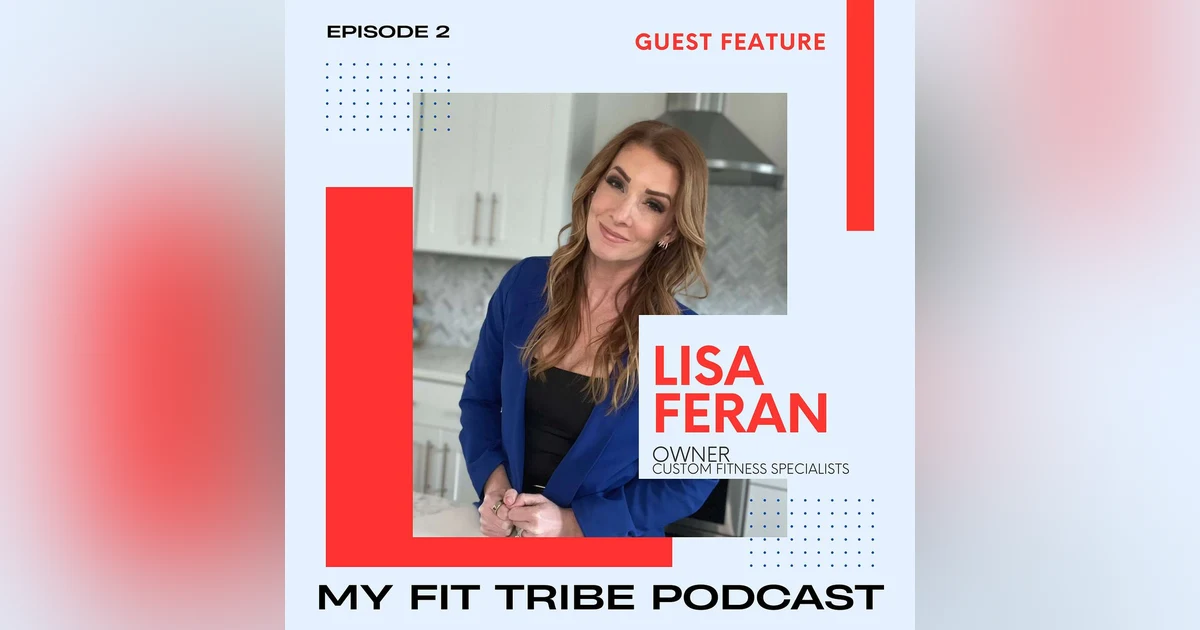


In today’s episode, we talk with Lisa Feran, a certified Nutrition and Fitness Coach. Join us as we dive into her inspiring journey through a cancer diagnosis and explore her passion for the health and wellness industry. We’ll also break down the basics of counting macros—how they impact our health and tips for your success.
Sponsored by https://customfitnessspecialists.com/
Here is information to help your tracking:
BMR Calculator Cronometer
Calculating Macros:
Activity Factors
- Little to no exercise, desk Job= bmr x 1.2
- Light exercise, trains 1-3 days weekly = bmr x 1.375
- moderate activity, trains 3-5 days weekly = bmr x 1.55
- Very active, trains 6-7 days weekly = bmr x 1.725
- extremely active, 2x days OR physically intense job= bmr x 1.9
TDEE (Total Daily Energy Expenditure)= BMR x Activity Factor
Maintenance Calories: Aprox TDEE
Fat Loss Phase Calories: TDEE x 10-15% Calorie Deficit.
Calculate your Protein: Lean Weight x 1-1.5= Grams of Protein OR Goal weight in Grams
Calculate your Fat: 25-30% of your goal Calories, Fat cals/9= Grams of Fat
Calculate your Carbs: Calories From Protein + Calories from Fat= FAT/Protein Cals
Goal Cals- Fat/Pro cals= Calories from Carbohydrates
Calories from Carbohydrates/4= Goal Gram of Carbohydrates.
Throughout my own life and fitness journey, I have had the privilege of meeting incredible people who've shared valuable insights on mindset, health, fitness, and spiritual growth. The profound impact of this knowledge on my own life has inspired me to share it with all of you. I'm Erica Sweeney, host and founder of My Fit Tribe Podcast. Join me as we explore inspiring conversations with experts, thought leaders, and everyday heroes who offer their stories and practical tips to help you on your own journey. From nutrition and fitness to mental well-being and personal or spiritual growth, our mission is to empower you to take charge of your health and live your best life. We are more than just a podcast, we are community. Through coaching, a wealth of shared knowledge, and a strong support network, we are here to guide and encourage you every step of the way. Come be a part of our tribe. Join us as we dive into her inspiring journey through a cancer diagnosis and explore her passion for the health and wellness industry. We will also break down the basics of counting macros, a topic that can feel daunting for many. Lisa will share valuable insights on what macros are, how they impact our health, and practical tips to help you succeed on your wellness journey. So whether you're a seasoned pro or just curious about counting macros, this episode is packed with information that can make a real difference. Enjoy the conversation, and here's to counting our way to better health. Today I am here with Lisa Farin. She is owner of Custom Fitness Specialist. She is a CSN certified sports nutritionist, NCI certified, a certified personal trainer, a pain-free performance specialist with almost 20 years of coaching experience. Hi Lisa, thanks for joining me today. So can we talk a little bit about your story, what you've been through, and what got you into this nutrition coaching?
SPEAKER_01Yeah. Well, first off, if I go way back, I was always kind of an athlete growing up, right? I did gymnastics through college, so I was a collegiate gymnast. And then after my fourth year and I was done with eligibility, I was actually a power lifter. And the cool thing about what way back when, when I was a power lifter, this is way before we even had Facebook, Instagram, like there was no social media, right? So there really wasn't women competing in powerlifting way back then. And so I was probably the only person I knew that was doing powerlifting. And I just really fell in love with lifting. I absolutely loved it. So then after I was done with college, um, I moved here to Madison and I met a really close friend that actually talked me into doing what's called fitness competitions. So for those of you who don't know who it is, what that is, it's um you basically do this like little dance routine with some gymnastics and some strength moves and stuff like that in a routine, and they're done with bodybuilding shows. You don't see it very often anymore. Um, it's kind of like phased out of the sport, but that's how I got into the sport of bodybuilding. So I was actually traveling around, this friend of mine, and we were going all over the country doing these fitness competitions, and I was not feeling great. I was chronically fatigued. Um, I had like a bad cough all the time. I just had like a lot of night sweats, things that I just thought were side effects in the aftermath of being so hard on my body for so long and chronically dieting. Um come to find out, I was out in Los Angeles for um the Fitness America World Championships. I came back um right around Thanksgiving. And I think part of it was just like I started to like have a normal routine again, and the lymph nodes in my neck like just expanded and got really huge. Um, come to find out, I was diagnosed with Hodgkin's lymphoma. It they think it had been growing for about three years, and so I um started chemo right away. So I did eight months of chemo, uh six weeks of radiation. And, you know, when something like that happens to you, you really just look at life differently, right? Like you look at how um important your health is and the kind of and the quality of life that you really want to live, right? And so during that time, I was already um doing some coaching. Um, I was certified to do nutrition coaching, and then I got certified to do um training. And um I just loved it. Like I loved it for myself, but it was even more empowering um coaching other people, quite honestly. I can tell you like the stories of the first few clients that I ever coached. One of them lost 100 pounds. Um the other one was looking to start dating, like he was very insecure about dating. He didn't really want to go on dates, he lost 30 pounds, he started dating, met his wife, you know. And so what really fuels my fire is actually helping other people get healthy too.
SPEAKER_00Wow, and after going through something so traumatic, how old were you when you got that diagnosis? So I was 26 years old. Wow, yeah. And that recovery, once you went through that first treatment, you were clear.
SPEAKER_01Yep, yep. So, like I said, um eight months of chemotherapy, six weeks of radiation, I got the all clear. And I'm pretty fortunate, like other than um having some thyroid issues due to the radiation, um I haven't had any issues at all um with cancer post-diagnosis um and treatment. So yeah, I'm blessed.
SPEAKER_00It's really I feel like when you people go through things that are so traumatic to be able to take something uh out of it where you're able to help other people just gives, you know, that doesn't make it worth it, but it kind of gives it a value to it that just helps people heal a little bit.
SPEAKER_01Yeah, I think I'm relatable to a lot of people, you know. I I've had women come to me and hire me specifically for their nutrition coach just because they're like, you know, I just went through um breast cancer treatment and I know that you've been through stuff like this and you can relate to me. And it's so true, right? Um and my goal for my clients is always that they just feel really good in their skin and they have optimal health. Like that's really what it comes down to.
SPEAKER_00So, to give everybody a little bit of background, I met Lisa just over five years ago. Uh, it was in 2019. I had been following people doing bodybuilding on social media. Always thought it would be something I would like to try someday, or what if. I had a lot of what if in that, in that journey. And finally I realized, had some things happen, and I realized, you know what, I'm never gonna not work 50 hours a week. I'm never gonna not have responsibilities and stress. If I'm gonna do it, I'm gonna do it now because I'm just getting older. So I was what, 45, I think, when I walked in your office, scared to death. So Lisa had competed earlier that year in the bodybuilding competition, right? So you were competing in the bikini category. Yep, yep. So that would have been 2019, right?
SPEAKER_01Yeah, 2019. Yep, yep. Um so yeah, I uh if we're going into a little bit of my history of competing, um I actually I think it was 30. I coached 30 um natural bodybuilders to pro cards before I actually earned my pro card myself, and which is kind of crazy, right? That's my own. Um and so 2019 I decided I was gonna go all in. I had a fantastic coach myself. Um I was very fortunate to get my pro card, my first show. And then I went on and I competed as a pro the rest of the season and won multiple pro shows. So it was really nice to have that validation and get that checked off the list after all of those years of hard work for sure.
SPEAKER_00Yeah. And to just be able to tell your clients that, you know, and can be inspired because I didn't know you personally then and I followed you on social media, and your journey inspired me to, you know, come seek you out for coaching. And, you know, again, going into a journey, how terrified.
SPEAKER_01We talked a little bit off the show about that, how you get just I love Erica's story because if if any of you guys know Erica, she's just such a badass in so many aspects of life. Um, and she's an extremely, extremely hard worker. And Erica was ready. She was ready for her show, but she had a lot of self-doubt. I always tell this story, it's so hilarious. We we always do like a final run-through before the first show of the season. And so we have these um team practices, I guess you could say. And basically we do like a mock show. And Erica was so nervous, she hid in the bathroom and she was like, I don't know if I can do this. I don't know if I can come out of the bathroom. Like, I'm so nervous. And I was like, Erica, you got this. So not only did we get her through that mock meet, we got her to the stage and she absolutely freaking crushed it. And it's just like one of my favorite stories to tell because like if you can get through that self-doubt, right? Yeah. Um, and this, you know, we're talking extremes here. We're talking about a bodybuilding competition, but this is, you know, just general fitness too. Like, if you can get through the self-doubt and get to the other side, um, there's so many rewards on the other end.
SPEAKER_00Yeah. And what I remember is, you know, is like I just wanted to do it. And I didn't tell anybody that season. I didn't tell most of my family. I didn't wasn't on social media much, you know. So when I competed in my first show, most people didn't know. All of a sudden I put out there that I, you know, had placed top three, which was crazy in that big field of contestants. But um yeah, it was just a crazy experience to, you know, have a goal. I just want to do it. Then I'm just want to get on stage. I'm like, well, maybe I do kind of want to win. And then maybe I do kind of want to get a pro card. And maybe I could see myself in Vegas as a pro in the 40s, you know, so you kind of change your the goal, move the goalpost as you get the confidence to do things. And so starting that journey with you really was, again, just an amazing time. So thank you again for that and also for coming to talk today. But one thing I, when I walked into her office, she was like, We have to start, we're gonna start counting macros. And I was like, the only thing I knew about counting food again was you know, grabbing a handful of popcorn and counting how many handfuls of popcorn I'm putting in my mouth. Yeah. And I didn't understand what it was, how you know, what it entailed, what do you mean weigh my food? It was it's very confusing. So this episode's really about talking about the basics of macros, counting your macros, things to know, um, just for the basics. So let's start with the basics. What are macros?
SPEAKER_01So macros, like simplified, is just carbs, proteins, and fats. And then alcohol is kind of a fourth sneaky macronutrient. But when people say they track macros, that's what they're doing. They're tracking protein, carbs, and fat. Which means you have to weigh all of your food. Yeah. So tracking macros is a tool to bring self-awareness to what you're consuming, right? Um, there's so many times people come in my office and they say, I don't eat a lot. Well, really, when we start bringing self-awareness and we start tracking our food and how much you're actually eating, um, your not too much might be 4,000 calories because it might not be very high nutrient quality. On the other end of the spectrum, um, somebody might come in and they say, Oh, I'm I eat so much. And then we really start to bring self-awareness through macro tracking, and then they're only eating 1200 calories, right? And so, so that's initially like what the benefit of macro tracking is, right? Is bringing self-awareness to how much food you're actually consuming. And to take it a step further, not just how many calories, but how much protein are you getting in, how much carbohydrates are you getting in, how many grams of fat are you getting in, and is it balanced, right? Um, are you getting the right amounts of all those things? And once we start to see how much you're actually consuming, we can start to make adjustments from there to get you to the next steps working towards your goals, whatever that might be.
SPEAKER_00So protein, we could have a whole nother episode on protein because most people, especially I would say women of my age, don't eat enough protein. From my experience, usually the protein will stay pretty steady when you're adjusting your macros. Can you talk a little bit about that?
SPEAKER_01Yep. Yep. So, first off, protein you can look at as like the building blocks of muscle, right? Um, we want our bodies to be in an anabolic state. Okay. We don't want to be in a catabolic state where we're constantly losing muscle. So um protein in essential amino acids are not produced by our bodies. So we have to take them in through food, right? So um, how I calculate protein is based on your lean body mass. So how much muscle mass you actually have. So protein can stay pretty steady over the course of time unless you start to increase your lean mass. Um, now with that being said, sometimes we have people come into our office and they're eating like, you know, 30 grams of protein. And, you know, my goal for that person might be that we eventually build them up to 150 grams of protein because that's the appropriate amount of protein for their body. But I have to teach them how to do that over the course of time, right? Like I can't just expect somebody who's been only eating 30 grams of protein to be able to the next day eat 150 because they're gonna be like, Lisa, you're crazy, I can't do that. So that's a that's a learned skill, right? We have to learn how to increase that macronutrient over the course of time. And then once we get to that higher number, yeah, it can stay pretty steady. If you are somebody that is like, hmm, I wonder how much um protein I should be getting, the simplest way to do it is shoot for your goal weight in grams. Okay. So if you are somebody that weighs 200 pounds, but your goal weight is 160, shoot for 160 grams of protein. Okay. That's the simplest way that I can teach you how to do that, like really quick. But if for some reason um you know what your lean weight is, you're gonna take your lean weight, um, so muscle, water, tissue, anything that's not fat mass, and you're gonna multiply that anywhere from one to 1.5 on the high end. So if you have a little bit more statistics, you can be a little bit more accurate in that measurement.
SPEAKER_00So when you start measuring your food and you put your food in an app, which we'll get to in a minute, and you're looking, you think, oh, I eat protein, I'm gonna have this hamburger, and I'm gonna have these eggs with the yolk, and I'm gonna have this bacon. So right away you're gonna end up with high fat grams. So talking a little bit about overall diets, you're looking at like keto and paleo, how does uh a diet like that affect your macro tracking?
SPEAKER_01Yeah, so what we believe in is that you should not eliminate any foods group, okay? So we don't want to completely eliminate carbohydrates. Carbohydrates are your fuel source. So if you are not eating carbohydrates, you are probably not going to have enough energy to fuel workouts, right? And we're talking overall health, right? So we don't want to sacrifice a food group, not only for micronutrient reasons, because we're not going to get enough micronutrients, but we also want to make sure that we're fueling our bodies and making sure that we have enough energy to work out, right? Same with fat. It's essential. We can't cut out fat, which is hard, right? Because a lot of us grew up in the era that it was fat-free, no carb, all of these fad diets that we've been told our whole lives that that is how we should be losing weight. And that is the complete opposite of what you should be doing for true body composition change and healthy weight loss. And nutrition. Right. Exactly.
SPEAKER_00Yeah. And again, eating whole foods. I mean, this again, another conversation, but so important versus all the processed stuff that's out there.
SPEAKER_01So, you know, we want to keep a healthy relationship with food, right? Like we can't look at foods as good foods and bad foods because that could give us a really poor relationship with food. But how I like to look at it is like 90% of your food should be from whole foods, and then leave about that 10% left for quality of life, for fun foods to eat things that you enjoy, right? Um, I was just thinking about this. I was just on a girls' trip in Vegas, and I was thinking about like some of my clients, and like I was like, would that person enjoy this? Like, we went out to Nobu, we had a tasting menu, and you know how that is. You're getting like 10 courses, and never once in my head was I like, oh, I wonder how many calories I'm eating. You just, I just enjoyed the meal. Like, and that's like the goal, right? Is like you can make really good food choices and still enjoy food and quality of life.
SPEAKER_00Right.
SPEAKER_01That is that food freedom.
SPEAKER_00Yes. Because you're right, because without that balance, you feel like you're sacrificing too much, which will make you less successful to be consistent. Um, and just makes it really hard emotionally when you want to be able to enjoy those times that are centered around food, which most of our social events are. Yes, absolutely. Wow.
SPEAKER_01Yep.
SPEAKER_00So let's talk logistics of counting your macro. Okay. Okay. So it has to weigh food. So what is what would I need? Let's say if I'm going to start counting my food? What are my essentials?
SPEAKER_01Yeah. So the first thing you're going to need is a food scale because we want to be as accurate as possible when it comes to the tracking, right? Um, it is much more accurate to weigh in grams and ounces than it is to do cups or tablespoons. The reason why is, and I always use this visual, right? If we have a cup of rice and it's like jam-packed into the cup, and then we have like a heaping, very loose cup of rice, that could be a hundred calorie difference, especially with something like peanut butter, you know. Um, if you have a tablespoon of peanut butter, but it's heaping over, it could actually be like another at least a hundred calories, right? And so that's why it's just more accurate to weigh things on the scale. So you'll tear out the scale, you'll place the food on the scale, and then it will say how many grams of that food or ounces of that food that you will put into the tracking app. So that's the next thing you're gonna need. You're gonna need a tracking app. I highly, highly recommend an app called Chronometer. The reason why I like chronometer so much is because everything is verified. So there's other apps out there. You might search cooked chicken breast, and it would give you like 30 chicken breasts, and you're like, well, which chicken breast is it? They're all different, right? So the nice thing about chronometer is everything is verified that's in there. And not only does it break down your macronutrients, it breaks down all your micronutrients, vitamins, minerals, even down to the essential amino acids. So that's a really great tool to make sure you're getting the right kinds of protein. So, um, vegan clients, for example, you can get all the essential amino acids that we need in our diet. You just have to make sure that you have the right combination. And so that's a really great tool to be like, okay, cool, like I got all my essential amino acids in.
SPEAKER_00This episode is brought to you by Custom Fitness Specialists, a Premier Fitness studio in Madison, Wisconsin, dedicated to delivering unmatched fitness and nutrition services. Their coaches help educate their clients on science based training and nutrition strategies that are specifically designed for anyone who wants to be in control of how their body looks, feels, and functions. Find them today at CustomFitness Specialists.com. I think it's important to point out too that, you know, when you start off in this, it can be very overwhelming. You know, even just thinking about weighing the food and then putting it in and then looking at all that data and thinking that you have to keep an eye on all that. So it's a learning process. You can take things or leave them depending on what your goal is or how far you take your nutrition journey. But it's important not to get too overwhelmed with it at the beginning.
SPEAKER_01And what I always say is um it's kind of a three-work week emotional roller coaster. So whenever I take on a new client, I tell them, you know, week one's gonna kind of suck. Like you're gonna be like, this seems like it takes for frickin' forever to plug all these foods in my phone to try to figure out what I need to eat, to do the planning part. It just doesn't seem like it's like worth it. Like I don't get it, like it seems hard, right? It's a skill, it's just like any other skill in life. By week two, you're gonna be like, ugh, it still kind of seems time consuming, but I get it. And then by week three, it's gonna be like second nature, you're just gonna be cranking it out and it's gonna be so much easier, like adjusting your menu to fit your macros, if that makes sense.
SPEAKER_00So that so if if I have kids and I have a family that I cook for, how does that work with recipes? Do you have to plan to make a separate meal?
SPEAKER_01Absolutely not. I actually encourage all of my clients to try to eat the same thing as their family is eating. There's so many things that we can eat that are healthy that um you just have to plan, right? So tacos, burrito bowls, um, you know, it maybe if you're in a caloric deficit, which we'll get into, which means you're probably in a fat loss phase, you might need a little bit less carbs at the time. So maybe you have zucchini noodles and then your family eats the whole wheat pasta depending on how many carbs you add throughout the rest of the day. So there's ways to do it, but I really encourage my clients for longevity to try to eat the same healthy meals as your family does, if that makes sense.
SPEAKER_00Is it easier though to be weighing foods because they have to be separate to weigh them? So if you're making a casserole, obviously that's different than having meat and things you can measure out, right?
SPEAKER_01Yeah. And there's definitely ways. What I tell my clients is you know, if you have your staple meals, like let's just use soup, for example. Soup can be very healthy, right? We can throw it in a crock pot. There the apps now, there's a recipe function where you can put all of the ingredients into the recipe function and then you can determine how many servings you want to make out of that one pot, if that makes sense. And so the great thing is, is if you have recipes on repeat, um, once they're in your phone, they're in there forever. So if you make a soup or an egg bake or something like that that you're like incorporating into your menu all the time, yeah, like it takes, you know, five minutes to plug it in. But then once it's in your app, your chronometer app, it's in there forever.
SPEAKER_00That's a great point. Yeah, that it just simplifies it over time. And then you've got the QR codes. So with the apps, you can, you know, when you're at the store and you're looking at the nutrition or you're putting it in, you can scan the QR code and it brings up the information for you so you don't have to be searching too long and all that as well. Absolutely. Do you have any other tips as far as the apps go? And another we'll talk about meal prep a little bit, but other than that that you would like to share?
SPEAKER_01Um, you know, Croniminator is really great because they have a YouTube channel. So if you ever get stuck and you don't have a coach, just utilize that. Um But yeah, I think the biggest thing on the tracking end of things is you just need to be realistic with yourself and make sure you're putting in what you're actually eating, right? Um, because I th I've seen that before a lot too. It's like, well, I'm gonna grab a lick bite or taste of this thing or the other, and then people aren't being realistic about what they're actually putting in their bodies. So that's the whole purpose of using that app is to get an accurate um view of what you're actually consuming, right? And so just make sure that you're being honest with yourself and you're putting everything in there.
SPEAKER_00And that would include things like cooking oil.
SPEAKER_01Yes. Right.
SPEAKER_00Absolutely. Yep. Yep. And then the goal is if your macros, if your protein is set at 150, you want to get as close to 150 for the end of the day. So you want to try to hit that exact number if possible is the goal.
SPEAKER_01So for a lifestyle client, um, I say within 10 grams of uh uh carbohydrates and protein and with in seven grams of fat is kind of the goal for a lifestyle client. Um if you have extreme goals like bodybuilding, we try to tighten that up just a little bit more. But but yeah, if you can hit within those uh ranges, you're winning for sure. Yeah, definitely.
SPEAKER_00Okay, let's talk meal prep. Meal prep. So how important is that for success? And what are your uh tips for success on that?
SPEAKER_01Yeah. So people um find kind of their own system, right? What I find most of my clients are the most successful with is if they meal prep twice a week. So, like once on Sunday, maybe like once on Wednesday or Thursday, right? Um the whole point of meal prep is getting yourself set up for success so it takes less time during the week, right? Um I hear often from clients that work at home, they're like, oh, it's fine, I'll just like make something real quick, like during the day. And then I'm but I'm like, are you? Are you actually gonna stop and do that? And the next thing you know, they either grab a bunch of crap because it's quick and easy, or they skip meals because they didn't feel like cooking. And so I was like, I'm always like, even if you work from home, set your environment up for success, right? So what I like to do is I like to personally have my breakfasts made, I like to have my lunches made for at least four days, and then have my snacks planned out, and then I have variety in my dinner. I save, you know, close to 500 calories for dinner. Um, I like to save a lot of fat because we do a lot of salmon, we do a lot of steak for dinner. Um and so I like to make sure that I save a good amount of fat, I save a good amount of protein, and then carbohydrates. And then sometimes, depending on what we have, that might leave like a little like some room for some fun food too. I might be able to have a piece of chocolate if I um, you know, didn't eat as much sweet potato as I thought I was going to, or whatever that is for dinner on that night, right? Yeah. But typically um how I do it is I eat the same thing for four days straight, breakfast and lunch. Dinner is different every night, but I also have that planned. So things are pulled out of the freezer, we have the proteins there ready to go and ready to make. Um, by the way, plopping a piece of like fish or chicken on a pan takes less time to cook than driving through a fast food restaurant. Right. It honestly does. When people are always like, well, I don't have time, like literally you're taking just as much time to like drive through a drive-thru, I'm telling you. You know what I mean? Right. Um, browning up some hamburger, some lean ground beef to make tacos is going to take about the same time as it would be to drive through the Taco Bell drive-thru. You know what I mean? Yes. And so, like, if you have those things in your house, it honestly is so fast to just crank it out. People fail when they don't have a plan. The plan is what's important and knowing what you are going to do when that day starts, right? So when the day starts, you should have everything ready to go, set up for success. So it's just, you know, figuring out what makes sense for you and when you can carve out just that little bit of time. People think that food prep, like on a Saturday, for a while there, at the beginning of this year, I actually did like an Instagram series where I just did, I think it was like 20 minutes or less like meal prep for the whole week. And I was like, I'm gonna get my breakfast done, I'm gonna get my lunches done, and you guys, it's always gonna be under 20 minutes. And it was every time. And I got everything done for the week in under 20 minutes. So if you can find just that little bit of chunk of time and look at it as self-care for yourself, you'll be successful.
SPEAKER_00Great tips. I've had a lot of people mention what macro tracking can do if you have an unhealthy relationship with food. Yeah. So can we talk a little bit about that?
SPEAKER_01Yeah. So I have seen macro tracking for people with disordered eating on both ends of the spectrum. It I have seen it be really, really good for people and I've seen it be really bad for people. Sometimes it can be really good for people because it brings a lot of self-awareness to their goals, right? So, with that being said, like if somebody wants to put on muscle and they are chronically undereating, and I can teach a person to say, hey, like your actions right now are not equaling your goals in the what you want to achieve. And this is what we can do to get you there. It can be very freeing for people and allow them to eat more food to work towards the goal, right?
unknownRight.
SPEAKER_01Um now, on the other end of the spectrum, people can become very, very obsessed with tracking and it can become very like a very unhealthy relationship with food because they're overanalyzing every single thing that they're putting into their mouths, and it leads to a very poor quality of life with food, right? And relationship with food. So um I've seen it on both ends of the spectrum. I've seen it be very, very freeing for people, but on the other end of the spectrum, I've seen it be not so good for people too.
SPEAKER_00It can really um make you realize that you're not eating enough food, which can be a really awesome thing. I like to eat, so anytime I can eat more food, I'm happy. Yeah. But I think people associate counting macros with having to diet, you know, quote unquote diet, uh, which isn't always the case. So I think it's realizing what you're intaking, where you can adjust that to give yourself better health, um to give you a better quality of life.
SPEAKER_01Yeah. And, you know, fundamentally, like tracking macros does not necessarily mean that you're eating in a caloric deficit or you even want to lose body fat. People track macros for other reasons. People track macros to be at maintenance, like just to um stay where they're at. They track macros to get really good body composition change. So eating at maintenance, you can put on muscle and lose body fat at the same time. People eat in a caloric surplus in order to put on muscle faster. So tracking macros um has different reasons why people might utilize that as a tool with their nutrition. And it really just depends on what your goal is at the time.
SPEAKER_00We talked a little bit about how you identify how to set your protein. Yep. So let's touch base a little bit on how you work on the carbs and the fat.
SPEAKER_01Yeah. Okay. Well, first off, you have to figure out your calories. Okay. So calories are always king. And so if you're trying to establish what your total daily energy expenditure is, so that would be like your maintenance calories. That would be how many calories you're burning in a day. Okay. What you're first going to do is you're going to, and you can just take out your phone and do this, just Google search, BMR calculator. So basal metabolic rate, BMR calculator, and it's going to spit out a number at you. So what that is, is that is the amount of calories that you need to take in that's essential for life. Okay. So that would mean like you don't move at all, like you're laying in bed. Like we even burn calories like digesting food and breathing, right? So that's even under that. Okay. So once you have your BMR, you are going to take that times an activity factor in order to figure out around where your maintenance calories are. Now, I'm saying around because we could have some metabolic adaptation. Okay. What that means is if somebody has undereaten for an extended period of time, you can have a downregulated, adapted metabolism. Okay. Um now, with that being said, we can also adapt our metabolisms back up. But if you were to calculate that, that might not be what your true maintenance calories is. We'll dive into that just a little bit more. Okay. Um, first though, let's figure out what your total daily energy expenditure around where that should be. Okay, so we're gonna take that BMR. And if you don't work out at all, you're still gonna take that number times 1.2. Okay. If you work out one to three days a week, you're gonna take it times 1.375. If you work out three to five days a week, you're gonna take your BMR times 1.55. If you're pretty active, like you train almost every day, it's 1.725. And if you're like extremely active, like construction worker, you're constantly moving like all day long, it's 1.9. So you're gonna take your BMR times that activity factor, and that is going to be your total daily energy expenditure or around where your maintenance calories should be. Now, I do this often in seminars, and people sometimes look at that number and they freak out and they're like, I could never eat that much. Like I'm eating like a thousand calories less than that, and I'm still not losing weight. So that is probably your sign that you have a downregulated metabolism, and you need to do something first called a reverse diet. Okay. What that means is you are going to bring your calories up slowly over the course of time, get some really good positive, upregulated adaptive metabolism, and get your body set up for success to lose weight again. Okay. Um if you look at that number, that TDEE number, total daily energy expenditure, and you're like, okay, like that seems about right. Like I feel like I'm in a place where I could put myself into a fat loss phase. If you're gonna start off in a fat loss phase, you really only need to start yourself in a 10 to a 15% caloric deficit. Um, way too often we see people slash too many calories too fast. And what happens is we strip muscle as we're losing weight. And we don't want to do that. We want to keep as much muscle mass as we can and keep our calories as high as we can as we diet. Okay. And so 10 to 15%, if you are looking to start yourself in a fat loss phase, is a really good place to start. If you're looking to maintain, start with that calorie amount right there. Okay. If you are looking to put on muscle, I would just start at a 5% caloric surplus. So we first have to determine our calories. Calories are king, right? That's how we're gonna start. Once you know where your calories are, um, you're gonna determine your protein. So we talked about that already. So protein can be right around probably where your goal weight is. If you know what your lean mass is, so muscle, water, tissue, you can take that number in pounds times one to 1.5. Okay. And then next we're gonna determine your fat intake. Okay. Okay. So we're gonna take your calories and 25 to 30 percent of your calories are going to be put towards fat. So you're gonna take your calories. Let's just say your calories for maintenance are 2,000. You'll take that by 25%, okay, if you're in a fat loss phase. And then that will be the calories that you have from fat, and you'll divide that by nine. Okay. So the reason is for every gram of fat you eat, it's nine calories. So now we know how much we're having in protein. We know how much we're gonna have in fat. And the long and the short of it is whatever is left is carbohydrates. Okay. Um, so you'll calculate what calories you have left, divide that by four, and that is how many grams of fat. Um, I think what would be really good, Erica, is we can type this out and we'll put it in the show notes so people can have access to this. And if it was a little bit hard to follow along, um, we'll get that to you in the show notes.
SPEAKER_00That's great. We'll also include the YouTube link to the chronometer and also the BMR calculator. Yeah. So perfect. Um, so let's talk a little bit about carbs. So the balance is carbs. There are good carbs and there are bad carbs, as we know. Straight up sugar is never good for us. But talk a little bit about if you could pick the things to really focus on.
SPEAKER_01Yeah. So what I have my clients focus on is I have them focus on fiber first. Okay. So for most women, you're gonna want around 25 grams of fiber a day. For most men, you're going to want around 38 grams of fiber a day. Um, so if we are getting a good amount of fiber in, if we are getting a good amount of vegetables in, so I always give my clients a vegetable goal. So I'm always like, hey, let's try to get at least, for example, let's get 30 grams of your carbohydrates from vegetables or whatever that might be. Um, so if you're hitting your fiber, if you're hitting your vegetables, um you're not gonna have a ton of room for fun foods, right? Um, and that's what I have them focus on. We can incorporate some fun foods every once in a while, right? We talked about that quality of life thing. But like I said, 90% of your diet should be coming from Whole Foods.
SPEAKER_00Yeah. Super important. Okay, so hopefully we haven't overwhelmed everybody by too much. But a lot of math. There's a lot of math in this podcast. Um, but and again, the you know, with the with the apps, it'll tell you how much fiber that you've eaten based on the food that you put in the app, so you don't have to try to figure that out. Yep. Um, so those those tools are really there to help you that you don't have to figure out on day one or even day 45.
SPEAKER_01And it won't be eye-opening, right? Like you might only have 10 grams of fiber your first day, and that's something that you know you need to work on, and then you need to add more high fiber foods into your diet. Yeah.
SPEAKER_00Or when you're cooking with a lot of oil and you realize that you used up all of your fat grams on the oil, or how many egg yolks you have. So just a couple of things from my experience. So you are a nutrition coach with custom fitness specialists. So and not everybody would wants to have a coach, and you've given us great tools if people just want to start on their own. Let's talk a little bit about the advantages of having a coach.
SPEAKER_01Yeah, let's talk about that. I think the biggest thing that having a coach is is just bringing you peace of mind. What I find is, like we talked about, our society has always given us misinformation when it comes to nutrition, right? And so oftentimes by the times people come to me, they're like, Well, what do I do? Do I do um like whole 30? Do I do keto? Do I do no fat? Do I do low fat? Do I do, you know, whatever it is? And people are so stinking confused about like what to do and where to start that they don't know where to start. You know, you could still listen to this podcast and be like, okay, that was a lot of really helpful information, but I wouldn't know the next steps beyond step one, right? Right. And what I always tell my clients is it's not your job to figure it out anymore. It's my job to figure it out. I am completely taking the stress off of you because it's not your job to figure it out anymore. It's my job. And all you have to do is implement the processes that we're putting in place and you will be successful. So if you're not losing weight, that's not your fault anymore. That's my job to figure it out. And then it just gives people a lot of peace, you know, um, in knowing that they have a teammate that is going to help them get to their goal and, you know, actually start feeling good about themselves again.
SPEAKER_00Right. I I'm one who likes to do things for myself. I don't take help very often. So we even hire. You as a coach was like, oh, that's I'm kind of uncomfortable with that. And then to listen, and then you'd feel like, oh, what if I don't follow through and you've got this guilt complex?
SPEAKER_01Like it can be a very weird dynamic at first. You'd be surprised how many coaches that I actually coach. And part of that is accountability, right? Even like other coaches, they know what they should be doing, but it's hard to follow through if you don't have anybody keeping you accountable. So that's that other piece of things, right? Is just like the accountability. And yeah, coaches are not here to like just tell you what you're doing wrong. They're there to like guide you in the process and help you be the best version of yourself and really accomplish your goals. That was a hard lesson I had to learn 20 years ago, right? When I first started coaching, was it's not about what like I want, it's what my client wants, you know? And so I always have that talk with people right away in our initial consultation. And I say, this is all about what you want and what's going to make you happy and feel good about yourself. And your goals can change over time. The biggest thing is that we communicate about that together. And um, if your goal changes, we'll talk through that. And, you know, we also set healthy goals, right? And talk about what's realistic, what's not realistic, like what is a good rate of fat loss, right? Because sometimes people come in and they think they're gonna lose like 30 pounds their first month. And I'm like, whoa, hold up. Like a good rate of fat loss where you're actually going to maintain your muscle as half a body fat percentage a week, right? And so that's the target that we shoot for. Because if people come in with this expectation where they're gonna be losing like, you know, 10% of body body fat a month or something insane like that, like they're only gonna be set up for disappointment, right? So setting realistic expectations and what a good rate of fat loss is for body composition change is very important right from that first meeting for sure.
SPEAKER_00Right. And as we're wrapping up, I do just want to say it's not this isn't all about weight loss, right? This is just about feeling healthier. Um, you know, some people have a lot of food allergies where they can't have the gluten or they have to do vegan or they have to do keto or and there's you have to try different different types of diets in order to find out how your body responds best. It's not something that you're gonna find the answer right away or again, first 30 days, 45 days, and it's not about you know necessarily how you look, it's just about how you feel. And when you start to feel better, you just carry yourself differently, which can be again life-changing. So we're gonna wrap up pretty soon, but I like to ask my guests a question. Okay. So if you could take yourself today and tell yourself that went through that journey when you got that diagnosis many years ago, what would you say to her? The cancer diagnosis.
SPEAKER_01Oh man. I think like the positive, like, you know, just stay positive, like with your mindset, which I think is honestly what got me through it so easily, is just like living your life like you want to live it, you know, and being really positive and not dwelling on the negative aspects that are like going on in your life, but focusing on the positives and you know, keep setting goals for yourself and keep striving for the next thing. I think honestly, I had goals set for myself that whole time that I was like going through treatment, and that really, really, really helped me. And so I would just, you know, look back at that person and be like, you're gonna get through this girlfriend. You know, like you're gonna get through this. You're gonna be so much stronger on the other end of things. And um you're gonna end up being like really proud of like what you build and what you become, right? Like sometimes I sometimes I wonder, you know, if I wouldn't have gone through that hardship, would I have built a business? Would I have, you know, or would I have just been complacent, you know, and just been okay like with what I was currently in my current situation, you know? But um, you know, I can look back now and say that I've built things that I'm really proud of.
SPEAKER_00And so I have another trick question for you. Oh boy. So part two. So now I want you to think about future Lisa. So Lisa 10, 15, 20, whatever in the future. Yeah. So if you're to have a conversation with her, what would she tell you? Oh, that is so good, Erica.
SPEAKER_01Um continue to live your life without regrets. Yeah, be relentless, right? Yeah. Live your life without regrets. And I can honestly say sitting here today that there's not very many regrets that I have in life. You know, like if I want something, I typically go for it. Um whether that be in fitness, in business, in just life in general, right? And I think that's that's ultimately like what we can all what we all want when we're like on like the last few years of our life, right? Is to look back and say, like, did did I do I have any regrets? And hopefully we can all say no. And that we lived and got the most out of this life that we can possibly get out of this life.
SPEAKER_00And that includes all the good, the bad, the ugly, everything. It just makes it all very special. Yeah. So that's what the the tribe is all about is bringing people who have gotten through adversity, who have that positive mindset, who bring you up to want to be the better version of yourself. So again, thank you for joining me today on our podcast. You're the best. And we'll put all of the information for our listeners that we talked about today just because we did go through it a little quickly just to give them some guidance. And if they want to find you, how do they find you?
SPEAKER_01Um, you can find me through my website, custom fitness specialist with an s on the n.com. You can also find me personally on the socials. I'm Lisa underscore Farron on Instagram. And then you can also find me on Instagram at Custom Fitness Specialist. And yeah, I hope that we can connect. Thank you. Yeah, thank you.
SPEAKER_00Thanks for listening to MyFit Tribe Podcast. Tune in weekly for our latest episode for more health and wellness insights and inspiration. For more information, visit myfitribe.org. Please note that the opinions and comments presented here are those of the guests and do not necessarily constitute medical advice or the opinions of MyFit Tribe. Copyright 2024, all rights reserved. This podcast is a production of MyFitTribe LLC.