Katie Hardie | Work With Your Body, Not Against It: Nutrition, Stress & Performance
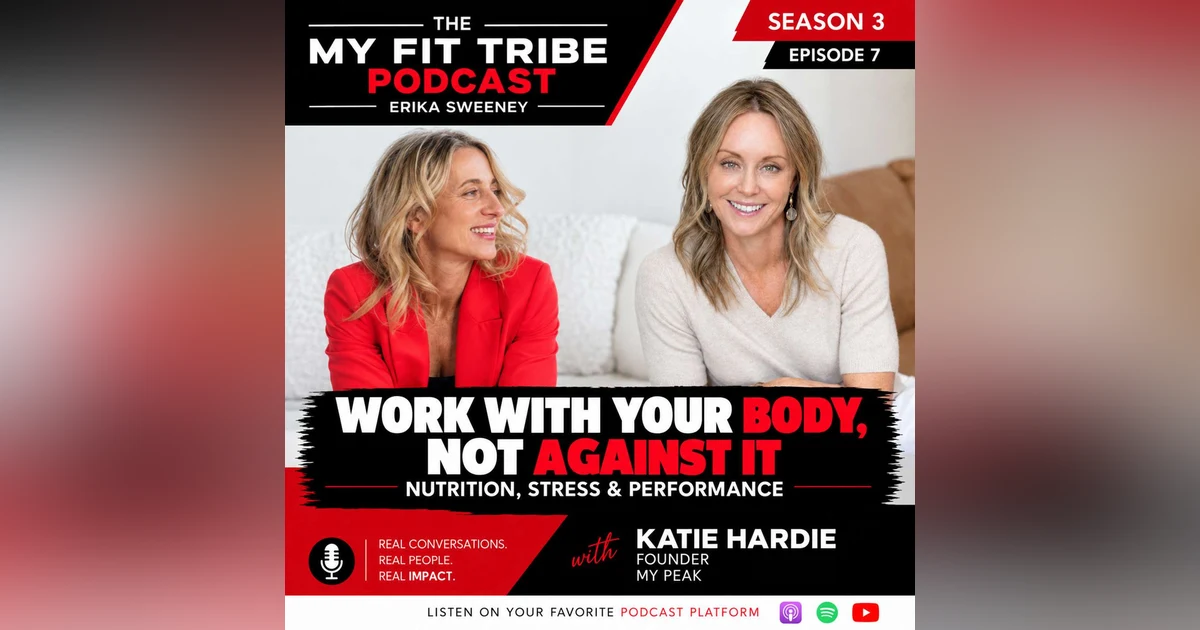

Send us Fan Mail What if the key to performing at your best isn't doing more, but learning when to slow down? This week on the MY FIT TRIBE Podcast, I sit down with Katie Hardie, founder of My Peak, to explore the connection between nutrition, stress, nervous system regulation, and overall well-being. Katie brings a unique perspective through her background in sport and performance psychology, holistic nutrition, and executive coaching. She also shares how a devastating personal loss changed ...


What if the key to performing at your best isn't doing more, but learning when to slow down?
This week on the MY FIT TRIBE Podcast, I sit down with Katie Hardie, founder of My Peak, to explore the connection between nutrition, stress, nervous system regulation, and overall well-being.
Katie brings a unique perspective through her background in sport and performance psychology, holistic nutrition, and executive coaching. She also shares how a devastating personal loss changed the direction of her life and opened her mind to a more holistic approach to health.
We discuss why traditional nutrition advice doesn't work for everyone, the importance of understanding your body's signals, and how chronic stress can affect everything from digestion and energy to sleep and performance.
We also explore the challenge of slowing down, especially for those of us who are accustomed to constantly pushing forward. Katie introduces tools like HeartMath and qigong, along with the value of incorporating small recovery breaks throughout the day.
In this episode, we discuss:
- Why nutrition should be individualized rather than one-size-fits-all
- The connection between gut health, digestion, and stress
- How nervous system regulation can improve recovery and performance
- Why high achievers often struggle to slow down
- Combining Eastern and Western approaches to wellness
- Learning to recognize and respond to your body's signals
This week's actionable takeaway: Taking care of yourself isn't a luxury. It's essential. Start by protecting a little space in your day for your own well-being, whether that's a few minutes of quiet, intentional movement, or preparing a nourishing meal.
Katie also shares a simple shopping list and recipe resource to make healthy eating easier.
Connect with Katie Hardie:
Website: https://mypeak365.com
Shopping list: https://mypeak365.com/shopping-list
Instagram: @mypeak365
Your health is the foundation for everything else you want to accomplish. Sometimes moving forward starts with slowing down.
Thank you for being part of the MY FIT TRIBE!
Throughout my own life and fitness journey, I have had the privilege of meeting incredible people who've shared valuable insights on mindset, health, fitness, and spiritual growth. The profound impact of this knowledge on my own life has inspired me to share it with all of you. I'm Erica Sweeney, host and founder of My Fit Tribe Podcast. Join me as we explore inspiring conversations with experts, thought leaders, and everyday heroes who offer their stories and practical tips to help you on your own journey. From nutrition and fitness to mental well-being and personal or spiritual growth, our mission is to empower you to take charge of your health and live your best life. We are more than just a podcast, we are community. Through coaching, a wealth of shared knowledge, and a strong support network, we are here to guide and encourage you every step of the way. Come be a part of our tribe. Today on the podcast, I sit down with Katie Hardy, founder of My Peak. So many of us spend our lives pushing through stress, fatigue, and burnout without ever stopping to ask what our bodies are trying to tell us. In this conversation, Katie shares how nutrition, nervous system regulation, and learning to work with your body, not against it, can help you feel and perform at your best. Here's my conversation with Katie. Today on the My Fit Child podcast, I'm joined by Katie Hardy, founder of My Peak. Katie combines expertise in sport and performance psychology, holistic nutrition, and executive coaching to help high-performing individuals optimize their health, resilience, and performance. Through My Peak, she takes a personalized, whole person approach that empowers clients to better understand their bodies, improve their energy, and perform at their highest level, both personally and professionally. Hi Katie, thanks for joining me.
SPEAKER_01Hey there, it's great to see you. Thanks for having me.
SPEAKER_02I'm so excited to have you on because I love all that you've accomplished and I love all that you are offering. A lot of it, you know, focusing on the nutrition, the holistic side of it, and really just learning to listen to your body a little bit more. So I'm super excited to learn about my peak. But before we do, let's find out a little bit more about Katie. Tell us about your journey.
SPEAKER_01Yeah. So I grew up in Iowa, Midwest, kind of like you, and I think grew up pretty standard 80s, 90s child, uh, lots of mac and cheese, canned green beans, and you know, just like playing outside. And I always loved having, you know, some sort of structure behind sports and um the presidential fitness challenge tests. I don't know if you guys did those, but that was like really piqued my interest. And so I always wanted to train and just get better at those things. And then as I got into high school, I wanted to take on the nutrition piece. And the information out there was kind of through self-magazine or the coaches who'd have pasta parties before the volleyball tournaments or tennis meets. And uh it was, you know, go nuts with the white breads, but don't really touch the avocado or the chicken thighs because they're high in fat and just really avoid calories in general because those are also bad. So that was kind of the upbringing, and it did not serve me. I ended up in a tough spot, like hormone-wise, um, getting too low in weight, too low in hormones, and I didn't really understand uh the whole extent why, but the approach was like, oh, let's just give her progesterone to make you know things balance, but it wasn't why are things not balanced. And so as I kind of further pursued strength and conditioning, nutrition, culinary school, sport and performance psychology, kind of layered in a lot deeper all the different avenues and realized wow, those are really general recommendations for the average American who tends to be more sedentary, eating more processed foods, and probably overweight and depressed. And so those recommendations don't necessarily fit for somebody who's more uh performance-oriented or really wanting something tailored to their unique self and variables they're working with. And so that's when I kind of realized like, all right, I would love to, you know, train for different events. So I got into triathlon just to know what it felt like from a strength and conditioning perspective and a mental aspect, a nutrition component, how to train for those and like how does that affect your body and performance? So that's kind of you know my end of one experimenting on myself to learn. And I'd say, you know, I grew up very conventionally. Um, everybody in my family was, you know, a physician, dentist, um, orthodontist. So that was definitely the input, which has tons of great aspects. And it doesn't really take into account that individualized piece or the holistic perspective. And so it really took probably like, you know, yourself, like an awakening, you know, like a life awakening event to kind of like, hey, there's something else out there. And so that for me was back in 2013. I was pregnant with our second child, and about a month from my scheduled C-section date, um, because my first one was an emergency situation, so it had to be scheduled. And long story short, um, ended up delivering a stillborn, which means they're not breathing, they're not there, and my uterus ruptured. I went into emergency surgery, not knowing if I'd come out of it. And I just remember thinking, because I had a son who was almost two at the time, like running into that room, like, I don't want him to be raised alone, you know, like with a single parent. And it was kind of after that, like when I came out of that, you know, because it was a C-section, um, I didn't have my physical outlet for just work out and like numb out and you know, feel good with endorphins. So it was the first time I really had to kind of sit with that discomfort. And, you know, because I couldn't go to that physical avenue, I'd always just gone to, I really opened my eyes a little bit more to the nutrition side. And I was teed up to do a PhD in nutrition, which is basically more USDA food pyramid recommendations, more whole grains, pastas, cereals, breads. And it was kind of, you know, it was gonna be a long, you know, commute. And at that point, I was like, I don't want to miss more time with my son. Like, I need to just like zoom out and you know, what makes sense here? And I was like, actually, people don't need more of those same recommendations. How's that working out for us? So that's when I kind of became a little bit more open-minded to Eastern medicine, holistic nutrition, just other things that were out there. And that, while that was such a crappy situation in the moment, that's what I needed to kind of wake up and see that there are alternatives, there are other perspectives, and just really open my mind. And that's been probably the biggest blessing for me because that's completely shifted my trajectory and how I do things, and then, you know, now been able to impact so many people's lives for the better without that standard, you know, approach.
SPEAKER_02Oh gosh, there's so much I want to get into. But first of all, I'm gonna say I'm so sorry. I mean, I I have had my very first podcast episode that we released was with my dear friend Vicky, who lost her teenage son in a car accident, and and the grief and her desire to honor his life by living her best life. You know, so I just I just want to give you my condolences because I just can't imagine going through something so hard. But on the nutrition side and the wellness side and the spiritual side, it all comes together so much, you know, like we talk about this on the podcast in in different silos a lot of times, but they're really you have to put them all together in one to be whole. And it's hard. And I've said before, like doing the checklist on the fitness side and even on the nutrition side is is easier sometimes than the mental and the spiritual side because it's not as tangible. So I love that you're able to take such a difficult experience and then realize that everything that we were told is not necessarily true for one. So let's just start there with the nutrition side. So food pyramid, yes, how ridiculous that Lucky Charms is healthier than a steak. Couldn't agree more. Yes. So, and also to note, and I think you've mentioned it too in a lot of your content, is that every body is very different. So people are gonna react to foods and diets differently. So you've got the keto and the paleo and the vegetarian and the carnivore, and there's so many different ones, but it really depends on you and how we you react. So, as you navigated doing things other than the pyramid, which we now know is off, how do you navigate finding what is best for each individual so that they feel better? Because that's step one is how do I get myself to feel better so I can have the capacity to do the rest?
SPEAKER_01100%. So a lot of that is really tuning into the signals our bodies are constantly giving us, but we've just been so conditioned and actually rewarded in a lot of situations to ignore those signals. And so, back to the 90s example, I would eat as many carbs as possible in the most processed form possible. And I didn't understand why at that time, but my blood sugar was spiking and dropping, spiking and dropping. And I was constantly obsessed with when am I gonna eat next? I'm constantly hungry, and then I would like stand up and kind of, you know, not completely black out, but you know, I couldn't see, like I just get lightheaded. Hydration was a thing too that I wasn't doing, but it so much of it was blood sugar. And then I, you know, since then have learned that my particular body type works so much better with more protein, more fat, and still carbohydrates, but in a whole foods form, whereas, you know, like maybe 70% of my plate is more of the proteins and fats, and the rest is carbohydrates, not in the form of breads and pastas, the only forms I'd ever eat before in cereals. Whereas other people, um, you know, if they ate like that, they might, like I do now, they might feel heavy or not as uh focused, not as uplifted, positive. So we do all have individual differences. I would say the consistency across everybody's the whole real foods, but the amount of each of those, you know, macros, the proteins, fats, and carbs, as well as the types of each um can really vary. And that's okay. Like we don't just because something's working really well for somebody else, it you know, it doesn't mean it has to work for us. It might. Um, some component of it can, and it's not so dogmatic that we all can follow the exact same script and have the same miraculous results.
SPEAKER_02Right. And just seemed to be true again for the the FDA recommendations. I mean, again, what they had in the 90s. I mean, I grew up in the 80s, yeah, and that was just a crazy time, you know. I think that but that's you know, when you as you grow up and even as parents do we taking care of your children, like you do what's recommended because you feel like what you're being told is what is best, and it's not necessarily like for nefarious reasons, but a lot of times it's just it's just not accurate for based on you know, over time we get to figure that out. So we do know now that the protein is super important, especially for women as we get older, and a lot of women have a hard time taking that the required amount in each day. So, do you have recommendations for protein for the clients that you work with?
SPEAKER_01Yeah, and this is something where you'll probably hear all sorts of recommendations that really span from, again, those recommendations from the government that are more based on what's the bare minimum to avoid disease or a complete atrophy. It's not a recommendation based upon optimal health that goes with our lab ranges for blood work and many other situations. But um, you know, you'll hear the bare minimum as that's the target. And then you'll also hear things like at least your body weight or more, depending on if you're going to, you know, if you're wanting to put on muscle or what your goal is, how hard you're training. And so, uh, like everything else, we're all a little bit different. Part of it that varies across people that a lot of times doesn't get considered in the conversation is how well are we digesting the food that we're actually putting into our mouths? Because you could eat on paper, the quote unquote, the most perfect diet for you or that's out there. But if you're either eating in a stress state, you're not producing digestive enzymes that are going to help your body break it down and actually absorb and assimilate it into your cells, or if you're not chewing your food, if you're eating a lot of or drinking a lot of fluids with your food, there are a lot of variables that it can impact how well you actually absorb what you are putting in. So that's one component is how you eat. Like, are you in a fight or flight state or are you in rest and digest? Really important. It seems so basic, but it gets skipped because we're so busy kind of in the weeds, often in that fight or flight state, trying to check all the boxes of doing the right things. Um, and then, you know, what's going on in our gut? Like, how well is our gut equipped to uh receive food? Because if there's something like H. pylori going on, which is a bacteria that reduces your stomach acid, um, it's so important to have stomach acid. And you hear of all these antacids out there because people will have a little like burn in their throat and they're like, oh, we'll give you, you know, PPI or whatever that should only be taken for a couple weeks, but they're on it for years or decades. And what that does is it diminishes your digestive power, along with it doesn't allow you to, you know, kill off any bacteria or pathogens that should not be there. So you can have um, you know, just kind of what's your gut environment. And then um, as we, you know, go through different stages of life, as you were mentioning, we have different needs. So actually, as we get older, we have higher protein needs because our bodies are more catabolic or in a state of breakdown compared to when you're younger and growing. And so a lot of times that's when people eat less because they don't feel like they have as much appetite or they're like, oh, I'm older, I probably don't need as much. And it's actually the opposite. So, yes, it varies. And I would say from a lot of the people I work with and see, most are not eating enough total food, especially protein. And I can see it in their blood work, I can see it in their muscle that definition or lack of it, because when we don't get enough um building blocks, the amino acids that are the you know components of proteins, those are also the building blocks for our stress hormones, our sex hormones, our immune system, like everything in our body needs amino acids. So if we're not getting the basic building blocks for those, then we have deficiencies in all those categories.
SPEAKER_02You know, the more I have these conversations, you know, I'm just reminded how complicated our bodies are. You know, we we try to like, okay, I'm gonna focus on what I eat, and then there's so much we can focus on. So it's it's hard not to sometimes get overwhelmed, right? Because like I need to work on my gut, I need to work on my food, I need to work on my movement. So um let I want to hop in and dive into the gut a little bit because I think that's something that we've touched on a few times in this podcast, but we really don't dive into like what can be done in order to help people identify what to do better. I mean, eating whole foods obviously is super important with your digestion, but how are you able to identify what types of needs people have in order to whether they should take prebiotics, probiotics, like to understand what your stomach is doing and what you can do to improve digestion?
SPEAKER_01Combination of symptoms and you can actually do stool samples, like a GI map is what I use. So you can get into the actual bacteria makeup as well as the digestive capacity and functioning. But for symptoms to start with, like after you eat, do you feel bloated? Do you feel physically full but not satiated, like still hungry, like you needed something more, just needed, you know, like something sweet? Do you just need more food? Do you get hungry one to two hours after you eat? Um, are you fatigued in the afternoon? All these um symptoms can correlate with not absorbing your food as well as you could be. And kind of what I was mentioning before, that can start upstream. Are we sitting down to just focus on our food? Um, because yes, you can have all these symptoms and things like off and upstream, why is it off? You know, like what's what's contributing to that? And so a lot of times in our culture, especially, you know, busy women who are juggling careers and kids and maybe parents or partners and dogs, you name it, they're kind of taking care of themselves last. And it's kind of like get everybody else's needs covered. And then if there's time, I might throw back a couple bites of something as I'm racing around the kitchen, or throw, you know, back a smoothie as I'm driving, or just even eat in the car, or just skip it all together and do coffee instead. So that type of situation is setting your body up for stress. You might not perceive it as being stressful because that is what you know. And from a physiological perspective, that is creating a stress response in your body. When we're under a stress response, our body is shutting down digestion to offer nutrients to your muscles so you can run or fight. And so a lot of times, yes, those symptoms are things I look at, and we can address and, you know, put band-aid supplements, things like that to kind of support the short term. Concurrently, it's really essential to work on the nervous system, like creating margins in the day, uh, things so our body can actually receive the nutrients and the supplements that we're potentially giving it.
SPEAKER_02Yeah, you know, the fight or flight, I feel like I've been in that state for like 30 years. 34, 30, well, maybe 50. Yeah. So it's a real deal. It is, and it is amazing how much the body reacts on it. And the hardest part for me with everything that I've learned that I try to do is the slowing down. Like I cannot get out of that state of mind no matter how hard I try. So, with you, like you mentioned how you were diving into performance and you did the triathlons and you were, you know, focused on that like hardcore competitions and pushing yourself. And then you were forced to kind of slow down and really heal yourself. Like that's polar opposites, at least, you know, from what you're doing with. Like, how is that how does that transition between the two and how does that help you navigate since then in order to have that more balanced approach?
SPEAKER_01That is the absolute hardest part for people who are wired and conditioned to feel accomplished or worthy based upon production and accomplishments. So that's absolutely getting to the heart of, I think the hardest work. And so it's kind of having a new perspective on time, not being like, I'm swapping this minute for that minute or these five minutes for those five minutes, but because you can't expand time. We all have the same 24 hours in the day, right? So, what's the thing? You can expand your energy. And so, how can we be more strategic with how our energy is being spent? Because if we're more productive with our 10 minutes, you know, we're actually gaining time and efficiency. And that is really hard to conceptualize for people who are very linear thinking, which I think most of us are. And so it's kind of where you have to trust a little bit of it to experience it. But um, one of the ways I like to do that for people who are very measurement driven, objective driven, is using, are you familiar with heart math?
SPEAKER_00Mm-mm.
SPEAKER_01Okay, it is um it's based upon heart rate variability, which is a measurement of your body's recovery, nervous system resiliency. And so for people who are like really into output numbers, it's a way to measure the like, you know, if you're considering sprints or strength, you know, pounds, like your output, it's a way to measure the down regulation of the nervous system and how effective you are at that. So I like that because you can actually tangibly see like what you're doing. And the more frequently you are able to get into that state, it doesn't need to be for the long duration at time, like a marathon type of mentality, like let's get more miles, let's get more minutes. It's more about how efficient or effective are you at dropping down, you know, like bringing, you know, like regulating your nervous system, because that's what allows your body to oscillate between, you know, rest digest, fight or flight, like sitting on the couch, sprinting from something, and then coming back to the couch and recovering efficiently. So your body isn't perpetually stressed the whole next hour or rest of the day. And so that's one way where it can just kind of help people see the numbers so then they can start pairing what is my body sensation and actually how am I the next hour, the whole rest of the day? Because the more frequently you engage in uh strategic recovery breaks like that, again, it it can take a minute. It doesn't have to take five minutes or an hour, the more efficient and effective you are at that, the better um able you are to mentally focus, better able you are to emotionally let things roll off your shoulders, the more in tune with things, like just intuitively you are, the better your sleep is, the more your body produces DHEA, which is repair, recover side of, you know, the counter side to cortisol that's breakdown. And that's upstream of testosterone and you know, the hormones that people are talking about being low in so many people, especially mid age and beyond. So that is kind of my approach to helping those people who are like, I just want to check the boxes of the to do items and get it all done and be really productive and. It's a way to kind of operationalize some productivity, maybe, or effectiveness behind nervous system regulation.
SPEAKER_02So those of us who drive our car with the gas pedal down all the time, you're allowing us to be able to not necessarily slam on the brakes, but at least slow down and regulate enough for us to breathe a little bit and calm down before we have to push the gas pedal again. Is that accurate?
SPEAKER_01Kind of, yeah. So uh, you know, you can't have the gas and the brake pressed down at the same time. And if you think about, you know, a marathon pace compared to a sprinter's pace, who's going faster, right? Who has more power? And at the end of the day, you know, you you want to think about your productivity in terms of sprints and what's your highest output, not necessarily the total volume, but like the effectiveness, the strength, the power behind it versus that grind all day long. Because when you get those recoveries, you can sprint. Like you can actually sprint. You can't sprint if you're never recovering. That's not a true sprint. You can jog, you can do an interval, but you can't actually sprint if you're not getting those little recoveries. So if you want to see like that top end potential and expand the overall energy for the rest of the day, it's so important to do that.
SPEAKER_02So is it something that you're looking at like how you schedule things where you're time blocking things, or is it more that you're focused on just the physical settling of the nervous system, or is it both, or how does I'm super curious because I need help? D.
SPEAKER_01Yeah, D all the above. So the actual heart math sensor I use is an is like a biofeedback mechanism. You clip it to your ear and then connects to an app on your phone. So it can run you through different guided exercises that are basically like breathing exercises, and you can see what types of things you are feeling to get into that state of what's called coherence. So it's getting your heart, you know, your waves in sync, which gets your body into a more restorative recovery mode because you can't heal and you can't like top and perform if your body's not able to do that. So this is awesome for athletes too, who want to get into flow state. It translates really well into that. And if you're not an athlete, into just like, you know, being resilient, getting better sleep, just you know, being able to have that difference between the gas and the break. And so back, you know, to your point about the the scheduling, I think um margins, you know, in the day or just like a space where it's not boom, boom, boom, boom, like one after the next. I mean, that's how I've always operated. Like be as efficient as possible. Uh you can sleep when you're dead, uh, you're kind of lazy if you need to sit down in the middle of the day, or if you need a nap. And that's kind of the Midwest way, right? You can work really hard and then, you know, you eat and drink maybe a little harder. And so it's a really different way of looking at it, but just those little transitions you have between meetings or um stepping away from your computer to not be zoomed, like looking so close and like walking around, changing your gaze, filling up your water, that circulation you get from moving around and that just that mental break makes you so much more effective at what you're doing when you come back from it. And again, it doesn't have to be an hour break, but like even five minutes, you know, between meetings can really shift the energy dynamics in terms of focus, in terms of, you know, just that, you know, emotional state. Like, are you feeling like on edge or are you feeling very like chill with things? And so um that's something I always did a really poor job with. I'm still working on it, I think we all are to some extent, but just jumping out of bed, hitting the ground, like running off to the gym, go teach a class, and go straight to work from there, and then boom, boom, look how much stuff I got done. You know, I remember when I was in grad school, I would start teaching classes at 6 a.m. at the gym, go straight downtown to work, work on my lunch break and teach another class, leave work early to go coach, and then leave from there to go do classes from 6 to 10 p.m. and then rinse repeat in just for what, you know, I was trying to be, I was trying to jam it all in. But that keeps your nervous system upregulated the entire time because you're constantly like fighting the clock.
SPEAKER_02And the other thing I noticed that I do is, you know, there's the multitasking now has been switched to um task switching, you know, is the new term because you're not really doing a lot of things. You're just barely doing, you know, just keep switching from one another and you're not doing anything well. And that's one thing I found is I'm gonna blame it on my age, the older I get, but I'm just just having been busy for decades, just my I'm so used to having to do so many things and getting it done that I don't even have the focus or the capacity. I love that word, is just to be able to do anything well because I'm just you know you just on that that fight or flight state. So that's very interesting. And it's again, it's like you said, it's you don't need to spend a lot of time. You mentioned getting up out of bed and going right away. So um I've been trying to make an effort to when I get up in the morning to to start slow or take a moment to like just like I told myself I'd do five minutes a day meditation. Cannot do it because I'm trained as soon as I wake up, like I'm better if I if I hit the ground running and I don't think about how I don't want to do all the things I have to do. You know what I mean? So for me to switch to like for just spend five minutes to get in that space, I I have failed day after day. I d how do you how do you even how do you do it?
SPEAKER_01It's hard. Okay, so um back to you know when the whole stillbirth situation happened, one of my friends gifted me a session with a traditional Chinese medicine acupuncturess. Growing up very Western-minded and closed-minded, I was like, what the hell is that for? But you know, hey, my uterus just blew up. As long as it can't harm me, why not try it? You know, this is how like idiotic I was at the time. I was like, sure, let's try it, I guess. And that um first session, I came out having no expectations, and I was like, wow, that was the first time I didn't realize how much of a weight it had been carrying on my shoulders. But when it was lifted, it was like I was now aware of what I was completely unaware of. I was like, oh wow, there's something behind this. I had no idea, any like mental, emotional piece. I, you know, I was looking at everything so physically. And so then through that, I was like, all right, there might be something to this. I'll, you know, come back again. And um, through some of the sessions, she taught me something called qigong. It's kind of like a more physical moving meditation for people like us who have a hard time like sitting still, and you know, you're used to your nervous system kind of being on hyper alert, hyper vigilance, like ready for something to happen, which has a protective mechanism for a certain time. And then it doesn't have a protective mechanism if it's constantly on. And so she's always like, Yeah, I, you know, get it in whenever you can, but ideally in the morning before you like get going. And I'm like, What? That's like I can't imagine that. But it wasn't until I moved to the mountains from Denver that the gym wasn't open as early, and I couldn't just like hit the ground and run into the gym because they didn't open till 6 a.m. And I was like, I want to be like halfway done with my workout by then. So it was like this awkward time where I was awake and ready to do something, and um, my kids weren't napping anymore. I used to do it during their naps. And so I was like, I guess I'll try it now. And it was kind of like force, I was like super annoyed with the whole routine, like the lack of the gym being open. If I tried it, I was like, actually, that's not as terrible as I thought. And you know, obviously they recommend the deeper you go, the longer, the better. But you know, I'm like, if I can just get a few minutes in, three to five, I call that a win because it's slowing down. It's like transitioning the nervous system from deep rest to, you know, go. Because your cortisol does spike like right away in the morning, and you want that. Um, the other thing I've tried playing is with that heart math. I do like kind of doing that where it kind of sets your tone for the day. So you're just not like hot, you know, coming in too hot. And I play with that different times of day too. I don't do both because that feels like now you're stacking to do items, and it becomes like now we're back into this stress state. So I just pick one of them and you know, kind of whatever feels good. But that qi gong has like a movement, like a crane's neck is what it's called. And my neck just like I used to like I used to road bike and do triathlons and teach spin classes and have you know like a really stiff neck. And um, so I realized when I do that, my neck doesn't hurt. And when I forget to do it because of traveling, being out of the routine, it is stiff, and I'm like constantly like kind of like adjusting my neck. And so it's just really interesting. It's like, okay, and same like with my back, there's a spinal twist where my back just feels better. And so it's like I needed to have that physical, like, you know, feedback that's like, all right, this is actually doing something, or when I forget to do it, it's not doing that thing.
SPEAKER_02So that's interesting because oftentimes we don't realize how bad we feel until we feel good, or we don't realize how good we feel until we start to feel bad again, maybe is more accurate.
SPEAKER_01Well, I think that's so common because everything is so normalized. A lot of those topics aren't necessarily happy hour conversations. And so you're just like, well, this is all I know. If I've never experienced anything else, how would you know? Like I always thought my stomach felt fine eating cereal and milk and bread and all the things every single day, almost every single meal, until I tried this, you know, kind of a cleanse challenge thing where you didn't do gluten and dairy and some other things, and which I was kind of pissed about, like having to give those things up. But then all of a sudden I was like, wow, my stomach feels really good. My energy feels really good. And I'm like, no, this can't be it. But uh, and then I went back to the cereal, I'm like, dang it, it is what's hurt. I didn't even know my stomach hurt, but I just knew I couldn't. I was like, I don't understand how people drink coffee in the morning. That just sounds like it would blow up my stomach. But then I was like, oh, if you're not putting all the things in that make your stomach just feel a little unsettled, but I felt that way all that time. I didn't notice that I did. And I think when you're an athlete, you're used to just ignoring discomfort because that's what makes you, you know, get through the workout, get through the training, get through the race, get through whatever it is that's difficult. And so you're used to doing that, and you're very good at numbing things out or compartmentalizing things. So I think sometimes those are the people that have a harder time actually tuning in. What is my body telling me? Because I've been really, really good at ignoring it.
SPEAKER_02Yeah, you know, there's something I was listening to a podcast on my way in today. You know, I've been spending a lot of time like with Joe Dispenza and listening to the power of the mind healing the body, which is just so fascinating to me. I I think that there is something there, right? Like I don't know what I but it's it's just you hear stories of people being able to slow down and meditate and put their frame of mind a certain way and how they they are able to heal in many ways, whether it be emotionally or physically, your illness or whatever. But one of the things that was talked about and then when I listened to this morning was like if you're gonna do something, like if you're going to envision how your day is and deal with like that that manifestation or the the visuality of of what the day is, you can't just like picture, you have to believe it. Like part of the slowing down and part of the of that visualization is you have to believe. So like you you have people who are healers or something, like those healers aren't just using your energy worker your acupuncture, they're just not just going through the process like at a factory. Like they are have this belief energy that's going into the process. And I don't know why today that just kind of hit me different. I was like, it's not just about doing the thing, like you've got to do the thing and believe in the outcome, like which is just a little bit interesting.
SPEAKER_01So that totally ties into the heart mass center because it's not about just visualizing the thing, it's experiencing it, just to your point, right there. And so when you feel the appreciation or whatever the you know experience they're trying to create to get you into that coherence, that's when it works. When you're just kind of like thinking about it, it's more surface level, you know. Um, have you heard of or read either by Bruce Lipton's The Biology of Belief or The Genie in Your Genes? Either of those books. I have not, but I will put them on my list. I think you would love them because they get into the science behind the epigenetic component. Epigenetics is the, you know, we're all handed DNA, and epigenetics is how that DNA is either expressed or not expressed, turned on or closed off. And, you know, we know stress impacts how we look, you know, um, how we age our hormones, nutrition, same thing. We we get those. Those are very tangible. Um, our thoughts and beliefs also have the exact same effect. And it is so cool how they measure and um operationalize those ideas through studies, and it gets into the energetics of healing and different modes of you know, energetic healing, and it is so fascinating. And that's really what a huge component of you know, just starting to enter the Chinese medicine and holistic nutrition, like that that whole world is like knowing of that, accepting of that, and practices it and it works. And so for us people who are very like science-driven and like data-driven, need to touch it, you know, those books are really helpful for kind of getting it.
SPEAKER_02Yeah, it's really cool. Like it's it's really cool to know that you have, you know, educated medical professionals who are starting to understand the connection and put it out there in a way where people, where there's the data to support it so that all of us who have, for some reason, we have this reason to find why it wouldn't work instead of believing that it does and how we can utilize it. So we need to work on that approach. But it's it's really fascinating, and I love that what you do is you're taking again both the physical and the tangible items and combining it with that energetic spiritual calming side in in order to get a whole version of yourself. You deal a lot with high performers, and again, we touch on that quite a bit through this whole episode about how these people, all of us who are are just on go mode and wanting to perform at our best. How has it been working with people like that? Because you, I mean, you obviously you are that person, so you've under you understand the mindset, but is the biggest challenge then that you're finding is them being able to slow down.
SPEAKER_01So, what's interesting is the exact thing that gets us in that hole is exactly what pulls us out. And so, you know, I've got so many people who have, you know, it's not a technical term, but people have heard it, adrenal fatigue. And we can measure it through urine saliva tests and see what your production of cortisol is and see what your availability at the cellular level is, which is very validating for people who are like, I wake up, it's like hard to get out of bed, or I'm like laying in bed, I'm tired, but it's like hard for me to fall asleep, or I get this afternoon energy crash. And we can see the pattern throughout the day, what's going on, as well as sex hormones. And so when people can see, like, hey, you've got no juice, like in your, you know, like your body is been pumping, pumping, grinding for decades, and this is now why you're feeling this way. And then when you can, you know, make that very concrete, and then here's you know the plan for how to get out of it, and then they start feeling this energy that they haven't experienced in a long time. And and these people don't have a lack of motivation, like they will themselves through everything, and you know, just are like, all right, it is what it is. And when they realize kind of like I did with my stomach and even with the energy too, it doesn't have to be that way. And dang, it feels great to feel great. That is, you know, motivating to continue that. And what's interesting is a lot of the people will like over cardio things, you know, and so that's a time expense, right? So there's always an opportunity cost. Well, if we shift more into that sprint mentality or recover, you know, first to be able to earn the workout or the thing that's gonna drain our adrenals more, you actually gain more time if you are trading minute for minute, but the capacity that you expand to is so much greater. And everything comes back. Like the skin's brighter, the stomach doesn't like have all these GI issues, the sleep's better, they go off meds, they're naturally energized without caffeine, you know, like finding the fuel that keeps the energy balance throughout the day. They're just like so grateful because it's like all of a sudden they're just doing more, which is exactly why they got there, but it was like doing more versus doing smarter before.
SPEAKER_02Yeah, that's a process. Because again, we have our default mode of how we operate and how we think. Yep. So it's very challenging to change it, speaking from experience.
SPEAKER_01Oh, yeah, I know. And like I noticed things, even you know, like when my mom was texting, they're retired and they got back from vacation. Like, how's the work, you know, like transition day? Oh, feel really good about what we accomplished, you know, when we got back. Like, what are you accomplishing? You're not working, like you don't have kids, like, but it's so ingrained, you know, to just constantly be accomplishing. And I mean, I want to accomplish things. I'm not like saying that that's a bad, but it's just it's like you're not validated unless you're accomplishing something. Yeah, it's quite the process, and it keeps people just chronically like busy but not productive.
SPEAKER_02And the mental side of things, like if you're not trying to achieve something, it really like you just you feel very lost. You know, it's hard to find your purpose and what to do. How long have you been offering the coaching? When did you start my peak?
SPEAKER_01Well, my business has evolved. It started in 2010, but I layered on so I've you know, the strength of conditioning, the wellness coaching, and I added culinary school. But it was the labs that I added, oh, in the last since around COVID. And that's what, you know, like so, yes, my eyes got open to just holistic approaches, but then really understanding the adrenal component, that's when I ran my labs and I was under like it was a really high stress period of my life and um ran the hormone labs before I went on this backcountry hut trip, like a ski trip. I'd been staying up late, getting up early, over-training, under-recovering, eating crappy foods, drinking more alcohol, like all the things that were not like a part of like my balance lifestyle. It was just, you know, layering stress upon stress upon stress. Went on the trip, uh skiing out, 10 miles from the car, um, hit some chunky snow, and my knee bent backwards and I fell. I was like, why did I fall? And then I tried to get my foot back in the ski and it kept buckling every direction. I'm like, damn it, that's my ECL. And so, like, once I got back, like a week or so later, I got the test results on paper. I was like a recipe for an injury or you know, something to happen because my body was in such a breakdown mode. And so it was kind of the first time like, oh, the adrenals like actually can affect me too, not just other people. Like, I think we all think we're a little invincible until you know you get injured or you get sick, and it's always at the least opportune time. So that was kind of my wake-up call because all of a sudden you got nine months out of, you know, doing the normal things you'd love doing, no more downhill mountain biking, no more sand volleyball, no more skiing. Now my job is to rehab, and yeah, there's a purpose behind it, but it's way more fun doing all the other activities. So it's like, all right, it's just you know, you life will hand you the lesson you need to learn if and it will keep handing it to you, like learn it. So it's like well, that was the next layer. So that was, you know, to me, very influential with how I've shifted my approach instead of just grinding more, it's you know, grinding smarter.
SPEAKER_02And it, you know, I always say to people too, like, if you like whether your future goal is to be able to retire or be able to play with your grandkids on the floor or be able to go travel or go ski till you're 90 or whatever it is, like you have to take better care of yourself, your whole self today in order to make sure that you can provide the best possible outcome to be able to do those things as we get older because we have to work hard at being well and in again in the the full whole sense of the word. So how much do you feel like that Eastern side of things has really like has is that it has that impacted you the most, or w how much has that played a part in your journey?
SPEAKER_01So I actually kind of bounce everything off of like what would they have done a thousand years ago, or kind of how does that approach fit with this? Because even in functional holistic medicine, it's still on the Western side of the equation. A lot of people don't realize that. And there's things, even supplements can be very allopathic in the sense of we're treating a symptom versus like, let's zoom out a little bit more. Why do we have the symptom? You know, because you can do the same approach just with supplements versus medicine. And yeah, it might have fewer side effects, and there's totally a time and a place for band-aids. And what is the larger imbalance that we need to really work on? And what's I think fascinating about the Eastern approach is you know, we Western, you know, minded people are very physical, everything's so physical, and they incorporate the mental emotional piece too. So, like with liver um stagnation or congestion, um, we look at it western wise as uh was. Was it alcohol? Was it pharmaceutical, you know, physical substances? Whereas Eastern, yes. And is there anger, irritability, stress, frustration, like emotional components can also create those physical things? And in turn, those physical blockages can contribute to those emotional mental imbalances. So I really like to look at all of it because I think the language we are used to and comfortable communicating in is more of that Western. And that's why I like to run the lab so people can see it on paper and like, oh, that's me. And then incorporate, you know, a little more subtly some of those Eastern concepts. So, you know, it's just very ancient wisdom and it works. And um, you know, sometimes people don't want to necessarily approach it directly that way. Although people who are open to it, I definitely like recommend incorporating those aspects. And people who aren't, I'll like kind of mention it, but we'll just talk from the the Western physical side and get there the same way.
SPEAKER_02Yeah, well, you definitely have I mean, anytime you're doing when the coaching side, I think it's really important that people meet people, their clients where they are. And I think sometimes that's missed in the process, you know, and it but I really think that it's exciting to see that people are learning to work on the whole being and not just have to wait until they're sick to go to the doctor, that they can take those initiatives and advocate for themselves and do the whole thing to try to again be that best version of themselves because you can't have the capacity if you don't have the energy. So we've got to work on all that as one. And the Dutch test is this the one of the saliva tests for the the for the cortisol home, and I've done that as well. And it's very nice to be able to again to be like, okay, I don't feel well. This may be part of the equation and what can I do to fix it, and then continue to check those labs and get that data so you can continue to improve how you feel because your body will keep changing even if you think you have it figured out. Oh, yeah.
SPEAKER_01Yeah, we're we're dynamic beings.
SPEAKER_02For sure, for sure. Awesome. So before we wrap up, why don't you tell our listeners how they can find you?
SPEAKER_01Sure. I'm on www.mypeak365.com. And if anybody's looking for kind of a tangible like step they can do today, I have like a 10-minute shopping list that corresponds with a few recipes because sometimes it feels overwhelming. I thought it did to me, like, you know, like what do I have for food? Or like, what do you get from the store? And so if you go to mypeak365.com backslash shopping list, um, you can get what my, you know, kind of go-to weekly list just to get in and out of the store in 10 minutes and then have, you know, you can just play with those on your own. Or if you want some inspiration with quick recipes that will help set up your day for really awesome energy and just be whole real foods, that's there. Or if people like Instagram, it's my peak365. And I'll put, you know, fun little tips or reels of like how to make some things to make it fun, because so much, you know, whether it's the Western approach or the eastern, so much of our energy and our well-being comes from that epigenetic influence we put into our mouths one, two, three, maybe more times a day. And so if we can get that piece right, um, a lot of the other things are so much less of a component that need to be focused on or supported with band-aids.
SPEAKER_02Okay, I'm gonna extend this because I have to jump into some of this. So I think offering recipes is really important because we have, you know, we have the internet now, so we have access to all of this great information, but it's so much and it's hard sometimes just to narrow in and do it. And the convenience a lot of times outweighs nutrition. So it's really important to be able to have just okay, I'm this is what I'm gonna make on every Monday. At least you have one Monday dinner done so that you can have a healthy meal. So again, taking it one step at a time to do something different. But I will definitely put the link to your website in the show notes as well. And I again I really appreciate your whole approach because nutrition is something that we can all work on. You know, I have stretches where I'm really, really good, and then I have stretches where I just start to fall back to again my default mode where I eat things that you know aren't horrible because I don't eat fried food. I stay away from processed food for the most part, but you know, I just get a little bit lazy with my with my choices, and not only that, but I get tired of eating the same old thing. You know, I'm like, I've I've had salmon every day this week along with chicken breasts, and I can't do it anymore. So having variety, I think, can be challenging, but important to be able to have options. So that's great that you offer that.
SPEAKER_01Yeah, no, I think we're all creatures of habit and start shifting into you know a routine. So if there's just one new thing you can kind of add to the rotation, it stretches out your current rotation so you're a little more excited about whatever's in it.
SPEAKER_02Yeah. So the one of the questions that we added to the season three is what actionable step would you advise to our listeners? I think you kind of touched on a bit that you would go to your website and download that shopping list. But as far as mindset goes, if someone's listening to this and just trying to see, okay, I I need want to be better, like what's a like legitimate like mindset first next step that you can provide?
SPEAKER_01Yeah, so filling your own cup is not a luxury, but it's essential for your well-being and performance. And so, in order to, you know, give to others, give to your career, give to your kids, give to anything or anyone, you can't pour from an empty cup. And, you know, protecting that space with boundaries, again, is not selfish, it's essential.
SPEAKER_02Yeah, and it's it's hard to do, but it's it's like the accident mask on the airplane. You really have to be able to take care of yourself. And again, not only for you today, to, as I mentioned, have the capacity, but also for you to be able to get to where you want to in the future, because we touched on you can have a hundred problems and then you don't have your health and then you only have one. So we want to make sure that you stay healthy as long as possible. Okay, so I'm gonna end this the podcast with my my two-part question that I ask all my guests. So if you, Katie, today can have a conversation with your past self, you know, maybe it's the one who went through that really difficult time or you know, just a time in your life where you just weren't sure how the future was gonna go. What advice would you give your past self?
SPEAKER_01You know, I think I would probably say the people giving you like advice are also limited with what they don't know, they don't know. And so the you know, realm of possibilities is probably greater than you realize, and to keep, you know, asking why, keep seeking out different ideas or options.
SPEAKER_02You know, that's really I've not had anyone express that, but you're right. You know, when you're in a difficult situation, a lot of times we do everyone wants has something advice to give, right? And you know, even going back to the food pyramid or to when you don't feel well and you go to your doctor or anything. You just sometimes you're restricted to the information that you're you think that's all you have. It's really important to expand the possibility. I love that. Thank you. So now you, Katie, can have a conversation with your future self. You can pick 10, 20, 30 years. If you envision her walking in the room and sitting with you, what would you ask her and what do you think she would say back to you?
SPEAKER_01Gosh, I'd probably want to know what I'm missing right now that I could be considering. Um, you know, like what I don't know, what I don't know or what I don't know that I don't know. Um, and what else to be kind of learning or exploring. And what do you think she would say back to you? What would she say back? I mean, probably, you know, the things that I'm also working on with others and myself is to really tune in to that inner intuition because we all have it. And like like the feedback our body's giving us, um, like, you know, when you're a lot of times talking with people who are considered more senior to you or more quote unquote educated, a lot of times you discount that. And I think there's so much of that innate wisdom that we can really tap into if we allow ourselves to.
SPEAKER_02There is. And even just, you know, the intuition that is unexplainable. You know, again, that's one of the the what I was listening to this morning. It just sometimes you just have to believe and trust, and that's where the change happens, right?
SPEAKER_01And that heart math is like, you know, working on that nervous system work really opens up your ability to tune into that intuition. And so I think if that's, you know, kind of a new area of interest or a value, I think tying that into your morning could be your why to slow things down, to like tap into that other side of things.
SPEAKER_02Is there an a specific app that you recommend for people to try that?
SPEAKER_01Oh, um, here's what it looks like. Um that's what it looks like. So it's called Heart Math. And what's crazy is I learned about this like almost 20 years ago in grad school and then kind of went away from it. And then, you know, it's just interesting how it actually ties into all the hormones and things that I actually test on people now. So it kind of has come full circle. But yeah, the Heart Math Institute, they've got books, they've got tons of research, really fascinating. Happy to share any links with you too.
SPEAKER_02Yes, absolutely. I'm gonna look into it and then maybe we can have a follow up conversation to talk more about it.
SPEAKER_01Yeah, yeah, yeah. Yeah, for sure.
SPEAKER_02Excellent. Well, I really appreciate your time today. I again, these conversations, it's hard because they go so fast and there's so much I want to ask and and talk about. And one I did remember the part I was gonna say earlier, even though it's probably not the right time, but um, you talked about epigenetics and how that's changed. And I wonder how with social media and all of our instant gratification and all of that noise and chaos that we have with our phones, I wonder how much that's gonna affect our genetics in the future. You know, just just I'm curious.
SPEAKER_01I know. Um, yeah, well, it can't not affect it, you know. So the question is how is that changing it and express and hopefully it balances out and you know, maybe the pendulum swung really far and it will kind of recalibrate, who knows?
SPEAKER_02All of but all the more reason to make sure we take that time for quiet and resettle our minds. 100%. Yeah. Awesome. Well, thank you again so much for joining me for this conversation. It was a pleasure, and I hope to talk with you again.
SPEAKER_01Oh, thank you, and we will.
SPEAKER_02Thank you. Thanks for listening to the My Fit Tribe podcast. Tune in weekly for our latest episode for more health and wellness insights and inspiration. For more information, visit myfittribe.org. Don't forget to share, like, and download this episode, and thank you for your support. Please know that the opinions and comments presented here are those of the guests and do not necessarily constitute medical advice or the opinions of MyFitTribe. Copyright 2026, all rights reserved. This podcast is recorded and produced by Jay Johnson at Paradigm Productions in Madison, Wisconsin, and is a production of MyFitTribe LLC.