Josh Kosnick -Unlocking the KAIROS CODE
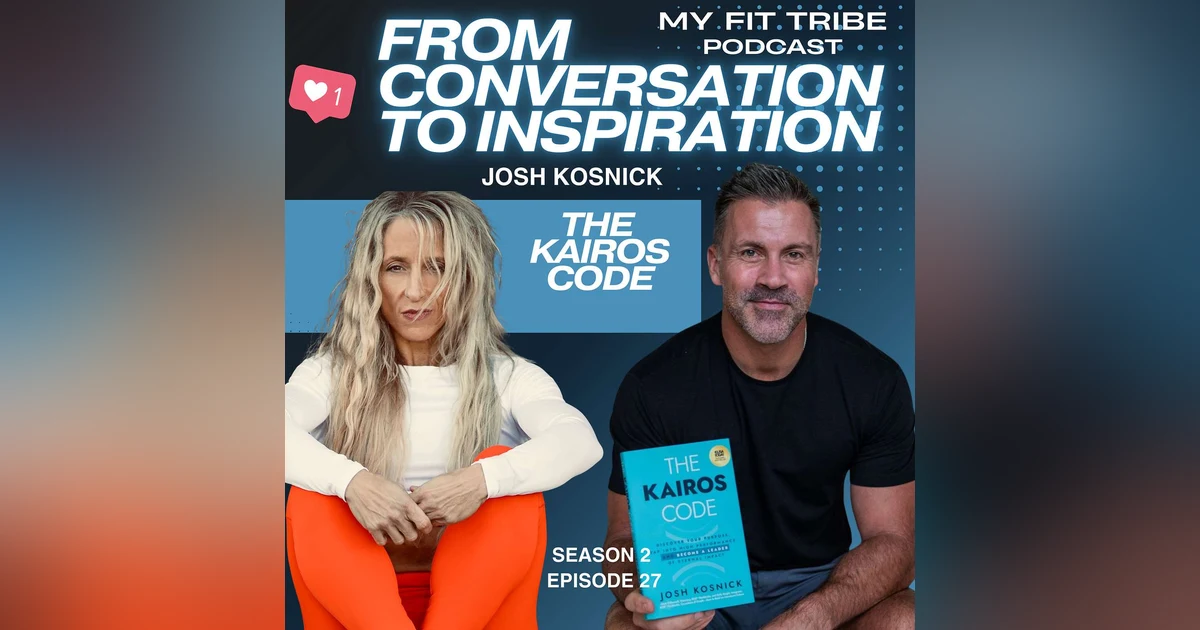


Welcome back to the My Fit Tribe Podcast. Today, I’m joined by Josh Kosnick, author of The Kairos Code.
There was so much I wanted to unpack in this conversation because I found myself relating to so much of his journey — the pivots, the questions, and the search for deeper purpose.
Whether you’re navigating a major transition or simply trying to reconnect with your passion, this episode brings you back to the fundamentals and challenges you to recognize the moments that could shape your next path.
Let’s dive in.
https://www.joshkosnick.com/kairos-code
17:15 - [Ad] Just Be True ~ A Soul-Led Podcast
18:01 - (Cont.) Josh Kosnick -Unlocking the KAIROS CODE
Throughout my own life and fitness journey, I have had the privilege of meeting incredible people who've shared valuable insights on mindset, health, fitness, and spiritual growth. The profound impact of this knowledge on my own life has inspired me to share it with all of you. I'm Erica Sweeney, host and founder of My Fit Tribe Podcast. Join me as we explore inspiring conversations with experts, thought leaders, and everyday heroes who offer their stories and practical tips to help you on your own journey. From nutrition and fitness to mental well-being and personal or spiritual growth, our mission is to empower you to take charge of your health and live your best life. We are more than just a podcast, we are community. Through coaching, a wealth of shared knowledge, and a strong support network, we are here to guide and encourage you every step of the way. Come be a part of our tribe. Welcome back to the My Fit Tribe podcast. Today I'm joined by Josh Kosnick, the author of The Kyrus Code. There was so much I wanted to unpack in this conversation because I found myself relating to so much of his journey, the pivots, the questions, and the search for a deeper purpose. So whether you're navigating a major transition or simply trying to reconnect with your passion, this episode brings you back to the fundamentals and challenges you to recognize the moments that could shape your next path. Let's dive in. In this episode, we are joined by Josh Kosnig, the author of The Kairas Code. Josh is a writer and an entrepreneur passionate about helping people recognize and seize those pivotal moments in their lives, what he calls Kairas moments. Through his work, he explores how insight, timing, and intentional action can unlock personal growth, clarity, and purpose. Today we'll dive into Josh's journey, the inspiration behind the Kairos Code, and the mindset strategies he teaches to help people make the most of life's most important opportunities. Hi, Josh. Thank you for joining us.
SPEAKER_01So excited to be here.
SPEAKER_00So I was saying before the podcast, I had the pleasure of reading your book, The Kyrus Code, a few weeks ago, and I really enjoyed it on so many aspects because it encapsulated so much of my life, starting with the professional journey and how the grind and the lifestyle of finding that success at such an intense level. So let's kind of start with who you were at that point in your life, starting that business, building it and focusing on that alone and what happened from there.
SPEAKER_01Yeah, so I think that uh it's actually better to start a little bit before context. I was a collegiate football player. And so my competitive drive transposed into business. And so I was told no for a raise in my one corporate job that I ever had, which was Best Buy 20 plus years ago now. And uh immediately I was called and kind of recruited uh to the financial world. In that world, it really opened my eyes because I get told no for a raise from corporate. I get offered this opportunity, which happened to be my father's firm, but uh he wasn't the one recruiting me, which was kind of ironic. But it gave me the opportunity to earn what I was worth or what I perceived my worth was. And it allowed me to compete again. And that's where my drive really came from, this hyper competitive drive to earn what I wanted to earn, to have freedom that uh the corporate structure didn't provide me. And so it was interesting. I was just able to build a business that was freeing to help people on the financial world of things. But also, if you help more people get what they want, you get more of what you want. And that's an age-old quote. But for me, I really started with wanting to earn more money and have freedom from a corporate structure. And then it turned into a far more service-oriented uh venture for me as I continue to grow in the career. So I think it started with that hyper competitiveness, just working my tail off to build something from scratch and then being able to turn it into a service-led inspiration.
SPEAKER_00You talk in your book about the difficulties and the challenges as you move forward in your professional career. Um, up until even recently, when you had the legal challenges and, you know, this doing things to help bring other people in your team up, and then having things maybe beyond your control that kind of change your trajectory. Can you talk a little bit about that?
SPEAKER_01Yeah. So I found about let's say midway through my financial career that I really had uh more of a passion and proclivity for leading others than just building my own thing. And so I've got myself into a leadership role where I was not only recruiting but developing other advisors, as well as building my personal practice. I did that so well that the Fortune 100 company chose me to secede my father and buy him out, send him off into retirement and take over this very large financial firm. In that role, I always describe to the outside world like it was imagine being like a hybrid between a franchise owner and a regional VP. So if I I always knew that if I wasn't doing my job well, that they could terminate me, but they would have to buy me out in the same point. So what I never anticipated was doing my job well and still getting terminated. Like that, that never crossed my mind. So five years into my run as being the managing partner of this firm, I had a young leader on my team that uh chose to make some wrong moves. And as I started to correct those moves, he chose an even more uh even worse path of choosing to sue me for discrimination, even though discrimination hadn't happened. The company did their own investigation. They knew nothing had happened wrong. So we're at this crux where I still cared enough about him that I wanted to see him succeed. And I had recruited this person, brought them in, mentored them to success, all these different things. So I still cared about this individual. He ends up finding another office. Two months later, paperwork shows up at my door. I truly hope no one has this happen to them. But courier comes to my door, you, Josh Kosnick, you've been served. Uh, so I get sued for discrimination, even though it didn't happen. So now my name's tossed in the mud. I tell my company right away and say, and they originally said, Yeah, we'll help you through this. About a month later, they show up in Madison and uh I think we're gonna go and renegotiate numbers. They said, Josh, you're no longer a managing partner. We're going in a different direction. And just like that, my whole world and what I thought was my vision was done in an instant. In my head, my vision was I'm gonna run this thing for 20 years from age 35 to 55, grow it as big as possible, have as big of an impact as possible, and then figure out my next chapter at 55. That wasn't God's plan. So at 41, this thing's ripped away from me, and I got to rediscover who I am and what I'm gonna do with the rest of my life.
SPEAKER_00Those moments, as you call them, the Kairas Code, those those moments that change everything, sometimes that just stop you in your tracks and you don't even know like how to pivot. Like one thing in in business, being an entrepreneur, you have to know how to pivot. That's that's just you can't succeed if you don't. But when you have moments that big, that's a big pivot to make. What did you learn about yourself in moments like that and and how to make a pivot that is that big?
SPEAKER_01So it's interesting. You learn a ton. Uh so if I could narrow it down, I I first paused. Uh, the power of the pause was really crucial. I decided I was gonna take the whole summer off. Money wasn't an issue. I was still negotiating my exit, and that took six months. But I was like, when am I gonna get this time back with my kids, my my wife? Like, I'm gonna spend the summer with them and not make any rash decisions. Well, I did that and we had a great time, but then I get them back into school, and I'm a type A driven individual, and I get them back into school, and I'm going stir crazy. Like, I have no purpose, my identity shattered, I'm still going through the stages of grief. Because I've I've told people this often, it doesn't matter if you have a happy sale of your business or a sad sale like mine, that was your baby. So you go through the stages of grief, much like losing a loved one. In fact, the Exit Planning Institute just put out this statistic that that's really troubling. It says 90% of entrepreneurs, upon exiting their own business, will suffer depression within 90 days. It's it's a massive, uh troubling statistic. And so for me, I was working through those stages of grief and actually sitting in it and actually journaling through it and actually feeling every emotion that us male, particularly us males, try to brush under the rug and not do anything with. And in that fault time period when my kids are in school, I'm getting recruited by everyone in the financial industry. And every time I took a meeting, I learned something new. But I also had this weird pit in my stomach that something wasn't right. And so I had to really spend a lot of time at prayer and reflection and figure out what that was that what didn't feel right. And God was basically telling me that I'd accomplished everything I set out to in that industry. It was time to blaze a different trail. Okay, so that's a realization. What is that different trail? Because I thought this was what I was going to do, and I'm passionate about this and I'm good at it. Why not why why aren't you telling me to go do that still? And so as I dreamed more, I actually drew a T chart really simple and said, What did I love about my previous world and role? Put that on one side, and what did I really dislike? And then I asked myself a really powerful question at the bottom of it. What if I could design a world that I only did the stuff that I really liked, that I was good at and liked? And so I started to design that. And it was through influencing and coaching others, as speaking and having an impact on other dreamers, other entrepreneurs, other people that thought like I thought in the realm of entrepreneurship. And so having a difference with them and even to the point of writing this book was those lessons that I learned, those tough, hard lessons weren't just meant for me. They were meant for the world. And if I could help people get through these lessons faster or less painful than I had to go through them, that would be really meaningful for me. And so I started design what that world would look like. And then we finally get to the end of our negotiation, which was December 29th, 2021. I get bought out. I'm like, all right, I'm gonna build this next thing. And it was really through that process of six months, which were the hardest six months of my life, actually led to this, these, the next breakthroughs, which were tremendous. But had I not gone through that period and sat in it and actually felt everything and journaled it out and actually took some time to plan, I would have made a rash decision in my competitiveness, probably joined another financial firm or bought another financial firm and would still be doing what I was doing then.
SPEAKER_00Okay, there's so much I want to dive into because this hits so close to home. So um, so what my husband and I had built our business. We had real estate business, started with an eight-unit and built it up to 800 some units, and had an opportunity in 2022 to downsize. We sold most of it. And I always thought, okay, I'm working so hard all the time, don't have time for my kids, so much stress up at night. I never thought I would ever not be doing it because it was our business. I didn't think I ever had an out. And all of a sudden, it was over. Like what I built, that identity of what we created was gone. And it was so hard. I was blown away. I did not expect to go through what you talked about, that grief of having to shed something that you built that was so much an integral part of your life and your everyday work and your identity was was shocking for me. So I'm glad that you bring that up that it wasn't, it's not just if something's taken away from you, but it's also in those good sales, too, where you have to really stop and and spend some time with yourself and evaluate what's next and how hard that is. It's really, really hard.
SPEAKER_01It's really hard.
SPEAKER_00Yeah.
SPEAKER_01It's really hard. And I so I look at that like I was blessed. When I stopped playing football, I lost my identity that time in college. Like I was a football player. Like I didn't even go to college to go to college. I went to continue my football career, if I'm being perfectly honest. And so when I stopped playing football, I lost that identity. And it was a good reminder that what we do is not our identity. Right. So this is what a lot of founders really need to understand is all the different tools and all the things that I've overcome in my life, all the characteristics about me make up what I do. Like if I asked a, you know, uh retired NFL athlete, said, tell me what it takes to be a great football player. And they list out all the characteristics. But at the top, I write NFL player. Right? That's who they think they are. But underneath all that, all the characteristics that they just described, that's their identity. Is if we circled all those from the grit to the work ethic to strength to whatever characteristic they listed out there, it would probably be 20 or more. I could circle those and go, now this is who more of who you are. And then we throw in there maybe they're a husband, maybe they're a father, and all these different puzzle pieces. It's not the title at the top of the whiteboard or the top of the paper. It's all these things underneath it that comprise who you are. And so what do you want to do with all of that now for your next chapter?
SPEAKER_00And it also goes back to the book, The Second Mountain, which I don't know if you've read by David Brooks, where he talks about the first mountain is like your work, your career, you build it. And that second mountain is that mountain of impact and what a difference it is when you're able to take all those things that you've learned and impact others with it and how that changes your life and how much more meaningful that is than the salary that you're making or the house that you have or whatnot.
SPEAKER_01I have read that. The one piece that I disagree with is maybe it's not even a disagreement, is I want people to realize the impact that they're having in their work and creating impact, like especially the leaders I'm privileged coaches, like whatever your field is. Like I work with a meat packaging company, I work with concrete company, I work with so many different industries, whatever that is, your team, your clients, your vendors, all of those people, you can have an impact on today. So why are we waiting to the second mountain?
SPEAKER_00Nice. So when you went through that transition then and you talked about journaling, because I'm gonna even pause right there, because I've talked to some people, specifically men, who talk about journaling and like, I don't even know what to journal. Like I can do my to-do list every day with my work, my workout, my meals, whatever. But the journaling, what do I write? You know, that's kind of a hard thing to start. So do you have start off there? Do you have suggestions for people who have never journaled before and just are kind of intimidated by the even thought of it?
SPEAKER_01Yeah, I would start at the top of a piece of paper, a meaningful question to you. Like if you wake up in the morning and you want to capture your first thoughts of waking up, like capture that. Or God, what would you have me know today? And just capture that. Like that, that would be a good way to start. I'll tell you how I started. Like, I was never against journaling. I wrote this in my book, but like I just never took the time to do it. Like I didn't poo-poo it. I didn't think it was like a girl in her diary. Like, I wasn't trying to demean it. And I just didn't do it. And so my coach goes, Josh, I really think you should journal. And I was like, but why? You just want me to write down all my shitty thoughts I'm having right now? And he goes, Well, kind of. He goes, I think you it'll be therapeutic for you. And also you will never have these exact emotions again. So capture them. And so there's triggers, like questions that my kids would ask me, like, Daddy, why are your eyes wet? Or why aren't you in your work clothes? Daddy, did you get fired? Like those were triggers, those were questions, and I wrote them down and how they made me feel as tears were streaming down my face. Like there's just things that you can get off your chest. Like I dubbed that my pain journal now, and I have it sitting on my desk. But like sometimes I can go back and I can go back to those exact moments and what they meant and how far I've moved from them now. Or here's actually a really practical one I took from the book, The Gap in the Gain. I've done it for two years now, and it's just awesome. So keep a journal next to your bed and at the end of the day, write down three wins. Just write down three wins from your day. And it could be more than that, but at least three. And so I've written at least three wins for two years straight, and I'm doing it again this year because it's been so powerful. So before I lay my head down, I'm actually capturing what I accomplished today, what wins or blessings came into my life that day. And even that has just been such a huge lift and benefit because in the gap in the game, they talk about we're constantly focused on social media or how far we have to go, or this friend has this, or this competitor has this, and I don't. And that's the gap that we feel we're we're in. We're not where we want to be yet. But the gain is all the challenges we've overcome, all the things we've accomplished, all that stuff, we're not capturing that on a real-time basis and realize how much we've grown as humans. And just doing the simple habit each night can help you realize that.
SPEAKER_00In your reflection, how much do simple habits play into success, whether it be professionally or in the personal development side?
SPEAKER_01They are paramount. So if we go back to Michael Jordan and Kobe Bryant, any great athlete you admire, like they started literally, like we go to Kobe or Michael with chess passes in practice each day. The most basic, basic thing. If we go back to John Wooden, one of the greatest coaches of all time, he started the season with five-star athletes teaching them how to tie their shoes properly. Like the simplest of things, and it's doing it with excellence. The little you take care of the little things, you will get the big things right. So oftentimes we get into a habit of it works so well, I stopped doing it. And we need to reverse that to go, okay, what do I need to get back to the basics? In my EOS coaching with teams, like the keep it simple stupid principle, the KISS principle comes up all the time. As humans, we like to overcomplicate things. We'll take it to like morning routines. We see this influencer on social media. Oh, they have this routine. They stick their face in ice cold water before 5 a.m. And I got to get up at this time and blah, blah, blah, blah, blah. And they go on this and then they try and recreate what they see influencers doing. I always tell people, you know what your perfect morning routine is? Your perfect morning routine. Right. The intention should be that I'm getting my mind, body, and soul ready for battle for that day. But whatever that routine is to get your mind, body, and soul ready does not have to be some influencer's routine. It's your routine that gets your mind, body, and soul ready. So all these simple little things that you add up and stack up is what we call in the investment world compound interest. And it's over a five-year period, 10-year period that you go, oh, look how far I've come by just doing this simple thing every single day.
SPEAKER_00Yeah, it makes a difference in everything. I mean, in this podcast, we talk about, as you said, mind, body, and spirit and how they all play a part in our wellness. And those little things, man, that that's the only way to be successful and maintain it. So I appreciate that. So once you started this new journey then, after you decided that your purpose was bigger, how did you start with coaching or what was your next step then?
SPEAKER_01Yeah, I was coaching. I didn't even have writing a book on my radar. I like I was speaking, I was coaching, and that was really it. And I started, and I actually thought the majority of my coaching would be in the financial world because that's where I spent nearly 20 years. But uh, as I quickly found out, entrepreneurs really needed help. I was uh kind of spoiled. I had great mentors, I had great coaches where I was at and in the financial world. And I got into talking to more and more entrepreneurs, and they had nothing. They didn't have peer groups, they didn't have coaches or mentors. They literally just figured it out from the ground up. So about 90% of my coaching now is with entrepreneurs that have nothing to do with the financial industry. And I'm having so much fun with it, but it was really just one by one, one-on-one coaching. And then I realized my time would be maxed out, just like a personal trainer would be maxed out with their time one-on-one coaching. I started some masterminds to where I could do group coaching and facilitation, which is a much different vibe than one-on-one coaching. And uh just continue. And then I got EOS certified, which about three years ago, because I noticed that entrepreneurs had two major problems, one being human development, their people, and then what second one being systems and processes, and EOS really provide a framework to help help me help them really get some systems and processes for efficiency, for leadership, and for their people to follow so they can uh not be so married to their business that they have no life outside of their business.
SPEAKER_00Which a lot of entrepreneurs aren't there at least. Um, for our listeners, EOS stands for Entrepreneurial Operating System.
SPEAKER_01Great question. I if I ever give another acronym to you, I'll just stop me.
unknownNot a problem.
SPEAKER_00Um so again, being an entrepreneur, this all fascinates me because you know, I did the same thing. We hopped in and we just had to figure everything out ourselves, whether that be, you know, the operations for the business or just the coping with the stress and finding ways to delegate and to not own so much of that responsibility ourselves. Is that something that you find a lot of entrepreneurs carry that need to do everything themselves?
SPEAKER_01Yeah. It's actually the hardest transition for a leader to get themselves out of the doing and into the leading because their their ego and identities attached to, well, what are the what are my people going to think of me if I go from the field to the office? Or what about like I'm the or I'm the only one that can do this exactly how I want it. And they become the bottleneck. And so it's really coaching them through no, this is the only way you scale and grow. It's like you you can build this to a million, maybe five by yourself. You without great people, you're not going to achieve a larger vision than that. It's you got to be able to replicate yourself and be able to get yourself elevated to a spot where you can lead and cast the vision and actually work on the business and not constantly in it.
SPEAKER_00Yeah, that's a harder thing to do. Um so for people like me who then you know end up transitioning out of their business and they have to start figuring out what's next. You mentioned how you created the form and you talked about what you loved about your job and you in that position and tried to imagine what life would look like if you only did those things. How easy is it to do that? That seems like that's not as easy as it sounds.
SPEAKER_01No, it you it's probably not. Like I think for most people, it's finding out what they really are great at and love doing. And what are the characteristics that you've built over time? Because what I've noticed is that we can believe that everything in our life is a coincidence or nothing is a coincidence. And I'm on the side that nothing's a coincidence. Uh, God intertwines relationships, experiences, all of this to lead you to where you are today. And so even when I started at Circuit City, which isn't a company anymore, for anyone younger listening on this, uh I was 16 years old and I was selling cell phones and pagers. And so that sales experience led me to being a sales manager at Best Buy in my early 20s, which led me to being a great financial advisor. That sales manager role and leading people that were younger than me, older than me, led me to being a great leader within the financial world. And that leadership and owning of that business and selling that business to be able to take over my father's business, like every piece of it has led me along the way. And then all the hardships that I learned, all the victories that I had, I can, and of the things I did great and the things I did poorly, I now use today and help coaching the people that I coach. So everything has been intertwined. And it's okay, where have the stops on the mountain? Where are those base camps been to learn up that mountain where you can look at it and go, okay, I could see myself doing this now because of all these experiences. Or it could be like, you know, it doesn't have to be in the coaching space. It literally could be, I could be a CEO for hire. Like I ran these successful companies. There are many businesses that are built by great operators that lack that visionary clarity. Oh, that could be me. I could go into that visionary, because I love thinking big picture. I love piecing together big relationships, I love solving big problems. I could be a fractional CEO. Like you just figure out what those steps were along the mountain that could lead you into another, your next opportunity.
unknownYeah.
SPEAKER_00And I find that a lot of people really, uh, again, as I mentioned before, creating that impact for others based on what you have learned in life, the good and the bad, really seems the most fulfilling for people when you're able to do that.
SPEAKER_01Yeah, it comes around that's that impact thing and being of service is an innate human trait. Like we are the only beings on this planet that seek and try and assign meaning to everything. And so having that level of service, and that's why I was so uh in my feels and depressed in those six months I wasn't working, is because I didn't feel like I had a purpose. Like my hands were handcuffed behind me and not able to really do or be of service to the world or others when I was in that negotiation phase. So that was that was the hardest part. And so it's finding whether it's charitable work, whether it's work for hire, whatever it is, we got to be of service as humans.
SPEAKER_00Yeah, big difference. You talk in your book too, uh, you know, about your faith. And, you know, for everybody, it looks different, you know, based on, you know, your religion or your experiences. How much has that guided you and given you the strength to move forward up to where you are now?
SPEAKER_01I wouldn't be where I'm at without faith. I don't even know if I'd be alive without my faith and my family, because that's how dark things were for me uh during those six months. But uh it's so crucial to figure out what you believe and not aimlessly go through life. So I'm not saying people have to believe what I believe, but understanding why you're here is crucially important to me. Uh, and I think it is for most others, whether they want to admit it or not. It's like you're not just an accident. You're not just floating by and uh you were here on purpose at this exact time and this period in history. What is it in your little world that you want to carve out and make sure that you achieve that purpose and that reason that you were put here on this earth? And so figuring that out and spirituality and my Christian nature and believing in Jesus and reading the Word of God has been hugely important in me figuring that out. But for someone else, it could be totally different. It's just understanding why am I here? What's my purpose? Why am I here?
SPEAKER_00I think that, you know, it in those big moments to, you know, when you when you're doing something new or you're in that dark place, there's so much fear, right? And so having that belief and that faith really helps guide you through that element, especially. Because you know, when you have to start doing something new, even if you've been successful at something, it can be very intimidating to have to start all over again. And when you've been good at something, it's almost more intimidating because you feel like maybe what if I'm not gonna be this time? You know, that's a an element of the mental process that can be challenging as well through something like that.
SPEAKER_01Yeah, I'm so willing to fail uh because I know I'll learn through the lesson. Like I heard someone a long time ago say, I never lose. I either win or I learn. And that really stuck with me because uh it doesn't matter what sport it was, I was willing to try it out and look stupid at the beginning to get good at it. And uh, so it's interesting. Like my wife just says, like, you can pick up any sport and be pretty dang good at it. And I was like, Well, I've tried a lot of sports and done a lot of things throughout my life that uh has led to some athleticism that will allow me to do most any new sport or any new thing. And but that was through being willing to fail. And that's similar to the business world. I've transposed that is like it's like do it dumb until you can do it smart, or do it bad until you can do it well. I'm willing to do that, I'm willing to put myself on the line. And I think that's where a lot of people get trapped in fear is they are worried about what others are gonna think of them. Like you said, you were successful over here. Why would you go and do that? Well, I've already proven I can be successful here. Why can't I prove I can be successful over here? Like, why not? I'm gonna do that, I'm gonna try that and kind of put that chip on your shoulder, like, watch me. And uh that that's I think what most people need to get to. And if if you are a believer, what you need to know is that um there's a command in the Bible that's stated 365 times, one for each day. And it's said in different ways, but it's fear not, do not fear. And right, so when we're thinking about fear, we're thinking about outside of our control, which is the future or other people. Inside of our control should be hope and faith, because that's things that we can control. And so I'm gonna put hope and faith in myself and and my faith and move forward.
SPEAKER_00Yeah, and you know, I said too, my doing hard things really accelerated once I hit 45 because I just realized that the time is now. Like we you're never gonna have the perfect opportunity to do anything in life. Like if you want to do it, you have to make a commitment to do it. You're you can always find an excuse not to. And it's amazing when you start to do those hard things and accomplish them, the momentum that that creates and how fun it is then to find those challenges of crazy stuff that you never thought you'd do that you can say, you don't want to get to the end of your life and say, I wish I would have, but I want to end my life saying, Hell yeah, I did it.
SPEAKER_01Yeah. Actually, that's a great reminder in the financial industry because when planning, we were dealing with life insurance, we were dealing with retirement, education planning, all that different stuff. But we used to get the studies of the top five regrets of the dying every year. And they varied each year, but the in those five, they were all things they wish they would have done, not things they did do. Right. So if you are paying attention to those that are, you know, facing death in the face, what they're saying is they regret the things, the actions they didn't take versus the actions they did take. So if that tells you anything, that should be that you are taking more chances so that you don't wind up with that regret Erica was just talking about.
SPEAKER_00Right. Yeah, so important. And I'm so grateful that I, you know, had the guidance spiritually and the changes in life to happen. And you talked at the beginning too about no coincidences, you know, the timing of your, you know, losing your job and how it's brought you on this path. You know, we didn't look to sell our business. Like it was not something we ever anticipated happening. But I had a moment of prayer where I was like, why is this happening now? And um, for those who don't know my story, I was told that I needed to be there for my parents. You know, my parents were both alive at the time, my mom's still with us, but it was not that far after that that my dad became ill and I lost my dad. And had I had to deal with that while working as much as I was in the business, it would have destroyed me. So I know that that all happens for a reason. But I think sometimes because we don't have control of the future necessarily or we don't can't see it, sometimes it's hard to kind of know how to move forward in those moments of transition, those kairos moments.
SPEAKER_01Yeah. Well, so change is typically what people say is change is hard. And I don't know that I necessarily believe that, but what I do believe is transition is hard. Change is typically a good thing, whether it's getting yourself in shape, losing 100 pounds, whether it's quitting smoking, whether it's uh changing jobs, whatever, like usually that's for a good reason. So it's the transition piece that we struggle with as humans. And so I'm glad you brought that up because that brought that thought to mind. What I've noticed is transition is hard, not necessarily change.
SPEAKER_00Since you brought up the fitness thing, you make that an important part of your life. So have you always, and you were always an athlete, but have you always been um very driven with keeping your fitness level high?
SPEAKER_01No, I uh I very much ebbed and flowed during my career. So I would have referred to myself as skinny fat when I hit the pinnacle of my career. Like I've sacrificed some of my health being a uh father uh and getting to the pinnacle of my career where I really lost focus on my fitness. And I was at a boot camp of my good friend Ben Newman's in uh Vegas in 2016, and I was just about to be appointed the managing partner. And um, he asked us about a visioning exercise. Most people are writing down what they want to accomplish in their career in the next 10 years. Well, I'm I'm I'm at the pinnacle. So, yes, I have goals there, but the thing that kept coming to my mind was I want to be healthy enough to walk my three daughters down the aisle. My son wasn't born yet. And uh I was sitting around the pool side with Jerry Rice and Tyron Woodley, who just won the Walter Wade Championship and this ex-Navy SEAL and all these just ridiculously fit people. And um, I was not. I was uh a kind of a shell of my former self. And I made the decision there that I was gonna get myself back in football shape. And so I went to Carbon World Health, got my blood test, found out my testosterone was low, uh, got on the personal training, and uh that was nine years ago, and I haven't looked back. Like uh now I look like I could still play football, although my knees wouldn't hold out. Uh, but uh it's been a major focus of mine. But I will tell you that for the majority of people, it shouldn't necessarily be even be your fitness goal. It should be your mental goal. Because I've uh I'm a big uh mental health advocate, and uh I've been asked before on podcasts, like if you could just choose one, I know the answer is both, but like if you could just choose one, work on your mental health or your physical health, which one would you choose? And I choose physical health every time because it does so much for your mental. If I just had to choose one, obviously we need to do both, but physical does so much for your mental and allows you to walk through life with confidence that you can do hard things, that you can accomplish. And like you, I've seen some of your uh fitness pictures. Like when someone changes their body like that, when you change, when you work that hard to change your body like that, like you've done, like I've done, like you actually have this question in your mind like, holy shit, like I just did that. Like, what else in my life could I do that with? Like I did that, like I did that. What else in my life could I change like that?
SPEAKER_00Yeah, exactly. And that that's what's so cool about it. And you know, what sometimes it finding those what's next is that's I think what's hard for me sometimes because I've accomplished so much more than I ever could have ever dreamed of. Like, you know, not to brag, but just I've had the opportunity to do amazing things and accomplish things that, you know, with a low self-esteem, I didn't think I could, that now I'm like, huh, what what do I set my sight on yet? Which is exciting, but it's kind of hard when you've already exceeded your expectations.
SPEAKER_01Yes. And actually, since you brought up the self-esteem thing, I want to go back to the uh simple little habits you do daily. So one of the ways that I found that people really uh sabotage their self-esteem is they don't keep their word to themselves. And so I just want to put this out there is like every time you keep your word to yourself, you're building your self-esteem, your self-confidence, your self-worth. And if eventually you get to self-efficacy, and this allows you to step into what's next when you believe so much in yourself and your abilities, because you have put in the work that you're gonna take a chance on yourself more often. But conversely, every time you don't keep your word to yourself, you erode your self-esteem, you erode your self-confidence. And people just miss this dichotomy so so greatly. So, like I put in my book, like a just stupid little example. Like if you say you're gonna brush your teeth three times a day, like you better do it. Because if you don't, you're eroding your self-esteem because you're not keeping the promises you made to yourself. And that's why it's so big for people to go public with their goals. Because not only did you make the goal and declaration to yourself, now you made it to others that you respect. And now you're gonna, you're more likely to hold yourself accountable because you said you were gonna do something.
SPEAKER_00Yeah. And I think it's important too for people to put it out there, maybe even to be proud of yourself when you do it. Like sometimes it just feels like there's shame or like again, you feel like you're bragging if you put something out there that you accomplished. Heck no, be proud of it. You know, own it. Like you have worked hard towards something, celebrate it for sure.
SPEAKER_01Yeah, and I post my workout post-workout pictures most often in my story. Uh, and I've had people like just friends, like, what why do you post that so often? I was like, I'm about to be 46 years old. There's less than 1% of people on the planet that look the way I look. I I you know how many people I've inspired to get back in shape through my 75 hard runs or just me continuously posting? Like it's not for me. Right. It's to show others what's possible if you just put in the work on a daily basis.
SPEAKER_00And social media can have its negative effects, but it does have an invisible impact in a good way where people do see you doing things. I mean, again, me being in my 50s, my husband's gonna turn 58 in a w in a week. Yeah, in a week. And um, you know, as it gets older, people tend to exercise less. But we talked in another podcast earlier today, too. You know, you you when you stop exercising, you think you should what is it, you think you should stop exercising because you're getting older, but in turn you're actually getting older because you stop exercising. That's right. So it's important for people to remember that they really have to take care of themselves so they again can experience those moments like walking their children down the aisle and and spending time with their grandchildren and doing all those things that they look forward to on a personal level is what's really most important.
SPEAKER_01Yeah, the goal of life, in my opinion, from that standpoint, is to stay as healthy as possible as long as possible. And if you just read any little bit of exercise science, like it'll tell you that your muscle mass and your bone density go down precipitously together. So those that are just cardio bunnies or whatever you want to call them, and you're not actually lifting weights, you're at higher risk of bone problems, bone density problems, falls, broken stuff, potentially death in your elder ages because you're choosing not to lift or not work out at all. So just keep that, I want people to keep that in mind is like lifting as you get older is extremely just as important, or if not more important, as it was in your 20s because of the bone density issue with your muscle mass.
SPEAKER_00Yeah, it's so important. I preach that all the time, especially to women who are afraid that if they lift, they're gonna get bulky because it's not that easy. It's really hard to do.
SPEAKER_01I would tell people that all the time. And I've I even uh like the trainers in my gym at carbon, they'll they'll say, Hey Josh, will you talk to her? Because I just had this conversation a couple months back. Because she does she was like, I don't want, I don't want to look like him. I was like, You can't look like me unless you're taking anabolic steroids. You cannot look like me because and she goes, Wait, are you on steroids? I'm like, No, I'm not on steroids. What I'm saying is you and the female body cannot be bulky by lifting weights without anabolic steroids. Like you're lifting weights to stay healthy.
SPEAKER_00Yes, yes. It's just it's just uh like I said, I I worked trained really hard to look like I did when I was on stage and got super lean, which of course is not healthy, but it's not an easy task to have muscles that are showing like that. So, women, don't worry.
SPEAKER_01It's so much easier to lose fat than it is to gain lean muscle mass. So much easier.
SPEAKER_00Yeah, and again, so important for your health to really focus on again your physical health and your mental health and uh really finding that purpose. What did you learn the most from writing this book?
SPEAKER_01What I learned the most writing the book, uh that it's a process to enjoy, not to think is another task, I think would be my answer. Is uh like I I've said often my English teachers, if they're still alive, would be shocked I wrote a book, let alone a best-selling one. But um I wrote it on the weekends and then when I felt inspired, and it took about a year, and I got to over 50,000 words, and I was like, I might have a book here, and I get it in the hands of the publisher. And of course, we got to do editing and grammar and all that stuff and kind of rearrange some stuff to make sure that it flowed better. But um, it was really an enjoyable process. It wasn't an extra task on my plate as I as I allowed it to be. Like I just had set times where I was gonna write and do what I could and make sure that it came together. And my intention was for it to be for the world so that they could learn from my mistakes, my my victories, and to uh just really be of service rather than me trying to be uh seen as some expert in some leadership area or anything like that. Because I feel like a lot of authors, because I've read over a thousand personal development and leadership books uh to date, and a lot of new authors are really trying to carve out their niche and try and be the expert in this area. I was like, I just want to share from the journey and just give back. And uh, and I know God will get it in the hands of the people that need it the most.
SPEAKER_00Yeah, there's a power in the story, right? And did you feel when you published it? I mean, you're very open about your journey and you talk about it with your coaching and stuff, but did you feel uncomfortable about it once it got into print or was it just pure excitement?
SPEAKER_01It was it was definitely a victory, like excitement, like hey, now it's out there and the hard work came to fruition. I'm so open about my story and I'm just vulnerable as a human because I want to be as authentic as possible. And and none of us are getting through this life unscathed. Like someone may be facing exactly what I went through, or someone may have gone through something much worse, or like it didn't I I didn't even play the comparison game. It's like this is my story, and I know people are gonna learn from it and feel a certain type of way and um like just kind of give it over.
SPEAKER_00I love that. And again, there's so many people, even that I know personally, that are are going again through that transition moment where they've either lost a job or they sold a business, or they're still in the same routine every day, but they're missing something. Like they need to make a change because they're, you know, that they might as well not have their job because they're so so sick of being stuck in that routine. So I think it's important for people sometimes to just stop and reflect and go, hmm, like is there something that I can do different, whether it be with my fitness or with my impact or with my job that will create that fire again? Because having that fire of doing something that fuels you is really really important.
SPEAKER_01And life's too short not to have that fire. So like this is a pretty sad statistic, but you'll recognize that 95% of people found work that they're kind of good at, but they really don't like. 95%. So that's why we see so many miserable people walking the face of this earth is because they found work whether they got a degree in something and they felt like they should go into that because they spent money getting that degree, or they found work post-college that they just happen to be kind of good at, but they they really never self-assess, hey, do I like this work? And or they get obligated because they have family and got to pay the bills. But like what you're talking about there is like so important is like life is too short not to have a burning desire, not to move up the quadrant is work that you're great at doing, not just good, and that you love doing. And so figuring out where you can take those pivot points, whether you use my T chart or create your own tool to figure it out. Okay, now what should I be pursuing? Yes, if I need to make money, like I gotta find work that makes money, but stuff that I can actually pour my heart and soul onto.
SPEAKER_00Which can be totally separate from your career.
SPEAKER_01Yeah. Yeah. Yes.
SPEAKER_00So now you you've had the opportunity and the blessing I'm assuming you're you feel that you're surrounding yourself with so many people with that cool mindset, with the entrepreneurial mindset or the people that just go for it. How much does that raise your vibration when you're surrounded by your tribe?
SPEAKER_01Oh, infinitely. The answer is infinitely, but I'll I'll give more context to it. Is I I had a epiphany a year and a half ago, I fired a couple clients uh because I recognized that my vibration with them was was lower. And then I okay, why was it lower? Is because they were accepting mediocrity in their life. And so it wasn't like a bad firing. Like I was like, look, you're not listening to me. You're not, you're not taking action on what, like, why are you paying me if you're not going to take action? Like, that doesn't make a lot of sense for you or for me. So it wasn't like a bad firing. I don't want anyone to take it that way. But uh, what it was, it was good for them, good for me. I need to be around people that are striving to do like change the world, like in their own little worlds, uh, that are trying to do something so big. And uh, because that's that's what I'm trying to do. And I want to continue to be around people that are trying to lead bigger lives, leave an imprint on this, on this earth and their time that they have, and uh need some help doing it.
SPEAKER_00I love that. I have goosebumps because it's so important. And I that's one thing I I've really found through this podcast. Again, doing something that was out of my comfort zone and completely different than my my real job. Uh, but to be able to have conversations with so many people that uh that have a story and that are in looking to impact others, whether it be through the adversity they've been through or the coaching they do or the knowledge they have, whatever, it's just been really cool. And so I'm really grateful for people like you that come on and share your story to be able to impact others and and and just just do great things. Um, for our listeners, how do they find your book, The Kiris Code?
SPEAKER_01It's basically everywhere where you read books, whether it's uh Amazon, Barnes and Noble, any of the uh it will be on Audible in the next 30 days or so. I did record it and it's in the hands of the people that do all the editing. Uh so for those that are just listeners, but you can do it on Kindle, hardback uh uh paper, whatever, um, or Nook if you're a Barnes and Noble person. So that is all over the place. Would appreciate it. And if you've learned something from it, just give me a DM.
SPEAKER_00Yeah, it's fun to get those little little words of wisdom when people are influenced by what you do. It just again, that's like I said earlier, it's a breadcrumb that lets you know you're in the right direction.
SPEAKER_01That's right.
SPEAKER_00Yeah. Well, again, thank you. And before I wrap up with my last question, I guess again want to thank you for for your time and for for sharing your story. As I mentioned, I really really enjoyed reading your book. It just hit home for me in many, many areas. Um, and before I ask that question too, how much has this journey impacted you being a father in your time with your family?
SPEAKER_01I'll put it like this. If you ask my kids, because my wife has, if you if they like daddy's old job or his new job, they would say new job universally. But it's not about the job. It's who I am to them. It's how I show up to them. And so that's that's where I would say is the biggest impact is how they experience me is infinitely better now than it was. And even some of the problems that uh have been incurred with the over the last few years, um, changes, rebuilding something from scratch to what it is today. Um, like there's been bumps on the road, but I was welcoming them and accepting and having faith throughout the journey to continue to live into God's plan for me, not my plan for me.
SPEAKER_00Very cool. Okay, so now my final question, two parts. You, Josh, today can have a conversation with your past self. I would pick the one that is in that six-month time period that is so dark, you're not sure what your future is. What would you tell your past self?
SPEAKER_01It's gonna be so much better on the other side.
SPEAKER_00Yeah, how many times in life do we wish we knew that, right?
unknownYes.
SPEAKER_01You gotta walk through it though. You can't skirt it, you can't bury it. Uh with all the stuff that we try to do. You gotta experience the hardship because in the suffering, if we didn't have suffering, we wouldn't have joy. Like there's the paradox of everything, every negative emotion or every negative thing has a positive on the other side of it. And through suffering, we can find joy.
SPEAKER_00Yeah. Be the buffalo, right? So now you, Josh, today can have a conversation with your future self. You can pick 10, 20, 50 years ahead. You're probably sitting with your family nearby. If you could sit down, ask your future self a question, what would it be and what would he say back to you?
SPEAKER_01The first one is I'm gonna go with my gut. Uh, that's a great question, by the way, Erica. Uh Did you do it? Did you follow God's plan and the vision that he put in your heart? Did you see it through? Because my bigger one of I I think it is my biggest fear is uh showing up to the pearly gates, God holding up an image of what I everything he intended for me to be, and not being that person, not recognizing myself. Like I want to see a spitting image that I tried everything. Like I showed up fully gassed, like pedal to the floor, did everything that I was set out to do, uh with his plan in mind and his guidance in mind, and left it all out on the field.
SPEAKER_00And what do you think your future self would say back to you?
SPEAKER_01Great job.
SPEAKER_00I agree. Great job, Josh Kosnick. Thank you for joining me for this conversation.
SPEAKER_01Thank you.
SPEAKER_00Thanks for listening to the My Fit Tribe podcast. Tune in weekly for our latest episode for more health and wellness insights and inspiration. For more information, visit myfitribe.org. Don't forget to share, like, and download this episode, and thank you for your support. Please know that the opinions and comments presented here are those of the guests and do not necessarily constitute medical advice or the opinions of MyFitTribe. Copyright 2026, all rights reserved. This podcast is recorded and produced by Jake Johnson at Paradigm Productions in Madison, Wisconsin, and is a production of My Fit Tribe LLC.