Jon Reader -Winning the Day
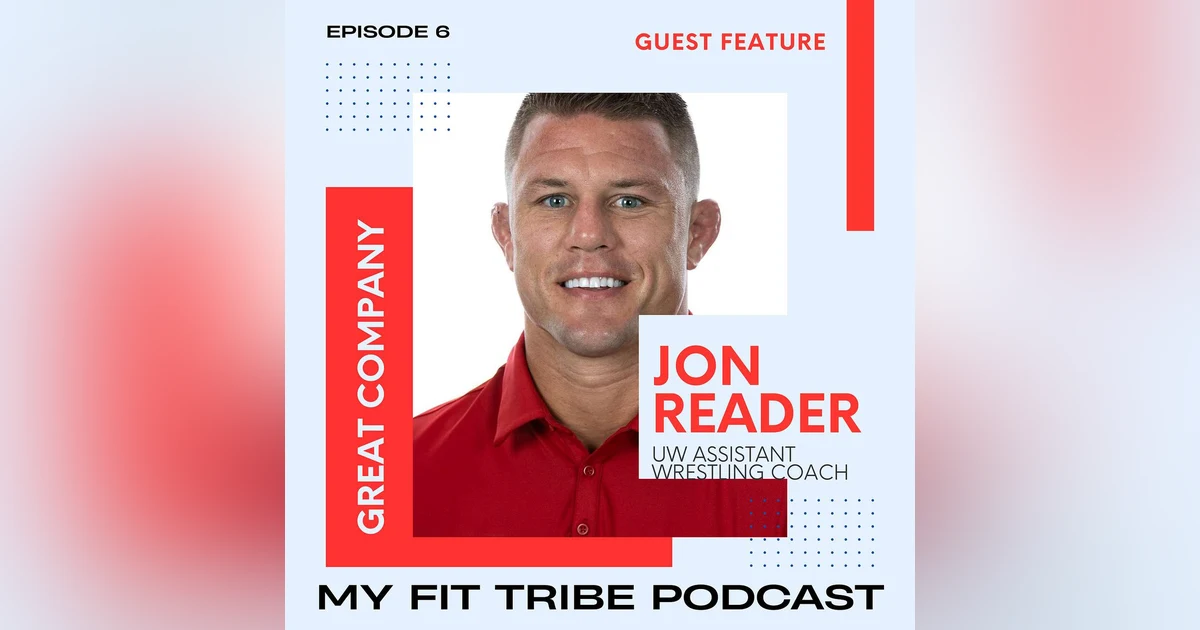


In today's episode I sat down with Jon Reader, the Assistant Head Wrestling Coach at UW Madison. Jon talked about the pivotal moments that shifted the trajectory of his career and his winning the day mindset.
We will dive into how he not only embraces this mindset for his own success but also inspires those around him to do the same.
Throughout my own life and fitness journey, I have had the privilege of meeting incredible people who've shared valuable insights on mindset, health, fitness, and spiritual growth. The profound impact of this knowledge on my own life has inspired me to share it with all of you. I'm Erica Sweeney, host and founder of My Fit Tribe Podcast. Join me as we explore inspiring conversations with experts, thought leaders, and everyday heroes who offer their stories and practical tips to help you on your own journey. From nutrition and fitness to mental well-being and personal or spiritual growth, our mission is to empower you to take charge of your health and live your best life. We are more than just a podcast, we are community. Through coaching, a wealth of shared knowledge, and a strong support network, we are here to guide and encourage you every step of the way. Come be a part of our tribe. Welcome back to My Fit Tribe Podcast. In today's episode, I'm excited to sit down with John Reeder, the assistant head wrestling coach at UW Madison. John has an incredible story, one shaped by pivotal moments that have shifted the trajectory of his career, moments of adversity that ultimately become his greatest growth, and a mindset he carries with him every day. Winning the day. We'll dive into how John not only embraces this mindset for his own success, but also inspires those around him to do the same. If you're looking for inspiration to push through challenges, stay focused, and adopt a let's go mentality to tackle your goals, this episode is for you. So grab your headphones, get ready for some powerful insights that will leave you ready to conquer whatever's ahead. Let's get into it. In today's episode, I am joined by the John Reeder, the assistant head coach for the University of Wisconsin Badger wrestling team. During his college wrestling career, he was a three-time All-American, four-time NCAA qualifier for Iowa State, becoming an NCAA champion in 2011. Do I have that right so far?
SPEAKER_02Yes, ma'am.
SPEAKER_00Awesome. During the season, he went a perfect 39-0 and held the number one ranking in every major poll for the entire year. Then you started your coaching career as a volunteer coach at your alma mater, Iowa State, where you coached three All-Americans. Then you followed by four years at South Dakota State, and now you are at UW Madison since 2018. Awesome. And in addition to that, maybe the most important is you were husband to Ashley and father to Aubrey and Johnny.
SPEAKER_02Greatest thing in the world.
SPEAKER_00And they are the cutest kids in the world. Oh my gosh, so cute. So that's a super accomplished career. It's amazing. Let's just start. How old were you when you started wrestling?
SPEAKER_02I started wrestling when I was five years old. And it was kind of a kind of a weird deal. I don't have anybody in my family that ever had wrestling history, right? So my dad was a Division I college football player, mom played Division I softball, Indiana State. That's kind of where they met. Um dad's from right outside of Chicago, mom's from Terre, Indiana, and that's they they both went to Indiana State. We're both athletes, zero wrestling in the in the family history. And you know, so naturally my dad wanted us to be football players, right? He's 6'5, big guy. I got all of my mom's, you know, side of the family of height and all that good stuff. But, you know, we we uh when me and my brother, I got a two-year uh brother that's two years older than me, and we were just, you know, routing typical boys, you know, just like I see my son now, just very all boy.
SPEAKER_01It's not playing.
SPEAKER_02We were in all kinds of different sports, and naturally my dad kind of pushed us and probably wanted us to be in football, but we just didn't you know he's just never kind of caught to. And one time we were playing T-ball, and the coach put me and my brother out in the outfield, and that this is the true story. Both of us went out in the outfield, and we were just starting to fight and starting to wrestle out in the outfield, and there was a local youth coach that was there at the time. His name was Julius Medina, changed my life, changed my family's history of where we were going. And uh he's like, Hey, you know, I'm starting a youth program. Would you why don't you bring your two boys out? My dad knew nothing about wrestling other than he had been around wrestlers through college, he'd been around wrestlers through high school, had a ton of respect for the sport, for his buddies, and and truly the rest is history. We went out five years old. I didn't really start going consistently until I was about six, but just having an older brother that was doing it with me, so I felt comfortable. And my dad of, you know, became a youth wrestling coach, had no history of wrestling, just to be one of those supportive parents that was helping out the coaches walking around. And, you know, truly, it changed my life. That that moment at a T-ball game changed my life. That guy saw us, gave my dad a flyer and said, bring your boys out, and it changed the rest of my life. And and that guy, Julius Medina, was such an impactful person in my life as a young, you know, child, all the way up until I was in high school. And even now as an adult, I still reflect and go back and talk to him. And um, just incredibly, incredibly grateful just for how passionate he was for every single person that was in the room. You felt like he he you mattered inside of his wrestling club. And being a college coach now and going across the country and seeing all kinds of different ranges of wrestling clubs and coaches and things like that, it's not always the case. And being a part of a youth wrestling club like we were, there were 200 kids in our wrestling club at least. It felt like a ton. And I'm telling you, every single person in that club felt like they mattered, and he just he he made you want to come back. You know, it was it was such a memorable experience for me. And come to find out later on down the road, he never wrestled.
SPEAKER_00Wow.
SPEAKER_02And and how impactful was that guy for me not being a wrestler, being my youth coach, to how much he made me fall in love with the sport is kind of where I'm going with it. And it changed my life. It's literally all I've ever done in my you know career was is be a wrestling coach and and very, very grateful for the impact that he's had on me. And um just just incredibly grateful for my parents just to give me that opportunity to to just be like, hey, you know what, let's do it. Because they could have easily took that flyer and not did anything with it. You know, and being a dad now, and you obviously as a mom, you've gone through these experiences, that's what you want for your kids to be in an environment where they're loved, where they're cared on, where their their coach is willing to put their arm around them and make them feel special. And you never know, you never know when that that young kid is gonna have that aha moment, like, oh, this is my sport, this is my passion. Right, let me lean into it. You know, and having kids now, my daughter's eight, my little guy's six, you know, and they're in every sport possible, but it's about finding what they're passionate about and just being behind them a thousand percent, and in whatever it may be. My daughter right now is into archery, and I'm like, let's go, let's be, let's be the best archer you can possibly be. And my little guy is again like his dad, he was all boy, and he's in wrestling, he's in football, he's in, he's in everything. So we're we're having a blast. But but started when I was five years old, and wrestling has truly changed my life, and so many people that I could go off and talk about, and we could be here all day, but just really, really grateful for the people at the certain times in my life that impacted me as a young adult, you know, now as an adult and as a coach, as a as a young father, there's been so many people that have been so impactful in my life, and it's come through the sport of wrestling.
SPEAKER_00I love it when you can look back at a pivotal moment and to have a one of those pivotal moments when you're five. I mean, that's yeah, pretty cool. But again, it's that chance meeting that had the it been a little bit different, your trajectory would have been 100%.
SPEAKER_02100%. There's 200 kids in that yu that youth club that you know I I felt valued when I came into that club. And it's a youth program, and that's that's that's what I want for my kids, and that's what any parent should hope for is you know, whether they whether that's their sport for the rest of their life or whatever it is, but you want those people, those those those leaders to lean into and impact those kids in a positive way and up uplift them, lift them up and make them feel special. And that's what I had as as a as a young kid. And I really believe of all the sports that I was ever in as a as a youth, that was by far the most impactful coach I've ever had.
SPEAKER_04Right.
SPEAKER_02And it changed where I went. I I fell in love with the sport. I was like, this is this is what I want to do. This is this is the track I'm going. And then by the time I got into middle school, that's the only sport I did.
SPEAKER_00Right.
SPEAKER_02Was wrestling.
SPEAKER_00And those youth wrestling tournaments, I don't know if everyone who's listening has ever been to one, but my nephew, you know, used to wrestle. And oh, those are fun. Oh, they're fun.
SPEAKER_02They're fun, they're intense, and they are so I come from a family too of um you're gonna earn it. You're gonna earn it. My dad was I'm I'm again, everything in my life I credit my mom and dad a hundred percent, a thousand percent, is because of just the opportunities that they gave us. I have an older brother and a younger sister. There wasn't a single thing that they weren't allowed, like they they sacrificed their own lives to give us kids every opportunity possible. So, you know, not being very knowledgeable on the sport of wrestling, my dad thought to give my kid more opportunities, we're gonna wrestle every single weekend, Saturday and Sunday, multiple divisions and multiple weight classes. So I was wrestling every weekend possible. And you when you talk about crazy wrestling parents, and yeah, we we've seen it all.
SPEAKER_00They are intent.
SPEAKER_02And I've seen it all.
SPEAKER_00Being a mom of a not a wrestling son, but you know, it's hard to watch those kids get beat. It's hard for the parents, it's hard for the kids, but when they get up and they go again, that's that resilience is something that they learn really young.
SPEAKER_02Absolutely. Absolutely. Resilience is is it's huge. Huge.
SPEAKER_00So then how would what did high school wrestling look for?
SPEAKER_02So high school, we grew up in a town called La Pierre. So my my parents moved from Indiana and they they got a my dad's first job out of college was in Detroit, Michigan. That's how we ended up in Michigan, had no family in Michigan. My dad just got a great job up in Detroit and kind of moved us into that area. So we were born and raised in Royal Oak, Michigan. Ended up going to a high school called La Pierre High School, or my brother did. My I was fortunate enough to go to Davison High School, which was which was the powerhouse in in Michigan. My dad kind of again gave us the opportunity. He's like, listen, we need to get you in the in the best situation possible in the state of Michigan, and that was the Davison room. So um just just being around the best guys in the in the state and being around a col uh my high school coach was a college wrestler, he was a division one wrestler, he was an all-American, he wrestled at Michigan State. He actually wrestled at Michigan State and Purdue. My assistant coach was was an all-American at Louisiana State before they dropped their program. Um so I had college coaches as my high school coaches, which was again, now being a college coach, you go across the country and you see some of these high school programs. Um some are more fortunate than others when it comes to what kind of resources they have in front of them. And again, for me, it was such a huge advantage and such a huge opportunity. Again, my dad was willing to move our family to put us in the best situation because he knew his kids, this is what their passion was. How do I put them in the best situation to succeed? And again, when I got to Davison, that's really where I was molded into who I am now, and um, and that transition into college was really built inside that Davison room. I mean, we won 10 state titles as a team in a row. Wow. We we were as ranked as high as second in the country, you know, as a high school program, and we traveled across the country and competed against the best guys in the country, but I was just one of a few guys that you know, everybody still talks about that Davidson team. You know, there were three four, you know, eventual NCA champions that were all on the same team. Like it was me, Brent Metcalf, Paul Donahoe, all three of us went on to win national titles in college. We were all three on the same team in high school, but there were we were there were so many more guys on that team that were way better than us. And it was just a team, a collective team. And I really believe that the culture that those those coaches built, it was about hard work, earning everything we do. Um, and and and it made my transition so easy into college. Like I see a lot of high school kids come out of uh high school and get, you know, that transition is so hard. It's met with so much friction, it's met with so much resistance because they're just not ready for the next level of intensity, whether it's nutrition, strength, going to class. There's there's so many more responsibilities that they have. I had that as a high school kid, and I'm I'm incredibly grateful for just the discipline and the structure that our high school coaches put in. We were we were running college practices in a high school setting. And and and I really believe that. You know, I I started going to Davison as an eighth grader, so my high school wrestling coach was our middle school PE teacher.
SPEAKER_04Oh wow.
SPEAKER_02So he would drive me over to the high school practices as an eighth grader, and I got to sit on the wall and kind of observe, you know, this team that had been on a run of state titles. I got to see, you know, multiple guys that were ranked number one in the country go on to get full rides at Michigan at various programs. I got to watch them and say, you know, I I I had my second aha moment. Like, I want to go to the next level. I want to wrestle in college. I want to go to X, Y, and Z program. And that's where my fuel, like I really my heart and my gut was just fueled by getting to that next level. And my goal as a as a high school kid was always to win a national title. You know, a lot of kids and a lot of guys growing up, it was about winning the Olympics. I don't know why, but I I vividly remember like it was yesterday, sitting down in front of the TV as a seventh grade kid with my dad, watching the NCAA tournament on TV and watching these guys win it in the NCA title and turn into my dad. I vividly remember saying, Dad, I want to do that. I want to win a national title. And he said, Listen, I'm gonna do everything in my power to give you that opportunity, but it's on you. You gotta go work hard and you gotta go do it. It's it's on you. And it was just uh seeing those guys before me, the way they trained, the way they carried themselves, the selfless teammate acts of you know, just building their teammates up and challenging each other and to be the better version of themselves. And I mean, that's what really drove that program. And and I mean, some of those teams were historic teams in in across the nation. I mean, we were again, like I said, we were ranked second in the country. I think every single year I was in high school.
SPEAKER_04Wow.
SPEAKER_02So that was that was uh a very it was just a very grateful opportunity for me and to see those to see that kind of level. It was huge, it was huge. And when that time came for me to go to college, it was like I was ready. I was already ready. You know, obviously you think you're ready, and then you get into a college room and it's a different case, and you know, guys are older, stronger, faster. Um, but I had seen that level of discipline and just sacrifice and consistency. Really, truly, the biggest thing I could say was I learned how to be consistent as a as a freshman in high school, whereas most of them don't really get that first taste of consistency until they're freshman of college.
SPEAKER_00And that consistency is I mean, that when in a sport like this to be competitive, that goes the whole year round. Oh, it's it's it's 365.
SPEAKER_02It's it's literally, and I now as a college coach, I tell you know, recruits that we're talking to, it's not just what you do on the mat. There's so many other things. And it's you know, i all the things we talk about with the nutrition, you know, in our program, nutrition's a non-it's a non-negotiable, right? If you if you truly say you want to be the best version of you, you want to be a national champion, well, you have to lean into your nutrition because guess what? 95% of your opponents, the top eight guys on the on the podium, those guys are willing to do it, but the rest of them aren't because it's too hard. Yes, too hard to be consistent, 365. Right. I've always been kind of not ridiculed, not not uh made fun of in in a way, but I am like intense and on 365. And that's the only way I knew how to do it. I didn't I couldn't take a break. I couldn't say I need a cheat day. I didn't believe in a cheat day because I I couldn't put my head down at night knowing that whoever I'm out there chasing is doing one day more than I am.
SPEAKER_00Yes.
SPEAKER_02And if they're doing one more day than I am, and I just put my head down knowing that I didn't do everything I could have done to be him, then how do I expect to win in the NCA finals? How do I expect to win with 30 seconds left in the NCAA semis when it's it's all that stuff comes to play in the in the biggest lights, right? 30 seconds left in the NCAA finals, that's when all that stuff's gonna come out. I believe that, and I believe that's why I did win, is because I I took that stuff to heart and I took it wholeheartedly. Nutrition, strength, mentality, you know, overturning every stone. And that's kind of my desire and passion for my guys now is listen, I know each one of you are gonna be in a different place. I'm gonna meet you right where you are, and I'm gonna walk every step with you, but you have to be willing to overturn every stone. You have to. You have to. I'm gonna be there to nudge you, and I'm gonna be there to challenge you, I'm gonna be there to build you up and lift you up, but you have to be willing to overturn every stone because there's there's guys that are doing that. There's guys that are doing that every single day. And they're double down and they're they're leaning into that, and and you've been around athletics for your whole life, you know this and you've seen this, and that's that's what that's what wins at this level. That's what wins at this level.
SPEAKER_00What was the m the most difficult part of your high school wrestling career? Do you have a moment or certain thing that was a lot of people?
SPEAKER_02I honestly my my biggest difficult most difficult moment out of high school. I I not to not to brag or anything, but Michigan, there's four divisions in Michigan. It's not like it's one of the toughest states in the in the country. I love it, right? And obviously I'm a diehard Michigan, everything. Um, but there's four divisions, and that's one kind of one thing that I've always struggled with coming through Michigan. I always believe that there should be one division or there should be somebody at the end of the year that's that's crowned as the state champion. You know, whether obviously we had four state champions in every weight class, so there was eight guys across four divisions that were going to be, you know, there's 32 guys that were standing on the podium for each weight class every year, which to me it kind of waters things down. But that was a challenge. Um I think that I had success in high school and it led to a lot of doors opening. I wouldn't I don't really know off the top of my head uh any any real challenges other than I had a lot of really successful people around me. Um and I have one defining moment of somebody that kind of doubted me. And it kind of fueled me even more. Um and I always kind of kept his name under under wraps because I know who it is, and and I don't never want to put him on blast, but he he he fueled me more than anybody could possibly know was going into my junior year, the the whole college recruiting process is you start getting recruited as a junior. So at the time, my dad used to subscribe to USA Wrestling Magazine. So that magazine would always come into my house once a month, and just being the wrestling junkie I was, I wasn't really reading the magazines. I would cut out the pictures of the successful guys inside that magazine, and my whole room was littered with guys that were, you know, getting their hand raised or just defining moments in their own careers. And, you know, naturally at that time, Iowa State was a very, very successful program in the country. They were, you know, um, you know, top three at least every single year. And you know, you got Cal Sanderson, which is an iconic name. He was kind of coming through um his career at Iowa State when I was going through high school. So naturally, I was always seeing Iowa State guys in this magazine. So my eye was always caught towards like, hey, I want to make my own path. There was guys that came from our high school that were going to Michigan, that were going in-state programs, that were going to Virginia Tech, Iowa, Nebraska. I've always been that kind of guy. I want to do my own thing. I'm gonna make my own path. And for one, for one reason or another, I mean, that's just always who I've been. Um, and I had a guy that was, you know, like I said, I had those magazines, so I always saw Iowa State as a as a program that I really, really desired to go to. So when the time came and I got that first phone call from Iowa State, you know, and I got that first phone call from Bobby Douglas and Kale Sanderson, and they said, hey, we're interested. And, you know, and I remember going back to that individual, and that individual being like, wow, that's kind of, you know, we got these other programs. They're gonna be offering you big, big time money. Why don't we why don't we do that? And it kind of was like, it just it fire was in my gut, and I was like, all right, I'm gonna show you that I'm gonna go to the program, and I feel like I'm wanting, you know, my that's where my heart really wanted to go. I was a Michigan boy, you know, everybody wanted me to go to the University of Michigan. And me going to Iowa State was kind of this, you know, my own track, and I believed that that's where I wanted to go, and I wasn't gonna be denied that. And I had again had being grateful, I had parents that were if that's where you want to go, we're we're a thousand percent behind you. And I remember when I got that phone call from Kale and you know, and got the offer, and and it was just like a dream come true, and I you know, it was that was a moment in my career where I was like, you know what, when you put your head down and you you put the work in and you make the sacrifice and you believe and that's where you want to go, and things came came to fruition, and you know the the rest of His history, really, you know, and and that was a huge moment in my high school career that that kind of led me. I was like, you know what? I'm gonna show this person where I'm going.
SPEAKER_00And show them you did.
SPEAKER_02And I'm showing them I did, you know.
SPEAKER_00That's so awesome. So how was it then? Well, we talk about your college career a bit too, obviously, champion, champion, champion. What was it like when you finished wrestling? It's hard sometimes as a successful athlete when all of a sudden that journey is done, that chapter is over. How did that feel?
SPEAKER_02I think it's I'm I'm honestly still trying to figure it out. Yeah. You know what I mean? I'm 36 years now and I'm still trying to figure that out. And I and you know, me and you have had brief conversations, just I don't know if you, as a competitor, you ever get rid of that itch, if you ever get rid of that desire. I've always, this is all I've ever done is to go in there and battle. And I truly believe the ultimate competitive uh battle is within, right? I really believe that it's always about you versus you. And I always consistently, every single day I battle with that. I love to scrap. I love to get in there and be able to be in the trenches with the guys and and to drill and to wrestle and to lift and to be there every second of the day with them. And you know, I I tell these guys all the time, I would do I would rip my legs off to go and wrestle one more time. Right. To go in the trenches and run out of that tunnel with you. You have no idea what it feels like 15 years down the road when your career is done and how much I desire to do it one more time. Seven minutes. I would do, I would rip my legs off for seven minutes to do it one more time. I just I don't know if you ever get over that competitive desire to to continue to chase things. I loved that part of it. I loved chasing that guy in front of you. I loved chasing, you know, the best guy in the weight class. And you know, once you were the best guy, it was how do you become a world champion? How do you become an Olympic champion? So it was always chasing something. And I've got so much, you know, balance now with being a dad and being a husband and being able to see my kids. And I really think that my my focus is really narrowed now. And um, obviously I've I've got a ton of passion for coaching and and uplifting these guys and just being that outlet to to say, listen, I've I've I've had so many experiences in my five years as a as a college athlete. I've been, you know, to the lowest of lows in my college career, to the highest of highs, and I've seen everywhere in between. So I can relate to anybody on that team. 30 guys on my team, I can relate to every single one of them. Guys that have fallen short, guys that have accomplished what they want to accomplish. Just being able to use my experiences and and and rub those off on those guys and and and really just to, you know, when they come in and see their potential and and to see the process through and where they come in as freshmen is where they leave as young men and and you know, model citizens and future husbands and stuff like that. That's that's what I love as a coach. But 15 years down the road, I don't know. I don't know how to answer that question. I still it's still it's always gonna be something inside of me that you know I f I just find different ways to compete now. You know, it's it's different, right? And obviously I've had a ton of injuries through through the sport, and the majority of them actually have been after college. You know, I've had majority of my surgeries have all come long down the road, but it's it's finding different ways to to get competitive and whether it's running a hundred miles, whether it's doing this or doing that, which I probably won't do again. But but it's it's um it's it's something I I I think it'll always be be inside of you. But it it again, it's you versus you every day.
SPEAKER_00Yeah. I love that your first coaching position was a volunteer position because you're doing it for all the right reasons.
SPEAKER_02Yep. So I was I was just incredibly grateful to be able to coach at my alma mater. It was at Iowa State. Um, my I and again to kind of preface all this, majority of college uh athletes they come in and they're the majority of them have one coach and one coaching staff for five years. I had three head coaches in five years. Wow. Three head coaches in five years with a numerous amount of assistant coaches. But again, that was an opportunity for me. How do I how do I direct this you know, obstacle in a way that I'm gonna benefit from this? And I truly believe looking back on it, it was such a huge opportunity for me because I needed each one of those head coaches at the right time.
SPEAKER_04Right.
SPEAKER_02And each one of them, I took something and and brought it and kind of formed that into the who I was at the end of my career. And I believed I needed each one of them at the at the right time. But um just it just in it it most most kids they could have they could have, you know, either transferred or they could have looked at it like, oh, you know what, I'm just gonna ride it out. I had three head coaches in five years. You know, so it's so a very unique situation.
SPEAKER_00But you're right, they each one will give you a different perspective because you took it that way, you were able to learn from it.
SPEAKER_02And all three of them were incredibly different when it comes to personalities, how they build relationships, just or just the way they approach technique, the way they approach competing, all that kind of stuff was was different. And I took each one of them, put it into who I was at the end of my career, and just very grateful. But it led me into being a volunteer assistant for a year and a half right after college, and I just won a national title, so I was so grateful to be a part of that staff and kind of learn how to coach. I didn't really have too many coaching responsibilities, and that's kind of probably one regret of mine. I was majority of my time at those that year and a half was after I'd won a national title, it was right away I was starting to compete trying to make a world team. And I actually, you know, made the world team trial finals and wrestled my former coach, Cal Sanderson, in the finals to make a world team, which was a surreal moment. And um, and uh it gave me an opportunity. So when I finished second in the world team trials and wrestled my coach, I kind of was like, you know what, I'm really, really close to making this team. And it's it was the year before the Olympics, and I said, All right, I'm gonna I I need to make one small change in my training environment. Whereas I was you know coaching and you know training with college guys, I I I thought that I needed to get in a situation where I was full-time freestyle. And probably a big regret of mine was doing that, but um I lived and I learned and and um you know I it it it didn't work out for me. I never got never made the team, but um started my coaching career there and just kind of learned, you know, here bits and pieces on how to coach, how to recruit. But I really honestly didn't have any re coaching responsibilities until I was at South Dakota State. Majority of that time was just training with the guys, and Coach Jackson believed in, you know, if you're gonna train to win a world Olympic title, you gotta compete. So that means you gotta get overseas, you gotta get over in international tournaments, you gotta go and immerse yourself into international training camps. And I did that. I loved it. I I lived and breathed it. My now wife was incredibly supportive of that. And you know, she's been all over the world with me and all over the country, moving to different places and you know, just super grateful for her support. But um majority of that time as a volunteer coach, I was really training and then competing. Um and I really didn't put that hat on and learn how to coach until I was at South Dakota State.
SPEAKER_00Aaron Powell So then when you got to South Dakota State and you were on the other side of the mat for officially, then how did that feel?
SPEAKER_02So it was it was weird, right? I um I I I remember that first year of coaching and it was it was just, you know, I as a young coach thought everybody thought like I did. And everybody was fueled by the same things or motivated by the same, you know how I was. And that was something I needed to learn really quick was everybody's motivated by different things. And as I got on in my coaching career, I found out you gotta meet those kids right where they are, and all all those kids on the team are are in different pe different places in their lives. Right. And that's okay. That's completely okay. And um, but just knowing that you need to meet them at right where they are in life and walk every step with them, and some of them need to be, you know, pushed a little bit harder, and some of them are self-motivated, intrinsically motivated by things that you you know that are you know pretty in line with what you are. And um, I learned a lot as a young coach at South Dakota State. I learned as a at a program that didn't have as many resources as some of the other programs, how to fundraise, how to recruit. And that's one thing, that's where our relationship with Coach Mono, that's kind of really where we got our coaching career started together was at South Dakota State. And he he kind of basically sat me down and said, Well, what do you like to do? I said, Well, I love people. I love being around people, I want to talk to people, I want to get in the people's houses, I want to impact them, I want to motivate them, I want to put my arm around them. I want to, I want to be the face of the recruiting. Let me do that. And I said that, and I didn't know anything about recruiting. I I just knew what my own experiences looked like. I knew what my recruiting process looked like, I knew what the coaches that kind of really influenced me and what I was looking for. And again, that's not always every kid. Every kid's not looking for that high energy, high, you know, this, this, this. But I learned, and he goes, All right, well, you're gonna start recruiting. You know, here's your first recruit you're gonna go see, and go figure it out. And I kind of was like a little bit nervous, right? But again, I love that nervousness. I always I always love that nervousness. And I remember going to the house just being sweating bullets, and I'm a sweater too. So I'm sitting in this guy's you know, living room with mom and dad, and I'm sweating profusely and just super nervous. And um, but again, uh uh quickly found out the more you're just yourself, and the more you can just relate with somebody as a as a person, as a human, and just let them know that I'm uh again, I'm gonna walk every step with your son, I'm gonna be there, you know, through the the lows and the highs, and win or lose, I'm gonna be right there with you. And you know, the goal is how do we get you to be the best version of you? And and how do we get you to walk away with a degree that's gonna set you up for the rest of your life. And that's that's truly my passion as a coach is is is exactly that is is I can't guarantee you're gonna win a national title. I cannot guarantee you're gonna win an all-American, but I I know damn well I'm gonna put you in a situation that you are going to be in a situation where you can accomplish those things if you're willing to be consistent, if you're willing to be held accountable, if you're willing to be coachable. Um and I love that. I love people, I love being around people. So that's uh continue to be a an area where I really lean into is recruiting. And but again, each each uh each year is different. Each, you know, there's there's different categories. I wish that all you had to do was recruit and and you know be in the room. But there's again, there's so many other hats that go with being a wrestling coach and certainly being a head coach. There's there's a different you know seat that you sit in with making decisions and and and things like that. But but very grateful for my time at South Dakota State because it allowed me as a young coach to put on so many different hats that kind of led me into where I'm at now.
SPEAKER_00Aaron Ross Powell And at South Dakota State you coached 20 national qualifiers, five All-Americans, and a national champion, including Seth Gross, of course, who I know.
SPEAKER_04Yep.
SPEAKER_00So what was it like after having been such a successful NCAA athlete to watch these kids put in so much work and find that success?
SPEAKER_02Well there's there's that feeling, especially in Seth Gross's situation. Seth Gross was such a unique guy, and you know, not to go back too far on his story, but he came from the University of Iowa, kind of came into a situation where he had a you know one last chance, right? And we took him as a one last chance. And again, a guy that was willing to be held accountable. Um and I think we even told him when we brought him in, listen, if you're late to practice one time, we're you're gonna be off the team. That's how much of a last chance he was on. And he never missed a practice, he was always on time, he was incredible work ethic, willing to do whatever it took to be the best version of him, and and to see his process of being from a guy that was on his last chance almost out of the sport, to building him into a national champion, to a moment that nobody can ever take away from him, an accomplishment that nobody can for the rest of his life can always call him a national champion. And to see that, I think that was more meaningful to me as a coach, sitting in his corner, seeing the emotion flood out of him and see his family, how proud they were, and just just to know like you've seen his lowest lows, you've seen the struggle, you've seen all the work and all the hours of discipline that he's done to get to that moment. Um and it's such a unique feeling, you know, winning your national title, it's such a euphoric and such a numbing experience, you know, and and and to be able to relate that with him, and it's it's I I I want all my guys to experience that. And you know, it's it's incredible. It's incredible, and and he deserves out absolutely every ounce of it. And um very, very proud of him and and to this day, very close friends and still working hard. Just an incredible human, truly incredible human.
SPEAKER_00So then you've got to UW Madison. So what's it like being in that field house when that they got the home crowd supporting your team?
SPEAKER_02It's rocking, it's rocking, and we love Madison. My family loves Madison, my kids love Madison. There's incredible opportunities here for my family. So for first and foremost, that was a very, very um, you know, had the opportunity to stay there and continue coaching at South Dakota State. And um, I just really believe in Coach Bono and and and and his passion and where he's he's his vision is going with with um you know why, how he builds programs and um had the opportunity to come here, so it was a no-brainer. So but first and foremost, sitting down with my wife and being like, hey, do you does this sound like the right thing? Should we do this? And it was a no-brainer. Um we're we're closer to family. This is the closest the two of us have been to our parents since we were right out of high school, right? You know, and her and I met our first semester in college. So cool. We've been together a long time and we've been we've been through a lot of moves and a lot of you know obstacles together, and and um this felt like the right move for us. And just very grateful my son was born here in Madison and um a lot of great things, but just the support here at at Wisconsin is incredible. It's a it's a different situation than what we had, and not saying that South Dakota State was was anything but amazing, and it truly was. It was a different, it was just a different setting, a small town to a big town. Um, and each of them have their positives and negatives, and Madison is just truly it's such a unique city that I I I believe that any kid, if you can recruit them to the University of Wisconsin and get them to see Madison and get them to see the lakes, you know. If you're a hunter, you can be out in the in the in the woods in five minutes. Such a unique town. And and um, you know, I I love every every opportunity we get to get inside that field house and showcase our guys and for them to be around rowdy fans that love Wisconsin wrestling. And um, again, you know, that's that's what it's all about is is to give those kids the opportunity to compete in front of environments that are gonna they're they're they're gonna be reflecting on those memories for for the rest of their lives.
SPEAKER_00Right. Real quick on your training, so how many days a week do you put those boys to work with?
SPEAKER_02So we go, we you know, there's there's obviously and say rules that uh that that you know allows us to certain amount of hours, but we we pretty much as we build into the season, you know, we go Monday, Tuesday on the mat and and we lift Monday, Tuesday, Wednesday is our off day, and we really believe in recovery. Yep and when it comes to you know just a mental rest and hot and cold as a team, you know, getting in the hot tub and getting a cold tub and and and being able to have that camaraderie as a team, but also stepping away, right? You can bang, bang, bang, bang, bang and you know, and do your technique and all this stuff, but you also need an opportunity to get away and be a student and be a college kid. And that's Wednesdays are kind of that day. And then Thursday, Friday of this week, you know, it's it's it's more technical individual work. Saturday is kind of a roll around, and then we wrestle Sunday. That's kind of what our week looks like like right now. So I would say six out of the seven days, we're doing something inside the room.
SPEAKER_00Yeah. And then nutrition, you touched a little bit on that, which is on my list to bring up, because you know, in college, there's not exactly the best, healthiest food available, anyways. And what I used to think is healthy is way different than what I think is healthy now.
SPEAKER_02You and me both.
SPEAKER_00So what is it, what type of um things do you tell your athletes in order to make sure that they're staying on the right track with their nutrition?
SPEAKER_02So again, it's just making conscious decisions to to you know, lean, lean proteins. And in obviously I I I have so much respect for you and following your your nutrition and your your own competitive that that you get it, right? So I didn't know this kind of stuff until I got to Wisconsin. I really truly believed, and even my my own college career, you know, and coach told me to drink a 32-ounce Gatorade after away-ins, I was gonna do exactly what coach did. If he told me to put my head through the wall, I was gonna do that too. And so when it came to nutrition, I didn't come from you know, even going back to high school, my parents, you know, they did their best to educate me and give me but I remember my mom giving me Arby's before away-ins.
SPEAKER_00That was the healthy version of fast food.
SPEAKER_02Seriously, my mom would, you know, bring me Arby's and and bless her. I mean, I I I loved it. But in high school, you go out and pin a guy after you ate Arby's and you think that you're doing a great job.
SPEAKER_04Right.
SPEAKER_02You know, and and so fast forward I got to college and again, really wasn't, you know, surrounded by any nutritional education and and and certainly not like what we have here. And so when I got to Wisconsin, I you know, I even dove in with the guys too. And again, I love being in trenches with them. So, all right, whatever nutrition plan is you're gonna be on, I'm gonna go in, I'm gonna, they're gonna build mine. Because I I believe in individuality when it comes to nutrition. All 30 guys are not the same build, they're not the same makeup, they're not, they're they all got different goals, whether it's get big, maintain, get smaller. So all third, you know, all of our guys have different goals. So I got on my own nutrition plan, got down to six and a half percent body fat, and you know, and and felt amazing and felt incredible. And I believe that what we have in place at the University of Wisconsin when it comes down to our nutrition is first class. And it and and it again, for us, it's a non-negotiable.
SPEAKER_04Right.
SPEAKER_02And you'd be surprised, you'd truly be surprised how much you do have to encourage them and and push them to do that. And I think that's just human nature, right? So many guys, after you know, after a tough practice, they would rather just go home than you know walk a hundred yards to go get nutrition. And to me, I'm it's mind-boggling.
SPEAKER_01Right.
SPEAKER_02Right. But the ones that do lean into that, the ones that do that that truly find the value in that um and they do it consistently, they're gonna recover better, they're gonna sleep better, they're gonna perform better, and that's what it's all about.
SPEAKER_00Aaron Powell But I think there's a huge part of that which comes with our society in the last 10, 20 years where healthy was not defined well and the amount of what food options you have were not good. So I think now that there's a more conversation about processed foods and whole foods and how to stay healthy is a good thing.
SPEAKER_02I'm super excited about it. I think that we're heading in the right direction when it comes to what we've got coming down the pipe as far as, you know, just like you said, processed food, all that kind of stuff. Um but our our university does a really good job of kind of building out a foundation for them to have the education, to know, you know, certainly just the macros, right? The proteins, the fats, the the uh the carbohydrates, so they understand what kind of decisions they're making when it comes to serving sizes, when it comes to, you know, because you know, if you're if you're just eating aimlessly, you could be having 30 servings of carbs one day, 12 the next day, 45 the next day, and you're like, well, why is my energy all out of whack instead of being consistent?
SPEAKER_04Right.
SPEAKER_02And that's where guys truly see the biggest gains, whether you know, because listen, you can go and lift, and you know this, you you can go and lift all you want, and certainly it is a massive part of our sport and any sport is lifting, and we believe in that from an injury standpoint too. But if you don't eat right, you're never you it's gonna be very, very hard to outlift your nutrition.
SPEAKER_01Right.
SPEAKER_02And it goes it goes hand in hand. And again, nutrition affects your sleep, your nutrient, your your your performance, recovery, all of that. Um so giving these guys an outline and the foundation to kind of make the right decisions, and again, they they gotta be willing to do that.
SPEAKER_04Right.
SPEAKER_02They have the resources when they're inside of our facility, but again, I the I I believe those championship hours are the 6 p.m. to six a.m. Yes. When nobody's watching. What are you going back to your apartment? What are you going to eat? You know, and again, to me, my my biggest motivator was knowing what my opponents were doing, or at least believing in in my head that they were making the right decision, and in Margan willing to make the wrong decision and then go to sleep and knowing I didn't do it right.
SPEAKER_00Oh yeah.
SPEAKER_02So that that was my motivation. It'll haunt you. And and again, that to me, I was whacked out that way. I always have been, but it motivated me to make the right decisions. And again, I wish I would have had the resources that these guys had at a young age because what they have is is is incredible. You know, what readily available protein shakes, right to the specific individual, you know. And it even it even blew me away when we first got to campus and they walked us around the facilities. And I remember what we had at South Dakota State, just being able to give a guy a bottle of water was was a big deal, right? And then, you know, or you know, if we want to duel, hey boys, we get gate raids today, you know, and that that was a big deal for us, and we were very grateful for that. But now seeing what these guys have, you know, readily available to them um is huge. And and and uh it's it's it's such a huge component of our sport is nutrition. Um and if you lean into that, I promise you you're gonna put yourself in a heck of a lot better situation to accomplish your goals, and plus you're gonna stay injury free or at least mitigate those and and um and recovery. And season's long, it goes from November till March. So if your nutrition's out of whack, you know, I remember I've got a lot of regrets my junior year in college. I was already a two time all American my freshman and sophomore year. I got to my junior year and I was cutting down to 65. It was better. For our team for me to be at that weight class, and I was cutting my weight wrong. I was doing all the things. I was cutting corners. I was crash dieting. I was getting the sauna. I was doing all the things I knew I shouldn't do, but I was doing. And it came up and it bit me in the butt. Big 12 finals. I wrestled in the Big 12 finals that year and I popped my knee and ended up getting, you know, injured. And I believe I attribute that to not doing my nutrition right. Yeah. Because I believe if I would have done the right diet, if I would have hydrated the right way, my ligaments would have been in a better situation, and I wouldn't have maybe been injured. You know, and it it cost me going to the NCA championship. I went to the NCAs, I was a number three seed as a junior, walked in and lost the first round.
SPEAKER_00Oh.
SPEAKER_02Just be I couldn't, you know, I was injured and you know, those are those that's probably my biggest, biggest regret in college is not, you know, not being disciplined and in that year, but I learned, right? And again, I think that was also on the flip side of that coin. I think it was the greatest moment in my college career. You know, everybody asks what your greatest moment was, and you think it was winning the NCAA title. I truly believe I found out who I was as a man my junior year when I fell to the very bottom of the barrel and um and didn't accomplish my goals. That's why I I tell you, I I can accomp I can relate to those kids. I fell in the round of 12 um to be an all-American in my junior year, and I just remember how bad I felt, you know, of disappointment and and and uh also knowing that I had that guilt that I didn't do everything right. I I cut corners and so I I I I do have that regret, but I also think that it I figured out who I was as a man when the darkest moments, you know, I found out who was really in my corner, I found out who was in my circle, I found out that my wife was the superhero in all of it. I found out my mom and dad were the same people that they were when they introduced me to sport at five years old, that they were gonna love me just the same way, and and it fueled me to get back up on that horse and and and kind of rallied to make that senior run and go 39-0. And um, I believe in those moments define you as a man. It did for me. And and I I I really truly reflect back on that as one of the one of the greatest defining moments in my young, young adult.
SPEAKER_00That's funny. I was just gonna ask you. I was gonna say, let's talk winning. Being an athlete is so much fun when you win, but let's talk how much you learn when you lose.
SPEAKER_02So there you just remember too, and this is so bad. I'm a I I grew up obviously, you know, or going to Iowa State, that was a dream come true. And then all the fans that come through that, and I'll never forget how low I was in that moment of not becoming an all-American for the my junior year and walking back to the hotel, and I had my wife, my mom, and my dad, just those three individuals with me, just those three. And I'm walking back to the hotel, and I those same fans that had supported me as being a freshman, all-American, a sophomore, McCarron, I'll never forget walking back into the team hotel and those fans looking at me in my eye in front of my mom and dad and my now wife and shaking their heads. And it it's a rabid, it's a rabid fan. And I love that. It comes with college athletics and and and you're gonna get that everywhere you go. But those same fans were the ones my next year when I went undefeated and won a national title that were right there putting their arm around me. And I was like, you know what, that you know, it truly put in perspective just how important that and how how important that tight circle was for me.
SPEAKER_04Right.
SPEAKER_02Um, and it gives me goosebumps because I it's it was a it was a huge defining moment in my career that I don't know if I would have won a national title that next year. If I would have become an all-American and had cut corners doing things that, you know, I knew were gonna eventually catch up to me. Who knows if I would have changed that in my senior year? You know, who knows if I would have if I would have changed that perspective and changed that mentality. And I just remember, you know, going to my college coach and Kevin Jackson, who was an Olympic champion himself, and I looked him in the eye in his office, said, I will do whatever it takes to become a national champion. You know, I will do whatever it takes. I will do absolutely every single thing right. I will lean in into whatever area you tell me I need to lean into, you tell me where to go and I will go. And and that was my fuel.
SPEAKER_00See, and look at how much the athletes that you coach now know that you've been on both sides of it, so they know that you get it.
SPEAKER_02I feel like it was yesterday. I feel like it was yesterday. So back back to like what you said. You you can you ever get over those moments? Right. I'm super proud and of of of those moments, and you know, you're so far removed of it, but it's it's um I wish you could do that for the rest of your life. I wish you could compete. I wish your body could allow you to compete forever. But you can.
SPEAKER_00But you do it you d you know, it starts with moving the goalpost, where you just move the goalpost, and then you realize that you have to change what goal you're and then you just find something different and then you keep going over different mountains, right?
SPEAKER_02And I was talking to my I was talking to my wife about this too. I was uh you know, obviously getting getting you know all the surgeries that I've had over the last couple years. I mean, I've COVID, I had back surgery. I had I've had five surgeries on my left shoulder. I had a full shoulder replacement just recently and in you know, four months ago. And um now how good I feel and how how much I desire to be back out on the mat. You know, I just I wish you could feel like that all the time. You know, I wish you could feel that good how I feel now, but also you gotta, you know, you gotta be smart now.
SPEAKER_00Yeah, yeah, you do. Okay, I've got a couple more questions for you before I wrap this up. First off, you have the phrase win the day. We're gonna go back to the wings. Where did that phrase come from?
SPEAKER_02I don't know if it came from anywhere. I just think it was just uh it's just a culmination of really who I am. And again, like I told you, I think the the ultimate competitive battle is within. And it's not always now to me, right? I was always chasing somebody at my weight class. Now I'm chasing myself. It's not about anybody else but me now. And it's how do I make sure that when that alarm goes off in the in at 4:30 in the morning, how do I make sure I get up and I don't have to push snooze on that button? I get up and I I go attack the day. And for me, winning the day means so much. It's about being selfless, it's about lifting and uplifting and motivating and inspiring those around me. That's really who I am now. Um, I've always been about taking guys down and breaking, you know, as a competitor, you want to dominate your opponents. Now, as the older I've gotten as a dad, I'm about building people up. How many more people can I inspire? How many more people can I build up and motivate to be the better version than them? And that's that's really where that win the day has come. And and for me, it's just about being positive. It's about bringing that hustle effort attitude, bringing that positivity to every situation that I'm in. And I know I can inspire and motivate everybody, but I can certainly, anybody that's in my vicinity every single day, that's my responsibility to uplift you. That's to build you up, to make you feel like you're the most special person in the room, whether that's the janitor that you know I cross paths with, whether it's by myself and I'm picking up a piece of trash, knowing that I'm doing the right things, that's to me winning the day. And it's a constant reminder for me. Um, but it's not about, you know, it's it's about me versus me now. And it's it's about how do I continue to do that every single day. And being a dad, being a role model of doing that, and seeing their dad be able to inspire and motivate and lift people up. Um that's what we need more of in this world. And and I think that that's to me, that's I don't want to say legacy, but that that's now what I want to be, that's how I want to be remembered, and that's how I want to motivate people, is to motivate people, is to uplift them, is to build them up.
SPEAKER_00Right.
SPEAKER_02And and I think we if we had a lot more people like that, this place would be a lot better.
SPEAKER_00But you have to remember that chance encounter when you were five years old.
SPEAKER_02Aaron Ross Powell Exactly right.
SPEAKER_00When you're saying something positive to someone, that that one thing can change traject the trajectory for other people too. Absolutely.
SPEAKER_02And you never know, you never know who you're impacting. You never know what kind of e even a small act might be a large and you never know what all those other people are walking through, what what's what season of life they're in. You never know. You never know who you're coming across with that just needed that hello. Hey, you ha hope you have a great day. Yep. You know, let's go, you know, stuff like that, bringing that energy could be incredibly impactful for for for so many people.
SPEAKER_00So if you could ask all of your athletes that you have coached, what's the one thing you think that they knew on the last day of their college career that they wish they would have known on day one? What would you think that would be?
SPEAKER_02Oh, that's a that's a that's a tough one. I just think that it's just a consistency. I wish they, you know, would know that right away. I don't even know how to uh put that into words, but I think that the quicker you understand that at at the college level of college sports and being consistent. I see it across all sports. I've got great relationships with many coaches across our athletic department, and majority of them say the same things. You know, consistency is the key to success, and and it could consistency is a key to a lot of things in life. Right. And um you know, I think the quicker you can get your athletes to understand that and the power of that, um, the better. And I think that that that would be something that I would, as a as an outgoing college athlete, I would imagine most of them, because I've seen so many guys become all Americans and national champions through my coaching career that in the moment they thought it was the worst training, they thought it was tough, they thought it was challenging, they thought it well, coach, why are we doing monkey rolls or why are we doing this? Why are we doing a two-mile run or whatever it may be? But when they're all done and they become an all-American and become a national champion, I swear a hundred percent of them always come back and they say, Coach, I'm incredibly grateful for how much you challenged me, how much you pushed me, how much you believed in me, how much you didn't allow me to cut that corner, how you kept me kept me accountable, um, and it made me into one, the man a man they are now, but it made them into you know accomplishing the goals that they dreamt of coming in and doing. And um but yeah, that that that would be certainly one of them of one of many. One of many.
SPEAKER_00Okay, my final question is a two-part question. I ask all my guests, okay? So if you could, you today, John Reader today, could ask John Reader of the past. I was thinking I was gonna pick the eighth grader who was watching the future, but maybe we pick the college one who just had that tough season junior year. So let's go to him. So if there's one thing you could tell him, what would you tell him?
SPEAKER_02Oh man. One, I love you, man. One, one, absolutely I love you, and and and just know that there's so many people around you that support you and and um and you're gonna everything's gonna turn out okay. Right. And and and sometimes you think that these are big, big, big problems. These are just obstacles. And you were built for this. You're built different, and you were built for this, and you got so many people around you that are gonna keep continue to love you, and they're gonna continue to motivate you, and um things are gonna be just fine. That's all I needed here in those moments.
SPEAKER_01Right.
SPEAKER_02That's all I needed here in that moment, and I got that from my wife, and I got that from my parents, and I got that from assistant coach and and uh and and Chris Bono, he was an assistant at the time for me, and I would go back and I'd tell myself that exact same thing. You got this. You got this, it's just an obstacle, it's not a problem. It's just an obstacle.
SPEAKER_00Just an obstacle, not a problem, different way of looking at it. Okay, so the second part is if you, John Reader today, could talk to John Reader of the future, say you can pick 10, 20, you're young, so however old, and you could ask your future self something, what would you ask and what would he say to you?
SPEAKER_02Oh man, these are so good. These are so good. I know what I would say to myself if, you know, 20 years down the road, um stop, slow down, be in the moment. And I continue to remind myself all that. And I I know that the moments that I have with my kids and my wife are incredibly precious, and I don't take them lightly. They're the greatest thing in my life, and then they are who I am, and um they are my why. And I know that um there's moments and and as being a competitor and certainly still a part of who I am, I get very, very caught up in the moment, and and sometimes you bring those things home, and sometimes you, you know, it's it's become the environment my family's in. They they know they're a coach's, you know, family, and but I when I come home, I want to be dad, I want to walk through that door, I want to put things aside, I want them to come to me and dad's home and and they know that dad's in the moment and dad loves them, dad believes in them, dad's proud of him. Um and I hope that my kids feel that. And um I think you know, 20 years down the road, I would continue to tell myself that same thing. You know, hopefully 20 years down the road, my kids will certainly be s close to having kids, maybe, and and um just be a proud grandfather and and and be able to say the same thing. Because I've I've I've always been a guy that's really wound up tight and um always ready for what's next. And sometimes that's really, really a hard struggle. It's a very big fault of mine is not being able to slow down, stay in the moment. You get your little grandkids are running around. Um getting them on the mat. Just getting them on the mat and just letting them know their their grandpop is is proud of them and they love them and and um and and everything's gonna be all right. That might be one of the greatest questions I've ever had.
SPEAKER_00Seriously. I'm pretty sure that in 20, 30 years from now, you'll be able to look back and say that you did win the day.
SPEAKER_02Yeah.
SPEAKER_00And your family's very proud of you. So thank you for taking the time today to talk to you.
SPEAKER_02I'm super grateful for you. Very good.
SPEAKER_00Awesome. Thanks for coming in, John Readers.
SPEAKER_02Thank you.
SPEAKER_00Thanks for listening to My Fit Tribe Podcast. Tune in weekly for our latest episode for more health and wellness insights and inspiration. For more information, visit myfitribe.org. Please note that the opinions and comments presented here are those of the guests and do not necessarily constitute medical advice or the opinions of MyFit Tribe. Copyright 2024, all rights reserved. This podcast is a production of MyFitTribe LLC.