Jon Florin- No Stomach for Cancer
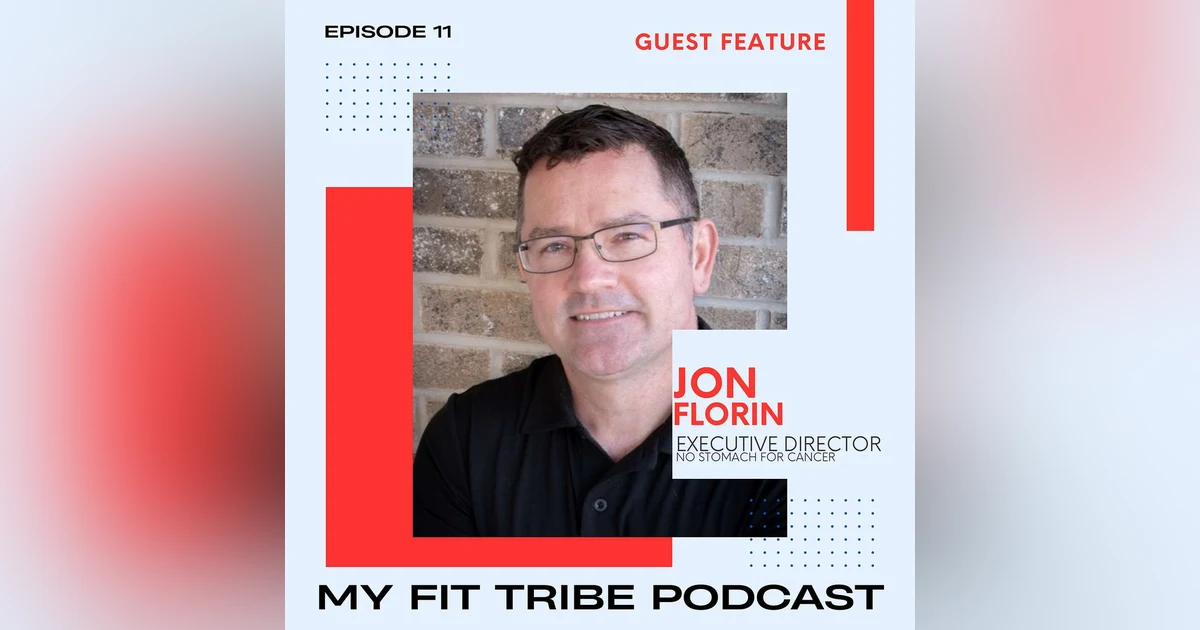


In today’s episode, we’re diving into a powerful conversation with Jon Florin, the Executive Director of No Stomach For Cancer, a dedicated non-profit organization focused on advancing awareness and education about stomach cancer. We’ll explore the often-overlooked topic of stomach cancer, from its symptoms to the emotional journey of a diagnosis, and we’ll also touch on some exciting research developments in the fight against this rare disease.
https://nostomachforcancer.org/
Test link: https://www.jscreen.org/product/hereditary-cancer-screen
Throughout my own life and fitness journey, I have had the privilege of meeting incredible people who've shared valuable insights on mindset, health, fitness, and spiritual growth. The profound impact of this knowledge on my own life has inspired me to share it with all of you. I'm Erica Sweeney, host and founder of My Fit Tribe Podcast. Join me as we explore inspiring conversations with experts, thought leaders, and everyday heroes who offer their stories and practical tips to help you on your own journey. From nutrition and fitness to mental well-being and personal or spiritual growth, our mission is to empower you to take charge of your health and live your best life. We are more than just a podcast, we are a community. Through coaching, a wealth of shared knowledge, and a strong support network, we are here to guide and encourage you every step of the way. Come be a part of our tribe. In today's episode, we're diving into a powerful conversation with John Florin, the Executive Director of No Stomach for Cancer, a dedicated nonprofit organization focused on advancing awareness and education about stomach cancer. We'll explore the often overlooked topic from its symptoms to the emotional journey of a diagnosis. And we'll also touch on some exciting research developments in the fight against this rare disease. If you're ready to learn more, make sure to subscribe, download, and follow the My Fit Tribe podcast so you never miss an episode. Let's unpack this important topic. Hi, John. Good to see you.
SPEAKER_00Good to see you as well.
SPEAKER_02So John and I go back to elementary school. We went to Leopold Elementary in Madison together, and I don't think we've had a conversation for 40 something.
SPEAKER_00Well, since high school, yeah. At least it is probably pretty brief. It's some sort of school event. Yeah, I'm sure. We you know, and the school we went to, you know, it was a lot of different groups.
SPEAKER_02Yeah.
SPEAKER_00You know, as they call cliques, you know. Um, but I think you know, we both kind of gravitated to different ones at different times. And and, you know, we weren't really part of one group, but big school. Yeah. Over 500 people. Yeah.
SPEAKER_02It's funny when I when I see people now, you know, 40 years later, I still picture you as like when you were eight. So it's almost trippy when you see people again after so long. Yeah. So thank you again for joining me today.
SPEAKER_00I appreciate the invitation.
SPEAKER_02I had a family friend who had a cancer diagnosis in the last year or so. Um, and John reached out to me um saying that he had some resources. So we appreciated that phone call. Um John, sounds like you joined this uh nonprofit in the spring of 2015. Is that correct?
SPEAKER_00March of 2015. So it's almost been 10 years.
SPEAKER_02And what did you do before that?
SPEAKER_00So just before that, um, I was just working um some different part-time jobs while I was finishing my degree. I decided to uh take 23 years off of college.
SPEAKER_02That's okay.
SPEAKER_00And, you know, uh started a small business for a few years, did that, uh got married, uh had a couple children, and you know, had a divorce in that time period uh and came back around um and went back to school to finish my degree. Um and that opened the door to this job. Part of uh the degree completion requirements was to do a volunteer type of uh thing. So I looked as close to my house as I as I could get and found this organization. And um I was originally gonna just apply to volunteer. And they happened to have a job uh opening for executive director, and it was right in line with with what I was doing uh with my my schooling.
SPEAKER_02So your degree is in organizational management. Okay. So what made you pick that as a degree?
SPEAKER_00Um Well, prior to that my life was mostly focused on advertising, marketing, retail. Um I spent a lot of time in the restaurant business as well. And I just wanted to make a change. You know, do something more in a leadership capacity. I mean, I loved managing people and young people for sure uh throughout the years, but I always knew I wanted to give back to the cancer community. I knew I wanted to do that. Um my best friend who you you know knew in in high school, Corey uh Witcher, passed uh from uh rare and aggressive cancer um shortly after we graduated. And my father passed from a rare aggressive form of cancer um uh uh after I was married in in the early 90s or late 90s. Um my uncle also passed. Um so I had all this cancer uh in my family, and uh I just knew I wanted to do something in that space. And this this particular degree uh that I pursued you know positioned me well for that.
SPEAKER_02Aaron Ross Powell We talk a lot in this podcast about those pivotal moments, and I love that this opportunity with this association opened up just at that right time, and you can't tell me that's not for a reason.
SPEAKER_00Oh yeah. You know, there's certainly a lot of eerie coincidences. Um, like I said, I originally was looking just for a volunteer role, but that just the job happened to be there, and I just took a chance and and sent my resume in, and uh a month later I was hired. I had no personal connection to stomach cancer at the time. But I I did recognize early on that you know they they were new um to the cancer world as far as advocacy. Um there wasn't a much uh a lot of information about stomach cancer in uh in the late 2000s. There was really a very little. So I saw that as an opportunity as well. Um and ironically, five years into my role, uh I did get a call from my brother-in-law um and he was diagnosed with late stage stomach cancer. And he passed thirteen months later. So midway through um I've been there almost ten years now, you know, it renewed my sense of purpose.
SPEAKER_02Well you see the journey from the very beginning, you know, just how hard that is for people when they get that diagnosis. Yeah.
SPEAKER_00It is, it's hard to you know the majority of stomach cancer cases are in late stages. Over ninety percent uh of cases are in uh final stages three and four. So it's very hard to treat. There's very few treatment options for stomach cancer. And you know, most people take an off-label treatment that's for some other type of cancer or they go through a clinical trial and chemotherapy is a part of that as well. If they can get the cancer under control, then they would have their stomachs removed altogether to try to either stop it from spreading or to um you know prolong their life.
SPEAKER_02There's so much I want to get into. Let's start by talking about this organization, how how it was founded. Sure.
SPEAKER_00So it was founded in 2009 by a family who had discovered a genetic predisposition to stomach cancer. So there's uh genes like the BRACA mutation for breast cancer and there's genes um CDH1, CTNNA1, and others that TP53 that can predispose a person or family to stomach cancer. This particular family discovered the C D H one mutation in their family. They had already lost two family members at the time. And our founder recognized at that time that there was a dearth of information. There was barely nothing uh out there, even on the internet, for people uh regarding resources and treatment options and any kind of information from diagnosis, you know, after diagnosis. So she decided to, you know, take matters into her own hands and she launched a foundation at first, and that quickly um evolved into a full-fledged patient advocacy organization, No Stomach for Cancer. And, you know, she coined this this the name, you know, this name she championed uh Stomach Cancer Awareness Month in November to uh to Congress early on. And you know, recognized that November uh was an important month uh because you know, we think about Thanksgiving and food and nourishment, and you know, it was a logical, you know, connection to stomach cancer because we were thinking of you know stomachs at that time of the year. So, you know, November is is the official awareness month. So, you know, we we've been around now for 15 years as an organization. We we serve patients globally. Um I carry a support phone. You see it down here. And patients call me from everywhere.
SPEAKER_01Wow.
SPEAKER_00You know, in crisis usually right after diagnosis or a family member that's been diagnosed. I provide one-on-one support by phone, text, email. You know, we do educational seminars at NCI designated cancer centers around the country. We collaborate with researchers at different research institutions all over the globe. We fund research, we provide education and resources to patients and families, you you name it. We do everything that you know the American Cancer Society does.
unknownRight.
SPEAKER_00But for one type of cancer, stomach cancer. Yeah.
SPEAKER_01Wow.
SPEAKER_00Started very small, just as a family foundation. You know, they pooled their money together, about ten thousand dollars, and wanted to do something and started, you know, funding research at that time, seed funding research, and then it just quickly became what it is today.
SPEAKER_02Aaron Ross Powell That's awesome. You were saying before we started the podcast that uh the most of the cases are outside of the United States. Do you want to get into that a little bit?
SPEAKER_00Aaron Ross Powell Yeah. So the majority of stomach cancer cases have been outside the U.S. The reason for that is um there is a bacterial infection called helicobacter pylori, H. pylori, and that is more common in developing countries and Asia in particular, um, and it can be transmitted easily between people through the food sources, water, uh, and other uh close contact um with um you know individuals. It can be passed down from mother to child as well. So that particular bacteria, if left unchecked in in a person's stomach, can cause uh chronic inflammation called gastritis. And over time, that can cause a change in genetics and the makeup of your stomach and your stomach lining and can eventually turn to cancer. So in those other countries where they don't have very good water treatment, good food handling, you know, you have a lot of people in close proximity to each other, high population centers, you know, HPLRI can be spread very easily.
SPEAKER_01Wow.
SPEAKER_00And if it's left undiagnosed or untreated, it can turn into stomach cancer, which it does. So in those countries in particular, um there's a higher rate of stomach cancer, and that's just how it's been for for many, many, many years. Now in the United States, we obviously have very good food handling, much better. Uh very good water you know control and systems and what have you. And so that reduces the the incidence here in particular. And of course, we have all the best cancer centers in the world here. Right. Which is another reason why there's uh lower incidence in the U.S. Although the numbers right now are they reflect uh you know about twenty-six to twenty-seven thousand new cases every year in the U.S. We believe it's probably more closer to forty thousand because a lot of these cases are misdiagnosed, as you can imagine. Right. Um because we have you know, in our stomach we have a lot going on, and when you go into the doctor and you're complaining about a different symptom or asymptom, you know, it's often misdiagnosed as indigestion, stress, something that you are sensitive to, food-wise, you know, just a whole uh all kinds of things, lack of sleep, anxiety, all these different things, IBS. So a lot of people go into the clinic with common symptoms for stomach cancer and walk out misdiagnosed as something else.
SPEAKER_01Right.
SPEAKER_00And then if they that continues and that that trend continues, those people of course end up coming back to the clinic months later.
SPEAKER_02When it's too late.
SPEAKER_00When it's too late. Um So it's more common to go in with some of these common symptoms and walk out with a protein pump inhibitor prescription and doctor tells you to call them in a few weeks or a month. Instead of having a different conversation with the doctor saying can we test for H. pylori? Can we can we talk about my family history of cancer or or gastric cancer, maybe? And that would lead that whole you know interaction in a different direction, potentially you know, having that H. pylori test and and having a positive result and then treating it.
SPEAKER_01Right.
SPEAKER_00Or finding out that a family member did have gastric cancer and being able to test for the genetic pre disposition for that, or even lobular breast cancer, which is also a result. Uh can can be uh can some people can get lobular breast cancer because of the C D H1 mutation, which you know, that's uh another risk factor.
SPEAKER_02So I get confused because when you go to the doctor, they give you a form and they have you fill out all of your genetic history of what your illnesses are, your parents or grandparents, but never have I been tested for anything. As I mentioned before the show, my grandmother passed away at age 76 from stomach cancer. I've never had a conversation with a doctor about any genetic testing I can do. Is this all something you know, the biohealth industry is changing, which we'll get into? But is this something that they just are now starting to test more of? Are they like why then if we know these genetic markers are there for these various cancers, when we go in for our checkups, say at age 40 or earlier, if you're if you're what I would like, why are we not why are we d why do we not know what our genetic makeup is to see what we're at risk for, in your opinion?
SPEAKER_00Yeah, well, that goes back to my earlier comment about prevalence. When it's not a a common cancer, the the average doctor probably hasn't seen a single case in their entire career. Especially a family practitioner who probably hasn't heard of, seen, or known a patient with stomach cancer. So they it's not top of mind. And that's where we come in, because we we provide the education to both patients and caregivers, but also to providers to learn more about stomach cancer and the risk factors. So going in there armed with information is important. But it really does come down to you know prevalence, awareness, and and you know, that doctor having some some sort of experience with stomach cancer to have that conversation. Right. To ask the patient, you know, maybe we should have some genetic testing done. Or do you have anyone in your family that you know of that's ever had stomach cancer, maybe lobular breast cancer or anything like that? And and that's that's where we're trying to get to. And that's really why, you know, you haven't been asked. But now you know, right? Now I know. Now you know, and and I can point you in the right direction now, and you could you could have a genetic test sent right to your home.
SPEAKER_02That was okay. So good, let's get into that. So do you work with testing companies then? Yeah.
SPEAKER_00Yeah, yeah, we have a great relationship with uh JSCreen, which uh is affiliated with a research hospital.
SPEAKER_01Okay.
SPEAKER_00And they will send an individual a genetic testing kit right right to their home. They expedite it usually next day or two days. And you just uh provide a saliva sample in a tube.
SPEAKER_02It is just a saliva sample.
SPEAKER_00So just a saliva sample. You don't even need to go through a blood drawn. You don't need to go through this complicated, convoluted route of you know, getting uh a doctor and insurance approval, and then you know waiting weeks or months to get those approvals and then waiting and then again having a scheduled uh blood draw to do a genetic test. You don't need that. You know. You know, the the companies like 23 and me and others that have kind of opened up the floodgates for genetic testing is why we don't need to do that anymore. The tools are there. Um, an individual can just connect with JScreen, fill out some information, they can submit it to insurance if they want it and have it covered, or they could pay out of pocket. And we actually have a program where if an individual can't afford the test, we'll pay for it. Um then that test is sent, like I said, and they just send it right back and within a couple weeks they would get the results and meet with the genetic counselor to discuss those results and family history and everything.
SPEAKER_02Aaron Powell And they're testing for multiple. Multiple. Yeah.
SPEAKER_00They do a multiple, multiple genetic gastric cancer risk panel. And in your case, uh you know, they would include some of the you know common uh genetic risk for breast cancer in there as well.
SPEAKER_02So see, it just blows my mind that this isn't the standard practice of the A. Standard of care.
SPEAKER_00Right.
SPEAKER_02Trevor Burrus, Jr. When you're dealing with the cost of insurance companies and the clinics and so I was getting uh uh lab work done outside of my primary care um just to see what was going on. And I got the kit or ordered online, it was a blood kit, and I had to take it into a local lab for them to run it. But then the local lab wouldn't do it because they said we don't cover that kind of test. So I so I had to do this work around. It was very like it's hard enough to request it because that's step one in taking care of your health. And then when you get it, you gotta actually make the appointment. And then you get the appointment, you actually gotta go. I mean, there's a lot of steps where denial or procrastination can can happen to throw you off the rail and getting that information that you need. But a saliva test, you really can't get any easier than that.
SPEAKER_00No, not at all. And and you know, that's part, again, part of awareness and education, why podcasts like this are important as well. So that the people that are listening out there may end up reaching out to an advocacy group like ours and saying, hey, I'd like to order a genetic test, because I'm aware of at least one person in my family who has this or that. And uh yeah, it is. It's it it's about education, it's also about having the right conversation in the clinic.
SPEAKER_01Right.
SPEAKER_00You know, we go into the clinic and we're typically rushed in and out.
SPEAKER_01No way.
SPEAKER_00So we so we don't really have a a lot of time to have these conversations with our primary care providers, but it's important that we we do take the time.
SPEAKER_03Yes.
SPEAKER_00Whether that's in person or it's through our my chart or or some other medical uh you know medical information highway that we're on, um, you know, making sure that we're having these conversations is is critical.
SPEAKER_02Aaron Ross Powell So what does it look like if I get this genetic test back and it shows markers for my risk? If I take that into my primary care physician, how do they how do they react to that? What would what would I expect in that situation?
SPEAKER_00Aaron Powell Well, you would what you should expect too is when when you receive that result is having a good, in-depth conversation with a genetic counselor to educate you on what those results really mean to you. Because each individual, each family risk factor is different because you you mentioned you know your grandma. Now if you had conversations with cousins and aunts and uncles, you might find that there was someone else further down the family tree or up the family tree that had another incidence of stomach cancer. So in your case, you would have a higher risk because there's more than one individual within your family tree. Now, for some, it might just be one individual who had a type of cancer and they've identified a genetic marker, but your risk is different because there's less prevalence within your family. So those are the kind of conversations that you would be having with a genetic counselor. You know, what are the next steps? Do I do I just keep my eye on it? Does my doctor need to be aware of this so that he or she can do uh a screening protocol every time I go in for my physical, you know, those kind of things.
SPEAKER_01Right.
SPEAKER_00You know, like a like a mammogram, right? Um for the stomach cancer world, they would do an endoscopy on a regular basis if they've identified a genetic risk factor.
SPEAKER_02Trevor Burrus And when they do the endoscopy, that's going in to see if there's actually seeing anything inside or what do you think?
SPEAKER_00They'll take samples of tissue inside your stomach and find out if there are any, you know, uh cancer cells or or early stage you know, cells that that could turn into cancer. So very much like any other biopsy of tissue.
SPEAKER_02Aaron Ross Powell So you mentioned most people don't come to you until they're at stage three or stage four. So what type of symptoms do people show when they come in to you?
SPEAKER_00Well they're they're very common uh to other types of things, like I said, like you know, indigestion, heartburn. Difficulty swallowing is always a big one, big red flag. Um So you have your common stomach you know symptoms that that you might get if you drank too much coffee. Then you have other things happening, maybe you know, you're having frequent vomiting or you have a difficulty um eating a an entire meal, so you're having a problem with that, or there's blood in your stool, or there's um you know other indicating indicators, you know, there could be a hardness in your stomach that you feel to the touch. Um so there are there, you know, there's 10, 11 common symptoms that are very similar to other things like IBS.
SPEAKER_01Right.
SPEAKER_00Similar symptoms. So you have irritation, you have nausea, um, all kinds of things that, again, are similar to other common gastrointestinal problems.
SPEAKER_02So many with our food today.
SPEAKER_00Right. There are there's so many, and you know, you have these energy drinks that can cause a number of those gastrointestinal problems. Right. And of course you have a common IBS is very common.
SPEAKER_01Right.
SPEAKER_00Um So yeah, those are the symptoms, you know, for sure. Knowing your family history is one. That's a big part. Two, when you do when when symptoms do present uh and they're persistent over a long period of time, that's where it's really important.
SPEAKER_01Aaron Powell That's a good point.
SPEAKER_00And and pushing for answers when they go to when you go to a clinic, you have to push for answers. Don't don't accept vague responses as to why you're experiencing that. You know, ask for that H. prelurite test, push hard for an answer, push hard for diagnostics. You know, don't just you know leave the the clinic with a prescription.
SPEAKER_02Aaron Ross Powell Right, and say take an apple and call me a week or whatever.
SPEAKER_00Take this pill and and it should go away. That's such a common that's where we we found that the breakdown really happens in the clinic. It's that first conversation with the primary care provider, the family practitioner. And again, it's not really the fault of either person in that room. It's just a case and it's a symptom of you know, we don't know enough about this disease in the United States yet because we've only been around stomach cancer advocacy has only been around for 15 years.
SPEAKER_02That's amazing.
SPEAKER_00And you think about the the American Cancer Societies of the world and the Susan G. Comens of the world, they've been around for half a century or more.
SPEAKER_01Right.
SPEAKER_00So they but they're way ahead of the game. The conversation is top of mind, right? You you can't turn your head or go anywhere, turn on the TV, go on the internet, go on social media. You can't go anywhere without hearing about breast cancer.
SPEAKER_01Right.
SPEAKER_00And that's because it's we've made it part of our daily conversation. Tell stomach cancer is part of at least the weekly conversation. You know, we've got a lot of work to do yet to do that.
SPEAKER_02There's so much, I mean, from since I'm getting older, unfortunately. Well, fortunately, I'm getting older. You know, there's there's so many risks out there. There's so many cancers, there's so many illnesses, but you have to start, like you said, taking care of yourself and being your own advocate for your health because nobody else can do it. And that it's hard not to, again, procrastinate, but it's so important. And the knowledge is power for sure.
SPEAKER_00Yeah, not not procrastinating, that's a good point. You know in recognizing symptoms early on and not ignoring them. Right. Um, you know, being proactive is so important, you know, sending a message to your provider, just documenting your symptoms and advocating for yourself is is such a big part of what we do. Um it it we we drive it that point home to all of our patients and caregivers is that advocating for yourself, for your family, for your you know, the people you're caring for is you know critical to survival.
SPEAKER_02So I I've known so many people that get that cancer diagnosis, and I have been I'm thankful, so thankful that I haven't had that personally. But when you get that phone call, you have someone who's just gotten that diagnosis and their life has just changed. What does that conversation even look like?
SPEAKER_00Well, yeah, it's it's the most common thing for for us in our world. I typically, you know, when I get those calls or those emails or those text messages, you know, I I assure them that they've come to the right place and that I will do my best to provide answers and guidance that will help them you know, from their diagnosis through their journey and all the way to survivorship, hopefully. So it's it's important to gather as much information as you can about their family history, about where they're being treated, about what symptoms and treatments they're currently having, and to talk to them about you know the next steps. Have they sought a second opinion? Providing them some information of you know, as much information as we can right up front. We you know, there's a patient guideline that we provide to them. It's a it's a pretty in-depth uh book of information that they can take back to their primary care provider, to their family. And we talk to them about clinical trials, we talked we put them in touch with other patients or other caregivers. It's another thing we do to provide that one-on-one support someone who's already been through it. Trevor Burrus, Jr.
SPEAKER_02It's so important.
SPEAKER_00We encourage anyone who calls to be treated at an NCI-designated cancer center. And there's it's very different from a clinic, uh, you know, a regional clinic or a small clinic, which is where we typically go, right?
SPEAKER_01Right.
SPEAKER_00We we don't go to a big hospital unless there's something big happening.
SPEAKER_01Right.
SPEAKER_00So we always talk to our our new um patients about the importance of going to an NCI-designated cancer center where they can receive comprehensive care, a full, you know, full spectrum of support services and care. Trevor Burrus, Jr.
SPEAKER_02So NCI would be National Cancer Institute.
SPEAKER_00Yes. So the NCI designates cancer centers across the United States. Um we have one here, you know, Carbone Cancer Center. And it's the only one in the state of Wisconsin.
SPEAKER_02Aaron Powell Wow, that's amazing, isn't it?
SPEAKER_00Yeah.
SPEAKER_02Aaron Ross Powell So what do people do then when they're out of network and they have a cancer diagnosis and they how does that even Yeah, so you know that's difficult to navigate.
SPEAKER_00Um so you know we we encourage them to have all their medical records and information readily available so that when they do seek a second opinion or looking for treatment outside their regional hospital or clinic, that they have all this ready to go and have it in their you know in a folder somewhere, either digitally or in print, so that you know they can provide that both to their insurance provider and and also to the provider that they're seeking a second opinion from. And that helps expedite that process. You know, there is approval processes that they go through with insurance, of course. And the good thing about a lot of these NCI designate cancer centers is that they have people there that can help walk them, walk them through that process. And you know, some people are uninsured.
SPEAKER_01Right.
SPEAKER_00Or underinsured, as they might be called. And luckily, a lot of these larger cancer centers, they're affiliated with a research um center like a university. And they have a lot of them have a sizable foundation where money's pooled for those individuals who cannot afford their care or their treatment. And of course, if they have no options, there's always clinical trials that they can look to. And if they qualify for clinical trials, depending on their situation, you know, clinical trials, there's no cost to a person to attend a be a part of a clinical trial. The challenge is just whether or not that person can qualify to be a part of that particular choice.
SPEAKER_02Is that based on the prog the progression of the disease?
SPEAKER_00So yeah, that's one part, uh progression of the disease, what other treatments have they already received that can disqualify or qualify an individual? Do they have a particular biomarker in their blood, uh a protein or some other marker in their blood or in their tumor that that could qualify or disqualify them for a trial? Do they have a genetic marker, um you know, a germ-lined mutation, as it's called, one that's inherited from your parents? And those types of things can either qualify or disqualify you for a clinical trial as well. So yeah, there's it's it's a complicated journey.
SPEAKER_01Right.
SPEAKER_00You know, when when you're diagnosed late stage of any cancer, but you know, particular stomach cancer, because there are no real bona fide treatments for stomach cancer. That there's real no specific treatment other than chemotherapy, which we've used for cancer for you know decades. There's really no treatment that's specifically for stomach cancer. We're still s still being studied, still being researched. So a lot of what people are receiving are off-label treatments, things that are meant for another cancer, or they're receiving chemo and they're under chemo or uh some immunotherapy for a long period of time to kill the cancer or as much of it as they possibly can and get it to a point where they can have their stomach removed.
SPEAKER_02That's amazing to me.
SPEAKER_00And then they if they hopefully if they survive that, then they live a life without a stomach. Which is the best place that they can end up, really.
SPEAKER_02Right, because then their cancer is not there because we have no stomach.
SPEAKER_00They're in remission, right?
SPEAKER_02So how does that even how does that work? Living without a stomach? Yeah.
SPEAKER_00Yeah. So that's another big part of what we do. We have a community of stomachless people.
SPEAKER_03That's amazing.
SPEAKER_00Thousands of them, believe it or not. Thousands of stomachless people walking this earth as we talk right now. You know, uh I I mean I know hundreds of them. Um, and we have a another website that supports them called Gastrectomy Connections. And it's just for the stomachless community, the people that are walking around trying to figure out how to live life without that. And it is an amazing group of people. So you have, you know, you so you when when they remove the stomach, they just connect your esophagus down to your lower intestine. That's it. So it's a straight pipe and your stomach is gone. So it creates all kinds of you know challenges uh for people. So you know, the you know you have to eat much smaller portions and chew very well. You have to you you can they can't really eat a lot of sugar, if if any. Sugar is a very big problem. There is, you know, there's complications with you know uh vitamin absorption because your stomach is kind of that it it w is that tool, it's the holding tank where nutrients are absorbed at a at a you know slower rate. So there's a there's vitamin issues um with the stomachless community, but believe it or not, the amazing part of this community, there's dozens of athletes. There's professional bodybuilders, there's triathletes, there's there's there are people running marathons without a stomach. There are people having babies without a stomach. It's it is an incredible group of people. And if you are part of that group, that means you've survived.
SPEAKER_01Wow.
SPEAKER_00You know, you've survived stomach cancer, and that's I think what you know motivates them to do these things. They're they're just they're unicorns, but really they call themselves seahorses. So seahorses don't have a stomach.
SPEAKER_02Aaron Powell That is I have goosebumps. Oh my god.
SPEAKER_00Seahorses don't have a stomach, platypuses don't have a stomach, so some of the people refer to them as platypuses. Uh I've seen really the majority of those who have survived and had their stomachs removed uh have seahorse tattoos.
SPEAKER_02That is so cool.
SPEAKER_00And you know, they are a very close-knit group, as you can imagine, you know, um helping each other uh with you know what are the you know the types of foods that that work well, you know, what kinds of drinks work well, you know, how much can you exercise, what types of vitamins can you take, you know, what doctors should you see to help manage all these things because it's a challenge from day one. And you're they're always going to be challenged throughout the rest of their life without that important, you know, organ you know, the stomach that we take for granted. Those of us who who don't uh have that risk or haven't had it removed. So it's yeah, it's we're very fortunate and proud to be part of that community and to be uh championing that uh for them.
SPEAKER_02Um that gives so much hope to people when they get that diagnosis, even if it is a stage. Because that's really like you can like you have hope that you can't.
SPEAKER_00It's a huge fear, right? Yeah. When someone gets diagnosed with stomach cancer, is oh my gosh, so really the only thing that's gonna stop this is my is to have my stomach removed? That just adds a whole nother layer of anxiety and fear. Um and with our gastrectomy connections community, it's a global community. So we have people from every walk of life.
SPEAKER_03That's so cool.
SPEAKER_00On on that uh community page. And we have video testimonials, we have recipes that they share, we have all kinds of other resources that they can uh share with each other to help them through it. We we're we just recently launched a new partnership with a nationwide network of nutritionists to help them.
SPEAKER_01Yeah.
SPEAKER_00Because that's something they're gonna need ongoing for the rest of their life, and something that's harder for them to access through their traditional primary care provider, as you can imagine. Yeah. Finding a you know, a certified nutritionist who can help them through all these challenges. So yeah, it's it's uh you know, a lot of people just don't realize that stomach cancer has been in the top five most prevalent, most deadly cancers for a very long time.
SPEAKER_01Aaron Ross Powell Wow.
SPEAKER_00Decades. Used to be the leading type of cancer in cancer death in the United States just as recently as the 80s in the U.S.
SPEAKER_02Aaron Ross Powell So I'm going to back up a little bit when you were talking about sugar. Because I've had conversations uh about sugar and how it feeds cancer cells. So but if someone if they doesn't have the cancer and don't have the stomach, what does the sugar do that they like why can people not eat sugar?
SPEAKER_00So your your uh body can only process so much sugar for one thing. Um what the stomach provides is a slower absorption of sugar into your bloodstream. So if you don't have it, that sugar goes right into your blood. Right into your blood, and they experience something called dumping syndrome, and it's a horrible thing, as you can imagine just by the name. And because your body can only absorb so much sugar at a time, you know, your pancreas and your kidneys and everything, um when you don't have your stomach, it is a shock to the system. Um you no longer have that holding tank to slowly release the sugar so that your body can handle it and your insulin and all that stuff. So it a lot of people who have had their stomachs removed, you know, it's by the gramps. Like they have to watch it very, very carefully.
SPEAKER_02And there's sugar in everything.
SPEAKER_00And there's sugar in everything, and even the natural sugars. Right.
SPEAKER_02Yeah. Honey, maple syrup, everything. Yeah.
SPEAKER_00Fruit, you name it, you know, all that stuff. So yeah, it's it's a it's really uh an incredible uh thing to to ponder, isn't it? Um but when you meet these people, it's just you you're just don't have a choice.
SPEAKER_02That makes it easier. Yeah.
SPEAKER_00Yeah, they you know, you they've realized that it's just part of their daily life and and they just learn to navigate it and deal with it.
SPEAKER_02Aaron Powell Well, what an inspiring group of people. That's amazing.
SPEAKER_00Yeah, and like I said, there's the professional bodybuilders and there's these triathletes who do Iron Man and and all these other things that have no stomach and marathons. You know, Boston, New York, and you name it, like and it's just incredible to me. That's to witness it.
SPEAKER_02Yeah. You know, and to know what they've I mean, it's one thing to acknowledge they don't have a stomach and they're doing these things, but you also know the journey that they took to get there. That's yes.
SPEAKER_00For s for a lot of them it it was finding out they had that genetic um risk and a family history of people who have had stomach cancer in past. And they've made the difficult decision proactively and prophylactically to have their stomach removed.
SPEAKER_01Wow.
SPEAKER_00Like if if someone found out they have a risk for breast cancer and and having their breasts removed. Same decision-making process, but very different. Very different than you know, the decision to have a different organ removed. Having your stomach or the prospect of having your stomach removed is unlike any other.
SPEAKER_02So these are not people that necessarily have had a diet.
SPEAKER_00Not necessarily. And identified that risk factor through genetic testing, and then requested to have their stomach removed.
SPEAKER_02Wow. My mind is clone.
SPEAKER_00Yeah, to prevent the cancer.
unknownRight.
SPEAKER_02And have found a high quality life.
SPEAKER_00And have found an amazing quality of life. Wow. Yeah. I mean, like I said, so some of them having babies, some of them doing these incredible athletic achievements. Yeah.
SPEAKER_02Taking advantage of every moment of life is pretty cool.
unknownTrevor Burrus, Jr.
SPEAKER_00Yeah. And, you know, so it's you know, what what we do is extremely important and and you know it uh it does come down to some very basic things, and that's just education and awareness. You know, having that conversation and and knowing that there's a risk is really important, you know, that the stomach cancer even exists. And you know, we're we are, you know, pretty young. Yeah, you know, stomach cancer advocacy only being around for 15 years is that's a very short period of time.
SPEAKER_01Right.
SPEAKER_00Comparative to to other advocacy and and initiatives that are out there. So but you know, there's there's been a lot of very well-known public figures, which I shared with you that have passed from stomach cancer. And most recently, you know, most recently, you know, Toby Keith is a big one. Um but there's you know, there's a lot of attention given to his death, not so much the disease. Trevor Burrus, Jr.
SPEAKER_02Not at all, actually.
SPEAKER_00Trevor Burrus, Jr.: You know, which is it's disheartening to stomach cancer advocacy groups that there was not more conversation around the reason why he passed.
SPEAKER_02Do you as far as nutrition goes for people who are listening who um who want to adopt more healthier choices, is there advice you give to people just prevention-wise who have not gotten that diagnosis to stay healthier?
SPEAKER_00Aaron Ross Powell Yeah. Well, you know, there's two very well recognized risk factors too for stomach cancer, and that's heavy alcohol consumption and tobacco use. So if you can cut out tobacco and you know reduce your alcohol consumption to a minimum, you've cut out two major risk factors.
SPEAKER_02Aaron Powell So okay, I missed a positive right there. Tobacco use for stomach cancer. Like I would think lung cancer, right?
SPEAKER_00Right. Yeah. But a common cause of stomach cancer for you. Both smokeless and regular cigarettes. And then for for food-wise, heavily salted and pickled foods has been identified and is a known risk factor. Yes. And that's another reason why Asian communities and and those in the and the European communities where there's a cultural prevalence of heavily pickled and smoked foods in their food uh system and in their culture, why that has increased prevalence of stomach cancer. That's interesting. And then you couple that with H. pylori prevalence, and it's you know, you're you're threefold, yeah. Yeah, right.
SPEAKER_02So I've heard recently that uh things like kimchi are actually good for your stomach because it helps on the probiotic side.
SPEAKER_00Yeah, yeah.
SPEAKER_02But that's pickled.
SPEAKER_00Yeah, it is. You know, the kimchi uh I thought about that myself. I haven't had the conversation with any doctor about the kimchi side of the conversation because yeah, it it has a lot of probiotic and prebiotic benefits, but then it is is pickled. But I think some kimchi's are fermented as well, which is different.
SPEAKER_02Aaron Ross Powell Okay, maybe that is Yeah.
SPEAKER_00So I don't know if they're all traditionally pickled and I know some are fermented. So fermented is different and it doesn't have the the same risk. So but yeah, it's it's certainly you know just being conscious of that, of what you're eating, and not going overboard with any of that stuff. Right. Like yeah, we all like salty things. Aaron Powell And I love pickled juice. And we all like most of us like pickled things, yeah. Sauerkrauters. We just need to exercise. Right. Moderation. Moderation is so important. And and I think that's for anything, really, because your diet affects not just your gastrointestinal health, but it affects your overall health. I mean, it affects everything. You know, your heart, your blood. It's not just you know, food is you know, food is fuel, but it's also poison.
SPEAKER_02I mean you really the fact that people think you can put all this crap in your mouth and it's not going to affect your body negatively is and I'm I'm guilty. I mean, we all are.
SPEAKER_00And it's just because it's part of our culture. Right. Right. Like this is American society. Right. You know, we're we are bombarded with advertisements for every type of food.
SPEAKER_01Right.
SPEAKER_00And most of it is fast food or junk food.
SPEAKER_01Yeah.
SPEAKER_00Right. It's just part, it's ingrained in everything. It's at every convenience store, it's at every grocery store, it's at every it's even at the checkout lines of every retail store. Right. You go to a shoe store now, you might find a counter of junk food at that register.
SPEAKER_01Right.
SPEAKER_00So we have to just be very aware that don't be impulsive. Resist.
SPEAKER_02Yeah, walk away.
SPEAKER_00You know, try and try but it's very hard. When it's being pushed at you from every direction. Even you know, even our hospitals are guilty of them. They still have junk foods available at hospitals and well, even the cafeteria food. I mean I think cafeterias at schools, even you know, the you know, high schools I walk in and I see these vending machines and I shake my head.
SPEAKER_02Right.
SPEAKER_00Shake my head because it's and soda machines right next to it. Yeah.
SPEAKER_02Yeah.
SPEAKER_00Soda's terrible.
SPEAKER_02It is.
SPEAKER_00I I mean I drank it up until my early twenties. I went and then went cold turkey. Good for you. Like I probably will have one soda a year. Maybe two. Maybe two. And one of them will be a diet soda and the other one will be a regular one.
SPEAKER_02I've just got to get them both. Yeah.
SPEAKER_00That's it. You know, it was cold turkey.
SPEAKER_02Aaron Ross Powell See those things, those little things can make a big difference.
SPEAKER_00Yeah.
SPEAKER_02So when you first started with this organization versus where it's at now, what are the biggest growths or differences you've seen in in stomach cancer and the development for treatments, et cetera?
SPEAKER_00Aaron Powell You know what some of the biggest developments have been just the volume of interactions with researchers and patients and providers. It's a big deal. That conversation is growing, the awareness is growing, the education is growing. But beyond that, it's the amount of research that's been funded. In 15 years, you know, millions of dollars between our group and other stomach cancer groups in the world and the United States have funded dozens of clinical studies. None of them have resulted in a new treatment or drug yet, but they are progressing. And the more awareness and research funding that we get from public sources, and I mean that's the thing with stomach cancer, we don't get government funding, we don't get state funding. All of our funding comes from individuals like you and me or family foundations. That's it. So a very startling fact is that if we pooled all of our resources together as stomach cancer groups, we couldn't even fund a clinical trial from stage one to final stages. We don't have enough money. And you ask yourself, why? Why why aren't we not getting the the hundreds of millions of dollars like the other cancers?
SPEAKER_01Right.
SPEAKER_00There's some very very uh logical reasons for that. One is nobody knows about it. Nobody understands that stomach cancer is so prevalent. Nobody understands there's a need, right? A need to fund this research. The other startling reason is we don't have many survivors. The majority of people pass within a year and a half of diagnosis. So if you don't have survivors, right, out there championing the cause, speaking out, meeting with people, talking about the disease, then you don't have people who are aware or interested in supporting the cause.
SPEAKER_01That's right.
SPEAKER_00Because you don't have any survivors. Unlike, for example, breast cancer, where you have hundreds of thousands of survivors.
SPEAKER_01Right.
SPEAKER_00What are they doing? Every year coming together, raising funds, talking about the disease, meeting with people on television, radio, and podcasts like this. For stomach cancer, because it's caught so late, we don't have those survivors. So we don't have the funds. So even if we pulled all of our resources over, we can't we can't fund a clinical trial through stage three. Hopefully we'll get there in the next ten years. I know that seems like crazy to think because we're in the 21st century.
SPEAKER_01Right.
SPEAKER_00We should we should have the support and the funds that we need to do these things. But we don't. We're working towards it. Uh you know, that's a big part of what I do is just creating the awareness and letting people know that yes, we we do need your support, we do need your help. Um and you know, bringing people together is a big part of it. Um bringing groups together, um, survivors, uh although there are a few um together, you know, it's a big part of of our cause. So, you know, it's yeah, it's it's really it's our uphill climb.
SPEAKER_01Right.
SPEAKER_00You know, and and we're just working to to just do as much as we can with the limited resources that we do have.
SPEAKER_02So these these testing, lab testing, genetic testing, there's quite a few, and that I believe the biohealth industry is changing quickly with AI coming in, I think really good things to come. So do those lab organizations have like when they someone doesn't know about you and they get that genetic panel back that says they're predisposed, does that connect you to them right away? Trevor Burrus, Jr.
SPEAKER_00Yeah, some of the labs do have a have a kind of a a knowledge of of us and other stomach cancer groups. So if a person tests positive for a gastric cancer risk, they will sometimes, not every time, it depends on the genetic counselor and their awareness of us, um they will refer that patient to our group or another group. Um but that, you know, again, that they still have to have that conversation.
SPEAKER_01Right.
SPEAKER_00Right?
SPEAKER_01Right.
SPEAKER_00So typically that conversation when the the test result comes back from the lab, the first conversation is all about family history. They build a family tree with them and then they talk about risk factors based on their specific mutation. Not every mutation is what they call pathogenic. It doesn't always cause cancer. So that's usually where the conversation goes for many people. Um so it's important that you know we keep this conversation going and that genet counselors know that that these resources are available.
unknownRight.
SPEAKER_00And then that the people that are talking to genetics also mention groups like us. Yep. Um, so that yeah, that they can take action.
SPEAKER_02Yeah, right. And hopefully that helps spread the word and hopefully at some point can help generate more income for your organization as well.
SPEAKER_00Yeah, yeah. Yeah, yeah. No, I mean all the organizations are in the same position.
SPEAKER_01Right.
SPEAKER_00We know what the organizations are are receiving from donations because it's public knowledge. When you're a when you're a nonprofit, you're a 501c3, you are required to publish this information.
SPEAKER_02Right.
SPEAKER_00So we know.
SPEAKER_02Right.
SPEAKER_00And we're all doing the same thing. We're all doing the same thing for all reasons. Yeah, we're all doing the same thing. And we're all, you know, just doing our best um to fund as much research as we can is typically just seed funding. Smaller grants, um, you know, between usually twenty-five and a hundred thousand. But you know, in comparison to some of the more well-known cancers, millions. No, billions. Billions. Billions. Yes. And and I would argue that breast cancer has reached the trillion dollar threshold and global funding to research. Which is the thing. Which has resulted in a better outcome, right? Right. We have all these survivors because of that.
SPEAKER_02Right.
SPEAKER_00Funding is such a huge part.
SPEAKER_02So where do you see your organization going in the next 10, 15 years?
SPEAKER_0010-15 years is getting to that million-dollar goal, either our group or another group within the stomach cancer community, to have a year where we achieve a million dollars uh of fundraising and are able to take those funds and really make a significant impact in research.
SPEAKER_01Wow.
SPEAKER_00That's really what what we hope to to achieve. The next more most important thing would be a celebrity or a public figure to come out and speak for the cause. Right. We don't we haven't had that yet.
SPEAKER_01Yeah.
SPEAKER_00I mentioned Toby Keith earlier. We really wanted to work with him. We all did. All the groups wanted to to work with him prior to his death for a public service you know awareness campaign, bring awareness to the disease and the disease that he was fighting, and we just couldn't make it happen. Uh you know, he he decided to spend his final days with his family, and that's fine. But that's a big part of getting over that hump is is a public figure or a celebrity to say, I have this. You know, and I've suffered or my family suffered, and to do that on television or on radio, where the world you know wakes up and says, Oh my gosh, we need to support this.
SPEAKER_01Right.
SPEAKER_00You know, and that we we were there, you know, decades ago with breast cancer, right? You had celebrities coming out of the woodwork, and then we've had it with pro prostate cancer and colon cancer and lung cancer, right? And once that happened for each one of those causes, that's when things changed.
SPEAKER_02Well, I think again, with the conversation that's out there about health and biomarkers and genetics, I think the door is opening more for people's awareness of all these cancers, where the small less common ones or the less well-known or talked-about ones are going to get more exposure to helpfully give you some more resources to grow as well.
SPEAKER_00Yeah.
SPEAKER_02Is there anything else you want to share about your organization before we wrap up today?
SPEAKER_00Aaron Powell Well, it's just important that when a individual or family discovers stomach cancer, either through family history or a diagnosis, that they they they do ask questions and they do seek out resources from either no summit for cancer, either online or on a text message or an email or a phone call. But you know, look at other groups and things that they might be able to provide them to. A lot of these groups are scattered about the country. So, you know, if a person lives in the South, they may go to a different group. If someone lives in the West Coast, they might they might find another group. We're in the Midwest. And so we're right in the middle, and we kinda we you know, we we do support patients nationwide and globally. So it's just important to seek out information.
SPEAKER_01Right.
SPEAKER_00And and and look for it and look for answers and educate yourself and advocate for yourself, like you said. And and uh that's really the most important thing and and uh to ask a lot of questions.
SPEAKER_02Aaron Powell For sure. And how do they find you?
SPEAKER_00They can go online and go to no stomachforcancer.org. And through there they can request one-on-one support with me, either through phone or email or text. It's as simple as that. Um I can connect an individual or caregiver with another patient or another caregiver, or I can have one-on-one conversations with them to help them navigate their diagnosis.
SPEAKER_02Trevor Burrus, Jr.: Awesome. So a lot of great information.
SPEAKER_00Yeah.
SPEAKER_02I'm gonna wrap up this podcast with my question. I ask all my guests, and you mentioned you've listened, so when you people know the questions, it kind of spoils a little bit. But you know, I was thinking of where to start the conversation. I was thinking at the beginning of when you first got this position with this, but I'm gonna take you back a little bit further because you mentioned Corey.
SPEAKER_03Yeah.
SPEAKER_02And that took me back because man, to lose to cancer at age what, 17, 18 years old.
SPEAKER_00Well, he he was diagnosed at um eighteen.
SPEAKER_02And that went so fast.
SPEAKER_00And it did, and it did. And and we all knew him. Um and he's my best friend.
SPEAKER_02Yeah. I knew him since I was five years old.
SPEAKER_00You know, so I'm very close to his brother, Heath. Yeah. So Heath and you know, Heath and I were just hanging out a few weeks ago. Wow.
SPEAKER_02You know, so let's take that John back after when we lost Corey to cancer, which is worth if you could talk to that John and have a conversation with him then, what would you say?
SPEAKER_00I would say save your money. I would start there. Save your money, finish school. Don't take that 23-year break.
SPEAKER_02But you did. And then because you did, everything lined up in the right reason.
SPEAKER_00Aaron Powell Right. You know, take the don't take the 23 year break. And you know, take take better care of yourself. And and I I would have probably said, you know, also once you're done with school, you know, focus your attention on helping others. Because if I had spent the last you know, that 23-year break doing what I do now, I I would have had an even a greater impact.
SPEAKER_02So now talk to John of the future. We're gonna go like fifty years because we're gonna live so long in the future. No, uh but so many so many 10, 20 years in the future. What would you ask future self, John, and what would he say back to you?
SPEAKER_00Well, that's a tough one. Um I would ask, do you have any regrets? And he would say no.
SPEAKER_02See? Because look how many people you're impacting.
unknownYeah.
SPEAKER_02Doing good things, John Ford. It's good to connect after all these years. Thank you for coming.
SPEAKER_00Thank you. Thank you very much. Appreciate it very much.
SPEAKER_02Thanks for listening to MyFit Tribe Podcast. Tune in weekly for our latest episode for more health and wellness insights and inspiration. For more information, visit myfitribe.org. Please note that the opinions and comments presented here are those of the guests and do not necessarily constitute medical advice or the opinions of MyFit Tribe. Copyright 2024, all rights reserved. This podcast is a production of MyFitTribe LLC.