Jessica Kuchnia- DexaFit
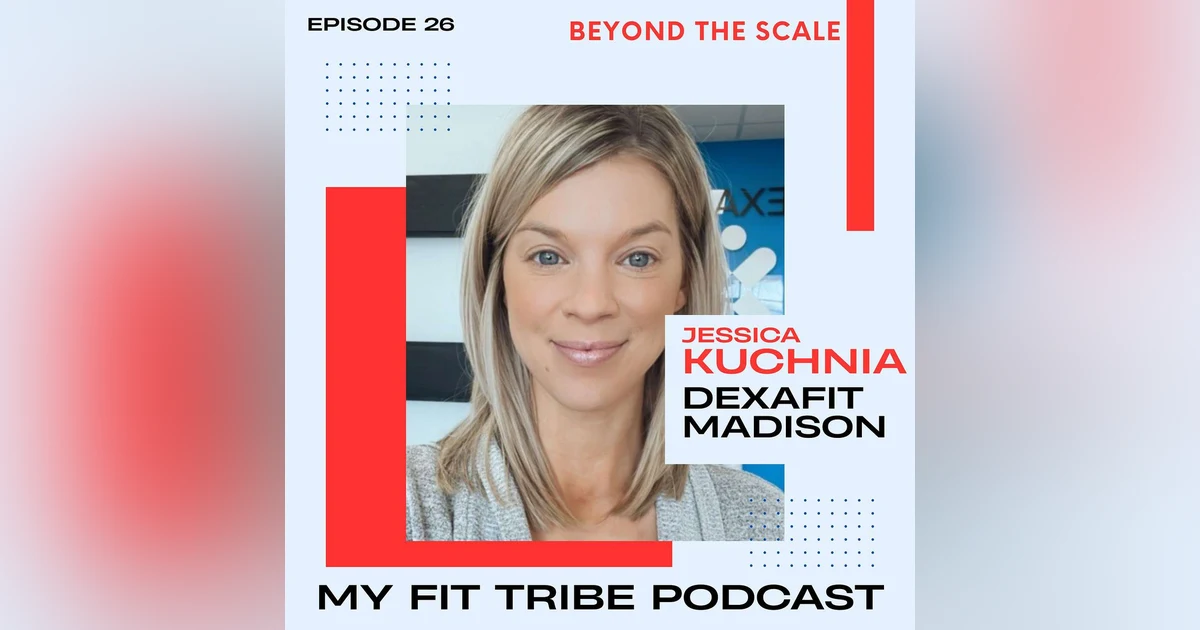


In this episode we are joined by Jessica Kuchnia from DexaFit Madison. Her path to health wasn’t a straight line—and that’s exactly what makes her story so impactful. In this episode, she shares how her personal experiences with wellness and nutrition shaped her mission to empower others through data, education, and self-advocacy. We explore how understanding your body is one of the most powerful tools for lasting change, and why taking ownership of your health journey is more important than ever.
Here’s our conversation.
Throughout my own life and fitness journey, I have had the privilege of meeting incredible people who've shared valuable insights on mindset, health, fitness, and spiritual growth. The profound impact of this knowledge on my own life has inspired me to share it with all of you. I'm Erica Sweeney, host and founder of My Fit Tribe Podcast. Join me as we explore inspiring conversations with experts, thought leaders, and everyday heroes who offer their stories and practical tips to help you on your own journey. From nutrition and fitness to mental well-being and personal or spiritual growth, our mission is to empower you to take charge of your health and live your best life. We are more than just a podcast, we are a community. Through coaching, a wealth of shared knowledge, and a strong support network, we are here to guide and encourage you every step of the way. Come be a part of our tribe. In this episode, we are joined by Jessica Kuchnia from Dexafit Madison. Her path to health wasn't a straight line, and that's exactly what makes her story so impactful. She shares how her personal experiences with wellness and nutrition shaped her mission to empower others through data, education, and self-advocacy. We explore how understanding your body is one of the most powerful tools for lasting change, and why taking ownership of your health journey is more important than ever. Here's our conversation. Today we're excited to welcome Jessica Kuknia, the dynamic force behind DEXAFit Madison. With a background in health, fitness, and performance optimization, Jessica helps clients understand their bodies through cutting-edge technologies like DEXA scans, VO2 Max testing, and RMR analysis. Hi Jessica, thanks for joining me. Hi, thanks for having me. Let's start a little bit to find out your history in wellness. Where did it all start for you?
SPEAKER_01Yeah.
SPEAKER_00Do you want the long or the short version?
SPEAKER_01Let's do the long version. We got time. Yeah, so I'm actually a dietitian by trade. I got my degree back in Minnesota where my husband and I met. I worked clinical in a hospital setting for about four years and then moved to more of a um high V setting. So they had dietitians at every high-V. So I worked there for a couple of years, and then my husband got a job at UW here. So that's kind of what brought us over here. And I did not have a job moving here. I did not know anyone here. So I was kind of just doing more of the health clinics to kind of just get my bearings, I guess, for this area, since I was, you know, not in tune with it. So and after a while, my husband kind of told me he was like, Jess, like maybe we should find something more stable because some weeks you'd have a ton of jobs, other weeks you wouldn't have as many. And I was feeling like good with where I was at when we first moved here. So I kind of told him, like, okay, fine, like just to appease you, I'm gonna go apply for a job, a more full-time job. And I came across Dex of It, which at the time I knew nothing about. I also did not have, I don't know, I wasn't excited about it, but I just did it, like I said, to appease him. And I got immediately called for an interview from the original owner to come work as an operations manager. Um, and after that meeting, I felt completely different with how I don't know, with how I felt about Dexfit and the position as a whole. He had kind of the approach of like, I'm just using this as a side hustle. You're gonna be running the show. This is gonna be kind of your thing. I just kind of want to have this as a side business while I do my full-time dentistry stuff. So I decided to kind of take that leap and I was like, okay, sure, I will think about it. Um, and at that same time, I actually had Hive reach out to me again here in Fitchburg because they were looking to have another dietitian take the place of the previous one. So I kind of was at this crossroads of like, do I kind of take a $20,000 pay cut, you know, to work at this place, but I have complete flexibility and it's almost like I own my own business without having the financial burden of that. Or do I go back to what's comfortable, which is high V. I know what I'm doing. It's a fun job, it pays really well, but I've already done that. So I decided, you know, after a lot of you know, talking with my husband, praying, all that stuff, that I was gonna take this leap of faith, try this new opportunity, which I was really happy I did, because now it's led to me over the years. We went from operations manager starting up a business, like when we were under construction from the very beginning, to during COVID, the partner that was working with, the owner at the time, backed out because of uncertainty of the times. So that's when my husband and I decided to kind of move in and become co-owners of the business. And then as of a year, year and a half ago, we took over full ownership. So yeah, it was actually a really unplanned um process, but I'm so glad that I like took that leap of faith because it went to it led me to like, you know, a job and a career that is so fulfilling where I can help people.
SPEAKER_00So there's so much I could dive into. So I I love those moments when it's nice we can have hindsight now, right? But you look at those crossroads, we're like path A or path B, but oftentimes it's the hard one, it's the uncomfortable one that gives us the most growth, right?
SPEAKER_01Oh, for sure. And it's scary because you're like, I have no idea what I'm doing. I went to school as a dietitian. I know nutrition, but I've never been on the business side. I've never operations manager, I haven't a clue. But I think the the previous owner had the mentality of the same thing, like, I don't know what I'm doing either. So, like, let's learn together. So I think that's also helped shape my leadership in just being a boss in general, because I have the same mentality because I was really drawn to that that you know we're gonna learn together in this in this business, even though we have no idea what we're doing. And I think there's something really powerful to move with that.
SPEAKER_00So that's one thing I if if you're an entrepreneur, you know that it there's no manual of the right way to do most of what you're learning. You just have to figure it out. And when you don't know or you make a mistake, you pivot and you do something else. Like just as part of running your own business, and it really is empowering because you do that in life then, right? A little bit more than that.
SPEAKER_01Yeah, absolutely. Absolutely.
SPEAKER_00So wow. So let's talk going back to nutrition. Did you always know you wanted to get in nutrition, or why did you pick that as a major?
SPEAKER_01Yeah, I actually am glad that you asked that because uh it was not my I actually went to school for dentistry, believe it or not. So it's kind of funny with like our old partner being a dentist. I went, I loved teeth. I wanted to be a dental hygienist. Went to St. Cloud State for dentistry, and I was a year in, and all of a sudden I was like, you know, I want to go to the University of Minnesota. They didn't really, they their dentistry program was very competitive, like maybe only taking 10 or 11 people per year. And I was kind of at a point where I was like, I want to move forward. I don't want to like just be on a wait list for a while because that's probably what would happen. So I had this other passion of nutrition, and part of that was because when I was, I don't know, like 13, I was diagnosed with celiac disease. So I went three years. So I think symptoms probably started when I was age 10. And again, this was 25 years ago. So this is back when no one knew what celiac disease was. No one knew what gluten-free was. It was it was a kind of a crazy time. Um, and I went through this long three-year process of trying to figure it out. I was losing a lot of weight. I stopped growing. My mom was literally taking me to any and every specialty doctor that you could find in Minnesota. And everyone could just kept telling her, like, nope, she's a late bloomer. She's a late bloomer, she's gonna be fine. And my mom was like, no, there's something wrong. Like she's losing weight, she's not growing anymore. Like, there's something wrong. And I think it was like when I was 13. Um, my pediatrician and it we ended up going back to like the old pediatrician family doctor. He was like, you know, let's test her for celiac disease. And it came back positive. And again, no one really knew what that was. So it was just kind of one of those things like, Oh my god, what is celiac disease? The word disease. I was like, oh my God. Um, and I was 13, I got hospitalized shortly after because I only weighed 42 pounds, which is insane. Because I think my son, who is four and a half, weighs 42 pounds, you know, and I think as a 13-year-old, failure to thrive from this, it really shaped how I felt. And as I grew up, I realized I want to be somebody that can help, you know, someone in a situation like I was, um, and being a dietitian is kind of that the perfect opportunity, I think, to do that, you know. Um, so even when I was in high V, I felt like that was such a great role because I was the person in between bridging together this new diagnosis of celiac disease, or maybe it's type 2 diabetes or whatever it may be. The patient leaving and being like, oh my God, what do I do now? Like, what do I eat? I have no idea. And then I was there to kind of help guide them through that process, which I think really ease that. So I've always had the passion of just trying to help people in one way or another. So I feel like Dexafit's really allowed that to be just another extension.
SPEAKER_00I have goosebumps because every a recurring theme on this podcast is we're here to help the person that we once were. Right. So that's just a beautiful thing when you can take something and the adversity we've been through and use that to help people who are going through something similar. So kudos to you for that. Um, celiac, so my husband can't have gluten, and I remember, or soy or dairy, but I remember when he first went in to the doctor and they were like, Well, you might be, but you'd have to go back on gluten, so I'm not sure if you are, and they were very dismissive. And when you have something going on so serious, it you can get dismissed so easily. That's very frustrating to keep going and looking for answers. So your mom did a great job of being persistent with that as well. What suggestions do you give to people who are dealing with something like that?
SPEAKER_01I feel like we are always having people come in so that are having the same issue, right? You have to be your own advocate. Like, I really true believe, like, especially through like what I went through, that no one's gonna save you. Like, no one's gonna save you when it comes to your health except for you. So you you need to take those steps. And thankfully at that age, my mom was the person for me, but I have grown up to also be that way. So I teach my clients at Dexafit, like, hey, you need to be this. So I kind of have this this dream for Dexafit, it goes outside of just getting your foundational metrics, right? I believe that everything that you're getting can help you achieve your goals, right? And that's the purpose, but also it's prevention. Like there's so many key things in the results and the data you get from the testing at Dexafit that is helping you to prevent chronic disease down the road. So I have people coming in all the time and they're like, oh, you know, going through parametopause. Perfect example. Tons of women coming in and they're just saying, you know, oh, I feel like this doctor's dismissing the symptom because I don't have hot flashes. Or this doctor doesn't really, I tell them X, Y, and Z, and they just kind of are like, oh, it's fine, here's a prescription. Right, right? Yes. Um, when in reality it's like, whoa, wait, can we start from the basics? Like that you're just treating the symptom. You're not treating the root cause. So for me, I have started all these different partnerships with all these individual private practice doctors, holistic, functional medicine doctors, chiropractors, PTs, personal trainers, dietitians to help be an extra resource to people, right? So when they come in and they say they need X, Y, and Z, oh, I got that for you. I have this referral, I have this resource for you. Because I feel like it can be really hard for people to be their own advocate. Um, and especially when we deal with it all the time. Like I know we're gonna probably talk more about, you know, DEXA scans, but bone density is a huge thing. Like people don't get the referral to get their bones uh checked until 65. And by that point, it's too late. You know, we have women coming in in their 40s that already have osteopenia. So it's like sometimes I'm going to bat for these patients to get a referral from their physician to do it earlier on because they have a health history of it, right? They have a family history of osteoporosis and they should be checked earlier. I just think if we screen earlier or we're more proactive in that sense, we can prevent a lot of chronic diseases from ever happening. Right.
SPEAKER_00And the the reality is that you have to do that, most of that, outside of standard medical care. You know, right now. Hopefully that changes, but right now I feel like you go for the standard medical care and you like you said, you get a prescription or you get dismissed, or not always, but oftentimes, where to get those answers and learn about things that aren't always prescribed or available through traditional medicine, you have to look outside the box.
SPEAKER_01Oh, for sure. And there's definitely, I do see this. We have a ton of doctors and surgeons that come to DexFit 2, and I'm starting to see this movement of people realizing that. So, like a lot of people working at the hospitals around here are kind of realizing like, hey, I want to do more than just treat the symptom. I want to be more lifestyle, right? Like, what can we do outside of just giving you a prescription to help with X, Y, and Z? And that's gonna start with your fitness. It's gonna help exercise, nutrition, all that stuff. That's the beginning, foundational things that we need to start working on before just jumping to the other things. And trust me, I think medication is another tool in your toolbox. That's kind of how I view it, right? But I don't think we need to start there. I think we can start with looking at nutrition. How is your exercise foundation? And I think a lot of doctors are starting to realize that, which is why I've started to partner with a lot of these private practice doctors because they're now leaving the clinical setting to kind of do that.
SPEAKER_00Yeah, it's pretty cool to watch this movement grow. It is. So before we touch on all the services and the connections that you offer, let's talk about DEXAFIT. Um talk about the scan first. Like what is it? What are we looking for? Just lay it all out there.
SPEAKER_01Yeah, so DEXA scans are kind of our bread and butter, I would say. Most people come in for this scan, or at least know of us because of it. Um and it's basically it's dual energy x-ray absorptiometry, is what it's actually stands for. But it's an X-ray, um, and it can thoroughly look at body composition. Um, in the past, generally it was used to do bone density scans, and that's clinically the only purpose it was used for. Um they wouldn't really ever look into like body composition, even though it had that capability. So when people come in, we are assessing muscle mass. We are looking at muscle symmetry, we are looking at fat tissue, body fat percentage, visceral fat, which is the fat around the organs. That is a fat that we can't even see, and it is very detrimental to our health. So knowing where you fall with that is crucial. And then again, the bone density aspect. So it really can give you a lot of information and insight into your body.
SPEAKER_00So, what is your most likely client? Does it look like? Is it an athlete, is an everyday person, or who comes to you right now?
SPEAKER_01Yeah, yeah, that's a great question. I think it's evolved. We've been open for six years, and I would say at the beginning, it probably was more of that stereotypical like athlete based on our name dexafit, but it's really evolved over the years. Um, I think weight loss is probably the largest percentage, whether that be a 300-pound person coming in starting a weight loss journey, or every day, you know, mom and dad just trying to get back in shape and maybe lose five to ten pounds, or maybe they're working on trying to put on more muscle mass. I would say that's a larger percentage than we do have a lot of the athletes. So obviously Madison's a very um fit community. So we do have a lot of people that are, you know, gearing up for races, so they're they're wanting to assess where they fall. Um, you know, we do have bodybuilders, bikini competitors coming in, especially before a show and everything. Um, but a bigger thing that I've seen probably in the past two years is people just wanting a general idea of where they sit with their health. Because, like I said, all of these metrics can also give you an indication of where you fall for risk for disease down the road. So people almost want to come in for a checkup and see, like, okay, where's my visceral fat at? Do I have enough muscle? Muscle is so key. It's longevity, right? Muscle is a vital sign and it's an organ of longevity. I don't know if you've heard that before, but it's so, so crucial. If you want to live a good life down the road, you have to have enough muscle on your body. Absolutely. Yeah. Low muscle mass is generally correlated to an increased risk of dying from all-cause mortality by 60%. Isn't that amazing? Yes, it's it's insane. So people start to realize the importance of muscle, and that's also tied to your bone, right? So, like low muscle, that they're connected. So they kind of go in tandem with one another. When you increase muscle, that can help increase bone density. Um, and you use the same modalities to do it, right? Strength training, um, weight bearing exercise. So, but it's really important that if you want to have a good health down the road, you need to understand where you sit with your muscle mass, your bone density, the visceral fat component.
SPEAKER_00Right. Uh, I posted just today, like the cost of inaction, which is everything you're talking about. If you don't make a step forward or learn about what your body is now and you decide to do it 10 years from now, I mean, look at all that time you've missed. I mean, as you get older, it's very important that you jump on that opportunity now.
SPEAKER_01Oh, for sure. I think I saw, you know, those like little gifts or memes on social media. It was something like if you want to be healthy in your 70s, you gotta start now in your 50s, or it was like did every like age group, but it's so true. Like, you need to be proactive now if you want to have a good health span down the road because building muscle does get harder and harder as the decades go on. Not impossible. I see it all the time with people. Same with bone density, you know. Um, it gets harder and harder to build as we get older. So starting younger is really important to establish that foundation. So you're setting yourself up for success so that you're not gonna be at a place where, you know, you're in your last decade of life and you can't get out of the chair or you can't do everyday basic functions like squatting down to pick something up off the floor or putting something up on a shelf, right? These things that we take for granted now become a really hard reality in that last decade of life because we're not actually doing the things that we need to. And it all boils back down to having enough muscle mass. So it's it's important for people to understand that. And even if you think about it in kind of a I'm really I feel like I'm really passionate about it because it's like there's so many different areas that you can like tackle with it, but like low muscle mass also leads to, you think about it down the road, more falls. Right.
SPEAKER_00I was gonna say that, exactly.
SPEAKER_01Right. And what happens when we fall later on in life? Like research shows over and over again that there's a high increase that you're not gonna survive after, I think it's like the age of 60. I think it's like a 40% of people that actually fall and break their hip, they only survive about a year after. Isn't that crazy? Which is but it can be prevented if we have enough muscle and we're doing the right things of exercising and maintaining that throughout life, we can prevent these things down the road. Right.
SPEAKER_00So if I come in to your to DEXAFIT and I get a DEXA scan and you you've just outlined the things it's looking for, what am I doing with that information?
SPEAKER_01Yeah, so it's really nice. You come in, you do the scan, the scan's super quick. It's anywhere from six to ten minutes, depending on your size. And then we thoroughly go over the results immediately after. So I think that's what kind of makes us stand out too is like we take the time to sit down with you, we go through every single metric on your report, explain you what it means, but then also give you recommendations of how to improve things, or maybe other ideas of how to modify things. Now, if you want like a specific like workout plan or meal plan, we have like dietitians and personal trainers that can like be that extra extension, but you'll leave having a good idea of like, okay, well, now I have low muscle mass, I need to start, you know, lifting weights, and maybe I've never done that before. Um, we talk about like how much protein you actually need to be eating. So I think there's a lot of education that comes along with the consult that we do. It also is one of those things that it's it's not a one size fits all, right? So it may be a little trial and error because we have to sell you also how your body responds. So what happens is a lot of people come in realizing, oh crap, I don't have enough muscle, or maybe I do have too much body fat that can be more detrimental. So we talk about, okay, what do we need to do to get you into a healthier range for these? And then maybe in three months you should come back. Let's see how your body responded to that and what changes have actually you've made. And then we're able to kind of continue to tweak things. Um, and we'll utilize some of our other testing too to kind of help support the changes that they're trying to make.
SPEAKER_00Okay, so let's talk a bit about the other testing. You've got the VO2 max testing and then the resting and metabolic rate analysis. So let's talk about both of those. Yeah, yeah.
SPEAKER_01So the resting metabolic rate, I think every I think everyone should do all this testing, but um to the the amount per year, because it's it kind of differs based on the person, but the resting metabolic rate is really looking at how many calories your body's burning. So we have indirect calorimetry, uh, metabolic hearts. So it's gonna be the most accurate form of determining like what you actually need to be consuming per day to properly feel your body, right? Especially for the goals that you may have, whether it be losing body fat, putting on muscle, maybe you're an athlete, you're just trying to maintain. Um, it's gonna be really helpful because if you put Your numbers into an equation, it can't take into account whether or not you have a fast or a slow metabolism, right? Which could really be pulling people out of the deficit they think they're in, or maybe they've tanked their metabolism. So the normal recommendation for how many calories you should be eat is actually too much. So it's it's a huge thing to kind of help people tailor their nutrition. Um and one thing with that that I often see is that people are actually under-eating. And that's a problem. And it's not on purpose, it's just they don't know what their RMR is. And I feel like we grew up back in the day in a society where it's like eat less and work out harder, and it's just like not the reality of where people need to be. People need calories to have energy to do the activities they want to do. So a lot of times people are coming in, they have tanked their metabolisms, and then it's like, oh my gosh, I'm not even eating what my RMR is, which is the amount of calories you're burning at rest just to, you know, survive and do everyday basic functions, right? And then you think about it, then we got to add more calories on top of that based on your activity level. And if people aren't even eating enough just to maintain like everyday life, then it's you start to run out of energy. You start to pull from muscle, right? You you may lose weight, but a lot of times it's from muscle. And you'll go into fat loss resistance, right? Your hormones will get all shifted around. And like I said, you may see some weight loss, but a lot of times it's a lot of muscle that you're losing. So it's important to kind of see where you fall with that because our metabolisms can change, you know, throughout the years that we live. Um, so that's really important for nutrition. And then VO2 max testing, it can really help tailor the workouts. Um, so it's on a treadmill. Again, we use our indirect calorimetry to determine, and we're basically assessing how many oxygen and CO2 that you're breathing in and breathing out on a cellular level. And then we get a lot of this data from it. But it's really cool because you're gonna get all your heart rate zones, so you'll know exactly like when you're in a fat-burning zone versus more of like a cardio or endurance zone. Um, and I'm basically assessing how efficient your engine's running, right? Like I'm seeing what fuel sources your body's using. If you're in zone two, let's say, and you're starting to go into zone three, but you have completely shifted over by like 40% using glycogen when you should be primarily using body fat for an energy source, you haven't really worked your aerobic system. I kind of look at it, I wish I had like a picture to draw, but I always tell people there is this pyramid of life, right? The bottom is the aerobic system. That is what we need to build up and have a hard foundation with. And then as you go to the top of the pyramid, it's more that anaerobic system, which a lot of people can build up by doing a lot of hip training, right? And there's benefits in all areas, but if you're only ever doing, let's say, HIIT training, you're only ever building up that anaerobic system and the glycolytic capacity of just using glycogen, so it's not sustainable long term. And you're gonna crumble. Things are gonna go haywire, you're gonna get injured, you're gonna not perform as optimally as you could. And part of that is because you putter out a lot sooner because you're not actually utilizing body fat as a fuel source longer term, and we only have so much glycogen, you know, stored in our muscles, so you will eventually deplete a lot quicker. So it's kind of looking at it as a whole system and giving recommendations on X, Y, and Z. And again, if people want like a thorough, you know, training like plan, we have coaches that we work with that we'll refer them out to. Um, but it's really nice because VO2 Max, too, aside from that, is literally the best predictor of all cause of mortality and heart disease. So aside from helping you train, it also is really a strong predictor of, again, you know, mortality down the road. So um just all really good information.
SPEAKER_00There's so much I want to get into. Okay, so let's start with the VO2 Max. If someone does not have a good result, then do you encourage more cardio at a slower pace? Like what type of route do you take them on depending on their results?
SPEAKER_01Yeah, I'm like just assessing first off um how long they're able to go. So we have three different protocols, which is nice. So you don't have to like train to come in and do the VO2 Max. We have a beginning protocol, which is actually a walking protocol. Okay, and then we have an intermediate, which is a jogging, and then we have the advanced, which is the running. Um, and we kind of set a minimum standard of how long we would like you to go for, but ultimately you're just gonna go until you tap out, right? Until you're gonna go until your max. Um, and I'm kind of assessing like how far you're going, but I'm really looking at how you're utilizing different fuel sources throughout the whole test and the protocol. I'm assessing your heart rate throughout the test and protocol. And then at the end, when I kind of am looking at all your heart rate zones, I'm looking to see when you're at your aerobic and anaerobic thresholds, where are you falling with that stuff and with those um data points? And based on that, yeah, a lot of times I'm actually telling people you need to do more zone two or steady state to start building up this aerobic like capacity that you are not very strong in, right? Um, and that's a lot of times when people tell me, like, oh, I know, because I I go and do four HIT classes a week and blah, blah, blah. And it's like, there's definitely a place for that. And I definitely want you to do that because there's definitely a strong adaptation that comes with HIT training, which can be a powerful way of increasing the O2 max. But we also got to balance it out with the adaptation of being able to make that mitochondria in the cell. So that's kind of like the powerhouse of the cell that produces energy, making that function better. And by doing more of that zone too, that's what you're attacking. You're attacking the mitochondria to make it function better, to make it more dense so that you can produce more energy, and then also teach your body to burn body fat longer term, which in end is just going to make you perform better, you know, and it's gonna make you healthier because you have a bigger foundation when you build that. Right. I feel like when I first started six years ago, it was a beast really trying to understand VO2 max and all that it encompasses. So I feel like when we sit down, I'm thoroughly talking about this stuff, but then I'm also recommending like, hey, you should be doing X, Y, and Z. Hey, maybe we got to focus on the flip side, like you have a strong, you know, aerobic capacity, but we also got to build up your anaerobic a little bit. So then I am recommending like, let's do some like at least one session or maybe two sessions a week of interval training, right? To start building that up as well. So there's different adaptations that come from doing different zones. Okay. Yeah.
SPEAKER_00Yeah, you know, I think about the average person like myself, where you you think about the analysis, and you know, with BMI in today's society, I mean, I'm overweight according to the numbers, which just drives me crazy. That's a joke. You know, and it and you have that perception where you're gonna walk in and they're like, oh, well, your BMI is high, and then they want you to run in a treadmill. I'm like, well, I don't really run. And a little bit of fear with that analysis when you know you're gonna look at the statistics of what your body's doing. And the body is such a complicated machine, you're never gonna be perfect in anything, obviously. But let's talk a little bit about that mindset shift when you're coming into a place like Dexafit when you feel a little intimidated with what the standard normal numbers should be, etc.
SPEAKER_01Yeah, yeah. And I think that's a lot of people's first time coming in. Numbers are intimidating. Right. Especially when it's your numbers, right? So I'm very sensitive to that. Um, and I try to break it down into layman's terms when we're like really going through the the results because it's a lot of information. If you're coming in to do all the testing at one time, um, it can just be a lot. So we break it down into the the DEXA first, which you know, going back to BMI, that's something that a lot of people bring up. Like, how does this relate to BMI, right? And I I have to tell them it doesn't. Like BMI doesn't take into account your lean mass, you know, like you are very fit. You have a lot of muscle probably on your body. But yeah, by BMI standards, it would say that you're overweight. Or if you think on the flip side, maybe you're having a really thin person coming in, they look healthy. BMI would say they're healthy, but then they have two pounds of visceral fat. They're not healthy, right? So a lot of times taking that out of the equation is important because then we break it down into what your body's made of. And then we talk about okay, what do we need to do to optimize this area and that area? Body composition, a lot of times I'm focusing on are you getting enough protein? How are we gonna make sure that we're maintaining your muscle, bringing down your visceral fat, right? Keeping your bones strong. That's a lot of talk about strength training. We really focus on let's make you stronger, not skinnier, right? Even if people come in, because we have a lot of people that are like trying to lose body fat. And I'm like, that's great. But we also want to make sure that you're not losing too much muscle along the process. So then, you know, I can pull in the RMR to kind of decide what would be a good deficit for you to go into without it being too much of a deficit that's hindering muscle growth. Or maybe you're actually losing muscle because you're just way too much in a deficit. And then the VO2 max will play into a completely different part of exercise, which is cardio. If someone comes in and they're tracking like their heart rate, you can't look at strength training and cardio as the same thing. Right. They're two different systems you're working, so you have to treat it that way. Strength training is one piece, cardio is another. And I'm not gonna lie, a lot of people come in and they are the same way like me. I don't have time to go on a run. I have two little kids. Life is crazy, but I do try to incorporate some of that zone two training, which that zone two training a lot of times is just a brisk walk. Right. You know, it's not like sprinting or running. Um, so like if I go on a walk with my family, I just try to pick up the pace. You know, I always say walk with intention. Try to get into that zone two to start optimizing at least that part of your body, right? Um, so I do try to break it down so it's it's not too overwhelming, right? I try to take a few things that we can tweak and optimize and just change. And then I say, let's start there. And a lot of times it's let's just increase your protein, because a lot of people do not get enough. Right. Especially women. And I think because you know, the RDA back in the day would tell you you need way less than what we actually need. And we realized over the years that that's just to survive. Right. We the amino acids that come from protein is the building blocks to every tissue type. We truly need way more protein than we think we need. And a lot of people are blown away when I'm telling them like you need X amount based on your muscle mass. And they're like, wait, what? Yeah. And I'm like, well, let's just start small. Like, let's just try to get you here. Let's start being a little more consistent, like with the weightlifting. Let's just try to lift a little bit heavier. Because we also have a lot of people that will come in and they'll be like, I just use the same weights all the time. And I'm like, I'm glad that you're strength training, but eventually your body's gonna adapt. And if you want to continue reaping the benefits of your hard work, you have to lift heavier, progressive overload. You gotta be switching things up, right? So we just talk about maybe those couple things with the DEXA. And then when it comes to the VO2 Max, it's like, let's just start incorporating brisk walking like into your routine. Like when you go on a walk, because most people do go on walks, especially during the summer, let's walk with intention. Let's just pick up the pace. Or maybe put on that weighted vest, right? To pick up the intensity a little bit and you can walk with the weighted vest on a little bit, because that also can bring up the heart rate. So, and then sometimes it's just that. Like, let's just start there, let's see in a few months how things are going, and then we can build on that or make changes if needed. So I it it can be a lot coming in and seeing all this stuff, but I think if you leave with a few things, people feel good and they feel like they can accomplish that because it's not too many things that they're changing at once.
SPEAKER_00Right. And no matter where you're starting, starting something gives you momentum, and then all of a sudden you start to feel better. So you walk faster or you incorporate a run or you lift heavier and you s you continue to progress because you started that momentum, which can be a game changer for sure.
SPEAKER_01Absolutely. And then they come in and they see, oh my gosh, like my numbers are changing. All my hard work is paying off. Like that is so motivating to see those numbers change. Um, and it's also very eye-opening if they're changing in the wrong direction because you know what you've been implementing, how your body's responding to it. So you kind of know what you should and shouldn't do.
SPEAKER_00I never thought about that. Because you think about someone coming in, they're all of a sudden gonna do the right things, but you're right, maybe they don't.
SPEAKER_01Right. And a lot of times those are people that are maybe waiting longer to like do a DEXA scan, and you know, nine to twelve months have gone by and they've gone on multiple vacations and all the things have happened, you know, which life life happens, and that's totally fine. Yep. But it's all about how you respond after, getting back on track, right? So I think consistency is really the the key thing.
SPEAKER_00So do you have any favorite stories of success stories of people that you've worked with?
SPEAKER_01Yeah, like I have um actually a couple of clients that same situation, they came in being the oh, like I'm just trying to lose this belly fat. I just can't seem to lose it. You know, I'm doing all the things and I just don't know what's going on with my body. And I'm always like, well, let's just start with the DEXA. Let's just assess like your your main metrics of where you're at and see what we need to actually, you know, improve or um increase or decrease, right? A lot of times it's then going to be the person that has pretty low muscle mass that tends to have issues. And then during the consult, I tend to find out, oh yeah, I'm only eating, you know, 1200 calories a day. And then I'm like, okay, maybe we should be doing an RMR because you are, you know, five foot 10 and weigh X amount, you know, like I think you also might be under-eating. And I think that's actually causing you to go into this fat loss resistance where your body's really not allowing you to let go of a lot of the fat tissue. And you may lose some, but like I said, a lot of times that weight loss is not all coming from fat, you know. So we need to rebalance things out. So we'll do like, you know, the RMR. And this client did that, come to find out he completely tanked his metabolism. Um, so I told him basically, you need to eat more calories, you need to eat more protein, you need to work out consistently, which we kind of talked in more detail about what that would look like. Came back in three months, completely started losing the body fat that he hasn't been able to lose, started increasing his lean mass. He would do that every three months. He would come in and do a DEXA and an RMR, and he would continue to see results. And then it was funny, I feel like it was, what was it? I think six months had gone by, and he just got busy with work. He was an executive at a company around here, and he just got was in the busy season and he kind of fell back into his old habits. And his results went back like down. He didn't go all the way back to baseline, but his results started shifting in the opposite direction. And he was like, Oh my God, you're right. Like I started not having time to eat meals consistently. Like I don't feel like I was properly feeling my body. And now I'm seeing like I'm starting to dip with my muscle, I'm starting to actually gain fat, you know, because I just haven't been consistent with the healthy habits that we've been working on throughout this time. Um, and until he started doing it again, like shifting back to what he had been taught, then his metrics started to improve again. So it's just really eye-opening to see that. Um, and I think it really helps. But I always get so excited when situations like that happen. Um, or even if we have clients that come in and they think they lost no weight. I actually did have this one woman come in. She comes in pretty frequently and she was like, ugh, like the the scale went up by half a pound. She goes, and I I she comes in frequently to get checked. She goes, I was gonna cancel this appointment, to be honest. But then I thought I should probably just face the damage that I've done and just kind of go from there. She hopped on the DEXA. She had put on five and a half pounds of muscle and lost five pounds of fat.
SPEAKER_03See.
SPEAKER_01And in her mind, because she was looking at that number on the scale, was thinking, I've made no progress. And she told me, she was like, Jess, I was gonna throw in the towel. I'm like, but didn't you notice like your clothes were fitting better? She's like, Yeah, but I think I was just so sucked into that number. Like I almost wasn't believing the fact that I was making these changes. So now it just reiterates the fact like the scale doesn't tell you the whole picture. We all know it, but until we start seeing that by getting DEXA scans, it really reinforces that message. And then she decided she's just gonna continue on with what she's doing because it is actually working.
SPEAKER_00I love those, those um when they show two pictures before and after, but it's it's through the same weight on the scale, but the body composition is so different, and you look like a totally different person in those two pictures. Yeah, absolutely. And in that respect, too, it's not just about how you look. Like it's a cherry on the top, right? But it's really about your health and how you're feeling is the goal that we're doing. We're not saying everybody has to be, you know, lean, mean fitness machines, you know. But I think that's really important that everybody knows that this is not just about how you look, that's part of it, but it's how you feel and your health for your future.
SPEAKER_01Absolutely. And that's like the underlying message that we're always honing in on, which is like we're trying to optimize your health. Right. This is health and fitness testing that can help you get to your goals, but also it's to help you optimize your health. So every recommendation that we're giving, it's to do that because I'm looking at you longevity-wise to make sure that you have a better health span down the road. And I think the benefit of like trying to improve these metrics for that purpose, you do have those other side effects of like, yeah, maybe I am feeling a little more sculpted because of it. Or and it it it's not the main purpose when people come in. It's really like, let's just get you stronger, let's get you healthier, and you need to be doing X, Y, and Z. And it's really like reinforcing those healthy habits.
SPEAKER_00So, a question for you. There's a lot going on in this culture with semaglutides. There have been comments out there that using that can be beneficial to people's health, but it also reduces your muscle mass by more than it should. Have you dealt with scanning people who have used that for weight loss and what have you seen for that?
SPEAKER_01Yeah, absolutely. We uh absolutely see people all the time, and we actually have a handful of doctors that are um they prescribe the weight loss meds and they are sending their patients in for baseline scans because they are also realize that is a side effect is losing too much muscle. So they'll come in for their baseline scan, and then in three months we'll assess where they're at. I think if people are really intentional about strength training and doing it consistently, you don't have to be perfect every week, but doing it consistently and then really making sure that they're hitting their protein, the amount of muscle that can be mitigated is by tenfold. Um, another thing that I hear often is like they're just not hungry anymore, right? So they're actually just not eating enough, which also plays into losing more muscle. We really trying to encourage them to eat frequently to fuel their body, get enough protein in, and stay consistent with the strength training. That's when I see that the amount of muscle is really being mitigated at that point. So, but it's really different for every person, and I think they just have to be consistent about those habits.
SPEAKER_00I do think it's important that people know they have to take those steps to make sure they're eating the protein and they're lifting weights because without that, you know, with their losing too much muscle too fast, that can cause a whole nother load of health effects, as you've been discussing.
SPEAKER_01For sure, for sure. It's so important.
SPEAKER_00You talked about connecting with other service providers in the area. Let's talk a little bit about the talks that you have, the classes that you have, and the additional services you offer at Dexafit.
SPEAKER_01Yeah, yeah. So um one thing that's important to me is giving back to the community. So I've started this um program called Healthier You Series, where really we it's just a way for us to give back to give a free event to the community for people to come to to be educated about different health and wellness topics. It's also a great way to highlight our partnerships, right? Because we'll either have local experts in the area come in and speak, or we'll have our partnerships come in and just discuss a topic that they are like an expert in. Um, and it's really powerful because it just reinforces a lot of those healthy habits that we discussed during the appointments and how they can continue them on, you know, outside of uh the dex of it realm. Like because when you go home, that's a whole nother thing, right? So being able to hear from other providers or just experts in the in the area about how we can continue to implement these things, it's really crucial. And sometimes it's topics that we don't even typically touch on, like it will be nutrition and fitness, but sometimes it's women's health, sometimes it's mental health, sometimes it's just preventative care, right? And I think that's the beauty, is it's very ranging in topics, so it kind of can suit anyone. So basically we host these at the end of the month. Um, generally on a Thursday around 6 p.m., we'll host, um, we'll have one or two speakers, depending on the month. And then on some offset months, we'll host like pop-up workouts, which are really fun. We'll clear out our whole front lobby area. And we've done like we've had back when Basecamp opened, we had Basecamp come in. They set up all their bikes, and we had like a we only fit 10 people, but it was still a fun, small intimate class, and we had like a little pop-up workout. We've had yoga, we've had kettlebell classes. Um, again, typically they're a free um class just for people to just reinforce those healthy habits and learn more. Um, so it's kind of important to us to be able to give back in those ways just to kind of continue that support outside of Dexafit appointments.
SPEAKER_00And the health journey is so expansive. So if something doesn't fuel you, you know, if you don't love just hitting going to the gym and lifting heavy, there are so many options that you can do to still get that same benefit for sure.
SPEAKER_01Absolutely. So I I just think and it makes it more fun, right? Um, you're always talking about sometimes serious things with people, and then it just lightens lightens the mood, and I feel like it just people love coming to these type of things.
SPEAKER_00And it promotes that self-advocacy, which we discussed at the very beginning.
SPEAKER_01Yeah, absolutely.
SPEAKER_00So with all the changes in biohealth that are coming in, which again we've touched on a little bit, but I'm so excited because testing, uh lab testing and DEX of testing, I mean, all this stuff is really making more information available for people. Where do you see the wellness industry changing short-term and long term, like with AI and other advances? Where do you see the future of this industry going?
SPEAKER_01That's a great question. Um, honestly, I don't know. I feel like I I see people taking these things into their own hands more. So, like one thing that we've already seen as a shift is you used to have to have a referral to get any any and everything, right? Right. Now a lot of companies like us are opening up where it's self-pay. We do accept HSA and FSA, but you can go and just pay for it on your own. Um, I know there's a couple other companies around. Like if you're looking for a calcium scoring scan or you do want to do that full body MRI scan, you can pay on your own to do it. And I think that's really helpful. And I think AI is incredible because it also can help with interpretation for people, right? Like, what do these mean? And I feel like the AI, even on Google now, like gives you the pros and cons of everything and recommendations of what it's found. So I feel like there's different like points to it that are really powerful. And part of our Dexpit too, we also have an app that incorporates AI. So it will give you added insights into what your numbers mean too, which I think is really helpful because people are always looking for more of that data. Um, so I don't know exactly the direction it's going, but I think it's gonna be a pretty positive one for people to be proactive, you know, to take the next steps to improving their health.
SPEAKER_00So it all starts with step one, right? Today, absolutely. Everybody listening for today. Exactly. Perfect. Um, anything else you want to tell us about Dexafit before we wrap it up today? And how do people find you?
SPEAKER_01Yeah, yeah. So you can um find us. We are on the west side of Madison um off of Junction Road. You can either follow us on Instagram, we're at uh dexfit.msn is our handle. Um, and I do my best to post as much as I can. But you can find us um on there if you want to follow along or message us. Otherwise, you can go to our website, which is madison.dexvit.com, um, and learn all about our services and where we're located, you can book an appointment.
SPEAKER_00So And I will put the links uh in the show notes as well. And again, I'm so um proud to see you not only offer the services but really work with other providers in the Madison area because it isn't just one appointment, is it it isn't just one tested was one service provider. You really have to encompass so much to move forward with your health, and it can be so overwhelming, but it's so important.
SPEAKER_01Absolutely.
SPEAKER_00So I'm going to wrap up the show today by asking you the question that I ask all my guests. Okay. It's a two-part question. Okay. Question one: if you today could have a conversation with Jessica of the past, so we'll say maybe 13-year-old Jessica, when you're dealing with such a difficult pending diagnosis and trying to find your health, if you could say one thing to little Jessica, what would you say? Oh, that's a good question.
SPEAKER_01Um I think I would say kind of what I said before is like no one's gonna save you. You need to be your own advocate. So, like, don't give up. Do what feels right, follow your intuition, follow your gut. Because at the end of the day, like your health is based on what you do, right? So, like, be your own advocate, don't give up, and don't take no for an answer.
SPEAKER_00Right? Absolutely, because you have to be so determined, you have to keep going, even though you get those uh answers that don't give you any information. Yeah, absolutely. Okay, so you, Jessica, today can have a conversation with Jessica of the future. You're young with young kids, you can pick 20, 30, 40 years, but you're sitting at your favorite place having a conversation with your future self. What would you ask your future self and what do you think she would say back to you?
SPEAKER_01Yeah, these are these are hard questions. Um they're great questions. I feel like uh we don't take the time to reflect in that in that way. Um I think I would I would ask, you know, like did you live out your purpose? Like your purpose of helping others achieve like or optimize their health. Um I would hope that I would respond being like yes, you know, because that I followed my intuition, you know, that I that I took the path that was uncomfortable, right? And not always known. And I continue to do it, hopefully, right, down the road. Um, so that I really have lived out my true purpose here on this world.
SPEAKER_00Well, I love that it it started with that fork in the road, and that you took that uncomfortable path and look at how many people you've already impacted, and I have no doubt you'll continue to impact many more.
SPEAKER_01Thank you.
SPEAKER_00Thank you for joining me today.
SPEAKER_01Thank you for having me.
SPEAKER_00Thanks for listening to MyFit Tribe Podcast. Tune in weekly for our latest episode for more health and wellness insights and inspiration. For more information, visit myfitribe.org. Please note that the opinions and comments presented here are those of the guests and do not necessarily constitute medical advice or the opinions of MyFit Tribe. Copyright 2025, all rights reserved. This podcast is a production of MyFitTribe LLC. Don't forget to download, subscribe, and follow the MyFit Tribe podcast so you don't miss an episode. Thank you for your support.