Hilary Grant- New Year! New gains! Inspiring Strength to Start Strong!
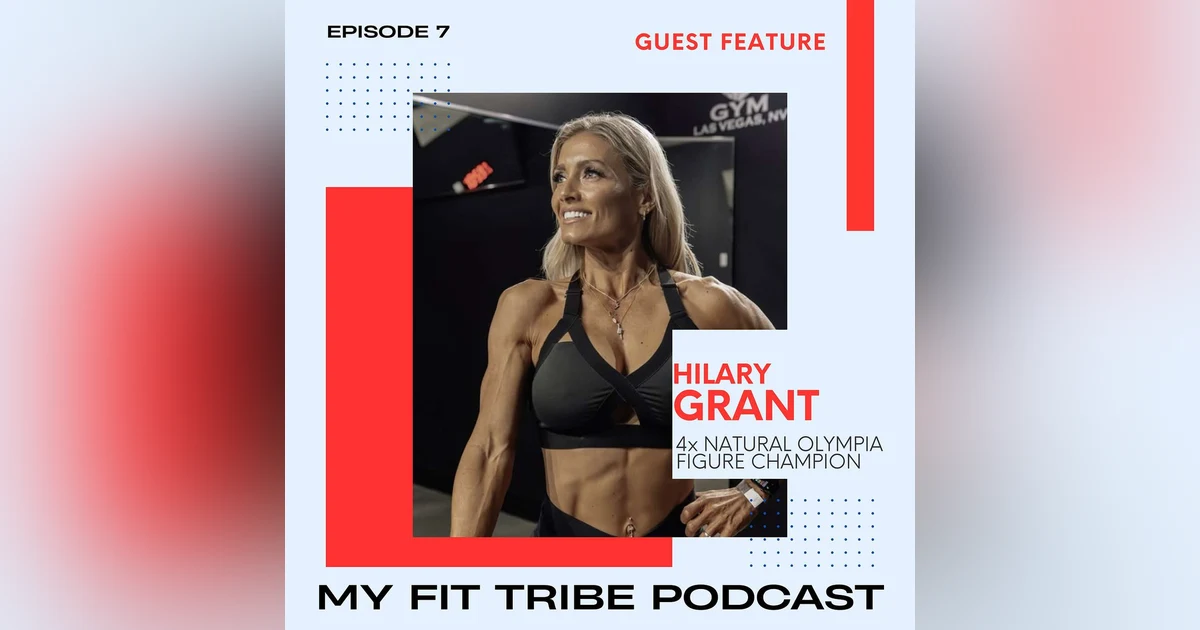


Happy New Year, Fit Tribe! To kick off the year, I’m thrilled to share my conversation with Hilary Grant, a four-time Figure Masters Pro Champion bodybuilder. We chat about her inspiring journey, fueled by hard work and discipline, and she offers some powerful tips to help you start the new year strong. Whether you’re setting goals or looking for a fresh perspective, Hilary’s energy and wisdom are sure to inspire. I’m excited for you to hear it—let’s jump in!
Check out MY FIT TRIBE on Instagram and Facebook for a chance to win the planner we talked about in this episode
Throughout my own life and fitness journey, I have had the privilege of meeting incredible people who've shared valuable insights on mindset, health, fitness, and spiritual growth. The profound impact of this knowledge on my own life has inspired me to share it with all of you. I'm Erica Sweeney, host and founder of My Fit Tribe Podcast. Join me as we explore inspiring conversations with experts, thought leaders, and everyday heroes who offer their stories and practical tips to help you on your own journey. From nutrition and fitness to mental well-being and personal or spiritual growth, our mission is to empower you to take charge of your health and live your best life. We are more than just a podcast, we are a community. Through coaching, a wealth of shared knowledge, and a strong support network, we are here to guide and encourage you every step of the way. Come be a part of our tribe. Happy New Year, FitTribe! To kick off the year, I'm thrilled to share my conversation with Hilary Grant, a four-time Figure Masters Pro Champion bodybuilder. We chat about her inspiring journey fueled by hard work and discipline, and she offers some powerful tips to help you start the new year strong. Whether you're setting goals or looking for a fresh perspective, Hillary's energy and wisdom are sure to inspire. I'm excited for you to hear it. Let's jump in. First of all, thank you again for joining me. I wanted to do uh an episode to air on the first of the year because we come out on Wednesdays. And I love all you do, and I know I'm so glad that we met and our paths crossed. So I'm like, we really have to just talk to people about first about bodybuilding and just about um goals and nutrition. And you said something in a post recently that we'll get to, but the non-negotiables, which is something I talk to people about all the time. Like you have to establish those non-negotiables. Like, so I'm having Hillary Grant on my podcast to talk about all the things. So thank you. Well, that's you're welcome. Thank you. That's exciting and a little nerve-wracking, but I'm so excited to be here. So you're a four-time, right? Natural Olympia figure masters champion. Four-time, yeah.
SPEAKER_02Yeah, that was, I'll be honest too. I went into this show a little bit different than I usually go in. Um I usually am kind of like, I'm like, I have this expectation for myself, you know, and I and I'm like, yeah, I'm going to win. I have this expectation. And I was a little disconnected to the ending with this one, which made it a little, so it made it different, but now in hindsight, it made it better for me. Yeah. Um, but I was unattached to the to the placings. I was just showing up and doing my best. But what happened is when we so we did classic first, and I ended up taking first place in classic, and I stepped off the stage, and it just, I was like, I don't, I don't know that I should have won. I feel weird. I I'm looking at all of these other physiques and I'm seeing, you know, where I would pick her over me or where she would, you know, place higher in in, you know, maybe the glute section or the or the symmetry or whatever it was. And I was just having this weird, I don't know, such a weird psychological experience. And so I tell my husband, and I'm just like, and he's like, okay, stop, like, stop and allow yourself to feel that you just won. And and stop looking at uh everybody else on stage and just look at the effort that you put this year and what you did. And it I was like, okay, all right. And then later I got pictures back and I was like, I was able to look at it from a different standpoint and go, okay, okay, I could see why a judge would do this and over this, but I'm usually my my biggest critic, to be honest.
SPEAKER_03Yeah, but that's part of why you're so successful because you're always looking to improve on what you've done and you know what you can do and you put your mind to it. So thank you. That's that's your success. So I met Hillary in 2021 out at well, we first it was at Team USA in Vegas. That was fun. That was my first time going to Vegas. My dream that year was to go to Vegas. So to go out there and compete in Vegas from Wisconsin small town girl was like insane.
SPEAKER_02So even just Wait, it was your first time in Vegas ever? Ever. Yep. Yep, ever. That's amazing. First time in Vegas and you're competing in Vegas.
SPEAKER_03Yeah, uh-huh. And second time in Vegas was no, maybe it was my second time because we did see a UFC fight there. I apologize. Um but it was second time and it was competing, and then you know, the next time, then a couple months later was at the Naturo Olympia. And I remember walking in the in the big room of Nature Olympia with all the chairs set up the morning of to go get my makeup done right. And I I was just like, holy shit. Like, I'm here. Like, this is the image of what I have been picturing since the COVID and all the things that I never thought would happen. And little Erica Sweeney is in this big place, about to get on the stage with the most amazing competitors. Like this pinch me, right? And I start crying, and I'm like, I have to get my makeup done. So I'm going to the back and they have to put my lashes on. I'm like, my allergies, man, my allergies are so bad. Yeah, I could not stop crying. And they couldn't get the makeup on me. And I was like, all the things. I'm like, this is a I'm a train wreck, but that's okay because this is my train wreck. But it was so powerful, right? Such a cool experience.
SPEAKER_02I love that that was your experience with it because I feel like that every time I tell my kids it's like my Christmas. That's kind of how I feel. Every time we walk in to the natural Olympia, even that first day, I just there's this energy that is only there. And I love competing all throughout the year. And, you know, we've traveled internationally, and I love the way that feels. But there is just an energy and a feeling at Natural Olympia, and it's Christmas. And yeah, I just love it. I love it like you do. I don't cry. I now I'm like, dang, maybe I'm not feeling it deep enough. I love that that was your experience, though.
SPEAKER_03That's amazing. So, how would tell me how the bodybuilding journey started for you? When did you start doing it? How did you get interested in it? Okay.
SPEAKER_02All right. So, from a very young age, I loved the human physique. I and I loved the female human physique, and I loved women that looked feminine, but also had a lot of muscle. It was just so beautiful to me. And when I was young, they would play the Mr. Olympia on television. And I don't even know what network would play it, but they would play it. And I remember, I don't even know the age that I was, but I remember watching these women and they would do their routines. And I was just in awe with how they moved. So that was kind of my first experience watching something that had to do with bodybuilding. And then, of course, I liked being strong. I was, I was the girl that was trying to lift the most weights in weight class and um all of that. And so, and then later, you know, my husband and I got married, and um, you know, I kind of learned my husband's a nutritionist and has been a nutritionist for a really long time, and he's trained other women for competitions. And so just I learned all about the um, you know, the industry. And I learned that there was a natural way to compete and uh, you know, a non-natural, uh, a drug, a steroid way to compete. And, you know, I want to do the natural way. So I searched, researched all of the different natural organizations. And in I did my first show in 2000, um, 2004, because my daughter was not quite a year old. I gave birth to my daughter in 2003. And so I did my first show in 2004, loved it, loved everything about it, but I was terrified to get on stage. Right. Next level terrified. And and when I did it, for some reason they had figure and you had to do a routine. And what's so funny is my husband, who like understood just how shy and terrified I was to like get on stage and be in this tiny bikini, and not just in a tiny bikini, but like do these little, you know, half acrobatic things that I've that I'm doing in a tiny bikini. He would he would call his brother and uh sister-in-law over to sit on our couch and watch me do this uh routine to like get me used to see, and it was mortifying. But anyway, so um I did it then, but I was so scared that he's like, okay, there's the um there's the novice class and then there's the open. And I was like, I am only doing novice, I will not get on the stage twice. I was too scared. Well, little did I know novice is great, but you you can't win a pro card or anything not doing the open. And so I I had very little knowledge as far as that came. Um, I just looked at the criteria for what I was doing and just tried to abide by that. Um, and then we had some things go on in our family, and I had to take a long break. And I came back in 2016. And ever since 2016, I've competed. Um, this was my ninth consecutive Olympia.
SPEAKER_03That's amazing. I I'm tired just thinking about the one I did three years ago.
SPEAKER_02Oh, and I just I just wanted I loved meeting you. I just feel like we connected so well. As some people, you know how it can be. Some people are just so like tunnel vision. The only thing that matters is stepping on, and I just your energy was calming and fun, and I just I loved it. We laughed, we laughed.
SPEAKER_01We were about to get on stage in Vegas and we talked about X Nell. Just laughing, yeah. Mostly because I was definitely gonna pee on stage and you know I didn't, so that's good.
SPEAKER_03And again, when you're in that I being so nervous, I tell people my very first show was in 2019, and it was a pretty big show, especially for the Midwest. And I was so I didn't tell anybody. I mean, I had my immediate family knew, but didn't have any social media then, didn't tell anybody. I'm like, I don't, I'm so scared, like I am gonna fall on my face, or maybe I'm not gonna do it. And I got hooked so quick because it was such a rush to be like, I was so scared, but yet I got up there and I did it and I did well and I had fun, and it just changed my life forever. Like it was just the most it was the most defining moment in my life as an individual. I mean, my my family and my kids are number one, obviously, but that's a that's a group effort when you talk about that. Whereas bodybuilding, it's a it's your it's a you sport, right? You have control over it. So it was really for me just uh I went all in and just just this is this is fun.
SPEAKER_02It's really fun. I just remember I remember loving you and also being like, oh but I feel the same way.
unknownI'm just kidding, I'm just kidding.
SPEAKER_02But yeah, no, I I've never heard anybody say it like that, a defining moment personally, and man, I can relate to that very deeply.
SPEAKER_03Yeah, when you're you know you spend so much time raising your kids and you're doing the things and building the business and um trying to survive every day just because you're so busy. I remember with my kids all in school, I didn't even have time to go to the bathroom and still talk about bad another. You know, it was so overwhelming, and then just uh take that time to to commit to something that I had to be selfish about um was different for me. And again, something that was so uncomfortable and so unrealistic in my expectations, in my opinion, at that moment, um, was a game changer and I wouldn't change a thing. So again, it was that fun meeting. So you said you did your first show in 2004, but you had your you had Vaya in 2003. Is that what you're telling me? Yeah. That you got on stage a year after. What? Wow. And now she's on stage.
SPEAKER_02How cool is that? It is the coolest thing. So um uh we have four kids all together. Um, my husband's oldest has never competed, but Bowen or Marley and Braven have each competed at different times in their um in their lives, and Nivea has kind of got the bug as well. And so she's you know, she did her first show when she was, I think, 15 years old. Oh wow. And she went to um when we competed in Greece. And so so this little 15-year-old, her first show is an international show where these women are just like these women come from all over the world and they're just you know in tip top shape, and yet it's her first show ever. And um, and my son Braven as well. And and they both did amazing. Um they they did so good. But with when she competed, um, we gave her the green light. We're like, okay, if this is something you want to do, you can do it, but you're not, we never put her on a calorie restriction. We said, these are all the foods that you can eat. You eat them how you want, but no, we're not restricting your calories as a 15-year-old athlete because she was still doing all of the all of the sports. And so um when she was done, she had a, you know, she was the youngest by far and she didn't place. She did amazing on stage, but but she didn't place. And backstage, she just, just crying and just she's she's very hard on herself and swore she would never compete again. That would she would never do it again. And you know, sure enough, she's she's back here with me. So, and it's it's so fun. She's gonna take this next year off. I think they're gonna they're gonna try to have a baby, she and her husband. Well, they just got married what this this past year, right? Yep, in April.
SPEAKER_03So yeah, that's exciting.
SPEAKER_01Oh my god, it is exciting, yeah.
SPEAKER_03Yeah. Um that's lost my train of thought. I was thinking about babies. It got me a little distracted. Um, so let's you're also a coach, a concierge health coach. Tell me how long you've been doing that and what that all entails. Okay, we have been doing that since oh, you're making me go back.
SPEAKER_02I think since 2020. Um, like I said, my husband's a nutritionist and he's been working with individuals, teams, doctors, patients for, you know, 30 plus years. And we do everything on the nutrition side. So um, so our main job, our main business is optimal health systems. And that is where we teach doctors all about nutrition and health and supplementation. So we formulate our own um nutritional sub supplements, and then the doctors purchase them and and sell them to their patients and explain the importance of nutrition. And so we have an acronym that we go by, and it's fitness and it's focused, intense, thought, nutrition, exercise-specific supplementation. So those are kind of the things that we teach um all around, and especially with our um, you know, our concierge clients.
SPEAKER_03Right. So as far as the doctor's goal that you sell it to, we talk a lot on this podcast about a functional medicine, alternative medicine, because many people who have been in the space where you're working on your fitness and your nutrition find that the standard medical uh care doesn't always provide you with information or resources in order to explore those supplements or deficiencies and all that. How does that work with your relationship with doctors and clinics?
SPEAKER_02Yeah, so we have we have Cairos, we have MDs, we have naturopaths from all walks of life. We also have, you know, different individuals, like trainers and um nurses and uh nutritionists. So we we help coach every kind of um, you know, health professional out there. So, and we just teach all about the nutritional side. What we are really big on as well is blood work. So we have our own little system um where when all of your you go you would go through like Quest or any place that draws blood, and you would have they would run your panel and then it gets put through our system and we basically tell you through a nutritional standpoint uh you know where your deficiencies are. And so we're very personal when it comes to what you need for diet, you know, your nutrition, for exercise, and then of course for your supplementation.
SPEAKER_03So important. I first got my blood work done for deficiencies probably 14, 15 years ago because I wasn't getting the answers that I was looking for. And it's there's so many different things to check and so many different things to balance. And then once you have it balanced, then they could get off again. So it is one of those things that you have to continually go back to get tested and work on to find out the right balance for you.
SPEAKER_02100%. So that is actually one of my non-negotiables is blood work throughout the year. And I would say I probably do it a little bit more than most, and probably not as necessary as much as I do it. But because sometimes, like at the end of the season, my diet and my workout schedule change so much, I like to kind of stay on top of it. Um, so I get blood work done a little bit, a little bit more often. So, but I would say everybody should get their blood work done at least twice a year, you know, just because you're right, things change. And depending on the stressors in our lives, depending on the season, just you know, of year, um, depending on illness, everything can change as age, right? As we get older. Yeah, we started on that one.
SPEAKER_01Things just freaking change. Yeah.
SPEAKER_03That's a whole nother conversation. But the season of life, too, and you know, just everything that happens, you you like stress levels, and it gets really hard to balance everything in order to feel good, which is hard because it shouldn't be so much work.
SPEAKER_02Yeah, no, for sure. And a lot of our clients that come to us actually are people that have that are um, you know, really high performers, and uh most of them are really successful in their businesses, successful entrepreneurs, and they've come to us because for so many years they've kind of put their health on the back burner because they've spent, you know, years upon years building their business. Right. And so they finally get to a point where they're not feeling well, they've gone the medical route, they've been put on different medications, and they just still aren't seeing the results that they feel like they should. And so that's kind of where where people hire us, and we kind of look at it from, you know, what can we do holistically to fix the body? And then once we've done everything in our power holistically, then maybe we need to go, you know, the more medical route. But until we've done everything holistically, you know, we shouldn't jump there.
SPEAKER_03Is there something that you guys find more more common than not as far as a deficiency goes? Like when you're seeing all these tests come back?
SPEAKER_02Yeah, uh so it kind of depends on what they are experiencing. But uh we see a lot of low vitamin D, a lot of low vitamin D, especially in the COVID era when when everybody was was coming down with COVID. So uh really low vitamin D. The other thing that's very interesting is when we're working with a lot of the men, they've been put on testosterone and it's creating all of these. So while they might have a little bit benefit in, you know, the energy production, right? It's creating all of these other things that they're having to deal with. Um, and so they're feeling sometimes more sluggish in a way. And so um higher hematocrit, you know, where they're just their blood's not moving well enough throughout the body, that kind of thing. Um, so a lot of what we do is actually help people at least lower the amount of testosterone or get off, get off testosterone.
SPEAKER_03So wow, just my other supplements. There's just so many options for people to try.
SPEAKER_02Interesting. So many options. And getting your blood work is is key, just knowing where all the you know deficiencies fall. The other thing that it provides us is a really great way to see how we process the foods that we eat. Because some of us, you know, some of us break down proteins great and have no issues there. Uh, some of us break down fat really well. So depending on that too, we kind of manipulate the diet to where, you know, we know which enzymes we need to provide the body because the body just doesn't break it down um well enough.
SPEAKER_03So and there have been so many advancements in the cellular health industry that I feel like this is just gonna really be next. It's gonna go so fast, the technology to really make it easier for us, hopefully. Yeah, yeah, yeah, for sure. So you post a lot of great nutrition content. So, and I love it when you cook, because then I'm like, oh, I can try that. So thank you. How do you come up with your recipes? So, what and what do you suggest to people who are listening? How to know what to eat, how to how to start that better nutrition process as we start the new year.
SPEAKER_02Okay, so I think something that's really been a great tool that we use sometimes is the 21-day challenge. And what that is, is it's just 21 days of doing these things and staying away from these other things. And nutritionally, the things that you stay away from are carb, or sorry, carbonation, so no carbonation, and that includes alcohol. So no carbonation, no alcohol. Um, and then no white flour. So, and and we're big fans of whole grains, but they have to be whole grains. So, so no white flour and keeping your sugar under. 50 grams of sugar daily and then no fried foods. So just those four things will make a massive difference for most people because most of us are having carbonation on a daily basis. Most of us are eating an excessive amount of sugar. Most of us eat fried foods. Even if we're thinking, well, I don't eat anything deep fried. A lot of people, you know, don't realize when you pour oil on your pan and then you cook your chicken on top of the, you know, that's frying it. So staying away from anything fried. And then, you know, what no white flour, your health will improve immensely. And then more raw fruits and vegetables. Everybody can benefit from eating more raw fruits and vegetables.
SPEAKER_03What is I drink a ton of carbonated. I'm just drinking my soda as you're saying that. And then I have like Clareboon all the time. So what is it about the carbonation that affects us negatively? Because I do not know this. Yeah.
SPEAKER_02So the carbonation is just super acidic. So now we're just putting a ton of acid in our bodies when we're drinking the carbonation. And acid, as we know, when our body isn't full of uh when our body's full of acid, well, that's when pathogens can just run wild. So it's easier to get sick, it's easier to feel sluggish. Um, it's just, it's just overall gonna bring down energy levels and make you sicker more often.
unknownYeah.
SPEAKER_03Well, I'm gonna start with that tomorrow. Thank you for the tip.
unknownYeah.
SPEAKER_02Because we're time to finish this bottle first.
SPEAKER_03I'm just kidding.
SPEAKER_02And then the other thing is that with a lot of the carbonated beverages that we consume, uh, you know, either the sugar content is through the roof or they're using um artificial sweeteners and both are terrible. So the the artificial sweeteners will just attack your uh your uh microbiome in your gut. So, and we know, especially lately, just how important probiotics are. You know, the gut, um, the gut brain uh connection is vital. And when we are destroying our gut bacteria, then we don't think as clearly. Um, we get sick more often. Um, so there's just there's just a whole lot of reasons to keep, you know, keep carbonation out of our lives.
SPEAKER_03So much. But that applies like just plain carbonated water, that also is not good. Yeah.
SPEAKER_02So what's funny is I my husband and I would always have this like discussion, like, no, it's it's not that bad. And and we have a client and he was like, I do not drink soda. And he was dealing just with a lot of overall inflammation, just basic um acidity in his in his blood work and stuff. And and so he's like, I don't drink any soda, it doesn't make sense. And then as we got to talking, he was like, the only water he was drinking was this carbonated water, and he was going through like seven, eight cans of them a day. And we're like, okay, so he stopped that, and um, inflammation has has gotten so much better since he stopped.
SPEAKER_03So interesting. So I will take note. Let's see again. I learned I learned so much new on this podcast. I love it. So nutrition, so that's great tips, and it's not too overwhelming because I think sometimes, especially when we go into the new year, you have all these that put these expectations on yourself, and then you set yourself up for failure because they're not attainable. Yes. Whereas if you just start start with five things, you know, for the first two months, even and just get comfortable with that before you make any more changes. 100%.
SPEAKER_02I think I think sometimes you're exactly how I am. I'm like, if I I read in the compound effect years ago that some people are toe dippers and some people are jump right in, you know, and he was talking about a cold, a cold pool. Some of us want to go a step at a time and feel the cold and get in and get used to it, get in and get used to it. Well, my husband's different than that. He is a, I will jump in and I will be fine. So we go about things very differently. So some of us can make those big, gnarly goals and stick with them, but I would say the majority of us are toe dippers. So just gradually making changes will have a huge impact. And also, I am such a big fan of grace. And allow, we all have to allow ourselves a little bit more grace. You know, of course, we want to help hold ourselves to a really high standard. And I get that. And improvement should be really important and progress. I think progress is imperative. I also feel like grace is imperative. We just can't be so hard on ourselves that then we're, you know, what happens when we, oh, I've messed up on my diet, and then what happens? You know, we just go through an entire row of Oreos, and you know what I mean? It when you're too hard on yourself, you just move backwards instead of just being like, okay, I'm human. I had a day, and tomorrow I'll improve.
SPEAKER_03Right. Yep. But then there are the non-negotiables. So there's certain things that you shouldn't. I mean, uh there are things that will happen, but um like I was speaking to somebody and they just sat at their desk all day, so they weren't getting up and moving, which it's I've been there, it's not good for the body at all. And then after work, they were so tired they didn't make an effort to go for a walk or get any activity. I'm like, you've got to do 20 minutes, even three days a week. Make that non-negotiable. You can't be so sedentary because you're just gonna feel worse. It's so bad for the body. So there's certain things I think you have to establish when you set up those initial small steps that you make some of them the non-negotiables, right? Agreed, 100%.
SPEAKER_02And I love that you talked about the movement thing because uh I'm I feel like movement is a catalyst for all kinds of other things, right? You know, objects, emotions, stay emotion. So I just feel like once we start to move, the hardest part is the start. And if we will just start, we will feel the momentum, we will feel, you know, different. I so in the mornings is my my cardio. Um, and it's a non-negotiable for me. I do my morning cardio, and I get more out of it mentally than I do physically. My it's my time where I clear my brain, where I get a good sweat in, and you know, I will sometimes listen to a podcast, sometimes I'll listen to music. Um, it just depends, but it is like this freeing moment of just my time. And so I would say not everybody has their mornings for them. You know, some people have very chaotic mornings. I like the morning thought because I feel like sometimes the day can get away from us, or we never we can't control what happens later, but I can control my morning. So my morning movement is a non-negotiable. And I feel like everybody has to find their movement in the day, and that has to be a non-negotiable because it will be a catalyst for so many other things. You know, getting your your blood pumping, getting those endorphins from movement, it will change how you feel and change the trajectory of your entire day and outlook.
SPEAKER_03Absolutely. I I love to be able to go work out in the morning. I couldn't for many years because of because of work. So when I when I do, or when I work out anytime, really, that is my time with myself. You know, that's that conversation that goes on, that's that calm without hearing anything. Um, and when I'm able to do it in the morning, the rest of the day, even if I have a ton of stuff to do, it seems a little bit more um possible and a little less overwhelming. Whereas if I wait to work out until the evening, by that I'm tired and everything hurts, and then I'm thinking about all the things that happened. Um, so for me, too, it's it's way more mental as well as physical. But I have to reset and spend that time within here in order to 100%.
SPEAKER_02Yeah. And then so a non-negotiable for my husband is at 4 p.m., he clocks out of the office because honestly, if if we didn't have a time, my husband would work 24-7. He loves it. It's his, you know, it's his everything. He he loves what we do, he loves health, he loves um our business. And so, but at 4 p.m. is my workout time. And even though um Autumn kind of takes care of all of my plans, my husband is still my trainer in the gym. And so 4 p.m. is clock out, and that's when I work out and he comes in the gym and he trains me. And that has been really beneficial for us as well, because it's his time to unplug, you know, and then then there's times that he's he pulls out his phone and starts, you know, answering. And I'll be like, uh uh uh-uh. And he'll be like, okay, okay, I'm sorry, I'm sorry. And and we get back to it. But it's basically his way to kind of start unwinding at least for an hour or two, because then he gets his workout in and then he'll get back into work when we're done. But at least we know for an hour or two, he can unplug, get his heart pumping, you know, make sure I'm getting the most out of my workout for my goal. And um, you know, I I think it's one that has been one of the best non-negotiables, personally for me, personally for him, but also as a couple.
SPEAKER_03That's really powerful. You really, it's really good for people to sit down and think about what people, what their non-negotiables are for this next year. Like what will make the difference? What do you need to establish? Write it down, figure it out.
SPEAKER_02Right. Uh huge. I'm I love the concept of planning your year before the next year happens. So December for us is filled with um, you know, we have our huge calendar on the wall because we have to get down all of the seminars that we'll be doing in the year. We have to get down all of the shows that I'll be doing throughout the year and get them all planned so that we can like have a visual in front of us, okay, this is what our year is gonna look like. Um, so yeah, I'm a big fan of planning before it happens because otherwise it's just life catches up to you. Too chaotic. Too chaotic for sure.
SPEAKER_03So, what's your recommendation for people other than getting moving as far as the physical fitness side of things? Um, if people don't have a lot of experience in strength training, or you know, what's a good way to start that goal going into 2025?
SPEAKER_02For somebody that wants to get in the gym and lift weights, is that is that kind of the question? Yeah, or even just start a workout regimen.
SPEAKER_03Okay. Like I think being active is good, but I think sometimes we have to do a little bit more than just be active.
SPEAKER_02Okay. So I truly believe for anyone that is able to hire a trainer, I think even it's like going to school for your health, right? So just even hiring a trainer for three months and getting workouts laid out for you and a plan so that you understand, you know, you understand how to hit different body parts and and why I'm doing cardio on these days. And, you know, just kind of that. So being able to hire a trainer if somebody is able can be life-changing. And it would it's not something that you need to do forever if if you're, you know, not an athlete or a competitor or that kind of thing. Um, but yeah, for at least a time. If somebody does not have access to um, you know, the funds to to have a trainer, there are so many great like tips and tricks on the internet. You can research oh, so much. That's probably where people are like, no, there's too much, you know. So I would say a great way to start is let's say five days a week. Three out of the five days a week, you're doing something that is either weight training or using your body weight to train your body, right? Right. And so uh three days a week training your body and um 20 to 30 minutes. Yeah, 20 to 30 minutes. And the other two days are more intense cardio because I believe seven days a week we should be moving our bodies if we're going for walks, if we're on a treadmill, if we do bikes, if we hike, if we swim, whatever it is. I feel like seven days a week our body needs the movement. Now, two times in in that week, it doesn't have to be as intense, of course, but we still need the movement always. And something that we've has helped um some of our clients is creating their health identity trait. So creating a name for themselves, even if they're not quite there yet, creating a name for themselves that they can live up to. And they can say, So, for example, mine is the feminine David. Um, and I kind of look at it like David and Goliath, because I feel like when I step on stage, I'm typically one of the smaller gals on stage, but I can defeat the Goliaths if I just do my thing, if I stay in my lane and train the way I'm supposed to for this body. So that's mine. Um, my husband's is um the Zane warrior. And because he loves Frank Zane. I don't know if you remember who Frank Zane is, but he was oh yeah, okay. So, and he's kind of my husband's build, a little bit smaller. Um, but he also wants to be a warrior, which means you know he can protect and provide uh for his family. And so just creating a health identity trait can be really life-changing. And we've had some beautiful names. Um, we've had um the oh, the sexy biohacker. Um, that's one of our clients' names because he always wants to like he wants to be sexy for his wife, but he also wants to be on top of the latest, greatest things coming out, right? Um, we've had the ferocious Buddha, which is such a great way to, you know, I want to be able to attack my life, but I also want to be peaceful and show nothing but love, you know. So just creating a health identity trait, something that you can always refer to. No, this is who I am, and what decision would this person make?
SPEAKER_03There's some power in kind of separating who you think you are right now from your ultimate self, right? Or an alternate personality. I mean, when I started competing and didn't tell anybody and then started to, you know, I created a different Instagram that wasn't me because in my mind it's not me, you know, but it is. But it really it just takes away some of that fear when you pretend it's not you.
SPEAKER_02Yeah, no, I there's it's so true, right? Yeah. The book uh Alter Ego is such a great book, all about that. Um, you know, and it's like it's like Beyoncé when she performs, she's like Sasha Fierce, right? She's right, right, right. And I think that's I think there's a lot of value in that, right? Because as a mother, I'm a nurturer and and uh lover and I and I and I'm soft and and loving and kind. And but when I step on stage, I gotta be something a little bit different, right? Yeah, you're fierce, you know, you gotta be fierce when you step on stage. So yeah, yeah, I like I like that concept, you know, allowing yourself two different personalities a little bit.
SPEAKER_03So again, people going into new year, we can establish five basics for nutrition. We can get up and moving seven days a week and focus on set up our non-negotiables for our fitness. Mindset, we can create our alter ego, so to speak. Anything else mindset-wise that you would recommend to listeners to really kick off their new year? Mindset-wise? Yeah. Journaling. Do you journal every day?
SPEAKER_02Uh so I'll be honest, there's times when I'm very vigilant and there's other times where I'm not. But I do try to jot down, um, even if I'm jotting down my daily to-dos, I feel like there's power in pen to paper. There's just power in pen to paper. So um, but journaling, especially when you're just getting going, is really, really valuable. And there's there's this great, I'll send you it when we get off. I'll send you this link to it. But there's this great journal that I just got on Amazon and it gives you prompts and you just answer them. It's very quick. It's maybe five or 10 minutes in the morning, five, 10 minutes in the evening. And all it's doing is helping you process, you know, the kind of day you're gonna have and getting back and be like, okay, what did I experience today? And it's and it's just, I think it can be so life-changing. And I do feel like writing down your goals, setting the expectations for the next year, imperative. It's imperative. And I feel like I feel like we all should make health our number one priority because um, so one of our one of our clients, uh, his name is David Meltzer, and he says, When you have your health, uh, you have unlimited wishes. When you don't, you only have one. Right. When you don't have your health, it's the only thing you want. You just want to feel good, you just want to feel better. So I feel like having our health and making it a priority will improve every other part of our life. Every other part.
SPEAKER_03And there's so many people I know right now that are going through some serious health crises and diagnoses that are just, you know, just one day your life just changes. It's just you're very true, and that we need to value our health while we have it. And again, it takes work, but it's worth it. It's worth it, it's 100% worth it.
SPEAKER_02Yeah, until so right now a lot of us are in dis-ease. We're just in dis-ease. But if we're not careful, that dis-ease will turn into disease. And so, you know, while we have the opportunity to change things and to improve things, um, we really need to take advantage of that. And I'll say this too. So, my brother, um he's my younger brother, and he is as oh, how can I say it in the nicest way? He is a, you know, he's a rugged hunter, big, burly, you know, bearded uh guy. Okay. And so for years we've talked about health. He he's he loves to poke fun, right? You know, uh I hadn't when I first started dating my husband and we went out to dinner, I didn't know men ate salads as a meal. I truly had, I know that sounds ridiculous, but I grew up with steak and potato eating men in my life. And so um he likes to, he's always liked to poke fun. Well, this last year he's really taken his health seriously because he's had a few things happen. My father passed away a few years back and it was really impactful for my brother. They they were best friends. And he told me something that was that I sometimes think we take for granted. He said, if you would have told me how much better mentally I would feel by eating better and working out, I would have done it a long time ago. So I think sometimes we're doing it because of, you know, we're like, okay, I need to fix blood sugar problems or my cholesterol's too high, or um, you know, aesthetically I want to look different. I need to lose weight, whatever that is. The first thing that will start to improve is the way that we think. And that will impact everything. It'll change everything. So I think if we all understood that we would feel so much better mentally by taking control of our health, we would do it immediately.
SPEAKER_03Yeah. If only, you know, you you don't want to end up at some point in your life where you wish you would have. I mean, that was like competing was uh, I don't want to end my life and say I could have, but you know, I that's why I started the podcast. I don't want to say I could have, but but that goes with your health too. You don't want to end up sick and go, well, I wish I would have. Maybe made an effort to care about my health. And for those around you too, your family needs you there, right? For sure. 100%. So now that you're we're gonna go back to your bodybuilding real quick before we wrap this up. So your postseasoned, um, how that after season is hard, was hard for me. Just the goal changes, you know, you've competed every year. So maybe it's a little bit different when you don't have that goal ahead. But but how what how are you feeling? And what does it look like for you for 2025?
SPEAKER_02Yeah, great question. So, how it looks for me that is a little bit different than it's been in the past. In the past, after I've competing, like like you say, uh, when competitors finish, it's like, I don't know what to do with my hands. Like, what am I doing here? Right. Um, because we have these big, gnarly goals that take up a lot of our time. What happens for me is my non-negotiables kind of work in seasons. So from about uh, you know, the end of December until mid-November is really hardcore focused on bodybuilding. But my family's always first, and then we have our business as well. But but bodybuilding is a big focus for that time period. When I finish on November 11th or whichever day that we actually finish, I go into full fun family mode. And and fun and family fill my days um until about right after Christmas, really. And I still, I still get my movement in. Um, you know, I'm still trying to stay hydrated. I still make protein a priority, but I am not crazy hard on myself when it comes to diet because there are little things that I'm gonna give into constantly, you know, throughout that time. So um, yeah, so that time I really allow myself to enjoy my family. And what's been different this time is that I've had to fight both sides of myself. I've had to fight the, oh, your body's changing too quickly. You shouldn't be putting on fat that fast. And this time it's not there. This time, like I'm like, nope, I'm I'm here and I'm enjoying life. And I think the big change for me is being able to witness my daughter working through those emotions that I've had to work through for years and understanding we have seasons, you know, there are seasons in our life, and this one is about, you know, family and fun, and we don't have to constantly be so hard on ourselves. So um that's kind of what I do about now. Now, as far as 2025 goes, uh we almost go every other year with some international competing. And next year we're gonna go really hard on international competing. I'm actually super excited about it. In May, we will be competing in Tokyo. Wow. I'm trying to think of all the different times and places that we're going to. Um, it's going to be Italy. And then we will also be competing in Argentina and then possibly I think Mexico. So we're we're gonna be biting off some pretty big things next year with international competing and and traveling. So I'm really excited.
SPEAKER_03And that's a long season. I mean, when you're starting your season on the stage in the spring and you're ending in November, I mean, that's a long time for your body to be working so hard. I mean, not the workouts, but it's just you know the leanness and the ups and the downs and the just it's it's a hard on the body.
SPEAKER_02Yeah, I will say that is one thing that I'm I am a little bit different on with than most competitors. Um, I when I start to compete, I try to get in at least five or six shows, and I do usually start about May. Now, this last season we did it a bit different, and I didn't start competing until September. So I competed from um September until um November, and that was a little different for me. Um, but I like the rigidness of competition season.
SPEAKER_03Hey, you're a badass. That's awesome. Oh, well, thanks.
unknownSo cool.
SPEAKER_03Well, before we wrap up, I have a couple questions that I ask all my guests. So it's a two-part question. Okay. So the first question we'll go back to when you were at your first show in 2004. Okay. If you could have a conversation with that Hillary today, what would you tell her? Wow.
SPEAKER_02What would I tell her? Enjoy the moment on stage. You only have one time at a first, you know, you only get one first. And so I would just tell her, you know, you're starting a lifelong career. Enjoy this first time on stage. You know, because I look back at it now and I was so fearful, you know, fear just engulfed me. Um, but I did it, I did do it, and that's that was most important. But yeah, I would just be like, calm down and just enjoy it, you know.
SPEAKER_03Right. Yeah. So let's say that now, Hillary today, you can have a conversation with Hillary of the future. Let's say 20 years, whatever, you can pick out old she is. So you're sitting down and you're talking to her. What would you ask her and what would she tell you back?
SPEAKER_02Um Wow, I think I'm gonna get emotional as as we end this. Uh, and I didn't think I would. Uh I would ask her, did you conquer fear? You know, um, because uh fear has kind of held me back in a lot of different ways. In and and I just mean kind of uh fear, uh perception of others, that kind of fear, you know, fear of the unknown. Um and I would just say, you know, did you did you conquer fear? Did you did you at least look fear in the eyes and move through it? And hopefully she'll say, yeah, I I did. So and we work on that daily. So hopefully that's something that we'll continue to do 20 the next 20 years.
SPEAKER_03I'm pretty sure your future self is gonna tell you that you are a badass and you did look fear in the face and you did well. So thank you. Thank you. Thank you for being on my podcast with me, and I wish you the very best for 2025. And I hope that our our paths cross again. Hope maybe on stage. We'll see if I make it up there again. But please do.
SPEAKER_02Oh, I would love it. I would love to see you again on stage.
SPEAKER_03I would be very fearful, but I would still love it. But you'd be looking that fear in the eye. Oh, that's right. That's awesome. Thank you, Hillary. Thank you. Thanks for listening to My Fit Tribe Podcast. Tune in weekly for our latest episode for more health and wellness insights and inspiration. For more information, visit myfittribe.org. Please note that the opinions and comments presented here are those of the guests and do not necessarily constitute medical advice or the opinions of MyFit Tribe. Copyright 2024, all rights reserved. This podcast is a production of MyFitTribe LLC.