Heather Abernethy MD- Trauma Informed Care
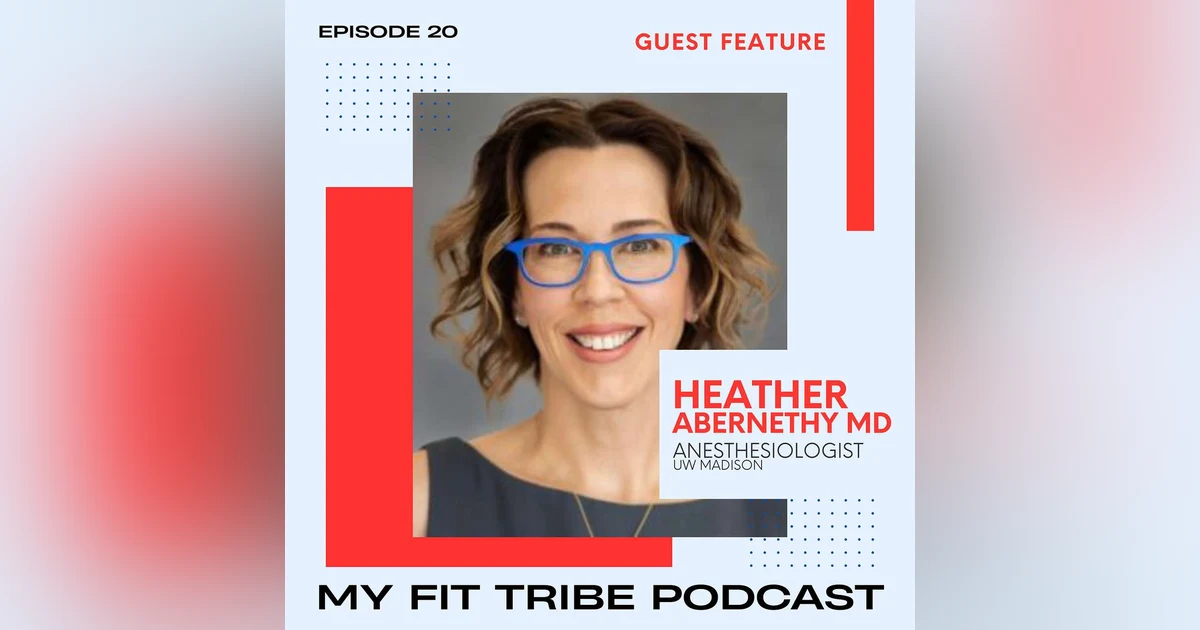


In this episode of the My Fit Tibe Podcast I sit down with anesthesiologist Heather Abernethy MD. WE discuss trauma-informed care—and the profound impact it has not just on patients, but also on healthcare providers.
These principles we discuss can be applied to all of us in our everyday lives, helping to improve communication, reduce stress, and bring more kindness and mindfulness to our lives.
Throughout my own life and fitness journey, I have had the privilege of meeting incredible people who've shared valuable insights on mindset, health, fitness, and spiritual growth. The profound impact of this knowledge on my own life has inspired me to share it with all of you. I'm Erica Sweeney, host and founder of My Fit Tribe Podcast. Join me as we explore inspiring conversations with experts, thought leaders, and everyday heroes who offer their stories and practical tips to help you on your own journey. From nutrition and fitness to mental well-being and personal or spiritual growth, our mission is to empower you to take charge of your health and live your best life. We are more than just a podcast, we are community. Through coaching, a wealth of shared knowledge, and a strong support network, we are here to guide and encourage you every step of the way. Come be a part of our tribe. In this episode of the MyFit Tribe Podcast, I sit down with anesthesiologist Heather Abernethy. We discuss trauma-informed care and the profound impact it has not just on patients but also on healthcare providers. These principles we discuss can be applied to all of us, helping to improve communication, reduce stress, and bring more kindness and mindfulness to our lives. Enjoy. Today I'm joined by Heather Abernethy, an anesthesiologist at the University of Wisconsin-Madison with a specialization in trauma-informed care. Heather works to equip medical professionals with the tools to create a safe space for patients while helping them navigate self-care and reconnect with their sense of purpose. Hi, Heather. Thank you for this conversation. Hi, thank you for having me. We were talking a little bit before the podcast about busy life and taking a moment to pause. So there's a lot I want to cover, but let's start, let's back up a little bit at the beginning. What happened in your journey to bring you towards becoming an anesthesiologist?
SPEAKER_01Well, I always wanted to be a physician, a doctor. So that was my plan. And I actually started out in general surgery. I thought that I wanted to be a surgeon and I loved the technique of surgery. I loved doing surgery. But there were a few things that happened that made that untenable for me. But I loved the operating room. There was nowhere else that I wanted to be except the operating room. And it worked out really well because as a surgeon, you have a clinic where you see patients, and then you have your time in the operating room. As an anesthesiologist, I'm in the operating room every day. And I love it. I love the energy of the operating room. I love the dynamics. I love the physiology. I am looking at a monitor and it's telling me moment by moment what is going on. What's this person's heart rate, their blood pressure, the amount of oxygen in their blood? And it is really fascinating. It's still after over 20 years, it's still fascinating to me.
SPEAKER_00I can't imagine. After having surgery, my first surgery uh this past year, it was my first time being under anesthesia. And that is a different experience. For sure. For sure. So as you progress through your career, how did stress impact your life? That's got to be one of the most stressful positions in a hospital with what could happen. Let's talk a little bit about what that environment looks like.
SPEAKER_01Yeah, it's a really challenging environment, not just for an anesthesiologist, but for all healthcare providers, uh, especially now post-COVID and having an extreme shortage of healthcare providers. And we're noticing that. For me, when I started, I was in private practice. I worked uh at a hospital where I did a lot of uh high-risk OB. So I delivered babies, you know, doing the anesthesia during epidurals, C-sections, uh, emergency deliveries. And that was incredibly stressful. Um, the stress that you walk out of a room where something just really disturbing, you watch something really painful or difficult, and you walk out of the room and you have people waiting for you to just go right into the next room, and you go and you go, and I would work for 24 hours at a time, and sometimes step out of a room, have some tears come down my face, wipe them off and walk into the next room. And you just go, and there's no time for that pause, and no one teaches you what to do. What do you do when you go home? How do you shed all of that that you've been carrying with you or you observed? And we don't learn that. And we don't learn really how to be emotionally with our patients, and we don't learn how to be emotionally with ourselves. Right. We're just taught to just keep going. And you keep going until you don't anymore. Right. And what does that look like? That looks like burnout.
SPEAKER_00Yeah.
SPEAKER_01Right. Which we have a huge epidemic of burnout among healthcare providers. Pretty much anyone who could have retired in the last five years has retired. And what we're seeing right now is a huge um scarcity of providers who have a lot of experience. This is especially in the nursing profession. It's a lot of new nurses who are out of nursing school and they are working really hard and they are trying their best, but they don't have the experience of nurses who've been doing this for 20 years, 30 years who are helping them. And so we're seeing a lot of burnout in that field also.
SPEAKER_00I can't imagine the stress level. I'm not a nurse for a reason that would just me too. And the empathy that you feel how you not take it home. Was there a moment then during your the last 20 years where you got home from work one day and you decided I can't do this. I need to make a change.
SPEAKER_01I did do that. I did. I changed from private practice to going to the university. It's a different setting, a different environment. Um they both have their pros and their cons, but I find this to be much more humane for me. I'm able to spend more time with my family, spend more time with myself, and I've found that that's benefited everyone.
SPEAKER_00Yeah, for sure. Oh my goodness. So what does trauma look like when you are the NSC adjust and you're dealing with a patient and you're dealing with trauma care? What does the conversation look like first with the patient?
SPEAKER_01So it starts with having a lot of curiosity. And I'll talk a little bit about trauma-informed care, how that impacts when I'm interacting with a patient. And just for an example, I had a patient that I took care of who was coming in for his third attempt at a surgery. The first time met his anesthesiologist and immediately after left the hospital. The second time made it into the operating room. But when the mask was just abruptly put over his face, the anesthesiologist canceled the surgery, said he's like dangerously out of control.
SPEAKER_00Oh my goodness.
SPEAKER_01And so the third time this person was coming in, I was assigned to take care of him. And what was really interesting is that all the things that people said, like this is a difficult patient, needs a lot of attention, demanding. But when I spoke to him, his behaviors they made sense. Right? I understood that, okay, this person's behavior, all behavior is communication.
SPEAKER_00Right.
SPEAKER_01So it's what is this person trying to communicate to me? What is their stress response? What's going on right now? And this person was able to share with me, you know, I came from an abusive household. I had a chronic alcoholic father, my mom wasn't around. And now I'm in a situation where I have no control and people have power over me. And that's terrifying. And also the fact that he felt like my body's just taking over. I can't control what my body's doing, that that's terrifying. Right. And so shifting this medical paradigm that we have, just that it really applies to all areas, of looking at someone and instead of saying, What's wrong with you? asking what happened to you. How have you tried to deal with it? How have you coped in your life? And then instead of, well, as an anesthesiologist, this is what I can do for you is how can we work together to meet your goal? How can we get you into the operating room, get you off to sleep in a way you feel safe so you have a successful surgery? So just starting with some open-ended questions was really all I needed to do. So when I met him saying, What do I need to know about you? What do you think is important for me to know? What happened with your last attempts that didn't work? What will work? Trusting that patients know what they need, you know, giving them autonomy, giving them choices and trying it out. And it worked. Like he told me what he needed, and then that worked.
SPEAKER_00Do you think that that puts more pressure on you? Because do you I almost feel like I'd feel like I'd have to have answers. Like, how did you I mean, you're already dealing with this job of being an anesthesiologist, and then all of a sudden you have to kind of take on more of an emotional aspect of it, which is helpful, but it also feels like that would add an extra layer of of pressure almost, you know.
SPEAKER_01Well, that's a great question. I think it's both and. So it does require some self-awareness to have other awareness, right? So I think of there are like guiding principles and um concepts of trauma-informed care. And you can know those, and I could list those off. But that doesn't make me a trauma-informed physician. What makes me a trauma-informed physician is how do I show up for you? How do I connect with you? Am I able to be present? Am I able to stay comfortable with your discomfort? Right? Can I stay regulated with someone who's very dysregulated? And you are right, that requires some extra work. Yeah. But the thing is that work, it's energizing. And it will it combats burnout. It helps you leave at the end of the day feeling seen, valued, connected, having a sense of humanity. And that's exactly what your patient will walk away with, also. Right? Like that's a biologic imperative for our survival to be connected. It is seen, right? So it's work that maybe at the beginning takes a little bit more, but it has great payoffs. And people are really eager, health care providers are really eager to learn about this. And it's not taught, and it's really a necessary part of being a good doctor, a good nurse, a good occupational therapist, physical therapist, whatever, a good human. Good. Yeah. Right? How can we show up? But that requires us to have a level of comfort with ourselves. And we're not taught that either. And it's not easy to learn. It's a practice. Right. A practice is a very important thing. It's a practice. It's always a practice. But that's all we have is this moment.
unknownRight.
SPEAKER_01Right. And how am I here in this moment? And it doesn't require you to be a great Buddhist meditator, right? You just have to be curious. Just be curious. And curiosity is so important because you can't be curious and judgmental at the same time. Right. So if you can be curious and be like, huh, what do I notice right now? Just start with that. What do I notice? Well, okay, maybe I notice a little bit of tightness in my chest. Or maybe I notice my leg is bouncing up and down because I really want to get out of here. Right. Or maybe I notice an expansion. Maybe I notice my seat in the chair. And when you just notice, that's mindfulness. Can you notice something different that you didn't know? Can you ask one more question? That's where you start.
SPEAKER_00I think with this, with society today, everything is so busy, right? There's so much information coming at us from every direction. Noise. Yes. Adding so much noise to our already noise-filled brains. Yes. So I can imagine that that takes a moment to really silence a lot of it. I'm just putting myself in that position. Imagining hypothetically. Hypothetically. So when you're you you've experienced this as an anesthesiologist, and you talk a bit about the importance of medical professionals to do that. What are characteristics of the medical professional right now that really shows that they need to incorporate a little bit more of that care into their practice?
SPEAKER_01They are overworked. They are stressed, and we can talk about the stress response and what that does to us. They are dissociated from their bodies. They don't have a good sense of interoception. Interoception is our eighth sense. It's actually what we notice going on in our body. So do I have a knot in my gut? Do I have butterflies? Am I hungry? Those are examples of interoception. And as physicians, we are trained, we are rewarded out of interception. We're rewarded for not noticing, right? Can you spend seven hours straight in a surgery and not need to leave? Right? Can you work for 24 hours straight and not complain? Can you be way overbooked in your clinic and just keep going? So there are numerous things in the system and individually that make it really hard to have that moment to notice. And because we've been trained and rewarded not to, it's really uncomfortable at first. And you build that skill and you build that practice. But again, it has a great payoff, not just in your profession, but with your friends, with your family, with yourself. And your patients will notice when you show up, how you show up.
SPEAKER_00It's hugely important. Can you talk a little bit about the nerve the stress reaction of the body and how that's incorporated with our reactions to stress and to people?
SPEAKER_01Yeah, definitely. So um our bodies were made to have stress, right? They were made to mount a stress response. Right. If you evolutionary-wise, like we needed a stress response so we could mobilize, so we could get away, we could fight off. But it was designed to mount a stress response and then to come back down to a baseline. So I'm not saying stress is bad. I don't want anyone to think that we should just walk around all day with no stress. Right. We need that. There's positive stress. So positive stress is let's say somebody, a little kid's first day at kindergarten, right? Stressful, but it's short-lived. And you're able to reassure them. That's positive stress. Then there's tolerable stress. So let's say that's something a little bit more significant, maybe the death of a loved one. But this can be buffered by supportive relationships. But then there's toxic stress. And toxic stress is pervasive, it's unrelenting, it doesn't offer any respite. It's this person's normal. And toxic stress can take a toll, it does take a toll on your body. You don't come back down to this baseline level. And over time, if you have a stress response and you don't get to come back down to a baseline level, over time with repeated stress, your baseline actually becomes your dysregulated state. And now that's where you live. And that's what has a toxic effect on your brain, which has a toxic effect then on your body. So when we sense stress, our brain picks that up. And then our brain says to all of our different systems, okay, cardiovascular system, increase your heart rate, increase your blood pressure, you need to mobilize. It says we actually need more glucose in our body to mobilize. So it does that. Then you have a release of inflammatory chemicals, cytokines. You also have your neuroendocrine system. It's saying increase adrenaline, increase cortisol. You need to go. And these are great in the short term, but long term, these things have a wear and tear effect on our body. And Dr. Nadine Burke Harris, she's the former surgeon general of California, and she says it really well. She says our stress response, it works really well when we're in the woods being chased by a bear. But what happens when that bear comes home night after night after night?
SPEAKER_00Right.
SPEAKER_01Right. And it used to be thought that that trauma, that adverse experiences were really rare. Like back in the 80s, I think, you know, the diagnostic statistic manual it's what gives like psychiatric labels to things. It it said PTSD was when somebody experiences something that is out of the realm of normal human experience. And fortunately, research has shown the myth of normal. Right. That about 70% of people have experienced at least one adverse childhood experience. And what we've learned is that your childhood experiences, what happens to you physically, what happens to you emotionally actually has a very strong correlation to what happens to you physically and emotionally as an adult. So these experiences become organic disease in adulthood. And they're incredibly common.
SPEAKER_00It's so hard to wrap your head around. Because there's so much that happens in life, and to hold that all in is very overwhelming to think about. Yes. Do you um get cues from patients when you are in with them to help you identify um what their state is, you know, obviously other than the obvious?
SPEAKER_01Yeah. So I try, I think maybe talking a little bit about what different states there are, and meaning like what physiologic states, what happens to our body with stress. So we can either be in this connected state where you're able to be present, you're able to be in the moment with someone, which means you can be calm, curious, connected, centered, courageous, creative, I call it the C state. But if you sense threat, which our brains are always sensing threat or looking for threat, right? They're prediction machines. They're always predicting what is going to happen based on what has happened to us. And so if you have someone who has an experience of trauma or a difficulty and they come into a medical facility, like most people are going to be looking for threat. They're not consciously. This is all on the subconscious level. Our bodies are scanning the environment. And so what happens is we have different physiologic states. We can go into hyper arousal, which is like a sympathetic state, the fight or flight kind of state. Or we can actually go into a hypo arousal. So the hyperarousal, sympathetic state is like, I can, I can fight, I can run away. Whereas the hypo arousal is like, I just can't. The world has become too much. I like I feel hopeless, helpless, trapped. This is where like shame exists. And so when I walk into a patient's room, I that's what I'm looking for. Like I never want to assume I know what someone's feeling or experiencing. I don't know that without asking them. But I can look for cues or clues. What is their body language telling me? What words are they saying? But what's underneath the Words also. And if somebody is in a sympathetic state, then sometimes they just look scared. Right. I just walk in and they look scared. Right. Or maybe they're they look okay, but again, I notice they're really fidgety. It's a, it's a lot of energy state, right? Right. Or they're having a hard time sitting still. Or if we're scared, we can get edgy, irritable, we can get angry. Is somebody really on the defensive with me? Or do I find myself all of a sudden on the defensive? Then I can kind of check in and be like, hmm, this is interesting. Right. Or maybe I walk into a room and somebody looks really apathetic. Like they just don't care. They're checked out. They're uninterested. They're maybe overly tired or unusually tired. They don't want to make eye contact with me. That's too much. Or they're in a, they've put their body in a position, like a protective position, where their arms are across their chest, or I've even walked in and a patient has pulled the blanket over their head. Sure. Right. So that's kind of the hypo arousal, like this is all too much for me. And so depending on where someone is, does change how I'm going to approach them. If somebody is really in a state where like this is too much, I'm going to, I always sit when I talk to my patients. So I sit, but I move really slow. I'm going to kind of slow down how I talk. I slow down how I move. I take time. I don't make eye contact with them. Sometimes I will, that might be one of the few times where I kind of turn towards the computer. And over time, as we build a connection, I may turn and look at them and talk to them. If somebody's in a very sympathetic state, sometimes humor works really well. Humor is a way to get rid of energy. So I may try to make a joke. Now I'm a mom, so I have mom jokes according to my kids, which aren't funny at all. But I still try. Right? Yeah. Yeah. Yeah. So it just changes. I may have like more of an energetic exchange with someone. And I find narrating. So sometimes I'll just say what I think, like, oh wow, it looks like this is a lot for you. Does that does that feel right? You know, does that did I am I right about that? Or it looks like you'd rather be anywhere else but here.
SPEAKER_00Right. I can imagine most people feel that way. Yeah. You know, depending obviously on the situation. Once you started making this change in your approach, did you notice a difference right away? Pretty much. Yeah. Yeah. So you said there's not a lot of training out there for this. No. So how did you learn? Goodness.
SPEAKER_01I learned from experience. I do have some training in things like somatic experiencing and craniosacral therapy. Interesting. But mainly it was personal experience. Like what felt good for me when I was on the other side. And then once again you notice someone, then you're both scene. Right. And it allowed me to go home feeling more satisfied in the work that I do. It felt like I made a difference. And people almost immediately said, thank you for listening to me. Thank you for taking the time to hear what I was concerned about. Sometimes that's all they need. That's all they need.
SPEAKER_00Yeah. How does has this changed how this affects your everyday life outside of your career?
SPEAKER_01It impacts how I move through the world, how I navigate things, how I navigate my relationship with my boys. I have two teenage boys. So that requires some flexibility. Does. And these same principles apply with my relationship with them. Can I be curious about their behavior? Why are they acting a certain way today when yesterday the same thing happened, but they had a very different response? Right? How can I not take things personally? That's so hard. Yeah.
unknownSorry.
SPEAKER_01Just saying. Yeah, just throwing that out there. Yeah, because it feels very personal. Right. And trying to again be interested in, okay, maybe where are like where are they? Where am I? It also builds this skill of what's mine and what's yours. So I've been able to really develop that skill. Like if I'm sitting with someone who's very dysregulated and I'm sensing things in my body, I can check in and be like, okay, no, I think that's theirs. I think that's theirs, and I'm gonna let that, I'm gonna sit here with them and I'm gonna stay present, but I'm gonna let them have that. And I do that with my voice too.
SPEAKER_00When you say what's mine and what's theirs, is that just your reaction to it? Is it what, is it the energy? Like let's what do you mean that's true?
SPEAKER_01It's almost, it's like I feel this resonance between me and another person. It's like on this energetic level, I can sense like we're even if we're not maybe um on the same like physiologic state, I still feel that there's a resonance or a connection between us as we're kind of working things out. And sometimes it goes, I I'm just sensing from them something that feels uncomfortable. But I can be like, okay, that's theirs. That's okay. Like, I don't need to alter anything. I just need to be mindful of how to stay present with them. Because sometimes, yeah, I'll start to get tight or I'll start to feel uncomfortable, or I'll get a little edgy, and I can just be curious about that. And then once I am, then usually I can that'll settle and I can be like, okay, I think that's yours. Like I think that's coming at me, and that's okay, but I don't have to take that on.
SPEAKER_00I find it interesting because I always think of a conversation or my reaction to a conversation as being a mental reaction, or, you know, where I don't associate my physical response. Like I don't think I pay attention at all to what my body is doing. It's just reactive. Yeah. Um, or coming from my thoughts where I don't connect it to my body. So that's very interesting. Is that kind of um like the polyvagal theory we talked a little bit about? Is that kind of a connection there? Um yes and no.
SPEAKER_01So the polyvagal theory is uh was developed by Dr. Stephen Porges and it talks about our physiologic states in response to threat. So again, this like connected state. It talks about a uh ventral vagal state and a dorsal vagal state. And what the what that is equivalent to is kind of like what I had talked about with the hyper-arousal and hypoarousal state. And you can have emotions, sensations that match those states or that you find coming up when you're in one of those superactivated state or kind of like dissociated or your checked out state. But starting to notice your body is key to this work.
SPEAKER_00So interesting.
SPEAKER_01Because your body doesn't lie. Like it's a combination of noticing your body and then also checking in with what's going on around you. Because sometimes your body does try to trick you. Like if you have a history of trauma, you are always going to be looking for that. But the thing is, it's going to be predicting trauma at times when you're safe. Okay. So learning to trust yourself, learning to check in with your body. And it can start, and this is what I do with physicians, just starting in this very basic way. Can you find your hands? Okay, what happens if you rub your hands together? And if you do that more and more, they'll start to get warm. Okay, well, what's does that feel different? Does that feel the same? Can you find your feet? Can you find your seat? And like how does that what do you notice different when you do that? Even things like there's a glass here. If I pick up my glass, okay, well, how much can I loosen my hands before I feel like I'm gonna drop the glass? Getting this sense of our body, and that is called interoception. As I talked about earlier, we are not taught how to notice our body. And and we don't want to notice our body all the time. And we don't want to notice all the things going on in our body, or we really wouldn't get anything done. We noticed all the things. But what has been shown is that people who have greater interreceptive awareness, meaning, like, do you notice your heartbeating? If you stop and pause, can you find your heartbeat? Like, can you notice it in your chest? Some people can right away. And they've done studies where people like hit a button in sync with what they think their heartbeat is. And then some people are wildly accurate. Some people are really inaccurate. Most people are in between. But the people who have this ability to tune in to their body, they are more attuned to other people. So they have more empathy, they have less issues with substance abuse, with anxiety, depression, suicidal ideation. And I think it's because when you know what's going on in your body, you can then know how you feel, which means you can then know what you need to do to feel better. So instead of I'm just gonna not notice, you develop this skill of I'm gonna notice, and then I'm gonna say, hmm, what is my body open to doing right now? And often it's things like sound, movement, connection. So sound like, oh, do I need to like listening to a song to music? Would that feel good? Or using my voice, do I need to speak up and say, no, this is not okay? Or movement, do I need to go for a walk? Do I need to just shake out my arms, you know, get rid of some of this? Or connection, reaching out to a friend, finding someone who can notice me, hear me, validate my feelings. And you just build this skill, and it can be really, really short. Like this can take seconds of just checking in. And that's what I try to do before I walk into a patient's room. If I've been running around the operating room and they're waiting for me to see a patient, and I before I open the door and walk in, I just pause and I okay, have an awareness, like what state am I in? Right. And then I can just find my breath. If you just find your breath, not you don't need to change it, just find it. Where's my inhale? Where's my exhale? And if you do that, you will notice a shift. And again, doing that all with curiosity. So I call that my ABCs, an awareness. Where am I? What state am I in? Find my breath and I stay curious.
SPEAKER_00I'm so I'm curious. So I feel like I'm always at uh, you know, that state of stress where again, where I don't notice anything going on in my body, and I get to be I choose, no, I tend to be more reactive. So if I am able to stop then and pause and notice my breath, and I like how do you even start figuring out what you like, what do I need if you know?
SPEAKER_01If you yes, and that's a great question. And I that's why I like to say, what is my body open to right now? Like, not what do I need to do, right? This is another thing to do. It's just what is my body open to? And that's it's again a practice. And so you may try something like, oh, well, maybe I need to do five squats right now, just like right where I am, right? Right. Or maybe I need to shake out my arms and you just try it. And how does that feel? Or maybe there's different breathing techniques you can try. After you notice or you find, okay, here's my in-breath, here's my out breath, you can try straw breathing. And straw breathing is you take a breath in and then you exhale like you're breathing through a straw. It's really slow, long exhale. And what that does is it activates your parasympathetic nervous system, which I should say it turns it up and it turns down your sympathetic nervous system. And you do that a few times, and you just notice how that changes things. And it's again, mindfulness is this noticing moment by moment. And so again, it's not like how can I change this? How can I fix this? It's just how does this feel? There's no right or wrong, right? And this isn't just something you just now you've learned in and it's right done, right? It's and you need to titrate it. So if I've been living in my head, I can't just jump into my body and expect that that's gonna feel good. It's gonna feel foreign. And so it's this like, I'm gonna tip dip my toe in here, right? See how that feels. Okay, maybe next time I'll go up to my ankle. Right. And there there are a lot of breathing practices, different body somatic practices that you can look online on YouTube and find what are these little things we can do. Um, but I start with breathing. I start with voice, how we use our voice, how we change our voice impacts our nervous system. Um yeah, just finding myself, finding my body in this moment. Just when I do that, it's like there's a little bit of a shift.
SPEAKER_00Before my shoulder surgery, um, I had listened to a podcast with Gary Breca and he talked about the box breathing. Yes. And then, you know, when you're laying in a in a bed at the hospital waiting to go under, you have time. You have time, you know. So I was able to really do that, and that really did help calm. By the time I went back, I was, you know, well, the medication too, but but it was really um, I wasn't stressed at all, you know, really kept calm. But when it comes to my everyday life, I find it very difficult to breathe.
SPEAKER_01Yeah.
SPEAKER_00So, so breathe.
SPEAKER_01So breathe. I mean, or some people even set their alarm for every hour.
SPEAKER_00That was my next question.
SPEAKER_01It goes off, you just take a few breaths and that's it. And again, I think as long as you can be interested by behavior, then, you know, interested, like why is why am I acting this way? Why are they acting this way? What do they need, right? What what are they trying to say? What am I trying to say? And realizing that we all try to be seen and heard and connected in so many different ways.
SPEAKER_00You talk a little bit about like talking to yourself with kindness. I want to get into that a little bit.
SPEAKER_01Well, first you have to notice what you're saying to yourself. I mean, I think that also requires some slowing down. And Kristen Naff, she studies self-compassion. And self-compassion has three components it has kindness, mindfulness, and common humanity. So when maybe something, I do something, I'm like, oh Heather, what an idiot. How could you do that? Well, if I notice that, it's like, great, okay. You noticed that. Now let's practice or let's remember mindfulness. Okay, so I just was mindful. I noticed something. Kindness. How would you talk to a friend? Right? Would you say that to a friend who just maybe dropped something? Well, of course not. And then common humanity, meaning I'm not the only one who feels this way. I'm not the only one struggling with self-compassion. And recognizing that that inner critic behavior that we have, that developed to try to protect us from something, right? I don't want to make this mistake again. So if I'm hard on myself, then I won't. I mean, the research shows the exact opposite, actually. But again, noticing, recognizing you're not the only one, and then having compassion for yourself. And that's a hard one for people to buy into.
SPEAKER_00The compassion?
SPEAKER_01Yeah. Like that that will actually make me better. They don't want to believe that one. They're like, no, it's I'm only gonna be better if I'm really tough on myself. That's the only way to improve. But that's not what research shows. Because you have a closed mindset, right? You don't have this open mindset of like, oh no, I can continue to learn.
SPEAKER_00Right.
SPEAKER_01I can, you know, instead of thinking, oh, that was a failure, thinks, oh, well, no, I just learned something. Right. And you are going to be more successful if you can have that mindset of, oh yeah, I'm gonna get things wrong. But that's how I get on the path of getting things right.
SPEAKER_00It all starts, though, with having to pause. Yes. Do you have what do you suggest to people who are listening to this conversation and can acknowledge, you know, that the first step of to trying to figure out how to make that shift is to feel yourself. Like what would be like step one? Like you said, you to understand to do it. But what other advice do you have for people that are like, okay, I need to try to learn this to improve my life? Because you can't run through life at that fast pace, no, that burnout pace in that, whether it be your career or your family or in anything. You're gonna burn out.
SPEAKER_01Yes, it's that stress response, right? Like you need to bring that stress response back down. And that that is absolutely going to cause ill effects in the future. High blood pressure, diabetes, you know, stroke, all of these things are impacted by our stress response. And so Ellen Langer, Ellen Langer is at Harvard and she talks about mindfulness and how powerful it is. And in her definition, again, it's just noticing how things change moment by moment. So she would say, okay, you want to start this today. Notice three things that you didn't know. That you knew. So let's say you're married and you go home and you're just gonna notice something different about your spouse that you didn't notice before, or about your dog, or about your car, or about how you drive. Like just today I'm gonna notice three different things that I thought I knew. That's how you can start. And then when you know those things, what is that next step? So that next step is just again, okay. Well, I didn't know this. So it shows you actually there's a lot of things that are moving and changing that I don't know that I can be open to, that I can be open to seeing the world a little bit differently, that I'm not set in this one way. And then that can start to help you to be more curious about yourself, be more curious again about other people, and you can then tie it again into the body. So say tonight when you crawl into bed, just can you find where your body touches the bed? Like can you find where it touches the sheets? Can you just imagine, like, oh, I'm gonna imagine just melting? Like, can you feel a little melty into the bed? Or just playing with these different experiences that you can notice in your body. Things like, okay, where are you in space? Like, where are you in this room right now? It sounds silly, but we all have this orienting reflex. Like if you're walking through the woods and you hear a snap behind you, what do you automatically do? You turn, right? You turn towards that sound. Because maybe a twig just broke, but maybe it was a bear, right? So your body naturally orients. So our bodies are always orienting around us, but we don't notice it. So when you walk into a room, or you're sitting in a room right now, just take a moment and look at the corners of the room. Look at the top, look at the bottom, look to your right, to your left, and then check in and notice does that do I feel anything in my body? Sometimes turning our head to the right, looking at the top of the wall, looking at the bottom, taking a minute, turning our head to the left, looking at the top of the wall, looking in the corner, looking at the bottom, taking a moment there. When that happens, like I just a breath just came in. Like my nervous system settled a little bit. You paused. I paused, a breath came in. I didn't try it. It's just like my nervous system was like, oh, I'm safe. I'm here. I'm good. And to join from there. How much feeling safe plays a part in everyday life? It's incredibly important. Yes. And the impact that we can have to help someone else feel safe is also huge for both people. For both people.
SPEAKER_00That's pretty cool. Um what is it, what has your because you do training now and and help educate medical professionals. How has your job changed now that you have navigated? Like you talked a little bit about how it's improved your life, but um as far as a career goes, how has that changed it with your peers and with what you do every day now that you've incorporated this in?
SPEAKER_01I feel incredibly fortunate to be able to do this work and to bring it to healthcare providers. I uh was the first person to give talks, lectures to the medical students on trauma-informed care. So that has been very rewarding for me to teach the next generation of physicians about trauma-informed care, which again has these principles and concepts. But what I love to teach them again is this awareness of self, awareness of others, how they build a sense of safety in themselves, how they help build a sense of felt safety for others. I also talked to uh physicians, all different uh departments. Again, it's yesterday I got an email from a physician that I talked to their department last week, and he said, Hey, Dr. Abernathy, I just want you to know I had this patient come in. She was a veteran. Um, at first I thought, oh, she seems really guarded and you know, kind of aloof. But then I remembered, I remembered what you said, and I remembered the framework, and I remembered, oh, maybe I should slow things down, and maybe I should take a little bit more time and pause. And by the end, she was incredibly grateful and so relieved. And um so I mean that made my day. Yeah. That makes you go, this is why I do this. This is why I do this. Yes. And yeah, I I get um got a message from a parent saying how it impacts her, this kind of work. And yeah, but I am just hoping it'll continue. Yeah, you know, nervous system by nervous system, one at a time.
SPEAKER_00It it just fascinates me because again, just having the conversation about how the mindfulness is really stopping and paying attention to what's around you, where I always considered mindfulness kind of like be grateful, you know, just come up with a thought. But it's so much more than that.
SPEAKER_01Very interesting. So much more than that. Yeah, noticing. And and there is, I mean, gratitude is a visceral feeling and awe is a visceral feeling. Meaning in our bodies, we sense awe, we sense gratitude, and those have been shown to again turn up our parasympathetic nervous system and to lead to positive effects in our body. And, you know, just having these connections, these small connections with people. Um, Susan Frederickson, she does work on micro moments. So micro moments are these like the barista hands you your coffee and says, Hey, I like your hat, or um, somebody holds the door for you. These tiny moments throughout the day are actually micro connections and they help our health, our vitality, they boost our immune system. I mean, there it has a physiologic impact. So our body is a big part of this work.
SPEAKER_00Yeah, I love that. It's it's just so fascinating to me because for someone who enjoys fitness and taking care of my body physically, I just miss that connection.
SPEAKER_01And that's something like next time you do a deadlift, right? Like, oh, how do my hands feel on this bar? Right. What do I notice when I grip the bar? How does that change things?
SPEAKER_00Yeah, it's just a different. It's because again, for me, it's just going harder, faster, stronger. You know what I mean? It's not even stopping other than form to just really take it in.
SPEAKER_01I think that's very And I think lifting it can be it can be so many things. It can be a form of mindfulness in that you, if you are lifting something really heavy, you have to be in the moment, right? You can't be thinking, oh, what am I gonna make for dinner tonight? Right. Like so that requires that, but it can also, there are times where you dissociate from your body and you're checked out. Yep. And so not saying either is right or wrong, right? Right? We all need things at different times, but just having that awareness.
SPEAKER_00It's very fascinating. I'm so grateful that you shared this today. Um, but I think not only will it help again in the medical profession, but just people in everyday life, and everybody has stress and are dealing with people. Yes. And to slow down into really changes the the way we show our empathy to people too, to stop and listen a little bit and not get defensive and reactive. Yes. Thank you. I'm gonna wrap up this conversation with a question I ask all of my guests. It's a two-part question. Okay. First question is if you, Heather, today, could have a conversation with Heather of the past, let's say at the beginning of your medical career or at the time when you were working and you were facing burnout, what would you tell her? I would tell her it'll be okay. You will be okay. Yes. Now you, Heather, can have a conversation with Heather of the future 20, 30 years. You pick. What would you ask her, and what do you think future Heather would say back to you?
SPEAKER_01I would ask her, were you present? And did you love well?
SPEAKER_00Hmm. And what would she say? She would say yes. I'd love that. Awesome. Thank you for joining me today. Thank you for having me. Don't forget to download, subscribe, and follow the My Fit Tribe podcast so you don't miss an episode. Thanks for listening to My Fit Tribe Podcast. Tune in weekly for our latest episode for more health and wellness insights and inspiration. For more information, visit myfitribe.org. Please note that the opinions and comments presented here are those of the guests and do not necessarily constitute medical advice or the opinions of MyFit Tribe. Copyright 2025, all rights reserved. This podcast is a production of MyFitTribe LLC.