Glenn Derby- From the Line To The Light
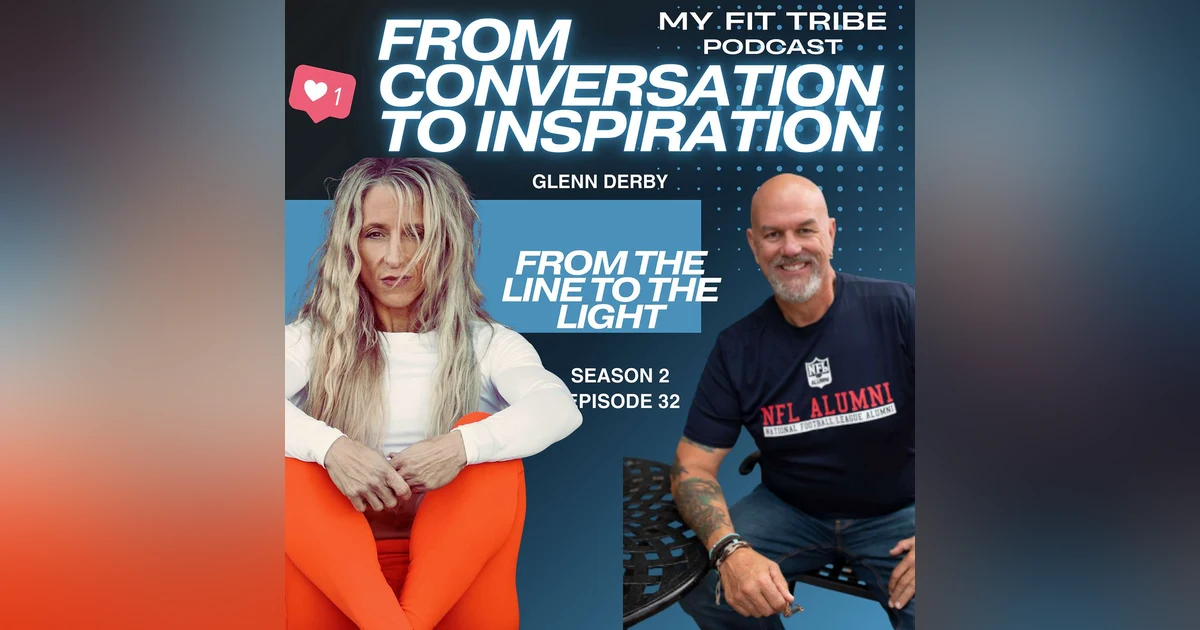


In this week’s episode, I’m joined by Glenn Derby. We dive into his journey and his book From the Line to the Light, exploring the challenges of addiction, the mindset shifts that helped him move forward, and the tools he uses to become the best version of himself. We also talk about how making an impact and helping others has completely transformed his life and given his story deeper purpose.
If you’re looking for a conversation rooted in resilience, growth, and hope, this is one you won’t want to miss.
25:20 - [Ad] Just Be True ~ A Soul-Led Podcast
26:06 - (Cont.) Glenn Derby- From the Line To The Light
Throughout my own life and fitness journey, I have had the privilege of meeting incredible people who've shared valuable insights on mindset, health, fitness, and spiritual growth. The profound impact of this knowledge on my own life has inspired me to share it with all of you. I'm Erica Sweeney, host and founder of My Fit Tribe Podcast. Join me as we explore inspiring conversations with experts, thought leaders, and everyday heroes who offer their stories and practical tips to help you on your own journey. From nutrition and fitness to mental well-being and personal or spiritual growth, our mission is to empower you to take charge of your health and live your best life. We are more than just a podcast, we are a community. Through coaching, a wealth of shared knowledge, and a strong support network, we are here to guide and encourage you every step of the way. Come be a part of our tribe. In this episode, I'm joined by Glenn Derby. We dive into his journey and his book From the Line to the Light, exploring the challenges of addiction, the mindset shifts that helped him move forward, and the tools he uses to become that best version of himself. We also talk about how making an impact and helping others has completely transformed his life and given his story deeper purpose. If you're looking for a conversation rooted in resilience, growth, and hope, this is one you won't want to miss. Today on the My Fit Tribe podcast, I'm joined by Glenn Derby, author of From the Line to the Light, and a voice dedicated to resilience, transformation, and meaningful growth. Glenn is a former NFL offensive lineman, having played for the New Orleans Saints and Green Bay Packers after a standout career at the University of Wisconsin-Madison. Beyond football, Glenn brings a powerful personal journey to his work, including long-term recovery from addiction and deep involvement in mental health, trauma healing, and emotional development. For over two decades, he has guided young people, couples, athletes, and professionals through challenges with clarity and compassion, helping them build resilience and grow stronger through adversity. Hi, Glenn. Thanks for joining me.
SPEAKER_01Hello.
SPEAKER_00It's nice to have you here for this conversation.
SPEAKER_01It's great to be here.
SPEAKER_00You know, we have so much to get into because I want to talk about your book, From the Line to the Light, and how you got to write about it. So let's just start there. Like what we'll start there and then move backwards. So what made you decide to write a book?
SPEAKER_01So I've had a fairly interesting life. I've moved all over the place. Um, I've done many, many things. There's very little left on my bucket list. And over the years, I've had people say, dude, you need to write a book. Because so many people are interested in all the different things that I did and all the ways that I went through things. And I like to tell people, you know, it's only through the grace of God that I'm here. And the way I was living my life up until I was 29 years old, um, I should not have lived. There were so many things that I was doing that was reckless, didn't care about myself, didn't care about others. And in that whole process, you know, I was able to somehow stay alive, and somehow I was able to get sober, and somehow I was able to kind of make a life out of a lot of mess. And people say, you know, you should write a book, and I kept saying no. And occasionally I'd sit down at the keyboard and I'd type a few pages and I'd be like, ah, no, not doing it. And um I went through my third divorce or was was deciding to get out of my third marriage, and I took a trip, a 14-day trip, just me and the dog, and went out west and camped and said, you know, I'm just gonna spend some quality time by myself and try and decide which direction I would go. And we it's a long story, but we ended up, me and the dog were ended up up on this mountain, and I'm sitting on a rock, and I'm just having a very meaningful, angry discussion with God. And I was screaming at him, and I just kept getting this whisper in the back of my head that said, write the book. And I'm like, I'm not writing the book. I'm not doing this. And then it kept saying it. And I was up there for a couple hours crying and screaming, and I kind of figured out what direction I wanted to go. I drive back to Wisconsin and uh I was meeting with a guy and he asked me how it went. And I said, Well, it was interesting, and I said, uh, it was good. I I think I have some clarity. I said, but I kept getting this message to write a book. And um he said, That's interesting you say that because I'm meeting with two ghostwriters on Friday. And I said, What's a ghostwriter? And he goes, Well, they write the book for you. I'm like, Wow, I never even heard of that. So I said, Can I meet with them? And he said, Yeah. And so I went and met with them, and they loved the idea of the book, and they said they wanted to do it. And I'm like, All right. That's how it started. So that's how I wrote the book.
SPEAKER_00Wow. So if we dive into your book, one thing that you you know you do in this book is you do offer what you call you know the battle in the trenches, and where you're giving tips for people who do it. But I guess before we get into that, what is the the premise of your book so that our listeners know, obviously who haven't read it, when you're dealing with your trauma and with what you've grown up with?
SPEAKER_01Trevor Burrus, Jr. So a lot of people have heard of C uh PTSD, which you know that is a big trauma. That is like a trauma from from the war or from you know uh being molested or raped or getting in a car accident or having somebody close to you die, a major, major trauma. I'm in counseling uh for many different reasons, but I'm I'm in with this counselor and we're talking, and he explained to me that there are a ton of clients that are in counseling that are showing, they're showing that they have the same symptoms of people with PTSD, but they didn't have that major trauma. And he said it was really interesting, all these counselors started getting together and started talking about okay, why are these people having the same symptoms, yet they didn't have the major blow up? And they started to realize that these people had had what they call repetitive or complex trauma. So when you hear the same message over and over and over and over in your head, you start to believe it.
SPEAKER_02Right.
SPEAKER_01Well, if it's a negative trauma type message, now all of a sudden you're gonna start having the same symptoms as you get to be an adult as someone from that. And so when I learned that, it it changed my life because I had been going to counseling ever since I was a teenager for anger management. I had a huge anger problem, probably why I became good at football, uh, because I could take out my anger on other people legally and kept myself out of jail and you know, kept myself going. Um, but I had this unbelievable rage inside of me that uh I couldn't control. And I would do every single thing they told me to do for anger management. You know, I'd go for the walks, I'd go for the drive, I'd count to 10, I'd, you know, touch my toes, I'd do whatever they told me to do, and it didn't work. And now all of a sudden I'm seeing this counselor, and he's explaining to me that I don't have an anger problem. And I'm like, every wife has told me this, every person I've been with has said, dude, you got an anger problem, you got to get that fixed. And when he said that, I was like, that's been my whole life is dealing with anger. And that label labeled and and like going, okay, every and I'd be like raging inside, and I'd be in a work environment, and I'd be like so angry at one of my employees that I just wanted to just go off on him and I couldn't control it. And he said, It's it's because it's not anger. He said, This is something that's from your childhood. He goes, People don't act like that if they've had a childhood that didn't have a lot of stuff that happened.
SPEAKER_02Right.
SPEAKER_01He goes, so this repetitive stuff, and so then I started really looking into my life and and moving as many times as I did, switching schools as many times as I did, uh, being a foot taller than everyone else from when I was very, very young, getting teased, getting picked on, bullied like crazy. I mean, I got I was a really tall guy, now I'm big, but back then I was like super skinny and wasn't very strong and got beat on a lot. And so that repetitive trauma in my head caused my emotions when I became an adult to be uncontrollable because I didn't understand them. And so when I wrote the book and when I went through all of this and kind of knew that God wanted me to tell my story to help all those people out there that are kind of confused as to why they're feeling the emotions they are, and it has nothing to do with what's going on right now. Like I remember getting in fights with my wife and being so angry at her, and then two hours later I'd be like, Why was I mad about that? I mean, that was stupid, but yet it was like enraged me to the point of like breaking things. And so I just wanted to be able to tell my story so that other people can say, Oh, maybe that's me. And maybe they can, you know, get the help that I got.
SPEAKER_00So, what did acknowledging that difference, like how did that shift your mindset?
SPEAKER_01So, what I do is before I would try to calm the anger, right? I would try to do something to calm it or get me away from thinking like that. Now I actually go right into it and I think and and I go and say, All right, I'm really upset right now. I can feel the rage inside my body. Where is it coming from? Is this something that's happening right now, or is this something from the past? And when I can separate the present from the past, now all of a sudden I can put it where it belongs. And so now I'm like, okay, I'm not really mad at her. I'm not getting my needs met. She's making a look at me or she's saying something that reminds me of what my dad used to say to me. So, you know, I never, I never could get satisfaction that I did enough for my dad. He, I could never do enough. And I mean, I'm even in the NFL and I'm a great game, and I come out of the locker room, I'm all excited to have my dad go, dude, that was awesome. And the first thing he did is tell me the things I did wrong. And I was like, huh, I can't do anything right. Well, what happened was is I was picking women to marry that were very similar to my dad. And so when they would make a criticism towards me, I owned it fully and it made me feel like crap. And then my emotions started coming up. And they might not even have meant to say it in that way, but that's how I took it because that's what I was used to. And so once I learned that those messages that were coming at me weren't valid. They were their experience. That's how they were trying to get their needs met, and it wasn't jive in with mine. And so I started to learn who to hang out with and who not to hang out with, and I started to learn those people are too toxic for me.
SPEAKER_02Right.
SPEAKER_01I can't hang out with them otherwise, because as soon as I start feeling that whatever, and I couldn't like like I always talk about the four C's, you know, you uh you calm the chaos, calm the chaos so that you can have clarity in your communication. As soon as you can clearly uh speak what you're feeling with good communication, you can stop any toxic relationship you're in. Just like that. And it's such a powerful, beautiful thing because now you're not owned by anybody else. You're owned by yourself. And you're able to go into any relationship and you can see now there are times where I'm like, okay, I can't listen to this person. I gotta get away, you know. Or I can say, I I just hear gobbledygook and just let them talk however they want to, and it doesn't affect me at all. I just sit and smile and okay, all right, all right, you know. And it's it's that clarity in your head when you can put the things where they belong so that they don't affect you. And this is years of work because you know, my solution when I was 13 years old was when the first time that I drank enough alcohol to get that feeling of peace. And that feeling that I had when I got it was my first time feeling uh any kind of um a buzz from alcohol. I correlated that with, oh my God, this is what everyone talks about with God. And so from then on, I'm like, I gotta get drunk. I gotta get that feeling. And so I was just a hardcore drunk for the next 18 years, and that was my solution. Well, obviously, when you're drinking, you're not thinking correctly, and you're causing a lot of chaos, and you're screwing up your life and screwing up, you know. I mean, I had a lot of friends that were good friends that I ruined the relationship and we were no longer friends, and it hurt, it was painful. So, what did I do? Drank more, you know. And so then when I got sober, then I had to go through all these feelings and emotions and everything else, and I didn't have anything to go grab, and that was hard.
SPEAKER_00Right.
SPEAKER_01It was really hard.
SPEAKER_00Really hard for anybody who's trying, you know, in that position of addiction, which is uh we had another episode where we talked about addiction and you know how people are afraid to talk about it. Like there's so much shame associated with it, but it's a reality. Everybody knows someone who's going through it. And the more we're there to support, you know, other families that are going through it or even just talk about it, you know, it's really important as well. I also like how you brought up that point, that conversation with your dad after that NFL game, because that's one of the points that really stuck with me in your book. Because here you you've been trying to prove yourself to your dad for years and years, and this is a big moment. You're you're so proud of yourself. And then in that one his reaction in a second, all that joy is just gone.
SPEAKER_02Gone.
SPEAKER_00And how can you explain to our listeners how much that affected the trajectory of your next choices?
SPEAKER_01So when I was young, I loved rodeos, I loved riding horses, I loved ranching, I really enjoyed basketball, I hated football. The only reason I played football is because my dad was a coach, and you know, it's what everyone else did. So I played, but I didn't like it. And for me, I was looking for another outlet for joy, and competition really gave me a lot of joy. So I didn't realize at the time, but everything I did, I was looking for my dad's approval. I was looking for, like when I would have a good football game or basketball game, I would always be looking at the sidelines and always like seeing if he looked, and I and I almost always saw a look of frustration in my dad's face. I was, you know, when I would date somebody, he didn't approve of who I dated. When I, you know, I I would go and um build something, and he would say, This, look at how many mistakes you made in here. And it was always that. So my competitive juices start to fire even more, and everything started to become I've got to prove my worth to my father and get his approval. And once I got to a point, I think it was like in the middle of when I was at Wisconsin, and I started to become really good. And now I'm getting accolades from the media, I'm getting accolades from a lot of girls, I'm getting accolades from a lot of the guys walking on the campus, and it's feeling really good. Like really good. And so this is like everything to me. And then they start talking to me about the NFL, and I'm like, okay, I'm gonna go to the NFL and I'm gonna do this, and series of things happened. Um, you know, I if I would have gone out into the NFL my junior year, I was rated at a top three pick uh, you know, in the first three rounds. But we had a coach, our coach died, and then we got another coach, and then we got another coach. And that last coach moved me to a different position. And it it I I I don't, you know, I mean, it it ha it happened, it was all part of the plan, and I'm I'm not upset about it anymore. At the time I was really upset, but so I I was supposed to go in the top rounds of the NFL, and all of a sudden comes draft day, and I don't go till the to the 218th pick, and um I go on to a team where it's very established, so I'm pretty much gonna be a backup. I mean, there's no way I'm getting into the starting role, at least it's starting off. So I do, and I'm getting beat up. And I kind of came out of college a little bit beat up, but I'm getting more beat up in the NFL, and um it was harder and harder and harder to feel like I was ever gonna be a great player like I was in college. And so I started doing a lot more drinking. I started after that incident with my dad, I started taking a lot of pain medicine. I was five to fifteen percocets a day.
SPEAKER_00Oh my gosh.
SPEAKER_01Drinking six to twelve beers a day. So you mix those percocets with beer, and you're just a puddle. And I mean, I can look back on those last like year or so, and after my dad's incident, I gave up. I didn't work out as hard. I didn't, you know, I'd go to the practice and I'd listen to my coach tell me what to do, and I'd be like, eh, I don't care. I'm not, you know, I'm gonna be a backup and I'm just gonna I figured I'll just make it here. Well, I was part of the first um free agents. I was actually the first class of free agents ever in the NFL. So I was able to choose another place to go. And Green Bay had an open position for long snapping, and I'm like, oh, that would be perfect. I could just long snap, I'm not gonna beat myself up, and I go to Green Bay, and the guy that was doing it was supposed to retire. Well, he decided not to retire. So I had to make the pos make the team at a different position, and I was starting at center, and there was a play that I did that I just got completely blown up, and I'm like, I can't do this anymore. I just can't, I can't physically do it. And so I remember calling my dad, and I said, I just don't think and he and he this is his first words he said to me is now what the hell are you gonna do? I'm like, Well, I'll get a job, I'll do what everyone else does. Well, don't think you're gonna get any help from me. And I'm like, ah, and I just it it was just so disappointing, and I was like, all right, I'm just I'm done. Well, I ended up coming back home, started to work out again. I had a couple surgeries to fix some problems, and then I went to um the Detroit Lions for a tryout, and I flunked the physical. So now it's no longer my choice. They said you're done. And when they said I'm done, now it's like, okay, now what am I gonna do? Right. You know? And I went home, and that last year before I got sober, my uh wife at the time, she had a cocaine problem, and she came to me and said, Hey, I gotta go get help. I said, All right, I'll go with you. We go to a treatment center. They they said, Glenn, we got a bed for you. I'm like, I don't have a problem, she does. And they're like, No, you got a pretty significant problem. And I refused to go into uh inpatient, but I did go to outpatient and I got sober.
SPEAKER_00Wow. I don't even know how to preface this because I just know people that are going through this, this the sobriety thing. It's just it's so hard.
SPEAKER_01It's so hard, yes.
SPEAKER_00And again, as we talked a bit, there's different approaches to it that people can follow. There's so much information, you know, out on social media. But the good thing is that I think in society now we're seeing more people choosing a sober option. You know, there's less drinking, there's things to do that doesn't always evolve around drinking. But if you have someone who has that trauma, you know, that goes to alcohol or other substances for addiction and is just heading down that slope because we know that that that low has to be pretty low sometimes for people to make those changes. What do you think it takes for people to really be able to take a step to become sober?
SPEAKER_01Well, we all get to choose our bottom. I think that's one of the biggest things for me is that, you know, people you don't have to go to the very bottom. I remember being in one of the first meetings I was in, and the counselor was telling us, you know, all the different stages of uh bottoms. And my my picture always was the guy that had uh was on the street with a brown paper bag with a bottle in it and had no shoes on and he had a coat. And so he was like at the that was where I thought the bottom was. Then I'm sitting in meetings where you got guys that are in three piece suits and coming off out of a big executive meeting, and I'm like, Oh, they got a problem too. You know, and so you start to learn some of that. I tell people all the time, you choose your bottom. You know, and I had a guy that I was working with who lost his leg in a car accident. Uh so he had a fake leg. It was from his knee down. And he came to me one time and said, Oh, I I gave my leg to the drug dealer as collateral. And I said, dude, how are you going to get around? Well, he never got his leg back. He went into another program and ended up getting another leg that was even nicer. And like three weeks later he did the same thing. And I'm like, his name was BJ and I said, BJ, when are you going to choose your bottom? I said because the way you're going right now, death is going to be your bottom. Right. Two months later he he died. He OD'd so you know he could have chosen any one of those times to say this is my bottom. You know, there's a lot of people that are um functional to a degree and they are not going to choose their bottom. They're just going to keep on living the way they're living they're losing like I can think of people that have lost me in their life. They've lost their kids they've lost their family they've lost all kinds of stuff but they just keep on going because they won't choose that bottom. For me, uh you know it's it's understanding that there was a reason that you use the alcohol or drugs more than just for enjoyment. When you start to use it to as a solution to feel better because you like like I always laugh at people that say oh I had a really hard day at work I'm going home and having a cocktail. Well that's like the dumbest thing to do. You know you're you're having a bad day now you're going to go home and drink and take a depressant and you know how's that going to help you get any better for the next day and but that's how we think and and so when I wrote the book and I started asking people in recovery that had you know 10, 15, 20, 30, 40 years of sobriety and I asked them I said do you think that you were covering up or using drugs or alcohol to numb or hide the pain from wherever you came from every one of them said absolutely. So I believe people can be social drinkers, social drug users very occasionally use them for a purpose and not become addicted to them. People that use them to cover up or numb themselves typically become addicted to them because that's their solution and they don't do anything else to fix the problem other than take chemicals.
SPEAKER_00You know what I mean? Yep. But that can be a really hard change to make in your mind well and it it that you're exactly right and it takes work.
SPEAKER_01You know I never tell anybody that this was an easy journey. The reason why I feel like I'm doing as well as a parent I mean I think I've done a phenomenal job raising my two girls you know I wasn't a great husband you know maybe I'll have another chance at that I don't know but I know I was a good parent. I know I was uh at my one job I did a really good job you know I I had the ability to do some of those things but it was work. Like every day for for a while like this was probably 10 years ago I heard a guy say if you want to change your life get up in the morning go to your mirror and smile for 20 seconds.
SPEAKER_00Twenty seconds is a long time.
SPEAKER_01It is and so I'm sitting there like oh do I look like a goof you know but I'm just sitting there smiling at the at the mirror and what ended up happening was because it's there's a physiological change in your brain now when I would go into different places I would smile and people treated me different. I didn't realize I was walking around with a bitch face all the time. I mean I I basically looked like I was ready to kill somebody until I started to do this but I did it on a every single day. There were days I got up that I'm like I ain't doing that shit and I'd get up and I'd go do it. The other thing is putting positive messages in your mind. That takes work it takes effort it takes a change most people not most many people don't want to put forth the effort to change they're just they're in their little zone they're familiar with it. It's like I was taught years ago and I asked a counselor once um why do women stay in physically abusive relationships? He said because it's familiar they don't know what it feels like to not have somebody beating on them. And they'd rather stay in that than make the changes and go out where it's really scary because they don't know what it's going to be like. And I think for a lot of people they're really scared to know what is their life going to be like if they can't have a drink. And I remember I would go out and I realized that you know this was my best friend at a party was my alcohol. You know it's like I had to have something in my hand and I had to have that feeling or that drink to be able to fit in. And when I started when I got sober and started going to some different social activities and I didn't have that I could feel myself really nervous and like I had to go grab something like get a you know and I would go I would get a glass with ice put in um like seltzer water with a lime so it looked like a gin and tonic.
SPEAKER_00And you had that same feeling of drinking it.
SPEAKER_01Yep absolutely I did. So you know and that's one of the nice things nowadays I see a lot of uh mocktail bars. Right. And there's a lot of like people saying hey what do you have for mocktails at the party because I'm not going to drink and I'm liking the fact that um you know there's there was a study done not too long ago that said the drinking in the United States is dropped like 15% in the last five years.
SPEAKER_00Yeah it's really becoming not expected socially. You know you people someone doesn't drink nobody cares. Whereas twenty thirty years ago everybody was drinking.
SPEAKER_01And you you were you were an outsider if you weren't right you know right.
SPEAKER_00You talk in your book about when you worked with the boys.
SPEAKER_01Yes.
SPEAKER_00Talk a little bit about what that was when you're impacting people because you know those boys at that age are you know you're making that transition from everything you experienced your reactions from your parents from your classmates you know such a pivotal time in life and all of a sudden then as an adult you're making your own decisions but they're so impacted by your past. And here you are working with kids that are troubled and that are trying to navigate that. How was that and how much did that impact you in your journey?
SPEAKER_01Well it's an interesting story. I'm in New Orleans playing for the Saints and there was a gentleman that came to one of our meetings and said I'm I'm a psychologist and I would love to do some tests on NFL players. Is there anyone here that's interested? And I'm like I got nothing else so I'm like yeah I'll try it. So I go through two days of testing with this guy. He gets the results he calls me into his office and he said you're not an NFL player and I said I got a contract to prove it what are you talking about? You know yeah I'm a I'm he goes no no what I mean is your makeup is not one of somebody who would be successful in the NFL. He said your makeup is that you're probably going to be really good at like being a police officer, a firefighter a teacher, somebody that's serving the community. And I thought oh that's interesting because I don't see myself as that at all. Three years after I got a job at this residential treatment center and I only got the job there because I had no other options. I mean it was like there was nothing available and I took this job just to try and get me some money and try to and I was newly sober and so I'm working for this job I made more in one week in the NFL than I did my first year salary here. So what a difference what a humbling experience. So I'm going to this job every day and I'm not you know I I had no training I didn't go to school for it. There was nothing that I could have said this is what I'm going to go do. Now all of a sudden I'm in this job because of circumstances and I'm doing really good and the kids are relating to me and I'm going into these meetings with these higher level like you know educated like you know people with all the letters behind their names and you know they're they're so smart and they're looking at me and when I give my report they're all like how do you know this how I'm like because I was that kid I was that kid. I I had a mom that was like this kid's mom. I had a dad or I had this or I had that and it was like I drove home one day and I just was like thank you God this is a gift from you and this is what I'm meant to do. And so for 20 years I did that and I loved it and I changed thousands of kids' lives and and I could just relate with them. And there were situations where it was like a major crisis and I always knew what to do yet I'd never been trained what to do. And it was just natural and it it was God given so you know that that was a very powerful time in my life and I got older and it started to become a lot more difficult for me to do the job that I had done when I was younger. And so I it was it was time for me to get out. And it was hard. Yeah but I I knew I was done I knew it that was not me anymore. I didn't know what direction I was going to go where I was going to go but I just trusted God and I think that's part of what this book is is the continuation of God's saying to me.
SPEAKER_00Well you know as you're talking about when you're working with those kids I was got a little emotional because I think about how many times when people start when it's not about you anymore and you're putting it into helping other people and you start to notice a bit of an impact and you start to give yourself a God given value, not a societal value where you understand that everything that you've gone through did happen for a reason. You continue to learn but that reason involves how you're impacting others and what a gift that is on your journey.
SPEAKER_01It really is. Yeah. And it's humbling it's also um scary I think you know to have that responsibility I remember there were times where I'm like this is too much responsibility. I'm not this good. I I shouldn't be doing this. I'm a dumbass. I mean I'm a drunk I'm a why am I doing you know I've got people's lives in my hand and that was scary. Yeah but you feel that fear and you go through it anyways and same thing with the book I remember when the editor said okay we're putting it on Amazon and I went yeah that's a scary moment right I'm like oh my God these people are actually going to read this thing thankfully everyone that read it so far has given a good review and said they really got something out of it. So I'm I'm grateful for that and I know um you know that that's God.
SPEAKER_00What's a vulnerability you have and when you're sharing such deep history of not only your past but who you are deep in your soul, you know, and to put that out there. But again you're people are able to relate to you then because of your vulnerability because they can see themselves in you.
SPEAKER_01That's what my hope is that's what a whenever I do one of these or go do any speaking I always want to be able to reach somebody that has something similar.
SPEAKER_00Aaron Ross Powell So let's dive in a little bit about why you came up with the um at the end of each chapter to provide the guidance, the battle in the in the trenches as you say where did you come up with that premise and how is that work within each chapter?
SPEAKER_01Aaron Ross Powell So when I started out I thought to myself I want a book that if I would have gotten this book 30 years ago it would have changed my life. And I started thinking okay what exactly do I need to have to change my life and you've got to have some either education or some direction. And so when I was talking to the ghostwriters I'm like I kind of want to make this and I was originally going to make it like a 12 chapter book you know related off the 12 steps of AA but then I started thinking no I'm going to kind of make it my own and we came up with seven chapters and then I started thinking all right what if we had seven things that people could literally do and that's where they came up with the trench tactics and they said what are some things that helped you when you were going through the dark times right and so that's what I did. After every chapter I thought okay what were the things that I did physically emotionally or mentally what did I actually do to change my life and I wanted those in there and those are kind of what that the whole trench tactics is is this is what I did to change the way my life was going.
SPEAKER_00Because I think we we don't I mean there's no there's no blueprint for our lives right and even though we might try things and it might not work the first time or the tenth time but it might work the 15th time. Right. You know but it's the point is that you have to keep learning you have to keep trying it's when you stop doing those two things that you run into trouble.
SPEAKER_01Yeah. Yeah. And again it's about action um you know like I wherever I go wherever I talk I'm always telling people listen I I don't think you understand how much you're actually going to have to do. You're not going to read a book or go to a counselor and all of a sudden your life is better because you heard a couple things. You actually have to go out into the real world and you have to do these things. So like I remember the first couple times when I was sober and I would go to a work function where all my coworkers were drinking. I had to come up with a plan because I knew if I walked into there with no plan, I'd be drunk.
SPEAKER_00Yep.
SPEAKER_01Yep. And so I had a plan and I had a plan of you know back then we didn't have cell we might have had cell phones, but they were like flip phones. And so you know I I I couldn't like text anybody but I think I had a plan of I'm going to call this person and I had that person waiting for the phone call. You know or I would go to one of these and I would bring somebody with me that had a lot longer sobriety than me that would be able to grab my hand and say come on let's go. Let's get out of here and it ended up that I was able to there there were some work parties that are at that were it was hilarious. Some of my coworkers got drunk and did handstands and did all this stupid stuff and I just kind of laughed at it and didn't have any desire to do it myself.
SPEAKER_02Right.
SPEAKER_01So I started you know you start to learn how you're healing. I just had a recent situation actually I just did a video today on it uh yesterday I had a conversation about my ex and in that conversation I felt a couple little twinges of pain and I recognized it I'm like oh there's that pain I wonder what that is well it was the pain of missing something that was in the past and I was able to put it in the past and then I was able to say ah no big deal you know that's just that's part of the process and then you know after the conversation with the person I was fine. I didn't feel any like need to call her or need to do anything. And you know you you start to learn to recognize those things in your life like walking into a party and recognizing the fact that you're capable and able to go into this not participate maybe not have a great time but who cares you're able to go home sober and wake up the next day and have a good day. You know and those are the things that you know let the gratitude and the the you know the positive thinking that you do.
SPEAKER_00You talk in your book and you've touched on it a bit well let's talk a little bit about how much God has played a part in your story.
SPEAKER_01So my dad so my dad uh became an Episcopal priest that's the reason we moved from Montana to Wisconsin very I was very very bitter still I still have some bitterness towards it um he became a priest I would go to church on Sundays I would hear his sermon I'd come home and watch him in action they didn't match I was 19 drinking age in Wisconsin was 18 so I was legal I went into a a bar there was a gentleman in there that was a big Whig at the church married kids and I saw him with another woman and I remember saying this is bullshit and at 19 I walked away from church never went back other than a wedding or funeral I knew God was out there I didn't think he gave a shit about me. I really didn't so from 19 until my second marriage I was having major problems in it and I I remember one time looking down at my daughter who was I think maybe four or five and I thought she should at least have an opportunity to know who God is. And and going back I I tell people all the time you know when I went to AA if they would have mentioned Jesus in the first meeting I would have walked out and I said I'm done but they said God of your understanding and I'm like oh I can mess with that I can play around with that you know and so I kind of went you know whatever God is and so for like 20 years I was like God of my understanding and he was cool you know I I didn't know anything about Jesus I just was all about you know God's cool and um he's got my back I know you know it was through the grace of God that I'm still here I I learned all that in the AA stuff and and counseling and um but I I wanted my daughter to go and at least experience what church was about. So I went to church and the pastor there started talking about different things and it really made sense to me so I kept going back kept going back and there was a time where I was sitting in church and I was trying to decide whether or not I was going to follow Jesus I was deciding whether or not I was going to get divorced I was deciding whether or not I was you know what direction I was going to go and he he said in his message that if you choose to follow Jesus it's gonna cost you. He said some people it costs their career some people it costs their finances and then he said some people it costs their marriage and when he said that I had like this hot poker that like it felt like went right into my gut and it was so hot I actually felt my I put my hands on my stomach and I could feel the heat and I'm like whoa what is this and then I went I need to get divorced I need to get out of this marriage and I need to go and you know go a different direction. And I felt like it came right from God and Jesus and so then I was like okay well now I'm gonna start following so now I'm I'm getting into it and I'm reading as much as I can. When I got sober I became a sponge I read every book out there. So when I got into this part that was the same thing I started reading and reading and reading and started understanding more and more and more about the crucifixion and more and more about what Jesus actually did for us and you know and I kept kept going and that and then when I was in the on that mountain and I knew it was God and Jesus and the Holy Spirit all three of them were ganging up on me and they were really around me and I could feel it all I didn't like it. I argued with it I yelled but I knew I knew deep down they were they had me and I knew that was my time it's like okay I've got to follow what they want me to do. And so ever since then and it's been probably 10 or 12 years I've just been delving into that and and when we were writing the book I just kept feeling like you know there the Holy Spirit was in a part of it. I felt like Jesus was a part of it and I felt like you know I'm going from this dark dark dark place 25 years ago to a lighter place. And that's where the title came and that's where everything kind of came is like you know going from the line the offensive line where my life Like just dark as hell to the light of following Jesus.
SPEAKER_00And you talk in your book, you know, about your suicide attempts too, and how dark it was, and how by the grace of God that you were okay through those and you survived.
SPEAKER_01Amazing. I was so, so set on dying those two nights. And I I I went back after, weeks after, I went back and looked at the scenario, and I'm like, there's no way I could have missed and and to let you guys all know, I mean, I I was driving my car at almost 100 miles an hour and saw a telephone pole that I wanted to hit, and I turned the car into and going right at the pole, and I hit something before the pole and I spun around it. Three nights later I did the exact same thing. Exact same thing happened. And I remember I was laying in the or sitting in the car in the ditch, and this is what the message was in my head. I can't even kill myself right. I was so down on myself, I couldn't do anything right. You know, and it was it is a very, very, very painful place to be.
SPEAKER_00It is.
SPEAKER_01You know. And you can't describe it to anyone, and you know, people can say whatever they want, but unless you've experienced that kind of desperation, you just can't understand how bad it is.
SPEAKER_00But how reassuring for anybody who's listening who is there or has been there recently to know that you can get to the light. Oh, yeah. You know, that there is a path forward when you're in that really dark place.
SPEAKER_01Yeah. Yeah. And and I think, you know, that's at that time I was nowhere near ready to meet Jesus or talk to God. But I know now they were holding my hand. And they were they were giving me a hug and they were holding me and they were getting me through that. And so any of you out there that are in that spot realize they got you. I mean, he's got you. You may not know it for 10, 15, 20 years, but he's got you.
SPEAKER_00And how important is it to listen to those conversations that you think are in your mind, right? Right. Those are pretty cool, aren't they? They are so cool.
SPEAKER_01Yeah. And and it's what's nice now is it's it's kind of it's kind of fun sometimes to go back and think about that. You know, think about, oh my God, look at what I was able to do. You know, my dad passed away, I don't know, maybe 12 years ago, and I was able to feel totally at peace when he went. Him and I were able to maintain and get a very shallow relationship, which was beautiful because I started to understand how much pain he had gone through. And I could hear and feel how helpless and hopeless he really was. I mean, I think he became a priest to try and cover up all of this pain that he had. You know, so it gave me a whole new perspective of this guy that I used to just absolutely hate.
SPEAKER_00You're able to release some of it because you've released a lot of it.
SPEAKER_01You know, I started to love him and realized, boy, I'm glad I didn't go through what he went through.
SPEAKER_00Right.
SPEAKER_01And mine was less than what he had, which is kind of cool.
SPEAKER_00Aaron Powell And how is it that you've been able to, you know, watch yourself on this journey and now write the book and then now being a parent, like how has this journey affected you as a dad?
SPEAKER_01Well, the one thing I learned in uh when I was working at the residential treatment center was I went to a conference and they talked about how absolutely important it is a girl or a boy both need it these the same. They need to feel valued from their father. Not loved. They need to be loved by their mom, but they need to feel valued by their dad. And when I heard that, and I didn't have kids at the time, I started, you know, looking at the kids in my program and kind of like it just stuck with me. This word value. You know, what does value mean? And what I learned was is the most important thing for my two little girls was that I want them to know how much I value them, how important they are to me. I don't care what they do, like, like, you know, you would think that you would want your girls or sons to be great athletes, get a scholarship, do what I did. I didn't care about that. All I cared about them is that they were in activities, that they were doing things to better themselves, and that I was going to support them and value them in anything they did. So my oldest daughter, she, and I was told they had to be in at least two activities. So my oldest picked um basketball and singing. My youngest picked volleyball and horse riding. And I'm like, I don't care what it is, as long as and so I would go listen to my daughter sing, and she would go and plays. And I mean, I remember sitting there going, where did this come from? Because I am not anyone who wants to get on stage.
SPEAKER_00And I can't sing, so yeah, and I can't sing.
SPEAKER_01So I'm like, where'd this come from? And I it was just so cool to know that I'm like breaking a cycle. Because as much as my dad wanted to value me, he wasn't able to. He wasn't able to. He didn't have the ability, you know. And so I challenge people if you're gonna be a parent, learn how to be a parent. It doesn't matter where you come from or what happened, but learn what's most important about being a parent. You know, a mom needs to nurture their kids up until they're in their late teens. A dad needs to value them and show them what they're doing. And then once they become adults, you let them be adults. And that that's been really hard. You know, I remember the first time my daughter called home and said, Dad, I need some money. And I said, What do you need money for? She had some reason. And I said, Well, go write down the definition of need and the definition of want. And I said, Send that to me. And then you explain to me how this is a need. I said, I will always provide the needs for you as best as I can. But I'm done doing any of your work.
SPEAKER_00No one's on you.
SPEAKER_01You're an adult now, you've got a job. Anything you want, you get. I'm not doing it anymore. And it's been beautiful because now we have a much better, different relationship.
SPEAKER_02Yeah.
SPEAKER_01I mean, I miss the old relationships like crazy. I I think about them all the time, but now I've got a new relationship that I really enjoy with both of them.
SPEAKER_00Yeah, the different chapters and watching them grow up and be their own person is really cool.
SPEAKER_01Yeah, and they're both so successful. I mean, I don't I know it was the hard work I did. You know, they never saw me drink. They never saw me out of control because of alcohol or drugs. They, you know, I every night they knew who I was. When I walked in the door, they weren't scared of me because I was some monster coming in. Um, you know, when they failed, they weren't it wasn't hard for them to come to me. And I think that was the most beautiful part for me was is they they always felt like they could come talk to me no matter what happened. And that to me is worth every bit of work that I did.
SPEAKER_00Yeah. Yeah, that really when you can bring it back to your family, it really makes the reflection really special, right? Yeah.
SPEAKER_01And and I tell this to people all the time. I mean, like, you know, if you're if you're raising a family and you've got an issue with alcohol, that's gonna be the thing that's gonna wreck your family more than anything else. So just quit drinking, at least for when the kids are living at home, you know. But most people can't.
SPEAKER_00Right. And but I I think one of the biggest things I take from this conversation that you said that just I can't shake is the you pick your own low. Like that's you know, you don't have to get lower than the low of lowest of the lows. Like you can decide today that this is low enough and make a change, but you've like you said, you got to put in the work.
SPEAKER_01Well, and that and that's a and that came true in the in my last marriage when I was so angry at her and she looked at me and you she said, You need help. And I stopped and I said, You know what I do? Because I don't like this about me.
SPEAKER_02Right.
SPEAKER_01So I need to change. So I picked my low, my bottom for anger. And I said, I'm gonna go find I and I was planning on going to see three or four different counselors till I found one. Fortunately, I found the right or God put the right one in, and He really switched my whole thinking from anger to trauma, and that's what I needed, you know. And so I I picked my bottom in my anger too, because I'm like, I'm done with this. I, you know, I'm she's the problem, in my opinion, but I'm gonna say, all right, I gotta look at myself and I've got to make the change, and I've got to say, okay, I'm done with this kind of behavior.
SPEAKER_00Yeah. And again, it's you've got to keep learning and growing because that's the point of our journeys here on this planet, right? Look and I love so much of that you have in your book. Um, I love that you have to, you know, just Jesus didn't just call us to acknowledge our wrongs, he called us to act on them. You know, and that's one of those things I've marked in your book because that's so true in everything we've talked about today.
SPEAKER_01Yeah. So it's not a passive uh lifestyle. When you decide to be Christ-like and you decide to follow his teachings, you are in action all the time.
SPEAKER_00Yeah. So for our listeners, before I wrap up with our final question, how can people follow you and get your book?
SPEAKER_01So my book is on Amazon. So if you just put my name in, Glenn2N's Derby D-E-R B Y. I also have a website, uh, glenderby.com, that you can go to. Um, I'm in the process of changing a few things with my journey, and uh there'll be a lot more. Nice. So yeah, I'll be doing a lot more speaking and a lot more being out there, so my website will be a lot more active. But yeah.
SPEAKER_00And again, there's so many points that you talked in your in your conversation too, where you get those breadcrumbs, those conversations, those listening. So I hope that you know that those are you know guiding you through the forest to really bring you to what you're supposed to be doing.
SPEAKER_01Well, and I again, you know, we can plant seeds. Uh, there was one gentleman who he said, and I I just thank God for these people, because he said, he goes, Glenn, you're not capable of changing any one of these kids' lives. But what you are capable of is giving them an experience. So if you give them an experience of maturity, of compassion, of holding like in when I coach football, I say this all the time. When I use when I used to coach, I would say, you know I love you and care about you if I'm critiquing you and working hard with you. And I'm never gonna do it in a negative way, but I'm always going to be on you to get better. That way you know I care about you. You know, so so that's an experience. I give that kid an experience of learning what it's like to have somebody care enough to hold you accountable to make the changes that you need to make to become a better player.
SPEAKER_02Yeah, yeah.
SPEAKER_01And so that that was a big one for me. Um, but yes, the little crumbs, I call them seeds, and that's all we're doing is planting seeds.
SPEAKER_00Absolutely. Watching them grow.
SPEAKER_01Facebook has been really cool because I've got a lot of kids that I worked with like 30 years ago that'll message me and they got kids and they're married and they're doing really well, and they never went to jail like everyone thought they would.
SPEAKER_00Right.
SPEAKER_01Some of them are sober, and you know, it's really cool.
SPEAKER_00Well, and you gotta remember too, sometimes it's those little things we hear that make that just click that make us m choose a different route. You know, it doesn't take much sometimes, just listening.
SPEAKER_01It's that message that pops into your head when you're sitting in jail waiting to go see a judge, and that happened to me. I mean, I remember someone saying, You're gonna end up in jail. I'm like, no, I'm not. And now all of a sudden you're in jail. You're like, oh my God, they were right.
SPEAKER_00Time to pivot. Yeah. Okay, so our final question, it's a two-part question. So you, Glenn, today can have a conversation with your past self. Maybe it's the thin kid who gets picked on in middle school, maybe it's the you know, college athlete. But what advice would you give your past self?
SPEAKER_01That is a great question. I would give myself the courage and encouragement to understand that the world we live in is designed to be run by evil and the Satan. Our human nature goes towards the negative. But there's another way. And this other way is you're gonna go through some pain and some turmoil, but you're gonna be able to turn it around and help a lot of people. So just keep going.
SPEAKER_00So now you, Glenn, today can have a conversation with your future self, sitting in your favorite place, reflecting. What do you ask your future self and what do you think he says back to you?
SPEAKER_01I'm gonna ask him if I gave it everything I have, and he's gonna say, Yes, you have. Yes, you have.
SPEAKER_00No doubt. It's impacting people along the way. Yep. Awesome.
SPEAKER_01100%.
SPEAKER_00Thank you for this conversation. I loved it.
SPEAKER_01Thank you. This has been awesome.
SPEAKER_00Thanks for listening to the My Fit Tribe podcast. Tune in weekly for our latest episode for more health and wellness insights and inspiration. For more information, visit myfittribe.org. Don't forget to share, like, and download this episode, and thank you for your support. Please know that the opinions and comments presented here are those of the guests and do not necessarily constitute medical advice or the opinions of MyFitTribe. Copyright 2026, all rights reserved. This podcast is recorded and produced by Jay Johnson at Paradigm Productions in Madison, Wisconsin, and is a production of MyFitTribe LLC.