Eric Weigel | What's Really in Your Supplements? Quality, Gut Health & Wellness
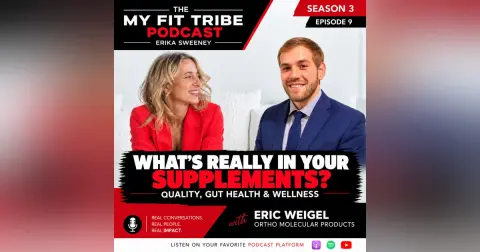
Send us Fan Mail Do you really know what's in the supplements you're taking? With thousands of vitamins and supplements on the market, how do you know which ones are worth your money, which ones actually contain what they claim, and whether you even need them? This week on the MY FIT TRIBE Podcast, I sit down with Eric Weigel of Ortho Molecular Products, a Wisconsin-based company specializing in professional-grade nutritional supplements. With a PhD in exercise physiology and a background in ...


Do you really know what's in the supplements you're taking?
With thousands of vitamins and supplements on the market, how do you know which ones are worth your money, which ones actually contain what they claim, and whether you even need them?
This week on the MY FIT TRIBE Podcast, I sit down with Eric Weigel of Ortho Molecular Products, a Wisconsin-based company specializing in professional-grade nutritional supplements.
With a PhD in exercise physiology and a background in strength and conditioning, Eric brings a wealth of knowledge about nutrition, recovery, and the science behind supplements.
We explore what separates professional-grade supplements from many over-the-counter products, why manufacturing standards matter, and the risks of purchasing supplements from unauthorized third-party sellers.
But this conversation goes well beyond what's inside the bottle.
We discuss the growing role of functional and integrative medicine, how gut health affects overall wellness, and why supplements should support—not replace—healthy lifestyle choices.
In this episode, we discuss:
- What makes a quality supplement and why manufacturing standards matter
- The risks of counterfeit supplements and misleading product labels
- Gut health, inflammation, and nutrient absorption
- Vitamin D and its role in overall health
- How sleep consistency affects recovery and physical performance
- The role of supplements in functional and integrative medicine
- Nutritional considerations for individuals using GLP-1 medications
- Why more supplements aren't necessarily better
- The importance of advocating for your health and working with a knowledgeable provider
Eric also shares insights from his doctoral research on sleep and athletic performance, along with his experience educating healthcare providers throughout Wisconsin.
One of the biggest takeaways? Supplements are exactly that—supplemental. Nutrition, exercise, sleep, and healthy daily habits remain the foundation.
This week's actionable step: Start with the basics. Prioritize consistent sleep and daily movement. Even a short walk after a meal is a simple place to begin. If you're currently taking supplements, review what you're using and discuss their quality, dosage, and necessity with your healthcare provider.
Connect with Eric and Ortho Molecular Products:
Ortho Molecular Products: https://www.orthomolecularproducts.com
Wisconsin Functional Integrated Medicine Group: https://www.wifunctionalmedgroup.com
Remember, being proactive about your health means asking questions, exploring your options, and taking responsibility for the choices you make today.
Thank you for being part of the MY FIT TRIBE!
Real Conversations. Real People. Real Impact.
Throughout my own life and fitness journey, I have had the privilege of meeting incredible people who've shared valuable insights on mindset, health, fitness, and spiritual growth. The profound impact of this knowledge on my own life has inspired me to share it with all of you. I'm Erica Sweeney, host and founder of My Fit Tribe Podcast. Join me as we explore inspiring conversations with experts, thought leaders, and everyday heroes who offer their stories and practical tips to help you on your own journey. From nutrition and fitness to mental well-being and personal or spiritual growth, our mission is to empower you to take charge of your health and live your best life. We are more than just a podcast, we are a community. Through coaching, a wealth of shared knowledge, and a strong support network, we are here to guide and encourage you every step of the way. Come be a part of our tribe. This week on the My Fit Tribe podcast, I'm joined by Eric Weigel with Orthomolecular Products. Health isn't just about taking supplements, it's about understanding what you're putting into your body and why. In this episode, we explore the science behind professional grade supplements, the importance of quality and transparency, and how asking better questions can lead to better health decisions. Here's my conversation with Eric. Today I am joined by Eric Weigel with Orthomolecular Products. Eric brings a unique background in exercise science, strength and conditioning, and higher education to his work with functional and integrative healthcare practitioners across Wisconsin. Through his role at Orthomolecular, he helps educate providers on the science behind professional grade nutritional supplements, supporting a personalized, evidence-based approach to patient care. His passion for education and commitment to quality have made him a trusted resource for healthcare professionals throughout the region. Hi, Eric. Thanks for joining me today.
SPEAKER_01Yeah, it's a great to be here. Thanks for having me, Erica.
SPEAKER_00So for our listeners, Eric's been here for maybe 10 minutes, and we have covered so much off the podcast. So we're gonna have to just back up a little bit in our conversation, and there's so much I want to get into. So before we jump into what orthomolecular products does and offers, let's hear a little bit about your journey. How did you get into this space?
SPEAKER_01Yeah, I so growing up, grew up in a small town in Wisconsin, Boscoville, Wisconsin, so it's in southwest Wisconsin. Half of our population is our prison population. We have a we have a supermax.
SPEAKER_00I guess I didn't know that.
SPEAKER_01Yeah, that's that's generally what people know it for. And uh you know like I said, I was a three-sport athlete, my dad was a coach, I wrestled my whole life, wrestled a little bit in college, and I was always into health and wellness, got into lifting weights when I was younger, and then that's what I knew of what I wanted to do when I went to school. So I was an extra science graduate at Winnow State University. From there, I transitioned into being a graduate assistant strength and conditioning coach. So I started my master's program in uh in sports science, and then I went on to and got my PhD in uh extras physiology with an emphasis on uh some leadership stuff as well. So all my dissertation was on sleep and stress response. So did a very large study with our football team at Winro State University at the time when I was there. And yeah, I was full-time there for five years and worked with a lot of different athletes in the strength addition realm. And then as I was doing my doctorate, I started transitioning more and more into teaching. So I was teaching in the extra science department. And uh with that, you know, I I did a lot with the nutrition side of things with the athletes. I was our NCAA liaison, so I was the guy that kind of, you know, if athletes would come up with questions on things, I made sure they were, you know, they could take it and it wasn't a violation. Uh anything that we gave to them, we had to research and make sure that it was, you know, allowable by the NCAA. There's things known as discretionary, meaning we can't give it to them, but they can take them. So there's a lot going on. It's a lot to know for like a college kid. So as all of that was going on, as and as I was graduating with my doctorate and it was about to you know start transitioning more and more into the teaching side, COVID happened. And at that point, who knew what the heck was gonna go on? And I just remember our dean sending out an email to us saying, like, upload all of your class content onto our, it's called D2L, which is like our online platform. And they basically said, as long as students are opening it up and they've like, you know, looked at it, it's a pass-fail. And, you know, so okay, so we're not teaching, you know, and who knew how that was gonna happen and how long that was gonna go on. And so this company called Orthomolecular reached out to me and said, Hey, we want you to come work for us. And I was like, not a chance. Like, I'm not gonna go be a supplement sales rep. You know, I just finished, you know, this this doctorate, I was you know, gonna be transition more towards full-time teaching. And they just said, no, no, no, here's out. We're an international company, we're based in Stevens Point, Wisconsin, and we just want you to be an educator, right? We want you to be someone that can go in and add value to a lot of these providers in a lot of ways that other people can, at least, at least not starting out. So that's when I said, you know what, I'll do an interview. I did that one, and another one, and another one after that. And now, fast forward five and a half years later, like it was the best decision I ever made. It was, I mean, it's it's been an absolute blessing working for this company and the resources we have and who we are and what we mean to the industry and and learning about the industry. I mean, it's it's been it's been incredible. So it's been a fun ride so far, and you know, it's given me a lot of interesting opportunities like this one today. So it's it's fun.
SPEAKER_00Well, there's uh so much I want to dive into, and it's fun kind of almost to start a COVID or use that as a reflection point because we were talking before the show how much everything changed in our mindset, in what we believe to be true, in um health opportunities. So before I touch on that, I want to go back to your sleep and stress study. How did you pick that as a topic? Because that is my number one issue across the board. Stress and sleep.
SPEAKER_01Yeah. So at the time I was looking for things to uh do my dissertation on. And I was really into sleep at the time. The aura ring had just come out, and I was getting really into like, you know, tracking like you know, sleep scores and all those different things. And I wanted to do a you know quantitative study. So I wanted a lot of data points. I wanted to do a huge statistical analysis, and you know, I wanted all the bells and whistles from that standpoint. And I also had a hundred football players at my disposal that I could test and track. And so it was one that I was able to through basic questionnaires, every morning when they woke up, they got a questionnaire that essentially just asked them a handful of different questions pertaining to their sleep. Mainly I was really tracking how long they slept per night and the consistency of how long they slept throughout the semester. Um, and then we were tracking other metrics, you know, like their squat, bench, clean, things we were already doing, and then we also did some um uh power outputs with force plates. But the gist of it, how did sleep, not only the amount of sleep, but the consistency of sleep throughout the semester, how much did that affect their performance? And it was it was very eye-opening, and we actually changed a lot of what we did as far as how we ran practices and timing of things based on that. But the gist of it was that individuals who got seven or more hours of sleep 85 percent of the time throughout the semester increased across the board in all their performance metrics. Individuals who got seven or more hours of sleep, 60 to 85 percent of the time, it was kind of a toss-up. Some things went up, some things went down, but it's kind of like they stayed the same. And then there's a clear line in the sand. Individuals who slept uh seven or less hours, or you know, 60 percent of the time, so they didn't 60 percent of the time they didn't get at least seven hours of sleep. Everything went down. So from there, you're able to kind of show these sport coaches like, hey guys, this is how important sleep is. So we need to put these athletes in opportunities to, you know, really get better sleep. But also you could show the athletes and show, hey guys, if you are consistent in your sleep and you make this a discipline, and you know, your day does not start when you wake up, your day starts the night before, right? That's when you really need to start thinking about these things. And if we're sleeping 85% of the time, at least seven or more hours at night, we're gonna get better. So that was you know a big longitudinal study um that I did with that. Got that published and uh yeah, I've still pull it out from time to time and dust it off and show it to some proof practice.
SPEAKER_00Well, it's important because you know one thing that we'll talk about that we often talk about on this podcast is you need to advocate for yourself and you need to be proactive in your health. You like as we mentioned, you can't just go to the doctor when it's when you're sick. You want to be able to go to a doctor to stay well. And one of those recovery items is sleep and stress management, that it doesn't need to be a football team or a you know high-performing athlete that should be paying attention to these details. We as you know people should be paying attention to those so that we can make sure that we're healthy going forward in our life. And that that sleep score that is so crucial and it's it's a hard balance to get because getting good sleep and no stress is impossible.
SPEAKER_01And sometimes you can stress yourself so you don't sleep.
SPEAKER_00Exactly.
SPEAKER_01Because sometimes with those sleep scores, is you can look at that and be like, oh no, my sleep score is terrible. I'm gonna have a terrible day. And you let it get to you and you stress out about it, and it affects your day. Versus it's just like anything, you know, like you've got to take things with a grain of salt. Yeah, if you didn't sleep well, you're not gonna have a good sleep score, but also you can't let that ruin your entire day because then it's gonna compound, right? It's about doing the little things right consistently throughout the day, which will make you sleep better, which will make you feel better. And it it all kind of comes together as a big wellness puzzle.
SPEAKER_00Aaron Ross Powell Right. And so part of that wellness puzzle is you know, uh I have talked too where many people will go into the doctor not feeling right. Like I'm lethargic, I'm fatigued, I just don't feel good. And the most of the time, as we mentioned, you get a blood panel done and they say, There's nothing wrong with you, might put you on an SSRI, or say come back in a couple months if you still don't feel good and we'll look at it again. And people get very frustrated by the not being heard, right?
SPEAKER_02Yep.
SPEAKER_00Um so that there's an element of health care and wellness that has come into play and become more common for people through functional integrated providers, and that's on the supplement space. So how long has orthomolecular products been in business?
SPEAKER_01Yeah. So we're going on 37 years.
SPEAKER_00Wow. Wow.
SPEAKER_01Yep. And we're local. We're we're based in Stevens Point, Wisconsin. And everything that we make, we make there. We're in fact kind of one of the last companies that we make everything, and we do not sell directly to patients. Our supplements, you know, we believe that medicine should be done through your provider with your you know, providers' advice, which is, you know, nowadays is so crucial because, you know, with Dr. Google coming up and AI and all those different things, right? People are seeking, you know, they're just doing a quick search and they're they're cutting the providers out of it. And a lot of these supplement companies that are kind of popping up left and right are starting to do the same, where they're they're just you know making their own labs and then they have their own contract manufactured supplements. And a lot of it is like, here's a lab, and then we'll tell you exactly the supplements to take, and it cuts the provider out. So one thing that Orthomobulchare does is we only sell the licensed healthcare professionals, and we take that extremely seriously. And a lot of what we've been able to do in the industry has gotten us some awards. So for example, we just won the uh Wisconsin Ford Award at the platinum level. That's not just supplement companies, right? That's every company potentially you know can apply for that, and it requires an audit where they come in and look at your facility, they interview your employees, they interview the vendors that we work with, the doctors that we work with, the community of, in this case, Stevens Point, what we mean to that community. So we won the Wisconsin Ford Award at the platinum level. And in the many, many years they've been given that award out, only 17 companies have won that. We actually just won it for a second time this past year. We're the only company to ever do that. And the reason why we won it twice is now we're up for the Malcolm Baldridge Award. The Malcolm Baldridge Award is you know the best way to explain it, it's like the uh Heisman Trophy for international business. So we're up against like the Apples, the Microsofts, like those types of companies. So it really is a really prestigious honor to get. And it takes a lot of hard work. And you know, at the end of the day, if you come in, you get an audit and they chew you up and spit you out, well, that's good. Now we have things and metrics and data points that we can improve on, so ultimately we're gonna be a better company.
SPEAKER_00Aaron Powell Well, and that's what it takes to be successful for the right reasons, right? There's a lot of successful companies that you know may make the numbers, but they're not doing things the right way, in my opinion. Um how did or why did this get started? Because supplements 35 years ago weren't even a thing. So give us a little bit of background on the why.
SPEAKER_01Yeah. So the company was started and is still to this day run by uh Gary Powers. So Gary grew up, and obviously this is his story, but I'll kind of give you the gist of it. So he grew up working at his uncle's uh pharmaceutical manufacturing facility. So as a kid, you know, he was growing up stamping pills, you know, on the old pill stamper. And you know, he started to realize like, you know, because through different health journeys and some family members, you know, doing the traditional routes and and not getting success and ultimately, you know, passing away. He decided, like, hey, if I can take some of the principles of manufacturing that I've learned in this industry and apply it to more of the natural holistic things, and if I can get a handful of doctors throughout, you know, at the time it was the Milwaukee and Chicago area on board, I can make this thing go. So over time, he built this company from nothing and it's expanded into what it is today, which is a very large nutraceutical company that is international. Um and to this day, he's still running it. Um he has a farm in Walworth, so just north of Lake Geneva, where he does regenerative farming, farms 1,500 acres, he has 10 kids. Um he's a pastor as well. Uh so he's really kind of does it all. And uh, you know, I'm super thankful for that guy, because if it wasn't for him, I wouldn't have this position. And to his credit, I mean, the guy is integrity to a T. I mean, the amount of times I'm well, knowingly he's had offers of other companies to buy orthomolecular, instead he doubled down and made us private and put us into a trust that we will always remain private.
SPEAKER_00Oh wow, that's so cool.
SPEAKER_01So we're never gonna sell out and now, you know, pull the rug out from our net providers and now we're going direct to patient or anything like that. So that's a big thing. And like I said before, we actually only sell the licensed healthcare professionals, and we take that very seriously to the point where we actually police, we have a whole department that will find illegally sold products from third-party vendors such as like an Amazon or like different wholesalers, that we will buy back products that sometimes end up there. Every bottle has a tracker, we scan it, see where it came from, and then we have those conversations with providers to say, hey, we are exclusively to practitioner. We want a provider at the you know, at the in the middle of any advice given with these products. And that's that's what we believe, right? We want the doctor prov doctor-patient relationship to stay intact.
SPEAKER_00So my experience with orthomolecular is I have been going to a functional doctor for the at least the last, oh my gosh, 12, 13, 14 years. And and the different functional providers I've gone to have all sold the orthomolecular products. So when I saw it recently and mentioned it to someone, it's like, oh, I know Eric, he's got to come on. So I was really excited to have this conversation. And I had no idea that it was a Wisconsin-based company. But you know, as we mentioned, a lot of people order products you know through Amazon or through these websites, one for cost. So how does a person who wants to have the best quality product, how can they navigate the supplement side within with you know, considering the cost factor for these products?
SPEAKER_01That is ultimately one of the biggest things, right, when it comes to the the buying signals from a a patient or even providers. Like they're all concerned about cost, which is great. And generally the term goes you get what you pay for. I don't necessarily prescribe to that, so to speak. I think that the most expensive vitamin is the one that doesn't work, right? So if you're paying for something that's doing nothing, then you're just wasting money. And in so many cases, I mean I can point out a bunch of stuff, but like we are actually less expensive than a lot of OTC products that you would get at Walgreens or or anything like that, what have you. And even more so now that every single social media influencer, everyone seems to have a product.
SPEAKER_00Right? Everyone.
SPEAKER_01Everyone's got a product, right? And the majority of the industry, the company that's selling the product doesn't make it. I would I would, and this is you know going out a limb, but I would say 99% of all products that are out there being sold are not made by the company that's selling it, including a lot of what people would consider like professional grade supplements that are thinking, you know, they're a company that's making their own stuff. They don't. They're contract manufactured, meaning they're made in these giant facilities, and there's there's a lot of them across the country, and they're made in these giant facilities, and each facility is making, you know, maybe a thousand different companies brand. And let's say each company has 10, 20, 30, sometimes 300 different products. Well, that means tens of thousands of products are being made in those facilities with their general raw materials to their general standards of how they manufacture. And it's just you make a product, you stick a label on it, and then they do distribution. They don't control anything. They don't control potentially how it's tested, they don't control the dosing, they're not testing for potential contaminants or nuances in the label claim. You know, a lot of times people will put a label on there and have all these different things in there at the certain doses. Well, how do they know that's in there, right? That's not regulated. You know, we have some standardizations and regulations with that, but that's generally the industry. And so what you see is a lot of these providers will do contract manufacturing to save money or to start their own brands, or they do something called private labeling, which we actually do, meaning someone takes our products but they put their label on it. So it still adheres to our standards and all the things that we do, but they're just distributing it with their name, which you know, a lot of times if if a clinic, let's say, has a you know a strong following, they have a brand, they kind of get to the point in the relationship with us as a company where we let them put their label on our product, which now means they can start to sell it online and and it's their brand. We're strict. So this allows them a little bit more leeway to do more of the online things, which you know obviously is important because that's kind of where this is going. A lot of people are doing stuff online now.
SPEAKER_00Aaron Ross Powell Okay. So you do have that option available for certain companies who contract you to provide the product for them.
SPEAKER_01Aaron Ross Powell Yep. So but it's our product. So for example, in our facility, the only thing that is made is orthomolecular products. We have a 400,000 square foot manufacturing facility, 6,000 different square feet of lab space. Everything is made in Stevens Point, and it's only our products. And then our private label department essentially will customize and we make labels. We help the providers with trademarking and we help them with, you know, creating the label and everything. We do that for them. And then we just put their label on our on our products. So when it comes to that, yeah, we do private labeling or some people call it white labeling, um, but we don't do contract manufacturing. Only our products are made there, which is why we haven't had anything on back order in two and a half years. The price stays really good because there is zero middleman. We control everything. That's allowed us to be, especially now, you know, with different tariffs and stuff, we've been able to maneuver a lot of that and keep our prices very steady where a lot of the industry had to increase.
SPEAKER_00Aaron Powell So a couple of things I'm gonna dive into. So a lot of these celebrity supplement companies are all kind of selling the same product with a different label on it as one. And let's talk a little bit about the fillers that go into a lot of these products. I mean, I don't have any factual basis on this just from what I've you know read and followed a little bit, but let's the integrity of the product. Let's delve into that a little bit.
SPEAKER_01Aaron Powell Yeah. So I'll give you a perfect story that'll that'll kind of dive into this or or start this conversation. Right now, we are currently in a lawsuit with Amazon, not against them, with them. Someone was taking our liquid vitamin D3K2 product, they were making a counterfeit bottle of our product. So the bottle looked identical. They did a really good job. The label is the same, the brown bottle is the same, the dropper, everything. The only difference from like, you know, point of view was that our expiration date on the product was in yellow, theirs was in red. So, like I said, we started to see this pop up on Amazon. We're like, what the heck? Like, you know, where's this coming from? So we bought it, went to scan it, didn't scan. So immediately we knew it wasn't ours. Well, then we tested what was inside, and it was tap water.
SPEAKER_00No way.
SPEAKER_01Just tap water. So people, like the counterfeit market for some of these higher end companies, which really comes down to essentially only us at this point, um, is a lot. So a lot of times people will buy stuff off Amazon because we weren't able to catch in time. And the product, they'll take the product image from our website and all of a sudden the bottle will show up and it's a completely different cap, it's a different shade of color of the bottle. Who knows what's in there, right? So a lot of times you are not even getting the product you think you are buying on top of potential fillers. So the quality of the supplement, a lot of times, you know, for example, clinics or or supplement companies, I guess I should say, will tell uh like we have this vitamin D product, so to speak, right? And they'll say vitamin D does X, Y, Z, you know. Well, the vitamin D that was used in all the studies might be a really high quality vitamin D, you know, maybe like a sheep lanolin, which is a higher quality one. Um but then they're using some sort of cheaper generic form of the vitamin D. But then they're saying, look at this great study, see how all the great things that vitamin D does, but it's kind of like a bait and switch because they're using a lesser quality or generic version of it with no control over manufacturing, meaning they might say there's you know 5,000 IUs of vitamin D in there. There could be 3,000, there could be 10,000. Not regulated whatsoever. So for us, I think when it comes to quality, right, there's there's three main ones that a lot of people know about. So GMP, which I'm sure you've heard. To that one, right? Stands for Good Manufacturing Procedures. Then there's CGMP, Current Good Manufacturing Procedures. Then there's NSF. NSS stands for National Sanitation Federation. And then there's another one that's a European-based one that we have is called TGA, Therapeutic Goods Administration. So this is one, and in fact, like right before I came here, I was in a training with a bunch of providers in a hormone clinic going over this. And GMP, a lot of these companies will tout it as like, this is this great thing. We're a GMP certified facility. This is great. It's good, it's good. But what a lot of people don't know is you have to have a GMP certification to manufacture a product. So when you're kind of bragging about you have a GMP, well, that's like saying you got a DN your homework. Like, good job, you passed the bare minimum.
SPEAKER_00Right. You were able to open.
SPEAKER_01Yes, good job. Yeah, exactly. You can make a food-safe product. And then the next one is NSF. And this is the one that a lot of people know about because, for example, the NCAA has NSF for safe sport, meaning that it's been tested for contaminants, meaning that if I had a bottle of magnesium and it says magnesium on the label, it can only have magnesium. And it's tested to make sure it's not contaminated with iron or calcium or anything else that's happening in the manufacturing process. Because again, if you're making a lot of different products and they're all in the same space, there's a high potential for contaminants. And when you have a contract manufacture facility that are essentially just GMPs and that's all they have, well now what ends up happening is you're it's about time. Like how much can we push through that day in that facility? So there's gonna be cross-contamination because there's no standards on testing to make sure there isn't some something. So think of this. You could have a pre-workout being made, right? It's gonna have caffeine, beta-alanine, you know, creatine, DHEA, deer antler spray, like all the fun stuff, right?
SPEAKER_00All the fun stuff, right?
SPEAKER_01And then now the very next product could be some other company's uh blood pressure supplement. Okay, that can be a problem. Will there be cross contamination? Yes. Will there be super crazy cross contamination that everyone's gonna react to? No. However, there is that 1%. And this is what I tell my providers all the time is that 99% of functional integrated medicine providers patients are the 1%. They are the really sensitive people that react. So when you to your point, when you say whenever you go to any functional integrated medicine clinic in the area, or in for that standpoint, probably in the country, you will see orthomolecular products because they know our standards, they know how we operate, and they know that when it comes to quality and trusted in the industry, they're gonna pick us. And so that's why it's it's really simple, because they learn about it through the IFM, A4M, any of these organizations that you know we're part of and they they've heard about us, but a lot of it's word of mouth. They like that we protect their business and they like that we stand by our quality. We're also one of the only companies out there that we have a 100% money-back guarantee on all of our products. If a patient takes it, even if they don't even take it and they just open it up and they don't like the way it smells, whatever it is, we'll 100% refund them.
SPEAKER_00Aaron Ross Powell, What is the shelf life on your products?
SPEAKER_01It depends. So it depends on what type of product it is. So for example, a lot of powders known as like medical foods or the distinction of medical foods, generally those are gonna be nine months to a year. They have the shortest one, generally probiotics. So when you're talking, you know, living organisms that you know have die-off over time, generally those are gonna be about a year. But for the most part, a lot of stuff is anywhere between a year and a half to two and a half years.
SPEAKER_00Aaron Powell Cause I find that I'm very guilty of like, oh, I get all the order all this like vitamins and stuff and then they sit in my cabinet, and then I I go back and look at it, I'm like, that expired four years ago. I guess I can toss that. But I'm getting better. I'm you know, it's one of those things, the vitamins and supplements is one of those things that you know you have to create a good habit in order to do. So now I I have to do it in the morning and the evening. I'm very consistent because it's become a habit, which I'm very grateful for because it took me a long time to make that habitual. Um what have you seen as you've been through this process with orthomolecular have you gotten uh like success stories from your providers on patients?
SPEAKER_01Absolutely every day. Yeah. Every day, which which is great because when I first started out, you know, I knew nothing. I I I mean, I knew a lot about nutrition, or at least I thought I did. The medical side is completely different than the sports side, um, which was the world I was in. But when I first started out, I would go into these clinics and say, hey doctor, tell me what you like about ortho. So when I was learning more and more about the products and doing some of the regular, really rigorous training, I was relying on a lot of my providers to educate me about what they liked about ortho and getting these stories and different wins and stuff like that. Uh to give you one just off the top of my head that I'm thinking about, had a two twin boys, 24 months old. And I was you know fairly close with this doctor, and he you know had reached out to me and said, Hey, one of my sons has terrible eczema, the other one has none. He's like, I don't get it. They eat the same things, they do all the same stuff, they're basically the same person, but one's got bad eczema. So I told him, I said, okay, so what we're gonna do is we're gonna give them a product that we make. It's called SBI Protect, stands for serum, bovine, immunoglobins. So it's known as a microbial binder. So it binds to you know inflammation, things like LPS lupopolysaccharides, other you know, pathogens, things like that, that are sitting in the gut. A lot of times eczema is actually bacteria or inflammation caused by the gut and it exasperates out to the skin. So if we can remove the irritant in the gut, it fixes what's happening externally. So that's what he did. He gave the child a dose-down version of SBI as you know, of his 24-month-old kid, so he you know did a little less than an adult would take. But after a week, eczema was gone.
SPEAKER_00See oh my gosh. So this takes me back to my daughter when she was young, had eczema, and I brought her into the clinic, and they gave her a whole bunch of steroids, a whole bunch of allergy medications, and blah, blah, blah. So and this was quite a few years ago before you know the gluten thing came up. But we decided to try a gluten-free diet for a while, and her eczema cleared up because clearly, again, it was something in her gut that was causing that inflammation, which causes the eczema. So I go back to the doctor at that time, and again, there's a place for all doctors, and I love them all. But I said, you know, just so you know, changing her diet made a clear difference on her skin, and it was uh well, there's no evidence of that. I mean, obviously things have changed since then, but I'm glad that now we're able to look at the whole picture. Again, it's it can be your primary care provider can give you some insight, but the nutrition and the supplements are a game changer for being healthy. Interesting.
SPEAKER_01Absolutely.
SPEAKER_00So how much of your supplements have to do with the gut? Because the gut is one of the most complicated things.
SPEAKER_01Yeah, uh a lot.
SPEAKER_00Yeah.
SPEAKER_01A lot of them. Um I would probably say, you know, we have roughly 190 products. I would say, you know, a about 40-ish of them are, you know, somewhat related to the gut. You know, some more than others. Um but yeah, to that point, is a lot of people don't realize that 70% of your immune system is in your gut. If something happens to your gut, right, it's your largest internal environment to your external environment. Everything that you consume, bring in, everything has to go through the gut. That's how we break down all our nutrients, that's how we do all that. And if we have inflammation and different things going on with our gut, meaning we have a dysbiotic gut, bad gut health, versus a eubiotic gut, which is good gut health, what ends up happening is this whole process of being able to get nutrients absorbed, um, our immune system, everything's compromised. So when you work in integrated medicine clinics, they operate it's called the four R's of gut restorer, which there's there's five now, but it's uh remove, repair, re-inoculate, and replace. And now there's rebalance, which is gut brain. But essentially what they're trying to do is remove the thing that's causing the issue, repair the damaged area that caused it, and then put good guys in the area so the bad guys can't come back, meaning you know, generally it's a probiotic or some sort of prebiotic to feed the gut. Um but that is what leaky gut is. So many people know that term of leaky gut, but they don't know what it actually entails or looks like. And essentially what it is is when you get irritants that cause your tight junctions, which are like the little gaps in your gut that break down food and let the nutrients get into our bloodstream, those get inflamed, they start to open up, and now we have undigested food particles or different bacteria or different pathogens literally getting into our bloodstream, causing an immunological reaction from our body to attack itself, and that is the basis of pretty much all autoimmunity, food allergies, food sensitivities all stem from that. So the gut's important.
SPEAKER_00So fascinating. And it's so it's one of those things that you have to try, you have to work at, right? Like you have to try them and go through the process and look at your foods, and you have to be patient and you have to be persistent.
SPEAKER_01Mm-hmm. Very much so. And I always tell providers like functional medicine, another way to look at it is accountability medicine. Because it is not for everyone, I will say, because sometimes you get people they just want to go to the doctor, they don't want to change anything, they just want to, you know, be given a prescription, which that's their choice, right? Healthcare should be involved between you and your and your provider as far as what you want to do. But what this is, is you are taking people who have a lot of times extreme deficiencies. Maybe a provider's tested for that or whatever they might have done, and they are now adjuncting it with a dietary supplement, or in this case a nutraceutical, to make up for shortcomings. They're trying to fill the gaps so that way, as they're educating them on diet and lifestyle and sleeping better and doing all the right things over and over again day after day, they can get to the point where now they don't necessarily have to be on a supplement, right? Supplements should be supplemental. You're doing it for a period of time to get you up to health, and then diet lifestyle, maybe taking foundational stuff here and there. I mean, we we live in the Midwest, winter is the thing, and you know, vitamin D is tough to come by then. But that's ultimately how it's approached by these integrated medicine providers, right? They're using these as powerful adjuncts to make up for deficiencies that they currently have, which is why they're they're sick or have issues, to educate them on how to be healthier. And and that's the big piece of it is most people will acknowledge that, okay, if I start working out and I go to the gym and if I'm consistent, I get stronger. But a lot of times in medicine, asking someone to stop eating Cheetos or highly inflammatory foods or whatever it might be, they're like, ah, that's that's too much. I can't do that. Well, you can take supplements and do certain things and get better while having a bad diet, but it's a means to an end, right? It's only going to last so long and you're only going to progress so quickly. But if you can stick away from inflammatory foods, in this case the gut, right? Inflammatory foods like gluten soy, dairy, um, you know, you can be consistent with you know certain supplements that'll help increase overall gut health. And you know, you're sleeping well, you're exercising, you know, you're keeping blood sugar under check, you know, different things like that. Um you can have very, very powerful outcomes that are absolutely life-changing. And not only that, a lot of these integrated medicine providers, what m most people don't realize is like, yeah, they don't, for the most part, accept insurance, which you know, which kind of stinks because in a lot of situations, healthcare is for the rich or for the poor, right? And a lot of times the people in the middle kind of get left out. And so what happens is when these individuals go to these doctors, they have to pay out of pocket. And that's that's a strange thing with the healthcare, because people are paying a lot of money for insurance. But these doctors not only are helping you by giving you the advice, but that advice is going to set you apart for the rest of your life, right? It's educating you to be healthy for the rest of your life. Because health is something that you either pay for now or you pay for later. So this is something that sets some up for the rest of your life. And from there, it's a ripple effect. Not only is the person who's going to that integrative medicine doctor learning, but those patients generally like to talk to their friends, to their family, and tell them about their healthy things. And to the point, kind of full circle story with me is my aunt, back when functional medicine was kind of first coming about, she was going to an integrative doctor. And I was really curious as a kid, like, what does this mean? And she was talking to me about, you know, don't use vegetable oil, use coconut oil. Don't use, you know, this, use this, stick away from dairy, you know, to try to stick away from gluten. So I was learning this at a young age. Fast forward, you know, years later, the doctor that she saw is the doctor I work with now. So the ripple effect is incredible in this small but mighty field.
SPEAKER_00Aaron Ross Powell Well, and you know, people might listen to this who have not had to meet with an integrated doctor and have been healthy enough to not have to, which is a blessing. But at like you said, at some point you you know you have a thousand problems until you don't have your health and then you only have one, right? Um but you know, when you start to again to feel better, you realize the value of that and you realize how much you didn't feel well before. And that's important too, that sometimes people they don't feel well, and then when they start taking these supplements or these hormones or these therapies that maybe their regular doctor didn't prescribe, all of a sudden like, oh, this is what feeling normal is. And that's and again they to tell their friends and they they have those conversations that you don't have to feel the way you do, but you have to put in the work to make those changes as well.
SPEAKER_01Yep. And you know, we were talking, you know, before we started recording about how eye-opening COVID was, right? Um I think you know the standpoint of that is is that people started to say, huh, if I'm generally healthy, I have a better chance of not getting sick. And that's really when it started to shift from a reactive form to that proactive form, and people are seeking out how can I be healthy. And you know, as you see, like the dietary supplement industry is now known as the next trillion dollar industry. Because there's every other day there's a new something or another on the market or a new technology, and you know, now there's like things like peptides, that's not a supplement, but you know, those are starting to stem up from the integrative medicine, and and the big thing now is hormones. Hormones are everywhere because you know, I joke, it's like they got out of jail, right? The black box morning is now gone. So now when it used to be these integrative medicine doctors were the only ones doing it, and patients were like walking into these clinics, like, you know, just kind of whispering, like, hey, do you guys do hormones here? It was like they're like trying to buy like cocaine or something, you know? They thought they were doing something bad.
SPEAKER_02Yeah.
SPEAKER_01Now all these doctors are starting to do it. And if you talk to any pharmacists, they're starting to say like some of the top prescriptions they're getting now are hormones. Like you can't get estrogen patches right now. And so I think hormones, just like the supplement side, is kind of going to be the next GLP one boom, right? It's it's becoming this next big thing because people are interested in it.
SPEAKER_00Yeah.
SPEAKER_01And people are looking at again, how can I stay healthy? How can I increase my longevity and all these different types of things.
SPEAKER_00Aaron Powell And again, when you start to take it, then you realize how you feel better. And you I don't have to not feel good for the rest of my life. You know, I can take these things and you know supplement my body the way it's uh supposed to be and feel good. It's an amazing concept.
SPEAKER_01Yep. Yeah, and it's something that people recognize and and can appreciate. And and it takes work, it for sure does. Um, but all in all, like I've never met one integrative medicine patient that's been like, I'm I'm mad that I did that. You know? Like they're they're grateful for the opportunity, the relationship that they built with their provider. And realistically, a lot of those relationships start because that patient was told by three, four, five different providers in a system that, hey, you're fine. So then they finally find a provider in an integrative space, and the provider's saying, Oh yeah, let's test this, this, and this, and they're just in tears because they're like, no one, no one's ever listened to me. Yes. No one's ever said, hey, there could be something else going on, and I I I want to get, you know, I can help you. And we're gonna keep doing something until something works, and they're not gonna give up on them.
SPEAKER_03Right.
SPEAKER_01And a lot of it too is, you know, doctors in the system, it's they're incredible. I mean, any doctor you come across, they're absolutely incredible people, extremely smart. Like, but a lot of times in the system now is is the insurance companies dictate a lot of what the providers can do.
SPEAKER_03Yes.
SPEAKER_01And you know, it's kind of they can't do anything unless it's under this certain range or this certain metric. And a lot of times insurance won't let them prescribe something until it drops below a certain metric. Well, a lot of these ranges between the low end or high end, there's a lot of that's a lot in between there. Where functional integrated medicine clinics will look at that and say, hey, you're in range. However, you're in the low end of range. We don't want to be at low end, right? We want to be optimal.
SPEAKER_00Right.
SPEAKER_01So they'll educate the patient and do things, whether it be a supplement, whether it be prescribing a peptide, uh, you know, they still prescribe drugs. Like when in doubt, like sometimes that you have to do that. Um, but a lot of time, in a lot of cases, like, you know, they have the entire toolkit, so to speak, at their disposal. And one thing, you know, tying it back to a little bit of the supplement side and orthomolecular, I always tell providers, like, we're like the Milwaukee tools of supplements, right? We make a really good quality product. However, as a provider, you're you're the contractor. If you don't know how to use a hammer, well, you know, that's not good. So the education and all the extra things in the seminars, like these integrative doctors, they work their butts off to learn the things they do because they're not learning it when they're in med school. So they have to seek their own means.
SPEAKER_00Aaron Powell On that note, with supplements, you know, even with some functional providers, you know, you go in and you r run the tests and you're trying to solve things, and sometimes they'll throw a whole bunch of stuff at you, right? I mean, it could be all orthomolecular products, it could be all great, but as an individual, as a patient, that can be very overwhelming to one, have to take supplements and vitamins if you're not used to it, B, talk about your diet and change it. Oh, then you gotta get movement and then you gotta get your sleep. And all of those changes all at once can seem very overwhelming for people, especially when they're you know just don't feel good and don't even know how to move forward. So do you have like some basic steps or even maybe even certain products that are like simple that you find are continuously, you know, prescribed in order to help people feel better or just to simplify it a little bit, I guess.
SPEAKER_01Great, great question. And that is the thing is like if I ran a micronutrient panel, a lot of patients, especially that are you know really sick, everything's gonna pop up, right? And yeah, could you justify like we need to do this, this, this, this, and this, like sure, but is that the best way to do it? No. So generally, what a lot of providers do is number one, when you are really sick, it requires more energy from the body in order to heal itself. So for the most part, um, I'll give you an example. Our number two best overall selling product is a product called mitochore. Mitochore is a, I would call it a premier multivitamin. So mitochore number one is a multivitamin. So you actually have to have certain nutrients at certain levels in it in order to be considered a multivitamin. So it checks all those boxes, and all the B vitamins are methylated. So now you know people are always concerned about MTHFR, which is a genetic SNP where you can't convert folic acid to folate because you have this gene. So that's not a concern. So a lot of times people, when they see B vitamins, are like, oh no, is it methylated? Because I have MTHFR. So yes, it checks that. But then on top of that, mitochore is also an ATP product, adenosine triophosphate, so energy. So in it, you also have Nacetylcysteine, acetylcarantine, and alfalpaic acid at high doses. And what that does is it creates ATP through a process called cellular respiration. But anytime you create ATP through cellular respiration, it creates reactive oxygen species. Those are free radicals. So those are toxins. That's also not good. So mitochore also has resveratrol, broccoli seed, and green tea extract that scavenge those free radicals in order for it to detoxify them. So a way to explain that, which at the end of the day I always tell my providers like all the science and stuff is great. However, you have to be able to communicate to that to your patient. Communication is king, right? So a way to think about it is mitochore is like a car, right? When you push on the gas, it gives you the energy to propel it forward. However, when you push the gas, you get the exhaust out the back end. That's not good. So it also cleans up the exhaust at the same time. So MidoCore is by far, well, it's our number two overall selling product, but by far it's our number one in integrative medicine clinics simply because of this. When you're these pa providers are getting the sickest of the sick patients, these patients are going to require more energy to make themselves healthy. So MitoCore is going to fill a lot of those gaps from a micronutrient standpoint. It'll increase the amount of energy that's going to require for that patient to get healthy, and it's offer also going to offer some detoxification support, which is always a great thing. So they use in many cases mitochore as their foundational product, and then they'll build, you know, whatever the most pertinent thing that they need to address from there. And a lot of times, sometimes less is more. If we can give a couple key things and address like the biggest thing first, in many cases, uh when you fix the leak, you know, the biggest hole in the boat, well, the boat starts to to float better now. So they start to get better over time without crushing them with a bunch of supplements. Because yeah, that is that is a problem. A lot of patients are taking so many things where you know that's that's that's not a great thing ever, you know, too, because it it increases price, it increases increases compliance. And you know, that's not good either.
SPEAKER_00Aaron Ross Powell Yeah. You know, it and I think that it's good for any providers that are listening too, just to remember that, you know, as m as eager as you are to help your patient, it's important to take that into consideration that maybe, you know, again, starting simple and plugging the boat is probably a good and I have taken Midocor and it is a phenomenal product. So I will support you on that a hundred percent. And you know, and as women get older, we talked a little bit of hormones, but the energy level is something that really is dwindles, at least in my experience. Um and I think as even as mothers working hard to take care of the family, like that's something that everybody could use. In order to help them be that healthy version to help take care of other people.
SPEAKER_01For sure. And and too, you know, as we were talking when we first started, too, we talked a little bit about uh, you know, GLP1s. So mitochore is another one where I always tell providers, like, if you were doing GLP1s, right, mitochores are non-negotiable for those patients. Because the whole thing with a GLP1 agonist is when you do that injection, right, it gets into your system, it travels to your brain, it signals specifically your brainstem to signal down to the L cells in your gut to release the hormone GLP1, which is what makes you feel full. So a lot of times, not in every case, but for the most part, what GLP1 therapy is, is it's just making you feel full so you don't eat. Now, there's a lot of different things that contribute to weight loss. Hormones is the big one. Uh PCOS, which is now called PMOS, which is a way better term, right? Polymetabolic ovarian syndrome. But in many cases, when these patients aren't hungry, they're eating less, meaning they become nutrient deficient. So a product like MidoCore fills those gaps so they can kind of you know not have these micronutrient deficiencies that might lead to hair loss or some of those other things that people are concerned about. It increases energy because when you're eating less calories, well, calories are fuel. If you're not getting the energy demands you need, well, mitochore is gonna bridge that gap. And then the last piece of it is when you are losing weight and really rapidly, like a lot of these people do, it puts a lot of burden on the pancreas and liver. So mitochore is gonna help detoxify these things. So it's gonna be a better experience while they're on it. So there's a lot of things that a lot of these integrated medicine providers are doing when it comes to GLP1s, and now there's you know all these different variants of it, that they're doing a really good job of making sure, okay, if you know they are gonna go down that route, they're really cautious about, hey, there's a lot of things to consider, you know, protein intake so we don't lose lean muscle mass, micronutrient stuff, energy. Um we have to be thinking about all these things in order to not just, you know, give you something that's gonna lose weight and then say, you know, take it, set it and forget it, and you're just gonna lose all this weight. Well, we have there's so many different things that need to go with that. And again, that's where it needs to be that doctor-patient relationship, right? Where you have the coach-quarterback situation where they're kind of, yes, you as the the patient have to do a lot of the work, but that that provider's come up with a game plan to give you the best path to success.
SPEAKER_00Aaron Ross Powell And that's what I think is the biggest difference between a regular general practitioner and uh integrated practitioner is that they're able to have more frequent communications, they're more of a coach-like feeling, they listen versus again the the general provider, you know, just not having that time to be able to spend it with you. Again, no fault to them, but just the way the system is. And regarding the insurance too, real quick, I mean the cost can seem overwhelming at first, but you know, you're you're like you mentioned, you're investing in your health. And I know the amount of money that I pay a month for health insurance, since I'm self-employed, is way bigger than my mortgage and it doesn't cover squat. So I mean if I didn't have to pay for if I could do a direct primary care or something where I'm not paying that large insurance premium, you know, you're able to actually get care that's gonna keep you well. And as I repeat on this podcast frequently, you don't want your future self to look back and say, Oh, I wish I would have taken better care of myself 10 years ago so that I wouldn't be so sick as I am today. So we really need to be in advocates for our own health.
SPEAKER_01Yeah. And you hit the nail on the head when it comes to insurance, right? You pay so much money. And then when you go to the doctor, and two, to kind of give you behind the scenes like, so my wife works in pharma.
SPEAKER_00Oh, okay.
SPEAKER_01So we're kind of the opposite ends of the spectrum.
SPEAKER_00That's funny.
SPEAKER_01Um, so you know, uh I I I was kind of telling you before we started that I had a a nose surgery recently. I had good insurance. My wife was working for a very large pharmaceutical company, and you know, by all means, like we had really good insurance. I still paid a ton out of pocket for every visit for all those things. So if you can get to the point where maybe you just have casualty insurance, so in case something goes wrong, or you know, yes, by all means, our systems are incredible at putting people back together. It's it's incredible what we can do. And then you go to like a direct primary care clinic that will run some labs and stuff. A lot of times you're still paying less out of pocket going to these integrative or direct primary care clinics, getting more time with the provider, the more information, and all those different things. And if you can just kind of have the oh no, oh shoot insurance.
SPEAKER_00Yeah, oh shoot.
SPEAKER_01And then you know, pay out of pocket for the rest of it, that that's a great way to do it. And that's what a lot of people are starting to do, is they're taking, hey, I'm gonna invest my money that I'm paying out of pocket with, you know, because a lot of times it just comes right your paycheck.
SPEAKER_02Right.
SPEAKER_01It's out of sight, out of mind, but people are paying hundreds, maybe thousands of dollars a month.
SPEAKER_00Thousands.
SPEAKER_01It's insane. Yeah. Well, you could now just you know take the you know, casual insurance, which is generally less, you have a high deductible, but and then take that money that you're already paying and invest it in your health.
SPEAKER_00Right.
SPEAKER_01That's that's huge.
SPEAKER_00Yeah. And again, for people just to know it's each circumstance is different, but you you have options. You know, it's it used to be that your only option was to go to whatever doctor is included in your network of the you know, insurance that you have by your employer. Yes, that's still the case. However, if you're not getting the answers you need, there are options. So that's good to know. Well, you can tell you're so passionate about your company and your job and what you do. You can just hear it, and I'm so thrilled to have this conversation. I could talk to you for like two more hours, and I can't believe it's that it's been an hour going by already. So I want to touch base a little bit on the fact that your wife works for pharmaceuticals, because I think that's really funny. What is your take on the future of pharmaceuticals and your type of product and how they're going to integrate going forward?
SPEAKER_01So a lot of it is and as bad as it sounds, it's like kind of follow the money. Um in the dietary supplement world, unless you're kind of keeping yourself in your lanes and having checks and balances, generally they don't happen. Um in the pharmaceutical world, as much as people would like to know that, like, okay, then you know the people that develop the drugs and they're trying to help people. Yes, of course, they are trying to help people, and there's some incredible drugs out there. The ones making the decisions of what goes to market and how it goes to market, they're not the ones making the drugs, right? They have shareholders, they have all these different things. And you're seeing now a lot of pharmaceutical companies are starting to buy supplement companies. So, with that being said, where I first see a lot of this come into play is is I think that the pharmaceutical market's gonna keep innovating, come out with great drugs as they should, because we need a lot of things that they create. Like it's incredible what they do, and I get that. But you're also gonna see the supplement companies start to increase their profits and there's gonna be more stuff coming out. But ultimately, what I I first see is care follows what the patients want, right? Because the patients ultimately make a lot of decisions. And if they're more interested in the supplement side, well, a lot of these systems that are only allowed to do pharmaceuticals because that's what insurance will cover, and insurance dictates a lot of what they can do, they're gonna have to pivot. So a lot of it is gonna be, you're gonna start to see more providers in the system say, hey, make sure you're taking vitamin D, make sure you're taking fiber, make sure you're taking a fish oil. But instead of just saying that and leaving it at that, they're gonna start to say, hey, make sure you're taking a high-quality vitamin D from like a company like orthomolecula. And we're starting to do a lot of stuff. We're starting to make more pushes to go into these hospital systems, not because that's like where all the money's at. Like realistically, it's not a lot for like for the market that we're in, like there's not a lot there. However, healthcare has to progress into that. And if we're not educated and we're not in these systems talking about the difference between a quality dietary supplement and talking about the industry a little bit and educating them, because a lot of these doctors, they think supplements are just silly.
SPEAKER_00Trevor Burrus, Jr.: They do. They have not been educated. Even as far as nutrition, they won't have that conversation of how those choices you make and what you put in your body are affecting how you feel.
SPEAKER_02Yep.
SPEAKER_00And that, you know, again, you it you're doing sick care. Someone gets sick, you give them a treatment to try to get them better instead of going, okay, what's causing the issue? What can I do to fuel my body better? I mean, there's so many things we can do. Um, I want to touch base on vitamin D real quick, because when I had uh a period of deep fatigue when I was younger, I finally got my vitamin D tested through my primary care provider, and it was like dangerously low. And I want to say for those, like you mentioned, those of us in Wisconsin where we don't have sun most of the year, it feels like most of the year, right lately, um, that a lot of autoimmune diseases, people with autoimmune diseases, live in climates where there is low vitamin D. So it's very important that that is a supplement that we incorporate in our body or in our regimen, I should say, um, if we're living in a zone like that. So give us a little bit of uh education on the importance of vitamin D.
SPEAKER_01Yeah. So vitamin D is a hormone that is at the epicenter of so many different things, right? Immune health over hormonal health, um, also disease prevention. So for example, vitamin D levels are it's you know anywhere from you know zero to obviously a hundred and and therefore beyond. Um most traditional healthcare models, like as long as you're not below 30, they're like, oh, you're fine. Like they just want to make sure you're not getting rickets, right? That's that's essentially that. However, if you look at a lot of disease studies or meta-analysis, which you know, I don't know if you post any information to on your page or anything, I can send you a vitamin D disease prevention chart. Yeah, that'd be awesome. That's extremely eye-opening. And what that chart does is it shows a various amount of different disease states. So, for example, breast cancer, fibromyalgia, a lot of autoimmune type things, right? And it shows the level of what vitamin D you need to be at and what percent it decreases your chance of of accumulating that that disease state. So, for example, most integrative medicine providers want you between 50 and 70 because that seems to be the sweet spot of where when you're kind of in that range, the 50 to 70, you kind of are maxed out as far as the potential of disease states. And the other thing, too, is a lot of people get really concerned with overdosing vitamin D. You hear that all the time, vitamin D toxicity. Well, you're gonna be very hard-pressed to find studies, good studies, showing someone that overdosed, taking it orally from like a capsule standpoint. Yeah, maybe if you do intervenus like an IV or anything like that, maybe. But you know, I see people all the time that are upwards of over 100, which to me that's that's a lot. Like anything over a hundred, it's like, you know, some means it diminishing returns. It's not doing anything for you. But if you can be in that 50 to 70 mark, it increases all these disease prevention and disease states. And again, during COVID, there's direct correlations in all these studies that were coming out showing that individuals who had optimal levels, high levels of vitamin D, were directly correlated to people who didn't have as many symptoms.
SPEAKER_00Yes. And then in the meantime, everybody was supposed to stay inside and not get any sun.
SPEAKER_01Yeah.
SPEAKER_00Yeah, that whole was a mess. But that's that's so fascinating to me. I was watching one of the morning news shows. This was probably a year or two ago, I don't know, but they were talking about you know items for your health. And they brought up two concerns. Make sure that you don't drink too much water because it can be dangerous, and don't overdose on vitamin D. I'm like, you're really telling the general public not to drink too much water and not that your vitamin D supplements are scary. You know, that's that to me was just eye-opening. Because I'm like, most people are are dehydrated and no, you know, unless you're doing some stupid radio contest where someone you know drinks much water. You know, again, everything in moderation, but there are certain things if you're deficient that you should incorporate into supplementing so that you can be healthy.
SPEAKER_01In fact, I would probably venture to say that one of the least expensive ways to stay healthy is to stay hydrated and keep vitamin D levels optimal.
SPEAKER_00Oh my goodness. Oh, I seriously could have you another hour. Okay, so we're gonna wrap up. So if someone is looking to find your product, they have to go then to an to a provider, correct?
SPEAKER_01Yep. Um so it has to be a licensed healthcare professional. Um so anywhere from you know a MD, PA, MP, RN, chiropractor, acupuncturist. So essentially they have to have an NPI number. If you're looking for an integrated medicine doctor in the Madison area, if you go and look at integrated medicine or functional integrated medicine and they're doing advertising that, they they have our stuff.
SPEAKER_00Okay.
SPEAKER_01Like they'll have it. But yeah, for the most part, it's my job to know people, it's my job to educate providers and doctors. Um, we have a high-quality product at Orthomolecular. We're a Wisconsin-based company, so that helps. And you know, I'm local to the area, so I'm I'm around a lot. So uh it's just about being able to get into these clinics and I educate them on what's going on. And if you can educate them and you you're giving them something that they're using as an everyday tool that ultimately is very inexpensive, of course they're gonna use it, right? Um so as far as trying to get it, um, yeah, most providers in the area have our stuff, um, pharmacies as well. So um, you know, Hoy Apothecary is one that carries a lot of our stuff, Modern Health Pharmacy, the hometown pharmacies all have our stuff, uh the Ford pharmacies, you know, McFarland Pharmacy, you name it. If they're an independent pharmacy, we we don't sell the Walgreens. We won't we won't sell to Walgreens, I should say. Um, but for the most part, yeah, it's it's it's pretty easy to get our stuff. Um unfortunately we don't have like a finder provider or anything like that on our website, but um for the most part, uh you can get our stuff. Another one, community pharmacy too. I don't want to leave anyone out. Um so they have our stuff. Um we don't sell at like Whole Foods stores, you know, we're not essentially an OTC by any means, but for the most part, you can get our stuff at any integrator provider, med spa, you know, anywhere that they're doing some sort of like NPI medical work. Aaron Powell Treatment.
SPEAKER_00Awesome. And if someone who's listening is a a newly certified functional provider, or if they are not familiar with you, which I'm sure they are, but is there a way for them to get in touch with you if they want to learn more about your products?
SPEAKER_01Yeah, absolutely. So a couple things. Um I I am local, I live in the Madison area. Um so I cover southwest Wisconsin, northeast Iowa is kind of like my territory that I do. Um I also founded the Wisconsin Functional Integrated Medicine Group.
SPEAKER_00Awesome.
SPEAKER_01So that is a network of over 400 different providers that I do events throughout the state where I bring in providers of all walks, which is fun because what we do is it's it's almost like a round table where I'll bring someone in to talk about a topic, usually about 20 minutes, and then I curate a discussion. So now we're having a topic, let's say it's hormones or GOP1s. We're hearing what the pharmacists think, what the MD in the system thinks, what the functional integrated medicine provider thinks, what the chiropractor thinks, what the acupunctures thinks. Love it. And a lot of what you start to find out is they're all kind of in these silos, but when they leave, they're like, huh, we're all kind of in the same spot here. Like, and you start to see these friendships start to form where now the doctor in the system's like, oh yeah, like we can test for this, but like you got to go down the road to this guy because they, you know, they do it really good, or this gal over here is doing a great work with this. So you start to see this giant network of referrals. Because at the end of the day, there's not like a shortage of of of patients out there for functional medicine. You know, most of the clinics that I work with, they're backed up months because they're just so busy. We need more of those providers. Um so that's one way. It's uh www.wifunctionalmedgroup.com. Um the other way was just, you know, call text email. Send me an email. E. L at ompimail.com. Um so feel free to shoot me an email. And at the end of the day, too, this is more of a I'm not a salesy guy. I always tell people like, yes, my role is in a sales position, but I haven't sold one thing since I started working with Ortho, right? I educate. Right. And of course, yeah, we have great things and we have great resources and great people and a great network of of providers. They're gonna use it, right? I don't have to be salesy or anything like that. So I always tell providers, if you want to have a conversation, we can talk, and that's great. And if it works out, great. If not, that's fine too. This isn't for everyone.
SPEAKER_00Yeah. And I think it's important again for providers and for patients, you know, take note of your symptoms and you know, frequent complaints that you people get from their patients so that they can come to you and say, hey, I'm having this symptom with the GLP ones. Do you have a product that can supplement it? Because we are all learning together. And that's what I love about that's why I call this my fit tribe, because it's all of us coming together trying to just be a healthier, better version of ourselves, and so grateful for people like you that are putting in the work to educate people on what the options are. Very cool. So I will put those uh connections in the show notes. I'm going to wrap up the podcast first with a question that I've added for season three. If there's one thing that someone who's listening, an actionable step that someone can put into play after based on your experience after listening to this podcast, what would it be?
SPEAKER_01Sleep well, exercise. Right? Those two things alone are a zero investment as far as cost, right? You have a choice to sleep well, which controls so many different things. And I mean we could do a whole thing just on sleep on sleep. Um and then exercise. And exercise can mean a lot, right? It could mean just go out and walk. I mean, literally like after you get done eating some food, go out and go for a walk. Research will show that going post-perennial exercise and just a 15-minute walk regulates blood sugar better than metformin, which is the drug that regulates blood sugar. So if we can control metabolic health through exercise and control overall a lot of different things through sleep, that's that's great, right? And so those are things that are free, everyone can do, and can make such an impact on health, obviously, you know. So I would say those two are the biggest ones. And on top of that, you know, obviously stay hydrated, eat well. Those take more education and more of a, you know, you have to take a more autonomy to do that. And obviously, I probably should plug some supplements too, right? If you take take a multi-foundational health, multivitamin, official, a probiotic, vitamin D, and magnesium. Those are the fab five, but just make sure they're good quality and you're you're consulting with the provider on that.
SPEAKER_00Yeah. Very good information. Okay, so now my final question of the show, it's a two-part question. So you, Eric, today can have a conversation with your past self. You can pick maybe it's the one in high school or college wrestler, or when you all of a sudden hit COVID and you got this job opportunity. What advice would you give your past self?
SPEAKER_01Oh, that's a great question. And honestly, I would say take your nutrition more seriously. Because growing up, you know, I was really into working out. Actually, when I was a freshman in high school, I was 250 pounds. So I was I was a chunky kid. I moved to the country, I started running home every single day. So I was lifting and doing all these things, but my diet stunk. And I thought, like, oh, I'm eating bread and stuff. That's good for you, you know. And so I would say if I would have taken my diet more seriously, because 75% of your physique, what your body looks like, comes from what you eat. 100%. So if I would have, you know, I was doing the 25%, which is lifting weights and working hard, and I still look good. But if I would have really dialed in in the diet, not only would I have like performed better as an athlete, look better, but my health would have been better. And I and I've been blessed to be healthy, but I think that's the big thing, is because you know, you are what you eat. And if I could have the knowledge on the nutrition side of things of what I have now and be able to educate my high school self back then, um that that would probably be the big one.
SPEAKER_00Aaron Ross Powell And but again, you being able to make those changes at this point in your life is gonna put you that much farther ahead to your future self. Which brings me to my second part of the question. If you, Eric today, can have a conversation with your future self. You can pick 10, 20, 30 years ahead and you're sitting in your favorite place. What would you ask him and what do you think he would say back to you?
SPEAKER_01Well one thing that my future self would probably say is always come approach things with gratitude. Right. Because the one thing, the one thing that I can always control is my attitude, right? And if I have a good attitude and every day I'm trying to go out and take this positive attitude and the education and knowledge that I have and be able to approach people and and educate them on those things, I think that's a big thing that future Eric would say is just have a good attitude and always have gratitude for it. And I guess one thing uh I would ask my future self from being you know me now would be essentially saying, hey, do we have a six-pack? Did we ever get in f in shape?
SPEAKER_00Because yeah, it's been a while since that's well then maybe you have an actionable step for yourself then.
SPEAKER_01Yep.
SPEAKER_00But I think too, the mentioning the gratitude, again, that's actionable. That I think we all are so busy in the rat race, and sometimes we're focused on our health and doing all the things and we forget to take a moment to just kind of settle into that, and that's an important step as well.
SPEAKER_01Aaron Powell Yep. It's it's a it's a privilege to be healthy. Yeah. Right. It's a privilege to be healthy, and uh you know, it's something that so many t people take for granted until they can. And and uh and so that's that's it. You know, have gratitude, you know, try to live a good life as far as you know, have good friends, have have a good community around you, you know, eat good things, support your community, do all those things because that's at the end of the day, all the money in the world can do all these different things, but like it's it's about the people around you, right? It's it's the tribe, right? It's it's the people that you accumulate along the way.
SPEAKER_00And the experiences you have.
SPEAKER_01Yep.
SPEAKER_00Awesome. Well, this is a wonderful experience with you. I'm so grateful. I'm gonna have to have you back because I'm not done talking with you.
SPEAKER_01Yeah, anytime you need me.
SPEAKER_00Awesome. Thank you for the conversation.
SPEAKER_01Yep, you bet.
SPEAKER_00Thanks for listening to the My Fit Tribe podcast. Tune in weekly for our latest episode for more health and wellness insights and inspiration. For more information, visit myfitribe.org. Don't forget to share, like, and download this episode, and thank you for your support. Please know that the opinions and comments presented here are those of the guests and do not necessarily constitute medical advice or the opinions of MyFitTribe. Copyright 2026, all rights reserved. This podcast is recorded and produced by Jake Johnson at Paradigm Productions in Madison, Wisconsin, and is a production of MyFitTribe LLC.