Dr Nathan Bryan- Nitric Oxide: What to know about this essential molecule!
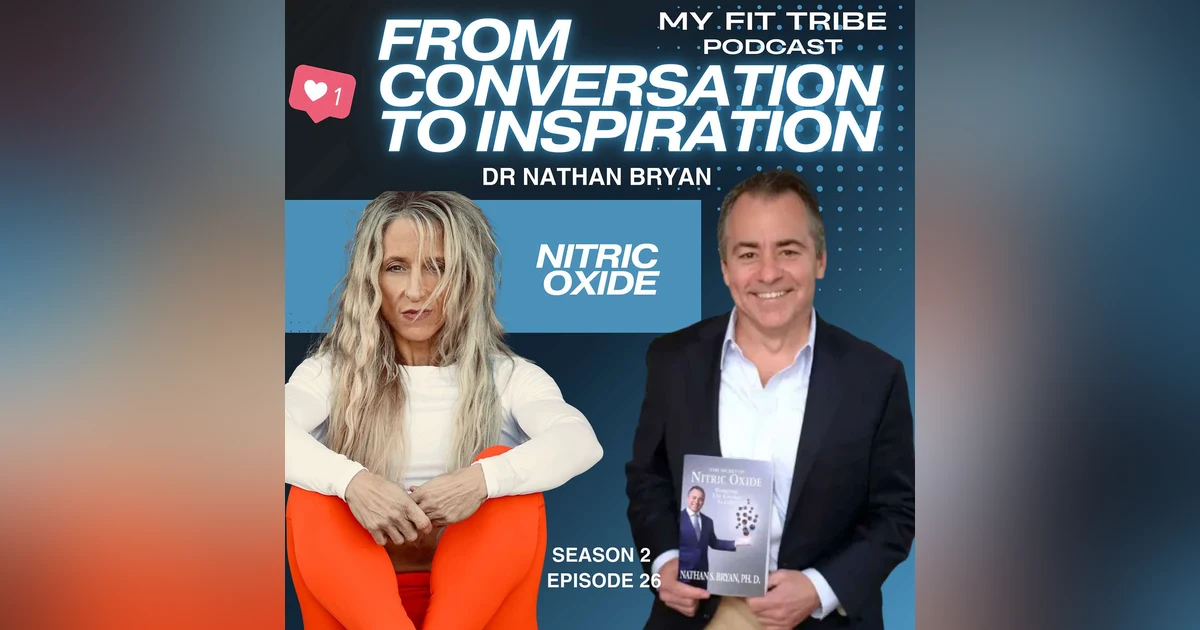


Today on the My Fit Tribe podcast, I’m joined by Dr. Nathan Bryan for a powerful conversation about nitric oxide — what it is, why it’s essential to your health, and how its production declines as we age.
We break down the fundamentals, explore why this molecule is so critical for cardiovascular health and overall performance, and discuss the lifestyle habits and supplements that can help support your body’s natural production.
It’s an eye-opening conversation with one of the leading experts in the field. The human body is fascinating — and this discussion truly brings that science to life.
Use DISCOUNT CODE MYFITTRIBE for a 10% discount at https://n1o1.com/
Check out his book here
16:30 - [Ad] Just Be True ~ A Soul-Led Podcast
17:16 - (Cont.) Dr Nathan Bryan- Nitric Oxide: What to know about this essential molecule!
Throughout my own life and fitness journey, I have had the privilege of meeting incredible people who've shared valuable insights on mindset, health, fitness, and spiritual growth. The profound impact of this knowledge on my own life has inspired me to share it with all of you. I'm Erica Sweeney, host and founder of My Fit Tribe Podcast. Join me as we explore inspiring conversations with experts, thought leaders, and everyday heroes who offer their stories and practical tips to help you on your own journey. From nutrition and fitness to mental well-being and personal or spiritual growth, our mission is to empower you to take charge of your health and live your best life. We are more than just a podcast, we are a community. Through coaching, a wealth of shared knowledge, and a strong support network, we are here to guide and encourage you every step of the way. Come be a part of our tribe. Today on the MyFit Tribe Podcast, I'm joined by Dr. Nathan Bryan for a powerful conversation about nitric oxide, what it is, why it's essential to your health, and how its production declines as we age. We break down the fundamentals, explore why this molecule is so critical for cardiovascular health and overall performance, and discuss the lifestyle habits and supplements that can help support your body's natural production. It's an eye-opening conversation with one of the leading experts in the field. The human body is fascinating, and this discussion truly brings that science to life. Today we're joined by Dr. Nathan Bryan, an internationally recognized biomedical scientist and the founder and CEO of Bryan Therapeutics. Dr. Bryan is a pioneer in nitric oxide research with over two decades dedicated to translating groundbreaking science into real-world therapies. His work has reshaped how we understand cardiovascular health, metabolic disease, and the body's natural signaling systems. Through Bryan Therapeutics, he's leading the development of innovative treatments designed to address some of the most pressing chronic health conditions of our time. Hello, Dr. Brian. Thank you for joining me.
SPEAKER_01Well, hi, Erica. Great to be with you.
SPEAKER_00I'm looking forward to hearing about your therapeutics and nitric oxide and everything that you're doing. But first, let's find a little bit more about you and how you got into nitric oxide therapies.
SPEAKER_01Well, I'm a small town, country Texas boy. I grew up in a small town, and you know, after that I went after high school, I attended the University of Texas, got a degree in biochemistry, and then from there I went to LSU School of Medicine. And that was where I first was introduced to the science of nitric oxide. I was uh working on a PhD in molecular and cellular physiology and uh trained under a nitric oxide scientist. The Nobel Prize had just been awarded for the discovery of this molecule in the cardiovascular system. So it was an exciting time in science, and there was a lot of promise in this field of nitric oxide. But you know, there was a lot that we knew about nitric oxide, but there was a lot we didn't know because this gas that's produced in the human body is gone in less than a second. So we had to figure out how do you detect this fleeting gas? And then once nitric oxide's produced, where does it go? What does it become, and how does it signal? So once we started, you know, down that path and making a lot of discoveries and understanding nitric oxide metabolism and what it what it is, what it does, then that really led us into a new direction of, you know, how can we develop novel therapies and product technology that can restore and recapitulate nitric oxide production and signaling. So, you know, once I started on that path, it was exciting. You know, we'd made a lot of discoveries and it just kept me intrigued and, you know, kept me in the field now for more than 30, about what, 25, 30 years now.
SPEAKER_00Interesting. So let's just go back to basics a little bit for everybody who's listening to talk about, you know, whether how the body creates nitric oxide and what types of symptoms occur when we're no longer producing it.
SPEAKER_01Yeah, no, look, I think that's an important concept because, you know, as I'm sure we'll talk about, there's a lot of companies out there selling products marketing towards nitric oxide. But, you know, unfortunately, unless you understand how the human body makes nitric oxide and then understand what leads to a loss of its natural production, you really have no business developing nitric oxide products because it's a complex science that most people and most companies don't understand. So, what we know today is that there's an enzyme, and it's found in many cells in the body, but it's it was first discovered in our endothelial cells, and these are the cells that line all blood vessels throughout the body. And this enzyme is designed to take L-arginine and through a multi-step biochemical reaction generate nitric oxide gas. And this is what regulates you know blood vessel tone and blood pressure and tissue oxygenation and nutrient delivery to every organ, tissue, and cell in the body. And so what we're finding is that that enzyme becomes dysfunctional or less active with age. And we'll talk about that later. But there are a number of things that contribute to a loss of its function. So there's an age-related decline in nitric oxide production that really leads to age-related chronic disease. So that was the first pathway to be discovered, but we've also discovered that there are bacteria that live in and on the body that provide an important source of nitric oxide. And these bacteria typically take inorganic nitrate, which is formed from the oxidation of nitric oxide, or interestingly, it's found in many of the foods we eat, like green leafy vegetables. And then if we consume these in sufficient amounts, and provided we have the right bacteria, then these bacteria can metabolize that into usable forms of nitric oxide in the human body. But this requires a certain diet, it requires specific and selective bacterium, and it requires stomach acid production. So once we s understand the steps in this process, you know, we can start to understand things that are disrupting nitric oxide production.
SPEAKER_00So I love that you talk about the natural formation of it, because oftentimes with therapies, you know, we go to pharmaceuticals and um, you know, people are really quick to take uh a drug that's prescribed by a doctor because they think it'll be fixed everything, but they're not really willing to make changes in their lifestyle in order to maybe get the same result. So I love that we touched on that. Um, let's go back to the therapies that have been used in the past, because I know there was some, there's some concern over treatments that were used for nitric oxide production over the years and how that has changed.
SPEAKER_01Yeah. We know once nitric oxide was first discovered, and to be a vasodilator and to improve oxygenation, the first therapy that was ever introduced into humans was in premature babies with pulmonary hypertension. So the lungs are typically the last organs to develop. And so when babies are born premature, they typically have underdeveloped lungs. And there's a mismatch in what we call ventilation to perfusion. And then so these babies are born blue. It's called blue baby syndrome. And so the first clinical indication for this was giving nitric oxide gas in the neonatal intensive care unit, and it completely oxygenates, opens up the pulmonary circulation, and improves oxygenation. So within a period of seconds, you see these babies turn from blue to nice pink, polyperfused. And so this has been life-changing for you know the most vulnerable and high-risk population, human population there is premature babies that are in critical care. So, but again, this has to be delivered as a gas through a nasal cannula. And so that's been FDA approved probably for you know 20, 30 years now. And then now you can use that off-label for adults in cardiopulmonary bypass, or it was used during COVID to improve blood oxygen saturation in chronically or critically ill COVID patients. But that's really been the cornerstone therapy and really the only approved indication of nitric oxide. There have been many pharmaceutical companies that try to develop nitric oxide-based therapies over the past 40 years that they've they've failed. And I think they failed because they're using the wrong approach. And I'll just let me just go back because you made a very important point on pharmaceuticals. And because pharmaceutical drugs are intended to treat symptoms of disease and not the mechanism of disease, that you know, they're they're typically inhibitors of biochemical reactions. But nitric oxide is a completely different field of therapy because there's never a condition where there's too much nitric oxide. So developing a synthetic compound that inhibits a biochemical reaction isn't really a source of therapy or model of therapy for nitric oxide. Really, it's always a deficiency of nitric oxide. So, how do we give nitric oxide at the right dose through the proper route of administration to the right patient? That's been the challenge in the field. But you know, there are many companies out there, you know, going back to the late 90s that started using L-arginine as a potential, you know, therapeutic agent. And L-arginine is an amino acid. It's found in dietary supplements. But what we found is that we're never deficient in L-arginine to make nitric oxide. So supplements are designed to supplement what's missing. If we're never missing arginine, it doesn't make sense to supplement. Furthermore, there are populations that L-arginine should not be given in supplemental doses. And those are patients with endothelial dysfunction, which means the enzyme is unable to convert arginine to nitric oxide. And in those patients, it takes arginine and makes superoxide, which is an toxic oxygen radical out of it. And there's been, you know, two clinical trials published that post-infarct patients, these are patients who had recently suffered a heart attack, were given L-arginine as a supplement dose, and it led to increased death. Post-infarct mortality and morbidity increased in patients who were getting L-arginine. And they stopped that trial in 2005-2006 because it was killing people. I mean, the last thing supplements need to do is to be harmful. The only regulation is that they're safe. And then a similar study the following year in 2007 revealed that if you give arginine to patients with peripheral R disease, then they actually get worse. So arginine is not a viable therapy. It should not be used as a means to enhance nitric oxide production. And then you've got companies out there that are putting L-citrulline in it, you know, thinking that it's a better substrate, but L-citrulline is a byproduct of nitric oxide production. It's not a precursor. So, I mean, that's just the kind of the global ignorance on companies that are selling nitric oxide products. And they do it because they don't know better, right? They're not biochemists, they're not scientists, they're not doctors who understand this complex science. So, again, they really have no business in marketing these products, which can actually do a lot of harm and in some cases cause death in patients. And you know, it could kill the entire field.
SPEAKER_00You know, it's frustrating as a consumer because you have the pharmaceutical side, which, again, I'm maybe biased, but I know it's not a big fan of it. Um, and then you have the supplement side, which can do well, but there's no guidance, there's no oversight, and you really don't know what you're taking and how it's going to affect you. So on an individual basis, it's kind of, you know, uh wild, you know, out there not knowing what it is.
SPEAKER_01Yeah, it's the wild, wild west. You know, look, there are a lot of good supplement companies out there selling really good products because you know, if we're deficient in things, and most Americans are nutrient deficient. So we almost have to supplement missing nutrients because the food we eat is completely devoid of most nutrients that we need. So supplementing things like vitamin D, vitamin C, chromium, uh, magnesium, all these things that maybe deficient, iodine is simple, right? Because these are typically, you know, stable molecules. You can put in powder form, you can put them in a capsule, but nitric oxide is not that. Nitric oxide is a gas with a half-life of less than one second. And if you don't know how to control and dictate the metabolic fate of nitric oxide or understand the mechanisms of production, these companies should not be in the nitric oxide space. And again, they're doing the consumers a disservice because they're providing products that do not, not only do they do not work, they cannot work. Because these companies don't have this. And I see CEOs of these companies out there who are former tech executives who have no idea about science talking about nitric oxide and trying to convince you beets are nitric oxide and selling beets and different form factors and out there talking about how important nitric oxide is and that they understand the science when they have no idea about the science. So that that is a major problem in the field. And you got companies spending millions, tens of millions of dollars advertising on TV and radio and you know, supporting you know athletic programs and universities and claiming the science. But unfortunately, their products do not work because they cannot work. These people do not understand the basic science. And it's not only disingenuous, it's fraudulent, it's deceptive, and it's dangerous.
SPEAKER_00Right. So as far as nitric oxide goes in the body, let's talk a bit about the symptoms that occur when as our body starts to lose the production of it. I think a lot of people associate like nitroglycerin with you know heart attacks or high blood pressure or ED for men. Um, but let's talk a little bit about you know why, what happens to the body when you stop creating it.
SPEAKER_01Now, that's a very important concept because it's not something that we measure, right? If you go to your doctor, it's not part of your blood labs, it's not part of any functional measurement. So we have to rely on symptoms. And so we started to recognize these when we understand what nitric oxide is and does. So the first sign and symptom of a you know, a deficiency or compromised system to make nitric oxide is sexual dysfunction and or erectile dysfunction. And this is in both men and women because nitric oxide is a vasodilator, so it's dilating the blood vessels to improve blood flow specifically to regions on demand. So if we're about to be intimate, we've got to dilate the blood vessels of the sex organs to get improvement in blood flow and engorgement. And that's what leads to an erection, whether a penile erection or a clitoral erection. It's an increase in blood flow. And that blood flow can only happen if the blood vessels produce nitric oxide. So again, if the enzyme that makes nitric oxide is not functional, you don't get nitric oxide produced, you don't get vasodilation, and we get sexual dysfunction. So that's number one. And 40% of the 50% of the people over the age of 40 self-report some type of sexual dysfunction. That's a huge problem. Number two, your blood pressure starts to go up. Because if you can't dilate the blood vessels, now your blood vessels are chronically constricted. And if you go back to your high school physics classes, we we know that pressure equals volume times resistance. So we have the same volume of blood now pumping through smaller pipes. Simple laws of physics tell us pressure has to go up. And two out of three Americans have an unsafe elevation in blood pressure. Number three, you start to develop metabolic disease and insulin resistance and diabetes because nitric oxide is required for insulin signaling. And again, if the enzyme can't make nitric oxide, insulin can't do its job. The cell becomes resistant to insulin. That's insulin resistance. And then number four, we develop exercise intolerance if we can't go out and maintain a brisk walk or run or walk up a fight of steps without getting short of breath. Uh, then tells us our body's not making nitric oxide, it can't dilate the coronary arteries to meet the increased metabolic demands on the heart. And then fifthly, you start to develop my cognitive impairment, we call it brain fog, dementia, and eventually Alzheimer's. Alzheimer's is the disease of nitric oxide deficiency. So if you have all of those, and these are all, you know, incremental, and we have to pay attention to our body. Our body is always talking to us, and if we don't listen, we get sick and we die.
SPEAKER_00I think it's interesting that you talk about the insulin resistance and then Alzheimer's, because there's now been a correlation between the two, which makes sense then if they're both related to the deficiency of nitric oxide. And I hope that the research going along with the treatment for Alzheimer's is progressing based on all of this information. Um, you talk about metabolic function too, because I think that's everything, you know, everyone suffers with that at some level, especially as we get older. And it's difficult to navigate again treatments and how to feel better. And starting again with lifestyle choices. You talk about the diet, how it helps your body to create it and being able to move and the exercise. How important is it for people as they age to keep those basics?
SPEAKER_01No, look, again, we have to understand how the human body makes it, what leads to a loss of its natural production. And it's it's diet and lifestyle. You know, the the science of nitric oxide is really complex, but the solution can be really so simple. And so movement, we have to move, we have to exercise. Exercise is medicine because it stimulates and activates nitric oxide production. We have to practice deep breathing exercise, nasal breathing, and not mouth breathing. We have to get away from mouth breathing. The mouth is not part of the respiratory system, it's part of the digestive system. It's not an instrument for breathing. In fact, and many people are mouth breaters, and it's leading to chronic disease. So, good diet, a balanced diet in moderation, high protein, good quality fats, limited carbs, no sugar, sugar glycates, it sticks to enzymes, sticks to proteins, and you know, sugar's a poison, sugar's a toxin, and sugar's the enemy. So a balanced diet in moderation, 18-hour daily fast with exercise really is the optimal lifestyle. But if we're using things like fluoride in our toothpaste, if we're using an acids, if we're using antiseptic mouthwash, and if we're exposed to other toxins in the environment, then we can exercise, we can eat right, but we're not going to get the benefits of it. Because again, we have to rely on the bacteria in and on our body. We have to rely on sufficient stomach acid production. And so, you know, give the body what it needs, remove from the body what it doesn't need, and the body heals itself. So a lot of people have a lot of good intentions and try to eat right and exercise, but if they're using, you know, fluoride in their toothpaste, if they're using antiseptic mouthwash or in an acid, it completely blunts the nitric oxide benefits of diet and exercise. So we have to stop doing the things that are inhibiting the natural production of nitric oxide.
SPEAKER_00I'm glad you touched on that because I've heard you talk about that, and it that part of it really fascinates me. Let's talk about the microbiome in the gut and in the mouth and how important that is and how things like fluoride and mouthwash make a difference and what type of research that you guys found in order to come to that conclusion.
SPEAKER_01Well, look, the entire microbiome project has been completed. We know that there are bacteria that live on our skin, you know, in our gut, in our mouth. There's there's the bacteria, the ecology of those bacteria in the microbiome is different for every environment. So the gut bacteria is different than the mouth bacteria because they do different jobs. So what we've discovered and others discovered is that there's ammonia oxidizing bacteria on the skin, that when we sweat, we excrete ammonia, these bacteria oxidize the ammonia to nitric oxide, improves skin blood flow. But if we're using, if we're taking a bath two to three times a day or using antibacterial hand wash and soap and other destroying the microbiome, then our skin isn't healthy. We get fungal infections, we get dermatitis, we get acne outbreaks. And the same thing happens in the gut. If you take an antibiotic, it causes gut dysbiosis and it causes systemic disease. Well, it's no different in the mouth. If you're using fluoride, and by the way, fluoride is put in toothpaste in the drinking water because it kills bacteria. So if we're bathing in fluoridated water, it kills the bacteria on our skin. We're breathing it, we're heating the water up to 105 degrees, it volatilizes it, we're breathing in the lungs, kills all the bacteria in our nasal passages. And if we're drinking fluoridated water or using fluoride toothpaste, it's killing the bacteria in our mouth, in our gut, on our skin, everywhere. And then, you know, two out of three Americans use antiseptic mouthwash every day. And you don't have to, you know, look very far. Look at the commercials for Listerine, for example. They they proudly advertise it kills 99.99% of the bacteria. But today we know that if you kill the bacteria, it causes systemic disease and makes people sick. So these companies are still out there advertising that you take this product, it's gonna kill the bacteria in your mouth, and when you do that, it's gonna make you sick. And they promote it to have healthy breath or have fresh breath. I mean, it makes no sense from a scientific standpoint. And so we have to get away from that. I mean, the bacteria that live in and on our body are there for specific reasons. It's a symbiotic relationship. And when we destroy the microbiome, we become more vulnerable to these opportunistic pathogenic bacteria. So everything we do on a daily basis, it seems like it's disrupting our own natural defense and making us more vulnerable and susceptible to illness, which then makes us more dependent upon pharmaceuticals. So it's a wonderful financial model, but it's at the expense of our own health, you know.
SPEAKER_00Right.
SPEAKER_01Crazy.
SPEAKER_00We have a community near here that recently voted to eliminate fluoride from their water. And now it's going back and they're now going to pay the money to put the fluoride back in the water because they had so much pushback. Fluoride is so contentious, but there's proven that it's not good for us. Why do you think there is such a stance? You know, why that's, you know, it seems like you're right or wrong. Like you're so difficult to penetrate that that theory.
SPEAKER_01Well, you know, I'm not sure. There's a lot of politics involved in in public policy, obviously. But if you look at, and there's there is a lot of pushback on floor because it's it's been in the drinking water for more than 100 years. And just last year, maybe in in last within the last year, the National Toxicology Program, which is mandated by the US government to test any potential toxicant that humans are exposed to, that Americans are exposed to. And this study, the National Toxicology Program, completed this study almost six years ago. But yet the government Delayed publication of it because the data was so damning. And so what we look at is risk-benefit. If we're exposed to something, what's the benefit of being exposed to it? And if there's benefit, what's the potential risk of that benefit? And what this multi-year multi-dulcet escalation study found was there's really no benefit to fluoride in the drinking water. It doesn't reduce cavities, which is the original kind of intent or argument that they put. And so if there's no benefit, what's the risk? Well, the risk is it's causing antiseptic effects, it's killing the good microbiome in the body, it lowers IQ by as much as seven points in kids, it shuts down your thyroid function, and it's a neurotoxin. So with that quotient, there's no benefit, and the risk is enormous. Then anybody with any sense of objectivity would say remove it from the supply, remove it from complete exposure to humans. Because it's making people sick. We have an epidemic of hypothyroidism, lowering IQ in kids by seven points. I mean, that's the worst thing we need. And so but if you if you think about this, what it means on a larger scale, that it's causing dysbiosis, it's causing hypothyroidism, it's causing systemic disease, it's making people sick, sick people need medicines. Medicines, big pharma's the biggest industry in the history of the world, multi-trillion dollar global industry. It makes perfect sense. So if the goal is to make people sick and dependent upon pharmaceutical drugs, this is the first thing you would do. Make people sick, expose them to something that's going to make them sick. And then put them on a drug, get their cholesterol below 200, recommend antiseptic mouthwash, recommend an acids, put people on antibiotics for a viral infection. Makes no sense at all.
SPEAKER_00Isn't it crazy? It's just so frustrating. It's just, and it's so contentious. But, anyways, we're not here to talk about pharmaceutical. I just wanted to touch base on that because it sounds like all of these things that they're doing is again decreasing the body's production of nitric oxide, which is then increasing our risk for inflammation and for getting sick and all of that. So let's talk a bit more about what you're doing at Brian Therapeutics in order to help the body to be able to continue to generate it. And because it has such a short lifespan of that less than one second, how does your product allow the body to do that?
SPEAKER_01Well, first we go back and again understand how the human body makes it, what leads to loss of its natural production. And then we're a kind of a clinical stage biotech company, but we don't make synthetic compounds, right? So we're not your typical pharmaceutical company. But because we know what how nitric oxide is produced, where it goes, what it becomes, and how it signals, now we can understand how to restore its natural production. So in 2007, we published a paper showing that nitric oxide is a hormone. And so we look at nitric oxide as hormone replacement therapy, no different than estrogen replacement in women, postmentopause in women, or testosterone replacement in men who have low testosterone. It's the actual molecule we give, right? So we're not giving you precursors or substrates and hoping your body can make nitric oxide out of it. We have to give you that molecule back. And so once we understood that, we started developing consumer products more than a decade ago. We've got you know a nitric oxide releasing lozenge that we're now developing into drug therapy. So this law, again, nitric oxide is a gas. It's a very important concept. And so, how do we make a solid dose form of nitric oxide gas? And that's been my claim to think. So we make an orally disintegrating tablet, you put it in your mouth, and I designed it to have a nitric oxide release profile over five to six minutes. So I want to deliver a certain amount of nitric oxide over a certain period of time. And again, this goes back to the data in premature babies with pulmonary hypertension, the most vulnerable high-risk population there is. And if that nitric oxide given at that dose through a nasal cannula is safe in that population, then I can develop a, but also therapeutic, then I can deliver that same amount of nitric oxide over a similar period of time in an orally disintegrating tablet in an outpatient setting. So that's what we make. If your body can't make nitric oxide, we do it for you. But we also fix the enzyme. So we understand the mechanism of why that enzyme becomes inactive and dysfunctional. So we fix the enzyme. And because this lozenge resides in the mouth, it's completely changing the oral microbiome. So if we get people off antiseptics, get fluoride out of their toothpaste, now this lozenge is able to repopulate the good bacteria, kill the pathogens, selectively remove the pathogenic bacteria, the odor-causing, halitosis, bad breath-causing bacterium. And so when we fix the enzyme and we restore the microbiome, we've improved the body's ability to make nitric oxide nitrate. And so that's been a remarkable technology. And we're developing that same technology for heart disease, which is number one killer of men and women worldwide for the past hundred years. And we're developing, as you mentioned, as an Alzheimer's treatment through the FDA and Alzheimer's drug therapy, because it affects the metabolic aspects of Alzheimer's and it affects the vascular component of Alzheimer's, restores cerebral blood flow, perfusion of the brain, gets glucose into the cell, improves mitochondrial function. And when you do that, you don't get misfolding of proteins, you don't get amyloid plaque, you don't get the taultangles, and it addresses the root cause of Alzheimer's disease. So that's what makes our products and technology different than all these other yahoos out there pitching beets or so-called nitric oxide products. But you know, drug therapy and development is very expensive. So I developed a consumer line of products to fund the more expensive drug trials because I don't want to have to go raise money from venture capitalists or private equity that want to come in and control and dictate them the fate and the direction of the company. I will never, never abdicate my role and strategy for the company to some outside person who doesn't understand the science and is looking to make money rather than do the right thing and advance the science.
SPEAKER_00Where do you see medicine going forward now that we have AI coming into the picture and we are able to have these conversations about alternative therapies and the research, the goal of the research isn't funded by the pharmaceuticals? And we're finding these natural components like peptides and you know what you're doing in order to help the body naturally. So where do you see, do you think at some point that it'll be a standard practice of care where doctors are actually incorporating these treatments? Hopefully.
SPEAKER_01Absolutely. I mean, look, at the end of the day, you can't ignore the science. Science drives innovation. It's science drives the development of safe and effective therapeutics. So, I mean, I truly believe in the next few years, I think within one or two years we'll have a nitric oxide drug approved on the market for ischemic heart disease. And I think within the next three to five years, we'll have a drug approved on the market for Alzheimer's. And we're making a topical drug for diabetic ulcers and a non-healing wound, it's nitric oxide-based. But the future of medicine is dependent upon nitric oxide because there's not a single disease indication where nitric oxide deficiency is not part of the problem, either an association or causation. But yeah, I think when you when you talk about AI, look, AI is only as smart as the information you feed it. And because there's so much misinformation out there on use of arginine, use of beet, if you prompt AI to give you a nitric oxide kind of strategy for enhancement, it's going to take the information that's out there, whether it's right or not, and still spit back to you kind of, oh, well, take arginine or take citrulline or take beets. When that's wrong. Because the strat these companies who put the information out there, there's so much misinformation that even AI can't really take information and impart knowledge. And then the goal of knowledge is to impart wisdom. AI can't do that because it can't discriminate between what's BS and what's real science, because there's all the inform you can find whatever you want on the internet.
SPEAKER_00Yeah.
SPEAKER_01And AI searches this and then regurgitates back in a kind of condensed form of what's out there. So AI is only as good as the information that it's fed. And unfortunately, in the nitric oxide space, 99% of the information out there is complete bullshit. And so it's just regurgitation by AI, and it's misinforming and misleading uh consumers, and it can be detrimental.
SPEAKER_00Well, and the fact that you say that every illness is really a result of the deficiency of it, it's remarkable that this hasn't been explored more. You know, that that's phenomenal. I have a question because you talk about the expansion of like your blood vessels with the nitric oxide production. And I know a lot of people who either for through injury or whatever get really bad headaches. Two of my kids have a history of lots of migraines and now they get the um when it's weather system comes in, they get terrible headaches. I have another friend of mine who got in a really bad car accident and now suffers from them tremendously. Is this something that you can use to help headaches?
SPEAKER_01You know, depending upon the etiology of the headaches, and so let me just go back because there is a correlation here. And nitroglycerin, which is metabolized into nitric oxide, it's a completely different mechanism that we take. One of the main side effects of nitroglycerin are really bad headaches, right? Because it dilates the cerebral arteries and you've got increased pressure in a closed kind of bony structure. And so it can cause tension headaches. And in some patients, it'll cause migraines. But we don't see that in our lows and because we we're generating nitric octet with a completely different mechanism. But for me, it's it's the etiology of headaches could be you know a cranial sacral pump issue. You know, if you get a buildup and this cranial sacral pump isn't working because you've got malalignment of the spine or or something going on there, then you can develop tension headaches. And you know, sometimes a good adjustment or realignment can do that. If you're exposed to toxic chemicals and mold and things like that, it could cause headaches. Uh, but here's what we're finding. And we haven't done randomizo-controlled studies on this, but we have a really strong database and feedback from consumers who had suffered from chronic migraines. And what they report back is that when they started using our lozens, the frequency and severity of their migraines was completely improved. So we don't we don't have a mechanism to explain it. Maybe it's it's perfusion and maybe it's a, you know, many migraines and headaches can be from cerebral vasospasms, where it's a loss of balance between vasoconstrictive and vasodilatory molecules, nitric oxide being one of those. And we restore that balance. Now we can adequately perfuse and prevent the vasospasms that lead to headaches or or migraines. But I think what we're finding is that there's four commonalities of all chronic disease. And it's always reduced blood flow, we call hypoxia ischema. There's inflammation, oxidative stress, and immune dysfunction. And nitric oxide addresses all four of those. It dilates the blood vessels, inhibits inflammation, prevents oxidative stress, and it corrects the immune dysfunction that we see in chronic disease. So this one molecule, remarkably, addresses the root cause of nearly all age-related chronic diseases.
SPEAKER_00Wow, that's remarkable, isn't it? I mean, it really is. The body is so complex, but yet to find something that is correlated to everything, it's really a good place to focus for everyone who wants to be healthier in a more natural way. So, with the creating this product now for the consumers, um, so how do people find it or how do they have access to it?
SPEAKER_01Well, we have a website called n101.com. It's the letter N number one, letter 0 number 1.com. It's not n101.com, but n101.com. Everything we do is geared toward enhancing the production of nitrococcides. So we have a uh an orally disintegrating tablet, the N101 lozenge. You know, because there's so much misinformation and fraudulent marketing around beets out there, I developed a fermented beet powder, remove the oxalates, that if people are looking for beets as a means of exercise performance or inner natural energy, then you know I felt an obligation to give them a product that actually works. It's based on beets. But again, we ferment it, we remove the oxalates, and that product is called NO beets. We make a topical nitric oxide for skincare and beauty. That'll be apply to the face, it's a dual chamber, it improves blood flow to the skin. Um, we make a fluoride-free nitric oxide-friendly toothpaste that stores the oral microbiome. We're developing a nitric oxide-friendly mouth rinse. But those are our consumer products. Um, and then, you know, I'm less interested in selling products, but more interested in providing good education, awareness in the science around nitric oxide. So, you know, I encourage people to subscribe to my YouTube channel, Dr. Nathan S. Bryan Nitric Oxide. I'm on social media, Instagram, uh, you know, Dr. Nathan S. Bryan. But really, the best um kind of resource is my latest book called The Secret of Nitric Oxide Bring the Science to Life. This is a book I published last year. I launched it on Fox and Friends last year, but it it tells the science of nitric oxide, the actual science, so that consumers can become informed and aware to where they're not duped into buying all these meat products that are advertised and understand what nitric oxide is, how it's delivered, so they can make you know good choices and spend their money wisely on products that work.
SPEAKER_00Well, and I like it too because you don't talk just about the product, but you also, again, I'm gonna repeat, you talk about the lifestyle choices that people make will help in this as well, which again is the whole foods and the being active, especially as we get older. You know, we people tend to exercise less as we get older, but that will make you older faster. So it's very important to remember that movement is so important.
SPEAKER_01Yeah, and I think Dr. Cooper in Dallas once said that people people once thought that uh people stop exercising because they get old, but it's people get old because they stop exercising.
SPEAKER_00Right.
SPEAKER_01So we have to move, we have to make it a point. But look, we we have to get back to the basics and we have to stop doing the things that disrupt nitric oxide production. So look, if you just change your diet, do an 18-hour daily fast, eat good high-quality proteins and good fats, and limit the amount of carbs you eat, get rid of fluoride, stop using mouthwash, and wean off an acids, now you've released the brakes on your body's ability to make nitric oxide. And you're gonna be amazed at how well you're gonna feel. You won't realize how bad you felt until you feel good because many people just accept the fact that they feel bad and they just you know write it off as a sign of aging. But if you stop doing these things that are harming your body and not allowing your body to work, you're gonna, I mean, I'm 52, but I feel better today than I did when I was probably 32. But I've I put into practice these things we've learned over the past 20 or 30 years, and I make a habit of it. Every day I do an 18-hour fast, every day I exercise, every day I do things to improve my nitric oxide production, and it's based on real science. So we've been able to apply the basic science and mechanisms into real life strategies that completely life change.
SPEAKER_00I'm gonna ask about the 18-hour fast because fasting is one of those things that I hear about that I have have not done out of knowing that I will not be able to do it easily. So every day you only eat within that six-hour window, is that what you're saying?
SPEAKER_01That's right. Between 12 and 6. Because if you look at the intermittent fasting or even caloric restriction, but I believe it's the intermittent fasting that's better. Your body adapts to that prolonged period without nutrients. You improve the metabolic flexibility. If you eat your last meal at six, which no matter if you're doing intermittent fasting or not, you should never eat past, say, six or seven or at least, you know, four to five hours before bedtime, because it takes that time to get kind of downstream in the in your digestive system. But then if you wake up, you know, I go to bed typically around nine or ten, I wake up at five or six, I have a cup of coffee, I work out, I do all the stuff. And then if you then it's probably eight or nine o'clock. So if you can just wait another three to four hours to eat, I mean, it's it improves autophagy, which is cleaning up all the cellular debris and removing senescent cells. It induces these longevity genes and pathways, upregulates PGC1 alpha, mitochondrial biogenesis, it improves your fasting insulin levels, your fasting glucose levels. And really that's the basis, what the drivers of inflammation and disease. But then once you eat, you know, you can't, you gotta make good choices. And typically I eat a lot of good protein. The older I get, the more protein we need. Good quality fats, throwing a few vegetables, but I typically try to avoid simple carbohydrates and and sugar. And I certainly don't take my nutrients through sugar gummies and chews and things like that.
SPEAKER_00Right. I know. Sugar is just evil.
SPEAKER_01Yeah, but here's what I found. Because, you know, many times before I did this, I would wake up hungry. And it was like I felt like I needed to eat. And then once I got, if you do this for one or two days, the first two, maybe three days is going to be tough. And it's it's a mental exercise. You have to deny yourself these pleasures. And I think that's a really important exercise for most people, denying ourselves the pleasures of the world, whether it's through fasting or eliminating things that aren't good for us. But you lose the hunger pains. You know, many days I'll wake up and it'll be one o'clock and I go, Oh, I haven't eaten because I'm not hungry. And, you know, Western culture, we eat, it's it's you know, it's almost like a ceremony. Many times we don't eat because we're hungry, we just eat because we're grazing throughout the day. And you know, but you have to remind yourself, oh, I it's one o'clock, I need to eat something.
SPEAKER_00Right.
SPEAKER_01But the hunger pains go away and it gets easier. So, you know, every day I do an 18-hour fast, once a week I'll do a 24-hour fast, and then you know, once a quarter I'll do a 48 or 72-hour fast. I did a 48-hour fast uh last week, and it's it's really remarkable what you can accomplish when you put your mind to it.
SPEAKER_00Yeah, you know, I went through a bodybuilding prep where I was very strict with what I ate. I was, you know, with my calories and what I was eating, and that was every day, you know, being that restrictive, but there's it's that habit. Like when I get up, I'm used to having my protein shake before I work out, and it's just habitual. So when I get up in the morning, I'm used to having that right away. So I eat most of my meals before, you know, two o'clock. I don't eat late, but
SPEAKER_01well lucky. No, that's a completely different strategy than most Americans. Most Americans aren't training for competitive bodybuilding or fitness competitions. Most Americans are unfortunately couch potatoes and aren't active. So that's completely different because your metabolic demands to achieve your goals are much different than someone who's not physically active. So I think that's that's an important concept because, yeah, for you, you know, maybe an 18-hour fast if you're gearing up for a competition isn't ideal for the goals that you're trying to accomplish.
SPEAKER_00Yeah, there's so much, there's so much to learn and so much to try, which is what I love about this space because I'm always learning there's new approaches. And I think everybody has a different body and needs different things as far as nutrients and what type of, you know, some people do well in carnivores, some people do well in vegan, but there's so much crap in our food that we need to get rid of that for sure. Like everybody needs to do that.
SPEAKER_01Yeah. Now, once you eliminate, and I only eat, you know, whole foods, uh, I don't eat processed foods. If it's got ingredients in there that are preservatives, and you know, fortunately, I I live on a ranch, I raise my own beef and and grow our own vegetables, and we don't get a lot of food from the grocery store. Um, so that's you know, once you do that and eliminate these things that are harmful in our food supply, it's really remarkable on um on the how you feel and in your body composition changes.
SPEAKER_00It does, and it feels good for sure. Absolutely. Well, I'm so fascinated by it. I'm gonna put links to your website and to your book in our show notes. Um, so I want to thank you for your time today and in sharing this information. Before we wrap up, I'm gonna ask you my last question, which is a two-part question. Now, we didn't get into like we got where you started as far as it, but the nitric oxide must have just called your name when you were young, and this was the path you were supposed to take. So if you go back and talk to your past self, maybe the one starting in college where you first learned about it, what would you tell your past self?
SPEAKER_01You know, just trust the process. God has a plan for you. You know, I look back in my life and realized I could never script, you could never script kind of the journey and the path that's got me where I am today. And so, you know, I know that, you know, had to trust the process, trust the plan that, you know, we're all born with a mission. And, you know, it's been said there's two important days in your life, the day you were born and the day you realize why you were born.
SPEAKER_00And
SPEAKER_01when we look back and figure out, and most people, sometimes it takes people a little bit longer than others to figure out their why. Uh for me, fortunately, it happened early on in my academic uh career. But um, you know, I think uh God has a purpose for us all, and we've got to figure out what that purpose is. But, you know, for me it would be just trust the plan and be patient.
SPEAKER_00On that, you know, how different is it for you when you took a path of learning about it and then when it turned into the path of impact? How much did that change your approach to it?
SPEAKER_01You know, it was it was an epiphany for me because we had, you know, there's these feelings of discovery, these eureka moments you talk about in in science that goes, this changes everything. So I've had several of those experiences in the research lab. But really the greatest was, you know, it came back for me personally, my dad, who was a paraplegic, who's still a paraplegic from a car accident in 1984, you know, he had a four-year-old non-healing wound and, you know, he almost died from it, got infected and septic, and all the wound care docs said there's nothing we can do for him. And so I started applying these things that I knew in physiology or medicine and applying nitric oxide, and within six months would heal a four-year-old non-healing wound. When I started him on the nitric oxide, he was on 15 different prescription medications. Today he doesn't take any, maybe if he you know was not very compliant in his diet, he has taken occasional blood pressure medicine. But we got him off 15 prescription medications. And dad's 76 years old, been in a wheelchair for 42 years now, and his coronary arteries are completely clear for an elderly paraplegic, he's done remarkably well. But to see that occur in my dad and see these profound transformational changes that even the best docs in the world couldn't explain or even replicate based on the best med so-called best medicines, you know, that that was when I realized this will change the world. And then we've done this in a number of randomized placebo-controlled clinical child. Took a 15-year-old kid with you know resistant hypertension in the pediatric intensive care unit where nothing would lower his blood pressure. We gave him the lozenge, and four hours later his blood pressure is normal. His heart disease resolved within five months, his kidney disease resolved within five days. I mean, it saved this kid's life. So those were the points and the times when I knew this is transformational, this is disruptive, and we have to see this to the end.
SPEAKER_00Goosebumps. Okay, so now you, Dr. Bryan, could have a conversation with your future self. What would you ask your future self and what do you think he would say back to you?
SPEAKER_01I hope it's good job, my my my faithful servant. You know, I I'm a man of God and just you know trust the process and you know, just don't be distracted by the naysayers and the people who because you know, I like this quote by Schopenhauer from you know 1600. He said, Truths go through three stages. First, they're ridiculed, second, they're violently opposed, and third, they're accepted as being self-evident. And so, you know, it's I'm glad you you survived the ridicule and didn't give in to the harassment. And I'm glad you were strong enough to withstand the opposition, the lawsuits, you know, the people coming after you day in and day, and not giving in to the pressures and selling out to to make a lot of money. Because these are fundamental truths that we've discovered, and the truth is the third stage is self-evident, and the scientist is revealing that this this science and this technology is is self-evident. But um, you know, hopefully it's a it's a high five and a congratulations for staying the course and not giving in or selling out.
SPEAKER_00I have no doubt that that will be the case, and it shows an impact that you're making. So thank you for all that you're doing. I'm happy to share all this, and thank you for the conversation.
SPEAKER_01Thank you, Verica.
SPEAKER_00Thanks for listening to the My Fit Tribe podcast. Tune in weekly for our latest episode for more health and wellness insights and inspiration. For more information, visit myfitribe.org. Don't forget to share, like, and download this episode, and thank you for your support. Please know that the opinions and comments presented here are those of the guests and do not necessarily constitute medical advice or the opinions of MyFitTribe. Copyright 2026, all rights reserved. This podcast is recorded and produced by Jake Johnson at Paradigm Productions in Madison, Wisconsin, and is a production of My Fit Tribe LLC.