Dr. Amanda Preimesberger-All you need to know about Direct Care Providers
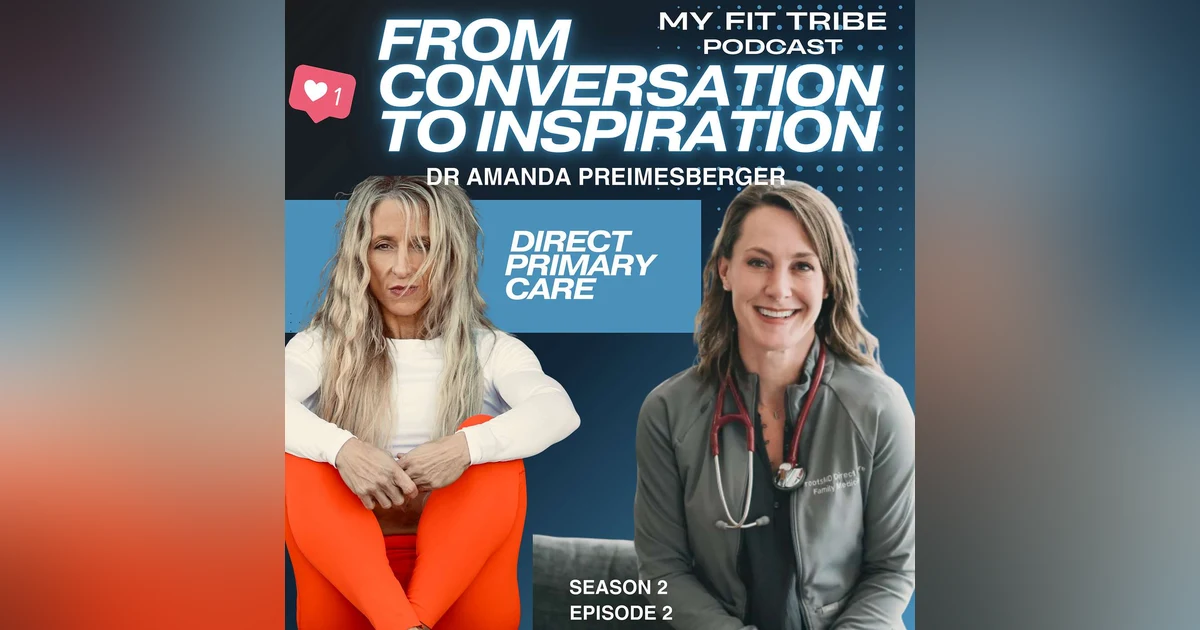

Send us Fan Mail In this week’s episode, I’m joined by Amanda Preimesberger, a dedicated Direct Primary Care Provider and the founder of Roots MD. Together, we explore the world of Direct Primary Care (DPC)—what it is, how it works, and why it’s gaining attention as a more personalized and patient-centered approach to healthcare. Amanda shares her journey into the DPC model, how it differs from traditional healthcare systems, and the powerful impact it can have on both patients and providers....


In this week’s episode, I’m joined by Amanda Preimesberger, a dedicated Direct Primary Care Provider and the founder of Roots MD. Together, we explore the world of Direct Primary Care (DPC)—what it is, how it works, and why it’s gaining attention as a more personalized and patient-centered approach to healthcare.
Amanda shares her journey into the DPC model, how it differs from traditional healthcare systems, and the powerful impact it can have on both patients and providers. We discuss how DPC makes healthcare more accessible, affordable, and empowering, especially for those seeking a stronger, more direct relationship with their doctor.
If you’ve ever felt frustrated by the current healthcare system or curious about how care can be more personal and proactive, this episode offers valuable insights and real-life solutions.
Tune in and discover how Direct Primary Care might just be a game changer for your health!
15:56 - [Ad] Just Be True ~ A Soul-Led Podcast
16:42 - (Cont.) Dr. Amanda Preimesberger-All you need to know about Direct Care Providers
Throughout my own life and fitness journey, I have had the privilege of meeting incredible people who've shared valuable insights on mindset, health, fitness, and spiritual growth. The profound impact of this knowledge on my own life has inspired me to share it with all of you. I'm Erica Sweeney, host and founder of My Fit Tribe Podcast. Join me as we explore inspiring conversations with experts, thought leaders, and everyday heroes who offer their stories and practical tips to help you on your own journey. From nutrition and fitness to mental well-being and personal or spiritual growth, our mission is to empower you to take charge of your health and live your best life. We are more than just a podcast, we are community. Through coaching, a wealth of shared knowledge, and a strong support network, we are here to guide and encourage you every step of the way. Come be a part of our tribe. This week on the My Fit Tribe Podcast, I am joined by Dr. Amanda Primusberger, founder of RootsMD. We dive into the world of direct primary care, what it is, how it works, and why it might be a game changer for your health. If you've ever wondered how healthcare could be more personal, accessible, and empowering, this episode has answers. Let's check it out. Today's guest is Dr. Amanda Primusberger, a board-certified family medicine physician and the founder of Roots MD, a concierge-style direct primary care practice focused on personalized integrative medicine. With over a decade of clinical experience, she blends evidence-based medicine with a deep focus on nutrition, lifestyle, and mental well-being. As a direct care provider, she operates outside of the traditional insurance model, allowing her to spend more time with patients and offer truly individualized care. Thank you for joining me. Thank you for having me, Erica. Due to my recent medical expenses, especially over the last year, this is a topic that I have been so eager to put on the podcast because I think there are so many people that can really benefit with options, right? So before we get into exactly what direct primary care is, look, let's start a little bit about you. So you went to UW Madison with a kinesiology degree, I believe, right? Yeah, I'm a badger lifer. So what got you into kinesiology to begin with?
SPEAKER_01Uh, you know, honestly, I think it was my experience with high school athletics. So I was a gymnast and uh I ran track and I knew that I was interested in medicine and healthcare in some way, shape, or form. But at the time, um, heading to medical school was just kind of not on the radar there. I didn't grow up in a family with physicians. Um, but I was fascinated by human body and injury recovery and all those things. Um and so I started at UW Madison and quickly understood that the kinesiology track and exercise science was gonna open doors in that realm. And so um was accepted into the undergrad uh athletic training program.
SPEAKER_00Awesome.
SPEAKER_01And had the opportunity to work with all sorts of badger sports teams, uh, which is just a really fun uh time. And in the throughout those experiences, I realized I really love understanding injury recovery, prehab, rehab, all those things. But also knew that if I if I stopped with a licensure in athletic training, I didn't, I wasn't gonna get the knowledge in terms of like how do I care for that athlete with asthma? What do I do when they have depression? How do I read the x-ray? How do I, you know, so um that's really when I started to think more about what do I do beyond this? Do I go on to PT school? Do I um, you know, what do I do? Right. And I hustling through undergrad, I was working in the meal room at the medical school and uh just started to get exposure to some of the med students and faculty there. And I was running routes as a courier to the hospital. And so, you know, there's all I think, I don't know if there's one specific thing, but it was just a melding of all those that I was like, maybe I could do this. Uh, and then just started chipping away and um finished med school at UW as well as a family medicine residency at UW. Wow.
SPEAKER_00I I love there's so many moments in this podcast where there's, you know, maybe not one pivotal moment, but a pivotal time, hence the mail room, you know, that really shaped the trajectory of your future. And that just gives me goosebumps. It's so fun to watch. And again, being an athlete and having been did you have injuries when you were competing in high school?
SPEAKER_01Um luckily none that were season ending, right? But I mean, I think I competed at state with a fractured toe and you know, stuff like that, and where you're just like, huh.
SPEAKER_00Um But you understand, you understood the mindset of an athlete, which is probably what got you partly into that. Can you see that? Yeah, there's a little grit there that you stay with you. Yeah. So you start to go to med school, which is which is such a, I can imagine, a very daunting task. We've had a few doctors on this show before, and uh kudos to all of you because of the amount of education, the training, and the discipline in order to get that point. So what when you got into that process, did it turn out like you expected it to, or what was the whole med school like? Um I think it was about what I expected.
SPEAKER_01Uh I mean, holy Moses, right? There you can't really explain the amount of time spent studying until you're really in the thick of it. You know, there's no time for a job, there's no time for uh much of a social life. Um and uh on the same note, I think having an end goal and having gone through hard things, you realize like this is just a this is a chapter, right? Um so I think it was about what I expected. Um there was a a welcome sort of surprise in there when when um so I I was married going into medical school, and then um we ended up having our first baby, my fourth year of medical school. So there's that extra layer that you know um time commitment.
SPEAKER_00Yeah, right.
SPEAKER_01There's I we were talking earlier on it, there's just a lot I don't remember about that phase other than studying and nursing a baby. Oh my gosh, at the same time. Yeah, yeah, right. Mostly, yeah. Oh my gosh. So yeah, but it was good. And and I came through medical school again having had so many different experiences with just some incredible people and knowing that I wanted to try to blend the background of primary care, sports medicine, women's health. I love delivering babies. Um, and so the only kind of natural fit to get the best of all those things was to pursue residency in family medicine because you can you can really get the chance to do it all.
SPEAKER_00Yeah. Yeah. Wow. So then from there you went and got um went into family care. So what was that journey like at the beginning of your career in family care?
SPEAKER_01Uh like still in residency or out of residency? Out of residency. Out of residency, yeah. So I'm so fortunate that we've got just amazing academic um, you know, medical programs in our backyard, right? So I knew having gone through the family medicine program at UW, which was primarily run through St. Mary's Hospital, still is. Um, and many of our rotations are what are called unopposed. So that means that the family medicine residents are the ones doing the most of doing most of the work on you know, on the floor. So like um we have our own kind of obstetrics track, we have our own uh, you know, role in the surgery rotations and things, um, whereas you know at UW hospital for some of those specialty uh rotations and residents um each specialty is really running the show for each department. Sure. Um so being primarily housed at St. Mary's, it gives it gave us a chance to really get to know a lot of the specialists. Um and I loved the community feel of that smaller hospital, you know, a little less academic and a little less sterile. And um, and so um part of that experience is what led me to then choose uh to start in a non-academic setting um in uh you know one of the other local health systems that was kind of affiliated with the hospital. And it was just really nice to be able to from day one know a lot of the specialists that I was gonna be working with.
SPEAKER_00Right.
SPEAKER_01Um and this, you know, by now, having come through med school and residency, we have three babies. Um and then, you know, had our fourth son shortly into practice. And when we started practice, or when I started practice in that setting, it was at the time a physician-owned multi-specialty group. So that meant that um, you know, after you kind of get through your first couple of years of a vesting process and um you become an owner in the company. And I you know, more importantly, it meant that I sat at the table with our specialists on various committees. I mean, literally, right? Right. Um, making decisions about the business, deciding the best ways to care for our patients. I mean, we were the boots on the ground, so we knew what our patients needed, we knew how things might be different from clinic to clinic, even within the same system, because those communities are different. Right. Um, and so we had a just a ton of autonomy and um a wonderful culture in kind of leading and steering the ship. And I I think just over time, as is the case with many of the health systems now, um, and for a variety of reasons, things have just changed and evolved. And so I got to the point where I realized it's you know, man, this is so far from where I began and what I set out to do and how I wanted to take care of patients that I need to start to think about some changes.
SPEAKER_00Right. That's what I was wondering how it was when you first started because it seems like the the change has been so fast. You know, with with not only medicine, but feels like any company right now, it gets bought out, gets bought out, gets bought out, and it's all owned by a huge conglomerate. Like every every single industry.
SPEAKER_01Less and less choice, right? Especially in the Madison area for healthcare, because um many of the big systems are integrated with their own insurance companies and their own pharmacy benefits. And they're you know what was different when I started, I think primarily it was just the ability to have that physician leadership that became kind of more and more um siloed or less integrated with if the folks that are actually doing the work uh on site, right? So um we started with having a department chair that was, you know, one of our own colleagues within the same department of family medicine. And by the time I left, that had changed and been taken away. And so it was, you know, a physician in a different specialty, not in the same location that was now in charge of kind of our region, right? And instead of um, so it just I think from a systems standpoint, there are reasons that that makes sense, but when you're putting physicians and patients under that umbrella, it's hard to, you know, we're not Toyota, right? Like you can't, there's a you know sort of like lean process and and things like that you hear about in the business world that um you can take parts and pieces from that, but it's really hard to apply that in medicine and not lose the foundation of relationship-based care.
SPEAKER_00Right. Oh, that's just it. The relationship-based care that seems to have been lost in the process. So is that what else did you find as far as your relationship with your patient? Sure.
SPEAKER_01Yeah. So um initially I had some uh autonomy in how I scheduled the patients and how much time I had with patients, and you know, as the pot of boiling water uh evolved by the time I had made this the decision to leave, uh, we were everybody was put into standardized schedules. So that meant that I had to choose, right, between if I wanted longer time with my patients, then that meant I needed to add a half a day into the office, which meant now I'm not making my kids events, which I mean there's this trickle-down effect, right? Um, or if I knew that the 85-year-old lady on my schedule that has eight issues that we need to check in on and can only get there on a Tuesday, the first of the month, when her daughter can drive for, you know, all these things, right? That we're now expected to handle all that in 20 minutes. And I just I couldn't. I I couldn't feel good about that. I I felt like I wasn't giving my best, and you're kind of just put into a place of putting out fires rather than having the time and space to really do preventive care or really dive in um on things and not just become a referral machine. That's not why I went into family medicine. Right. So there was the time issue, and then, you know, one of the other issues that I started to understand was this evolving change within the health insurance world where, you know, costs continue to rise. And whether it's an individual or an employer, in order to try to contain those costs, many more people were choosing high deductible plans. And so that helped them pay less on a month-to-month basis. But then when they needed something, they had no idea what it was gonna cost them. Um, or they just wouldn't seek care because they, again, they had no ability to plan or anticipate what they were gonna have to spend. And as physicians in the big system, we had no idea what, right? Like we're just seeing the patient across from us and trying to do the right thing from them and recommend the right tests. And and I started to hear more and more, you know, um, oh, that thyroid test that you ordered for me was $185. And um, did you code it wrong?
SPEAKER_00Right.
SPEAKER_01You know, I'm like, no, I haven't changed anything, right? Did your insurance plan change? Yes, we have a high deductible plan now. And so um at the same time, I was starting to learn more about direct primary care, and I knew that that same thyroid blood test is five to seven dollars. So it's really hard to look at the person across from you and say, Oh, I'm sorry that you got that bill. That's crazy. You know, and it's because of all of these different layers of middlemen and overhead that those costs are what they are. And I I think another thing that really just started to eat at me was I have all of these people that I've known for, you know, 10 to close to 15 years, some of them, and they have these big dreams and want to go do their thing and like, you know, start a business or follow their passion or whatever it is, but they're stuck in jobs that they hate because they need the health insurance. Right. So you so I I started thinking like, okay, so you are you're stuck in a job because you need the health insurance to cover the depression, the high cholesterol, the, you know, whatever it is that's impacting your lifestyle because of the stress from your job. Like it's this vicious cycle. Right. You need the health care to pay for the thing that's kind of slowly killing you because you can't go leave and do your own thing. And so um direct primary care just became like the more and more I learned about it, I'm like, this is a slam dunk for a lot of people. It doesn't work for everybody, right? But so many things made sense and it solved a lot of the pain points.
SPEAKER_00So before we get into what it is exactly, what was your transition then? Like, did you have an aha moment where like as you start to hear that little voice in your head that tells you this, what made you finally make that leap?
SPEAKER_01Oh, I that's so hard to say. It was really truly like death by a million pecs, you know, where it's just um little by little by little by little. Um, I honestly don't recall. And maybe that's the blur, you know, that when you tell you a little bit. The cord is almost high, and I'm like, I don't know, I gotta just leave. Um I I think it was just a combination of, like I said, that that kind of moral injury of knowing there's a better way to do this. This isn't how I set out to practice. You know, everything has changed. Um, and I mean, I I remember telling my husband, you know, the night before going to work, I'm like, you understand, I feel like I'm going to battle every day. Like I have to, I have to have everything in line, right? Like I have to know exactly what I'm gonna eat. I have to do all my chart prepping. I'm up until, you know, on the computer till 10 instead of like hanging with my kids just to try to like stay ahead the next day or stay even the next day. You know, don't eat lunch, skip going to the bathroom, all these things. Apologize all day long for running late because again, you're trying to do the right thing for the person in front of you. And and they're all things you can't control. So I I don't know, but at at some point I just said, this is nuts. I have to change it.
SPEAKER_00Yeah. And then you talked a little bit before the show what your first office space on your own was like. So let's talk a little bit about that transition.
SPEAKER_01Yeah. So when I opened the up the c the quote clinic, um, it was in a shared office space in Verona, and it was literally a 12 by 12 foot room. So I had my cabinets with my supplies, an exam table, and a desk, and uh, you know, a patient chair, and and that was it for the first six months. Um, I recall so at the same time I had ordered the exam table and it was being shipped from Texas, and that that was the year they had ice storms.
SPEAKER_00Oh, yeah.
SPEAKER_01And everything was shut down, and logistics chains were running behind. And and I remember looking at my schedule, and I'm like, I have a woman on for a wellness exam. She's gonna need a pap smear, and I don't have an exam table. And this is a new patient, so this isn't someone that I knew for you know 15 years where I could chuckle and be like, hey, hey, you know, guess what?
SPEAKER_00Guess what?
SPEAKER_01Um schedule. So I remember messaging her and I'm like, hey, this is the scoop. How comfortable are you trying to do a pap smear on the floor? And she's like, I'm in, it's fine, it's good. I'm like, oh wow. Okay, like it was just that was an aha moment where I'm like, okay, patients are so desperate for a relationship and trust, you know, in their physician that they one, they love being part of the process of the change. Right. Right. And two, they know that when you're doing something uh, you know, from a point where like you're really you're doing this to have their back. Right. It the rest just doesn't matter, right? It's just you need just that connection.
SPEAKER_00So see now when I hear that, I think if anybody has an excuse to postpone that appointment, like both people versus the floor. That's wild.
SPEAKER_01Yeah. Oh my gosh. Um I mean, with you know, cleanly technique, right? But it's not just but but yeah, that was telling. Um so yeah, it was just a very tiny space and it suited us well for you know that initial kind of growth phase until we could get our feet under us and um very much trying to keep overhead down. I mean, I went from um having a steady income and you know, all things, all ducks in a row as the primary breadwinner for our family to a really big, scary, uncertain time. Um one of the stipulations of leaving was uh most physicians have non-compete contracts and clauses. So for the two years after I left the health system, I was not to take care of anyone that I had as patients before leaving. Um you know, for those two years after. So uh the people that knew me the best and really understood who I was and you know, valued that relationship couldn't follow. Um so you know, to to try to get going again, you do everything on a shoestring budget and um working urgent care side shifts and things to try to make ends meet and get it to be a go. So I think that's the one thing that people are always like, if this is so great, why aren't all the doctors doing it? Because it's scary. Yeah, it's financially insecure and big risk.
SPEAKER_00So so when you started off then on the clinic, it direct primary care was not a term that most people have heard. I feel like now with social media and with the change in the knowledge about our health, that that's become a more common phrase. But four or five years ago, nobody even knew what that was. And I feel like anything outside the standard realm of care was was too scary for other people to try. Right. So, how did you manage to get people into your clinic to try something that was so different? Yeah.
SPEAKER_01Uh, social media.
SPEAKER_00Yeah.
SPEAKER_01Right. And I'm one-on-one, I can talk all day about this, right? But I am the introvert of introverts. So it that was a whole personal growth phase of, you know, trying to put myself out there to help people understand what is this and why are we doing it. And um so social media was really was really helpful. Uh I mean, I have wonderful patients that even if they couldn't follow me, you know, right away, were my biggest cheerleaders. And I think there's that sort of organic word of mouth growth that comes with that. There are a couple of other direct primary care practices in the area, and and we were all, you know, within a year or so of starting. And so there's power and numbers, uh, you know, there where each of us are are pounding the drum, right? And um and DPC is by and large a very collaborative group of docs. Um you know, so uh several of the clinics in the area were always trying to help each other out. Um so um There it's just not a turf war, right? So that's super helpful. And then I think just it really takes patients being frustrated and searching for a different way. And that has only increased.
unknownRight.
SPEAKER_01So more and more now, you know, when we started, if patients reached out to us, it was oftentimes the first question was, well, what insurance do you take? I'm like, well, okay. We got to start at square one, right? This is a direct primary care clinic. We are membership-based. We don't, you know, we don't bill insurance. We can see you if you have any kind of insurance plan, but we just don't bill it here. Um, whereas now, when people reach out, they're like, Yeah, yeah, I know what DPC is. I'm just trying to find my tribe, right? Like, are you it? Or you know, um, and as folks move in from different areas and change jobs, it's just really cool to hear, like, yeah, I was a DPC patient in Atlanta and I saw Dr. So and so, and I'm like, I know that doctor because DPC is a such a tight-knit community. Um so it has been a really cool journey to see that shift.
SPEAKER_00Yeah. So getting into it, before we get into the billing and insurance part of it, let's talk about the care part. So um, how does it differ from, say, a functional doctor that are out there as well? And what is your general scope of care?
SPEAKER_01Sure. So that's a common question. I think uh because DPC is still relatively new, sometimes patients come into us thinking, oh, you're an alternative care model, therefore you must be an alternative doc, you know. And um, so Dr. Trace Cool and I are both at RootsMD, and we're board-certified family medicine physicians, primarily Western trained. So our our focus really is that kind of evidence-based, more Western, you know, type of um uh family medicine. That said, uh so we're not we're not trained in functional medicine, um, and there are some family docs that are integrative, medicine fellowship trained, um, and we don't have that background. Uh, but where direct primary care shines is that we're able to do everything that we set out to do as family physicians. So um we have more time to talk through and focus on lifestyle medicine, you know, nutrition and social connection and spiritual values and all of the things that make up the pillars of lifestyle medicine, that we just there was not time for it. And there there still is not time for it in the system. And but physicians want to do those things. Um and I so our you know, our visits are 30 and 60 minutes long, not 12 to 15. We as family medicine physicians can do so many things. So uh we do a variety of office-based procedures, you know, joint injections and skin biopsies and laceration repair and um IUD placement and endometrial biopsy. I mean, there's the list goes on. And again, when we have the time with our patients to understand what they need and to practice the top level of what we were trained to do, we don't have to refer out as much. So it's just a win-win. Patients have a better relationship, they have fewer unnecessary referrals, you know, that sometimes in the system happen just because, hey, I want to work on this with you, but I don't have time, or the next time I can see you is six months. Right. So, you know, the kind of quote, easy button is to refer to, you know, the specialist when in fact we could handle a lot of the initial care.
SPEAKER_00So if I'm looking for well care, so you know, the female well care is you know, uh is gynecology would be one thing. Yeah. Or if you have kids, if you're just doing well care with your kids, uh what if you break a bone? Sure. You know, what about those general medical visits? How does that work?
SPEAKER_01Yeah. So we see infants to, you know, um, grandmas and great grandpas, uh, so the whole spectrum of of the family. Um, we do all that same preventive care. So well child checks, you know, adult wellness exams, um, we can do pap smears in the office, we can order your mammogram, we can order your cola-guard or colonoscopy. Um we uh you know the bulk of family medicine is um chronic care management, so diabetes, depression, ADHD, you know, again, the whole gamut of um of primary care. And uh within our office hours, if acute needs come up, say, you know, I don't know, a few weeks ago I had a little four-year-old guy that had a spill in the playground. So we were able to stitch him up, you know, right in the office. They were in and out within about 25 minutes with a doc you was familiar with, as opposed to, you know, three, four hours at urgent care with unfamiliar faces and scary times. And um, so we really it's just it's like old school family doctor, right? You know, um, with all of the modern day medicine perks. Yeah.
SPEAKER_00I love that you talked about lifestyle medicine, because I've not heard that term, but I think that is so crucial in our wellness that people just don't think is a real physical condition. Yeah. So what types of things have you seen treating people, people's lifestyles, being able to have those conversations about best practices and food and nutrition, et cetera? What types of changes have you seen that have enabled people to live their best life, their better wellness?
SPEAKER_01Oh um, I mean, there's minor things to, you know, bigger and more complex things. So um it could be minor, like simply having the time and space to say, give me a rundown. How much caffeine are you drinking? Do you drink alcohol? Are you going to bed on time? How's your sleep quality? What are, you know, right? I mean, just getting having the time to get the data, right? It that just shouldn't be hard. But it is in the system. Um so there's there's that piece. And then um, oh you know, I think in the in the system, one area that stands out is we've got this kind of epidemic of uh metabolic syndrome and insulin resistance and diabetes and prediabetes, and and I always felt like we were like a step behind, right? Like, well, when your A1C is above 6.5, or well, when you're like, well, that's too late. Right. So now we can chat with our patients about again, how do you get the protein that you need? How do you time the protein with your carbs? How do you uh, you know, are you doing resistance training? Because the more muscle mass that you have, the better you're gonna utilize your blood sugars. And guess what? That actually makes a difference. Right. And um now with the with it being more publicly available to have things like continuous glucose monitoring, right? We're able to connect patients with those types of resources that are really helpful in learning. And a lot of them have portals with it, they can sync and we can see our patients' numbers in real time and then meet back. And you know, what did you learn? Like after you had your spaghetti, if you went for a half-hour walk, what did that do to your blood sugar compared to you know, having your chicken breast first, a little smaller side of noodles, and then going for a walk? Isn't that amazing? Yeah. But it that's not stuff that we had time ever to do in the system. But it's um it's such an upfront investment that's worth it because that can save years, you know, and hundreds, if not thousands, of dollars down the road for patients and they're doing the things they want to do.
SPEAKER_00That kind of gets me to my next question I had as as far as AI coming up, because I've had this conversation with other coaches and medical professionals with how much we anticipate that making changes in the next two to five years versus in the next 10, 15 years. What do you really see on that front, not only with AI, but also with the you know, the biohealth movement and being able to do all the testing?
SPEAKER_01Like many things, there are pluses and minuses, and context is so key. So where uh AI is really helpful is helping with getting data fast. It's not again, depending on the AI route, we are still learning so much about accuracy. Um that scares me a little bit because I, you know, we have patients that will be, oh I chat GPT'd this or, you know, whatever it is. And um, and then sometimes you're like, well, that's partially true. But also, you know, for you, the person sitting across from me, we have to keep in mind that this, this, this, and this, right? So I think you still need that kind of physician coach to walk you through things. Um I think from a diagnostic standpoint, it's gonna be helpful. What scares me a little bit with AI or like biohacking and and kind of that trend is there's just so much that we don't yet know. There's a lot that we understand from an evidence-based medicine standpoint that does have a lot of promise, but we need the data and again, we need the context of using things in a different way, right? Like, so right now you hear like the rage is all these peptides. I mean, not just the things like Wasempic and Wagovi and Zetbaum, but but other types of peptides too that can impact like growth hormone and um and have very specific implications for use. And it may be that they're wonderful, but I can't we can't say that yet. Right. And it's really confusing for patients because there's an entire industry um of folks that are excited about it, that also have a lot to gain financially, but don't have the training to know, again, where is the true benefit and do they do they fully understand potential risks? So I'm super cautious about those advances right now, and I hope that we know a lot more you know in the years ahead. Um but it and then the final thing I would say about that is it it worries me a little bit because uh there's a lot that we can do, and then it's really important to take a step back and say, should we? How is this gonna change your plan? How is this gonna improve your health? You know, or is knowing this gonna cause more anxiety for something that may never happen? You know, thinking about like testing for genetics of uh like dementia risk. Right. Right. Um super exciting and really cool. But I have some patients that are all in and want to know everything and are comfortable with that potential discomfort of finding out something that might not be a positive. Um, and others are like, I can't, I don't want to know. I, you know, um, so those are conversations that I think really require a trusted relationship with your physician and and are really hard to replicate through an online platform. Absolutely. You know, or oh, just order this test. Anybody can order anything, and then um you're kind of stuck with more questions and answers when things come back.
SPEAKER_00Right. Well, I think that's one thing that DPC does is it provides that um that compassion relationship with your patients that you know that we're missing from standard care. And then you go to the online platforms and you may be able to get something faster and cheaper, but you don't have that at all. So this is a great option for people to have the full service that we've been looking for and missing.
SPEAKER_01Yeah, I cannot, I can't fault patients for for doing those things, right? Um, because the system right now doesn't work. Right. And they don't have a place to turn to to ask those questions. So I'm hoping that as DPC, as the movement spreads, that we'll all be kind of able to take a breath and a pause and know that we've got reliable resources to lean on to answer those questions or, you know, discuss what the goals are and then make an informed decision.
SPEAKER_00Do you cover uh prenatal care as well?
SPEAKER_01Uh I I do right now. Dr. Cool does not. Okay. Um we I might phase that out just because my practice is closed right now and my people are aging with me, right?
SPEAKER_00And so um but there are some DPC providers that do provide. There are some, yeah.
SPEAKER_01And if, you know, down the road, if we end up bringing a third doc on that's um wanting to do that, and uh that's the again, the beauty of DPC is that you kind of you find your tribe because patients have the ability to to find who they resonate with. Right. Mm-hmm. And that might be a younger, you know, hey, we're just starting a family.
SPEAKER_00Right. Yeah, I had someone I know that asked that question, so I had to make sure to carry it to pass that on. Okay, let's delve into how DPC works as far as the financial obligation goes in insurance. So you want to like do DPC billing 101? Sure. Yes.
SPEAKER_01So we we contract directly with our patients, right? So there's no insurance middlemen. Um, and that means that our patients pay us a flat monthly membership, and that is we like to say they're all access passed to us in in terms of um you know communication and care. So when they reach out via secure portal message, or we schedule a phone call because we can um you know, uh, or a video visit or an office visit, there aren't any co-pays or additional fees for any of that. And then when other needs come up, say they you were discussing the need to order labs, or there's an office procedure, or we dispense a medication right from our office, those have additional costs, but they're all at a reduced, essentially like near wholesale price to the members. So our most common labs range anywhere from about five to fifteen dollars. Um and say you needed a skin spot biopsied, um, there would be a fee basically to cover the cost of the supplies for suture and then a pathology fee of around $50. Um, again, compared to, especially for our patients who have high deductible plans, if they had that same procedure done in a family medicine office in the system or dermatology, you know, clinic in the system, that one skin biopsy could easily cost them $800. You know, and that's almost their entire uh membership paid, you know, for the year with us. So um so there are there are absolutely some cost savings, especially for folks that are uninsured or have a high deductible plan. Um but the slam dung for everybody is the relationship and the access to someone that you know that knows you and unrushed visits and um so so that's the membership piece. And then still, especially in our area, I would say 90% or so of our patients have insurance. And so they use that outside of our office, and we can still help them access that, you know, for various needs. So say, you know, where it makes sense to use your insurance, especially is for things that are fully covered. You know, you come in and you're due for your mammogram and you've got a local HMO or a national insurance carrier, then you know, we can send orders into UW, SSM, wherever, um, and you're able to use your insurance to pay for all that preventive screening. Um if you see a specialist or need a surgery, right? But our insurance in the US has evolved such that like the common analogy in DPC is imagine how you use your car insurance.
unknownRight?
SPEAKER_01You don't use your car insurance to fill your gas tank or change your wiper blades or do the things that are gonna be you know reasonable out of pocket. But because in the US, our insurance system is such that we use it for everything, it escalates the cost of everything. Um, so I think it'll be exciting these next few years, and even already we're starting to see this where there are new players in the insurance industry that are starting to carve out plans that are really more of the catastrophic type of plan where it's this is here for the big stuff.
SPEAKER_00Right. Right?
SPEAKER_01Go find your DPC doctor, pay out of pocket for most of the day-to-day things because you're gonna save money and have a better relationship. And then when you need something big, that's when you use your insurance. So the other exciting thing I would just say from the finance standpoint is that effective January 1st, 2026, the IRS has approved uh health savings account funds or HSA for DPC membership fees. So now a lot of our patients that are on high deductible plans that have been saving money or putting it aside into their health savings account can use that pre-tax money. Before they couldn't have used it. It wasn't officially in black and white, right? So um it's their money that they've earned and they're saving and putting aside. And if they are smart about taking care of themselves and have access to a direct primary care doc that can help them save money on a lot of the you know routine things, then any money that's left in that account for them accrues, right? And is there as a retirement, you know, sort of um investment as well. So it that's pretty cool.
SPEAKER_00Yeah, smart. Hmm. And then so you talked about like the catastrophic insurance, which obviously if there's a you know a terrible diagnosis or um you know a car accident or something like that. But when you're talking about like just getting an X-ray or you know, those simple, you know, scans, what are options for patients in those situations?
SPEAKER_01Yeah, so uh again, when I was in the system, you kind of just know the system, right? And so the bulk of those orders all get fed right back into the system. And so if someone uh needed an MRI, they and again they say, especially the folks with high deductible plans, that might cost them anywhere between three and five thousand dollars. Um but uh for our DPC patients, we've got relationships with independent radiology centers in the area, and so that same MRI may cost them 500. See, that's 650. Right. Again, so again, that that one need, right? The savings from that one thing just paid their direct primary care membership for several months. So yeah, MRI is a good example. Um CT scans out of pocket through these independent centers can range from 250 to $450. A simple x-ray uh is about $50. That includes the imaging and the radiologist fee. Uh and it's a board certified radiologist, right? Like there's it this isn't like a we're not we're not diluting the quality of anything. We're just helping step helping to step outside of these monstrous systems that kind of inflate things. It's all smoke and mirrors, right? Yeah. Like you see these insurance um premium bills that come back, and I'm always fascinated by it, like, oh, your insurance saved you, you know, $4,000. You're like, that's baloney. It didn't cost that much in the first place. Like this is just Yeah.
SPEAKER_00Yeah. Yeah. Speaking from experience, I had to go to urgent care recently and get an x-ray. I have insurance that I pay a whole lot of money for because I'm self-employed. And my out-of-pocket for an X-ray at an urgent care was $530 for for nothing. I mean, it's it was it was I was just a I'm like, why am I paying for insurance? It's just right, it's crazy. And so you can see how people just don't seek care. Right. Yeah.
SPEAKER_01Because they're so afraid that they don't they don't know if they're gonna pay their mortgage next month if they go to urgent care. Right. Exactly. It's just that's so broken.
SPEAKER_00Wow. So what an opportunity for the medical world to grow with these opportunities for patients to find a new form of care that's not so scary both with care and financially. That's a huge benefit for people. Yeah.
SPEAKER_01So and I I think too, it just right now we're in such an era where there's so much mistrust, yeah, you know, in the health system. And I think physicians have kind of become the fall guy for a lot of that when in fact like we're all on the same team. All trying to help the patient, yeah. Um, and so I'm excited about that too, because I think we have the opportunity to really show patients like we have we've got to, right? This is we value you, we value your time, your money, and our relationship, and we want to talk through your concerns and understand them, and then with shared decision making, you know, move forward.
SPEAKER_00That's so important. You're right. It really does a lot of repairing to do for sure. Um, how has making this change from the previous clinic that you worked at into your own DPC clinic, how has that change affected you?
SPEAKER_01I don't dread going to work. You know, I mean, I love my patients, it's all that other stuff, right? Um and I mean like on the personal side, again, so much growth. Um kudos to any small business owner, right? Like in DPC, I mean doctors say, like, hey, you went to med school, you went to right, like you can do you can do hard things, you can figure everything's figure outable, right? Right, and it is. Yep. And there's a whole community there to help support you. Um I I didn't understand profit and loss statements. I didn't understand that's not which one school.
SPEAKER_00You know, right.
SPEAKER_01So I mean, there's that personal growth on that side. Um The number of amazing people that I've met. Like I can't even begin to put a finger on the value in that, you know, whether it's instances like this, just the networking of being able to have a common conversation over a podcast. Or the last three years, I've sat on the board of directors for our national organization, the Direct Primary Care Alliance, which helps physicians do this and kind of use their collective, you know, presence to negotiate lab rates and in malpractice and that, you know, for our for our patients and for our practices. And, you know, it's just giving me such a sense of community back. I think that was one thing that I really almost grieved as the system changed again, was like no longer being able to sit and chat with the cardiologist that I'm referring patients to because we're all too busy. Right. Right. Um, or really not knowing your colleagues. Um and now I've got colleagues and like really great friends across the entire United States that are all you know, swim in the same direction. Right. And I and I never would have met those people had I not taken the risk to do something different. How cool. So, and my kids, I will I was just asking the other day, I'm like, do you guys like, is there any tangible difference to you? You know, like, do you need to understand what's going on here and and how has it changed? And um, our younger two said, like, oh my gosh, you're around so much more. Even if I'm working, I've got the flexibility to do the admin stuff from home, right? And I can flex my schedule. I can um work with patients to say, hey, you know, do you mind coming in this time? I gotta, I gotta run a kid. And they're like, Yeah, for sure, right? Like, as long as they know they're cared for, that flexibility comes back. Again, kind of one of those immeasurable, sort of non-tangible things of having your kids see you do something hard and being able to be there for them.
SPEAKER_00That's what's really important. Yeah, no more missed birthdays or you know. And it goes so fast. Kids grow up so fast, as we talked about before the show, just so fast. So, what else would you want people to know about not only DPC but roots MD?
SPEAKER_01Um, I think, like I said, direct primary care, it really can it can work for so many people. Um, just we've got uninsured folks in the practice, we've got people that carry health uh cost-sharing plans, we've got folks that have high deductible plans and also quote good plans, right? And they all come for a different reason. Um, but they all get that relationship-based, super transparent care. Um roots and D, one thing that I would just mention is I we love taking care of other small business owners. I I think I alluded to it earlier, you know, just talking about like how in the system I saw people that were locked in and couldn't go follow their dream because they were so hesitant to lose their health insurance. And I'm hoping that this model helps to open doors for other people because when you're happy, you're healthier.
unknownYeah.
SPEAKER_01Dr. Trace Cool is my colleague. Um, she joined the practice two years ago. She's still enrolling new patients. She's fantastic. She I we we joke that we're it's really uncanny how similar we are. We both did uh kinesiology undergrads. We were both athletic trainers. I have four boys, she has three girls.
SPEAKER_00We uh I mean there's so they're gonna end up married someday.
SPEAKER_01Yeah, she she practiced for uh about 20 years in the Twin Cities area, and then they moved um because her husband took a job in the area and she reached out and said, Hey, if I'm gonna continue family medicine, this is the only way I want to do it. I've you know learned about your practice. Can we talk? How cool. So she's enrolling new patients, um, and we would love to have folks join her panel and and learn more about what we do. Um for people that are not members of the practice, there are some procedures and things that we offer to non-members at you know lowered rates. So some fun stuff like ear piercing and Botox, and then some things that are really just trying to help folks um navigate the system. So um, you know, for instance, uh someone who was seen in the local health system, they were recommended to get an joint injection, whether it was a steroid or um PRP, which is platelet-rich plasma, um, but it's gonna cost them, you know, hundreds or thousands of dollars. They reach out and uh we're able to access their medical records to make sure it's safe and indicated, and then you know, do that procedure for them at a fraction of the cost, or you know, simple things like, oh, we've got an ingrown toenail that needs to be removed, but it's gonna cost us $500 in the system and they can't see us for four months, and you know, oh, we can do it for a fraction of that and probably next week, right? So um such a valuable resource.
SPEAKER_00Yeah. I mean, just for life, because stuff happens. I mean, that's just and I hate going to urgent care if that last experience was horrible. I mean, they the staff was great, but they can't help it. They just were understaffed and it's a function of summary. Oh my goodness. And what I love too about your your website, it has so many resources, not only about what you offer, but DPC in general, you know, the articles have been published about both RootsMD and about you and about just what to expect when you go there. So if you're curious and want more information, it's all available on your website too. And where can people find you?
SPEAKER_01Yeah, so the website is Roots DPC. Um, so DPC meaning direct primary care. So rootsdpc.com. Um we the best way to reach us directly is either like I said through the website, there's an inquiry button that you can schedule a half an hour free kind of intro meet and greet with Dr. Cool to learn more and get your questions asked. That's again, no cost. Um, or to email us at hello at rootsdpc.com. I guess one thing I'd mention that might be a little bit more unique about us is we're a micropractice. So the two of us are it. We don't have staff. Um, and so we do rely heavily on technology for communication and and things. Um, and that's why I direct folks to the website or the email because you'll get a faster answer from us there than trying to play phone tag because our primary duties are taking care of our people. So you don't have a front, an admin person, it's all you two.
SPEAKER_00Wow, that's awesome. A lot of work.
SPEAKER_01Yeah, it's a work in progress, right? We'll everything is always evolving. So um there may be a time where we have a team member, you know, helping out, but for now, it just it's great because it helps us to keep our patient panel sizes small and cozy. Yeah.
SPEAKER_00Um so But that self-employment, you gotta pivot when you need to.
SPEAKER_01That's right. Yeah. Exactly. Yeah. And I don't this is maybe an aside, but um just for context, so the average primary care doc in the system, or in the traditional insurance-based system, may have anywhere between 2,500 and 3,000 patients. So when I was employed, I was three-quarters time still delivering babies, and I had around 2,300 patients.
SPEAKER_00Wow.
SPEAKER_01Um, whereas now in this system and this model, you know, each of us will care for somewhere between 250 and 300 patients. Um so, and that's uh we each choose to be in the office three days a week to again juggle just that kind of balance of life and being a whole person and being a mom. And um, but we're still available to our patients. Um, you know, that our days out of the office, we're still checking the portal for messages that might have some urgency to them. Our patients have phone numbers that come directly to us after hours so that if there's an issue that comes up that we could maybe head off an urgent care visit or help them understand if they really need to go to the ER, they have someone that knows them. Um, you know, not just sort of a recipe answer of like, oh, yep, go to urgent care, go to ER, you know.
unknownRight.
SPEAKER_00Um that's not always necessary. So right. I think that's one thing too that I felt with doctors' visits over the years is you know, the questions were asked, but it was almost like I'm just I'm just answering this question on my computer so that it can tell me what to do next. Or it wasn't really looking at what information I was providing. Right. Yeah. So that's nice to have that again, that one-to-one care that really makes the difference. Wow. Yeah, we love it too.
unknownRight.
SPEAKER_00Well, I'm I'm so thankful that you were able to come in today to talk about DPC and RISMD. And I encourage anybody who has questions to reach out to you and check out the website, which we'll put the links to both um in the bio for the the show notes as well. Um so I'm gonna wrap up this show with my question I ask all my guests. Okay. So if you, Amanda today could have a conversation with you of the past, you can pick maybe the one who was working in the mailroom at UW at that point. If you could have a conversation with her, what would you tell her?
SPEAKER_01Oh, um gosh, I I think there are just like some phrases that come into my head, you know. So like it's worth it. Keep at it. Um, this is where I'm gonna start to cry. Like uh just because it like there's just been so much in the last few decades that I again I couldn't have imagined for myself, my family, or my patients. Just keep keep doing the next right thing. Yeah, yeah. Even if it's even if the system is kind of reeling against it or it's uncommon or seems hard. It all has to be right in your soul.
SPEAKER_00So now you, Amanda, today can have a conversation with you of the future. You can pick 10, 20, 30 years ahead.
unknownYeah.
SPEAKER_00What would you say to her? What would you ask your future self and what do you think she would say back to you?
SPEAKER_01I think, and this is something I talk about with my patients too. Um what is worth uh saying yes to, and what is worth a hearty no?
SPEAKER_00And what do you think your future self would say back to you?
SPEAKER_01Uh I think I think she would say, your time is limited. Who and where do you want to spend it with?
SPEAKER_00Yeah.
SPEAKER_01And that will guide you.
SPEAKER_00There you go. What a perfect way to wrap it up. Thank you for the conversation today. Thank you, Erica. Thanks for listening to My Fit Tribe Podcast. Tune in weekly for our latest episode for more health and wellness insights and inspiration. For more information, visit myfittribe.org. Please note that the opinions and comments presented here are those of the guests and do not necessarily constitute medical advice or the opinions of MyFit Tribe. Copyright 2025, all rights reserved. This podcast is a production of MyFitTribe LLC.