Dennis Beggs- Running Around The World
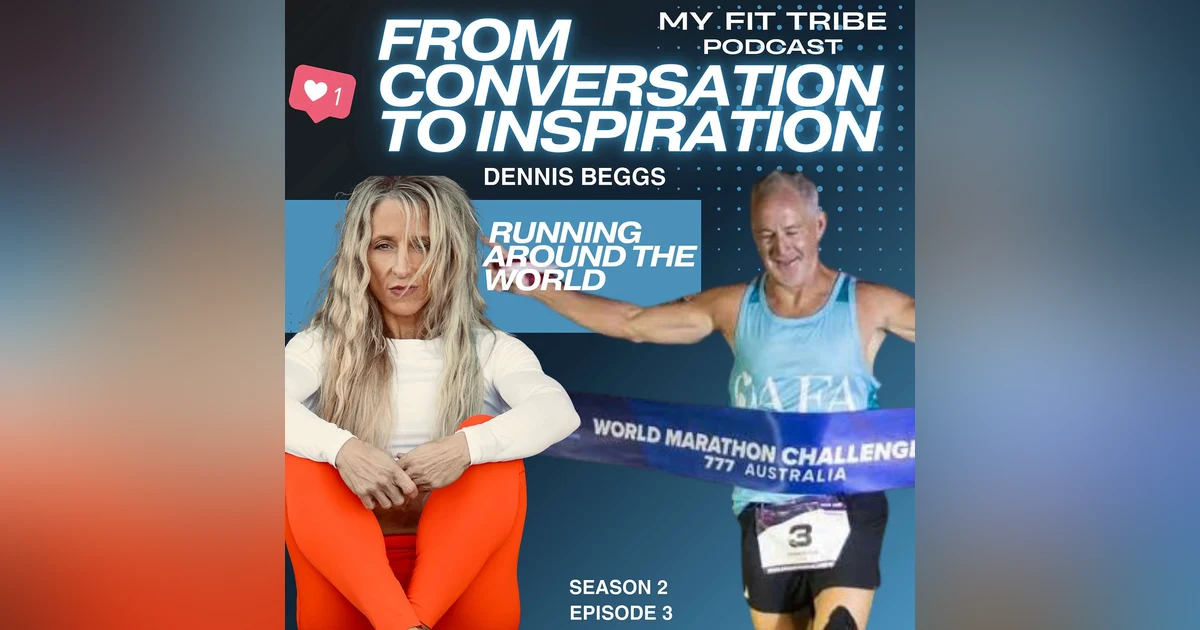


In this Episode of THE MY FIT TRIBE PODCAST I chat with Dennis Beggs about how he found his love for running in his 50s and how it has completely changed his life.
From crossing continents to pushing past his limits, Dennis dives into the mindset and work ethic that has taken him places that he never could have imagined
This conversation left me feeling totally inspired, ready to lace up my running shoes and start my own adventures.
Enjoy!
https://givebutter.com/dennisbeggs
https://www.beggsfatbottomfarm.com/
23:16 - [Ad] Just Be True ~ A Soul-Led Podcast
24:02 - (Cont.) Dennis Beggs- Running Around The World
Throughout my own life and fitness journey, I have had the privilege of meeting incredible people who've shared valuable insights on mindset, health, fitness, and spiritual growth. The profound impact of this knowledge on my own life has inspired me to share it with all of you. I'm Erica Sweeney, host and founder of My Fit Tribe Podcast. Join me as we explore inspiring conversations with experts, thought leaders, and everyday heroes who offer their stories and practical tips to help you on your own journey. From nutrition and fitness to mental well-being and personal or spiritual growth, our mission is to empower you to take charge of your health and live your best life. We are more than just a podcast, we are a community. Through coaching, a wealth of shared knowledge, and a strong support network, we are here to guide and encourage you every step of the way. Come be a part of our tribe. In this episode of the My Fit Tribe podcast, I chat with Dennis Beggs about how he found his love for running in his 50s and how it's completely changed his life. From crossing continents to pushing past his limits, Dennis dives into the mindset and work ethic that's taken him places he never imagined. This conversation left me feeling totally inspired, ready to lace up my running shoes, and start my own adventures. Today on the My Fit Tribe podcast, I'm joined by Dennis Beggs, a third-generation Janesville farmer who discovered marathon running in his 50s and never looked back. Now an accomplished endurance athlete, Dennis recently completed the extraordinary World Marathon Challenge. Seven marathons on seven continents in just seven days. As the owner of Beggs Fat Bottom Farms, he took on this global test of grit and resilience to honor his late mother and raise funds and awareness for the Alzheimer's Foundation of America. Hi, Dennis. Thank you for joining me.
SPEAKER_01Hey, good afternoon, Erica. Thank you very much for having me.
SPEAKER_00Dennis and I connected through mutual friends on Facebook, and I'm so excited to hear about his journey, and I don't even know where to start. So let's start what your life was like before you turned 55.
SPEAKER_02So before I turned 55, I was working in corporate America. And then also I had purchased my parents, actually, I took over my fair parents' farm in 88 and bought them out in 1992. So I did both in parallel. Um, so we had a dairy farm to start with, so we had a I had a dairy herd to manage and then go to work every day. And so I would kind of uh I did both. And I had strategically managed help and my time, and uh it was a lot of 120 plus hour weeks.
SPEAKER_00Oh my gosh. So uh and anybody that knows a dairy farm, uh it's so much work because you have to milk those cows early in the morning. And you were just talking about that you get up still at 2 to 40. I'm tired already just listening to this conversation. Okay, so you work in corporate America, and then what happened?
SPEAKER_02So I get the opportunity uh uh about well, it's 11 years, 11 years ago, um, they had a buyout, so I took the buyout. So then I just went back into the farming. And at that time I had got rid of the dairy cattle after I had paid off the equipment and the cattle, and so then I just moved it kind of into the beef, and then I was in the beef for a while, and then I got married and had a kid and um got out of the beef and just did crops and stuff and focused on work and then raising my son and stuff, and then eventually marriage didn't work out, so had to move on to the next step. So then uh I had my son and um eventually about 2010 I got back into the beef again, and then that time I got more, I was more strategic about it because I knew I was gonna retire early. And so what I did is I did a certified Angus beef herd, and then I did worked a lot with like UW research uh on the nutrition factor and the genetics because I wanted to sell restaurant quality beef, and that's what I ended up doing.
SPEAKER_00Oh, that's fascinating too.
SPEAKER_02Yeah, it was it's a it was an interesting story on how to get there. It's a long detailed story, but uh it's under Big Fat Bottom Farm. I have everything documented on the on the website, so a lot of it. So yeah.
SPEAKER_00And and then we'll get into your race story, but just having the that high quality beef, how important it is to have good, healthy animals if you're eating meat.
SPEAKER_02Yeah, farm fresh um beef. It's not I'm not certified organic, but I do you know all the uh the practices and stuff, and um, it's really about the protein level and um is what I look at, and all natural roasted soybeans, uh, ground mushrooms, different things that you can feed for protein sources. Um, and then looking at vitamin A, B, C, and D and E. Just it's a lot like feeding a uh a nutritionist would feed a human, you know, to develop, you know, like your athlete yourself. How do you get them microcarbs and all that stuff you need to and the macros to to get the most out of yourself to get to the highest performance level? And that's what you want your animals at. And a good high quality beef, a great marble, not too much fat.
SPEAKER_00Wow.
SPEAKER_02And good clean meat. That's what you want.
SPEAKER_00And I think that the the society's starting to pay attention to that now more than ever.
SPEAKER_02Yeah, my sales have just gone, you know, even in this last year, it just keeps on ratcheting up. People want to know where their stuff comes from, they want to know it's not full of antibiotics, they want to know it's not full of chemicals, they want to know it's not pumped full of you know, steroids and everything else artificial to to contaminate that in your body.
SPEAKER_00Right. Wow. Okay, well, we'll put a link to your Fat Bottom Farms website for all these meat eaters out there as well. Okay, so you you went through like a corporate retirement, you focus on your farming. How did you get into running?
SPEAKER_02Well, it was interesting. The the first year I I I did like hiking, and I was always active, you know. So my my brain was working too fast, and you know, so I had to figure out what I was gonna do with my extra time. So I did like hiking for a year and a little bit of biking, then another year I did a lot of biking and stuff and worked in volunteer work, and then my mom actually lived about a mile away from me on the farm. And so she had, I can't remember exactly what year, 2014 was diagnosed with Alzheimer's. So every night I'd go up and check on her and I'd walk up and I'd walk back. And so it got eaten up quite a bit of time. So I thought, I'm gonna run. And so I had just a regular set of boots on, I believe. And so I ran like a quarter mile and said, I'm done. This is it, never, never to be done again. So being Irish, I'm married to one of those, very bullheaded. Uh, I'll did that myself. I I said, you know what? I gotta run a mile to see if I really like this or not. So I went to Shopcoin Jan's own, big spender, $14.95 on a pair of shoes. I don't remember what kind they were, but I I was talking to my exes, I want some running shoes, and I'm gonna try running, so I'm telling this story, and don't you know she's like, Woo-hoo. So anyway, I get my shoes, I go home and I run out. So the next night I ran a mile. I thought, wow, this wasn't that bad. So I thought, I wonder if I can run two miles. So the next day I ran up and back. And then um, so then I kind of thought, well, I I like it. And it's uh I never I don't wear a watch or a phone or nothing. I got I look at the the stove and see what time it is on the clock before I leave, and then what time it is when I get back. And that's how I'd kind of judge. And then I kind of knew how far it was to like certain places, certain little like the Fulton store, Indian Ford, or Gibbs Lake. And so I'd say, Oh, I'm gonna run over here, run over there, and then I kind of look at my time and and I thought, oh, I wonder if I'm improving. I'd check my time, and I kind of got challenging myself, you know. So I would get up um in the morning at 2 45 a.m. I'd stretch and I'd take off running. And I remember I'd been running for a while, and of course, all the Rock County cops knew me. They're doing safety checks. No, not really, but they're on their nor normal cruise, and they just say, What, you know, what are you doing? And so they we'd catch talking.
SPEAKER_00You're running down the highway in the dark.
SPEAKER_02So anyway, I was up by, I was like nine miles from my house. And this police officer goes, Dennis, you know how far you are from home? I go, I don't know. I'm just all running. He goes, nine miles. And I freaked out. I was like, How am I gonna get back home? How am I gonna get back home? You know, I just like I was like, Well, I ran here. Maybe I could run back home. If I got to walk, I'll walk, you know. And I got no phone, so I was like, I don't know, you know, it's early in the morning. Who the hell's the door are you gonna knock on at 5 a.m. 3 a.m., 4, 5 a.m. So I ran back home and then um different people would see me out running and stuff, and everybody said, Oh, you gotta join a run club. And I'm like, I I'm not good. I don't know. I'm I'm afraid, you know, at this point. And um so eventually uh I went down and I talked to the people in the run club a couple times, and I was still I wouldn't run, I wouldn't bring my shoes because I was very fearful. So anyway, we they finally talked me into it, and um, so I ran with them a little bit, and then they invited me to my first run, the Milton Fourth of July run. And it was hot and it was a 10K. And I didn't know what the hell I was doing. I had no clue. So they said, just run as fast as you can. I get up and I take off, and all of a sudden I'm starting to pass all these people I was running with who'd been on this run club. I'm like, I don't know if I should be doing this or not, you know. So I think I end up getting uh second for my age group.
SPEAKER_00In the first run ever.
SPEAKER_02In the first run ever. So I didn't even realize you know, and then so then I was enthused and excited about running, so I met with the group more often. They said, Dennis, you could run a marathon. Like, I don't think so. And I said, Well, it takes a while, but eight weeks we think you can get you ready. So yeah, they got uh we got together and I I ran with them. They gave me like a you know, here's how you want to run all this advice and stuff. And I kind of did I always kind of did what worked for me, and so I ran my first marathon in Minneapolis, Minnesota. Um, I was gonna wear the shirt today and I thought, ah. Uh but so I ran that and the Medtronic marathon, and I think it took me like four hours and 17 minutes.
SPEAKER_00And what year was that?
SPEAKER_022017, okay. October 17th. So then I was so excited about completing it. It was really a disaster if you look at marathons and where I'm at today. But I was like just happy I got done, you know. So I signed up, I ran Madison, and I I ran that 30 days later. I think it was like three hours and forty-four minutes. So just from what little I learned and stuff, and then I think the next marathon I ran was in Carmel, Indiana. I qualified for Boston.
SPEAKER_00Oh my gosh, and your third marathon you qualified for Boston?
SPEAKER_02Yeah, and I didn't even know what the hell I was doing. I just I never had a watch or anything. I just I run and I so I try to read and then I'd listen to what people tell me and stuff, and then I really learned, you know, you really got to listen to your body. Um, and to me, and I tell everybody, I'll tell every runner I talk to today, and I said, I'm not a coach for anything, I don't have a coach, but if you're looking at that watch, you're competing against yourself, and mentally, that's gonna hurt you. Because if you have, I go, you can have two bad miles, but you got 24 more to make it up. So don't, you know, you can't lose sight of where you're at. I always feel like I'm listening to my body, and you know, I feel how I'm breathing, you know, feel how cohesive I'm running. Is there ease to it? You know, you you get a feel from how your body feels. Um and so uh, you know, you know, I think I always feel like I know when I run a marathon, is I'm gonna have a good day or I'm not gonna have a great day. But they're all great. If you finish a marathon, they're all great. That's a great day. No, and that's kind of you gotta keep it in perspective. Is even like your training runs. I've talked to people now, I said, you know, you have good training runs, you have bad training runs, but you you get it done. And I said, that's just like a marathon. You're gonna have great marathons and you're gonna have, and I always say a good marathon. I think individually is in especially when you're an individual sport like that, you set your expectations very high for yourself.
SPEAKER_03Right.
SPEAKER_02You know, and it's but you can't lose focus and get down on yourself either. Mentally you gotta stay positive about that. And there's you know, there there's ways of different ways of of looking at that. And I always look at the a lot of times I've ran a number of places, a number of things, and you'll see like you know, a young child who's handicapped in a wheelchair, they'll never have the opportunity to do what you're doing today. They won't have the opportunity to fight with somebody on the playground, or you know, there's just things that they don't get to do. And so you should feel, you know, very privileged. And the reward is you're out there and they're not, you know, and and so that incentives like that go a long way. There's and there's things you know you think about in life, every runner's got something they're carrying.
SPEAKER_00Absolutely.
SPEAKER_02You know, and you're trying to cleanse that. And so it gives you it gives me a lot of times to process that type of emotion and stuff. And um there's a lot a lot of times to think, and but there's a lot of times um, you know, you're gonna feel bad, but it's always, you know, every mile gets better in my book. And and the and I I hate to say it, it sounds cliche, but hitting the wall, you gotta check that out. You know, there you don't you don't think about hitting the wall, you think about what strategy I'm gonna do to, you know, is it mile 18 that's tough on me? Why is mile 18? Is it mile 14? You know, what have I done in the past? You know, what are the weather conditions? You know, is it hills? You know, did I take off too fast the last time? You know, did I stretch? You know, there's so many different factors.
SPEAKER_00Do you find that you that you spend a lot of time evaluating so that you can keep improving?
SPEAKER_02Yes. You know what? That's one of the things I think about too, um, especially when I'm running. Uh during my training cycle, I mentally keep track of you know how it went. You know, I I think about the weather conditions. Um, you know, I think did I stretch enough today? My nutrition, but uh, you know, what did I what did I do wrong? And sometimes, like in New York City, you cannot let the crowd get into your emotions because you end up feeding a lot of energy back into that crowd. You just gotta stay focused and stay consistent. Now, there's not sometimes you're gonna go out there and have fun. You know, you're gonna eat it up because you got two and a half million people screaming at you. It's it's it's hard not to get sucked up into that. But if you're, you know, like there's a couple races where I focus for, you know, like my Boston qualifying time, my New York qualifying time, all the big ones, I just want to have solid races. But there's a lot of times you'll run, and then there's times you're gonna race. So your level of focus changes.
SPEAKER_03That's true.
SPEAKER_02And then um, you know, it depends what you know, and like in Tokyo, everything was very quiet. Nobody clapped, nobody cheered. Um, they played some orchestra music, very different, but it was it was very unique.
SPEAKER_00Did you run better or worse in that environment?
SPEAKER_02I had an average race. I think I just came off of uh uh I was in Budapest, I think the week before Tokyo. And so I I was uh had a strong run in Budapest. I Tokyo was like, I'll get what I get.
SPEAKER_00Okay, so I'm gonna back you up a second because I'm still stuck on the I ran a quarter mile with my boots on and I hated it, which is where I would come from. And then a month, two months later, you qualified for Boston. Like, that's that's crazy. Once you got going, it must be fairly easy for you physically.
SPEAKER_02No, it's not easy. You know what? You're gonna get out, it's like anything in life. I worked hard to develop that farm. I worked hard at work to achieve what I did at work and move up within the company. I wanted to work equally as hard at running to reward myself with the benefits because every time you do something better, even as a kid, you know, there's a reward. There's something that you feel that I've done good. Even on a bad day, uh I felt good running. So, and it and it also I think it mentally I could mentally check in with myself in the morning. And, you know, I I think people do yoga, Pilates. Um, there's a number of things people do to kind of connect with themselves. Right. You know, and this was how I connected with me. And this is how I could, you know, feel comfortable in the morning, relax, think about all the things I need to think about, or just watch the stars fall, watch the moon, see the animals.
SPEAKER_00Yeah, get in the zone.
SPEAKER_02Yeah. So you it really, you know, it just helps you mentally for me, it mentally unwound me for the day.
SPEAKER_00I can understand that. I'm also very, I don't say fascinated is the right word, but for me, after we sold most of our business, there was a big adjustment period for me, unexpected. You know, I was still doing some work, but the the change of focus was very hard for me to adjust right away because I was used to having that work goal of going, going, going, and all of a sudden that's taken away. You know you need to redirect your focus somewhere, but that can be a really hard transition. Did you find it hard to? I mean, running kind of fell into your lap in a way of you starting it, but when you had that transition of stopping the corporate world or even changing the type of farming that you're doing, how did that transition work for you?
SPEAKER_02That was, as you said, a very hard transition. You know, I'm going from corporate board meetings and very intense schedules, and then running home, getting all the work done in the farm and worrying, making sure I'm getting out in front of the weather, or you know, and and you know, of course, you got a lot of money invested and stuff, so you're always on eggshells, and then all of a sudden it goes away. And everything's just and it's like you could hear a pin drop. Um, so you're kind of wondering where you're at and what your next move is. It's when you're into that that type of environment and you're go, go, go, and then all of a sudden seem like you're stalled, you don't know which way to go. And I and that's why I said I I felt like I gotta fill this void. What am I gonna do to fill this void? And so you try something, that doesn't work. You know, you try another thing. Is it and I always knew I was an active person and I had to have some activity that would physically and mentally drain me down.
SPEAKER_01Challenge you.
SPEAKER_02And um, and that's what I really needed. And and like I say, when I started running, it was by accident. There was no thought of ever trying to run. That wasn't on my scope. Riding bike, hiking, walking. Um, you know, I enjoyed kayaking, but it just running wasn't there, and then when I started, uh it caught me by surprise.
SPEAKER_00It's so amazing how that happens, and it just has completely changed your trajectory in your life.
SPEAKER_02Oh, a hundred percent. You know, I went from working 120 hours a week um probably back to eighty, and then starting to travel, and then just and that took off and that led me in a whole nother direction. Um between you know, the running, and then I was I could remember uh I'm jumping ahead a little bit, but uh I started and I'd ran marathons in the US and stuff and did some Bostons and did some other destinations within the United States. One of my buddies and all my friends had been around and they'd ran 50 states, they did all this great stuff, you know, sub-three marathons and just tremendous stuff. So he says, You know what, Dennis, try running an international race. And I go, I don't know which one I've got never done it, you know. And I was so I was nervous. He goes, Berlin's flat. He goes, go run Berlin. And so I signed up, I did my qualifying time, got accepted, went to Berlin, Berlin, and then uh what happened was I was signed up, COVID hits.
unknownOh, right.
SPEAKER_02So I'm like, oh man, so now I'm delayed. In the meantime, I got thinking there's a six-star award, so you run all six majors. So it's um Boston, London, Berlin, Chicago, New York, and Tokyo. Cool. So I thought, you know what? Instead of doing 50 states, because I'm too old, I'm 55, 56, I think then. I had 57, I don't remember, but I said, I'm gonna run all six within a year, and I'd be the first American amateur to get that done, which I had no clue I was gonna do it. So all the I signed up for all these, nobody signed up for marathons. So I get I get accepted all the major marathons, so I get them all qualified. I had them all in a 10-month cycle. So I got it all set up, so I take off and I go to Berlin. Next week I fly to London, the next week I was uh New York City, you know, and so I was doing all these back-to-back. Oh, I think I did Boston someplace in there. So within 10 months I did all six majors. And then you had Chanel Flanagan, who was a professional runner, run the New York Marathon, she was doing the same thing. She got all the publicity, I got all the work. I know.
SPEAKER_01It's always it was it's uh a rolling joke.
SPEAKER_00And that was in 2020 that you did that?
SPEAKER_02No, it's 2022.
SPEAKER_002022, okay.
SPEAKER_02I had signed up, but everything kept on getting delayed. So I thought I deferred, I could have got in on some on 2021. I got thinking, you know, if I can do all six in one year, that's a a huge milestone that nobody other other runners have done it, but I think I was the first American amateur. But then I'd have to go back. If I wanted it registered, I'd have to go back, have all the courses certified, and I just like that's amazing. So that was I got my six star uh in Tokyo that year.
SPEAKER_00So what is what is the closest that you'll have races back to back?
SPEAKER_02Uh well, I did the 777, 7 marathons, 7 continents, 7 days. But I do a lot of like this fall, I'll be overseas starting in well, starting mid-October, I'll do Chicago, and the next week I go to Marine Corps in DC, then I go to New York, then I go to Seoul, then I go to Tokyo, uh, then I go to Shanghai, then I go to Rome, Turn, Hong Kong, Bangkok, Singapore, Chinda, and China, uh Hanoi, Hanoi, Abu Dhabi, and Mongolia, Casablanca.
SPEAKER_00That is just in Istanbul. Oh my gosh, and that's all in a year.
SPEAKER_02That all no, that'll be 14 weeks.
SPEAKER_00So don't you ever get jet lag?
SPEAKER_02No. I mean, so what I I yes, yes and no. But you gotta see that's all the that's what I did for that 777. I took 10 weeks last year, and I did 10 weeks, 10 marathons, um, five continents twice. So I figured out how to handle jet lag, how to handle my nutrition, how to handle like luggage in the airport and all that kind of stuff. So the biggest thing I learned is luggage is a dragger. So I ship all my ship my clothes. I never carried Luggage. I got one little like a little knapsack and I carry that on the plane. And then um, so that was a big thing. Jet lag, you know, I and I got where I'd fly a lot at night and stuff, and I could sleep, and I'm only about a four to five hour sleep guy a night. Um, basically, when jet lag catches me, is when I come back to the United States after that. Depending on where I come back, I always try to make it so I'd like preferably if I'm in Europe, it's not too bad. Um, because there's like depending on where you leave from, it's just about a six-hour time difference. Sure. So that doesn't affect you as much. But like when I came back from Bali, there's 13, 14 hours. So about day number two, get home, and that's when you're you're really tired. But you kind of I just kind of push myself and then just I take a little bit of extra sleep, you know. I I'm not a napper, so it's I try to get to bed and sometimes I wake up in the middle of the night, but you just you gotta kind of shut down and manage through that. But um jet lag, you can manage yourself through that. You just gotta plan your flights.
SPEAKER_00And I love that with every step that you've taken that you keep learning. Like that's so important, not only in training like you are for running, but in life, really, because you're gonna face adversities and you have to learn from them in order to face your next challenge. Same thing with your running. You've really looked at everything you can do to optimize your performance.
SPEAKER_02You know, and that and uh that you bring up a great point. As never being coached or having a nutritionist or anything, you know, I've talked to a number of different people, I've read books, and I've made quite a few friends. Uh, one of the biggest changes I had to make was um my recovery strategy. So when you're running week in, week out like that. Um, I had talked to a gal, she was a professional wheelchair marathoner, and she goes, Dennis, what are you doing for recovery? And I said, I run, I stretch. She goes, with that schedule, she goes, you're gonna need um so I get a lot of massage therapy. And then I get the where they've got uh typically it's the tie, it's uh typically a more deep tissue. But also if they get the credentials for chiropractic, they can work your muscles for like a couple days and then they can do your adjustments. And I've had a I had a kink in my neck, I swear, for a lifetime. And that kink is gone, and and you know, you feel so much better. The other thing I learned too, you know, I'm I'll be 64, so I I cut out speed work and I got more into hills and then doing longer runs on the weekends and stuff. So the hills just build up your legs and your lungs and your endurance. Because with the if you're doing speed work, um, you're more susceptible to injury and stuff just because of the impact. So you know you gotta kind of shift and you gotta, and that's what part of understanding your body, what hurts and why, you know, you always it's that why five times, I think is what they taught us. But um, yeah, you'll learn stuff and then you know what, and it's I like being around the world because so many cultures and so much different thoughts. And you know, sometimes you just grab one piece and it and it's a world of difference in what you do and what you learn and stuff. So, you know, the world is the hugest piece of education you can ever get. I don't know. I I I got a much different perspective than a lot of people about the the culture and the environment you're in. And um, you know, we all gotta be good people, but we all gotta be good stewards of the world.
SPEAKER_00Right?
SPEAKER_02You know, and that's that's important, especially if you travel a lot.
SPEAKER_00Big part of it.
unknownYeah.
SPEAKER_00Wow. I'm just fascinated. Sorry, I drifted out of it. No, but you you look at I mean it was 2017, that is you know, less than 10 years ago, where you just went for a run, and now you're traveling the world and accomplishing amazing feats that are beyond imaginable for the majority of people, which is so cool. So let's talk a little bit about how you connected with the Alzheimer's Foundation of America and what you're able to do to promote their cause.
SPEAKER_02So in 2014, my mother was diagnosed with Alzheimer's. And so I was her, because I had been retired, so I was the family of five. I was the caretaker. And my sister actually lived, she lived up north in in uh Minnesota, so I ended up being the caretaker of my mom. And then she eventually developed uh dementia. And I had a house on the built for her on the farm, and then um it got to a point where we couldn't take care of her at home anymore. I had CNA and a nurse come in and stuff, but it was just my sister said, No, we're done. So she went to the home, and um, that was hard. Um and so working with the different resource groups and stuff, these people are wonderful, they're the hardest working, kindest people you ever meet in the world. And I don't care if they're in Rock County, Dane County, Chicago, uh, you know, East Shamong, these people are are giving up their lives to help people get into their final years. And I don't think there's any big reward in it other than, you know, it's something they want to do. So when I had the opportunity to run the seven marathons, seven continents, seven day of the world uh marathon challenge, it's a great opportunity to earn money. And so I went to Rock County and said, hey, I said I'm gonna do this. I said, can you guys do a website and get advertised for me and get some interviews and stuff? I said that's too big for us. They sent me to Dane County. Dane County said, nope, too big for us. They sent me Chicago. Chicago says, too big for us, go to New York City. So the foundation. So I get connected with the foundation out there. And then they did uh, you know, did my webpage, um, you know, and they did bios and pictures and everything. And then then we did a lot of I did interviews all over the world, TV, podcasts. I was even on the TikTok.
SPEAKER_01Um so I uh and you know, and I went from I didn't want to talk to anybody to I didn't care whoever listened.
SPEAKER_02I just, yeah, you know, and so that's that kind of started. And with that, you know, I was touched on my travels with so many people that were affected. You know, you look at it in Wisconsin alone, there's 419,000 people with Alzheimer's or dementia. Now just think of that, multiply that by four. That's just say some family members, friends, and that's a light number. Then you look at the United States, 13.9 million people affected by Alzheimer's. And really, there's no cure for it. There's nothing in it, and the re and the resources they have is limited. Um, and that disease, if they can't get anything done, it's expected by 2030 to have over 39 million people affected by that Alzheimer's dementia. So to me, it was important for not only me, but all the people I had met that had somebody touched by Alzheimer's and end up doing I end up doing a lot of fundraising um in different spots in the world of people I had met who had been touched. I mean, I was in Italy, Australia, uh, Portugal, all over Africa doing these different fundraisers, running 5Ks, 10K's, half marathons, a marathon at one place. I can't remember where that was at. Might have been Tanzania. But just meeting all these people and how many people would come together for one common cause. You know, the world's a good place. And so many people in the United States and some amazing people. And we talked earlier about some of the donations, you know. Some people with not very much gave their life for you to go run, you know, and then I didn't, I sponsored myself, and then also 100% of the money went back in. But it was it was important to me to do something that I could make an impact. And working with the foundation out there, you know, so much money went back to Rock County, the resource centers, Dane County, you know, I did Chicago, and then so much money went into the research area up in like Harlem and stuff. But uh a very rewarding feeling, a very humbling feeling in a lot of cases and stuff, meeting those people and stuff, and that interaction was, you know, and that gave me the the will to want to do it and keep my motivation high. Because when you're running that kind of schedule, it's easy to get worn down and torn out, but you just think about those things when you're out running and the people.
SPEAKER_00Yeah, there's a couple things that resonate with me. First of all, you were talking about with the running, how that had that's your time to really get in your own head. You know, that's when you spend so much time with yourself in the morning. And and that I understand that both in the gym and when I did run, like that is my zen, my space. But then when you're able to take your thoughts in the that deep zone you go into with running and be able to use that in your impacting other people, like to me, that's just perfect. You know, because you get to really just sit with yourself and challenge yourself, and then you get to impact people just by doing what you love, not for your own glory, but just because you really want to help people. And that that is that having that be a fabric of your being changes their lives and it changes your own. I mean, statistically proven through other episodes, we had a couple medical doctors on that talked about how when you are kind to other people and that's genuine, that makes you healthier, it makes them healthier, it raises the vibration of the whole world. And if we all could live that way, what a difference it would make.
SPEAKER_02You know, at that not a true statement. I looked at my parents when they brought us up, and it was always be kind to everybody because you never know. Um and my parents were great ambassadors of that and just outstanding people, and everyone would say the same about their own parents, and I and I felt that was always instinctive inside me and very intuitive to do that. Um, as you said, it it it was a feeling of it it wasn't for me, it was because I had the ability to help others and help others with something good that may improve their lives or their family's lives or their friends' lives, you know. So it's it it was a it was a feeling like I've never had before. Very self-rewarding.
SPEAKER_00Right.
SPEAKER_02Um you know, the accomplishment was was doing all the races, but the reward was knowing what the outcome of that accomplishment was. Right. That makes sense.
SPEAKER_00Completely, 100%. So you just got back from Bali earlier this week. So out of all the places that you visited, do you have one that's your favorite?
SPEAKER_02You know, I I fell in love with Africa, and I've been all over Africa. Um, the Cape is beautiful. Um, the people are wonderful, the food's outstanding. They say the wine's great. I don't drink, but uh um, but you know, uh Morocco, I stayed in Tangera. Actually, I stayed up on this like open-air deck rooftop, and it had a little area for a bedroom, and you'd walk out and you'd see the Mediterranean Sea every morning. I mean, so peaceful. And I'd go down in the Medean, and it's an old fortress area, and everybody makes their own clothes and stuff, and everything, everything, everything's handmade down there. And I and I'd walk down the stairs and I'd go down to the ocean every morning, I'd go around and stuff, and it was just to me, that was the most peaceful, breathtaking place I've ever been in my life, and I've been all over the world, you know, and it's and Cape Town was beautiful, but there was something about that area that was just, you know, and I was down to the Canary Islands, you know, just south and west of there, and that was gorgeous. But but that Tangera and the people were so nice and so friendly. Actually, I was in New York and I was riding on the subway, and a lady got on she bought that dress in Tangier at the Medean. I go, I go, I said, I just want to ask you, did you get that dress in Tangier? She goes, How'd you know? I go, I said I was there a couple months ago. And I go, down the Median, right? She goes, Yeah.
SPEAKER_00Oh, that's so funny.
SPEAKER_02We talk, and then all of a sudden we're friends and we go to the US Open together. You know, so it's, I mean, it's just one thing leads to the next and the next and the next.
SPEAKER_00So And you meet just like we talked before the show too, you just meet more people that open up more doors. And when you surround yourself with positivity and you put yourself, quote unquote, in the room, it really just changes your perception of everything. Your attitude is positive. You're it's just a contagious vibration, as I like to call it.
SPEAKER_02Yeah, and and that is uh a phenomenal way of putting it. You know, and uh when I go to expo, I don't go so much to I, you know, I get my bib, get my stuff, but I really go to meet the people who are gonna be I'm running with. And and and you know, I and I can recognize the different accents from the different areas. And of course they know, you know, the American accent, you know, and everybody wants to get inside each other's head and see what's going on, you know, and what they know and where they've raced, what they've seen, what they like, what they don't like. So it's a it's a real it's an exchange of culture. It's an exchange, you know. We talk about AI, you know, it's a runner's form of AI for me. You know, it's just like it's amazing just to hear the stories and the people. Um, you know, and it and you establish a bond of friendship. And I've got I've been to uh 44 different countries, and I've got I can say I've got friends that communicate with regular in those countries all the time.
SPEAKER_00That is so cool. I'm envious in a way that there's so much out there that we forget. We get so bogged down by everyday busyness and work and whatever that we forget that there's so much out there to see. Like it makes me want to go hop on a plane like right now.
SPEAKER_02Yeah, and that's interesting that is the European culture and different cultures is other than Japan, America is very intense. Right. But you go to these other places and it's and maybe it's because I'm I'm I'm an intense person myself, but once I get in that travel and marathon mode, you know, it's like I I I slow down and I and I and I can listen and I can relate and I can have good communications and you know really enjoy my time and suck in the world, you might say.
SPEAKER_03Right.
SPEAKER_02And and have a better understanding of what's going on in that country or that with that person or you know.
SPEAKER_00So cool.
SPEAKER_02Yeah, it's it's a different feeling. It's a different feeling.
SPEAKER_00So one other curious question. You mentioned how you have that you've learned how to tweak your nutrition. Is there something specifically that you've learned that is either good for you or something that is bad for you in your training?
SPEAKER_02Sugar in my mind is good.
SPEAKER_00Yes.
SPEAKER_02I I uh last year I went sugar-free um before the 777. And um it took me, I was a quick trip guy, and I like my brownies. Um, but you know, once I wean myself off sugar, I you don't you don't you don't realize it's just like you know, you it's an addiction, you know, and it's alcohol, drugs, whatever. And you get away from that, and then um you can feel the change in your body, you can feel the energy level. Um, you can feel the need. I mean, I do a little bit now, but not like I was pretty intense on the little sugar.
SPEAKER_00Yeah, I'm week five. I'm at five weeks out now with no sugar. I have berries, is the extent of my you know, fruit, but uh as far as no no sugar. So I've just just finished week five and I'm at first I crashed. It was hard. Oh it was like physically, it was my body was not happy with me. And I don't think I had a ton of sugar to begin with. I've thought I was eating pretty decent, but apparently not. Your body really does not want to live without it.
SPEAKER_02Yeah, and I I didn't realize uh how much uh sugar and other stuff I was eating I shouldn't be. Um when I was doing that 777, I never hired a coach and I did or and I had a ton of people want to coach your your nutritionist just to have you on their resume. And I finally connected with a lady in uh Massachusetts and she was uh super nice and she's and so I just said, you know what? I said I'm not gonna hire anybody. I've just made up my mind, I'm just gonna do what I normally do. And she goes, I'll tell you what, I want you as a test tube baby. Because she goes, You got an interesting story. And so she goes, And so we'd communicate on Sundays and stuff. And the first thing she told me, she goes, I want you to get off the share. And I thought what? And uh and she talked to me and showed me the values of doing it and stuff. And you know what, like you said, that first four to six weeks was rough. Rough. Um but but once I was off and c clean, you know, it I could feel the difference and uh and things started getting better and things started improving and stuff and and then that and that changed my I shouldn't say changed my diet, because we didn't change a lot in the diet, it's just how much I ate and when I ate it. Um type of thing. And you know, we substitute a few things, but you know, like instead of donuts, I'd have avocados. Right.
SPEAKER_00You know, I mean You know, come on everybody, who doesn't want an avocado instead of a donut?
SPEAKER_02I do I if I don't have an a if I don't have an avocado or three a day, I'm like, whoa.
SPEAKER_00Well you get a different addictive, like different preferences once you're used to something, totally relate to that. I mean, I've been eating the same daily meals, I guess that week this is week three of five with the same meals a day. And at first I'm like, oh, this is getting really old, but now I'm like, I'm kinda digging it. I'm I'm liking sweet potatoes. That's my thing.
SPEAKER_02And I've always had a garden, so you know I've always had the ability to have fresh stuff.
SPEAKER_00So that's as you mentioned, that's super important too.
SPEAKER_02Oh yeah. Yeah. Eating's a huge part. It's just like feeding my animals. I I put so much time and effort studying to feed my animals, but when it comes to yourself, you you need it too.
SPEAKER_00Right. And that's so important. And it's more important, I think, than anything is what we're putting into our bodies.
SPEAKER_02Oh yeah, that I think that's key.
SPEAKER_00Wow. Okay, so what so you mentioned a little bit about what you have to do for the rest of the year, but I'm I have to go back again more to the seven in seven days. How did you even have time to fly between day like how does that work logistically?
SPEAKER_02So what happens is you start out, first of all, you gotta have you go through all the um security checks for around the world, because you gotta have global passport, you have to have global entry, and then so it's it is a chartered plane or uh it's a private charter. So then you actually start out in uh you never go through any security or anything like that. So you're all pre-screened and everything and everything's taken care of. So you start out in you meet in Cape Town, and then your your clock starts, you fly from Cape Town to Antarctica. Antarctica is the start. Then you fly from Cape Town or Antarctica back to Cape Town is your next race. Then from Cape Town you fly and you got a time zone change. You fly over to Perth, and then from Perth you fly to Dubai, um Dubai you fly to Madrid, Madrid you fly to Fort Lees, Brazil, and then Miami. So you're flying, you're you're going back in time zone sometimes. And I think we were 69 hours in the air, uh 45,000 miles. And that's insane. 184.2 miles of running.
SPEAKER_00That is insane.
SPEAKER_02In six days. Not seven, six. And two girls that won it finished in five days, twenty-three hours, seventeen minutes, the other one was forty-one minutes.
SPEAKER_00So this was a so as you had multiple people doing the same timeline. How many people in all were competing in that?
SPEAKER_02Twenty-four.
SPEAKER_00Twenty-four.
SPEAKER_02Twenty-four. Well, there was uh 17 of us did the full marathons, seven did half marathons, uh, and a couple that were doing the full kind of dropped out and went into halves, or you know, just couldn't, you know.
SPEAKER_00Makes sense.
SPEAKER_02Yeah, and that that happens. But along the way, say like Antarctica, we had uh, you know, they had like uh I think another 30 people who people who wanted to run in Antarctica could could just join in, run that one, then drop off, or somebody wanted to run in Perth or whatever. So you could have different runners, so they kind of filled things up.
SPEAKER_03Gotcha.
SPEAKER_02So yeah, you had I think the biggest crowd we ever had was like 75 um runners. But uh, you know, the one thing too is there was no inner fighting, nobody everybody got along, you know, there was many different languages. It really you're you're kind of a big team, and I and I can see why they want you to get together like a they'd prefer a week, but three days a minimum. And that way they have dinners and people can interact and kind of get to know each other, feel each other out, you know, establish some bonds. Because during that seven, six days, you're gonna help carry some people through. And you're gonna carry some people through from China, and you're gonna carry some people through from Italy, and they're gonna carry you. You know what I mean? So everybody's gonna have a bad day, and everybody's gonna help everybody. And I don't care if you're at the professional level or if you're at we had some people, we had one guy who only ran one marathon.
SPEAKER_00Um who just decided to do seven in a row in six days across the world.
SPEAKER_02Yeah, yeah. Well, he was with another guy, he got talked into it there from Dubai. But uh, you know, there you would think there was gonna be a huge language barrier, but it's interesting culturally, everybody's there for the same thing, and you really knew what the goal was. And you know, and you've got a lot of different electronic tools to help you through the language barrier. But everybody knew when somebody was down, everybody knew when, you know, how to celebrate together our our successes, and a big thing was like hitting a hundred miles for everybody, you know, to get past that hundred mile marker where for a lot of people was a big thing, you know, and how do we celebrate that together, how we kind of come together and you know. So there there was a a a real team, you know, effect on everybody.
SPEAKER_00I correlate that a bit to my bodybuilding experience because like running, bodybuilding is very much the individual sport where you're up against yourself, you're comparing against other people and you want to win, quote unquote. But um, you know, you spend a lot of time training on your own. But I found that I met the most supportive people that through every competition and in the fed different federations that were when someone was having a tough time or needed help with something or someone's super or whatever it may be, there was always people coming together to help one another out, to encourage each other, which is the opposite of what I thought it was going to be like. So I'm it doesn't surprise me at all that everybody was able to come together and really push each other through it.
SPEAKER_01Oh yeah. And it was amazing.
SPEAKER_02There are some great stories. I mean, people sleepwalking on the plane.
SPEAKER_01I mean, just there's all this kind of, you know, when you were somebody, you know, on your and it was a uh, I mean, it was everything was first class, but it was still, it was just hilarious.
SPEAKER_02It was fun.
SPEAKER_00You stay in touch with those people forever.
SPEAKER_02Oh yeah. And uh yeah, I bet uh there's a gal from Brazil, she was a uh executive lawyer at a uh at a big oil company, Chevron, I think it was, and Supreme Court justice, and just people on every, you know, there's a lot of uh, you know, doctors and CEOs of Big companies and stuff. And it was just amazing. And I was the only farmer. People were asking me about this strange. I was like, what?
SPEAKER_00But you have again people that are so busy, that are carving out time to train and do these amazing things. They make time for it. What advice do you have for people who are listening who maybe want to experience a challenge or want to get started on a new venture to open up opportunities? Like what would you suggest?
SPEAKER_02Don't make it too big. Lean into it slow and never look at what somebody's out doing. Look at the the day-to-day accomplishments and the goals that you're doing. Because you're going to get better and you may surpass a lot of the people that you admired at one time. But don't let that go too far. Just remember who you are and where you came from and how you got started. I think that's important. Don't don't make the challenge too big for yourself. Um, reward yourself. And when you felt like you had a bad day, say, what do I learn from this? I think that's important too. Never try to and it's easy to get down on yourself, especially whether you're bodybuilding or any type of competitive, whether you're playing football or running or soccer or cricket, whatever your game is. You know, don't don't lose track of that not every day is a great day.
SPEAKER_03Right.
SPEAKER_02You're rewarded because you're out there. You're not that poor kid in the wheelchair or on crutches or you know, it's that's hard.
SPEAKER_00Yeah.
SPEAKER_02Think about that.
SPEAKER_00Yeah. Perfect perspective to keep.
SPEAKER_02You're lucky to be doing it.
SPEAKER_00I love that. So you like I mentioned, you just got back from Bali. When are you leaving again?
SPEAKER_02So I take off. Uh my my really marathon season starts. If you look at NASCAR, NASCAR's window, I'm picking up. Um, so I start in middle of October. I'll be in Chicago, and then I'll go from Chicago down to DC, and then I'll go from DC to New York, and then from New York, I'll start overseas and Korea, Japan and China a few times, and Abu Dhabi and Casablanca and Rome. I'll be in Italy a couple places, Vietnam, I'll be in Bangkok and Singapore.
SPEAKER_00How do you choose which races to do?
SPEAKER_02So I, you know, I actually meet a ton of people from around the world. And so we're always talking marathons and you know, what's your most interesting ones? And then I, you know, you're flying a lot, so you're reading and stuff. And so I always pick, you know, I look at the someplace I've never been. Um, I look at like the culture, the history, the country and stuff. I look at the food, I like architecture, um, the things to do, and then plus what the marathon has to offer. And I always look at what their international fields are. Because if they got a huge international field, you're gonna meet some people who are gonna be able to turn you on to some things you've never heard about or never seen. And that's truly, and that's how I got to Bali. And now I'm going down, oh, I'll be in Maldives, too, you know, another small island, Indonesia. And so, you know, you just and that's kind of how I pick. But I always do my standards, I always do well, I try to make sure I do qualify for Boston. I think that's my eighth consecutive, and I do did this will be my eighth consecutive Chicago, fifth consecutive New York. So I do my staples. I don't even have one to I didn't even get to run one in Wisconsin this year. I feel bad.
SPEAKER_00Well, next year you're gonna have to then.
SPEAKER_02I know, I know, I know. My friend has called me up. He goes, Hey, can you run a marathon tomorrow? And I'm like, I just got done running to marathon last week and I'm out of my training cycle for Chicago. I said, I can't, I can't, but uh so I just want to try to get one. I don't think I'll get one in Wisconsin this year. But then I always try to run one more in the United States. So this year I'll get Marine Corps. One year I want to get to Philadelphia, I've been to like Dallas, I've been quite a few places. And here I was the guy thinking when I started running, all my friends had these 50 states are close and done all these magnificent things. I thought, I'll never accomplish nothing. You know, and it's like 44 countries I've ran in. I'm looking for a hundred.
SPEAKER_00And how many days do you usually spend at each place so you get a chance to see the culture and stuff?
SPEAKER_02So what I do is I try to spend seven days. But sometimes if it's like, say if it's a uh city or something that is not as place I really, you know, I just went there to run the marathon and it's not got a lot to offer. I'll either go to another city someplace nearby, or I'll go to on to the next place and I might get nine days there to tour, you know, a bigger area. So I always try to get um, you know, once I go someplace, I I I tour a lot. Um so I I take a lot of the different sites in. And plus the other thing about running is I've met so many people and they're like, Dennis, when you get to town, we'll help you get, you know, and then see all of a sudden you've met all these people, and now you're here, here, there, and you don't have to study or you know, they'll take you to the non-touristic places and the fun stuff.
SPEAKER_00The best part, right. The best restaurants, the best places.
unknownYeah.
SPEAKER_02I mean, I went to some beaches and bales that nobody even knew they existed, and they were just beautiful.
SPEAKER_00Oh my gosh. I'm just I'm so excited for you to all that you have done and again to have that that change in your life happen like that, especially after such a transition, relating again to my own life. It's just I'm so excited for you. It's so cool. Um, so I will put the link again to your farm in the show notes for anybody who's interested in your beef. Where can people find you if they want to follow your journey?
SPEAKER_02On Insta, as the young people say. Uh they can look at uh they can just go Dennis Begs, B-E-G-G-S. I've got two accounts. I've got uh the Begs Fat Bottom Farm and then Dennis Bags, either one so I post on there.
SPEAKER_03Okay.
SPEAKER_02Um and then also Facebook under under Dennis Bags as well. I do a lot on WhatsApp, but that's more of the international type. My international friends do do WhatsApp. And then I got also I'll have linked in there is give butter um Dennis Bags for Alzheimer's.
SPEAKER_03Okay.
SPEAKER_02And that's where they can donate. Like I say, five dollars is the world to a lot of people.
SPEAKER_00Right.
SPEAKER_02You know, and you know, so any donation is welcome.
SPEAKER_00And they can make it under your account so that it shows as you're part of your Yeah.
SPEAKER_02And that's a hundred percent goes back into the organization.
SPEAKER_00So And I do love that part of it's coming back locally too, even though you had to go to the bigger state to really connect with them. I'm really glad that they make sure they keep some of it in Wisconsin.
SPEAKER_02Yeah, and that was one of the things that was the deal when I went out there, is I just want to make sure that money went back locally and stuff to the so many resources without you know the funds they need a lot of times. And and they're trying to do fundraisers. And so I had the ability to make a lot of money or you know, earn a lot, um, a lot of different revenue sources. So I would just want to make sure we were channeling that back.
SPEAKER_00That's awesome. What amazing things you're doing. I love it. Thank you. I'll make sure to put all those links in the show notes, and then I'm gonna wrap up the podcast today with a question I ask all my guests.
SPEAKER_02Oh my gosh.
SPEAKER_00So the first question is if you, Dennis, today could have a conversation with you of the past, maybe the you that had just retired, you know, from the corporate job before you made all these changes, what advice would you give yourself?
SPEAKER_02Don't fear anything. You know, um don't fear anything. You you put your mind to it. My father always said is I can't snot in your vote vocabulary. And I've lived by those words and it's taken me a lot of different places and I figured out a lot of different things.
SPEAKER_00A lot of different places.
SPEAKER_02Yeah, a lot.
SPEAKER_01And looking for more.
SPEAKER_00Wow. And then so if you, Dennis, today, could have a talk with you of the future. You're probably somewhere exotic around the world that you have never been somewhere in the future, and you can ask him a question. What would you ask your future self and what do you think he would say back to you?
SPEAKER_02Is a juice worth a squeeze?
SPEAKER_00And what would you say?
SPEAKER_02Yeah. Yeah. Keep going. Like I say, there every place I go in the world, there's no two places the same. There's no two people the same, and everything's exciting and it's an adventure. And you're welcome with open arms. I don't care if you're in Russia, I don't care if you're in Singapore, I don't care if you're in Bogota. Um it doesn't matter. People care about each other.
SPEAKER_00That's how it should be.
unknownYeah.
SPEAKER_00Awesome. Well, thank you again for coming in today and sharing your journey. I am so inspired. I'm gonna start running, I'm gonna start traveling, I'm gonna start doing other things. So again, thank you for for your time today, I think it in the conversation.
SPEAKER_02Thank you very much for having me.
SPEAKER_00Thanks for listening to My Fit Tribe Podcast. Tune in weekly for our latest episode for more health and wellness insights and inspiration. For more information, visit myfittribe.org. Please note that the opinions and comments presented here are those of the guests and do not necessarily constitute medical advice or the opinions of MyFit Tribe. Copyright 2025, all rights reserved. This podcast is a production of MyFitTribe LLC.