Dan Trautman- ARP Wave Technology
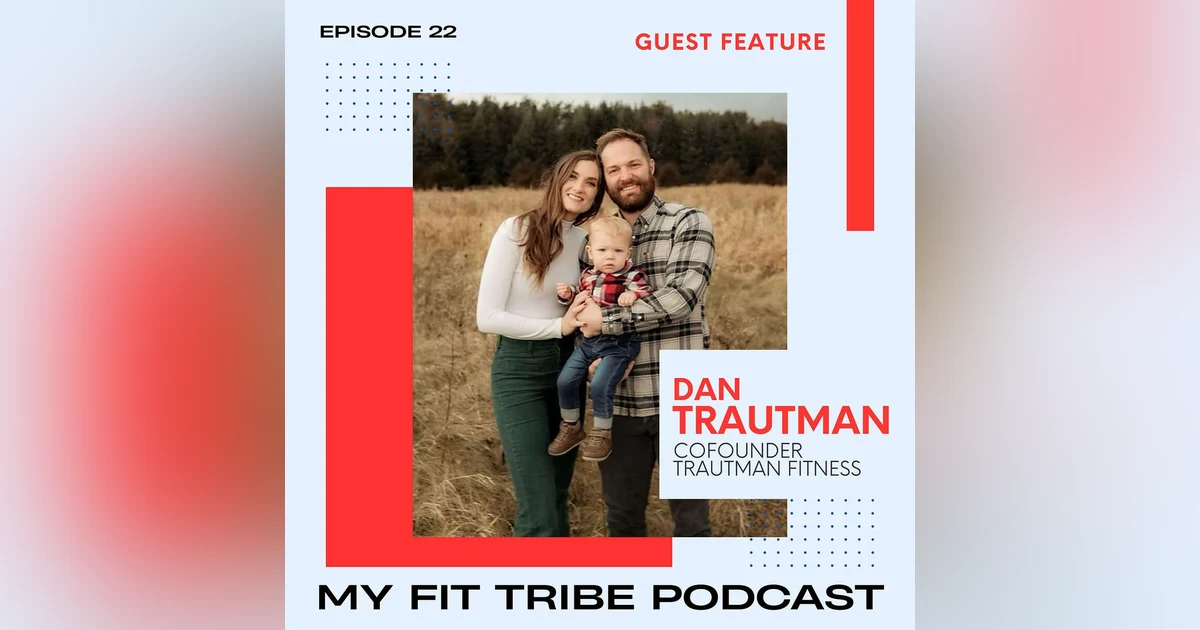

Send us Fan Mail Welcome back to the My FIT TRIBE Podcast! This week, I'm joined by Dan Trautman of Trautman Fitness as we kick off a new series on injury prevention and recovery. Dan is co-founder of Trautman Fitness. Since 2015, Dan has been helping clients reach their rehab, fitness, and performance goals. He holds a master’s in Exercise Science from UW–La Crosse and is a Certified Strength and Conditioning Coach, USAW Level 1 Coach, and Red Cross-certified in CPR and First Aid. Dan leads ...


Welcome back to the My FIT TRIBE Podcast! This week, I'm joined by Dan Trautman of Trautman Fitness as we kick off a new series on injury prevention and recovery.
Dan is co-founder of Trautman Fitness. Since 2015, Dan has been helping clients reach their rehab, fitness, and performance goals. He holds a master’s in Exercise Science from UW–La Crosse and is a Certified Strength and Conditioning Coach, USAW Level 1 Coach, and Red Cross-certified in CPR and First Aid. Dan leads the personal training side of the business, bringing both expertise and passion to every session.
Injuries can be frustrating, but there are therapies out there—like ARP Wave—that can speed up healing and help you train smarter to avoid future setbacks.
Dan and I dive into what ARP Wave therapy is, how it works, and how it might support your recovery and performance.
https://www.trautmanfitness.com/book-online
Throughout my own life and fitness journey, I have had the privilege of meeting incredible people who've shared valuable insights on mindset, health, fitness, and spiritual growth. The profound impact of this knowledge on my own life has inspired me to share it with all of you. I'm Erica Sweeney, host and founder of My Fit Tribe Podcast. Join me as we explore inspiring conversations with experts, thought leaders, and everyday heroes who offer their stories and practical tips to help you on your own journey. From nutrition and fitness to mental well-being and personal or spiritual growth, our mission is to empower you to take charge of your health and live your best life. We are more than just a podcast, we are community. Through coaching, a wealth of shared knowledge, and a strong support network, we are here to guide and encourage you every step of the way. Come be a part of our tribe. Welcome back to the My Fit Tribe podcast. This week, I'm joined by Dan Troutman of Troutman Fitness as we kick off a new series on injury prevention and recovery. Injuries can be so frustrating, but there are non-conventional therapies out there that can speed up healing and help you train smarter to avoid future setbacks. Dan and I dive into ARPWAV therapy, what it is, how it works, and how it might support your recovery and performance. Let's jump in. Joining us today is Dan Troutman, co-founder of Troutman Fitness. Since 2015, Dan has been helping clients reach their rehab, fitness, and performance goals. He holds a master's in exercise science from UW Lacrosse and is a certified strength and conditioning coach, USAW Level One Coach and Red Cross certified in CPR and First Aid. Dan leads the personal training side of the business, bringing both expertise and passion to every session. Outside the gym, he is a proud dad to his son Lincoln and shares his life with his wife, Michaela. This is going to be our first episode focusing on injury prevention and recovery. Thank you, Dan, for joining me today.
SPEAKER_00Thanks for having me.
SPEAKER_01I met Dan last year, after was it before my shoulder surgery? I think we were trying to get it better before surgery, right?
SPEAKER_00I believe so, yes.
SPEAKER_01Yeah. So I had a shoulder injury which turned into a frozen shoulder. So I was determined to find any and every type of therapy in order to avoid surgery and even just to look at things to ways to recover post-surgery. So let's talk a little bit first, Dan, about how you got into fitness.
SPEAKER_00I've probably been doing it my whole life, but um truly I was always interested in the body, um, even uh in high school. Um, just wasn't really sure which avenue I considered, you know, becoming a sports medicine doctor or a chiropractor. Um and when I went to lacrosse, I um was introduced to you know the profession of strength and conditioning, which is what I eventually went down that path and uh stayed there for a master's as well in exercise science with the emphasis in strength and conditioning. Did a couple internships uh and then um uh decided I didn't want to pursue that you know as a team strength coach any longer. I I'd I'd like to uh stay in my hometown because that would require probably a lot of job, you know, change um changes over the years. So I decided to um you know open up my own business in my hometown, Middleton. My father-in-law has been a chiropractor for about 30 years, I believe, now. Um so I started kind of just working with his um clientele, working with fitness and doing some corrective exercises and things like that. So that's kind of how I got my start. Um, you know, he was the one that actually told me about the ARPWAV machine. So yeah, things kind of just evolve from there.
SPEAKER_01Now, were you in athletics in high school and college?
SPEAKER_00I was, yeah. I played three sports in high school. I played um baseball, basketball, and football. Um, quit baseball to run track late in high school and then stayed with football throughout college.
SPEAKER_01Now, when we talked originally, uh, you talked a little bit about your sports journey and playing football. How did that, what type of experiences did you have that incorporated you taking this other, you know, coaching journey?
SPEAKER_00Yeah. Um, so I mean, like every every kid, you know, wants to make it to the league, and of course that didn't happen. Um, I also sustained quite a few injuries along the way. Um, late in my high school career, I actually broke my ankle and you know, foolishly didn't get it looked at or fixed, just kind of played on it. Um, and did so throughout my college career, which led to a lot of compensation issues, obviously. So I sustained a few tears in the same knee, then tore up my hip, then my other knee, and it was just kind of like I was kind of a China doll, you know, like it just kept breaking every two seconds, and it was really frustrating and truthfully kind of ruined a lot of the joy of playing because everything hurt always, you know. So when I was going through school for exercise science, we learned a lot about training, of course, and you know, the the whole idea of like functional training was just kind of coming about, becoming really popular with uh you know the functional movement screen type of stuff, and things have obviously evolved since then. But um, my father-in-law was uh John was the one who kind of opened my eyes to the world of rehabilitation. He uh he does deep tissue um fashion manipulation, it kind of it's kind of like a deep tissue massage, um, you know, prior to his adjustments, and they're they're very intense and painful. But I went through a um the first session with them. I mean, it left me black and blue for a few days, but once that subsided, I was uh I went back to my workouts and was uh about 30 pounds stronger in my deadlift, which was a pretty gigantic improvement in just a few days. And I so I called them up and I was like, whoa, you know, what what was that exactly? You know, and um we didn't learn so much about the inhibitory processes in school that maybe you would learn in you know physical therapy school or chiropractic school. We didn't get as much of that. And anything we did get, it wasn't really emphasized. So I kind of realized that this whole time I've been trying to you know drive down the road, pushing ever harder on the gas pedal while I'm also pushing on the brake pretty hard. So he was able to strip out a lot of the uh a lot of the densifications in the fascia and and get me moving better. And I it's kind of a light bulb moment for me of saying, Oh wow, it's not just you know being tough and and fighting through pain, you know, it actually is reducing my strength. And that could have been, you know, speed or endurance, it could have been any expression of you know athleticism. I just happened to be happened to be lifting. So I was kind of like, wow, okay. So there's something to taking care of your body, and it's not just about you know feeling good per se, you know.
SPEAKER_01There's so much of taking care of the body for the listeners. I know John, that's how I met Dan, first of all. And it was in the middle of my prep season, and then I know I'd had a a few massages in my life, but never a deep tissue massage like John Murphy does.
unknownLike, oh my gosh.
SPEAKER_01I was not quite sure what to expect, but when you're working those muscles on such a consistent basis and then you end up releasing them, I mean, it is just night and day with how you feel. And I believe there's so much importance to tissue work to be able to just, again, for your movement, for your compensation for everything. So if anybody out there needs some serious, serious deep tissue work, he's the one to find. But let's talk a little bit how that affects then whether you have that deep tissue or when you realize that you are off in your alignment, how the compensation piece works into everything.
SPEAKER_00So it's basically um we're kind of wired to get the job done and do what our bot what we ask of our bodies, what we're trying to do, whether it's sports or lifting or yard work or whatever, just life. And most things are a result of muscle imbalance weakness that we compensate for. So we'll just use the wrong muscle groups or something, or we'll overuse or something like that. Um that when done over and over and over again um creates um obviously inflammation, but uh these fascial densifications and things that you and I both know from getting released from John how powerful that can be in terms of healing and such. But whether it happens before or after, the retraining, the restrengthening um and balancing has to occur. Otherwise, you'll just kind of consistently always need to get things released, so to speak. So that's kind of the the basis of it, yeah.
SPEAKER_01What types of injuries? I mean, we can think about alignment as far as like spinal alignment or hip alignment or knee alignment, but what types of injuries or things that you see with your athletes that you're able to work with on that?
SPEAKER_00Yeah, um I mean it the list seems to be somewhat endless, but kind of any any type of tendonitis, um low back pain, knee pain, pretty much anything, um a lot of Achilles issues, shoulder issues, rotator cups, things like that. Um but truthfully, every every pain that you have is of course, you know, injured tissue, there's inflammation um that uh is there for a reason. Sometimes it can it's necessary to the healing process, but uh, if left too long, it's gonna create issues. Um, and we can fix a lot of those things, um, you know, unless the the joint or the tissue is too far gone or it does require surgery, but a lot of the things we can get the body to essentially heal itself um by giving it the right inputs, whether it's attractive exercise, you know, adjustments or uh you know massage or the stem. But it could be many things. So um being able to determine which tool to use is the most important thing in my opinion. Um so I'm sure I mean, you know, in your career, yeah you've probably tried a bunch of things. You know, you hear people swear by different things, you know, like oh dry needling or this or laser or whatever, they're all just different tools and all of them have their place. Having a way to determine what to do and what tool to use and how to use it is what I can surmise to be the most important missing piece, I think, in a lot of whether it's a trainer, a carot, or physical therapist, uh it that seems to be the the the missing piece that if found would deliver substantially better outcomes in a lot less time.
SPEAKER_01Yeah, game changer. One thing that frustrated me uh going through an injury is getting to the doctor for the evaluation the first time, and then they're dismissing it pretty quickly, saying, Oh, well, here you can go get some exercises or maybe do a quarter zone shot. Those were the only two options that I was given with my primary or my sports med doctor. So I was determined to find things again a little bit outside the box, which is why I love this podcast to share the information. So after doing tissue work and doing some dry needling, um, then we got to meet. So let's talk a little bit about when an athlete comes in or a person comes in who has an issue, which could be as simple as something in a misalignment or as as difficult as an old injury that you're trying to recover from. What is the process that you take them through to try to figure that out?
SPEAKER_00Yeah, so I have um an assessment that I I take people through, um, a movement assessment. I mean, of course, being a strength and conditioning coach, uh, my scope is limited, so I focus mainly on movement. Um, although I I have read quite a fair amount and trying to learn how Artwave works and how all these different things work um over the years. If I feel or they assess for needing an adjustment, I'll just refer out, you know, to John or you know, if they need something um like dry needling or something. I know a guy in town um over at uh pro physical therapy, I'll refer to them or things like that. So I don't like to step out of my box too much, but basically I use um, and this is kind of a uh in a lot of people's minds, a um again outside the box type of assessment because I use manual muscle testing to determine what I'm gonna be doing with that client from an exercise standpoint. So basically, their movement assessment consists of essentially activating every joint action in the body. So we'll take their ankle in and out of planar endorsiflexion, their knee out of extension, flexion, hips through all the range of motion, flexion, extension, rotation, ab and adduction, so on and so forth up the body, spine, uh, shoulders, and such. So when you do um even just a ref or two of those movements, um you will either strengthen your manual muscle test or you will fail. And what I mean by that, or I shouldn't say fail, but you'll weaken very temporary. But um, say I had you hold your arm out and resist me pushing down on it, I would gradually apply force until I overcome that strength a little bit. So your arm would kind of um get pushed down a little. If you do a movement, truly any stimulus, so that's kind of a stepping stone to deeper talks later, but if you do apply a stimulus, in this case a movement that you need, you will yield a stronger muscle test. Whereas if you do a movement you don't really need, it'll be weaker. It doesn't mean you can't necessarily do those, but when you're trying to accomplish a goal in terms of delivering the exact thing someone needs so you can get the best results, it's a very helpful tool to have in your arsenal. So I'll pick out it could be two, three, four, or five different exercises that will go through that session. So they're getting assessed every session, um, which is a bit different than most rehab processes that I've ever been through. Um, it's always been kind of more protocol-based, like, all right, you're this is kind of week one and this is week two, and so forth. There's no like way of asking your body what it needs. What I'm describing is a way to ask your body, hey, what do you need? Then we can do the same thing for the amount of weight, the amount of reps, um, amount of sets, all the variables that go into exercise. Um, you can basically optimize with manual muscle testing. So you're getting because you don't want to use too much weight because that'll shut you down and put you into a compensation state. You don't want to use too little because it's you're leaving results on the table, of course. So it goes reps and sets and all that. Um so, anyways, um that's the assessment that I take people through, and that's how we customize our workouts um every session.
SPEAKER_01So I'm gonna back up a little bit. So you said when you were doing an assessment of a certain uh movement, if it doesn't need it, it will lessen. If it does need it, it will increase.
SPEAKER_00Yeah.
SPEAKER_01Okay, let's talk a little bit about that. Yeah.
SPEAKER_00Yeah. So um, I mean, there's a lot of different books out there now that you can read about manual muscle testing. Some people will call it applied kinesiology. Um it's kind of a controversial thing from my understanding, but I found a lot of merit to it. There's a book that I read called Energy Medicine by James Oshman. That's a really good read and kind of connected a lot of dots for me. He's a biophysicist, actually, and he's actually able to explain the underlying physics concepts behind some alternative therapies that you know kind of get chalked up to being like voodoo medicine or things like that, right? Um so it's super helpful to understand those things. So, what it seems like you're doing is essentially creating resonance um vibrationally in your body when you apply something, a good input, something that it needs. Conversely, you could be inducing a state of interference. Um, you know, you might see like some people do these party tricks online or whatever with muscle test, and when you like, they'll hold up like a cell phone by you and you'll weaken, or you take it away and you'll strengthen. So it's just creating like um essentially interference um vibrationally. And that's from my understanding the concept. So applied to exercise, and that's why you could potentially do this with anything, whether it's chiropractic or massage or whatever, you can figure out where to apply a stimulus and how much of it. Yeah.
SPEAKER_01So you evaluate your your client then, and they decide they can utilize your service. Let's talk a bit about the ARP wave then, what it is, uh, what the history of it is, and then how you use it for for treatment.
SPEAKER_00Yeah. Um, so they've been around. They're they're kind of the original um stimulator in its space in that particular niche. Um, there's I don't know, thousands of different kinds of stimulators, of course. But um this one um is pretty cool because it has a lot of adjustability to it. Um and it yields very, very strong muscle tests. And if you ask them, they'd say that's because of their waveform and all these kind of technical aspects to the machine. Um so they would say that it um is harmonious with your nervous system, which I wouldn't translate to it's essentially creating that resonance I was kind of speaking about a second ago, rather than a more interfering type of signal. Essentially, it speaks um a language our nervous systems can pick up rather than it just being like this scattered noise. So, anyway, you can fine-tune the frequency and the power outputs and all these different things on it that allow you to um maximize the results for every individual. So you basically apply electrodes to the areas indicated by the assessment. So, for example, um someone this morning we uh assessed and they could only do one exercise, and it was a um basically a laying on your stomach like a superman, an alternating superman exercise. And the electrodes had to go on her glute medius and her erector spinae, contralateral erectorspinae, and we would turn them the stimulation up as she did the exercise. So it's a way to enhance those muscles and nerves, right? More so they can get more out of that session.
SPEAKER_01When we did that, my treatment on my shoulder, so one of the one of the exercises that you had me do was the basic bicep curl.
SPEAKER_00Yeah.
SPEAKER_01We were working on that. And I have been working out for 15 years, fair, you know, sometimes I I can lift heavy. My biceps have never been sore like it was after that treatment. And we had what zero weight? We had no weight. It was just that stem creating that resistance and then pushing through that increased resistance. And I think like for three days, my biceps hurt. I'm like, that is crazy.
SPEAKER_00Yeah, yeah. It kind of gets you twofold, or maybe even threefold, because like most of the time when we're the areas that we're working on, let me backs up just a second. If you ever look at basic like EMS, like electric muscle stem research or books or things like that, it's pretty straightforward. It's like, oh, if you want a stronger quadricep, put it on your quads and do some leg extensions or squats or something. Well, that's fine, but when you understand a little bit more in depth about how the nervous system works, it's like kind of everything's connected, right? So if you have a weak area over here, it could be affecting and creating weakness over here or over strength over here, right? So you're that's why the assessment's key because you want to you want to figure out truly where you're you're deficient, um, you know, rather than just kind of being um, I always call that like kind of the meathead method, you know, just uh slap it on the biceps and crank them up. Now you may put it on there, right? But when you find the areas where it's creating systemic inhibition, you will get better activation in your whole body. Um, so that's kind of number one. And then number two, the areas that the the exercises we have to do, those areas have probably been inhibited for quite some time. They're usually pretty tight. You know, if you ever start lifting, as we all know, those first couple of weeks are usually the worst in terms of soreness because your muscles kind of get lengthened out under load. So a lot of the eccentric loading that you're not used to, you that kind of you kind of get used to that after a little while. That soreness is induced by that. The lengthening process that the machine allows us to undergo is what helps create a lot of that soreness as well. Plus, then the direct stimulation from the machine also obviously enhances activation too. So it kind of gets you in three different ways there.
SPEAKER_01I was floored.
SPEAKER_00You know, pretty sore sometimes.
SPEAKER_01I did not expect that. I mean, I expect you're like, oh, a little bit. I'm like, oh, I'm tough, I can handle it. But man, like just moving my arms, I was like, it was so much more sore than I get during any type of workout combined. Uh, how much can that have help people who have atrophied a lot or who are in a situation where they're unable to load their weights? Like that is a huge resource.
SPEAKER_00Yeah, significantly. Um, it's been pretty um powerful in many instances. In fact, I I'm working with somebody right now, um, you know, and most of like because I'm not a physical therapist or anything. So I just um I always take the doctor or the PT's lead on things, you know, and things like that. But a lot of people come try to do extra workouts with me, you know, to help get back faster or whatever. Or if they've plateaued and in the thing that they are. Doing. It's a good supplement to what they're doing. So this person has recovering from an ACL injury, and they had a little bit of a strength plateau. And then using the machine and then the workouts, you know, again, it's just the ability to target exactly where you need the strengthening in the stimulation is truly the key. But she was able to improve her strength about 60% in a matter of three weeks. So that's just kind of one example. Um there's been a few other ones, and that was under ice isokinetic testing. So it's uh it's very important to get those that inhibition from the injuries out, I guess, so to speak, of your system. And the only way through that is to retrain it. Otherwise, it'll stay in a state of being guarded and locked up and weak. So yeah, in terms of the hypertrophy or the the working against the atrophy, um, yeah, it's a matter of getting everything activated first and then from there it's kind of easy.
SPEAKER_01That's very interesting that you mentioned the guarded part because it's not necessarily that mentally we're thinking, oh, I can't use my arm. It's your body saying it I know I can't do that to protect it. Because I was surprised when I ended up with frozen shoulder, because I'm, you know, continued to work out and stretch and do all the PT after my injury, expecting to avoid that, and it froze completely. So yeah.
SPEAKER_00Yeah, so that's called artrogenic uh muscle inhibition. So basically, anytime there's like tissue damage, your brain senses it and will shut you down in the way it sees fit to essentially avoid using it and causing further damage. Um, so it'll weaken all those muscles. It's like turning the volume knob down on those muscles, and then um it'll usually overactivate other areas to kind of pick up the slack. So that's why, like a lot of times you'll maybe like not necessarily in your case, but I've seen a lot of people where it's like, oh yeah, my I used to have this problem. Well, that went away, but I'm real stiff up here. And it's like, well, you're kind of just robbing Peter to pay Paul, and then you know, robbing Paul to pay another guy. It's like this kind of endless, and that's essentially what I went through throughout my college career. So, you know, this is a bit of a side note, but basically, some of the coolest stuff I learned um in terms of strength and conditioning was looking at D-training and the effects of D-training, um, and how you don't necessarily lose everything. And there's actually some benefits to D-training, and that's a whole different thing. But um there was this paper I read that said uh um you'll hold on to those myonuclei that you develop from strength training even after a period of detraining for up to two years, and I believe this study just concluded at that point. So it gave me a lot. Well, I read that when I was all banged up, which was a huge relief for me because I'm like, oh, I'm not gonna like lose everything. Your muscles just kind of go into like a dormant state. But as soon as you're able to put that, get that stimulus back in there, the weights and you know, the training, it it'll come back and roaring back pretty quickly. So you don't have to like, I don't know, give me this like peace and um ability to be patient in my rehab, you know, instead of being like, oh, I gotta get back in the gym and smash weights, you know.
SPEAKER_01Yeah. So in in detraining, you mean not train taking time off due to injury.
SPEAKER_00Yeah, yes. Like, don't be afraid to take time off to heal up, you know, because otherwise it's it's very you're better off losing, you know, a few months or whatever it is, um, than perpetually being banged up, causing more problems. Um and you know, at the best case scenario is you're just not the best athlete or lifter or whatever it is you're you that you can be, as evidenced by that story I told about John massaging my leg and things like that. My deadlift went up a lot. So it's like um you're you're inhibited. That artogenic muscle inhibition is so strong that it's you can't really overcome it. You know, it's a it's not a conscious process per se. A lot of it's not. So heal up and fix it.
SPEAKER_01You can talk yourself out of it, right? Like you said, just go harder, just give it, you know, go to the gym.
SPEAKER_00Yeah.
SPEAKER_01Wow. So, what are some of the other uh experiences that you've had with clients that have been really remarkable, or something maybe that someone has come in for where you end up treating something completely different than they originally came for?
SPEAKER_00Yeah, that that second question is that is the story of my life. Um I mean, like most people are coming to me for injuries. Um, there's a lot of kind of, I don't want to say last resort types, but you know, it's like they've tried everything. This is kind of the last thing. Um, but even people that are coming to me straight up for fitness or sport performance training, it seems like everybody has something. Like everybody's got a tight hamstring or a bad back or whatever that you know, they're not really like seeking, actively seeking help for. But everybody's got, I've never met anybody that's just like, yep, I'm pristine. You know. So um to me, after school, I I was debating on going back to you know, PT school or Cairo school, and um maybe I will someday, but I I still view it as um a training, whereas like you know, everybody wants to think, well, well, how many sessions or this or that? And they don't look at things as uh, you know, you're rehabbing from injury as a as a training process. Um, it's a just like extra like normal training, it's no different. You just need maybe you know, a more targeted training. But you know, when you get into try to fit into these business models or these, you know, of like, oh, it's gonna be four weeks and it's like, or eight weeks, and it's like, well, maybe, you know, it's that's just kind of a cookie-cutter approach, and the body doesn't really fit that mold. So I guess that's where where my philosophy lies is that it's it is more training. So getting people into that mindset is um is kind of essential if you're gonna truly fix some problems, you know. So that being said, there are there are some interesting stories that come about every once in a while. I mean, most people we can help um back to, you know, as long as they're pretty much non-surgical, uh, we can help a lot of people get out of pain, you know, within a relatively shorter period of time, but it kind of just depends on the person. Um, there's been some uh interesting cases. You know, like uh one somebody came to me with an ankle sprain, and it was like two days before a like a regional tournament. And it was like we just we were able to do like three sessions before, and it was, I don't want to say 100%, but it was like you know, 80% you know, back, which is pretty substantial in a matter of two days. Um, she was able to play just fine, hardly any pain. Then there was this is really early on, but there was somebody I was working with, um uh a bodybuilder, um, very strong person, and uh they just couldn't deadlift anymore because every time they deadlift and push it and just go a little heavier, uh, they'd throw their back out. And we found uh a spot in their uh posterior tibialis. Um that muscle was particularly weak. So we were able to strengthen that up over the course of a well, we we worked together for a couple of months, but um just a couple weeks in, there was kind of there's like these times where like these breakthroughs and range of motion will occur, and you can see it in real time. It like happens within the session. You're like, whoa, wow, okay, that's awesome. And then yeah, he was able to go back and start lifting heavy again, and he hadn't deadlifted since before that back injury, and he was able to work up to a spot that was 40 pounds heavier than he was before. And it's not like I made him 40 pounds stronger, he just had that within him, and it was being inhibited because he was all locked up and compensating. So we're able to kind of bring up that weak link, and all of a sudden he's got all green lights, you know, he doesn't have any yellow or red lights, you know. So it was things like that can be pretty exciting and and fun to see, but it's not like it's um um you know something I directly, you know, induced in him. He was just able to strengthen that one spot and finally get him back to where he wanted to be.
SPEAKER_01Well, the thing I love that it about it is it's so targeted because again, when you go to the PT through the doctor referral, they'll usually sit down with you and do some assessments and then they'll print out your little worksheet of exercises, which frustrates me because I exercise, but getting me to do these, you know, slow exercises, I'm not always consistent. But it also there's no guarantee that someone's going to be doing it with the right form and they're not correcting those inhibitions, they're just going through the motions of these exercises, which may not be helping the problem.
SPEAKER_00Yeah. Yeah, 100%. Um, you nailed it on the head there. Um, you know, and that obviously speaks to the benefit of working with you know a trainer one-on-one rather than on your own. Um, but even so, even if you were able to do it, you know, obviously you're you you have a strong large history with strength training, so you know what you're doing, you know, so they can give you the right exercises. But how do you how do you know if you're even ready for that exercise? Or if, you know, um maybe you just need to do like shrugs for a few days in a row. And then, oh, you're on the fourth day, you need a rest day, or and then the fifth day we need to do some external rotation, and then oh, back to shrug, you know, it's like there's no way to predict it um without having some sort of assessment and insight into the body and asking what it needs, and that's that's why I again um we'll keep going back to that muscle testing assessment. Um, without that, I mean, and I I hadn't I've only been doing that for the muscle testing assessment for maybe three years. Um, prior to that, it was kind of just like you know, shotgun approach. We would just do a million different things, you know, you know, and some of it would work, just maybe luck, or just because we did so many things that we were able to get some the strengthening in the right area, but also there's probably some cost there as well because you're doing things you weren't prepared to do. So um, you know, figuring out the muscle testing and being able to apply that to exercise um selection and getting all the right loading down um has been just an astronomical improvement for us in getting results. Um, the only tricky part is that first it can be a little like it's kind of like the more banged up a joint is, meaning like the more damage there is, the more time you're gonna kind of spend in real, like maybe only an exercise or two, maybe only a couple rounds, and there's very little weight. So it's kind of boring and monotonous at first, but all of a sudden those little areas get strengthened up and boom, okay, now you can start doing some compound movements again, light, but okay, that's a big jump going from an isolation to a compound and um things like that. So it it definitely progresses and it will go faster if people are diligent about it and don't try to like force it, you know. Um, because the second you start forcing it, your body's gonna go into that kind of fight or flight mode where it compensates and locks up, and you know, it's essentially what happens like when we max out and do one rep maxes, you know, you you feel kind of like crap for a couple days. And if you keep doing that over and over, you're not gonna get anywhere. So you got to figure out how to load adequately.
SPEAKER_01Right. And also when you have those weaknesses, those weak muscles, it's hard to get those muscles fired up. You know, if if you have if you can't fire up your glutes when you're doing squats or you're doing something else, you're still gonna fire up those hip flexors, whether you're doing the exercises or not. So with this, you're able to get those weak muscles to fire up, which mentally you might not be able to do without it.
SPEAKER_00Yes, yeah, 100%. Um, yeah, there's nothing more I can I mean, you nailed it on the head there. That's uh that's a hundred percent of the issue, is you the and it goes into those inhibitory processes again. So yeah, you sometimes, and that's why the ARP can be pretty nice, it can help essentially um do away with that inhibition to allow your body then to activate the way it should. And um, you know, like you said, even if you have the right exercise, you may not be able to activate the right target areas. So, yeah, I mean, all of that goes into it. Um, luckily, I mean, it sounds like it's a lot of information, but the assessment only takes you know less than five minutes, and then we're off and running. I write the workout up and then we're going. So it's pretty quick. Um, it's just a kind of a lot of background information and and understanding goes into it. But I again I always like to say like the best way to understand it is to experience it yourself. Um, because then like there's like a feeling like, oh, you can feel how your body changes and the way it moves differently within each session. You're like, oh wow, okay, yeah, this makes sense.
SPEAKER_01That's one thing I enjoy about lifting is because I always want to do a little bit better each week, you know, whether it be more reps or more weight. So each six-week period, I always want to one up a little bit because that's keeps it uh a challenge for me. That's one thing I love about what you do, is because each time that you go see you, you can see that you're getting a little bit stronger or working a little bit differently. Like it's tangible improvement.
SPEAKER_00Yeah, and it's it's really interesting. Um it's really hard to separate strength training from rehab because it's really the same thing. It's just kind of like rehab just a little bit further back on the spectrum, you could say. Um, you know, you're just usually dealing with lower loads, higher reps, things like that. But it's interesting to see how people go through. So, for example, I have um I had a person I was working with for a while, and um they had a a knee surgery and we kind of got past the rehab stage, and they were just into the training stage. Um but using um, I still use the assessment, even though they're not injured, to determine what workout and everything to do. And um, it was like, okay, we'd be squatting back, like we'd be doing some back squats um on this day. And then he he went test for squatting for like three weeks. And then by the time he had come back to it, you know, we'd work on you know upper body and you know, core and all these different exercises to hit those weaknesses over the because he'd work out probably you know three times a week, probably. And but three weeks later his squats up like 30 pounds, and we hadn't squatted in three weeks. So it's like it shows you the power of tapping in and really strengthening where you're weak, you know, rather than always forcing the squats and and everything we want to get stronger at, you know, it's like, well, we're not getting stronger at this because maybe you know our planner fascia is weak or you know, our so ass is weak or something, you know, like that's just hypothetically. But um, that's kind of the idea is if you can keep just strengthening your your weaknesses, you make a lot more progress without the injuries, you know, and and just the overall feeling like crap, you know, like uh if you get you go too hard in the gym or whatever, you know, you're always kind of getting the right dose of of stimulus for you.
SPEAKER_01And like you said, when you are overtraining, then you over-strengthen your strong parts, which then over weakens your weak parts, right?
SPEAKER_00Right, exactly, exactly. You become, as they would say, an FMS overpowered, I believe is the term. Yeah. So you become, um and this is is, I mean, we see this all the time. Like, I don't know if you watch the NFL or whatever, but those guys are extremely strong and explosive, and they'll tear their ACLs or something just on a routine cut. And it's like, okay, well, that explains like that concept is what um seems to be the going theory is that they're super strong and explosive, but imbalanced. So the joint just can't handle that force, that imbalanced force. So um, you know, I think that's why a lot of us, when we I mean, I've suffered my my fair share of injuries, of course, from sports, but also from lifting as well. You know, I think that's why a lot of us go through these injuries, is because you know, we um we keep trying to press harder on that on that gas pedal, but we're we keep gradually applying our foot to the brake as well. So um in the form of you know, imbalances.
SPEAKER_01I feel guilty.
SPEAKER_00No, yeah, I am I am so guilty of it.
SPEAKER_01I think I would have to come back and see you, Dan.
SPEAKER_00Yeah, I basically got to this point, just got beaten to submission of just okay, I I cannot keep getting injured. This is ridiculous. So I I know as as well as anybody, too.
SPEAKER_01So you probably deal with athletes or people, I should just say, because it's not only athletes that you deal with, right? But from I mean, to do with kids as young as high school when they're in athletics, and then all the way up through any age, I'm assuming.
SPEAKER_00Yeah, yeah. Um uh I guess probably half of my clients are athletes. Most are just, you know, adults that value being functional and fit, um, don't want to get hurt or trying to recover from injuries. Um the youngest I I'd I'd go is is probably middle school, but I try not to get, I don't know, like there's all that kind of information about um long-term with like development. You don't want to put kids through burnout, you know, but so I allow them to come in, but if it's if it's getting to the point where they're it's getting too much, I like to, you know, if they're in there once a week, twice a week, you know, um consistently, that that's probably good, but no more than that. I don't want them to experience too much rigor, you know. It's got to still be play for young kids. But yeah, once they kind of get into that high school realm, I guess with those middle schools, just enough to keep them in balance and get them a little stronger and you know, kind of enjoying the the training, you know. Right. Um develop a good relationship with it because who knows if they're gonna be professional athletes, like who cares about that? You know, it's more about developing a good relationship with fitness for their life. And uh, you know, if they turn out to be good athletes, great. But then in in high school, it gets a you know, I allow them to get a little bit more dedicated, um, you know, coming in almost daily if they can. Um otherwise it's you know three to three, four, five times a week. Um, and then yeah, adults are the same way, whatever it's usually schedule limiting, though.
SPEAKER_01So yeah, but it's hard for you know high school kids that are they're so focused on their sport, and that sport is such a huge part of them. So when they do get injured, it can be devastating for them psychologically because all of a sudden they've missed, they've lost this piece of them. So to keep them healthy is super important.
SPEAKER_00Yeah, yeah. And I mean that that's a great point you brought up. I mean, that that brought me back to my experience as an athlete and like just loving football, and within a couple of years, just almost resenting it because it was just like it just meant pain. Like being in pain just sucks, you know, like it's gonna it can ruin your joy for something you should love and have and have joy in. So yeah, that's a hundred percent. You know, you you gotta you gotta stay, you know, um balanced so you can enjoy the thing that you're trying to play.
SPEAKER_01So so for our listeners, if they want to come find you, how do they find you?
SPEAKER_00Yeah, uh my website, TroutmanFitness.com, all my information's on there. I'm in Middleton over by uh in the new Kiva building there off Airport Road. So yeah.
SPEAKER_01You've got a nice facility, very cool. Okay, so I will put the link to your website on the show notes too, so people can help find you. So I'm gonna wrap up this conversation today by the question I ask all my my guests. So it's a two-part question. First part is if you, Dan, today could have a conversation with Dan of the past, we'll say Dan, who is playing football, who's busted up, kind of unhappy, unsure what his future holds, what would you say to him?
SPEAKER_00Oh, that is such a good question. I would tell him without being such a meathead, probably. I'd say bump the brakes, get healthy, go to the doctor, do all the things, you know, stop trying to play through injuries. But at the same time, um, it's led me to where I'm at now um and has given me a deep understanding for all that and is something I'm able to use for good for other people. So I I can't I can't regret it too much, I suppose. Yeah.
SPEAKER_01I love that. We find a lot in this podcast that people are are helping the person that they once were. They're best equipped to help the person you once were, for sure. Totally. Okay, so Dan today can have a conversation with Dan of the future, 20, 30 years in the future. You know, sit down with him, your favorite place, about to do some STEM work or something. What would you ask him? And what do you think he would say back to you?
SPEAKER_00Well, that is a really good question as well. Um, I would probably ask him, um I would ask him, although it's like I feel like in asking it, I already know the answer, but uh I tend to kind of squirrel cage a little bit, you know, and like worry about like, oh, this is this the right move or is this the right way to go about things, or is it gonna work out, you know? Um I would ask him that kind of stuff, you know, am I am I going down the right path or something like that?
SPEAKER_01Okay, and so what do you think he would say?
SPEAKER_00I think he would say, yeah, just keep you know having faith and lean on that, and uh, you know, that'll act as your guidance. That seems to be, you know, the savings grace for me personally. So, you know, that's helped me a lot because prior to all that I would I would have leaned too much on myself, you know, rather than uh, you know, God and things like that. So I you know, leave it in his hands and good things will happen.
SPEAKER_01I love that. Thank you for joining me today.
SPEAKER_00Yeah, thank you.
SPEAKER_01Thanks for listening to My Fit Tribe Podcast. Tune in weekly for our latest episode for more health and wellness insights and inspiration. For more information, visit myfitribe.org. Please note that the opinions and comments presented here are those of the guests and do not necessarily constitute medical advice or the opinions of MyFit Tribe. Copyright 2025, all rights reserved. This podcast is a production of MyFitTribe LLC. Don't forget to download, subscribe, and follow the MyFit Tribe podcast so you don't miss an episode. Thank you for your support.