Cortland Dahl-Meditation, Healthy Minds App and the Mindset that changes your game
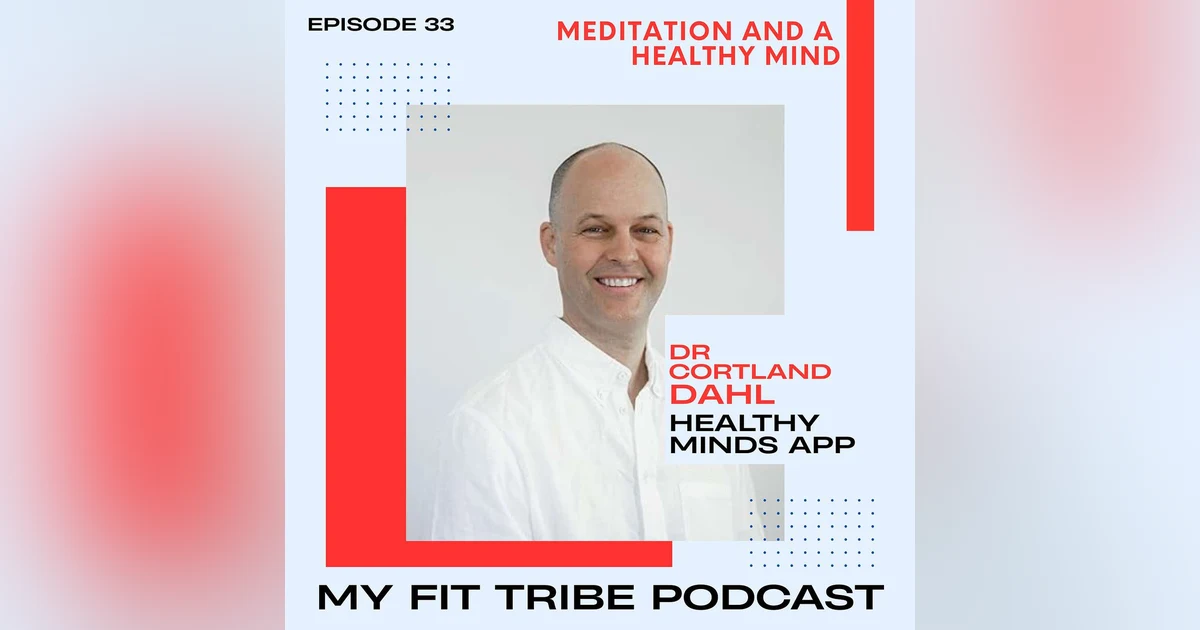

Send us Fan Mail In Today’s Episode I am joined by Cortland Dahl, he is a neuroscientist, author, and meditation expert dedicated to advancing human well-being. He is the creator of the Healthy Minds Program app, a free mindfulness and well-being tool featured in The New York Times and downloaded over a million times. Developed in collaboration with leading scientists, the app is now used in research at top institutions worldwide. Cortland lives in Madison, Wisconsin, where he continues...


In Today’s Episode I am joined by Cortland Dahl, he is a neuroscientist, author, and meditation expert dedicated to advancing human well-being. He is the creator of the Healthy Minds Program app, a free mindfulness and well-being tool featured in The New York Times and downloaded over a million times. Developed in collaboration with leading scientists, the app is now used in research at top institutions worldwide. Cortland lives in Madison, Wisconsin, where he continues to explore the science of the mind and teach meditation globally.
We explore how his journey with meditation began, the path it led him on around the world, and how it ultimately shaped his work in the science of well-being. We also cover the basics of meditation—what it really is, and how it can benefit us in ways we might never have imagined. This is an episode you’ll definitely want to listen to!
13:22 - [Ad] Just Be True ~ A Soul-Led Podcast
14:08 - (Cont.) Cortland Dahl-Meditation, Healthy Minds App and the Mindset that changes your game
Throughout my own life and fitness journey, I have had the privilege of meeting incredible people who've shared valuable insights on mindset, health, fitness, and spiritual growth. The profound impact of this knowledge on my own life has inspired me to share it with all of you. I'm Erica Sweeney, host and founder of My Fit Tribe Podcast. Join me as we explore inspiring conversations with experts, thought leaders, and everyday heroes who offer their stories and practical tips to help you on your own journey. From nutrition and fitness to mental well-being and personal or spiritual growth, our mission is to empower you to take charge of your health and live your best life. We are more than just a podcast, we are community. Through coaching, a wealth of shared knowledge, and a strong support network, we are here to guide and encourage you every step of the way. Come be a part of our tribe. In this week's episode of the My Fit Tribe podcast, I had the pleasure of speaking with Cortland Dahl, creator of the Healthy Minds app. We explore how his journey with meditation began, the path it led him on around the world, and how it ultimately shaped his work in the science of well-being. We also cover the basics of meditation, what it really is, and how it can benefit us in ways we might never have imagined. This is an episode you will definitely want to listen to. In today's episode, I'm joined by Cortland Dahl. He is a neuroscientist, author, and meditation expert dedicated to advancing human well-being. He is the creator of the Healthy Minds Program app, a free mindfulness and well-being tool. Thank you for joining me today.
SPEAKER_00It's great to be with you. Thanks for having me on.
SPEAKER_01So I was explaining right before we started the podcast that in a previous episode, uh, we were talking with Liz, who had suffered a cancer diagnosis, and she mentioned how much this app has changed her life. So I'm really excited to get into the app features, but I'd like to start with your journey into meditation and how you got familiar with it and where it took you.
SPEAKER_00Yeah, yeah, it's been a long winding road. Um, I started meditating back in the early 90s. And the simple story is that I was really struggling. I I had always been wound a little tight. I was a little anxious as a teenager. I got to college and my anxiety just went through the roof. I had a lot of social anxiety in particular. And it's kind of ironic because another thing that I really struggled with at the time was public speaking. I had a genuine phobia of public speaking, um, which is strange because I do things like this all the time now. And it, you know, I have like zero anxiety about it now. But then it completely threw me into an emotional tailspin. So the social stuff, public speaking, being in college, it was just, it was just overwhelming. I was just totally overwhelmed. Um and it turned out to be a blessing in disguise because it got me looking for something, for anything, because I knew I needed to make a change in my life. And I stumbled upon the practice of meditation. This was long before the days of mindfulness, and it just changed my life. My the world was a different place within probably about six months of regular practice. And I just I knew this was going to be at the center of my life, and it really has.
SPEAKER_01So many people suffer from that mindset that you talk about where you're so anxious and strong, tight. And there's a lot of forms of of relief that people go to that are not healthy, right? So what first brought meditation into your view? How did you even find that?
SPEAKER_00Well, I was I've always been introverted. I like spending time alone. I love and I was a voracious reader uh then and now. And so for me, actually, it was books. I I read books in my teenage years, and I remember always being attracted to these figures and characters that were kind of larger than life, but in a like in a really wholesome way, people who just seem to kind of radiate wisdom and compassion. So, like the the one of the characters that I'll always remember is is the bishop from Les Miserables, who's kind of like the saintly character. And there's this famous scene where Jean Valjean is this character, and he's he basically been taken in by the bishop, and he ends up stealing all of this silver from his house and escapes. But then he's caught, and the the policeman drags him back to the house, and the bishop says, Oh, no, no, no, I gave him all of this stuff. He he I he didn't steal it. And then he says, Oh, and you forgot your silver candlestick, just a minute. And he runs into his house and he gives him something else. And that that's like a turning point for him in the book. And I remember reading stories like that and feeling really moved by these figures who just seemed to be their life was about something bigger than their own self-interest. And at the same time, I was also a little disheartened because there wasn't a path forward. Where do I, where do I go with that? What how could I be like that? There was nothing really that connected with me that that gave me a path. And it was really meditation when I started reading some books on meditation, that it felt like somebody had just handed me the roadmap to actually get there. And I'm always a little fanatic about anything I do, and that was certainly the case when I started reading about that. And I'm I'm pretty much still a fanatic. It just uh I was just stuck with that.
SPEAKER_01And meditation has taken you all over the world. Can you talk a little bit about that?
SPEAKER_00Yeah, I, you know, I um even then I was I was very, very curious. Restless, I guess, would be the the more toxic side of it, but the positive side of it was was restlessly curious. And I've always just been a curious person. So I I did a study abroad trip. This is back in I think 1995. I traveled to I think eight or nine different countries in Asia, and uh as part of a study abroad trip where we were kind of just traveling around, it was a really cool thing. That I really got the travel bug, got bit by the travel bug through that trip. I ended up traveling in, I think, more than 40 countries over the course of the next couple years. And I was really almost like a semi-monkish kind of lifestyle. I was doing my own personal meditation retreats, doing a lot of yoga, a ton of reading, very introspective. And it was just this meditative journey around the world. And I think the mixture of being kind of outside my normal comfort zone, culturally, emotionally, socially, on every level, just created a space for a lot of self-discovery and growth that I don't think I would have experienced otherwise. Um, and a big part of that was living overseas. I ended up living for almost a decade in Nepal and India, doing long retreats in the foothills of the Himalayas, meeting just these amazing meditation masters. One of my teachers who I spent time with had spent 40 years living in caves and retreat. And it's just until you meet people like this, you just can't even describe what it's like being around them. It's it's like, yeah, it's it's yeah, it's it's impossible to put into words, but people who are unlike anybody you normally meet in your daily life in in an incredibly inspiring way.
SPEAKER_0140 years. I can't. I know.
SPEAKER_00Can you I mean spending a couple of days at it, I mean, is unthinkable. I'm really imagine that. I mean, it's I mean, it's just so far from most of our lived experience, we can't even fathom why you would do that or what might happen if you do.
SPEAKER_01One thing that uh gets my curiosity with meditation, it's something that I have done and that I know I need to do more. But the stopping to slow down enough to do it proves very challenging for me because I have the squirrely brain that that drives me crazy. So I'm gonna get into that as well. But it's again, hearing 40 years and thinking of my squirrely brain.
SPEAKER_00Well, you're you're not alone. There's even a very technical term for that. That's pretty much everybody's experience. So we definitely we should talk about that.
SPEAKER_01Yeah. So you you were in Nepal for 10 years, and then what brought you back to Madison or to Madison?
SPEAKER_00I thought I was gonna live my life in Nepal, actually. And it it turned out to be this uh now few decades-long collaboration I've had with a Tibetan monk and lama named Mingyur Rippice, who's one of the great living masters and teachers of the Tibetan tradition. I got to know him around 2000, and um at a certain point we started working together on some things, and we ended up creating what is now a kind of a global network of meditation groups and centers around the world called Tergar. There's um a center in Madison where I'm based and many other places around the world. So that's why I moved back. And then a few years after that, I actually met Dr. Richard Davidson, um, also based in Madison, at a conference in Zurich in Europe. And that started yet another important relationship and collaboration, um, based out of UW Madison and the Center for Healthy Minds, where I also continue to work and Richie and I still work very closely together. So it was those two things together that kind of drew me back uh out of Asia, back to the to the US and to the Midwest, where I grew up and and where I live now.
SPEAKER_01Interesting how crossing paths with someone, you know, just affirms that you're supposed to be here and doing what you're doing. I love those those stories.
SPEAKER_00So true.
SPEAKER_01So let's talk a little bit about the University of Wisconsin-Madison's program for healthy minds. Where did that start? And what was the thought behind it and the research behind it, and what was the goal through that program?
SPEAKER_00Well, like I said, I met Richie at a conference in Zurich. This was right on the heels of the financial crisis in 2008. And there was this conference on compassion and economics. And there were some Nobel Prize-winning economists, the Dalai Lama was there. Richie was one of the moderators, was one of kind of the main organizers of it. And I was there with Mingi Rimpache, the Tibetan Lama who I mentioned a few minutes ago. And just by chance, um, I ran into Richie and we met. He knew Mingi Rimpache because Mingi Rimpache had been one of the subjects of his early research. And Richie, for those who don't know him and probably many listening may not know of his work, he's one of the most well-known neuroscientists on the planet. And he was also really the one you could probably credit more than anyone else with putting the rigorous mainstream scientific research on meditation and mindfulness on the map. It was really his early work around the year 2000, where a lot of this, the research on meditation, which prior to that had been very fringe, not particularly rigorous research, started making its way into the mainstream of science. So, anyways, he he knew Mingi Ripoche because Mingi Ripoche had been one of his test subjects in that early research. This is in 2007, so it's a few years after that. And we just got talking, and Richie, you know, in the way only he can do, he's a uniquely persuasive uh individual. He basically said, Why don't you come to Madison and do a PhD? And my first thought was, well, with all due respect, why would I do that? And he said, Well, why don't you just come and visit and you can check it out and see, you know, see what you think. I had actually been in the scientific field many years earlier. When I did my undergrad, I worked in a lab and was involved in research, was very interested, and thought I would get a PhD at that time, but then my life took a right turn, you know, to the Himalayas and never thought I would go back to science. And I had no intention then of doing so, but he, you know, he just sparked my interest. So, fast forward a while after that, I went to Madison and he invited me to be a fly in the wall on this gathering that actually was incredibly unique. I don't, nothing has happened like this before since that I'm aware of. So Richie was there, obviously, John Cabot Zinn, and some of the people who are now really the leading researchers on the planet studying meditation, mindfulness, things like that. So Amishi Ja, a really important scientist in this area, Judd Brewer, another really important scientist, just this remarkable group of people. And it was just like 10 or 15 people sitting in a room for a few days with having these deep discussions. And I was, I mean, after that, I was like, wow, I'm coming. Like, sign me up. This is so cool. But I had, but I had no idea why. Really, people would say, well, why are you going? Why are you getting your PhD? And honor the honest truth is I didn't know. I was, I just felt right. And I kind of trust that instinct. Um, and it's led to some amazing things. But at the point, at that point, I had really had no idea why I was doing it. It just felt like the right step at the time.
SPEAKER_01You talk about um Richie using a test subject. What type of research, how does that even work when you're testing meditation? What are you looking for as far as um is it your biology? Is it your calming mechanism? What are you researching for meditation when you're studying this process?
SPEAKER_00Well, there are lots of things. And we have at the Center for Healthy Minds, which you know is an interdisciplinary research center at UW Madison, we it's a pretty big center. So we have many, a whole range of scientists who are studying all sorts of different things. So just to give you an example, we're we're best known for neuroscientific research. And Richie is a neuroscientist. Um, he's really one of the founders of a field called affective neuroscience, which is the neuroscience of emotion. He was is also one of the pioneers of what is now these days being called contemplative neuroscience, which is the study of how things like meditation that train the mind can actually affect the functioning and even the structure of the human brain. So it's kind of two fields that he's been the a pioneer of. But we study all sorts of things. We study everything from uh the brain, brain activity, brain structure to things going on in the nervous system. We measure things like cortisol, different stress hormones, inflammatory molecules in the body. But we also do stuff that's more out in the real world. We we do lots of work in the school system, for example, where we study how training the mind and cultivating well-being, like we do through the Healthy Minds program, how that affects not only individual well-being, like the well-being of teachers, for instance, which we've done a lot of work on, but how that can even affect things like unconscious bias in the classroom or even schools, like systemic outcomes like school system variables like student achievement, GPA, like very kind of hard-nosed metrics that school systems and societies are interested in. So we study all sorts of things. I mean, it's a very broad-ranging uh field of research. But back in those early days, it was it was pretty straight-up uh basic neuroscience looking at the the functioning of the brains of very advanced meditators like Mingyu Rinpache. Um, I was a a subject myself in in one of the the second wave of studies. And then looking at things like the pain network, for example, was was one of the main studies. Do does the pain network in the brains of advanced meditators differ from the normal person in how how people respond to pain? So that was a, for example, one of the research questions. So there was lots of research, but those early days it was it was pretty straight-up neuroscience.
SPEAKER_01So you have gone through the process of discovering meditation and learning meditation, and then you're able to study the effects of it. How much does the results of the studies parallel what you learned in your own experiences?
SPEAKER_00Oh, that's a great question. You know, I think the science is despite the fact that there's thousands of studies now and it's been going on for a few decades, the research in this area has just scratched the surface, I think, of what you know, anybody who's been meditating for a long time has likely experienced. Um and, you know, that that leads to the motivation for a lot of the work we've done in recent years where we're we've really tried to broaden the agenda and think about what are the important questions that we haven't even asked yet, what are the things we haven't looked at yet, so we can open up new avenues of scientific research. So there's been lots of exciting findings, really, really cool cutting-edge work that now thousands of researchers around the world are are working on. And it's interesting thinking back to the days when I started meditating and I was a college student at the University of Minnesota, which has one of the best psychology programs in the country. But the idea of studying meditation at that time, I mean, it was totally taboo. You would have been like laughed out of the, you know, out of any classroom or laboratory. And now, you know, we just we did an event at MIT, you know, with Richie and a few neuroscientists there that are, you know, on the short list of the most well-known, respected neuroscientists on the planet at the most respected institution on the planet, or certainly one of them. So, I mean, it's come such a long way. And in that work, actually, that team who we've collaborated with using the Healthy Minds program, they had just published research showing how these practices and principles and the Healthy Minds program specifically had been uh had been improving outcomes for people with autism. So this stuff would have been totally unthinkable, you know, even a few years ago, certainly a few decades ago. Um so, anyways, there's tons to say. I I mean I'd be happy to share some of the more interesting findings, but it still feels like we've just scratched the surface of beginning to understand these practices, how they work, how they affect the body, the mind, the brain, and then more complex systems like our families, school systems, healthcare, et cetera.
SPEAKER_01I would love to tap into what meditation is in like as a big picture and specifically how it triggers the body to calm down, um, put it in a parasympathetic state, and what we all can gain from it. So let's just do meditation 101 for people who have meditated very little or never at all. Like what's the basics about it? Start there.
SPEAKER_00Well, I would say meditation is the first thing to know about meditation is that it's an umbrella term that covers many, many different things that actually have a very, very different effect on the body, the mind, and the brain. So you mentioned the calming aspect of meditation. Some meditations do that. Some meditations actually are activating. So some meditations lower the heart rate, for example, some meditations raise the heart rate. So you can think of meditation in the same way that you think about physical exercise for the body. There are many forms of exercise, and they all do very, very different things. Um, they're designed to do different things. So, you know, cardio obviously raises your heart rate, helps with endurance, strength training does something different, you know, like you can do many different kinds of exercise. Um meditation similarly has all these different varieties, and we've studied some of them scientifically, many we haven't. But we published a paper a few years ago in a cognitive science journal that tried to provide some architecture to understand this very diverse landscape, where we categorize them into three different forms of meditation. The first is what we call the attentional family, like you would guess. It's basically practices that are working with the attentional networks of the mind and the brain, essentially training attention. And those largely are calming. This is probably the category most people know most. Mindfulness practices, for example. There's a second category that we call the constructive family. These are practices where you're not just changing how you pay attention to different things in your experience, you're actually zeroing in on a specific quality and then nurturing it, cultivating it, strengthening it. So compassion, for example, kindness, patience. So there's a whole range of different qualities, and you basically systematically strengthen them through different meditative processes. So that's a second kind of umbrella category. And then third is a category we call deconstructive practices. These are practices that historically, in a variety of traditions, would have been thought of as insight or wisdom catalysts, basically helping us understand the nature of the human mind, the nature of the human condition, and really just getting to understand our own mind and experience and how it all works. So you're not necessarily strengthening something, you're not just learning to pay attention to it, you're really gaining deep insight into the very functioning of your mind and experience. So again, and even these are our broad categories. You could you could zero into any one of those and find that there's many, many different varieties and variations, and they all do quite different things.
SPEAKER_01I think that's important to acknowledge the fact that wisdom isn't just necessarily sitting in a calm room, that it can be done in many ways and many places. Um, let's talk a little bit about that.
SPEAKER_00So people think of meditation exactly exactly as you just said. When you think about meditation, you you immediately imagine somebody sitting, you know, with a serene look on their face in a dark room, maybe with a candle or some incense, you know, wafting through the air, and it's very peaceful. And that's certainly one way you can meditate. But there are not only many different kinds of meditation, there are many ways you can practice meditation in the sense that even say something very simple and common, like mindful breathing practice, you can do that as a formal sitting meditation, but you can do that while you're going out for a jog. You can do that while you're doing the dishes, you can do that any number of times. What makes anything meditation, I would say, is two things. One is that you're doing something intentionally with your own mind. So people often say running is my meditation or being in nature is my meditation. And I would say to that, well, maybe it could be. But just the fact that your mind gets peaceful when you're doing a given activity doesn't mean that it's meditation. If you're consciously cultivating a quality of mind or a mental state, like you are consciously and intentionally choosing where to place your attention, for example, then it would be meditative. So that's one of the key things. First is that there's some intention behind it. It's not just your mind accidentally becomes calm or becomes calm purely due to the situation you're in or what you're doing. That's the first thing. The second thing is that it's geared towards some understanding of well-being, flourishing, you know, optimal functioning. I mean, there can be many ways to phrase it, but it's kind of like exercise. No matter what kind of exercise you do, it's because you think it's going to make you healthy, right? You wouldn't necessarily think of just getting up and, you know, picking something off the floor. You wouldn't say, oh, I just exercised. We tend to think about those things, think of it as being exercise because we're doing it consciously and intentionally to be more healthy. You kind of need both of those things. And then we think, oh, yeah, that's exercise. So meditation is a little bit like that. But again, there's so many things within that category, you know, that fit that description. So, like for me, I I love, I meditate sitting down, of course, but I love meditating when I'm going for a jog or walking. There's many different ways you can meditate.
SPEAKER_01How did this research program turn into the app?
SPEAKER_00Well, when I first got to Madison, so I moved to Madison in 2012, and that's when I started my PhD work at uh at the Center for Healthy Minds and started working with Richie and another dear friend and colleague named Antoine Lutz, who now has his own neuroscientific center in France. And we were just we were just talking about the state of the field of research at that time and what we might do. And actually, it was a comment by the Dalai Lama that sparked the whole thing. So, mindfulness was just taking off as a field of research. It was just starting to get a lot of mainstream press attention and much more visibility. And scientists were starting, there was started to be a lot more research happening on mindfulness. And we were thinking about what comes next. And it was exactly this conversation that we're having now that was the context. We were, all of us are meditators. We had been meditating for many years, and we knew just from our own experience that there's so many different forms of practice. And yet the field was very, I mean, in some ways it was a positive thing, but was very narrowly focused on this one form of meditation. It was kind of like people are like, oh, let's meditate, let's, let's do some research on exercise. And they focused on bicep curls as like the only thing that they were researching. It's like, yeah, bicep curls are great, they're important, but like there's so much terrain to cover. Like, let's let's look out, let's look a little more broadly. So that was the context. And then we there was this comment from the Dalai Lama who had told Richie many times. Richie is a close confidant of the Dalai Lama and has worked with him and been kind of a deep friendship and dialogue for decades now. And he had told Richie uh, or it encouraged him to study analytical meditation. This is a one of these deconstructive practices I mentioned earlier. It's a it's more of a imagine like you turn the microscope of attention back on the mind itself, and you kind of do this deep sort of experiential analysis of your own inner mental and emotional states, very different than a lot of the forms of meditation that had been studied to date. So we were thinking about that and beginning to think about what the next chapter of scientific research might be. We then thought, well, right now people don't even understand these distinctions about different forms of meditation. They think of meditation as just mindfulness and vice versa. And so we thought, well, if we're gonna, if we're gonna start exploring this terrain more broadly, we need a few different things. We need a framework, number one, that scientists can really understand. And we need a program that people can study that can be something that can be replicated in the same way that mindfulness-based stress reduction, which was this brilliant program that John Cabot Zinn uh created back in the 80s, that has really made it possible to study mindfulness in a systematic way. Without that, it would have been not impossible, but very difficult. So we thought, well, if we have that framework and we have a program we could create, then scientists all over the world could have something they could commonly study and we could build it for scientific research. So we can tweak it and adapt it based on the scientific questions we ask. So that's basically what we did. We published in 2020, we published um this framework in the proceedings of the National Academy of Sciences, which is one of the most prestigious scientific publications. So that was very helpful to get it into such a high-profile journal. And then we created the Healthy Minds program based on this framework, um, which has now been downloaded more than a million times. We thought this would just be kind of a small thing that researchers would use, and then quite surprisingly, got picked up by by outlets like the New York Times and Sports Illustrated Vogue. I mean, I how on earth Vogue? I mean, I just not a not a not territory I'm used to even thinking about. So that was it was just interesting and certainly, you know, kind of cool to get picked up by such broad-ranging publications, which has just given us a million data points on how people can learn and and benefit themselves through doing these things.
SPEAKER_01Well, the reach you get, the more you expand the reach, uh, it affects so many people and bettering their wellness. Um and you're right, the the whole mindset philosophy has really grown a lot in the last couple of decades. And we mentioned before the show with COVID coming up, how important it is for people to really take care of all of themselves. So, what did you see uh with people using the app during that pandemic, you know, with people looking for answers and how to really take care of their mind?
SPEAKER_00We've now done quite a few very rigorous large-scale studies of using the app. And these are very, very rigorously designed studies where we have what are called active control groups and random assignment, I mean, basically randomized control trials using the scientific jargon. So there's a lot of ways that um some of the early research was was really important and helpful in just kind of starting the field off. But at a certain point, what scientists are looking for is rigor and replicability. Like, is it, you know, are people able to conduct the same study and repeat a lot of the same protocols and find similar things? So we've now done a bunch of these different studies in different contexts. And one of them was in the pandemic, in the really actually at the beginning of the pandemic, in the school system in Wisconsin. And we we did a very interesting study where we just gave teachers and other school employees the Healthy Minds app, which is completely freely available. There's no paywall or anything, you can just download it and get it for free. And we just gave it to them. We didn't do anything other than just give them this free app and let them use it for a month. And then we studied what happened in the group that got the app versus the control group that did not get the app. And we found some really, really interesting things. The first thing we found was that the the quote unquote dosage was very small. That was one thing we really didn't know. Like how much how much do you really need to practice to see an effect? But what we found is that it was just a few minutes a day. These uh teachers were were using the app about 4.5 minutes per day for a month. So it's a very minimal dosage, so to speak. That's kind of the wonky scientific term. But in with that very minimal dosage, we saw these dramatic benefits. There were improvements in stress, anxiety, depression on the order of 20 to 30 percent just in that that single month. And keep in mind, this is about I think it was about six or nine months into the pandemic. So can you imagine a more stressed-out group of people than school teachers at that point in the pandemic? Everything's still in total lockdown, everybody's quarantined teachers. You know, I mean, I can't even imagine how difficult that must have been and how stressful to be teaching online, everything. We're all just, I mean, just everybody's trying to figure out how the world works in this upside-down situation of the pandemic. Um, so it was really heartening because it showed a few things. One is we saw these really uh dramatic benefits with a very, very modest amount of practice and and time. And two, these were with people who were incredibly busy and stressed out. So it really showed us that you don't have to have some ideal circumstances. You don't need to have a bunch of time and be already pretty calm. You can, we can be at our most, the most challenging point in our lives. And as you, the story you mentioned, the anecdote you mentioned with the person you interviewed who was struggling with cancer, we hear that all the time. Is that it's of course we can do this when things are relatively stable and we should. But people, even when they're in the middle of a total crisis, not only can it help them get through whatever crisis they're facing, it can put their whole life on a new trajectory that for years and decades to come, they just look back on that. Like for me with anxiety. I mean, it not only helped me with my anxiety, but it just put my entire life on a totally different track. So that was the first um, well, it wasn't the first study we did, but it was one of the first ones to show this point around the amount of practice it takes. We have since done work that is showing that similar amounts of practice can have this effect on our body. For example, can even change the microbiome just by training your mind, you can actually change the microbiota in your in your digestive system. We've shown it can have all these systemic effects that I mentioned earlier. Like if you look at two groups of students, and one is with a teacher who is doing this kind of training, and another group of students is not, the standardized test scores of the students who are in the classrooms with teachers who are doing this, improve. Their test scores improve. And there's nothing for the students, right? It's just purely what the teachers are doing for themselves. So, anyways, I could go on and on. There's there's all these just amazing benefits from from a very, very modest amount of time and effort that people put in.
SPEAKER_01I'm gonna back you up a bit because I'm super curious about the microbiome. So tell me more. I don't understand.
SPEAKER_00Yeah. Um so the first thing to say is that at this point, it's hard to draw any conclusions about what exactly is causing these changes. And this is unpublished research, uh, by the way, from some of our colleagues, uh, in particular, uh, one of the leading researchers in this area, Joe Handelsman. Um, but basically, we're we're what we're seeing is a signal that when people do these practices, and again, it's a very similar amount of practice, it's a with a different population in this, in this case, but a similar amount of practice, that we can see that there are changes in the microbiome. Like it seems to be affecting these beneficial bacteria in our in our gut. And there could be different explanations for how that's happening or why that's happening. And there'll be future research will be needed to really figure that out. But we certainly know um from other research, actually, work that we've done, one of my um colleagues at the Center for Healthy Minds, Melissa Rosenkrantz, has done a lot of work with asthma patients showing how training the mind can affect inflammatory processes in the brain and in the body. So we know from this and countless other studies in other fields and other researchers showing that there's this incredible connection between the mind and the body. That's very well established. And if you influence one, you're likely going to influence the other. So exactly how that happens, the time scale over which that happens and so on varies quite a bit. But you know, that's likely a huge part of what's going on here, is that you're you're essentially changing what's going on in your mind. That changes the way your brain operates, that's gonna change inflammatory processes in your body, and that could rip that ripple effect throughout your entire system. You know, and what this is showing is that it also affects your uh even something like the microbiome, which seems kind of crazy, right? That you could a few minutes of training your mind changes your gut. But it does. It is indeed what we what seems to be the true the case.
SPEAKER_01But I think it's so true that we it's the mind, body, and spirit are all so connected, and we focus so much on the body because it feels so tangible that those are the things we can control, but when in fact our mind is completely what we need to control, which maybe we need to do more of for sure.
SPEAKER_00Yeah, exactly.
SPEAKER_01So since we touched on it a little bit, let's talk about the squirrely brain, because I need help with that. So, what do you suggest to people who are really wanting to be able to dive into meditation and at least calming their mind and the the mindset? How do you even start when you've got that problem?
SPEAKER_00I have well, first just to say, you know, you have that problem, as does the entirety of humanity.
unknownRight.
SPEAKER_00And not only right now, you can read you can read meditation manuals from thousands of years ago, and this is exactly what you read about. So the first thing to know is that this is just the human mind. This is not uh, you know, countless people, I can't tell you how many times I've met people who said, Well, I started to meditate and my mind was just so distracted, I think I'm just I'm just not good at it, or the or I was doing it wrong, or meditation just isn't for me. And every time I hear that, I kind of feel like, well, that's that's like not ever exercising and then thinking, oh, I'm gonna, I'm gonna start exercising, and then getting really tired or sore and thinking, oh, I should I should stop exercising. I got tired. It's like, well, no, that's that's exactly the sign that we need exercise, right? We need, we kind of recognize some potential. And of course, there's gonna be some challenges. The other thing I would say is that one of the most common misconceptions of meditation is that somehow thought thinking is the enemy, that we somehow need to end, like the phrase empty the mind has got to be one of the most unhelpful things that has ever crept, you know, into the world of mental health and psychology and this conception. Like we should sit down and somehow our our brain just goes blank or something. Not only do we not need to do that, that is actually not at all the point, really, of any form of meditation. What it is about, it's about changing our relationship to what's going on in our own inner experience. So if you sit down and you notice that your mind is wandering all over the place, which is the experience of pretty much everybody ever who ever meditated, that actually is the point. You're noticing what's going on in your own mind. It's not that that just started when you started to meditate. Your mind is wandering all the time anyway. But usually we're just oblivious to it. We just see the world through the prism of whatever thoughts are moving through our mind. And our thoughts are so pervasive that we just kind of don't even notice that it's happening until we start paying attention. So that step of just noticing the prevalence of distraction is a huge, huge game changer for the mind. The same thing with emotions. We get hijacked by our emotions, we have, you know, we we just react, we don't respond, we just get caught up in a habitual reaction. And if we notice at all, it's usually after the fact that, oh, I just flew off the handle, or I, you know, I, you know, I froze in that situation, or I got so negative about myself in that situation, or I vented at somebody else in that situation. If we're lucky, maybe we we kind of wake up, so to speak, a few minutes after, or a few hours after it happened. Meditation is just training you to notice that, eventually to notice it ideally before it happens. So for me with anxiety, I I kind of mentioned how I had had so much anxiety. Now, because I've been doing this so long, I can notice right very early on in my mind and my body a certain thought pattern, a certain physiological reaction, a change to my breathing, my rate of breathing. And just noticing that, I'm not even trying to change anything, but just bringing awareness to the cascade of thoughts and emotions that are playing out all the time. It just naturally kind of defuses the unhealthy reactions slowly over time. And it creates more space for something different. But it's the noticing that's the important thing. It's not that, oh, I should not be distracted anymore. Like that's not gonna happen. But now you can notice that. And that noticing gives you choices that you don't have if you don't notice. It's that simple. But people usually draw the exact wrong conclusion from distraction. It should be celebrating that you notice the distraction, not beating yourself up that you got distracted again, which is of course gonna happen over and over.
SPEAKER_01I'm really glad you said that because you're right. It when I have um been guided in other ways through meditation, it's been, you know, to empty the mind. And if any, like you said, anytime something pops up, like, oh, gotta push it back out, like a like this little guy in my brain with a hook, you know, trying to pull him off the screen. And that's then I get entertained by the guy that's pulling the hook across the screen. So it it that makes the perfect sense to be able to really look at those thoughts that come in and maybe place them somewhere. So what so what going past that first step of quieting or acknowledging a little bit, what you know, eventually is your goal with those thoughts, or what is your goal with the meditation, if it's not to quiet the mind or empty the mind?
SPEAKER_00Well, as I said earlier, you there's a lot I think people can have all sorts of different goals, but what I would say, based on research and also a common theme across many different meditative traditions the world over, is that there's a few different elements that are critical ingredients, you could say, of the meditative process. The first is motivation, which is to say, why are we even meditating in the first place? This gets to the what the goal might be. Now, we might meditate because we're stressed out. We might meditate just because everybody else seems to do it and we're curious. We might meditate, you know, because uh we want to impress our boss and our boss meditates. You know, there's all sorts of reasons you could potentially meditate. But from a from the perspective of mental health, emotional balance, and mental well-being and even the ability to thrive and flourish in challenging times like we have right now, I would say that if you want a recipe for what will support mental health and our ability to flourish, it's really an attitude of altruism and service that is the most powerful catalyst. So if you can sit down when you meditate, and actually not just when you meditate, you can do this really before any activity, even something mundane like brushing your teeth. And just think to yourself, of course, I'm doing this because I want more balance or peace of mind or whatever I'm looking for. But beyond that, I really hope the benefits of this ripple out and will do some good in the world. Might this might a little more kindness and compassion ripple out into the people I interact with in my day today? May it somehow benefit my friends and family. Even beyond that, may it ripple out even the people I find challenging, may they be a little more chilled out and experience more peace of mind. I mean, you can really just the more vast and aspirational you make that motivation, the better. But infusing it with compassion and altruism and wanting to be of service and to do good in the world, that is going to be one of the most powerful things you can do in your meditative routine. And as I said, even better. Beyond that, you can just make this a habit you do throughout your day and throughout your life. In fact, I was talking to Richie the other day. We were talking about the Dalai Lama and about what he would probably say if you were to ask him, you know, what's the most important thing about these teachings and these meditative traditions that he, of course, is such a great proponent of. And it was just clear he would not talk about mindfulness or attention. He certainly wouldn't mention emptying the mind. I highly doubt that would ever, that phrase has ever come out of his mouth. But he would almost certainly talk about compassion. He would talk about shared humanity and how the world desperately needs wisdom and compassion right now. And we all, of course, we need to benefit ourselves, but we need to be thinking about the greater good. And we we we desperately, especially need to think about people who we disagree with, who we feel we're different from, and widen the circle of our own care and compassion. So we're including all of that. So that I would say is the single most important thing if we're we just kind of zero in on one thing. And it's something we can easily forget about. We just launch into watching our breath or whatever we're doing in the meditation. But if we do that one thing, I the day will be well, well spent if that one thing happens. The second thing is also maybe one that we might not normally think about, but it goes back to a phrase you or a word you mentioned earlier, which is mindset. And we have so much conditioning in our lives to be viewing ourselves, our relationships, the world through the lens of all the problems we see. We just see problems, all the things that I wish were different about myself, or about my relationship, or about my job, or about the world as a whole. We're just oriented to all the flaws and shortcomings. And out of that mindset and that that predisposition to focus on the negative, and there's a whole, there's biological reasons why we do that. There's evolutionary reasons why we do that. It's not necessarily a bad thing, it's actually quite natural in a way. But if we're not conscious about it, when we go, when we start meditating or do any of these practices that have more of a spiritual component, it all becomes this endless march of self-improvement. And no matter how many things you get right, no matter how much progress you think you make, at a deeper level, we're just locking in place this mindset where we're always focused on the problem. So even if you fix something, you're just going to find more problems. The more we get into that mindset, the more problems we see. It's like the the analogy of like you're holding a hammer, everything looks like a nail. And what we find in a lot of these traditions is a very different paradigm, which is not at all about self-improvement. It's about self-exploration and self-discovery. And the whole idea is there's all sorts of qualities we already have that are already present in every single moment of our experience, but we just haven't learned to bring them into focus and to see them clearly. And that's not about fixing anything. So I always like to say mindfulness is not going to fix any problems. Meditation is not going to improve anything about your mind. It's going to help you see that there's part of you that was never broken and doesn't need to be fixed. And it's it's really learning to get in touch with that. If Richie were here, he'd be talking about how that from a brain point of view that we see that even in young infants, you can see that there are innate qualities like kindness and compassion that even before babies learn to speak, you can see are very clearly demonstrated. There's very rigorous research. This is just one example. So I would say that the motivation of compassion and altruism and the mindset of self-discovery, if you can kind of put those two together, and then any practice you do, watching your breath, cultivating compassion, any any form of meditation, if those two are there, you can pretty much guarantee that it's going to be uh deeply transformative. You just need to be patient and give it a little time.
SPEAKER_01One thing I love about doing these podcasts, because we're going to be up to number 35 pretty soon, is when the messages kind of cross. So a few weeks ago, we had Dr. Steven Treziac on and he wrote a book called The Wonder Drug. I don't know if if you're familiar with him, but he's from Madison originally. And he they are doing studies on how much that compassion and kindness helps you personally. Like if you it just becomes a part of your fabric of who you are that you're helping people, it improves your health, it improves your hope, it improves longevity. All these things that everyone's trying to do by focusing on themselves, you can actually do by changing the fabric of yourself by helping others, which is exactly what you're saying is.
SPEAKER_00That's so cool. Exactly.
SPEAKER_01Definitely a repeated message of how important um our reach is. And again, talking to people who you may not relate to on everything and finding common ground and doing things to, as I called it, I called it raising the vibration, right? Because if you're around people who are supporting each other and and helping each other, everybody kind of lifts up and it makes everybody feel better and then it spreads. You know, the good stuff spreads, hopefully, instead of all the bad stuff that's out there.
SPEAKER_00It's so true. And and even, you know, there's such interesting and fascinating and surprising data about the role that feel feeling connected to the other people, not only in your immediate orbit, but you know, as you were saying, um, beyond that, how important it is. So, like for physical health, for example, one of the most important findings, and this is from large-scale epidemiological research with hundreds of thousands of people, shows that feelings of disconnection. So if you feel lonely, for example, feel alienated, that is as toxic for physical health, not mental health, physical health as smoking 15 cigarettes a day.
SPEAKER_01Oh my gosh.
SPEAKER_00It is it is more toxic than obesity. It is more toxic than not exercising, it is more toxic than other things like sleep, diet. It's really only smoking. It's smoking and social isolation are at the very top of the list of what are the most toxic things you can do for your physical health. And of course, mental health. I mean, emotional health. Of course, that's even more obvious. But if you go to the doctor and you have some, you're struggling with physical health, how often do they ask you about that? How often or how often would they give you any support? And like, here's what you can do to focus on that. I mean, that's what we've tried to do with the Healthy Minds program: treat appreciation and kindness and compassion like skills that you're practicing in your daily life. So the data is is pretty rock solid. And it's just we don't even hear about it. We just kind of assume, yeah, it's this kind of fuzzy stuff. Yeah, you should be nice and kind. This is incredibly important for virtually every aspect of our lives.
SPEAKER_01I think, I feel and I hope that this is a changing point for people, maybe not everybody, but now that we have the ability to share the information, technology can be good things and bad things, but this is allowing this information to get out there so that people understand that to work on the brain in the in the mind, in that they're helping other people. And again, the redundancy of compassion, as they hear about in the health aspect, is just phenomenal. So it gives me goosebumps just to see that that uh continue to grow and people know about it and hopefully put it into action. I mean, that's the goal, right? I mean, that's where we're supposed to be.
SPEAKER_00Yeah, yeah, absolutely. And there does seem to be so much openness and receptivity now. I think just because the suffering is so great, the mental health numbers. I mean, we you know, we just lived through the the COVID pandemic, but the mental health pandemic, I mean, the the numbers of people who struggle with depression, anxiety, attention-related disorders, all of these things, I mean, it's just astronomical, especially younger people. I mean, you look at the numbers for teenagers and young adults, uh, it's just it's heartbreaking. I mean, it's never been easy to be human, but the just the amount of struggle and hardship um is yeah, it's it's the numbers are just through the roof. So hopefully the the research and these tools are more widely available than they've ever been throughout human history. So that's you know, that's a bit of a silver lining, but it's um it's not easy. You know, we're not we're not making it easy for ourselves as a species.
SPEAKER_01No, not at all. And the other good thing I'm gonna say too, because you mentioned being available, the fact that the app is staying free. Now that's phenomenal. I don't know if that's required because of the research that's done, but I mean, to the it's available for everybody who can download an app, which is pretty much everybody, at least in this country, most people, right?
SPEAKER_00Yeah, we're very committed to keeping it free. And um, I must say it has not been easy. You know, we've been we're we're uh we're not even talking about changing that. But um a business model built around a product that's free is uh not the not the easiest way to make it work, but somehow we've we've been able to maintain it and um continue to um, you know, it's reached now more than a million people, and we have all these, not just our research here at UW Madison, but we have so many studies at other universities going on. And so there's gonna be more and more really cool research coming out. So we're we're 100% committed to to keeping it as accessible and as freely available as we possibly can. And one, you know, one thing on the point of accessibility that I didn't mention, I think it was sort of implicit in in something you asked earlier, but just to make it extra clear, because it was a really important research question we had, is that in the app, as you probably experienced, every practice you do, you can do as a sitting meditation or as an active meditation. And we were very curious if people would benefit as much when they did these active practices. Like if they never actually sat down to do a sitting meditation, do you still benefit? And if so, how much? Well, now we can answer that because we've done many studies on exactly that question. And we show that at least at the early stages of practice, we haven't looked a year or two years later, but at least in the early stages of practice, we don't see any difference between people who do the sitting practices versus the active practice versus a mixture of them. People seem to benefit just as much. And our hypothesis is that it's largely because a lot of the changes early on are from a change in mindset. It's just that you're you're looking at your life a little bit differently. You're starting to see stressful situations and problems as opportunities to be more present and aware, or to be a little more kind and caring, or to gain insight into your own mind and reactions and so on. It just shifts your whole relationship to your inner experience. That doesn't mean you completely rewired the attentional network of your brain necessarily, but your mindset has changed. And that can change in an instant. You know, you don't need to sit and meditate for 20 minutes to change your perspective or just to notice something nice about the person you're with, or to notice that your mind is getting distracted and to bring yourself back to be fully present. Like that can just take an instant a moment.
SPEAKER_01And it can be five minutes a day.
SPEAKER_00Exactly. Exactly.
SPEAKER_01Just think like everybody has five minutes a day. Everybody probably has more than five minutes a day. But yeah, that's that's pretty phenomenal. Wow. So as we wrap up today, how do people find the app?
SPEAKER_00Well, you can go on either app store and just just search for Healthy Minds program. Um, as you said, it's you know, it's totally free. It's it's there. You can also just go online and just Google or search uh for the Healthy Minds program. You'll you'll find it mentioned all over the place. So it's pretty easy to find.
SPEAKER_01Do you have a place where you publish some of the data that you found from all your research? Or is there a way to people to connect with you on that?
SPEAKER_00Yeah, you can go. Uh I mean, it's listed in a few different places. Probably the best place where it's all just in one place is my personal website, which is Cortlandahl.com. And I have, you know, with my publications, I have an area with my scientific publications where I've just listed all of the work on the Healthy Minds program in one place. So that's that's the easiest place where it's just listed in one simple place. You can find all of our research as well, along with hundreds and hundreds of other studies kind of mixed together on the Center for Healthy Minds website, where it's not just the Healthy Minds research or the Healthy Minds program research. It's all the work we've done on a range of topics from our huge team of scientists and researchers, where there's all sorts of really cool stuff happening. So that's another great place to look if you want a bit of a broader uh lens on the research we do.
SPEAKER_01I find it all fascinating and it gives me hope. So again, I'm gonna thank you so much for taking the time out of your schedule to talk with me. I'm gonna wrap up the podcast by asking you a question that I ask all my guests. It's a two-part question. The first part, if you, Cortland, today, could have a conversation with you of the past, the one who's F at college and has the anxiety and really, you know, at the end of his rope for what to do, what would you tell him?
SPEAKER_00Hmm. That's a great question. I think I would say something like everything you're looking for, everything you think is missing from your life is actually already here. And you you think you need to be some other person to experience that, but it's already here and and you can learn how to see it. It's just the learning how it's it's less less looking and more seeing. And um and it's possible for everyone.
SPEAKER_01So now you today can have a conversation with Cortland of the future. You can pick 10, 20 years, maybe you're maybe you're meditating with him and you can ask him a question. What would you ask your future self and what do you think he would say back to you?
SPEAKER_00Oh I think I would just want that the perspective. Like what um what maybe what am I not actually the same kind of thing? Like, what am I not seeing now? What am I, you know, I think every year of my life there's something where I look back and it's like, oh wow, I didn't even notice that. There was something but it's from that attitude of of kind of just opening, widening the perspective, letting more information in and seeing things a little bit more clearly and exploring that. So yeah, I I would I think I'd be curious, like, what have you what did you see in the years between these two versions of me that I'm not seeing right now and just being curious. But as I say that, part of me is like, actually, I don't know, maybe I don't want to know. Maybe I'm just happy to keep going and let it go. And yeah, and I'll get there when I get there. I don't know. But that's a great question. I'll I'll keep thinking about that one.
unknownYeah.
SPEAKER_01I think that's part of the journey. You know, we learn every step of the way with every, you know, adversity we face and the things that we learn. That's that's what this journey is all about.
SPEAKER_00Yeah, yeah, absolutely.
SPEAKER_01Awesome. Well, thank you again for joining me today.
SPEAKER_00Yeah, thank you. Wonderful dialogue. I really appreciate it.
SPEAKER_01Thanks for listening to My Fit Tribe Podcast. Tune in weekly for our latest episode for more health and wellness insights and inspiration. For more information, visit myfitribe.org. Please note that the opinions and comments presented here are those of the guests and do not necessarily constitute medical advice or the opinions of MyFit Tribe. Copyright 2025, all rights reserved. This podcast is a production of MyFitTribe LLC. If you know someone who would enjoy this episode, please help support the show by sharing.