Celeste Mastushima-Bodybuilding and Longevity
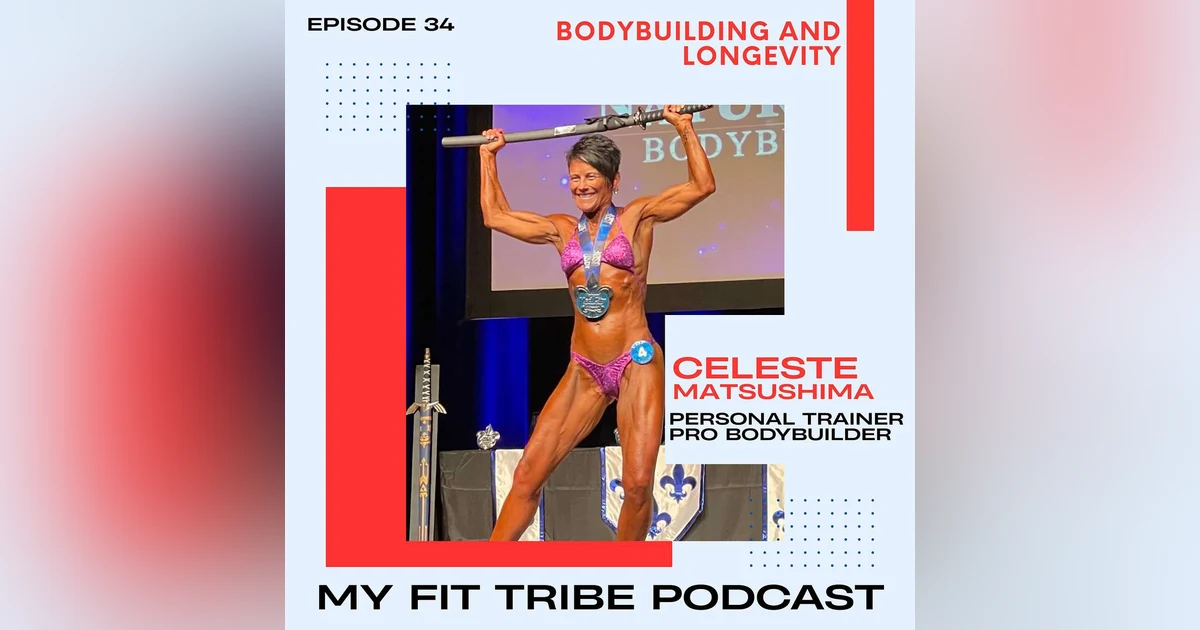


In this episode of the MY FIT TRIBE Podcast, I’m joined by Celeste Matsushima — NASM Certified Personal Trainer, USBF Masters Pro Bodybuilder, and a dear friend. We dive into her fitness journey, what it’s really like to compete, and the physical and emotional ups and downs that follow.
Celeste also shares insights on aging, overcoming adversity, and the power of staying strong — in body and mind — through every season of life. Whether you’re just getting started or looking for your next challenge, this episode is full of inspiration and real talk.
25:41 - [Ad] Just Be True ~ A Soul-Led Podcast
26:27 - (Cont.) Celeste Matsushima-Bodybuilding and Longevity
Throughout my own life and fitness journey, I have had the privilege of meeting incredible people who've shared valuable insights on mindset, health, fitness, and spiritual growth. The profound impact of this knowledge on my own life has inspired me to share it with all of you. I'm Erica Sweeney, host and founder of My Fit Tribe Podcast. Join me as we explore inspiring conversations with experts, thought leaders, and everyday heroes who offer their stories and practical tips to help you on your own journey. From nutrition and fitness to mental well-being and personal or spiritual growth, our mission is to empower you to take charge of your health and live your best life. We are more than just a podcast, we are a community. Through coaching, a wealth of shared knowledge, and a strong support network, we are here to guide and encourage you every step of the way. Come be a part of our tribe. In this episode of the My Fit Tribe podcast, I'm joined by Celeste Matsushima, an NASM certified personal trainer, a USBF Masters Pro Bodybuilder, and a dear friend of mine. We dive into her fitness journey, what it's really like to compete, and the physical and emotional ups and downs that follow. Celeste also shares insights on aging, overcoming adversity, and the power of staying strong in body and mind through every season of life. Whether you're just getting started or looking for your next challenge, this episode is full of inspiration and real talk. Hello, Celeste. Thanks for joining me today. Hi, Erica. Thank you so much for having me. It's an honor. We met at the gym. We go to the same gym. So we saw each other, I don't know, a year or so ago because she looks amazing. And so I really wanted to have her on to be able to talk about her fitness journey, also your bodybuilding career, and the importance of staying active as we get older. So can we just start by letting people know? Can we talk about how old you are? Sure. I just turned 61 in June. Awesome.
SPEAKER_00So let's talk about where your fitness career started. I actually started, oh, probably in my 30s at one of the uh local gyms doing the Les Mills programs, body pump, um, body step, all of those things. And what did that um was it just a group class setting then?
SPEAKER_02Yes, those were group classes. Okay. So what made you look to fitness at that time in your life?
SPEAKER_00I think I just wanted to feel better and then of course aesthetically look better.
SPEAKER_02And then were you, how did you get then as you progressed through the years? Um, what path did that take you?
SPEAKER_00Well, I started to really get into the weightlifting piece. I really liked that. The step aerobics was great, but eventually my knees decided they didn't like it. And I really liked how my body changed through weight training.
SPEAKER_02I laugh when I talk to women and they say they don't want to lift weights because they're afraid they're gonna get too bulky.
SPEAKER_00I laugh at that too. And I always tell my clients, that is a myth. You're not gonna get bulky. I just say, look at me. Do I look bulky?
SPEAKER_02And you work out more than most people. So as bulky as we are, you know, it takes a lot of work for us to try to get this bulky. Am I right? Absolutely. Yeah. So as you're starting to lift weights and starting to feel stronger, what was your mindset like? How did that help you in other aspects of your life?
SPEAKER_00Well, it just with activities of daily living, you feel stronger. It was also more of a mental game for me. Can we talk a little bit about that? Well, sure. I um I was never an athlete in my formative years. I was a pom-pom girl in high school, which my kids just laugh at that and call that not athletic, but it really is. And then as I got older, I wanted to be in the Navy for some discipline. Couldn't get in for physical reasons and turned to martial arts. So I studied martial arts for 25 years. Taekwondo. I have my fourth degree black belt. Wow, that's awesome. It was, yeah, it was quite an amazing journey, and I learned a lot about focus and discipline. And I was coupling that then toward the end with weightlifting. My kids were young, and I had to shift from martial arts into something else.
SPEAKER_02So we talk uh um at the gym sometimes too about the therapy, the mental side of working out. So, as you, you know, were in Taekwondo and you are transferring your focus, how important was it at that point when you're a mom and you've got kids to make sure you have that time for yourself and you know, building yourself that way?
SPEAKER_00It was incredibly important for me. I tend to be a little type A and I have a lot of anxiety. And if I don't have some physical outlet for that, it really shows. So when you're busy as a mom, you really have to have time for yourself in order to be the best mom you can be. And it's important to have time for yourself. So working out has really helped my mental state. People can tell, my friends, if I haven't worked out, they'll say, Did you go to the gym today? And I'm like, no, but I do plan on it.
SPEAKER_02But I should.
SPEAKER_00But I should.
SPEAKER_02It does. It becomes a point where you, when you don't go or those rest days are hard because you aren't going there to focus right away. But it it does, it does set your mind to be able to tackle each day. And again, when you talk about being a parent, that can be very uh busy and very overwhelming when you're a parent of kids. So let's talk about that time in your life when you're really trying to f you know make that a priority to help you balance the life you had when you're raising your kids and you know, to give you that therapy time.
SPEAKER_00Well, trying to find that time was a little bit of a challenge just because my husband at the time, his job, he traveled a lot. And so during the week, I was primarily taking care of the kids. Um, so I was able to go to Taekwondo during the week. But what was really cool is we got both of the kids into Taekwondo. And so they would just come with me. They would take their class and then they would wait while I took mine. And so it worked out really well. So during their young years, I was more into martial arts. And then as they got older and progressed into their sports, um, daughter in gymnastics, my son in hockey, I then had more time to go and do my class. And even in the evening, I could go and work out and do my weightlifting or my step classes or whatever.
SPEAKER_02And then we'll just touch base quick on your kids because they were able to take their, you know, you started spending time showing them how to be active and how to have that focus. And both of your kids have amazing athleticism and amazing focus. Do you want to talk a little bit about what they're doing?
SPEAKER_00Um my daughter is my youngest. She's 28 and she lives in Florida. She is an Olympic-style weightlifter, which she started after 15 years of being a gymnast. And because of a lot of injuries, um the Olympic lifting was a good progression for her. She had explosive strength, and it really just it was very natural for her. So she has been able to compete on the national level. She was actually just um competing at nationals in Colorado, and she actually finished um ninth out of 32 women.
unknownWow.
SPEAKER_00So that has really been good for her. Um, and my son, he's my oldest, he's 31. He has been a hockey player since he was seven. He started in roller hockey, had a um a talent for it, and someone said, you know, he should really play ice. And we said, hmm, it's a lot of money and a lot of travel. And so we put it off as long as possible. But once we did allow him to start that journey, he has uh been playing hockey ever since. So right now he plays at the professional level. He started um in River Falls as a D3 player. So to progress to playing pro hockey, and especially at 31 from a D3 school, it's kind of not very common. Right. But because of his focus, his perseverance, he's clawed his way up and he's still hoping to make his dream play in the NHL.
SPEAKER_02Oh, that's so cool. But you spending time with them and teaching them and exposing them to, you know, the the athleticism and the focus so young clearly played a part in what they're doing now, for sure.
SPEAKER_00Well, I think just having number one, the exposure. And number two, um, we're very fortunate enough to allow them to have the experience because sports, let's let's be real, they're expensive. Um, so we were very fortunate enough to be able to provide them with those experiences. And then they had their own natural ability, and we just wanted them to see how far they could take it. And, you know, the rest was all them. I mean, they love it and they are very focused and they are a little bit like me, competitive and yeah.
SPEAKER_02I love that. So what it so as your kids got older and you got more into lifting weights, how did you transition into bodybuilding? When did that journey start?
SPEAKER_00That's that's really interesting because I um I started going to a gym where my daughter was actually coaching, teaching, and I just went to get healthier again. I had gained some weight, I had stopped eating good, and so they helped me with my nutrition and programming. And as I started to lose weight and gain more muscle, someone said to me, you know, you should really compete. I mean, that was never on my radar. Are you kidding me? And I ran it by the kids, you know, of course. They're always my sounding board. And my son said, Well, mom, if if you wear a thong, I don't think I can come and watch you. And I said, you know, Ed, I number one, cannot walk in heels. And number two, I'm just I'm not a very girly girl, so to speak. And so I really wanted to do the bodybuilding piece where I could be barefoot and have a little bit of coverage. Um, and so I just started to consider that and I thought, okay, why not? Let's give it a shot, see where I can take it. And so I had two um really good coaches at Baki Athletics. They were both bodybuilders at the national level. And um they looked at me and they said, Let's go, let's go for it.
SPEAKER_02Oh, I get goosebumps, because it brings me back to my moment when I'm like, okay, let's do this. And I was like, wait a minute, what did I just sign up for?
SPEAKER_00Exactly. You have no idea. No idea. And a lot of people have very negative connotations about bodybuilders for a myriad of reasons. But unless you really get into the sport or know someone who's doing it, you have no idea. It's a completely different animal than what society thinks it is.
SPEAKER_02Yeah, let's talk about that a little bit. So, what do you think? I mean, the negative connotations are that you're, well, that you're on steroids would be assumption number one. Um, also that you're just kind of an arrogant person, you know, which I and that everybody that I've met through my journey have been amazing people that are now my great friends, none of whom are arrogant. They're all super supportive and kind. What other assumptions do people have, do you think, when they think of bodybuilding?
SPEAKER_00Well, I think they think the lifestyle is extreme. And I know that when I was in my I did my first two shows when I was 58, and I was still working full-time, and a lot of my coworkers would look at me while I was in my show prep cutting and just they thought that was so unhealthy. They're like, you're way too thin. That's so unhealthy. But what people don't realize is that when bodybuilders are uh on stage, they are at their peak, but that peak is not sustainable in their everyday life after being at their show weight. And so I tried to explain that to people, but I I don't think a lot of people understand. And then the other piece they don't get is the food. People think that you're crazy when you say, Well, I weigh my food or I plan my meals, I meal prep and I eat pretty much the same thing all the time because it fits in my macros. And uh people just don't understand that.
SPEAKER_02Yeah, and so much of our society is is based around food and drink. So when you are at even lunch at work, you know, to having to heat up your tiny little servings, or if you're at a family event, you know, if you're not eating the food, people almost get insulted by it. And it's like, it's just this is the journey I'm on right now. I mean, it it's almost weird because it feels like the unhealthy option of okay, maybe I go there and I drink way too much is acceptable, but eating healthy and clean and controlled food is not. Isn't that strange?
SPEAKER_00It is strange. And it it's just like you said, it's a social norm. And to be on the healthy end, I mean, I think our society has almost made it harder to be healthy than to be unhealthy.
SPEAKER_02I laugh because I think back to when I started tracking macros, I had no idea what it meant. I had no idea that you had to get like to the gram as close as possible to the numbers. I'm no idea. And it's crazy when you understand that people who go through that process are tracking every single thing that goes in your mouth.
SPEAKER_00Absolutely. And now on my journey as a personal trainer, I have had clients who really wanted to lose a significant amount of weight. And yes, you can exercise all you want, but the biggest piece is what you're putting in your body. So I have three clients who've lost over 35 pounds, but they have followed the nutrition. I never call it a diet because that's not what it is. It's a way of life that you want to be able to sustain once you've reached your goal weight. And so we program the macros, they do the macros, they lose the weight.
SPEAKER_02Right.
SPEAKER_00Do they need tips and hacks for how to survive that? Absolutely, because when you're in the deficit piece, it is a struggle.
SPEAKER_02Right. So and I think the hardest part uh, you know, preparing, you know, breakfast and lunch and eating those same things for those times for me is not a hard part for me. It's the when you eat something where everything's mixed together, if you don't prep it. Or, you know, if you go to a graduation party or something where there's food and you eat and you're not, it becomes a little obsessive, which isn't always healthy either.
SPEAKER_00Yes, that's true. Um case in point, I was just in at a July 4th party. And for the weekend, I brought my scale so that I could weigh my food. I brought a lot of the foods that I knew I need to eat in order to make my macros because I knew I was not going to be eating a lot of what everyone else was eating. But I think I think people may look at that as being obsessive, but once you do it, it's a way of life. Yeah. I I can't imagine not weighing my food. How do you know what you're eating?
unknownYeah.
SPEAKER_00And I can't imagine not knowing what my distribution of macros should be, either to lose weight or to maintain where I'm at. That's where we get in trouble. And I I know that from personal experience because after my first competition, I did two shows and then I went to Italy afterwards. Well, of course, in Italy, you're not going to worry about what you eat or drink. But then after that, I didn't regain my healthy weight in a healthy way. Right. And it just snowballed after that. I mean, once you get back into eating poorly, it's really hard to break out of it. It is. And I've been doing that for two years. So eating poorly, eating poorly. Dirty bulking, as we call it.
SPEAKER_02But there's also a part of the life balance, which you and I talk about all the time. But, you know, I like to talk to people about that that reverse dieting post-competition, because again, going into bodybuilding, all I heard was you're going to track your macros. Um, there's going to be a peak week, and then maybe you'll reverse. And I don't, I don't know what any of that means. So when you are you're post-your first season and all of a sudden you had to reverse, if you're going to Italy, you can't reverse well at all.
SPEAKER_00No. I actually didn't gain any weight in Italy, but I really didn't I really didn't follow the reverse process correctly. Because I I think I just went off the deep end. Well, yeah, everything tastes really good.
SPEAKER_02And for those who don't know, do you want to explain what the reverse diet is like for people?
SPEAKER_00Well, if I would have followed it, I would know. And so, to be quite honest, I don't. And hopefully this time, I will do what I'm supposed to, and then I will know. Yeah.
SPEAKER_02So when you're in such a low deficit or extreme deficit, when you're doing, like, say, your final show and you are going to go back to what your maintenance macros are, you have to reintroduce those carbs fats slowly in order to let your body gain the healthy weight back as lean muscle instead of putting it all on fat. Um, which again, as we've discussed, when you jump off that road too quickly, um, you tend to not feel well and gain faster than we'd like. That's correct. Yeah.
SPEAKER_00So that was guilty the place that I was at uh two months ago before I decided I needed to find a coach to get me back on track because I thought I could do it on my own. Right. Which now that I've been with Chad and following his programming, paying attention to my macros, I look back and I was like, you weren't doing it on your own. You were coasting.
SPEAKER_02Yeah.
SPEAKER_00And the macro piece, I it's the accountability, I think. And having somebody say, okay, we want you to put on some lean muscle. We're gonna lean you out at the same time, what are those macros look like? So I really needed someone else to say, here you go. Now you're gonna check in with me once a week, and there's the accountability.
SPEAKER_02Yeah, I have that on my list to talk to you about. It was the importance of coaching for that same reason. Because if you you know what when you've gone through the bodybuilding process, you get a decent idea of you know what foods are bad, you know, more so like like I don't eat fried food, you know, stuff like that. I don't eat ranch dressing, you know, stuff, the obvious stuff, you know, but you really have no idea your total macros for the day unless you're counting it. And the coach will definitely lay that out for you.
SPEAKER_00Oh, absolutely. And a lot of the people that I program macros for, when they start weighing their food, they're like, this is crazy. I have been way overeating because you really don't know until you pay attention to what you're putting in your mouth. It makes a huge difference.
SPEAKER_02Do you find that either with yourself or your clients, is there one part of the macro tracking that is the hardest for them?
SPEAKER_00Well, I coach all females, which is actually why I got into personal training because I really wanted to empower women through fitness. So it's amazing to me that females do not get enough protein. And it's the biggest, I mean, carbs, absolutely fat, you bet, no problem. But when I tell them what macro amount of protein they're supposed to get, they just look at me dumbfounded. And I can't fathom why that's hard. I have no problem getting my protein in because I love it.
SPEAKER_02Yeah. And you do, I mean, there's there are so many sources, including the protein powders that um can help supplement for people that have a hard time getting it. Um, we did an episode a few months ago with Renee, who uh has protein in everything she eats, which is you know truly amazing to hear those tips. Um and I was gonna say the same thing the protein seems to be a hard piece for people. Uh, do you have suggestions for your clients then that when is it? Just a matter of what food choices to make, or what do you suggest to the clients when they have that, oh my God, I've got to eat that much chicken moment.
SPEAKER_00Well, to be honest, if if they portion out their protein requirements throughout the day, it's really not that bad. And yes, protein shakes are great. Uh there are a lot of decent protein bars out there. And some of them, as my son would call them, because he's a clean eater, are candy bars. And then I just try to give them tips about how to get that amount of protein at each meal. Like for instance, breakfast. Egg whites are amazing. Eggs, egg whites, lunch, ground chicken, ground turkey, dinner, chicken breast, or lean steak. Lean steak, any of that. Pork, it all works. You just have to know what the distribution of protein and fat are in the meat. The leaner you eat, the more you can get your fat from other sources that might be more enjoyable than protein.
SPEAKER_02To name a few, yeah. Um so did you get into personal training then after you competed? So just recently you you became personal trainer.
SPEAKER_00I did. I was on the path to retire from my career with the university. Um, I was a clinical research coordinator in childhood cancer for almost 30 years. And I wanted something to do when I was retired. And I started thinking, you know, I really enjoy weightlifting. I enjoy sharing it with other people. Maybe I could be a personal trainer. And again, I got a push from my fiance who said, try it. Go in, interview, see if that would be something that would work in your schedule. And then, of course, there's the certification. So where I work at Crunch, you have to be a certified personal trainer. And so I jumped on the bandwagon. I started studying, I got my certification, started working, have slowly built my clientele, and I absolutely love it. It is the most incredible choice I've ever made for a career. And I've a lot of all of my clients have seen a lot of benefit from the help that they've gotten. So that is a cool feeling.
SPEAKER_02Yeah, to think back when you were, you know, you competed in your first show not that many years ago and how much that that uh experience changed the trajectory of your life and in turn every people that you coach too.
SPEAKER_00Yeah, I I think the competing and the introduction to macros and and following all of that really gave me a good foundation so that I could relate to my clients. Do I know how hard it is to get in the gym? Yes. Do I know how hard it is to eat healthy and eat clean and change habits that you've had for your whole life? I absolutely do. And like I mentioned before, I can give them little tips and tricks that I use to make that transition easier.
SPEAKER_02Let's talk a little bit about injury, because when you compete and you are working that hard, you can get injuries. And the difficulty of when you have an injury, how that affects your training.
SPEAKER_00Injury was not an issue for me until after I competed in both of my shows. So I look back and I wish I would have appreciated the fact that I was not injured at that time because I developed arthritis in my fingers, hands, wrists, thumbs. I will eventually have to have surgery on the thumbs because there's no cartilage left. And that has made a major impact for me mentally, mostly, and starting to say, well, now I can't do that. Well, can't is not the word we should be using. How can I do that and work with this injury rather than make this injury eliminate something that I love so much in my life? So I've had to make a lot of adjustments. Um, how I grip a barbell, can I grip a barbell? Um, how much weight can I lift? Do I have some apparatuses that can help me with that, like leather grips or wrist wraps or um KT tape? KT tape and I, I wish I had stock in that company because I use it all the time. So the injury piece is something that I've had to overcome. And Chad has been amazing with that. He'll say, Okay, here's your programming, and I'll look at it, we'll go over it, and I'll say, Well, I know I can't do that because I can't hold the barbell the way I need to. And he'll say, All right, let's try this or let's try that. And so we shift things around and think outside the box, like, how can I make this exercise happen and not further aggravate what already hurts.
SPEAKER_02And to to point to that, you can do the exercises without having to lift heavy, which is what a lot of people, you know, that's one of the reasons they don't want to lift, is because they are afraid to lift heavy for, you know, fear of injury or whatever. But there are options to strength train. So there's really not many excuses out there for people out there who don't start it.
SPEAKER_00Yeah, I think lifting heavy is kind of a misnomer in a way. I mean, if you want to tone or or get hypertrophy, you can do a lot of other things, higher reps. Um, there's also blood flow resistance training, which is something that Chad has introduced in my programming so that I can get that nice pump, but I don't need heavy weight in order to do it. Yeah.
SPEAKER_02And so for those who aren't familiar with that, it's a band. So, for example, that you put a tight around your arm or whatever part you're using to restrict the blood flow in order to increase the effect to the muscle.
SPEAKER_00Yeah, we use it both for biceps and triceps, and then we also use it in my quad and hamstring exercises. And at first, when I put those bands on my legs, I was like, oh my gosh, this really feels freaky because it's basically a tourniquet.
SPEAKER_02Right.
SPEAKER_00And then you start doing your weightlifting, and I can't even describe the feeling. It's not really like cramping, but that muscle is just being worked in a completely different way. It's so bizarre, isn't it? It's extremely bizarre. Yeah. And people kind of look at you in the gym like, what are you putting on yourself? I know. Like, are you trying to make it look bigger?
SPEAKER_02And I'm like, well, I'm trying to make it bigger, okay? Oh, that's funny. So what have you, what have you learned most from your personal training, other clients? What have you taken away from that?
SPEAKER_00Well, I think one of the most important things is that people need encouragement. And people need to know that number one, they're doing things correctly. Number two, are these things making any changes? So I love to show my people I program through progressive overload, which means that you're either increasing sets, reps, or weight over a period of time. And when my clients look at how they have increased the amount of weight that they can push, pull, lift, it's really empowering to me to see how empowering it is to them. I also think that it's it's really cool to see them increase their self-confidence. A lot of women, when they walk in the gym, they don't know how to use a piece of equipment, so they'll stay away from it. They don't want to go back in the back where the free weights are because that's where all the quote-unquote meat heads are. So I like to incorporate both. I love free weights. I like to make sure my clients come to the back where all the guys are lifting. Well, there are a lot of women back there too. But I also like to make sure they look in the mirror. For some women, looking in the mirror is just not something they're comfortable with. So I will say, okay, not only for a technique purpose, but I want you to look in the mirror and look at your body. Look at how what you're doing is changing your body. And so a lot of times one or two of my clients, I'll make them pose for me. I'll say, show me your guns, or look at your guns, or I'll actually videotape them, let's say, doing a wide lap pull down so that they can see what their back looks like as they're doing this exercise. And when you show people the video, it's they just can't believe it. And so that's the piece about training women I absolutely love because then as I see them progress, they're looking in their mirror. They're like, okay, yeah, I need to adjust this or that. And so they've gotten over that whole body image piece.
SPEAKER_02And I think sometimes we're afraid to embrace our body. I mean, not only that we don't, but we're almost feel that shame behind embracing our body. Doesn't that make sense?
SPEAKER_00Oh, absolutely. I mean, we don't want to appear conceited or um self-centered, but you put a lot of work into coming to the gym. Uh why not appreciate that? I had someone tell me once that when you look in the mirror and you're hard on yourself, you're going to regret that. Because if you look back 10 years ago, you look at that person and you think, well, why did I not appreciate what that person looked like in the mirror then? Right. And it's something I've tried to help my daughter with too. Um the whole body image, um, self-shaming, negative self-talk. I am still guilty of that. And her comment to me will always be, Mom, is that how you would like me to speak to myself? Oh, that's a big wake-up call.
SPEAKER_02Yeah, it is. Because we do we do it to ourselves and we don't want others to do it to them. Isn't that interesting? Very. I can I need to practice what I preach more. So we're gonna we're gonna highlight this reel so we can replay it for you. But you're right, I mean you have I you and I have had that conversation even post-competition, because when you get to the point where you're stage ready and you're super lean, even at that point I didn't feel like I was big enough or lean enough because you you're so afraid of being perfect when you get on that stage. So I was so hard on myself getting up to the stage. And then once I got off the stage, I was like, oh, I'm putting weight on, you know, it was always the negative. I'm putting weight on too fast. I don't feel as lean as I was. I'm never gonna be as lean as I was on that stage. And now I look back at that and I go, oh wow. I wish I would have appreciated how great I've looked, you know, for the occasion. Again, not forever, but just to be able to know that I did that.
SPEAKER_00Well, and you know, as you speak about that, I think that's also one of the most difficult pieces of bodybuilding that people don't understand. So when I competed, no, I was not big per se, but I was shredded. And so I look at myself in my pictures, and I can't believe that I actually achieved that. But then part of me secretly wanted to stay that way.
SPEAKER_01Yeah.
SPEAKER_00Because I always grew up and I was on the heavier side. I wasn't well defined. And getting to that, to how I looked on that stage was huge for me. But I know in my heart and also mentally, you can't stay that way. It's not good for you physically. But I really wanted that body.
SPEAKER_02Yeah. And it's not only that body, but also that drive and focus towards that hard goal. And I didn't expect that after my first season. Like I was, you're on a high because you've accomplished you've worked so hard in every facet of your life to get to that point. You've challenged yourself out of your comfort zone like no other time in your life. You achieve it, and then all of a sudden you've got a now what?
SPEAKER_00Exactly. I mean, it is kind of a high when you actually, for me, it was stepping off the stage because it was like, oh my God, I really just did that. Exactly. I put on an outfit I never imagined I would wear. And I walked out in front of other people, posed, and got judged, and got judged. And then it was the high after I got off stage, the accomplishment. Yeah. And then to do it a second time. But then I went through that whole mind game of, oh my gosh, I'm gaining back this weight. I don't look like I did then. And it's been a struggle ever since, to be quite honest. And that's a piece I don't think that people realize about bodybuilding is that there is a lot of not mind games, but it's it's difficult mentally to see the the changes in your body so be so extreme. It really is.
SPEAKER_02And it's hard not to, like I said, look back at those pictures. I mean, you do it with awe because you're very proud of yourself and your accomplishment. But you're right, the whole uh being shredded before. And and then, you know, I you always think, well, but people probably look at me now and go, what happened?
SPEAKER_00That's no funny. No, I look at myself and go, what happened? Oh, it was the dirty bulking, let's be honest. That's what happened. That's right.
unknownThat's so funny.
SPEAKER_02So let's talk a little bit about what your future bodybuilding goals are.
SPEAKER_00So honestly, I thought that I could be ready by October of this year. And when I met with Chad, we interviewed with each other and um decided we'd be a really good fit. And I had to submit baseline photos. So not in nice tight little spandex that hold everything in, but in a two-piece swimsuit. And when I did that, I also submitted what I looked like back when I competed. He got the photos, he looked at everything, and he developed a plan. And he said, you know, I think your lower body needs to catch up with your upper body. He was very sweet because I looked at myself and I said, What were you thinking? October of this year? I don't think so. And he said, I think what we should do is build that lower body and let's look to fall of 2026. And I was very appreciative of that realism because now when I think about it, I do need to put on some muscle and lean out. And I think it'll be exciting for me to see where I can actually go. And no, had I pushed myself in the gym, absolutely not. And the way I'm being programmed for, I mean, he considers me an athlete. So there's no cutting corners. I'm training to failure, which I've never done. I'm doing drop sets, which I've never done. And actually pushing myself, and I've already in two months seen a lot of gains in the amount of weight that I'm lifting. It's really amazing to me. So I'm excited to see how my body can look different than it did three years ago when I competed. I'm really excited for that.
SPEAKER_02There are so many people that think they're too old to start. And even I look back and I thought I was too old to start at 45. And now I'm like, well, I want to do it again in my 50s, you know, and you're gonna do it again in your 60s. And you have a client. Do you want to talk about your client who's gonna compete in her 70s? Oh my gosh.
SPEAKER_00I have a client who is a spitfire. And yes, she's 70 and she will be competing for the first time in August. Um, and she is going to compete in bikini. So, yes, the high heels. She was very sweet in that when I told her what she would be wearing, she didn't realize that her lower piece would be a thong and what some of the posing entailed. But by gosh, she's going for it and she looks amazing.
SPEAKER_02She does look amazing, and she works so hard, and she's again, there's there's not a there shouldn't be a point in your life where you say, I'm too old to ch to chase a dream, or to become healthier, or to experience something, because we only have one of these lives.
SPEAKER_00Well, and I think if it's something that interests you, uh sh in her case, she constantly needs a goal. And she we ran marathons and she's just uh been very motivated. And I think if you really want it, you need to go for it. Like my son, he's 31. What are the chances of him actually making it to the NHL? They're a little slim, but he's not done. He's gonna go until the chances are absolutely zero. And so I think for anybody, you're never too old. You just have to approach that goal realistically, and it it helps to have help. In in the coaching? In the coaching. The coaching, absolutely. And and like we've said, accountability is huge. Do I really want to say to him, no, I didn't get my workouts and no, I didn't make my macros? Yeah, should I be accountable to myself and not want to say that to myself, of course. But then to have to say it to someone else, no, I really don't want to have to look like I've shortchanged myself.
SPEAKER_02Right. And what it's much easier to stay focused when you have a goal.
SPEAKER_00Yes. I think a goal it makes it makes the the process more interesting because then you have something that you're working toward and you know that this hard work it fuels that fire. It does. It's fun.
SPEAKER_02I'm excited for you.
SPEAKER_00Well, I'm excited for you too. Well, we'll see what happens with that. Maybe we'll be competing at the same time. That would be awesome, wouldn't it? It would be extremely awesome. Because then you have somebody that's going through the pain with you.
SPEAKER_02Yeah, I know. Just thinking about that carb drop is like, ooh, but that's okay. I mean, you again, for me, as I get older and with the with the last few years going through again my shoulder surgery and then the loss of my dad and you know, a change in lifestyle, trying to find health again, you know, for my body and my mind and my spirit has been my focus. And I'm learning that, you know, sometimes you have to go back to pushing yourself harder than you thought you wanted to, you know, to with my nutrition and with my with my goals. And I think sometimes I make the excuse, well, I eat pretty healthy compared to most people. And then I think it's okay, you know? And that's really not enough.
SPEAKER_00Am I right? Uh no, I would agree. And I think, especially with the sport that we're in, I mean, it is an extreme sport.
SPEAKER_01Yeah.
SPEAKER_00Um, but I think going through the difficult piece, the training piece, the food piece, once you come out on the other side, you look back and you're like, wow, I actually really did that. Yeah. I really didn't think that I was going to be able to, but I pushed, I found the support that I needed. Like, you're a huge support for me. I see you in the gym, and you have been an inspiration in so many ways. And you are always so complimentary of everybody that you talk to and inspiring them. And so I kept, I kept looking at you, and I'm like, you know what? I need to get back on the horse. So, what was it that we finally made you reach out to your new coach? I actually met him at a show that I was at supporting a coworker who was competing. And just in talking with him, he seemed he seemed awesome. And I thought, you know, if if I can't invest in myself, what else can I invest in? And I I really did like him as a person. And so I just decided I was gonna go for it. And it it was really one of the best decisions I've made.
SPEAKER_02I have goosebumps. I love that moment where you're just like, okay, sign me up, do it. And then once you do, you're locked in.
SPEAKER_00Oh, absolutely. Yeah. And had I thought at the time, I it was serendipity, really, meeting him. Because I I wasn't gonna get a coach. I just I I thought, oh, my injuries, this and that, all the excuses that you could figure out to make. But then when I met him, I thought, you know what? I think this guy could make it happen for me.
SPEAKER_02And again, you the depending on the length of the season. So my first season uh in 2019 was only four months because it was a whim, a spur-of-the-moment decision to to do something crazy. And I had no idea at that time that a normal prep season was, you know, six, nine, twelve months, years. You know, I I remember thinking, I don't think I've ever told anybody this, but I remember thinking, um, just outside of my first show, I'm like, oh, you know, if I had, if I had like two more weeks, I could probably, you know, get my my glutes work better. I'm like, you can't get that in two years, Erica. You know what I mean? It takes a lot of time and effort to build.
SPEAKER_00Yes, it does. And I'm I'm realistic. I know in a year that I am not gonna be able to build a large amount of muscle in a year's time. But I am fighting against these injuries and I want to get through to this goal before I really have to do something like surgery.
SPEAKER_01Right.
SPEAKER_00So we're gonna go with where I'm at at that time. But I know Chad will not put me on stage unless he really feels I can be successful.
SPEAKER_02Right.
SPEAKER_00Whatever that success means. But he's not gonna put me on stage if he doesn't feel like it would be detrimental for me to do it.
SPEAKER_02Right. And again, I can tell too the difference in your physique, even just since you started with him. Well, you said two months, you've been two months. And so you talking about doing it alone versus doing with a coaching again, it just shows that different coaches also have different philosophies and different ideas. And I just want to say for all the coaches out there with your clients that um sometimes it's good for them to have different coaching options depending on what season they are in their life or what that coach's specialty is or how far they want to go or what federation that they're gonna be competing in. So I hope that all the coaches out there understand that if their clients do choose, you know, other coaching options, that it's just to help them grow and learn more. And it's, you know, nothing personal against any coaches.
SPEAKER_00You know what I mean? No, absolutely not. Because the first two coaches that I had at Baki were extremely supportive and worked with me on posing and all of the different aspects of competing. And so, no, I'm very grateful to them for putting me on this track. And after taking a break, um, like you said, it's just needing something maybe a little bit different. Right.
SPEAKER_02To keep learning, to keep learning, keep growing. Yeah. I I think that's I just like to people because even with my kids, when they would have a different soccer coach, you know, they would be like, Oh, there's a different coach. I'm like, that's great. You have a new person that you can learn from. Like, how if you you're gonna be stuck learning the same things if you're in the same coach all the whole time? So sometimes it's good, depending again, what season you're on and what your goals are, that maybe you need to just keep learning in different ways. Absolutely. Yeah. Um, before we wrap up, too, I want to touch base on the importance of having muscle as we get older. So you now are 61 and you are you train hard for for strength training, but how important do you uh tell your clients that it is for them to be able to that they have muscle to help support their health?
SPEAKER_00Well, for females, it's extremely important to weight train because it helps to prevent osteoporosis. And I also think just from in terms of um activities of daily living, as I mentioned before, lifting those groceries out in the yard, dragging a bag of bark. I mean, just sitting in a chair, it's all we take that for granted a lot of times. But I think the strength training just can help in so many facets.
SPEAKER_02Yeah, we talk a lot in this show about how important it is, again, like you said, for that your future everyday life, to be able to play with your grandkids, to be able to continue to be healthy as you get older. And it's important that we think about our health now for how it's going to impact our future. So we don't look back and go, oh, I wish I would have taken care of myself.
SPEAKER_00Yeah. And I think it's unfortunate that we kind of grew up in an era where the whole health conscious movement wasn't prevalent, and especially for women. And so we grew up with all of these bad habits, and now it's almost like we're trying to backtrack and gain back some of that precious time. So if women can start when they're younger, like I'm very happy that my daughter is doing what she's doing because she's setting herself up for health and longevity for the rest of her life.
SPEAKER_02Right. Um, so do you have a favorite success story that you want to share now that you've been a personal trainer for a few years?
SPEAKER_00There there are actually a lot of them. I have um two women who have really had extreme weight loss. And um, one of them started with another coach, and he unfortunately got cancer. Um, but she works with several individuals for her nutrition, and then now she has been working with me, and she has lost an incredible amount of weight. Um, I also have another client that with me has lost over 30 pounds, and um for her, a lot of it was learning how to eat. That was the hardest part. She gets in, she digs working out now. She loves it, but the eating piece is hard. It is. But she's done it. She's done it and she's altered a lot of her lifestyle, and we have a lot of laughs when we train. We have fun, right? Oh, absolutely. And you know, the biggest thing I'm guilty of is counting their number of reps. I'll start talking to them to take their mind off of how many reps they're doing, and then I'll lose track and I'll say, Where are you at? Are you at eight? That's my my canned phrase. Are you at eight? And she said, you know, I actually pay you to count for me. And so I've started counting on my fingers while I talk. It actually worked. It works really good.
SPEAKER_02Until you get to you fill up your two hands and then eat it.
SPEAKER_00I fill up my two hands, or I count on the same hand and I say, Oh, you're at four, but you're really at nine.
unknownSee.
SPEAKER_02That's okay. You're working them harder, they don't even realize it. True.
unknownThat's awesome.
SPEAKER_02That's so funny. Um what do you think is the key to sustainability when it comes to both nutrition and training?
SPEAKER_00You have to find something you can live with, something that you can incorporate into your life that you can actually stay with. So if you're gonna commit to four days in the gym, you have to be realistic. Can I can I do four days in the gym? Right. If you don't, you're gonna feel defeated. So, number one, you really have to be realistic. And the same thing with food. Are you gonna be as extreme as some of us who are competitive? Maybe not. But make small changes. Right. And then keep those changes. And I think that's the biggest thing with some of my clients. I just say you have to be realistic. Make the changes that you can, let's get you to a good point in your life where you can sustain those changes.
SPEAKER_02That's great advice. Because if you to if you are all of a sudden approached with something that's extreme, like again, like not being able to eat anything you enjoy, why would anybody start that, you know?
SPEAKER_00True. And and I will tell them if you need to eat something not quite as healthy, count it. Put it in, see where it falls in your macros. And a lot of times people will do that and they won't eat it quite as often because it'll take up all their carbs for the day or all their fat when they could have been eating a lot more of something else. Right. I'm all about volume. I want to eat as much as I can.
SPEAKER_02Yeah, it's funny how you switched to that high volume thing. I used to eat so much lettuce and cauliflower rice and all that stuff. Oh my god, it's amazing. Yeah, you can really eat more than you think.
SPEAKER_00Sugar-free jello, that's that's my tip. That's my treat now.
SPEAKER_02Ew. Um so my question as far as tracking goes, because this is something that that I have struggled with, and I think anybody new to tracking their food would, is if you go to a restaurant and you want to be able to enjoy time with your family, and you're gonna say put it in your macros anyways, how you're not weighing your food necessarily. What if you have a piece of pizza? Or what if you want to have a hamburger, even if there's no bun, just so you have it, but you don't know the weight? Like how do you have any tips or tricks for navigating the real world and tracking your food? I know that's a really hard question because I don't have a really good answer for that myself.
SPEAKER_00A lot of times I plan ahead. So I will look at a menu before I go out. And they do have the calories a lot of times on the menu. But that is a great question because I think the more you weigh your food, the better idea you have visually of what let's say four ounces looks like. So, and maybe this isn't the best way, but a lot of times I will save my macros for that meal because I don't know how to fit it in exactly. So if I undershoot my macros for the day because I saved for this meal that I can't quite count exactly, it's kind of a trade-off, I think.
SPEAKER_02But I think you it's, I mean, it's okay, especially as you're learning the macro, the tracking process, and you're not, you know, again, having to be super strict with it, if you, as you're learning to still put it in, still say, okay, I'm eating a piece of pizza, even though I can't weigh it, or what kind of pizza it is. Because there's no it may be in your tracking app. It may not, but that's a really hard thing to navigate. Because again, if you don't want to sacrifice eating out all the time, or the how much oil they're cooking it in, you know, that's stuff you don't think about. How much salt, how much dressing is on the side? You know, it's all that stuff that you don't think about.
SPEAKER_00Yeah, I think that's the most difficult piece, especially for my clients. I mean, it is for me too. Right. I mean, we're gonna be going out to dinner at the end of the week, and I'm thinking, oh my gosh, what can I order? Right. But I I do think just putting it in. Yeah. And if you're not like if you're not in show prep, it's not that big of a deal. Right. You put it in, you have to enjoy life. My clients will tell me, Oh, I did I ate this and I ate that, and I'm like, well, then you just get back on the horse.
SPEAKER_02Right. And if you put it in and you realize how much you're eating, it can really make you not, like you said, not want to eat as much the next time. Or you next time you have a half a piece or whatever it may be.
SPEAKER_00Or choose something different. Right.
SPEAKER_02Yeah. Yeah. So I just think that's a huge part of the learning curve as people are navigating their nutritional choices because you do have to sacrifice. And if you sacrifice everything, it's not sustainable. And part of enjoying food is being able to go out to dinner and enjoy a meal. So that for me, when I'm outside of prep, is the hardest part.
SPEAKER_00It's this it's the same for me as well.
SPEAKER_02Yeah. So we're still learning all to all our listeners out there.
SPEAKER_00Yes, absolutely.
SPEAKER_02Well, you have proven that at any age you can accomplish your goals, you can be fit, you can track your food, and you can impact other people. So I want to again thank you for joining me here today for this conversation because I love you and I love bodybuilding. So it's always fun to talk about it. Thank you, Erica. I appreciate the opportunity. I'm gonna wrap up by asking you the question that I ask all my guests. So it's a two-part question. Part one is if you, Celeste today, could have a conversation with a Celeste of the past. Now we didn't touch too much on the past other than, you know, when you started your taekwondo and your fitness journey, but if you can pick maybe a Celeste of the past that was having a hard time or that couldn't envision herself being accomplishing as much as you have. If you can have a conversation with her, what would you say?
SPEAKER_00You are worthy. I would try to instill some confidence. Go for it. You're strong.
SPEAKER_02See, and those are all the things that now that you're seeing your clients feel about themselves.
unknownYes.
SPEAKER_02Kind of a full circle moment there. Absolutely. So now you today can have a conversation with Celeste of the Future. You can pick. Maybe we're gonna live to like 150 by the time all this biohacking stuff works. But pick you of the future. What would you ask her? And what do you think she would say back to you?
SPEAKER_00I would ask her, did you give it your all? Are you happy with the choices that you've made? So, in asking me that question, I want to be able to answer yes to those. So I need to think about those things now so that when I do get to the future and ask myself those questions, I can say yes.
SPEAKER_02I have no doubt she will. And again, you're impacting people along the way. So I'm sure everybody that you touch thanks you as well. Thanks, Erica. Thanks for joining me. Thanks for listening to My Fit Tribe Podcast. Tune in weekly for our latest episode for more health and wellness insights and inspiration. For more information, visit myfitribe.org. Please note that the opinions and comments presented here are those of the guests and do not necessarily constitute medical advice or the opinions of MyFit Tribe. Copyright 2025, all rights reserved. This podcast is a production of MyFitTribe LLC.