Amanda Braverman-Brone | Finding Your Purpose: Advocacy, Confidence & Impact
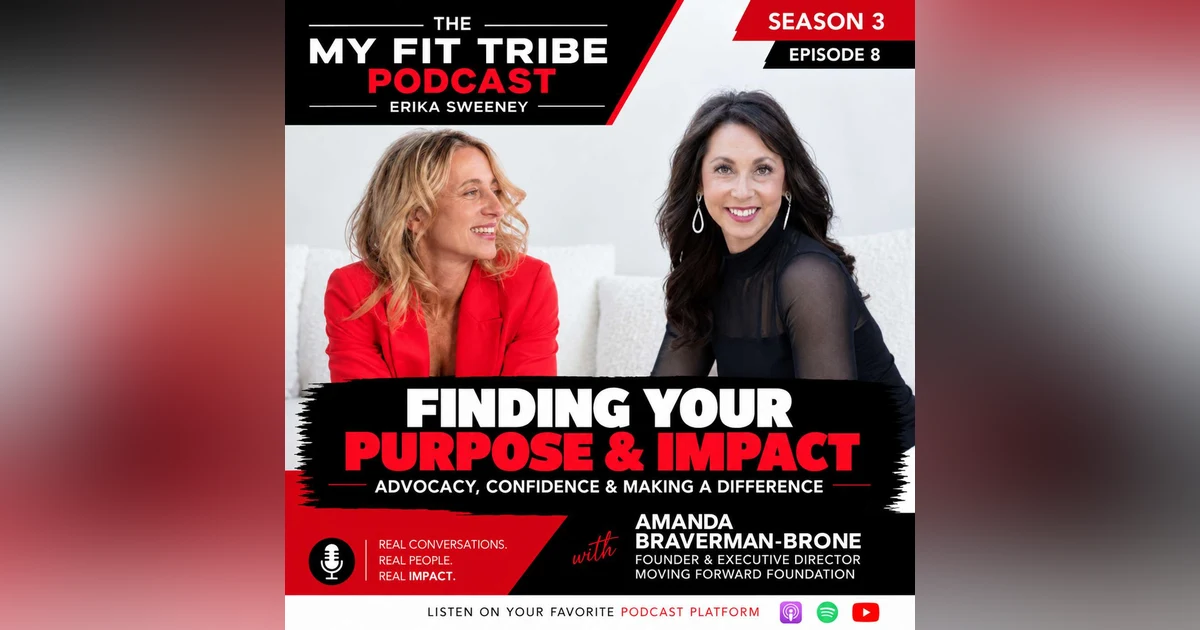

Send us Fan Mail What happens when you stop waiting for the perfect time and start pursuing what matters most to you? This week on the MY FIT TRIBE Podcast, I sit down with Amanda Braverman-Brone, founder and executive director of the Moving Forward Foundation, maternal and infant health advocate, and United States of America's Miss Dane County 2026. Amanda's journey into advocacy began with a frightening experience during her second pregnancy. After noticing a change in her baby's movements,...


What happens when you stop waiting for the perfect time and start pursuing what matters most to you?
This week on the MY FIT TRIBE Podcast, I sit down with Amanda Braverman-Brone, founder and executive director of the Moving Forward Foundation, maternal and infant health advocate, and United States of America's Miss Dane County 2026.
Amanda's journey into advocacy began with a frightening experience during her second pregnancy. After noticing a change in her baby's movements, she ultimately underwent an emergency C-section that saved her son's life. That experience inspired nearly two decades of work educating families about fetal movement awareness and stillbirth prevention.
Today, through the Moving Forward Foundation, Amanda is expanding her mission to support expectant mothers, healthcare providers, and families navigating pregnancy and postpartum care.
But Amanda's story doesn't stop there.
At 45, she decided to challenge herself in an entirely new way by entering the world of pageantry. What began as an opportunity for personal growth has become another platform for service, confidence, and community impact.
In this episode, we discuss:
- Fetal movement awareness and the importance of speaking up during pregnancy
- The mission behind the Moving Forward Foundation
- Maternal mental health and the need for postpartum support
- Why asking for help and accepting support matters
- Challenging expectations and finding confidence in midlife
- How pageantry became a platform for advocacy and personal development
- The power of volunteering and creating an impact you may never see
- Why it's never too late to pursue something meaningful
Amanda reminds us that we don't have to wait until everything is perfect to begin. Whether it's advocating for your health, volunteering in your community, or trying something that feels completely outside your comfort zone, opportunities for growth are all around us.
This week's actionable step: Today's the day! Think of something you've wanted to try, learn, or pursue but haven't started. Take one step toward it today. If you're searching for purpose, consider getting involved in your community through volunteering.
As Amanda says, "Life is long. So fill it up."
Connect with Amanda and the Moving Forward Foundation:
Website: https://themovingforwardfoundation.org
Instagram: @moving.forward.foundation
Instagram: @amandabravermanbrone
Thank you for being part of the MY FIT TRIBE!
Real Conversations. Real People. Real Impact.
Throughout my own life and fitness journey, I have had the privilege of meeting incredible people who've shared valuable insights on mindset, health, fitness, and spiritual growth. The profound impact of this knowledge on my own life has inspired me to share it with all of you. I'm Erica Sweeney, host and founder of My Fit Tribe Podcast. Join me as we explore inspiring conversations with experts, thought leaders, and everyday heroes who offer their stories and practical tips to help you on your own journey. From nutrition and fitness to mental well-being and personal or spiritual growth, our mission is to empower you to take charge of your health and live your best life. We are more than just a podcast, we are community. Through coaching, a wealth of shared knowledge, and a strong support network, we are here to guide and encourage you every step of the way. Come be a part of our tribe. This week on the My Fit Tribe podcast, I talk with Amanda Braverman-Brone. We talk about the Moving Forward Foundation, wellness for expectant and new mothers, and Amanda's own journey of stepping into the best version of herself. I love this conversation because Amanda truly lights up when she talks about the things she cares about. She's found her passions, she's following them, and she's making an impact along the way. Here's my conversation with Amanda. Today on the MyFit Tribe podcast, I'm joined by Amanda Braverman-Brown, founder and executive director of the Moving Forward Foundation, an organization dedicated to advancing maternal and infant health through education, advocacy, and community collaboration. Amanda is also United States of America's Miss Dane County 2026 using her platform to advocate for stillbirth prevention, empower women, and encourage girls and women to show up with confidence and use their voices. Her commitment to service and advocacy has earned her recognition as a 2026 Wisconsin Governor's Service Award Volunteer of the Year and a daily point of light honoree. Amanda's work brings together so many things we talk about on this podcast: purpose, advocacy, confidence, and using your own experiences to create an impact for others. Amanda, welcome to the MyFed Tribe Podcast. Thank you so much. I have goosebumps just beating that. I'm so excited to have you here on the show. Thank you for having me. You're doing so much. I know I was thinking on the way in. I'm like how exactly I wanted to start this because you you do so much, and I don't know that you always know how much change that you're making. So I'm excited to really um let the listeners know like what your story is. So you want to go back to how you started what your experience with with prev the stillbirth prevention. Yes, of course.
SPEAKER_01So I um during my second pregnancy um noticed a change in my baby's movement in utero. I couldn't feel him moving anymore. And I know my doctor had asked me at appointments, you know, is your baby moving like normal? I didn't know what normal meant. You know, there was no normal if I wasn't paying enough attention to know what was normal. And so when I noticed that change, um it definitely I just I felt like something isn't right, something's wrong, but I didn't know what to do about it. And um, in hindsight, you know, it sounds kind of silly, like, well duh call your doctor. But so many of us, we don't want to be a nuisance, we don't want to bother somebody. And I called um family and friends that had had babies also and asked them about it and said, you know, I just I feel like I can't feel him moving. And they told me things like, um, you know, maybe you know, you're at the end of your pregnancy. I was 37 weeks. You're at the end, maybe he's running out of room. Um, or they said, you know, you're probably just getting anxious. And I didn't know that it's a myth that babies run out of room. That is a myth. Babies do not ever run out of room in the womb. Like it is made for their growth. Like that's literally what it's for. It that doesn't run out of room. Um, and you know, the the theory that, like, well, maybe you're anxious, you're having your second baby, that sure. I I could I could believe that. And I thought, okay, calm down, Amanda. You know, don't be anxious about this. It's okay. And um, so I I didn't do anything, I didn't call the doctor. And um my oldest was about 21 months old at the time, and he had this routine of always delaying nap time, and he would use this little Fisher Price toy stethoscope, and he would listen to my tummy every day and play doctor on my tummy. And he was just so excited to be a big brother, and um every day would tell me, um, the baby's doing good, the baby's okay. That was his routine every day. And that day at nap time, he said, the baby's not okay. And I started crying, and I just knew like I need to go in now. And so I didn't even call ahead. I think I just put him in his car seat and we drove to labor and delivery triage. And from there, everything happened so quickly. Did the all the tests and um he failed like everything. Um, and so they said, you know, do you want to do an emergency c section? If you do it, it is going to be very fast. Um, or we can let nature take its course and um you can, you know, we can induce you or we can wait for labor. And so I said, no, let's do the emergency c-section. And I think from the time that I arrived in labor and delivery triage to the time of his delivery for a C-section was 30 minutes. Like that's how fast it was. Um, so we learned later that um he'd had a stroke in utero, and that was what changed the um, you know, his movement and reduced his movement so much. Um he was just in significant distress, obviously, and needed out, needed help outside of the womb. Um, and so when he was born, they um resuscitated him. He had to have CPR right there, like as soon as he was delivered. So it was very traumatic. And I just I just had this overwhelming feeling of luck. And I am, I mean, I'm so lucky. He's 18 now, he just graduated. He's moving on Thursday to college. I don't want to talk about that too much because that's a whole different episode, you know. But um I just felt so lucky. And then I realized like something just hit me that why do we have to be lucky to bring our babies home safely? Because if my doctor was saying, is the baby moving like normal? And that was going to be a a significant like indicator that something might be wrong if it's not normal, then I wanted to know more. And so um I learned about other organizations that actually advocate for the for tracking fetal movement, and there are other countries who've been doing research and doing more maternal health things for a lot longer. And they had um there was a research study in Norway that showed that tracking fetal movement in the third trimester, just the parent at home tracking baby's movement, just like hand-on tummy, feeling when the baby moves, and learning the baby's normal pattern can help them to know when there is a change to contact your provider, and that Norway was able to reduce their stillbirth rate by 25%. Oh my god. And that's just such a significant number. And so when I learned that we don't have to rely only on luck, 25% of babies could be saved just by tracking fetal movement. That doesn't require a doctor, that doesn't require a device. It really just requires you to take a moment and notice how baby is moving to find out what their normal is. And so that was what started my advocacy for stillbirth prevention.
SPEAKER_03Oh, there's so much I want to get into. So, first off, the fact that your eldest son was only 21 months when he held the stethoscope. I mean, that is just like a that's more than that's just like an angel. That's a that I mean that is a beautiful story that he was able to know that. And that I think it's really important to point out that having that denial about things is so common for us women, or maybe men too, but you know, just not willing to, you know, it could be a burden or I didn't want to bother somebody.
SPEAKER_01It's literally the doctors and nurses' job to take care of us and make sure that we're okay. And I felt like, oh, I don't want to bother them. Like so passive and you know, it's just looking back, I think, oh, I don't like that version of me.
SPEAKER_03No, but I think we all fall into that and how you know we talk a lot on this show too about being an advocate for your own health.
unknownYes.
SPEAKER_03That that is so true. You you know, you can go to the doctor with not feeling well and get an answer like, oh, you're fine, or maybe it's just normal. Yes, yes, and how important it's to really listen to your instinct in that too.
SPEAKER_00Yeah.
SPEAKER_03Wow. So now your your that son is what does his name? Aiden is Aiden. And Preston is my second that is the one that had the stroke. Okay, and he was perfectly healthy once they were able to bring him back.
SPEAKER_01Yeah, he um, I mean, there was a lot of concern. The strokes are like graded, you know, like the level of significance, and his was a grade four, which is the highest that it goes. And so um it was it was a big deal. There were a lot of follow-up appointments, there was a lot of people visiting our home, like at-home visits for infants um through different state programs, and he just blew everybody's mind. I mean, really, you know, every time we'd go to an appointment, it was nerve-wracking to be like, what will they find? Are they gonna find something today? And I was always so nervous. And by the time that he was four months old, and you have children, so you know, like four months, like that's a baby. They came for his home visit the day he turned four months old to do like a physical assessment. He crawled on hands and knees across the room at four months old. So he didn't ever have like the delays, he didn't have, you know, cerebral palsy is very common in infants that have strokes in utero, and he doesn't have cerebral palsy. So again, like we are just so lucky. And that just it always takes me back to like we we shouldn't have to rely on luck. But yeah, he he's bright and compassionate and so talented and funny, brilliant. And going off to college.
SPEAKER_03Going off to college, yes, on Thursday. Oh my gosh. So when you decided to do more research on it and advocate it, then you had three children after him then. Two I have four biological children and one stepchild. Okay, gotcha. So you and they they were all healthy, but obviously then you're able to, I think even just being able to slow down and spend time paying attention to your body and to your baby, how hard that is for us to do in this culture sometimes.
SPEAKER_01Yes. And it is like a bonding experience, and it was a bonding experience for the older siblings then too, because they could help you know count, count babies kicks is what we would call it. And so they were a part of that. Um and so it was it was special. It was a bonding time for everybody.
SPEAKER_03And how important to be able to, again, to be able to change someone's life where maybe they're preventing a stillbirth because there can be nothing worse than losing a child.
SPEAKER_01The long-term impact, like you know, I again I'm just I'm so fortunate to have not experienced it. But because of the work that I do in this space, I meet so many people who have lost a baby and the impact that has on them it it's just it's it's infinite. You know, when does that impact stop? And it's a painful impact, you know, and they the grief for for the parent and or both parents, the siblings, the extended family, uh the loss of income from not working, the funeral expenses, um, you know, it is just so much uh th that potentially could be prevented.
SPEAKER_00Yeah.
SPEAKER_03Or with something that's easily so easy to do. Yes. Oh my gosh. So how did this turn into like something that you pay attention to to something that you're like full force advocacy of on?
SPEAKER_01Oh gosh, I think passion, I I'm you know, I I think something that people say to me a lot is, oh, you're doing this and you didn't even lose your baby. And I'm like, well, I want to prevent other people from having a terrifying experience. I want other people to experience, you know, parenthood without the fear. Because even though I didn't lose my baby, it was traumatic. It was scary. And the the the days after, you know, because he'd had a stroke and we were in the hospital in the Nick U for a week and all of those follow-up appointments, every time I we went, I wondered, you know, had to worry. Okay, now we're going to see neurology, now we're going to see a child development specialist, now we're going to see these people. What they're looking for things. Right. And so I was always like, well, if you look hard enough, they're gonna find something, right? And I'm just grateful they never did. And he's he's been so healthy, but I I just don't want people to have to have that experience of fear and loss and grief if it can be prevented so easily. Did you start like the official advocacy work like right away, or when when did you start your foundation? So um the foundation was actually only started this spring. Um it's very new. I uh volunteered for a different organization that um encouraged tracking fetal movement um for 18 years. Uh, shortly after he was born, I was introduced to five women who had lost their babies. And um we worked just really hard on educating our community about the importance of tracking fetal movement, and that grew into something much bigger than I think anybody ever imagined it would. And then I just became it was kind of that midlife, like, what am I gonna do? Is this really what I want to be doing? Am I where I want to be? And the answer was no, I just didn't know what I wanted to be doing. And so I just did a reset, and that reset included wanting to spend more time advocating in the stillbirth prevention space and the maternal health space and maternal mental health space. And so as I volunteered more and more, the organization I'd been volunteering for, I don't want to misquote them, so I need to think about what they said. They said something like we need you to work at a pace that we can support. And when I stopped to think about that, like I I want to please people, but then I thought, wait, you want me to slow down trying to save people? No way. I just couldn't. I could not slow down. And so I created the Moving Forward Foundation in an effort to do something that, you know, I'd spent almost two decades volunteering, and so I had a lot of ideas about things I wanted to be able to do. I live in a different state now than when I started, and I wanted to just be able to do more than the grassroots efforts. Their efforts really focused on volunteers spreading the word, you know, from one person from a volunteer to a pregnant person. And that's a very difficult task. You know, in Wisconsin there are what 60,000 babies every year. And so I wanted to take that up to the next level and perhaps try to reach the providers, um, you know, the doctors, the nurses, the doulas, the people who are supporting the pregnant people and do it at that level. And so we've been working on creating uh continuing education courses that providers and professionals would be able to take to just continue to learn more about uh fetal movement and the importance of tracking that in the third trimester and how to talk to patients about it, how to talk to patients who've experienced a loss about the importance of tracking fetal movement this time and speaking up if they notice a change. And so the Moving Forward Foundation has just really tried to go up one level from the pregnant people to the providers. We still talk a lot to um expectant people as well. And then the other thing that I really wanted to support um just from my experience of being a volunteer in that space, I wanted to support the people who are the support. I wanted to support the family, I wanted to support the doulas, um, the you know, postpartum care teams. And so we're working on creating courses for them and then hope to someday be able to provide like financial resource so that expectant people can have postpartum support. And that would be like in an effort to really try to support that postpartum mental health because we know that's such a vulnerable time for somebody who has given birth, and so we want that to go as smoothly as possible and have as much care for them as possible.
SPEAKER_03So d what why do you think it is that providers have not gotten the education regarding a process that's so simple, the education for them to easily provide to their patients?
SPEAKER_01I'm not sure. I think that, you know, there are organizations above, you know, licensing boards, and so I think that that's those are slow moving. You know, they the research is there for our country, and so to take uh research from another country and apply it here and then make the changes and make the recommendations and funnel it down, I think it's just it takes a long time. Um so I don't think it's that anyone's in denial about the importance of tracking fetal movement. I think it just really takes a long time to make a change. Um that's the other thing that we are trying to advocate for is like systems change. You know, instead of people finding out about tracking fetal movement or finding an app that tracks fetal movement, having it be a part of like an aftercare summary is a really simple way for them to make a systems change that you know, and I make it sound like it's easy. It's probably harder to actually change that after visit summary than I think it is. But once that's changed, that information then goes out to everybody who comes in for a regular, you know, OB visit, for maybe a triage visit, if they have an unplanned visit. So I think that that is that's one of the things that we really want to see is a systems change.
SPEAKER_03That's one thing that frustrates me about our medical system, and is there's all the benefits of it, and I'm not trying to be all negative, but there are the simple back to basic things like the nutrition and the vitamins and the monitoring yourself in the third trimester that don't put anything bad in your body that are easy for people to do. So there's no you're not giving any bad information if you're telling people to eat whole foods and you know, monitor. So I wish that it were easier for the medical system to to say, okay, you have your realm of care for the providers, and you know, they have what they're supposed to do. But there's these common things that again don't cause any harm that I wish they would incorporate into their literature as well. It's very it seems like it would be easy.
SPEAKER_01Yeah. And especially knowing that other countries have successfully done it and that it has made a difference there. I think that that's a good it should be a good motivator for us. Yeah. And the yeah, the data's there to say it's supportive.
SPEAKER_03Yeah. So I'm glad that you brought up like the postpartum care because that's something I again I feel like everyone's has been so afraid to talk about up until recent years. Right.
SPEAKER_01Especially in the last three weeks.
SPEAKER_03Yes, right. I was gonna say that. So, you know, there's not a lot of resources out there for women and they're kind of meant to feel like, oh, it's just part of being a mom, get used to it. Yeah. You know, what what do you think we can do as a culture, at least in this country, to help support people who, you know, have just given birth that are dealing with these changes that they don't really understand?
SPEAKER_01Yeah, I think back to, you know, even when I so I was on bed rest actually with all four of my my biological children. Um, I had preterm labor with all of them. And I think back to the first time that I was on bed rest, it was my first pregnancy, um, my employer created, you know, a meal train that prevented us from making a meal for, I mean, he was probably like four months old from the time and I was on bed rest for many months. And there was there was food brought to our home and just brought in. Someone would put it in the kitchen and then leave. And I think back to how incredibly helpful that was. And it it was my first experience with pregnancy or bed rest or a meal drain or you know, any of those things. And I I definitely I I I probably took that for granted. You know, it was nice, but I didn't realize how nice it was until I had all the other kids. Um, and I think about, you know, a long time ago, we know that people used to live in the same home as their parents, or their parents would move in with them, or they would move back home to have that support. We just don't do that anymore. I think that our culture has really shifted to, you know, independent families. I mean, my kids are probably gonna listen to this and be like, do not move in with me. Right now. Only by invitation, babies. Um, but but I want to be able to provide that support. I think that that is something that a gift that we can give to people that is, you know, maybe it's one day for us, but it could be a much longer gift for other people. A meal is a really simple gift. Um, the gift of time is just invaluable, you know. And sleep. Sleep. Oh my gosh, yes. And that's that's one of the things that, you know, with Moving Forward Foundation, wanting to be able to provide financial resources to people who could then have that postpartum doula or that postpartum care so that they can just get three hours of sleep and then maybe even tack on another three more. Like one long stretch does so much for our mental health uh and our well-being in general. I think that that I just I wish that everybody could have that. I know that it it's not something that can just be done so easily. I wish it could. I think the other thing that has changed in our society is uh our own speed, our own agenda. You know, our our schedules are so full that if something comes up, do we even like if a friend calls and says, I need help, do we have the ability to say, I can drop something and come help you? I I don't feel confident that a lot of us could say yes to that.
SPEAKER_03The other thing too is we don't ask. You know, sometimes like I could really use some help, but we're Of too afraid to ask the friend to to help out.
SPEAKER_01I don't even know I don't even want to ask my family. I mean I I I I guess that's that's a whole other episode too, right? Like, why are we so independent? I could have a long list there. Um but yeah, I think that being afraid to ask definitely plays a part in it too.
SPEAKER_03And I think it's important, you know, we talk again on the show so often about impact and and I was helping the person that you once were, which you're a perfect example of.
SPEAKER_00Yeah.
SPEAKER_03But it's really important to remember that, you know, being kind to people and offering to help and again dropping the meal off or doing the things that are easy for you. Maybe one day a week you think, okay, I'm gonna do something for somebody today, whether it be buy someone coffee or you know, just being kind and helping people. If we do a little bit more of that, I think it could really change things too.
SPEAKER_01And I have stopped asking for permission to help. If they don't want to eat the meal that I make, that's fine. They don't have to, and I don't even have to know about it. Um, you know, an Instacart gift card is really easy now. We can that that's something that we do have time for. We can hop online, we can go get an Instacart gift card, send that to somebody. They can use that very easily and not feel like they've been a burden. They didn't even have to ask for it. And so I I've stopped asking for permission to help or give somebody something. If I I can give without any expectation afterwards, I don't need a follow-up.
SPEAKER_03Yeah, those m um meal delivery cards, you know, are a good gift for people too that are going through health issues, just again to say, you know, I don't I don't know what your food restrictions are. Because I always worry, like, what if they can't have gluten? What if they can't, you know? Yeah. There's all those that I know are is a factor because if someone tried to give us food, we probably couldn't eat much of it, you know. But it's nice to be able to just say, you know what, I'm I know you're going through some stuff and I don't need you to reply, but you know, just know I'm thinking of you, and hopefully this helps and leave it at that. Yep. Hmm. So the for all the women out there, the young women who might be going into a pregnancy, like what do you do have advice for them as far as what they're about to go through? That's a big question.
SPEAKER_01I know, and it's such a long time ago. You know, my youngest is going to be 13 in a couple months, and so many things have changed. Um I think, like you said, advocating for yourself. And it doesn't have to be saying, like, this is what I want, this is what I need. It can just be advocating to get your questions answered from a professional. And if that answer doesn't satisfy you, continue to ask. You know, ask somebody else, uh ask a nurse, ask another provider, find out the answer until you have the information that you need. Because we are all just trying to do the best that we can for ourselves. But if we don't have the resources, if we don't have that information, we can't always make those decisions. And so I think advocating for yourself by getting the information you need is probably the biggest thing.
SPEAKER_03Yeah. And I think postpartum really just give yourself some grace. You know, it's hard, it's a hard to and again, it's been way longer for me since I've had my oldest is gonna be 33, and my youngest is, you know, just turned 23, you know. So it's just it goes so fast. So you really have to give yourself some grace in that process.
SPEAKER_01I think, do you feel like society has also encouraged us to be these super independent people that can just do it all? You know, like the Pinterest, the Pinterest moms that can have the cute snacks and lunch boxes and the backpack setup and the back to school, first day of school sign, like all these things. I I can't do that. Like if if the PTO needs cookies, they are going to get something that I bought from the store and brought, you know, I just I I want to I want to help, I want to do the things, I want to be a mom, I want to be involved, but I can't do everything perfectly. And and perhaps just being aware of that, that you know what, society and social media has sort of set us up to believe that this is possible. It doesn't have to be. Right. You can you can say no. And that's okay. You can not have the perfect photo op, and it's okay. You know, I I think that that's that's something that like letting yourself let go of that pressure might be a really helpful thing for a new parent.
SPEAKER_03Yeah, that's good because you're right, there's so much expectations. And when and I'm gonna tell you that I have asked my children, like, what what field trip that I went on with you do you remember the most? Or what you know, what Christmas present? I mean, they don't remember any of it really. They don't, like not that they didn't enjoy the experiences, but you know, we don't remember everything that happens in our lives, obviously. So don't worry if your lunchbox is not packed perfectly because they probably won't remember that. They might remember the time you put the sandwich they don't like in it.
unknownRight.
SPEAKER_01Yes, you're talking about the field trip. I I can remember my my oldest was in preschool and had it was like their little winter concert. And Preston was a toddler, and I think I was pregnant with Tate, my third. And I think Preston was sick, and Aiden had this concert, and I didn't fully, it was a I was a first-time parent. I didn't know what preschool things were yet. I was learning. I didn't go to preschool myself, so I was like, what is this? I didn't know, I was overwhelmed. I had a sick one, I had a pregnancy, and I didn't go to this winter celebration. And he came home and he asked me, like, Mom, why weren't you there? All the other moms were there. I was traumatized, let me tell you, I have never missed a performance since then. Like, no way would I ever miss one. Um, but have I had to miss other things in order to stay balanced? Yes. Like, and now that my kids are older, sometimes they have things of the same day and because they're in different, different activities, and I have to pick and choose. And I'll have to go home and ask them what's what's one that you remember.
SPEAKER_03Yeah, it's just funny because I mean I would you know make sure to like wrap presents a certain way and you know, try to, you know, hide doing things that won't spoil Easter bunny or Santa Claus things, but you know, and it and I just wanted you just want to be perfect. You know, you just want to give your kids the best experience you can. And again, perfect is a is a term that it's we made it up, yeah.
SPEAKER_02Like what's perfect.
SPEAKER_03Exactly. Yeah. And again, having the capacity, and we've talked about that. You you know, you can't make everything possible and do all the things you want to do if you don't have the capacity to do it. Right.
SPEAKER_01And what does that what does exceeding your capacity actually take from? And is that worth it then? Exactly.
SPEAKER_03Yeah, yeah. So I want to touch base now that we talked about your your advocacy, I want to touch base on your journey now because here you are, and this, like you mentioned, this am I doing what I'm supposed to be doing. So looking at it today with all these opportunities opening up, like, yeah, you are. I hope so.
SPEAKER_01Um yes, I so I I assume we're talking kind of about the pageantry and this new um this new experience. I was just searching and I just felt like I'm not in the place where I'm supposed to be. There were signs that I wasn't in the place I was supposed to be. I just didn't know what to do. And um I was up late, like too late, Googling things like trying to find my answer somehow online. But I remember typing in, how can I be a better version of myself and volunteer more? Enter. And this search, you know, result came up and it said um, you know, an opportunity to empower others, to inspire others, and to uplift everyone around you. And I thought, yeah, that's what I want to do. That's I'm doing that. I want more of that. I want to build more of that, more of that good stuff, and just keep putting more good back into the world. And the Empower, Inspire, and Uplift was the mission statement of the United States of America's pageant system. And so that was the search result that I got. And so I clicked on it and I thought, mm-mm, no way. I um I've shared this a little bit. I actually, when I was about 14 probably, read in Teen magazine about this opportunity to find um new friends, be a better public speaker, serve your community. And I thought, yeah, I want to do these things. I'm I'm gonna do this. And my mom drove me like an hour away to this orientation for this program. And when I got there, they started calling it a beauty pageant. And at 14, I thought, well, I showed up to the wrong place. No one said this was a beauty pageant. What am I doing here? And I just felt really embarrassed. And um, you know, at 14 I had a very different understanding of what beauty is and what beauty, you know, I thought it was just if you looked perfect in a photograph, if your face is perfect and your body is perfect and your hair is perfect and everything's just so perfect, then you can be a beauty queen. See, there's that perfect word again. Yeah, like who made that word up? And so we left that orientation, and I never thought about pageantry ever again. But yeah, I know you like signs. There are always these little signs, and I can remember having friends that did the fair queen um pageants and going and watching and supporting them and just loving every second of it. I have a classmate from high school who does the bodybuilding, and she's just, you know, I never I never wanted to be a bodybuilder, but I admired her so much for dedicating time for her own health and strength. And then I also just marveled at how she could show the world I did this, and I thought that was incredible. I know you know that experience too. And so there were always these these little breadcrumbs, these little breadcrumbs that um this time then when this pageant came up, and I thought, no, no, no, no. This is I've been there before. And then I thought, but why not? Like why not try something new and different? If I want something different, I'm gonna have to try something different. And it has been so rewarding and so fulfilling. Um, and it's just a little bit of everything, you know, it is it's a it's a little bit of self-growth and self-development. I told someone else it's kind of like therapy, except I don't cry so much. Because I'm just learning and growing and then giving. And, you know, it's like I'm bringing that energy and that growth in, but then I'm able to turn right back around and give it and share it in my community and with other people. And that just feels so good. I love spending time in my community. It has been an opportunity to learn from amazing women, and there are so many women out there doing the most incredible work. It's so inspiring to hear what they did, and I love being able to support them in their journey as well. That has been something I really didn't expect. Um, but probably has been my favorite part of my pageantry experience is just meeting amazing women, doing amazing things and being so proud of them and so excited for them and watching them grow. Being encouraged to take care of myself, you know, mentally and physically has been kind of the just encouragement that I needed because as a parent of so many children, there are so many activities to go to, there's only so many hours in the day, and I was always the last one to receive any of my attention. And I have changed that so that now I make sure that I get in the things that I want to do, and that is a non-negotiable for my day. If I skip something, if I skip my 10,000 steps for whatever reason, if I skip my workout, if I skip my own like breath time, it's because there was something that was I chose that was more important to me. Um, and it's a an intentional choice. But I have prioritized that a lot, and that has been really helpful and just really fulfilling to be able to say, at 45 years old, I'm taking care of myself. It's not too late. It wasn't too late for me, and it's not too late for any of the other women that might be listening or watching or following on Instagram. You know, it's not too late.
SPEAKER_03Oh, there's so many mirrors of my story, like so many, because you do you spend your time taking care of all the kids and you know, working and doing all the things so busy days. Remember when I would go from one soccer practice to the other to this to that, you know, working 10 hours a day, and there was never any time for me. So for me, the bodybuilding experience was okay, now it's my turn to see what I'm capable of. Yeah, because I don't feel like I gave myself that opportunity. And it is never too late, whether it be 45 or 55 or whatever.
SPEAKER_01Yeah, yeah, I agree. I actually thought of you the other day, and I'll have to see if I can find it, but I'll I'll tell you the story because I I meant to send you, I don't remember if it was a a real or a meme, but I saw it on Instagram and it said something like, Um, like it was this woman and she was doing a bodybuilding competition, and it said, um, you know, the worst thing that I did during perimenopause was wear high heels and bikinis or something. And it was just so funny because it was like, yeah, there are a lot worse things that we could be doing. And so it's comical that taking care of ourselves is so rare that we have to be like, that's silly to to laugh about why didn't any of us think of that before? Right. Um, but it it made me think of you when I saw it. Because I thought, yeah, the worst thing that I did was wear high heels and bikinis and you know, get muscles when I was in perimenopause.
SPEAKER_03Well, and again, going if you would have asked me at age 35 if I would be doing that at 45, I would have laughed.
SPEAKER_02Oh, right. Well, at 44. 44, yeah. Yeah, yeah, me too. Me too.
SPEAKER_03So how has it changed your like you, like the core of who you are? Do like how would you put that into words?
SPEAKER_01I think it gives me satisfaction and comfort just knowing that you know, you talk a lot about your impact and your breadcrumbs, that I have left breadcrumbs, that I may never know the impact that I've made. But I do believe that it's there. Whether even if it's just that I saved my baby and he is going to go on and do amazing things, and the people who know him will get to go on and do amazing things, that is a legacy I can be proud of. And I hope that it extends beyond my family. And so I think that that is probably the thing I've learned the most is just to be able to say, I'm proud of what I'm doing, and know that it's making a difference in someone's life. And I think that we're also taught like, stay small, be humble. No, I don't want to stay small anymore. And I don't need to, it's not like I'm not being humble by by believing that what I'm doing is making a difference. I'm proud of that. And so I want to be able to say that out loud and proudly.
SPEAKER_03That's amazing. Do you so when you first got into the pageantry, was it hard for you, or did you feel comfortable right away?
SPEAKER_01Both. Um, you know, it's a new world, and so I was a little bit insecure. Like some of these women have been doing pageants since they were, you know, toddlers, and they are so impressive. The things that they do, their experiences, the titles that they've won, the places that they've gone. I mean, all of it is just so amazing. And um, so I've I definitely felt like a little bit like a fish out of water at first, but I thought I'm gonna learn from them. And so I started talking to them. I started interviewing them to learn more about their experience and um just going to events and putting myself out there. And I don't know which came first, like the pageant or the confidence, or if the confidence allowed me to do the pageant, or the pageant gave me the confidence to say, I'm going to do things. Um, but either way, I'm grateful because it has allowed me to step into spaces and feel like I belong here now. I can be in this space and I can fill it up instead of, you know, being really timid and going in and wondering if it's for you. Like, I'm gonna go in and I'm gonna make it a space, I'm gonna learn from it, I'm gonna do what I can, I'm gonna give it my best, and when it's done, it's done. And I can at least do it without regrets.
SPEAKER_03Oh, I love all of it so much. I think I think it is both ways. I think you have to have the confidence to start, and you have to realize that doing hard things is where the growth happens. So you have that confidence knowing that. So yes, it's hard, and yes, there are those doubt moments, but then when you do it, then you're like, oh, I did it. Like, what can I do more? And then it turns into again that impact side, like I'm stepping into myself and I'm feeling authentic to me because I feel like I'm making a difference. And then they just kind of keep raising your vibration the whole time, which is really cool. Wow, what a journey it's been. I'm so excited for you. So, what are your big goals for your foundation going forward, like in the next 12 months?
SPEAKER_01Um, we want to get the classes rolled out so that people can start taking those classes. I'm really interested in expanding beyond um our state. You know, with me here, it it's easy to start here. Our board members live in different states, and that was done intentionally so that it would be an easy way to start expanding. So I would like to start expanding our reach beyond the state of Wisconsin um within the next year and start going into the other states to start providing that support and advocacy. Big goals. Very cool. Yeah, and those are big goals. And then as far as the pageantry, what are your goals for that? Oh my gosh. Um, I just want to make sure I am living each day to its fullest. I think that is the biggest part that pageantry has taught me is not, you know, I think that what we see of pageantry is often the pageant day, the big competition day with all of the women on the stage and their gowns or their swimsuits or their fitness wear and answering the on-stage question. And that is only one day of the pageant. The the rest of the pageant takes place before and after that. You know, it can be a year before and a whole year after that. And so I just really want to make sure that each day I can be proud of of what I did, of what I accomplished, of what I learned. As far as competitions do go, um the state competition for United States of America's Wisconsin pageant is in November. So that starts on November 20th, like less than three months. Yeah, so the countdown is on for that. Um and then the national pageant is in March. And so that would be, you know, five months after that, that there would be um uh hopefully, fingers crossed, uh, an opportunity to to share what I've done at the national level.
SPEAKER_03I think it's really good to talk about the pageantry because it does have a stigma sometimes, just like bodybuilding did, you know, and people kind of don't always appreciate what the whole purpose of it behind and the work that goes into it. It's more than just, you know, picking a day like you said and going up on stage.
SPEAKER_01Right. Because we do, we see the gowns on stage, we see the fancy hair and makeup, but all the things that those women did before the pageant competition day to get there, and all the things that the impact that they make afterwards, you know, the crown is a piece of jewelry, but it is a tool as well. It is a tool to get them into spaces to make a difference. And I think that that is the part that we often don't see as much of because it's not the public event that is televised.
SPEAKER_03And that's the real reason behind Right, yeah. Right. Wow. So exciting. So again, I ran into you a few months ago at the Made for More convention. Um, and the big shout out to Sarah Bonder for that and the the show she puts on. But I was asking you what you're up to, and you're like, oh, not much. I'm really glad I see you on People magazine and making your podcast rounds.
SPEAKER_01And yes, the people article was unexpected. Um, I had the nominated for and received the um Volunteer of the Year through our Governor Service Awards. And that was really, I think I told you guys that day that as a little kid, my parents or teachers would ask me, What do you want to be when you grow up? And I would say a volunteer. And um, that was kind of the moment that I thought, I did it. Like, look, everyone, I did it. I'm a volunteer. And um, but it was, it was just really um, like it makes me get teary-eyed because I don't do the work to get a trophy or an award. But to to know that the impact that I have made made its way to our governor, that helped me to know, okay, I'm doing enough that like people have heard about it, and that somebody wants to say, like, we'd like to honor her and the work she's done. So that was really um a really meaningful day. Um and then at the um, there was another award, it's a a national award called Points of Light, and that organization really encourag encourages volunteerism in our country. There's been a decline in volunteerism since COVID. Um, you know, we used to spend more time in our communities and outdoing things, and then we all stopped doing that during COVID, but we never really got back into our communities the way that we did, you know, pre-virus. And so their organization really encourages that and wants to highlight that um because strong communities mean strong futures. And so that they really hope for that. And so they um highlight people that they feel have been impactful enough um in their communities to be honored at a national level. And so I learned that I earned that award. Um, and then when they wrote that article, um People magazine saw that and then contacted me by email. And I thought at first I ignored it. I actually thought it was just spam, like junk mail, somebody trying to like get money for something, you know, and I just ignored it. And then they reached out again, and then somebody from Daily Point of Light contacted me and said, like, this is real. You should you, you know, if you if you want to do this, you should reply. Uh you should reply. Okay. And so I did. And then we had a series of interviews then where they shared the story then also about um, you know, me being unaware of the importance and of tracking fetal movement and just wanting to make sure that other women are aware of what a difference that can make. And so I'm just really grateful that that story has the ability to reach even more people more people than I could ever reach on my own to encourage women to track fetal movement.
SPEAKER_03It you just see this momentum with your journey, you know, especially in the last year. Yes. You know, how much when you finally step into what you're supposed to be doing and you enter it with that confidence and you take opportunities that feel uncomfortable and how they keep coming at you and you have more opportunities and you grow so fast. Yes.
SPEAKER_01I mean it was like a very big snowball that accumulated very quickly. Yeah.
SPEAKER_03Which again means that you're doing exactly what you're supposed to be doing for all the right reasons. Thank you. It's nice to hear that. It's so cool. I'm so proud of you, and I'm so excited for the work that you're doing. Because you're, you know, again, the you're you're dealing with with topics that people don't always talk about, and they're very important because again, losing a child, I can unimagine. I mean, when my when I was pregnant with my youngest, I was mowing the lawn and I ended up bleeding. And I called the doctor and he's like, Well, you're probably miscarrying, I would just rest. I mean, it was so nonchalant. Right. Where I was and I was just that's their job.
SPEAKER_01Like to them, you know, they that's their job. They do that every day. Yeah. It's just a part of their work. Just a matter of episode of your life. That was your baby.
SPEAKER_03And you know, obviously everything turned out fine, but I was shocked at the at that representation of possibly losing my child. It was very early in the pregnancy, but it was still my child, you know. Oh, right. As soon as you know that that baby is in there, you're dreaming about that future. Right. So I think it's really good, again, having conversations, letting people know that there are things you can do with that don't cost money, that are learnable, that you can do to make sure that your child is as healthy as possible. And again, you showing women that you can step into yourself and do things and impact people. Like that just that's just what it's like. And don't delay.
SPEAKER_01That's the I would just say don't delay it. Like if it's crossed your mind, go do it. Try it, investigate it. Like what harm comes from learning more about something, or what harm comes from trying something I just encourage people that if they have ever had a thought, a dream, a wish, a regret that they didn't do, you know, do it.
SPEAKER_03It's time. That's what I said. I don't want to end my life and go, I wish I I could have done this, but like no. Right. No, I and as you get older, you realize you do have restrictions in your body and your capacity. So you know, today's a great day to get started. Today is the perfect day. Yes. We talked about perfect.
SPEAKER_02And there's no perfect, but today actually is perfect. So except the time adaptable. Today's the perfect day.
SPEAKER_03That's awesome. So before we wrap up the show, I ask my two questions, I ask all my guests. Um, but how do people find you if they want to help with your organization or you know, just kind of follow your journey?
SPEAKER_01Yes, I think social media is always the easiest on Instagram. My handle is uh Amanda BravermanBrone. I know you'll have that spelling there for them. I use that more than Facebook. I my Amanda Braverman-Brone is also my name on Facebook. Moving.forward.foundation is our Instagram handle for the Moving Forward Foundation. Um, and then our website is themovingforwardfoundation.org. Find us at any of those places, reach out to me personally, send me an email, reach out to Erica, ask her how to get a hold of me. I am a very um responsive person. And so I would definitely um welcome anybody who has questions, whether it's about pageantry, about um tracking fetal movement, about the organization. Um, I'm always happy to share my experiences and and have people join in and support what we're doing.
SPEAKER_03And I want you to know too that there's something we call the invisible impact because you're putting that out there. And sometimes, at least for myself, I get kind of consumed like, oh, nobody cares. You know, but but they do. Like I see you, and you you're making a difference and you're representing yourself with such kindness and genuineness and confidence that is like the the perfect way to inspire other people. So thank you for all that you're doing.
SPEAKER_01Yeah, thank you.
SPEAKER_03So if you were to talk to our audience, I've added this question in for the season because I think sometimes we listen to episodes and we we take something from it and then we go about our day and then we forget about it. So I'm trying to incorporate actionable steps that our listeners can take on as they listen to episodes to make a difference. So you could look at, I mean, you're doing your advocacy, but maybe you focus on either your your journey during pageantry or your volunteerism. What's one piece of actionable advice that you would give our listeners in order to be that better version of themselves?
SPEAKER_01I I would repeat what we just said. Today's the day. Today's the perfect day. The perfect day. Today's the perfect day to learn more about something that you want to do, want to try, something that you thought about that you haven't done yet, something that you thought, oh, I could never, or I don't have time, or people would laugh at me. I wonder what people would think if I did X, Y, and Z. If you're wondering what what your purpose is, I would say get involved in your community. Um Rotary clubs are my favorite way to encourage people to get involved. You can go to the Daily Points of Light website and look for volunteer opportunities there. If there's something that you like to do, find a way to volunteer in that space. I think giving back to communities is such a positive way to also feel good about the work you're doing. Um and it's a way to meet other people, make new friends. Um, and just I think it's just a it's it's such a valuable part of life that, you know, like the Daily Point of Light has been talking about, you know, is really regressed since COVID. And I think that that community opportunity is just so vital to our futures.
SPEAKER_03And it's been proven as we've talked in other shows, that when you're helping other people as a fabric of your being, not as a transactional thing, that it actually improves your own health. So you can kind of do it selfishly while doing it not selfishly. Right, right.
SPEAKER_02That's good. I didn't know that.
SPEAKER_03Yes, yes. We did an episode with Dr. Steve Tresiak and he did a wrote a book about it, and it's really like it actually changes your body composition when you're, you know, again, it's not transactional. Yeah, I'll send you the episode. It's season one. Okay, but it's it's a great reminder that we are meant to be helping other people as part of our being. Yes, I love that.
SPEAKER_01I always feel my best. Um I remember in college doing the the Myers Briggs um or even like the Enneagram now, those personality assessments. And I'm always categorized in like the outgoing category. But I it's never because that's where I get my energy, is just like being with people. I get my energy from giving to people. And so that it does, it just really is fulfilling to me. So good to know that it's also helping my longevity. Yes.
SPEAKER_03So now my final two questions. So if you, Amanda today, could have a conversation with your past self, and I would pick the one who, you know, is on the way to the hospital or after, you know, you just give birth in that really difficult time, what advice would you give yourself?
SPEAKER_01Um, it could be that mom on the way to the hospital or a much younger version of me. And I think I would just encourage the younger version of me to not worry about what other people are going to say. I spent a lot of time thinking and wondering and worrying about someone else, about what someone else might think or say. And it just doesn't matter. It doesn't. I think about um you know, all the time I spent worrying about what will someone think of this outfit or this swimming suit. Have you ever gone swimming and decades later thought, oh, I remember that girl's swimming suit? Like, no, we don't think about that. Why do we spend so much time thinking about it? And so, yeah, I think I would just encourage a younger version of myself to stop thinking about what other people might think and wonder and judge. Yeah. And then I'll hear, of course, I now I'm like literally paying someone to judge me. Like, put me on a stage in a swimming suit and judge me now.
SPEAKER_03I know, I've said about bodybuilding too. I'm like, how weird like to get up there and you know, work so hard in your body and have people tell you what's wrong with it. Like But it is also a journey. So now if you, Amanda today, could have a conversation with your future self. So if you're if you picture yourself sitting here today and your future self walks in, what would you ask her and what do you think she would say back to you?
SPEAKER_01I would want to know, did you do, did you do the things? Did you do it all? And what do you think she would say back? I hope she's able to say, yeah, you did it. You know, I just the the and I know that I don't remember if you were um at a conversation where I talked about um at 45, when I turned 45, I thought I'm only halfway to 90. Why do I think I have to live with rigor to live without doing something I wanted to do? I have 45 more years, and this is the smartest I've ever been in my life. So at 45, why would I think it's downhill? Right. There is so much life left to live. And so I hope that if I could ask, you know, future me, did you do it? I hope she can say, Yeah, you did.
SPEAKER_03It's so cool. It just reminds me so much of that moment where I was like, you know, life is short. Like, you know, why why do you keep waiting for that perfect time or that ideal moment or when everything's gonna settle down? That might not ever happen.
SPEAKER_01And I I say, I don't I don't usually say life is short. I say life is long. So fill it up. That's a great way to look at it. Fill it up. Why like you have your whole life to do things. Why not do them? Right? Why wait? And I think too, you know, we wait for the perfect moment. There's never there's never it today's the perfect day, but it's also like, are you gonna have enough money, enough time, enough whatever? There's never a perfect day for that. There's always going to be a bill to pay, there's always going to be something that can take your time, there's always going to be an excuse to not go to the gym. Your mind is so powerful. And using that to determine the the day that's what chooses the day. That's how your day is going to go. And so I think, yeah, just live that day. Just do it. Do it. The best night.
SPEAKER_03Nice is the best slogan ever. Like just do it. Yeah. Do it today. I love it. Well, it is the perfect day, and I'm so glad that you came here to join me for this conversation. And I'm really excited to see where you're going because again, just this year, I mean, it that momentum is crazy and so exciting. And you should be so proud of yourself, not only for your personal journey and putting yourself in those uncomfortable spaces, but the impact that you're making. So thank you.
SPEAKER_01Thank you for having me and for being interested in what I have to share. I love it. Thank you.
SPEAKER_03Thanks for listening to the My Fit Tribe podcast. Tune in weekly for our latest episode for more health and wellness insights and inspiration. For more information, visit myfitribe.org. Don't forget to share, like, and download this episode, and thank you for your support. Please know that the opinions and comments presented here are those of the guests and do not necessarily constitute medical advice or the opinions of MyFitTribe. Copyright 2027, all rights reserved. This podcast is recorded and produced by Jake Johnson at Paradigm Productions in Madison, Wisconsin, and is a production of MyFitTribe LLC.