Nathan Brinkman- Exploring Financial Health
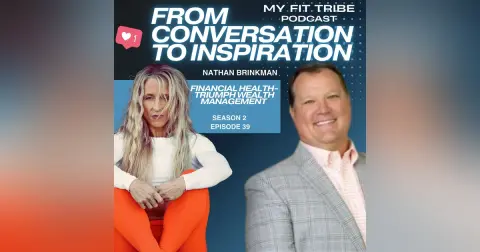


Joining me at the mic today is Nathan Brinkman. It felt important to have a conversation about financial health, and what stood out most was how often we could connect health and wealth when it comes to decisions, habits, and long-term strategy. This isn’t just another conversation about the market—we dig into the “why,” so you can take meaningful steps toward the “how.”
10:10 - [Ad] Just Be True ~ A Soul-Led Podcast
10:56 - (Cont.) Nathan Brinkman- Exploring Financial Health
Throughout my own life and fitness journey, I have had the privilege of meeting incredible people who've shared valuable insights on mindset, health, fitness, and spiritual growth. The profound impact of this knowledge on my own life has inspired me to share it with all of you. I'm Erica Sweeney, host and founder of My Fit Tribe Podcast. Join me as we explore inspiring conversations with experts, thought leaders, and everyday heroes who offer their stories and practical tips to help you on your own journey. From nutrition and fitness to mental well-being and personal or spiritual growth, our mission is to empower you to take charge of your health and live your best life. We are more than just a podcast, we are a community. Through coaching, a wealth of shared knowledge, and a strong support network, we are here to guide and encourage you every step of the way. Come be a part of our tribe. Joining me at the mic today is Nathan Brinkman. It felt important to have a conversation about financial health, and what stood out most was how often we could connect health and wealth when it comes to our decisions, our habits, and long-term strategy. This isn't just another conversation about the market. We dig into the why so you can take meaningful steps toward the how. Today on the My Fit Drive podcast, I'm joined by Nathan Brinkman. He is the founder of Triumph Wealth Management, bringing over 30 years of experience in the financial services industry. He specializes in wealth management, strategic philanthropy, and business succession planning, helping entrepreneurs and family business owners align their financial strategies with both personal and professional goals. Known for his comprehensive approach, Nathan simplifies complex decisions and guides clients through every stage of growth with clarity and confidence. Based in Madison, Wisconsin, he is also a husband and father of three. Hello, Nathan. Thank you for joining me.
SPEAKER_00Well, thank you for having me.
SPEAKER_03It's always fun when I get to have my friends on because it's a little more personal and I we joke around a little bit. So I'm looking forward to this conversation.
SPEAKER_00Me too. Well, you're really not looking forward to it knowing you.
unknownYeah.
SPEAKER_03To those people who know me, I don't love talking about finances. I'm really like, I can pay my bills and I know what I'm doing. But for some reason, which is what it's going to get into, is talking about money causes a lot of stress and fear, can cause a lot of stress and fear and unknown and uncertainty. So we'll get into how people can approach that. But let's start a little bit about Nathan, about like how did you get into finances?
SPEAKER_00Yeah, that's a great question. So uh I was born and somewhat raised in South Dakota. So that's the state right below North Dakota.
SPEAKER_03Thank you.
SPEAKER_00And uh my parents owned a an office products business on Main Street, ironically, of Madison, South Dakota. So as a young child, you know, we participated in counting pencils and papers and inventory, and uh our reward was pizza at the end of the night. But the long and the short of it is in the 80s, quite a bit of economic meltdown, and uh my parents ended up losing a lot, almost everything, uh, which forced us to move to the Twin Cities. So we go from small town South Dakota to a very large metropolitan area. That's where I graduated high school, eventually went to college at the Harvard of the Midwest, aka Whitewater, and uh graduated in in kind of business and what we call organizational communication or what is now entrepreneurship. So when I graduated, I was like interested in finance, but I was really interested in the idea of leadership and just how to how do we manage through things and how we consult uh because I really truly think that if my parents had better advisors around them, they probably would have made better decisions during that economic change and they just couldn't get out of the way fast enough. So professionally, as I go through this, I have that in the back of my mind always is how do we how do I help assemble a team of people so that we impact people, but obviously the families, not only just to them, but the people that they work with, the vendors, employees, all that kind of stuff. It's it's it's a lot.
SPEAKER_03It is a lot, and that's there's so many different stages of financial health, you know, that we go through with the different stages of our life. I mean, as I've mentioned on the show before, I was a single mom. I'm making six eighty an hour, you know, I got paid twice a month. And that first check went towards rent and the second one went to daycare and everything else went on the credit card. So I've been at that broke broke stage, you know, where you just you can't pay your bills. And as a business owner, I've been at the how are we gonna make meet the payroll stage. That's right. So there are there are those starting points, though and then you get those pains during operation and during business, depending on the route that it's going to. So it can be very, very stressful.
SPEAKER_00Absolutely. And uh and and there are times in life where you're in business where you're successful and there's excess.
SPEAKER_03Right.
SPEAKER_00And then there's times where it's scary and stressful. So that that's where I would like to say, you know, in the context of what it is that we do, you know, think about the last time you went to have your health checkup with your doctor, right? Most of us can remember that. But when's the last time you really had a financial health checkup? Like one of the ones that kind of you check everything out, you do the stress testing, you make sure that all the numbers are lining up, you understand what those numbers are, cause and effect. Like that's what we do. And part of that is you got to have some muscle. And part of that muscle is the advisors you have think like CPA, your banker, an attorney, MA advisor, that kind of stuff. And what our company does is we put the heart in it. So we we pump the life, you know, the lifeblood into those people so everybody has the appropriate information to go do their jobs.
SPEAKER_03Okay. So we'll get into kind of that team aspect of it. How did you so when you started in the financial side of things, you did you know right away then that you wanted to focus on small business owners because of your history then?
SPEAKER_00Or does that no, that was somewhat accidental, but somewhat just how God works. So uh I had a business partner in the early 2000s, late 90s, early 2000s, and uh and we did very, very well. And uh my wife came to me in 2006 and basically said, Hey, you know, this is all great, but you're you're not the you're not the dad you told me to be, you're not the husband you told me to be, because I was essentially never home. So we uh we did a good job of building a business, but I wasn't doing a good job of building a family. So the great news is my wife called me on it, and so I went back to my business partner and said, Hey, we I need to make some modifications, we need to make some modifications. And uh unfortunately we just couldn't come to uh a viable resolution, so I sold out to him um and then started Triumph in 2007, which by the way was not the best time in the economic system to start uh a wealth management financial services company because uh, if anybody remembers, that was kind of in the heart of an economic meltdown. So the good news is I didn't have many clients, so nobody was upset with me for losing money in the market because we weren't managing much at that time. But that's when I looked at, you know, what is it that I really want to do? What are the passions? Like what is when I get up in the morning, where do I lose track of time? It was when I was working with people that own and run companies, the risks, the complexities that come with that. And growing up in business, I just I knew that I had gifts and talents to help people walk through that because I myself was a business owner. I had a payroll, bought and sold companies, real estate, etc. So I just I think it just uniquely positioned me, and that's where I just enjoyed spending my time. And and not that I don't enjoy the other stuff we do, but especially in that area of working with complex situations is where where I lose myself, you know, it just time goes by fast.
SPEAKER_03That's a good way to look at it because you and I have had this conversation outside this podcast too, but when you are going through transitions, especially as a business owner and you've built the business, and all of a sudden you have to make a change, like you were forced to do based on what you know, with your conversation with your wife. Like, how was that? It's hard to make a change. It's hard to do something different when you have the unknown.
SPEAKER_00And and by the way, I just want your audience to know like, do yourself a favor and go listen to Erica's when story. Uh it's beautiful. And um do yourself another favor, like and download stuff uh from My Fit Tribe, subscribe because you know what you're doing is really incredible. So uh yeah, it is it is transition, and um, you know, I found something a couple years ago, and I wish I had the memory to do the you know right off the top of my head, which is not there anymore. But the Delianama said something that was really impactful to me that um every once in a while I have to pick this up and read it, but it goes like this man surprised me the most about humanity because he sacrifices his health to make money, then he sacrifices money to recoup his health, then he's so anxious about the future that he does not enjoy the present. The result is that he does not really live in the present, nor the future. So he lives like he's never going to die, then he dies, never really having lived. So that's this really vital and important connection between, I think, wealth and health. And um and the game is changing very quickly. I mean, you've had several guests on your podcast that talk about longevity. You know, those of us that try to take care of ourselves, we're simply gonna live longer and uh hopefully better. So um, can we do that healthier? Well, some of that takes resources, so it's you can't just go off of the internet averages because if it who knows what's gonna happen with you. So, again, that's part of what we try to do is get to know you as a person. Uh some people have a lot of longevity in their genes, some people don't. But you know, it's not about what you have, it's like what do you want to do with what you have?
SPEAKER_03Yeah, you know, we s we spend so much of our core years, you know, you're raising the family and you're working your tail off, and you really like you're just in sort of like go mode. I won't say survival mode because it's not always that dramatic, but you know, you just don't even take time to think about much than you know, getting the kids to school and going to soccer and paying the bills and going to work, you know, the grind. And then when the kids go off to college and then you kind of have that next reflection of okay, well, who who am I now or what do I want to do outside of the kids? Because that identity shifts. And then once you get a little bit older and you kind of realize you're getting older, you're like, well, shoot, like I have to figure this out. Like there are decisions you you can't keep kicking the ball ahead, right? You have to actually sit and make some decisions to decide, like you said, what your future looks like and how you're gonna take care of your kids. Because I know there's situations where you know people pass away unexpectedly, and then the family has to take care of that. And from experience losing my dad, I mean, he had a will in place and didn't have an estate or anything significant to have to deal with. But I mean, when you're in that state of grief, you can't think straight. So you have to fill out this paperwork that, I mean, I put wrong addresses. I mean, it was just horrible. So there's that element of the healthy wealth process too, where you're making sure that your family's taken care of in that way too. So you talk about you have your team, like you have the accountants and lawyers and estate planners and all this. Is that something that your company then will work together with other professionals in order to provide services for your clients?
SPEAKER_00Yes. So I like to build us as collaboration experts. Kind of my observation many, many years ago was, and I used to build our company this way, is we have silos of expertise, which is great. But when you go through things like you were just describing, when you go through your own personal financial and economic situation and you're trying to figure out, well, how do I pass this on? How where do I want things to go and how do I want to get there? That's when those silos, those walls have to go down because you need good communication and collaboration. So oftentimes I step in and we're like expert information gatherers. And we're really spending time on the heart behind it. Like, what do you really want to do? What's your why? What's your purpose? In the end, like what does this really look like? Uh, and then we collaborate with the other professionals to make sure that they have the necessary information, uh, open the lines of communication, have that collaborative conversation, like everybody's in the room at the same time, so that we can be a real board to our clients, and everybody's voices there efficiently, effectively, versus clients at the do-it-yourself model that I'm gonna go talk to my accountant, I'm gonna talk an accountantese there, I get depreciation, tax avoidance. I go to my attorney, we talk about a legalese, now efficient. I have these trusts, but in the end, you have these, uh you have a game plan, you have a document, you have all that, but it very rarely gets executed because nobody's coordinating. And in the end, maybe it's the client, but oftentimes it's their family members that are left with these papers and these stories that they've never heard. So, how do you go forward and make decisions? Well, that's what we're trying to break is that pattern of good job. You know, you you have a will, you have a trust, you you have somebody doing your taxes, but like what do you really, really want to do with this? And your kids or your trustees, whoever's helping you with this, should be keenly aware of who you are. Like, like going back to our our idea of the body of like, you got all the muscles, okay? That's not, but what's feeding them? What's what's the the bloodline that's getting there and what's pumping information at the right time so that uh the critical decisions are made. So it's for us, it's not like what I observe, people don't get hurt by bad decisions. We're all gonna make bad decisions, right? Intentionally, unintentionally, whatever. People get hurt when they don't make decisions or they don't take action. Uh they don't follow through on those kind of quiet conversations or conversations that we know in the back of our minds or heads that we probably should be having, but like, how do we have them? Like, so that's where we come in is help support infrastructure-wise, you know, put together modeling. And we also spend a lot of time what we call a family constitution, really, really getting mom and dad to sit down together and and build out their life story. Like, here's where we came from. Here's you guys may not know this, but this was hard. Uh, and now we're here. Or like we wouldn't be here because we got this and this and this break. Sometimes kids have a tendency to think, oh, life was so easy, because as parents, we try to hide the hard stuff from them, right? Uh, and then we tell them the these stories, but they're like, oh yeah, sure, right. So the constitution is really important because it gives them the life story, like the genealogy, the where did you come from, which then transcends into the why. Because they kids oftentimes, you know, when we transfer wealth to them, they're like, Do I use this to buy a house or an e-bike or stuff that I really want or you know, special dental work, or is it only supposed to be for special occasions? So when you go through that process, it gives that permission slip to the kids of like, ah, I understand where this came from. I understand the heart or intent behind this, the why. So it just makes it much easier for them to then go make decisions and frankly unlock opportunities for them. So uh, not my favorite story, but one of the true stories that we work with is a very wealthy family in the Dane County area. And mom and dad, uh, you know, they were like your next door neighbors, had a lot of money, but not a lot of people knew it. And uh they were very kind and generous people, uh, behind the scenes, support a lot of things, to the point that, you know, their kids didn't even know it. Well, one of their kids like had a business idea, but always was afraid to launch it because we'll we'll just say it plainly, it was a little risk adverse. Um, but then when parents passed away and left them a bunch of money, he's like, so now I'm in my 50s, I don't have the energy I had in my 30s and 40s. And so that dream kind of died. Not because at that point he didn't have the resources, he finally had the resources, but it just was bad timing. So if we could replay the tape, I know that mom and dad would have helped out, but but there was nobody opened that conversation or you know, because the kid didn't want to seem like less than, because his parents were so successful. Um so those are the kind of stories we're trying to avoid.
SPEAKER_03There are so many emotional triggers when it comes to talking about finances. I mean, and either side. I mean, for for you said wealthy parents who worked hard and you know kind of hit it because that generationally you just that's what you did. Or for those people who struggled financially and then just trying to pay the bills. I mean, it really really triggers a lot of you know, absolutely.
SPEAKER_00Again, I didn't have great wealth habits in my family. My family and my wife's family both used leverage debt to try to get there. Well, you know, that can be good, but it also can be an anchor around your neck, as it is with health. I mean, there's a lot of emotional eaters. I'm definitely one of those. I mentioned before, like when our reward when we did something was food. So I'm like a very celebratory person with food and alcohol now that I'm adult. So I've had to relearn some of those things of like, okay, that's it's good, but that's not good.
SPEAKER_02Right.
SPEAKER_00And the same thing is is in wealth, is like you said, it's emotional. You know, frankly, people would rather talk to me about their sex lives than they would what's in their checkbook or what their budget is. I mean, seriously, right? So I mean, that's where we are as a society, is this is not easy. And, you know, I have coaches in my life, and they're like, don't use the B-word when you're talking to people. Don't use budget, use life plan, life spending plan, you know, that kind of stuff. And that that's just how masked all this gets. And again, it's one of those things that we're trying to make it easy or put it in the dark and hoping it finds light. Uh, you know, I just think we have to bust through some of those things. And, you know, you've had a lot of guests on your podcast that just talk about modifications. Well, again, that's some of the stuff we do. You're not gonna get it perfect every time.
SPEAKER_01Right.
SPEAKER_00Well, let's figure out what modifications are necessary so you you keep going, you continue to do the positive things. We're looking for progress, not perfection, right? That's really important. Just let's see progress, not focus on perfection. Nobody's perfect.
SPEAKER_03Yeah, and you know what's funny? I I think back, you know, sometimes you'll have a stranger say something to you, and for some reason or another, it sticks, right? So I remember uh when I was a single mom working at the bank, and this woman, customer, older woman came into the bank as a customer and I chatted with her and she just kind of looked like into my soul. Like I remember it. And she said to me, she goes, one piece of advice, don't spend more than you earn. Yeah. And I was like, okay, you know, like like I don't have any money to spend, so it's not, you know, it is what it is. But for some reason, I can still see her like, you know, staring into my soul, telling me that. And that stuck with me. And then never did I, you know, overextend myself on credit cards or miscellaneous spending, or I mean, not that I am perfect that way either. But again, I think that again, that progress. Like, so if you're starting in your financial journey to make sure that you are setting money aside and saving it for the future, I mean, that's step one, right? So, and then you deal with up as you build your wealth and trying to figure out what's next. Um, again, progress, learn something from where you're at and how you can move forward to where you want to be.
SPEAKER_00Yeah. And um, I wish there's more people, like the woman that came into the bank to talk to you about. Unfortunately, you know, you got to think of like what are the messages that we're constantly inundated with, right? So, I mean, just think about how many credit card commercials there are. Right. It's like live free, go do the and and and the stories are amazing. We're, you know, floating wistfully on a beach, and it's just like, tap, you know, in college, they're almost predatory. Like open up this credit card, you get a free t-shirt, do this, do that. So, you know, all you have to do is spend $500 and you get this, and you know, all of a sudden, we see many of these kids uh just amass a tremendous amount of debt. And they don't really, there's nobody's educated them of a plan to get out or what to do. We've certainly educated them how to spend. So I think that advice was key, and I've again I've heard you say it before is you had a plan. You're like, my first check goes to rent, my next check goes to food, and if there's anything left over, well, goodness, there's not a lot left over, so I guess I don't spend it. You know, that is not the culture that we live in today. We live in a very much immediate gratification. You know, you just think about like what are some topics we talk about regularly today. Our government has a boatload of debt.
SPEAKER_03Right. Right.
SPEAKER_00So, you know, we're constantly, okay, well, I guess that's okay, because our leadership in Washington is not off in trying to figure out how to problem solve getting out of debt.
SPEAKER_03Right.
SPEAKER_00In fact, they're leaning more on how do we spend more. I don't know how that works out long term.
SPEAKER_03No.
SPEAKER_00I don't think it ends well. It doesn't end well personally. I don't think it can end well for our country.
SPEAKER_03And same thing, social security was created so that people would have money as they get older, and we certainly cannot depend on that in order to provide us with the lifestyle that we want to have when we are fortunate enough to be able to retire.
SPEAKER_00Exactly. And Erica is not giving specific advice. She's giving an opinion, not being Correct.
SPEAKER_03Not a professional.
SPEAKER_00And seriously, I mean that just you're going to like stuff that we you know we have to take seriously, and um, and it is our responsibility. I mean, it goes back to again where uh I I was excited to come here and talk because frankly, um I have struggled with wealth uh in a very like positive way. Um worked very hard, built some things, got lucky, got blessed, you know, all that kind of stuff. But on my health is is been, you know, I just haven't had great examples. And so that's been a struggle for me, lifelong struggle. And it hasn't been until the last few years where all of a sudden I'm 50 plus and the numbers don't go down, and I can't just lose 10 pounds uh in a week like I used to. So it's like it takes work, it's it's effort and it's focus and it's awareness and it's tracking things that I don't love to track. And you've been through that again. Again, people go listen to our when story, but like when you made that decision to like, here's my new self, I can't even go back to my car and think about this. I'm gonna do it. And you were tracking macros and you're tracking all those things. Like, look at how successful you were in a short period of time. That's inspirational. So, like, that's this tieback to going back to the Dalai Lama of like, I'm sure you were laser focused on that at that time, right? There's just things that had to go on the back burner. It wasn't they weren't present, it's just you were laser focused on that because obviously you had the results. But again, you can't you can't do that forever. You you have to have awareness and things because otherwise your numbers creep around. So, again, some of the we'll call it fun stories that we have, uh, again, doing this for 30 plus years is you know, we're sitting down with people now that have been my clients for 20, 30 years. And I look at where they are, and they they don't even know, like they've amassed so much. Okay. And then we think about well, where is this going to be in 10 years? So there is an economic rule, it's called the rule of 72, is money will double every 10 years at a rate of 7.2%. So if we kind of take that out 10, 20 years, like their eyes pop out of their heads, like, there's no way. Like, well, let's look back at where you were 10 years or 15 or 20 years. Look at where you are. So that's again goes back to that progress. But unfortunately, the same thing can happen with a scale for me. Is like if I don't focus, if I'm not doing the blocking and tackling, all of a sudden the the numbers go up over time. And it takes like there's just things that have to change. Well, that's that's why these two concepts of health and wealth are just so intimately tied. Um, which again, I'm thank you for inviting me because I love to talk about this stuff.
SPEAKER_03Well, and I'm gonna point out too that what they have in common is that the goal of what you do today is that your future self is gonna thank you.
SPEAKER_01Correct.
SPEAKER_03And that goes for changing how you're living with your health-wise so that you don't get sick or that you're strong enough to fight an illness or whatever, or with your relationships that you put into it enough that you have a happy relationship or your wealth, that you've saved enough money appropriately so that you can live beyond your wildest dreams and do the things you enjoy when you get to that point. So you really challenge everybody today to sit down and go, okay, where is it, what is it in my life that isn't that I want to make sure I establish good habits in order for me to have that version in two years, five years, ten years, twenty years, whatever it may be.
SPEAKER_00I think that is such sage advice. And again, that some of my best financial advice hasn't necessarily come from my coaches or books or whatever. It's it's coming from real life people. One of them I'll never forget during COVID is our backdoor neighbor was really having a tough time just with the whole set of circumstances. And at that time he was 50. And he just shared a story with me. He's like, I just uh I'm I'm thanking my 40-year-old self because he said I remember at 40 when I took my 40th birthday, I'm like, what do I have to do? So my 50-year-old self would thank me. And one of them was like paying off his house. Well, he did that, so he had a lot of freedom and flexibility at that time because of what he did during his 40s, right? So was there sacrifice? Of course there was, but it gave him that freedom at that time. So that that really hit me like a ton of bricks, and I think you just called it out too is like, what do you do today? What are the things you can do today and tomorrow that your tenure plus self is gonna look back and say, thank you? And and we're not saying like, don't ever go on a vacation or don't have a nice car or don't go out for dinner ever. That's that's not the point. The point is, is like, what are the things that you sh you know you should be doing that are gonna get to the things that you really want to have anyway? And you you just have to buckle down and do it.
SPEAKER_03So, what do you advise people? I mean, if you were to say in general, I mean, financial health can be very complicated because there are obviously different ways you can grow your money and different ways not to spend your money, different ways to spend your money that are gonna be beneficial, tax-wise, whatever. If someone's saying they're going, I am not anywhere where I want to be, or young people are listening who really just haven't taken the time to establish good habits, like do have like a top three things, like where to start, or if you're in the middle to how to analyze where you are to make a step forward.
SPEAKER_00Yeah. Start with a like a simple goal. Save a thousand dollars. Like literally anybody can save a thousand dollars. Okay, it might be in a week, it might be in six months, a year, whatever. Like hit that goal. And then along the way, like get a spending plan, track what's coming in and what's going on. So when we do that, we typically tell people, you know, don't put on that filter, don't change your habits, don't stop going to Starbucks for a month. Anybody can do that. Just live your life for a month, track your expenses very carefully. And what's gonna happen? Like your mind will automatically problem solve. Like as humans, we we know the difference between right and wrong. We'll we'll optimize, and you're gonna look and be like, like, holy cow. So again, I have three children. My oldest probably has her first dollar from babysitting. She loves to go out to dinner, especially when when we're there. So we pick up the tab. Uh our middle guy is is very disciplined, so he'll save for stuff, but he he likes to buy stuff. Our youngest guy is kind of the guy that's like, you know, you give him two bucks, he's gonna spend three. That's just who he is. So I've had to spend some time with him, uh, just kind of going through okay, let's look at what you're spending. And for him, it's like quick trip is evidently by the number of and volume of transactions on his debit card, is like his favorite spot in the world. And and if you can't get it at Quick Trip, it may not exist. I don't know in those world. So, but it was like one of those things we just had to pull down his bank statement and debit, and like, Jack, look at all of these transactions that you've done at this one, it doesn't matter what it is, it's just this one thing. And it first it was justification, and then it was awareness, and then it was change. And he knew, once he was aware, he knew how to problem solve. Like that was the easy part. It was going through that exercise to get him just to simply look at his bank statement and like, check this out. Like, do you see what's going on? So that'd be my advice is just save a thousand dollars, get a spending plan, dig deep a little bit. And then third is you got to get into the saving for emergencies and opportunities, three to six months. Once you get to that point, the rest of it gets a little easier. But those three steps, like you get there, you're on a good path. You're you're on the start of a really good path.
SPEAKER_03So there's so much I'm gonna quick dive into. So I'm gonna correlate this again to the hot the nutrition side of things because when you are tracking your food, you see what you're eating. So if I'm sitting down and and eating popcorn, if I'm tracking it, I'll put it, weigh it, and I'll have that little bit. If not, I eat the whole freaking bag. You know, because I kept sticking my hands.
SPEAKER_00We all do.
SPEAKER_03Right.
SPEAKER_00We uh we kind of lose consciousness when we're doing that. Absolutely.
SPEAKER_03Yeah, yeah. And it's the same thing with spending and those darn like apps that you download and you oh, it's free this time, and all of a sudden you have these random Apple charges because you've downloaded a service, a T you know, streaming service or whatever, those expenses too can add up so quickly. And they're hard to stop sometimes. You have to call it.
SPEAKER_00They are something absolutely. No, it it again, it just it like again, this health it's it's the cool part is it's a very similar process. Right. Right? So if you're good at one, you're gonna be good at the other. If you're bad at one, you might be bad at the other. So uh and some of us are good at one and not the other. So but the the correlation is really strong.
SPEAKER_03Yeah, yeah. And again, so like comparing it to the tracking food, you're just collecting data. Like it doesn't mean you have to be perfect, you're collecting data so that you can improve as you move forward.
SPEAKER_00Oh, yeah. A couple years ago, I hired a a diet coach or a food coach, and like, yeah, I mean, I'm not proud of this, but she's like, you have one of the most celebratory lives of anybody I've ever seen. Because we are entertaining our clients often. Uh, we're walking through our clients like big events like retirement and business training. I mean, I am blessed that we get to celebrate that, but at this flip side of like, I I had no idea, you know, when you ate when you eat like nice steak three or four times a week. Turns out that that adds up after a while, right? So just I had it was like until I had that awareness, I like I just lived my life. Yeah, it just turned into my life. So that's been like super challenging of I still want to participate, right? I still want to be there, I still want to do the the things, but I just have to change my attitude. And I wouldn't have known that had I not like looked at the data, tracked at it and somebody be very honest with me of like, dude, like you can't keep doing this.
SPEAKER_03Right. Well, and that's what a financial advisor does. They're able to be honest with you about things that you need to do and ways you can grow your money beyond your expectations, which is as you accumulate wealth, it's important that you have people in your corner to help you build that as well.
SPEAKER_00And a really good one is gonna spend some time with you to figure out what your why is. I mean, I I'm not I don't say this to be facetious or out of touch, but like, you know, building wealth is really not that hard. Anybody can do it. It doesn't that doesn't mean it's easy, but when you do that, it uh you know, people always want to be rich. Okay. And I would argue being rich is much more comfortable and fun than being poor. But it comes with responsibilities because it also people of wealth have a lot more opportunity. So there's a lot more things to say no to. There's a lot of things to say yes to. If you're not working with advisor, it really helps you figure out your your funneling system, the way to filter through things and to make sure you're focusing on your why and what your intent what you really want your money to do for you and and what you want that to do and impact for your kids or future generations, whatever. Like, again, I'm not saying that the the market gives the market, right? I we all fish from the same pond. I don't have a better, like I don't have the unknown stock pick of the year. Like it just doesn't exist. But what what I think is different is uh a really good financial advisor is gonna walk you through a comprehensive process and spend time on the heart. Spend time on like what drives this and and really like what is your intention and focus. So, you know, my goal always is just for me is my last breath to die in peace of mind to hit all the boxes checked. But it's also the same for for clients. And it's it's a it's a hard process, right? It's it's uh people don't always love, I'll say it, they don't love my questions. I hope they still like me. They just don't love the questions I ask all the time. But but we have to if we're really gonna get to the heart of the matter.
SPEAKER_03Yeah. Yeah. There's just something about talking about finances, no matter what it is. It's just and it and it's interesting that you talk about the why, because at each like transition point, which I kind of referred to earlier, it's you have to kind of sit in this and think about that. You have to sit in that space of the why. Like, what am I doing, or why am I doing this, or what's gonna give me happiness, or you know, it's not just about living day-to-day. You know what I mean? That's it can be a really hard answer to find.
SPEAKER_00It it is, but uh I guess here's a cautionary tale I would have. Is particularly in business deals, they can be very expensive when you're paying by the hour. And I'm not trying to pick on any, you know, one profession or whatever, but you know, they're in the business of problem solving. And uh, you know, when I work with my attorney on business deals, in the back of my mind, I it's like watching the gas pump today. It's like I feel that thing going. And I'm not like, I don't want to talk about touchy-feely things with them. I just want to like, how do I get this done?
SPEAKER_03Correct.
SPEAKER_00And therefore, you uh you short circuit that process when you get to you, so you like everybody that everybody knows we got to get to the why, but which one of these professionals is really gonna unearth that and and take that information and make sure that it's it's flowing to all the other professionals so that that the actual plan, all the arrows point to the proper appropriate end result, versus like just getting it done, here's your documents, we'll go through it, you're gonna forget about it, you'll come back to me 12 months later, I'll re-explain it to you. You come back three years later, I'll re-explain it. If we just did the why and you understood that and you knew all the arrows are pointing there, it takes that. Like, do you really have to know what subsection 3C says in category five of what no? You but it has to be there. You still have to do that part. Um, and those professionals are really good at tax-wise, same thing, but that's what I see missing in so many of these plans is we're in such a hurry to get the job done that we didn't really do the job.
SPEAKER_03Right. Yeah, and if you tell me what is in section 3C, I'll forget after five minutes, anyways, because as I get older, I can retain absolutely nothing in this brain. Um, as you see as people get older and their their priorities change, and you know, they modify their financial strategy based on that. How do you, I mean, how do you navigate? You talked about a little bit, but how do you navigate them through that?
SPEAKER_00So one is it's like truly understanding the numbers. So again, going back to the beginning of our process, like when people would tell me the value of their business, I'd be like, oh, okay, yep, yep, yep, that's what we put out. And they, you know, they tell it to their banker and the banker believes them. And what we really began to uncover is like they didn't really know the number of the value of their business, which was really a big part of their net worth statement. So that's what I would go back to is like know your numbers. Especially if you own a business, you you should understand like what the impact of that is. Like, do your own internal due diligence report because someday it's gonna happen either way. There's gonna be something, there's a stress test coming. I don't know what it is, but that's where I would start is a true understanding of the numbers. Then you walk it through like uh a screening or a test, uh stress test of some kind, second opinion is like, is this doing what we want it to do? So I'm an optimization nerd. It just, it just, it's who I am. So I love that part of the process of just making sure it all fits and works together and it's working efficiently. So going back to your example of like all of a sudden I have these subscriptions. Well, there's a lot of redundancy in what we see in that. So my best advice for people as they get up there is like understand your you know, what what is the true numbers? How does that walk through your financial life? And in the end, you're probably not gonna spend all of it. So then what?
SPEAKER_03Right.
SPEAKER_00Um, so I mean, I I can't tell you how many people is like, well, if I die and I have to pause and say, you know, I've never seen anybody get out of this place alive yet. Uh evidently there's two in the Bible, but I haven't witnessed it yet. Um, so we have to like have that challenging conversation. Like, can we all agree we're gonna die? Okay. So we should really talk about what happens then and how do you want it to go? And do you want to leave a headache unintentionally, or do you really want to button this down so everybody can know their order, know their plan, know what's gonna happen?
SPEAKER_03You talked about a business value, because that's something I just want to touch on real quick. Is I see a lot of people that have built their small business and they work their tail off, build it into something, and then these big equity firms come in and snatch them up because again, they're tired. Like they've built it and they were maybe hoping to pass it on or whatever, or for whatever reason, that becomes very attractive. So I feel like we're losing the mom and pops to all these equity firms. And there's there's some good in that because there's opportunity for people to be able to sell their business and move on to the next chapter of life. But uh that makes me kind of sad.
SPEAKER_00Yeah, I mean, we're we're economically in a very interesting time. We just think about when money is cheap in the banking economic where we call it leverage, right? So if I can borrow money at 2-3%, my leverage is low, so I can pay, you know, at or maybe even above market rate and move into this. And then uh any of us, if we're smart business, we're gonna optimize, you know, where somebody left off and and try to get as much as we can out of that. So what's recently changed is obviously interest rates have gone up.
SPEAKER_02Right.
SPEAKER_00So I think we're seeing some slowdown in that, uh, which means the these businesses, you you have to be top shelf. Uh, they're not just gonna take anybody off the street anymore, right? So again, I say this tongue-in-cheek, but it's relatively true. You know, I do get those Friday afternoon calls of like, hey, by the way, I'm gonna sell this thing Monday morning because I got a plane ticket to Florida on Wednesday, and I have seven days of golfing, and I just want to make sure the what money's wired into my account. And you know, I was just golfing with my other buddy, and his deal closed in 24 hours, and that's just not how it works. Right. So um, if you own a business, it's complex. There's a lot of stuff. So again, uh the financial side of it actually is the easiest side. It's uh, and and you've been through this is like you're when you build something and you put your heart, soul, and everything into it, the identity changes the second you hand the keys to somebody else. And that that's hard. So hard. So that's what we focus on is like no offense, but anybody can do the financial side of it. Again, there's only so many strategies, and I mean, maybe it's because we've done it enough. Like it's not boring, but like we know we're doing the really exciting part is like, so what who are you gonna be Tuesday morning?
SPEAKER_03Well, it's funny you say that, like, oh, I'm gonna go play seven days of golf. And my first thought was, well, what about day eight? You know, because you're gonna have a day where you get up and you go, This isn't like I don't know what I expected, but this is not what I expected. Like, I I don't feel lighter.
SPEAKER_00Yeah, I mean some ways, but numbers are changing, but I mean, as of 2022, uh most business 67% of business owners, two-thirds of them, had regret post-sale. I mean, that's a staggering statistic. And that's something I'm trying to change one one deal at a time is you know, how do we how do I give enough of the movie so they can see the ending? And uh, and I think a lot of it starts from the beginning, is is what we call due diligence, is like somebody you you should go through your own due diligence because actual due diligence is no fun. No, people I call it the ugly baby syndrome is people come into your life and they tear apart your business and they tell you all the things are wrong because that's what they're supposed to do. Right. Because they're trying to like get a deal. But in the end, it's like you have a beautiful baby, like most of our businesses, they're they're awesome. It just you should know like where your strong points are, where your weak points are, so that they can't like uh intentionally or unintentionally pull the wool over your eyes. Right. But that's what they're gonna do. So you want somebody on your side that's on your team to tell you that, right? Um, and the strategy and the financial, all that stuff will come out, and that's why you work with multiple professionals. So everybody kind of has their two cents in. So you should have peace of mind and like I have the right structure, but then it's but nobody is spending time on the who are you? Yeah, what your identity, and what are the things that you know, part bits, pieces, parts of your business you may want to take with you. Um that's where I get a rush, right? It's also very difficult and challenging because there's not a lot of people that do that, particularly here in the Midwest. Right. So when I talk about this, they're like, oh well, I got it. And you know, I'll be cool, like uh, you know, if I have enough money, who cares? Well, it turns out if you have a value system where where your um your personal health and mentality and all that kind of stuff is higher than money, it's gonna affect you.
SPEAKER_03Yeah.
SPEAKER_00If if your highest priority is money, you may be right.
SPEAKER_03Yeah.
SPEAKER_00But I probably won't be working with you.
SPEAKER_03Right. Yeah, it really that's I've talked about that several times. It just the the shock over the grief process after, you know, and not just was it was tremendous.
SPEAKER_00And it's embarrassing, right? I mean, think about all the dreams that came true.
SPEAKER_03Yeah.
SPEAKER_00I mean, think about the subsequent decisions you've been able to like you have some amazing views.
SPEAKER_03Yes, yes, we're very blessed.
SPEAKER_00And that would only happen if you did what you did. So it's not bad. It's just it's that process that if somebody could have walked you, okay, Erica, here's here's kind of the stages of grief, and here's the things you should do. And you know, I people are surprised, but oftentimes I'm stepping in and I'm saying, stop decision making. So the process that you went through, you know, after your dad's passing, somebody should have stepped in and said, Slow down.
SPEAKER_03Just don't make try telling me to slow down.
SPEAKER_00Understand, but at the same point in time, like when a woman steps in front of you at a bank teller and gives you advice, yeah, and it resonates with you, you're gonna do it.
SPEAKER_02Right.
SPEAKER_00So if somebody stopped in and said, Erica, there's way too many, just stop. Don't make lifelong decisions, don't loan money to your cousin, don't start another business, right? Just let this happen for a few minutes until you get like the clarity, let the fog clear. Right. Um, you're gonna feel better about yourself, right? Again, I think that's part of the regret. People go from returning a hundred emails a day, but you know, all of a sudden their phone's dead, they're like looking at it, shaking it. Does this thing work? And that's what they wanted.
SPEAKER_03Right.
SPEAKER_00But then it's like, well, wait a minute. Am I important anymore? Does anybody love me? Like, I should be doing something, right? And then they they go and they they do things they know they shouldn't, but in absence of something else, that's what they're gonna do.
SPEAKER_03Yeah, and I just don't think I I I could you could have told me that prior to me doing it, and I wouldn't get it. Of course. Like most things in life, you really don't get it until you've been there. But anybody who's going through that, I mean there's grief and so many different areas of our life, and that we just really, like you said, have to kind of sit with it for a bit before we make some some big decisions.
SPEAKER_00But it also unlocks so many cool opportunities.
SPEAKER_03Yeah.
SPEAKER_00Right. So I remember like one of my personal first wins in real estate, like our goal, frankly, in doing that was to pay for our kids' college education. It's a gift I wanted to give my kids. I didn't have. And I, you know, it was in real estate. Like, um, I'll never forget my attorney was like, Nathan, you're too much of a nice guy to be a developer. Like, there's no nice developers. And I was like, oh, you know, I can well, turns out he was right. And I and I use that advice at the very end. Because as you know, in most real estate development deals, like you don't make any money in the beginning, like you're all the money's out, right? Your your pockets are empty, and you're hoping that the last maybe 25 to 30 percent sells at what you think it is, because that's where you make all your money.
SPEAKER_02Right.
SPEAKER_00And that is what ended up happening for us. But I gotta tell you, like three three-quarters of the way through that process, like I had to turn into a little bit of an a-hole. Um, because it was just take, take, take. And I'm like, wait a minute, this is like, I am not like Donald Trump with gazillions of dollars, I could just do whatever I want to do. I wouldn't have thought that way. Because my and my thing is like, well, you know, if you're just nice to people and if you do the right thing, it works out well. It turns out that you kind of have to protect your own backyard.
SPEAKER_02Yeah.
SPEAKER_00And that was not a natural thought for me.
SPEAKER_02Right.
SPEAKER_00Um, but had my attorney not said that in the very beginning, it would have turned out very different.
SPEAKER_03Interesting. Yeah, it it's interesting how experiences like that can can open your eyes a little bit.
SPEAKER_00Yeah, and I'm again, I'm I'm happy we went through it.
SPEAKER_03Yeah.
SPEAKER_00But I kind of had to stand my ground, but I had never done that before.
SPEAKER_03Right. It's good, good, good for you.
SPEAKER_00Kids got out of college without uh debt. See? Awesome. Check, goal achieved.
SPEAKER_03Before we wrap up, I want to touch base a little bit on all the stuff that you do outside of your job because you do a lot to give back to the community. Um, you feed a lot of people. Can you talk about that, your recent adventure, and then we'll touch base on Joey's as well.
SPEAKER_00Oh boy. So one of the gifts that my parents did give to me is uh, you know, to be aware of your community, to be involved in your community. So as um Chris and I went through a lot of really tough times, and uh, we've also gone through some pretty spectacular, amazing moments as well. And so uh we just believe to whom much is given, much is expected. And part of our mission is to feed kids. So we've had uh the uh opportunity to be a part of a particular organization called Feed My Starving Children. Uh, we've been able to go to their mission field and see these kids uh that you know they're walking miles to go get water. They wake up uh every day wondering, like, am I gonna be able to eat? And when you do that, there's no space to dream. So um we knew at that minute when we saw that that we had to do something. So we we've um organized part of our community to uh to help feed kids so that uh they can unlock that channel in their brain to really dream and think. And so you when you're talking to a seven-year-old kid and they say you want to be a doctor, and in the background is the most god-awful poverty and lack of hope. But man, you give them, you get their tummy full, it changes, right? So that's that's part of our passion. It a big part of what it is we do. We also try to be really active members in our church. We believe in in that community. And then uh our one of our mutual passions is Logan's Hearts and Smiles. And um just uh there's a infectious guy, Joe, and uh, we just fell in love with him and what he's doing. So again, it goes back to in our minds kids that need help to be able to live. And so that's it's really simple. It's easy for us uh to be able to plug into that stuff. So we're really passionate about feeding kids, helping kids that that uh that just need that that step up so that they can live a life of hope and the ability to unlock dreams.
SPEAKER_03Well, you can see and you can feel your passion and emotion. Um I don't know, I've ever talked about this on the show, but when I was young, I was blessed to become best friends with with Snow. Her name was Snow, and her dad was Madison Santa Claus. And anybody who grew up in Madison in the 80s remembered we'd be in the holiday parade and we would go to hospitals and the civic center. And, you know, from a very young age, I was blessed to have an opportunity to volunteer with them and spend time with kids. And that molded who I am very much because I found joy in helping others and again at that very young age. And I'm so grateful for that opportunity. I was, you know, and through a senior year in high school.
SPEAKER_00Absolutely.
SPEAKER_03You know, and I think that, you know, we talk about wealth and you know, money and the material side that things can buy, but really where you are wealthy is in your love and your experiences and helping other people, and that is truly where we all need to remember is so important.
SPEAKER_00Absolutely. And and again, going back to us, kids are easy because there's so much purity in them. Like the world hasn't yet like changed them. Like when we look into and I have a kid, it just it's so much more meaningful and impactful. And so again, uh the another story that I like to share is like we have three children. In our estate plan, we have a fourth child, her name is charity, so our kids know about charity. Um, and that just I think that's just really important is is if if we've been blessed and um our kids are gonna be okay, like it's it's part of I feel it's our part of our duty to to help out those that that could use it, need it, help it. And our goal is to do it obviously while we're here, but also if we're not able to spend it all, that you know, it goes to our fourth, our fourth favorite kid.
SPEAKER_03That's pretty darn cool. So before we wrap up with my last question, I would like, can you share how people can find you at Triumph? Um, if they're interested in conversation about that.
SPEAKER_00Oh, thank you so much for that. So uh the easiest, I think, is to go to Triumphwealth, T-R-I-U-M-P-H wealth.com. Uh you'll see our bio, but on the upper right-hand corner is a schedule meeting. Um I love to provide second opinions. So uh it's kind of one of those like no obligation things. It's just we'll do some observations. We come unarmed, we don't present products. It's like it's a getting to know you phase. We're not a great fit for everyone, uh, nor is everybody a great fit for us. But you know, we're willing to have that conversation to at least provide, you know, opportunities and and observations so they they at least get a like a purview of here's where you are, and here's kind of professionally what we see happening.
SPEAKER_03Very good. So we'll put the link for that in the bio as well. So I'm gonna wrap up, Nathan, today, by asking you my my last questions, which I think, you know, I ask these questions for a reason. You know, for me, when I had to reflect on those moments, it was me looking back at a version of me in the past. So if you, Nathan, today could look back and have a conversation with your past self, you know, you can pick one that really strikes a chord for in a good way for you. What advice would you give your past self?
SPEAKER_00Oh, this is easy. Uh, there's a restaurant tour business owner in town, and uh, he's been a great mentor to me. But um, I'll never forget a couple years ago, like I I'm a perfectionist. I'm just really hard on myself. And I was discussing with him my frustration of myself and how I missed a couple of things. And he kind of just sat back and crossed his arms. He said, Nathan, you you have to be more kind to yourself. And looking back, I wish I was more kind to myself. Like my inner thoughts were much more um sharp and critical versus like, hey man, take it easy on yourself. Like you're you're actually not doing too bad. You're you're doing the things that you want to do. Um so it's simple for me. It's just I I I need to be more kind to myself.
SPEAKER_03So now you, Nathan, today can have a talk with your future self. So we've talked this whole entire podcast episode about where you started, where you are, and where you want to be. So you can picture where you are sitting next to him having a conversation. What would you ask him and what do you think he would say back to you?
SPEAKER_00Oh wow. I have all kinds of questions. I'm pretty sure that I'm just gonna like collapse and be like, I'm so sorry. I know I could have been better. There, use your kindness to yourself. Um Yeah, I mean, I to be very honest with you, and this is like spatially real, like today is like, did I do what you wanted me to do? You know, was I authentic to you and authentic to myself? So I I know he's gonna be gracious and forgiving and and I believe that, but that's what I'm trying to work on is like being present, being truly present and authentic and and just enjoy the journey. Like I screw up, other people screw up, so what? But it that's that's that is challenging, honestly, for me. Is just to to enjoy the ride, be present. Like there's cool stuff going around me all the time, uh, if I look. Or I could pay attention to the little things that I think I could or should, or my kids, my wife, everybody could be doing better.
SPEAKER_03Aaron Ross Powell So your future self is gonna tell you. So when you have those moments, ask him again. He's gonna remind you slow down, live in the present and enjoy the journey.
SPEAKER_00Goes back to Dalai Lama, you know, you you go through all this, you you build wealth to spend it on health, worry about the future, don't live in the present. So in the end, we all die and you never lived.
SPEAKER_03See. Well, I think as of right now, I think we're all gonna make a plan to make sure we live.
SPEAKER_00Amen. Amen.
SPEAKER_03Thank you for joining me today.
SPEAKER_00Thank you.
SPEAKER_03Thanks for listening to the My Fit Tribe podcast. Tune in weekly for our latest episode for more health and wellness insights and inspiration. For more information, visit myfittribe.org. Don't forget to share, like, and download this episode, and thank you for your support. Please know that the opinions and comments presented here are those of the guests and do not necessarily constitute medical advice or the opinions of MyFitTribe. Copyright 2026, all rights reserved. This podcast is recorded and produced by Jake Johnson at Paradigm Productions in Madison, Wisconsin, and is a production of MyFitTribe LLC.